
LONDON — When roughly forty nations convene by video on April 17 for the Macron-Starmer Hormuz summit, Saudi Arabia — the country with the most to lose from a closed strait and the most to gain from a reopened one — will not be among them. Riyadh declined the UK-led coalition that first met on April 2, declined to contribute warships to the CENTCOM mine-clearance operation that began April 11, and now finds itself absent from the only multilateral framework that could produce an UNCLOS-grounded alternative to the American blockade it privately wants lifted. Five days before the ceasefire expires on April 22 with no extension mechanism written into the Islamabad Accord, the kingdom occupies the worst of all structural positions: too exposed to stay silent, too compromised to speak.
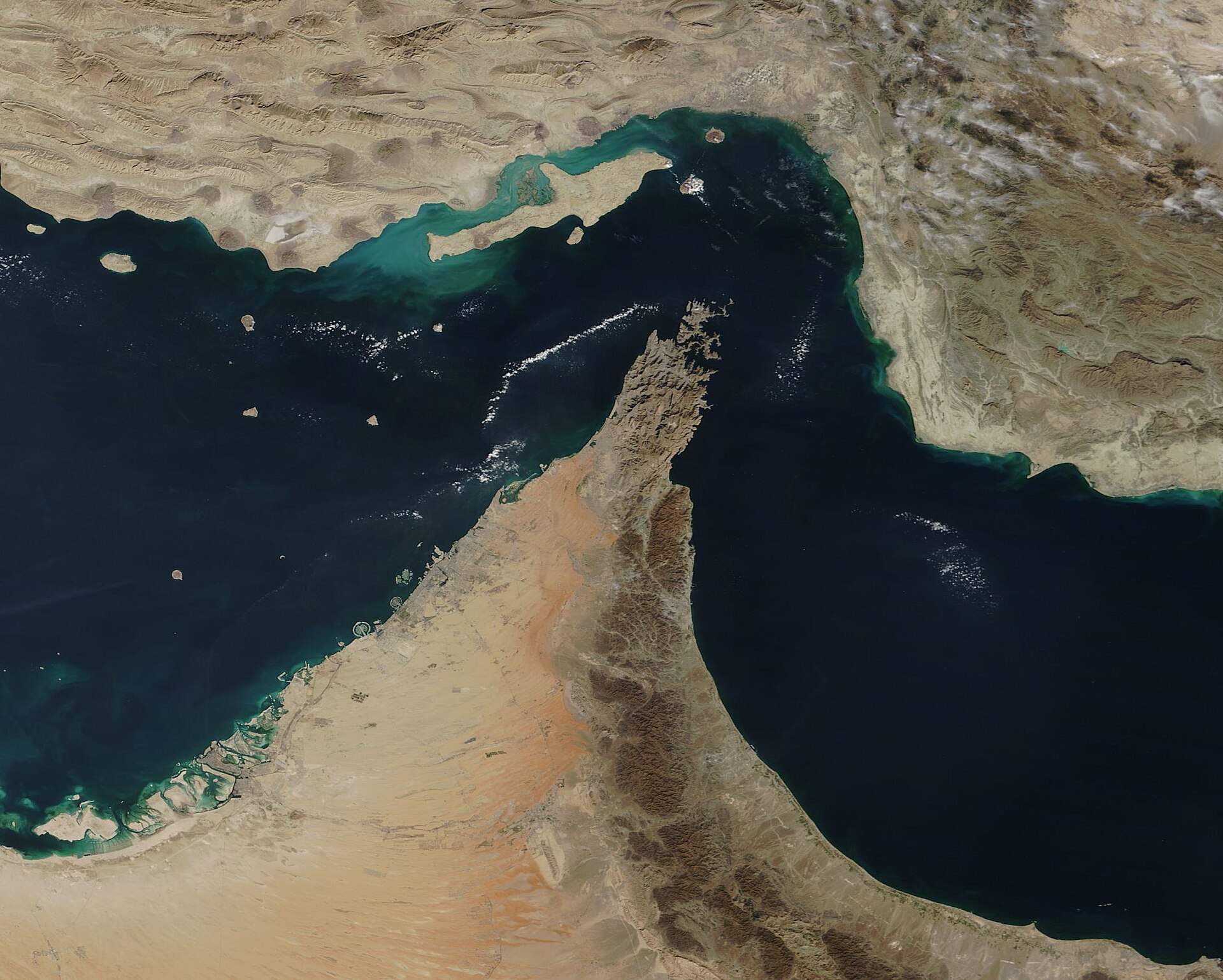
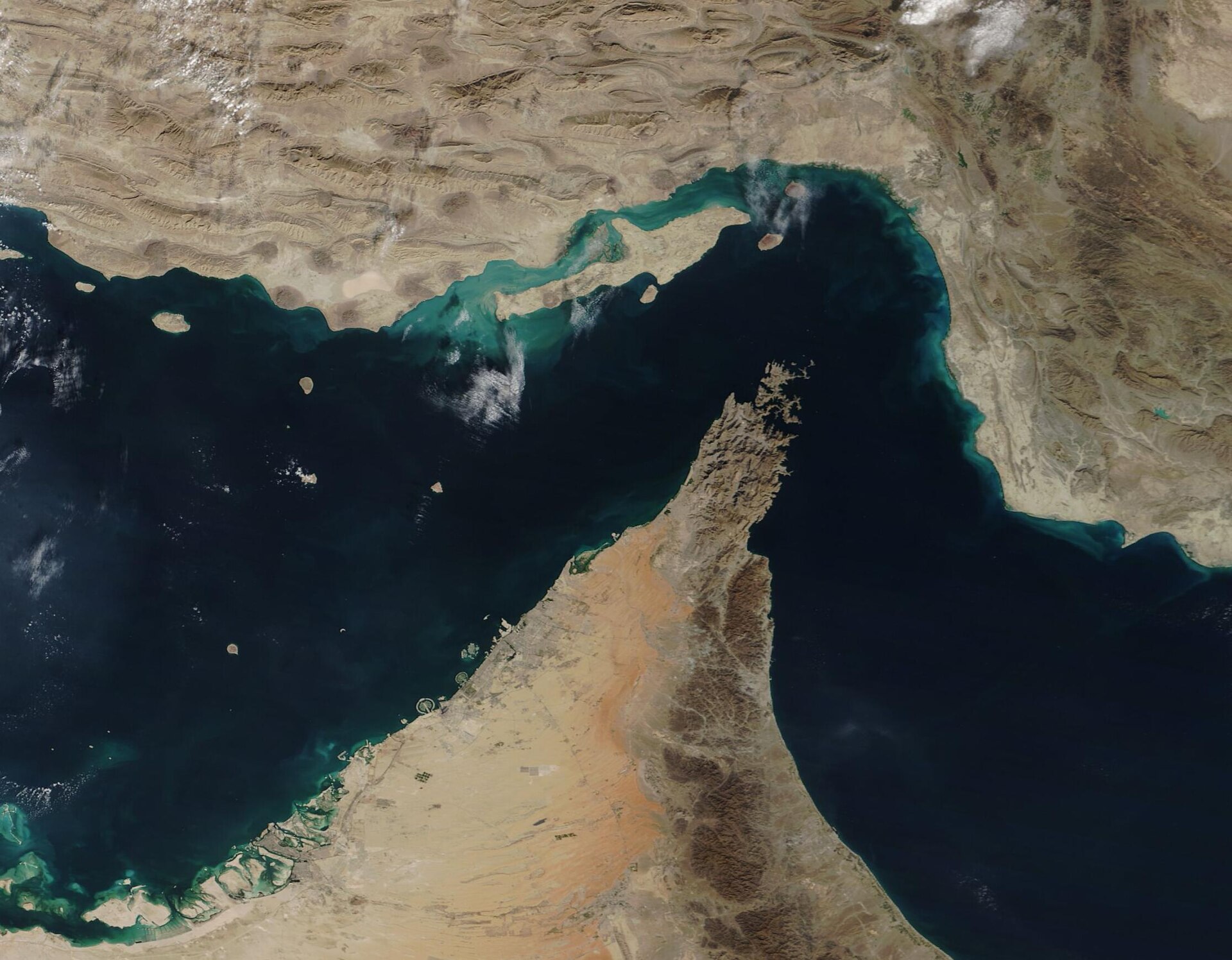
The summit’s architecture — four working groups covering freedom of navigation, economic countermeasures against Iran, trapped seafarers, and transit-readiness — was built by London and Paris without Saudi input and without a Saudi seat at the table. UAE and Bahrain are the only Gulf states inside the coalition. Qatar, Oman, and Kuwait also stayed out, but none of them route the volume of crude through Hormuz that Saudi Arabia does — or did, before the war cut throughput from 138 ships per day to 15-20.
Table of Contents
- Two Western Tables, Zero Saudi Chairs
- Why Did the UK Refuse to Join the US Blockade?
- What Does the 40-Nation Coalition Actually Look Like?
- The UNCLOS Paradox Nobody Wants to Name
- What Is the Montreux Model and Why Does Saudi Arabia Need It?
- The Mine-Clearance Gap That Undermines Everything
- Saudi Arabia’s $120 Billion Silence
- How Russia and China Closed the UN Track
- Five Days to April 22
- FAQ
Two Western Tables, Zero Saudi Chairs
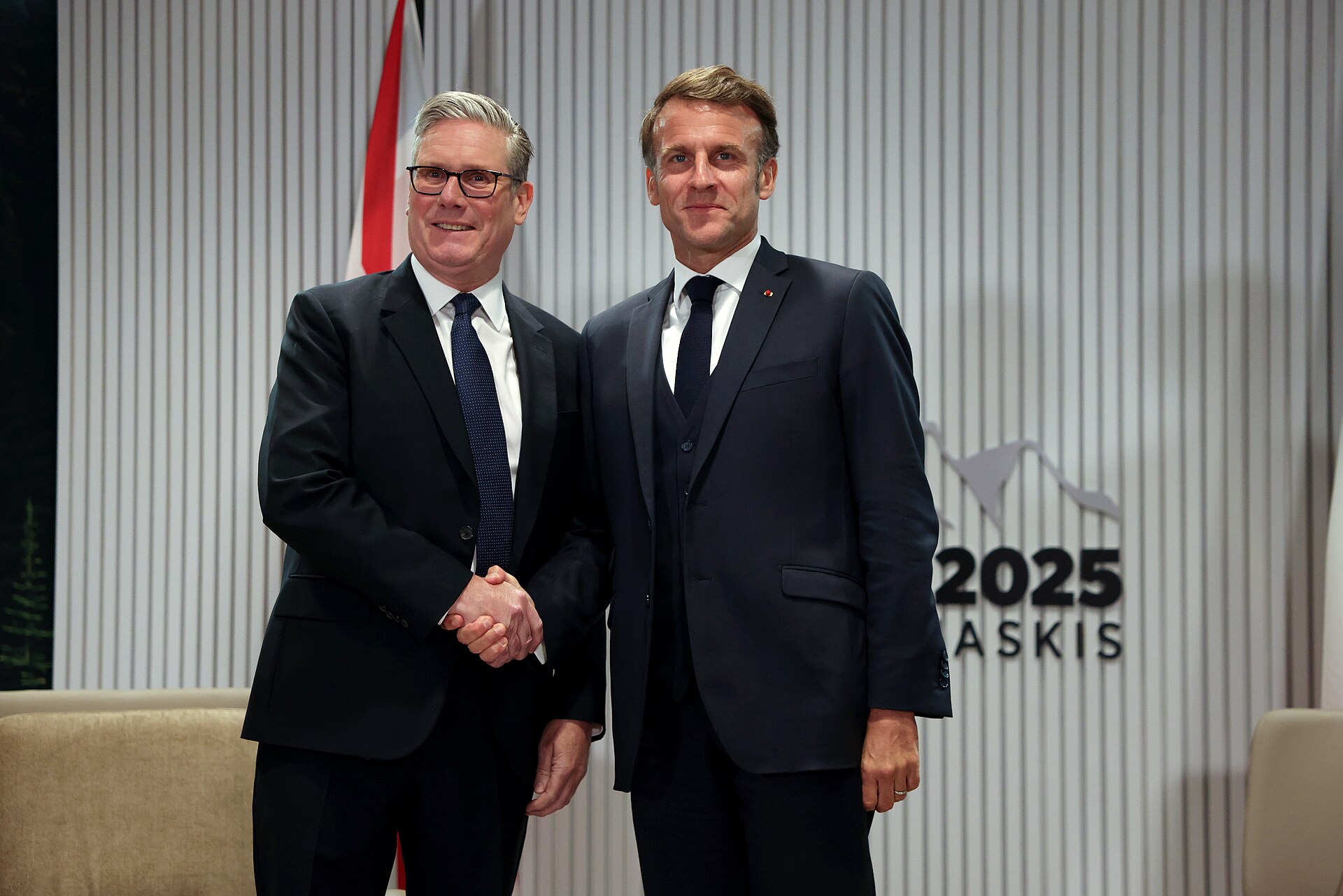
The geometry is worth spelling out because it defines the trap. On one side sits the US-led blockade — effective since April 13, applying to Iranian ports and toll-collecting vessels — which Saudi Arabia has privately asked Washington to end, citing fears that Iran could weaponise the Houthis against the Bab al-Mandeb in retaliation. On the other side sits the UK-France multilateral track, which Starmer framed on April 14 as “a coordinated, independent, multinational plan to safeguard international shipping once the conflict ends.” Saudi Arabia belongs to neither.
The blockade table is Washington’s, and Riyadh has made clear it does not want to be a blockade partner — a position driven less by principle than by the entirely rational calculation that co-sponsoring coercive action against Iran while Saudi cities remain within ballistic missile range and PAC-3 interceptor stocks sit at roughly 400 rounds is suicidal force posture. The multilateral table is London’s and Paris’s, built from the April 2 meeting that drew over 40 countries from every continent — including, from the Middle East, only the UAE and Bahrain. At that meeting, EU High Representative Kaja Kallas attended; the US did not; Saudi Arabia did not.
Why Did the UK Refuse to Join the US Blockade?
Starmer’s language on April 13 was unusually direct for a British prime minister discussing a close ally’s military operation: “We are not supporting the blockade” and the UK is “not getting dragged in” to the conflict. The phrasing matters because it was not hedged — no “at this time,” no “under current circumstances,” just a flat declarative that functioned as a public break with Washington on the primary coercive instrument the US is deploying against Iran.
The refusal has a legal spine. The UK-France framework is grounded in UNCLOS Articles 37-38 transit passage, which Mark Nevitt of Emory University School of Law — a retired Navy commander — described as “widely regarded as customary international law and binding on all States,” including Iran, the US, and Israel, none of which have ratified the convention. Macron described the planned Hormuz mission on April 14 as “a multinational and purely defensive mission aimed at restoring freedom of navigation in the strait when security conditions permit” and “strictly defensive, separate from the warring parties.” The operational DNA runs through Operation Aspides, the EU’s purely defensive Red Sea escort mission launched in February 2024 — distinct from the offensive US-led Operation Prosperity Guardian — which France has explicitly cited as the template.
The Middle East briefing 3,000+ readers start their day with.
One email. Every weekday morning. Free.
The distinction between defensive escort and offensive blockade is not semantic; it is the difference between a legal framework that can survive a Chinese or Russian challenge at the International Court of Justice and one that cannot. Yvette Cooper, the UK Foreign Secretary, framed the coalition’s purpose at the April 2 meeting: “We have seen Iran hijack an international shipping route to hold the global economy hostage.” That language is calibrated to invoke UNCLOS, not the law of armed conflict — a deliberate choice that places the UK framework on entirely different legal terrain from the US blockade.
What Does the 40-Nation Coalition Actually Look Like?
The April 2 UK-chaired meeting in London named participants including France, Germany, Italy, the Netherlands, Canada, Australia, Japan, UAE, Bahrain, Panama, and Nigeria, with the EU’s Kaja Kallas attending. The chair’s statement described “over 40 countries from every continent” pledging to “explore co-ordinated economic and political measures, such as sanctions” alongside “the fundamental principles of freedom of navigation and the law of the sea.” The April 17 summit extends this into a structured video conference with senior diplomats meeting in person in Paris on April 16 to prepare the ground.
The four working groups map directly onto the escalation ladder the coalition is trying to build: championing freedom of navigation and maritime law provides the legal foundation; pursuing economic measures and sanctions against Iran if the strait stays closed provides the coercive instrument; securing the release of trapped seafarers and vessels addresses the immediate humanitarian emergency of some 800 trapped ships and the roughly 20,000 seafarers aboard them; and working with industry to restore readiness to resume transit signals to insurers and shipping companies that a return to normal operations has institutional backing. It is, in structural terms, the architecture of a post-war Hormuz operating framework — minus the country whose crude constitutes the single largest share of Hormuz throughput.
| Country | In Coalition | Naval Contribution | At Islamabad Talks |
|---|---|---|---|
| UAE | Yes | Baynunah-class corvettes (escort/patrol) | No |
| Bahrain | Yes | Co-drafted UNSC resolution | No |
| Saudi Arabia | No | None | No |
| Qatar | No | None | No |
| Oman | No | None | No |
| Kuwait | No | None | No |
The UNCLOS Paradox Nobody Wants to Name
The entire UK-France framework rests on UNCLOS transit passage as customary international law — a position that is legally sound and operationally hollow. Neither Iran, nor the United States, nor Israel has ratified UNCLOS — the three belligerents in the conflict that produced the Hormuz closure all sit outside the treaty that the coalition invokes as the basis for reopening it, and while Nevitt is correct that the transit passage regime is “widely regarded as customary international law and binding on all States,” the enforcement mechanism for customary international law against a state that controls one shore of the strait and has mined the shipping lanes is, to put it plainly, warships.
Which brings the problem full circle. France pledged roughly ten additional warships — eight frigates and two amphibious assault ships — to the Eastern Mediterranean and Red Sea as early as March 9, under the Operation Aspides framework. Macron’s language has been consistent: “purely defensive, purely support.” But a defensive escort mission through a mined strait requires mine clearance first, and the coalition has a mine-clearance gap that no amount of legal argumentation can bridge. The UK-France position amounts to a claim that transit passage is binding customary law, enforced by a defensive naval mission, through waters that cannot be safely navigated until mines are cleared by assets that do not exist in sufficient quantity — a chain of dependencies in which each link assumes the next one holds.
What Is the Montreux Model and Why Does Saudi Arabia Need It?
Chatham House has cited the Montreux Convention — the 1936 treaty governing Turkish control of the Bosphorus — as a precedent for a post-war Hormuz arrangement. The model is multilateral, treaty-based, and gives the strait state a regulated but circumscribed role: Turkey controls the Bosphorus, but under rules negotiated with and monitored by other nations. Applied to Hormuz, the Montreux model would give Iran a formal role in strait governance — inspections, environmental oversight, perhaps a fee structure — but within a framework that subordinates Iranian authority to international rules on transit passage.
This is the architecture Saudi Arabia needs but cannot publicly advocate for, because endorsing it would implicitly accept that post-war Iran retains some form of Hormuz authority — a concession that contradicts Riyadh’s stated demand for “the permanent reopening of Hormuz” and that would enrage Washington, which has staked its position on the blockade as the coercive instrument to force unconditional Iranian compliance. Iran’s own negotiating position — that Hormuz sovereignty is non-negotiable and belongs in Phase 2 of any deal, not Phase 1 — makes the Montreux model simultaneously Iran’s most likely acceptable outcome and the framework most toxic for any Gulf state to be seen endorsing before the ceasefire expires.
The result is a diplomatic arrangement in which the two parties with the most at stake — Saudi Arabia as the largest exporter and Iran as the strait state — are both absent from the only forum attempting to build a workable post-war transit regime, for entirely opposite reasons. Iran stays out because any multilateral framework dilutes the sovereignty claim it has spent the war enforcing. Saudi Arabia stays out because any framework that includes Iran contradicts the unconditional reopening it demands — while privately needing exactly the kind of managed, rules-based transit architecture that the UK-France coalition is trying to construct.
The Mine-Clearance Gap That Undermines Everything
No escort mission operates through mined waters, and the coalition’s mine-clearance capacity is threadbare. The US decommissioned its four Avenger-class minesweepers from Bahrain in September 2025 — five months before the war began — and the three Littoral Combat Ships theoretically capable of mine countermeasures are deployed in Asia, not the Gulf. The 1991 Kuwait mine-clearance operation, the most relevant benchmark, required roughly 51 days to clear a comparable area; the IRGC has had since late February 2026 to lay ordnance across the shipping lanes.
Ian Lesser of the German Marshall Fund, tracking the coalition’s prospects, assessed the outlook as “doubtful unless some sort of arrangement for access to the strait is negotiated with Iran.” That assessment captures the structural dependency: mine clearance is the prerequisite for any escort mission, but mine clearance in contested waters requires either Iranian acquiescence or military dominance sufficient to suppress Iranian naval assets — and the coalition framework, by design, is defensive. It cannot suppress or clear; it can only escort through waters that CENTCOM — which is running a blockade the coalition explicitly refuses to join — alone has the capacity and posture to make safe.
Saudi Arabia’s $120 Billion Silence
Muhanad Seloom of the Doha Institute quantified the Gulf states’ war costs in terms that make Saudi absence from both tables difficult to rationalise on any grounds other than paralysis. Gulf states “absorbed significant damage during the conflict while maintaining defensive posture and refusing to permit offensive operations from their territory,” Seloom wrote, with economic losses that “exceeded $120 billion including damage to Qatar’s LNG facility requiring 3-5 years for repair.” They depleted “75-87% of air defense interceptor stocks” — a figure consistent with the PAC-3 arithmetic that puts Saudi Arabia at roughly 400 remaining rounds from a pre-war inventory of approximately 2,800 — while being excluded from every negotiating table controlling “their security environment for the foreseeable future.”
“Gulf states absorbed significant damage during the conflict while maintaining defensive posture and refusing to permit offensive operations from their territory.”
Muhanad Seloom, Doha Institute / University of Exeter — Middle East Council on Global Affairs, April 2026
The UAE broke from this pattern by committing Baynunah-class corvettes to escort and patrol duties under CENTCOM’s mine-clearance operation beginning April 11 — a unilateral decision that placed Abu Dhabi inside both the coalition and the military operation, giving it influence at both tables that Riyadh lacks at either. Saudi Arabia, which is privately pressing Washington to lift the blockade while simultaneously declining to join the multilateral alternative, has chosen a posture that amounts to free-riding on diplomatic architecture it did not build, cannot shape, and desperately needs to succeed.
The kingdom’s stated position — demanding “an end to attacks on regional states and the permanent reopening of Hormuz” — is shared by essentially every non-belligerent country on earth, which is precisely what makes it useless as a diplomatic instrument. Demands without a seat at the table are press releases. Seloom noted that Saudi Arabia was excluded from the Islamabad negotiating table despite absorbing a disproportionate share of the war’s physical and economic damage — but exclusion from Islamabad was imposed externally, while exclusion from the UK-France coalition is self-imposed. What Riyadh chose instead on April 17 — and the structural logic of that choice — is analyzed in “Saudi Arabia Did Not Go to Paris.”
How Russia and China Closed the UN Track
The Bahrain-drafted UNSC resolution, which went through six drafts over fifteen days and was progressively stripped from Chapter VII enforcement authority down to a non-binding statement, was vetoed on April 7 by Russia and China — the eleventh for, two against, two abstentions. Russia’s UN Ambassador Vassily Nebenzia called the resolution “biased against Iran.” China’s Fu Cong said it “failed to capture the root causes and the full picture of the conflict.” The vetoes eliminated the only pathway that could have given the UK-France coalition UN Security Council backing — a legitimacy deficit that matters because any sanctions regime emerging from Working Group 2 of the April 17 summit will lack the legal force that a Chapter VII resolution would have conferred.
The veto also revealed the structural alignment that constrains every multilateral initiative on Hormuz. China is not merely a diplomatic opponent of Western-led frameworks — Beijing is the operational intermediary for Hormuz transit, running cargo through the strait via CNPC and Sinopec equity stakes and processing payments through Kunlun Bank outside the SWIFT system. China’s interest is in managed access on Chinese terms, not Western-policed access under UNCLOS — a position that gives Beijing functional veto power over any Hormuz arrangement regardless of what happens at the Security Council. Russia’s veto is simpler: Moscow benefits from high oil prices and a distracted Washington, and has no incentive to resolve a crisis that serves both objectives. How China’s structural dependency on both Saudi oil and Iranian crude through Hormuz translates into operating leverage is analysed in full in China Declares Hormuz “Open to Us” — Saudi Arabia’s Dual-Dependency Architecture at Breaking Point.
Five Days to April 22
The ceasefire that began on April 8 expires around April 21-22, and the Islamabad Accord contains no extension mechanism — a structural deficiency that the Antalya Quad has been attempting to address without visible progress. The same day Indonesia begins airlifting 221,000 Hajj pilgrims, a logistical operation that raises the threshold for any resumption of hostilities near Saudi airspace but does nothing to address Hormuz itself. The April 17 summit falls five days before expiry — enough time to announce a framework, not enough time to deploy one. For a full account of how those three conditions interact with the summit’s activation logic, see Forty Nations Came to Paris for Hormuz. None Can Open It.
Abbas Araghchi, Iran’s foreign minister, has said Washington shifted negotiating positions when a preliminary deal was “inches away” — a claim that, whether accurate or self-serving, reflects the absence of any agreed framework for what happens after April 22. Michael Froman, the CFR president, framed the post-war requirements in terms that describe the summit’s ambition: “Iran must emerge weakened and chastened, the strait must reopen…and the region must recover stability.” Every element of that sentence requires Saudi participation to be operationalised — Saudi crude is what flows through the strait, Saudi infrastructure is what needs stability, Saudi fiscal arithmetic is what breaks if Hormuz stays restricted — and yet Riyadh has positioned itself as a bystander to the only process attempting to deliver it.
| Date | Event | Saudi Role |
|---|---|---|
| April 2 | UK-chaired 40-nation coalition meeting, London | Absent |
| April 7 | UNSC vote on Bahrain-drafted resolution (vetoed) | Not on Council |
| April 8 | Ceasefire begins (Islamabad Accord) | Excluded from talks |
| April 11 | CENTCOM mine-clearance begins; UAE contributes corvettes | No naval contribution |
| April 13 | US blockade effective; UK refuses to join | Privately objects to blockade |
| April 16 | Senior diplomats meet in person, Paris | Absent |
| April 17 | Macron-Starmer ~40-nation video summit | Absent |
| April 21-22 | Ceasefire expires; Hajj airlift begins | No extension mechanism |
Pakistan’s role as Iran’s sole interlocutor with enforcement capacity makes the ceasefire extension question functionally a question about whether Islamabad can deliver something that Riyadh, London, and Paris cannot — continued Iranian compliance without a framework, without UN backing, and without the participation of the country whose oil makes the strait worth fighting over. The April 17 summit will produce a communiqué, working group mandates, and possibly the outline of a defensive naval mission modelled on Aspides. What it will not produce is Saudi participation, which means the largest crude exporter dependent on Hormuz transit will enter the post-ceasefire period with no multilateral framework it helped build, no bilateral channel to Iran it controls, and no coercive instrument it is willing to wield.

On April 2, the UK chair’s statement pledged that coalition members would uphold “the fundamental principles of freedom of navigation and the law of the sea.” On April 17, forty nations will attempt to turn that pledge into operational architecture. Saudi Arabia will watch from Riyadh, having declined every invitation, absorbed $120 billion in losses, burned through 86 percent of its missile interceptors, and placed its faith in the one outcome the summit cannot guarantee — that someone else will fix Hormuz for them.
FAQ
Which countries from the Middle East joined the UK-France Hormuz coalition?
Only the UAE and Bahrain have joined. The UAE committed Baynunah-class corvettes to escort and patrol duties under CENTCOM beginning April 11, while Bahrain co-drafted the UNSC resolution that was vetoed on April 7. Saudi Arabia, Qatar, Oman, and Kuwait all declined to participate, though their reasons differ — Oman maintains its traditional neutrality and mediator role with Iran, Qatar’s relations with both Tehran and Washington make coalition membership diplomatically costly, and Kuwait’s proximity to Iran and Iraq makes visible alignment with a Western military framework a direct security risk.
Could Saudi Arabia join the coalition after the April 17 summit?
Structurally, yes — the coalition’s open architecture and working-group format allow new members at any stage. Politically, late entry would be worse than absence. Joining after the framework is set means accepting architecture Saudi Arabia had no hand in designing, including potentially the sanctions and economic measures that Working Group 2 is mandated to develop. Late joiners inherit obligations without having shaped them, and Riyadh would face the additional problem of explaining to Washington why it joined a framework that the US pointedly declined to participate in while maintaining a parallel blockade.
What happens to Hormuz shipping if the ceasefire expires without extension on April 22?
The 15-20 ships currently transiting Hormuz daily — versus 138 pre-war — would likely drop further as insurers pull war-risk coverage and shipping companies suspend transit. The approximately 800 vessels currently trapped in the Gulf would face extended detention. The Kpler-estimated 6 million barrels per day supply deficit would widen, and the 70-plus empty VLCCs idling off Singapore — each requiring a four-week voyage to reach the Gulf — would remain stranded. Brent, which has already fallen 13.3 percent on ceasefire hopes, would reverse sharply, with the East-West Pipeline’s 5.9 million bpd Yanbu capacity representing the structural ceiling on Saudi export alternatives.
Why did France cite Operation Aspides as the model for a Hormuz mission?
Aspides, launched in February 2024 as the EU’s Red Sea escort mission, established two precedents that Paris wants to replicate. First, it was purely defensive — escorting commercial vessels rather than striking Houthi launch sites, which was the US-led Operation Prosperity Guardian’s mandate. Second, it operated under EU command rather than US command, giving European nations operational autonomy. For Hormuz, the Aspides model allows France and the UK to deploy naval assets for commercial escort without subordinating their operations to CENTCOM or being drawn into the US blockade — a distinction that is legally and politically essential for maintaining the “separate from the warring parties” framing Macron used on April 14.
What is the Montreux Convention precedent and how would it apply to Hormuz?
The 1936 Montreux Convention governs Turkish sovereignty over the Bosphorus and Dardanelles straits — Turkey controls transit but under internationally negotiated rules covering vessel types, tonnage limits, and advance notification. Applied to Hormuz, a Montreux-style arrangement would give Iran a formal administrative role — potentially including environmental inspections, vessel tracking, and a regulated fee structure — while binding that authority within a multilateral treaty framework that guarantees transit passage. The model appeals to analysts because it resolves the sovereignty deadlock: Iran gets recognition of its strait-state authority, and the international community gets enforceable transit rights. The obstacle is timing — Montreux took years to negotiate, and the ceasefire expires in days. Making the timeline problem worse is that even the ceasefire’s expiry date is now disputed: mediators are briefing a seven-day extension agreed in principle while Washington has publicly denied any such deal, leaving the April 17 summit working to a deadline that may or may not still exist. The ceasefire extension claim, Washington’s CNN denial, and the knock-on effects on Saudi Arabia’s Hormuz reopening calendar are examined in detail here. The outcome of the summit’s actual commitments — and what the Northwood military planning session converts those commitments into operationally — is analyzed in Paris Built a Hormuz Framework Washington Cannot Join.