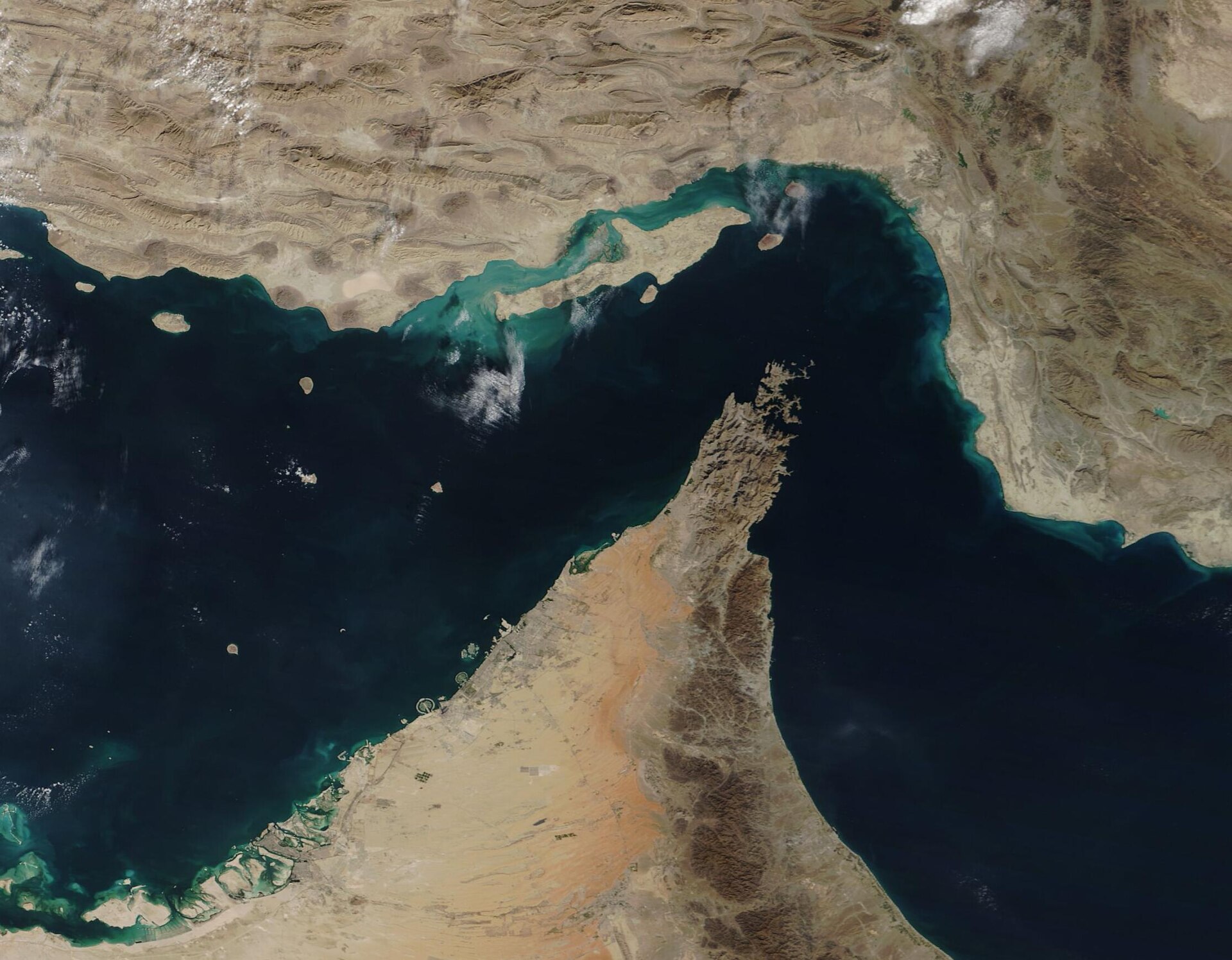

PARIS — France and Britain convened roughly 40 nations at the Elysee Palace on April 17 to launch the Strait of Hormuz Maritime Freedom of Navigation Initiative, the most ambitious European-led naval coalition since the Cold War, deploying a nuclear-powered aircraft carrier and escort frigates toward a waterway that carries a fifth of the world’s oil. The initiative was built without Washington, branded without Washington, and announced without Washington — but its three activation conditions mean it cannot function until Washington says so.
The summit’s own trigger clause, disclosed by a French presidential official to Al Jazeera, requires three simultaneous conditions before any escort or mine-clearance operation begins: Iran must commit not to fire on passing ships, the United States must commit not to block ships entering or exiting the Strait, and a lasting ceasefire must hold. On the same day Macron and Starmer stood at their podiums in Paris, Donald Trump posted that his naval blockade of Iranian ports “will remain in full force UNTIL SUCH TIME AS OUR TRANSACTION WITH IRAN IS 100% COMPLETE.” One of the three locks on the coalition’s trigger is held by the country that was deliberately excluded from the room.
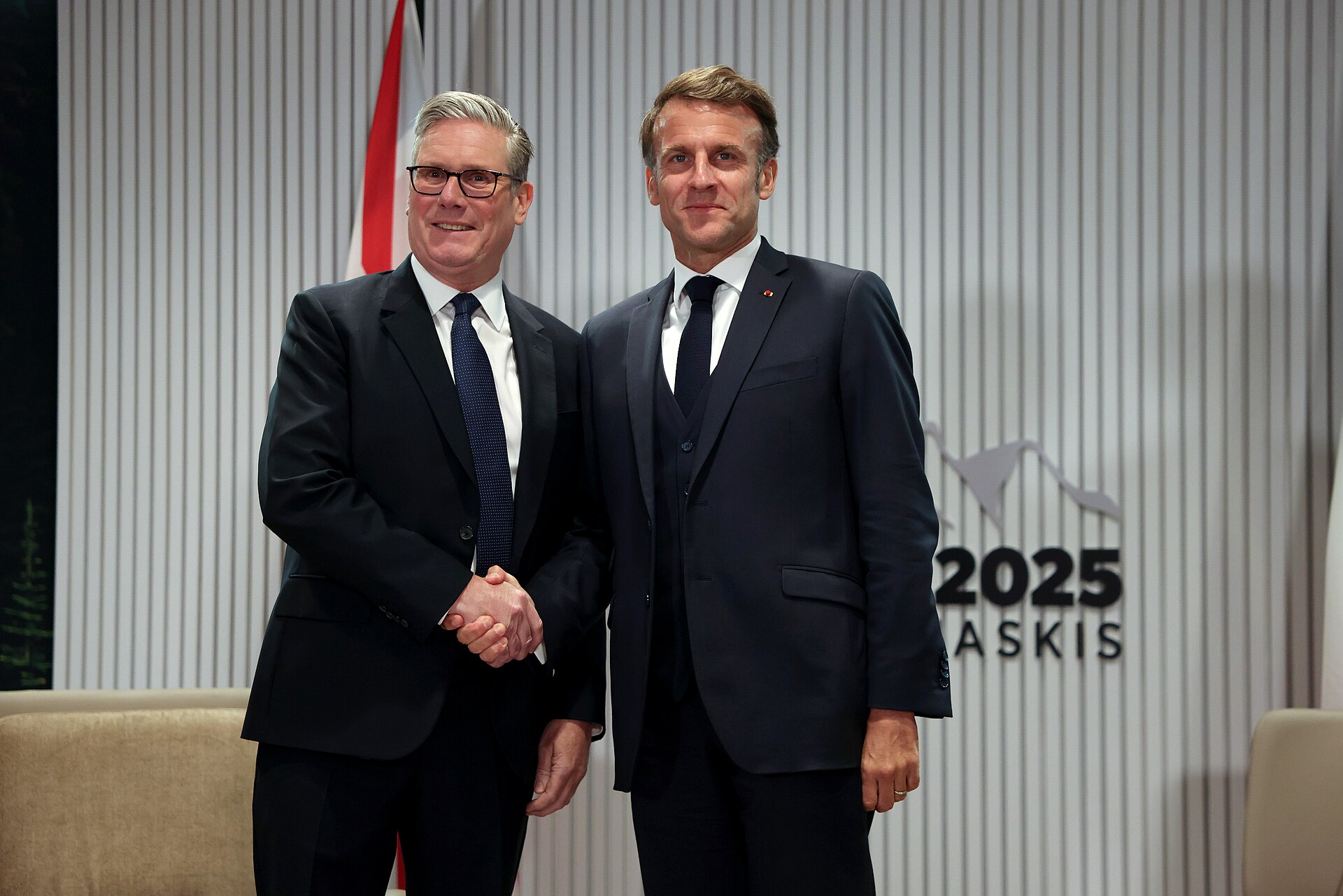
Table of Contents
What Macron and Starmer Actually Built
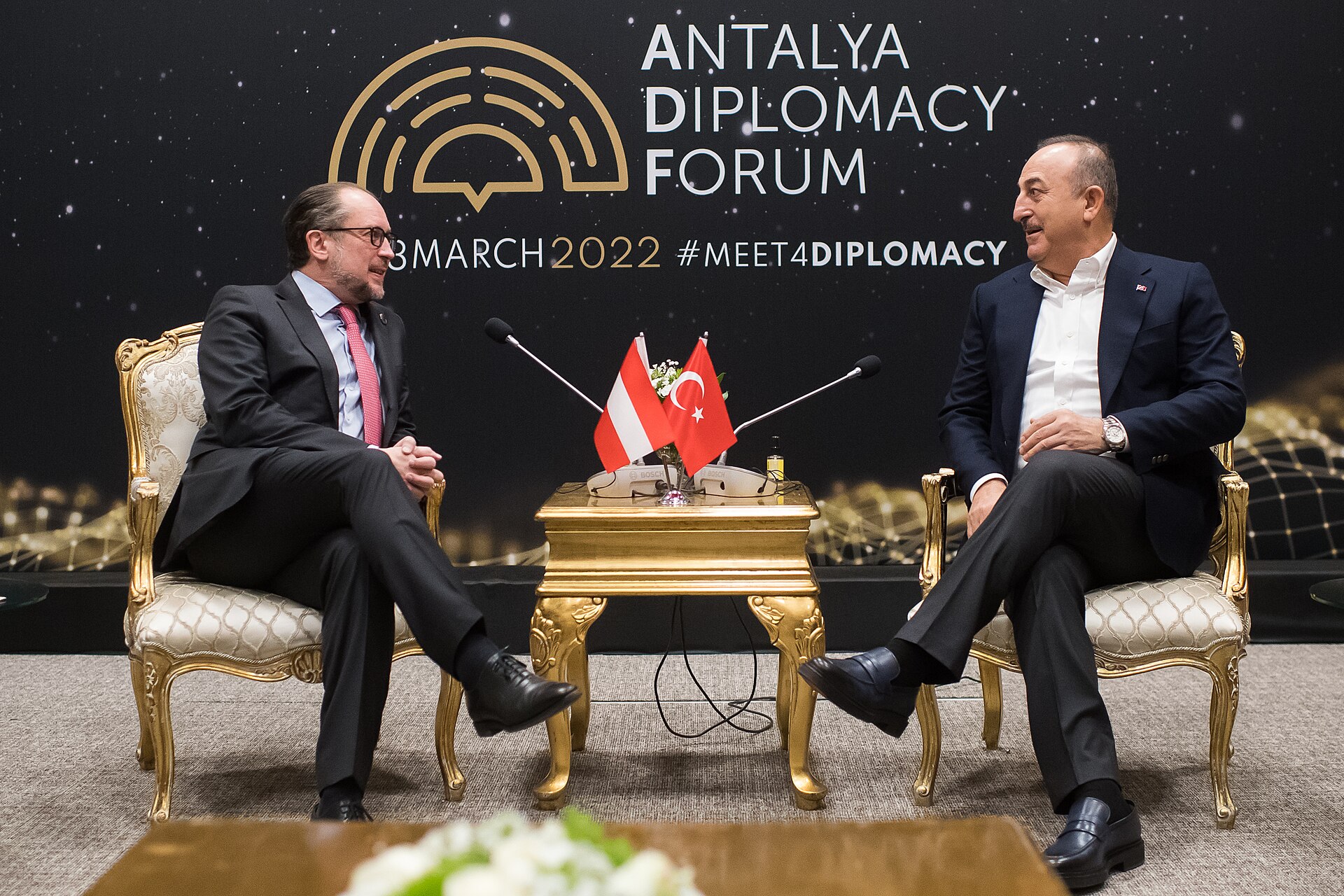
The Paris summit assembled the widest maritime coalition attempted outside NATO command structures in decades. Germany’s Friedrich Merz and Italy’s Giorgia Meloni attended in person, according to PBS NewsHour and AP reporting. Australia, Canada, South Korea, and Ukraine joined by video. So did China and India — a detail that would have been unthinkable in any US-led Hormuz initiative, given Beijing’s simultaneous role as the operational broker for Qatari LNG transits through the Strait.
The House of Saud Daily Briefing
Saudi Arabia's news in 3 minutes, every morning. Free. See today's issue
The initiative was divided into four working groups, per AP’s wire report from the summit: freedom of navigation and maritime security; economic measures against Iran; the release of trapped seafarers and ships; and industry readiness to resume transit once conditions allow. EU High Representative Kaja Kallas framed the coalition explicitly as a departure, telling Euronews on April 2 that this was “without U.S. participation for the first time in decades.” Restoring “safe, toll-free freedom of navigation in the Strait, consistent with the Law of the Sea,” she said, was “an urgent priority.”
Britain’s role is operational command. UK Defence Secretary Grant Shapps confirmed to Euronews that the Royal Navy would assume command of the multinational force, with a military planning summit to follow at Northwood, the UK’s Permanent Joint Headquarters, as confirmed by GOV.UK on April 16. Keir Starmer, speaking at the summit, accused Iran of “holding the world’s economy to ransom” — language calibrated to justify naval action under international law without invoking the US-Iran conflict directly.
The Three Conditions No One in Paris Controls
The summit’s entire operational logic rests on a phrase a French presidential official gave Al Jazeera: the coalition will activate “when security conditions allow.” That phrase unpacks into three specific prerequisites, each of which depends on an actor who was either absent from the summit or actively hostile to it.
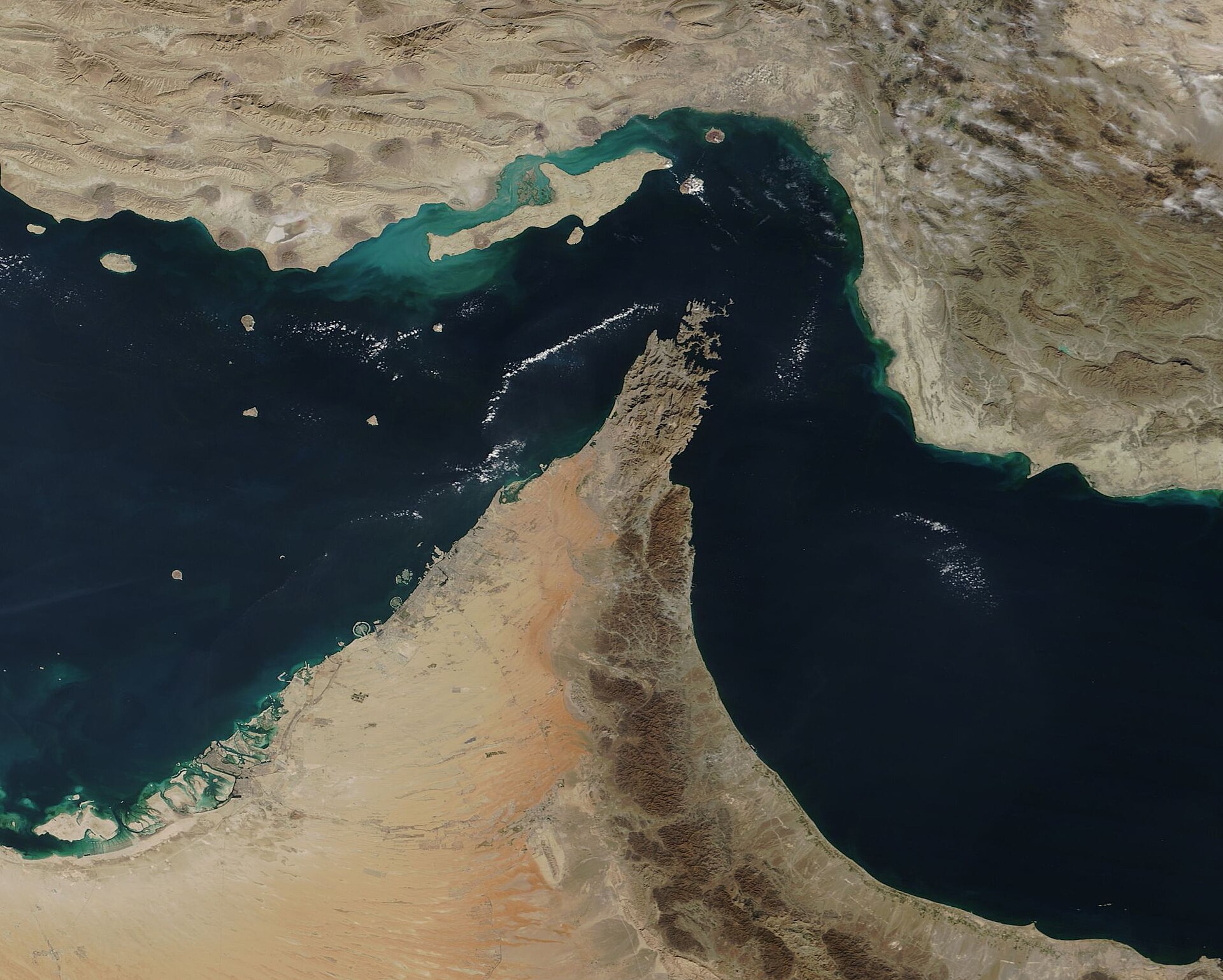
The first condition requires Iran to commit not to fire on commercial ships transiting Hormuz. This from a government whose IRGC Navy declared “full authority to manage the Strait” on April 5 and again on April 10, while Iran’s own foreign minister was negotiating in Islamabad. IRGC Navy spokesman Zolfagari warned that “the security of ports in the Persian and Omani Gulfs is either for everyone or for no one” — a direct threat to every Gulf state whose flag might appear in a European escort convoy.
The second condition requires the United States to commit not to block ships entering or exiting the Strait. Trump’s April 17 social media post did not merely fail to provide that commitment; it actively foreclosed it. His blockade stays “in full force” until his bilateral deal with Iran is “100% COMPLETE.” The coalition’s architects designed an initiative to exclude Washington, then wrote an activation clause that gives Washington a veto. Macron appeared to acknowledge the contradiction obliquely, telling France 24 that France “will never take part in operations to open or liberate the Strait of Hormuz in the current context.”
The third condition is a lasting ceasefire. The current ceasefire — brokered through Pakistan in Islamabad — expires April 22, five days after the summit. No extension mechanism exists; the Soufan Center has noted this structural gap. The IRGC’s track record during the ceasefire period includes striking a Saudi East-West Pipeline pumping station on the first day of the nominal ceasefire and maintaining mine-danger declarations across Hormuz’s standard shipping lanes.
“We are not a party to the conflict. And so France will never take part in operations to open or liberate the Strait of Hormuz in the current context.”Emmanuel Macron, France 24/Al Jazeera, April 17, 2026
The structural effect is that three different actors — Tehran, Washington, and the warring parties collectively — each hold an independent kill switch over the coalition’s activation. All three must turn their keys simultaneously. None was in the room when the lock was designed.
A Nuclear Carrier and No Mine Clearance
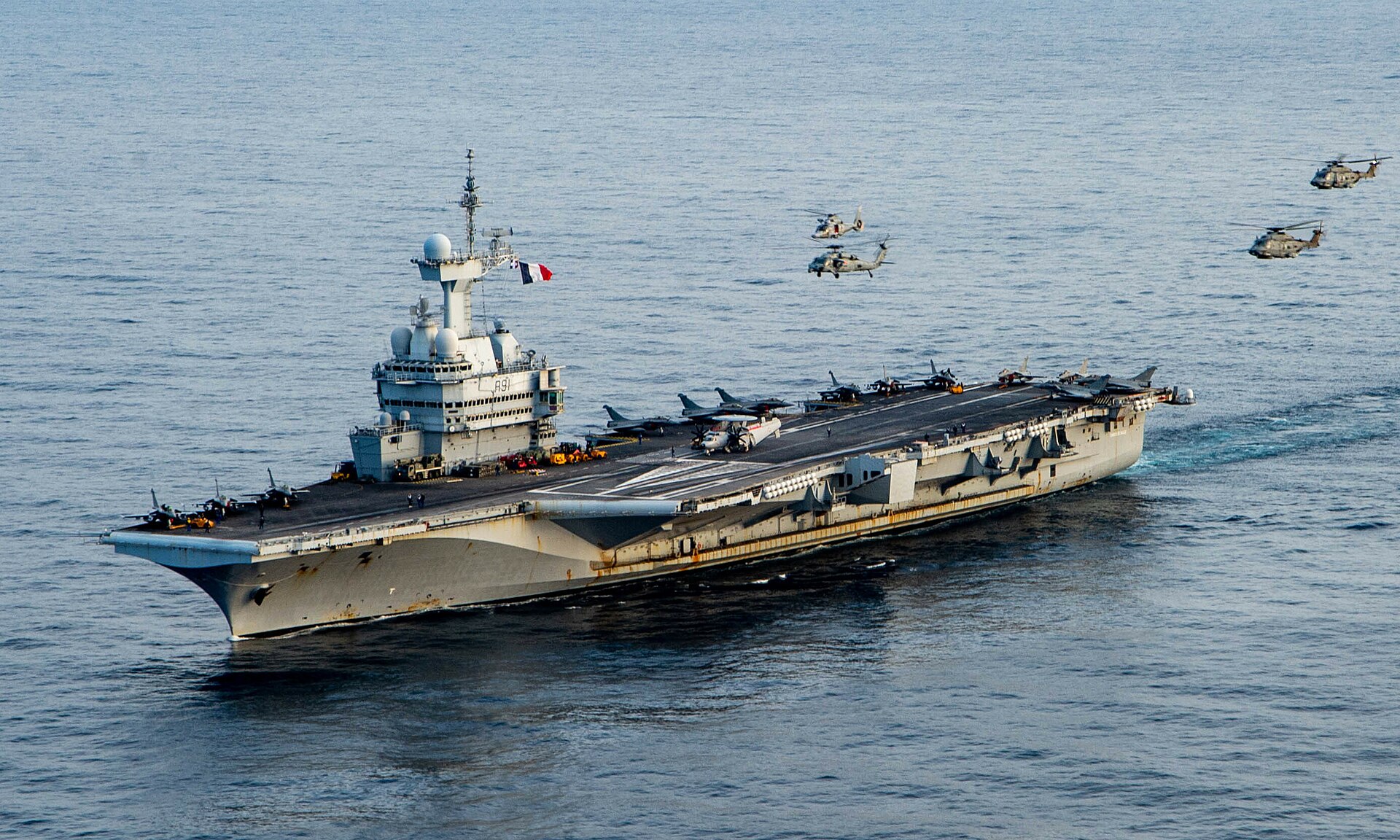
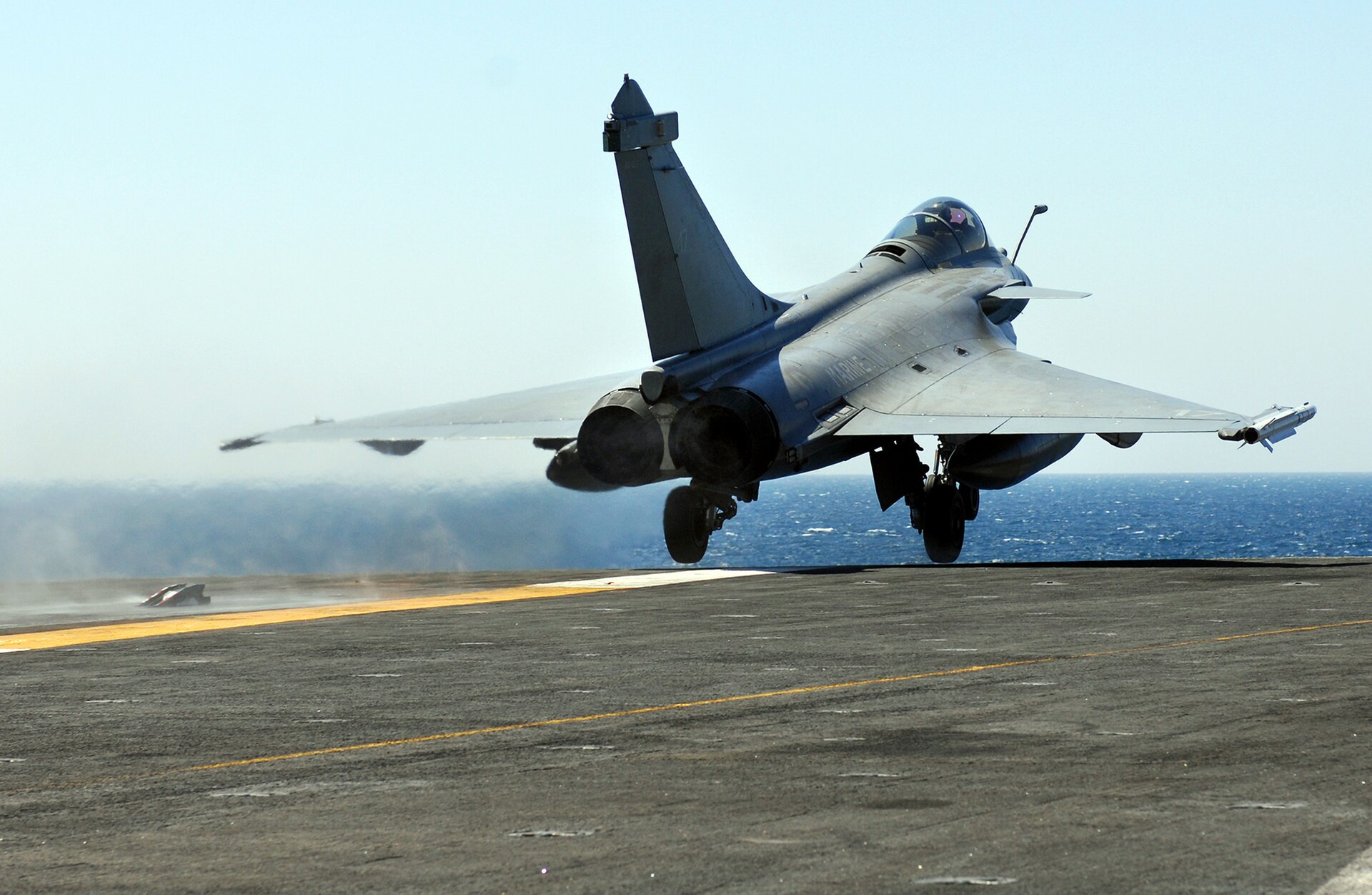
France positioned its most powerful naval asset toward the theater. The Charles de Gaulle (R91), a 42,000-tonne nuclear-powered carrier running on two K15 reactors, was tracked by satellite imagery approximately 70 kilometres southwest of Cyprus between April 9 and 15, per Army Recognition analysis. Her air wing includes 20 Rafale multirole fighters and three E-2C Hawkeye early-warning aircraft — enough to establish a local air-superiority bubble over a convoy transit, though not enough to suppress Iranian anti-ship missile batteries along the 180-kilometre coastline flanking the Strait.
The carrier strike group, as reported by USNI News on March 9, includes FREMM frigates, the air-defence destroyer FS Chevalier Paul (D621), an oiler, a nuclear attack submarine, and allied contributions from Spain’s ESPS Cristobal Colon and the Dutch HNLMS Evertsen. France also moved two Tripartite-class minehunters — 560-tonne vessels equipped with PAP-104 remotely operated vehicles — from Brest to Toulon by April 10 and staged them toward Djibouti, according to Army Recognition. No mine-clearing mission has been activated.
That last detail matters more than the carrier. The IRGC published a chart between February 28 and April 9 marking Hormuz’s standard traffic separation scheme lanes as a danger zone, redirecting vessels into a five-nautical-mile channel between Qeshm and Larak islands — inside Iranian territorial waters. Clearing the mined area would require sweeping roughly 200 square miles, a task that took coalition forces 51 days during the 1991 Kuwait operation. The four US Avenger-class mine countermeasures ships previously based at Bahrain — USS Devastator, Sentry, Dextrous, and Gladiator — were decommissioned on September 25, 2025. The Foreign Policy Research Institute’s March 2026 report, “The Mine Gap,” and USNI Proceedings’ April 2026 analysis, “The Crisis in Mine Countermeasures,” both documented the resulting structural gap. Europe collectively operates approximately 150 minesweepers, but every one of them sits 6,000 to 10,000 nautical miles from Hormuz.
Barak Seener of the Henry Jackson Society told Fox News that without American carrier strike groups and fighter aircraft, the European proposal “risks being largely symbolic.” His assessment of the British contribution was blunter: “Keir Starmer’s assertion ‘We’re not getting dragged into the war’ disguises the embarrassing fact that the Royal Navy is facing a hollowed out crisis.”
Iran’s Summit-Day Ambush
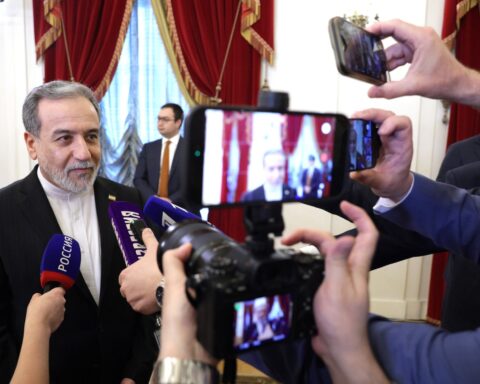
Tehran’s timing was precise. As delegates gathered at the Elysee, Iranian Foreign Minister Abbas Araghchi posted on X that the Strait of Hormuz was “completely open” for commercial vessels for the duration of the 10-day Lebanon ceasefire, according to PBS NewsHour’s April 17 reporting. Oil prices plunged 10-11 per cent within hours — a market reaction that did more to undercut the summit’s urgency than any diplomatic statement could have.
The declaration was tactically elegant and strategically hollow. Iran simultaneously maintained the IRGC’s “full authority” claim over Hormuz, offered no enforcement mechanism, and conditioned the opening on a ceasefire that expires April 22. Araghchi’s post did not address the IRGC’s mine-danger chart, the Larak Island corridor diversion, or the CENTCOM blockade of Iranian ports — which remains unchanged regardless of what Iran declares open. Starmer responded that any Iranian commitment must become “both lasting and a workable proposal,” per PBS NewsHour — an implicit acknowledgement that it was neither.
The IMO’s Secretary-General Arsenio Dominguez, speaking separately to Ship Management International, said the organisation was developing “an evacuation framework” for ships and seafarers using the existing traffic separation scheme, with Iran involved. The framework’s existence — an evacuation plan, not a transit plan — captures the gap between what the Paris summit promised and what the waterway’s actual conditions allow.
Where Was Saudi Arabia?
Saudi Arabia was not at the Elysee on April 17. It was not at the coalition’s founding meeting on April 2. It was not among the 38 signatories of the March 19 joint statement, published on GOV.UK, which demanded Hormuz’s reopening. Of the six GCC states, only the UAE and Bahrain signed that statement — not Saudi Arabia, Qatar, Kuwait, or Oman. The country whose economy depends most on the Strait was absent from every Western table built to reopen it.
This absence operates on two levels. Saudi Arabia is not part of the European coalition, and it is not part of the US blockade either. Riyadh sits outside both Western frameworks for Hormuz, despite being the state most damaged by its closure. Saudi production crashed from 10.4 million barrels per day in February to 7.25 million in March — a 30 per cent drop, the IEA’s largest recorded disruption — with the East-West Pipeline bypass to Yanbu running at a ceiling of 4 to 5.9 million bpd against a pre-war Hormuz throughput of 7 to 7.5 million.
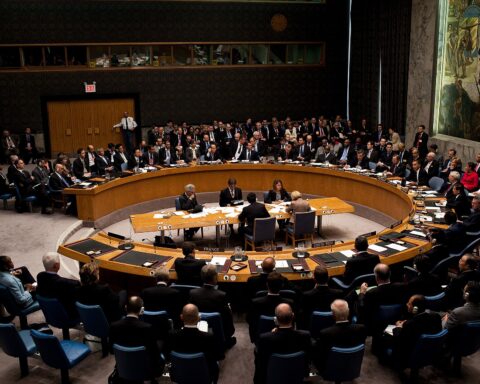
The pattern mirrors the UNSC veto track from April 7, when Bahrain co-drafted a Hormuz resolution across six drafts and 15 days, only for Russia and China to veto it. Multilateral form, unilateral effective control — and Saudi Arabia on the outside of both structures. When Macron told PBS NewsHour that “we all demand the full, immediate and unconditional reopening of the Strait of Hormuz,” the “we” did not include the state that loses the most money for every day the Strait stays shut.
“Keir Starmer’s assertion ‘We’re not getting dragged into the war’ disguises the embarrassing fact that the Royal Navy is facing a hollowed out crisis.”Barak Seener, Henry Jackson Society, Fox News, April 2026
Background: From Surveillance to Escort
The Paris initiative is the operational successor to EMASOH, the European-led Maritime Awareness in the Strait of Hormuz mission that France launched in 2020 after Iranian tanker seizures in the Gulf. EMASOH and its military arm, Operation AGENOR, were strictly surveillance operations — monitoring, awareness, and presence, never escort or interdiction. In six years, according to the mission’s own reporting, AGENOR logged over 2,000 flight hours, 1,070 days at sea, and “reassured” 1,600 commercial ships. Its headquarters sat at the French naval base in Abu Dhabi, and it operated with Iranian acquiescence.
The 2026 initiative contemplates something fundamentally different: active escort and mine clearance in a waterway where the IRGC has declared sovereign control, Iran has marked shipping lanes as mined, and the United States simultaneously operates a naval blockade of Iranian ports. Neither Operation Sentinel — the US-led International Maritime Security Construct formed in 2019 — nor EMASOH faced this combined threat environment. The legal basis rests on UNCLOS Article 38, which establishes transit passage rights for straits used for international navigation. Iran signed the convention but the IRGC’s “full authority” declaration is a direct operational challenge to it.
China’s attendance by video adds a layer that neither predecessor had to navigate. Beijing holds CNPC and Sinopec contracts for 8 million tonnes per annum of Qatari LNG and roughly 5 per cent equity in Qatar’s North Field East expansion. More than 60 per cent of oil transiting Hormuz heads to Asia. China vetoed the Gulf states’ UNSC Hormuz resolution alongside Russia, providing Iran diplomatic cover — then attended Macron’s coalition summit days later. Beijing wants a seat in whatever post-conflict Hormuz architecture emerges without committing a single hull to clearing the mines or breaking the blockade.
FAQ
How does the Paris coalition differ from the US-led Operation Sentinel?
Operation Sentinel, formed in 2019 under the International Maritime Security Construct, was a US-led presence mission based at Bahrain’s Fifth Fleet headquarters, designed to deter Iranian tanker seizures with American carrier power underwriting it. The Paris initiative is European-led, European-commanded (through Northwood), and explicitly excludes US participation. The operational difference is that Sentinel had American carrier strike groups, Aegis destroyers, and mine countermeasures ships — assets the European coalition lacks. The 2019 mission also operated in a non-combat environment; the 2026 initiative faces active mine threats, IRGC “full authority” declarations, and a simultaneous US blockade.
What naval assets has Britain committed beyond command authority?
Britain has committed to operational command through Northwood but has not publicly detailed specific hull deployments for the Hormuz mission as of April 17. The Royal Navy’s surface fleet has shrunk to 16 frigates and destroyers — its smallest since the Napoleonic era, per a 2025 House of Commons Defence Committee report. Britain’s two Queen Elizabeth-class carriers (65,000 tonnes each) are larger than the Charles de Gaulle but HMS Queen Elizabeth was in refit and HMS Prince of Wales has faced repeated propulsion issues. The UK’s two Sandown-class mine countermeasures vessels in the Gulf were withdrawn in 2023, leaving Britain with no forward-deployed mine clearance capability east of Suez.
Could the coalition activate without all three trigger conditions being met?
Macron’s own language suggests not. His statement that France “will never take part in operations to open or liberate the Strait of Hormuz in the current context” frames the current conflict environment as a hard constraint, not a preference. The three conditions function as a sequential dependency chain: mine clearance cannot begin while the IRGC threatens to fire on sweepers; escort convoys cannot transit while the US blockade treats certain vessels as blockade runners; and neither operation is sustainable without a ceasefire holding beyond April 22. A partial activation — escort without mine clearance, or transit without blockade exemption — would expose coalition warships to risks that European publics and parliaments have not been prepared to accept.
Why did oil prices drop 10-11 per cent on summit day despite the coalition having no activation date?
The price drop was driven not by the coalition but by Araghchi’s simultaneous declaration that Hormuz was “completely open.” Markets priced in the possibility — however conditional — that Iranian oil and Gulf exports might resume flowing, creating a supply expectation that briefly outweighed the structural reality of mines, blockades, and expiring ceasefires. Brent crude had been trading above $90 per barrel through much of April on Hormuz disruption premiums. The 10-11 per cent intraday swing reflected algorithmic and speculative trading reacting to headlines rather than a reassessment of the waterway’s actual navigability.
What role does Oman play, given its absence from the coalition?
Oman shares sovereignty over the Strait of Hormuz with Iran — the waterway’s traffic separation scheme runs through both Omani and Iranian territorial waters. Oman was not among the 38 March 19 joint statement signatories and did not attend the Paris summit. Muscat has historically maintained neutrality between Iran and the Gulf Arab states, serving as a back-channel host for US-Iran negotiations including the preliminary JCPOA talks. Oman’s Transport Minister Al Maawali stated publicly that “no tolls can be imposed for crossing Hormuz,” pushing back on Trump’s earlier “joint venture” toll proposal without endorsing either the European coalition or the US blockade. Any mine-clearance or escort operation in the Strait’s southern lane would require at minimum Omani acquiescence, given that the navigable deep-water channel passes through Omani territorial waters.
The House of Saud Daily Briefing
Saudi Arabia's news in 3 minutes, every morning. Free. See today's issue