
JEDDAH — Ukraine has quietly become a structural participant in the Gulf’s air defense architecture. The “Drone Agreement” signed April 24-25 between Volodymyr Zelensky and Saudi Arabia, the UAE, and Qatar — ten-year defense cooperation deals projected to yield several billion dollars in 2026 alone — is not a conventional arms sale. It is the export of a counter-drone doctrine built from 14,000 acoustic sensors and four years of Shahed attrition data that no US Foreign Military Sales package can replicate. With 201 Ukrainian specialists already deployed across the Gulf and the Sky Map command system operational at Prince Sultan Air Base, Kyiv has converted wartime survival into a security product. The arrangement strips Iran’s Shahed and Arash-2 inventory of its assumed surprise value against Gulf targets, repositions Ukraine from aid recipient to peer defense partner, and creates a structural problem for any eventual Hormuz settlement — because Ukrainian intelligence and doctrine are now embedded in the infrastructure Iran must negotiate around.
Table of Contents
- What Does the Ukraine-Gulf Drone Agreement Actually Cover?
- Sky Map at Prince Sultan: The System the Pentagon Didn’t Build
- Why Does the Cost-Exchange Ratio Matter More Than the Hardware?
- The Shahed Library as Doctrine Product
- How Did Russian Satellite Intelligence Accelerate the Deal?
- The Abqaiq Gap: Seven Years Unresolved
- Can Saudi Arabia Maintain Neutrality with Ukrainian Officers on Base?
- What Does Ukraine’s Involvement Mean for a Hormuz Settlement?
- The Iranian Silence
- FAQ
What Does the Ukraine-Gulf Drone Agreement Actually Cover?
The Drone Agreement is a three-component defense transfer covering interceptor drones, electronic warfare systems, and integrated air defense software, structured as 10-year cooperation agreements with Saudi Arabia, the UAE, and Qatar. Zelensky described it on April 21 as “a systemic approach” — “not just interceptors alone, but also defence lines, software, electronic warfare systems, and so on.”
The language matters. “Systemic approach” means Ukraine is not selling individual weapons. It is selling an architecture — the layered detection-to-intercept chain it built under Russian bombardment, packaged for export. Ukraine’s Deputy Secretary of the National Security and Defence Council told Ukrainska Pravda on April 19 that the combined value “amounts to several billion dollars across all partners for 2026,” with at least ten separate export contracts projected.
Zelensky’s second visit to Jeddah on April 24 — weeks after his March 27 trip that produced the initial Saudi defense cooperation agreement — advanced the arrangement across three pillars: defense, energy, and food security, according to The National and Arab News. The speed is unusual. Defense cooperation agreements with Gulf states typically take years to negotiate. These took weeks.
The acceleration has a cause. Iran’s March 1-8 Gulf campaign — 3,034 strikes in eight days, of which 2,155 were drones (71%), according to CSIS — demonstrated that the Gulf’s existing air defenses had a structural problem with cheap saturation attacks. The UAE alone absorbed 1,668 strikes, 55% of all recorded strikes in that period. Ukrainian officers already in-theater identified specific inefficiencies: eight Patriot missiles fired against single targets, $6 million SM-6 interceptors expended on drones costing a fraction of that, and air defense batteries left without protection against ground-level threats (Breaking Defense, March 2026).
Marko Kushnir, head of communications at General Cherry — one of Ukraine’s largest drone producers — told Breaking Defense: “At the moment almost every nation of the Middle East that Iran is attacking — which is to say almost every nation — is trying to reach out.”
The Middle East briefing 3,000+ readers start their day with.
One email. Every weekday morning. Free.
Sky Map at Prince Sultan: The System the Pentagon Didn’t Build
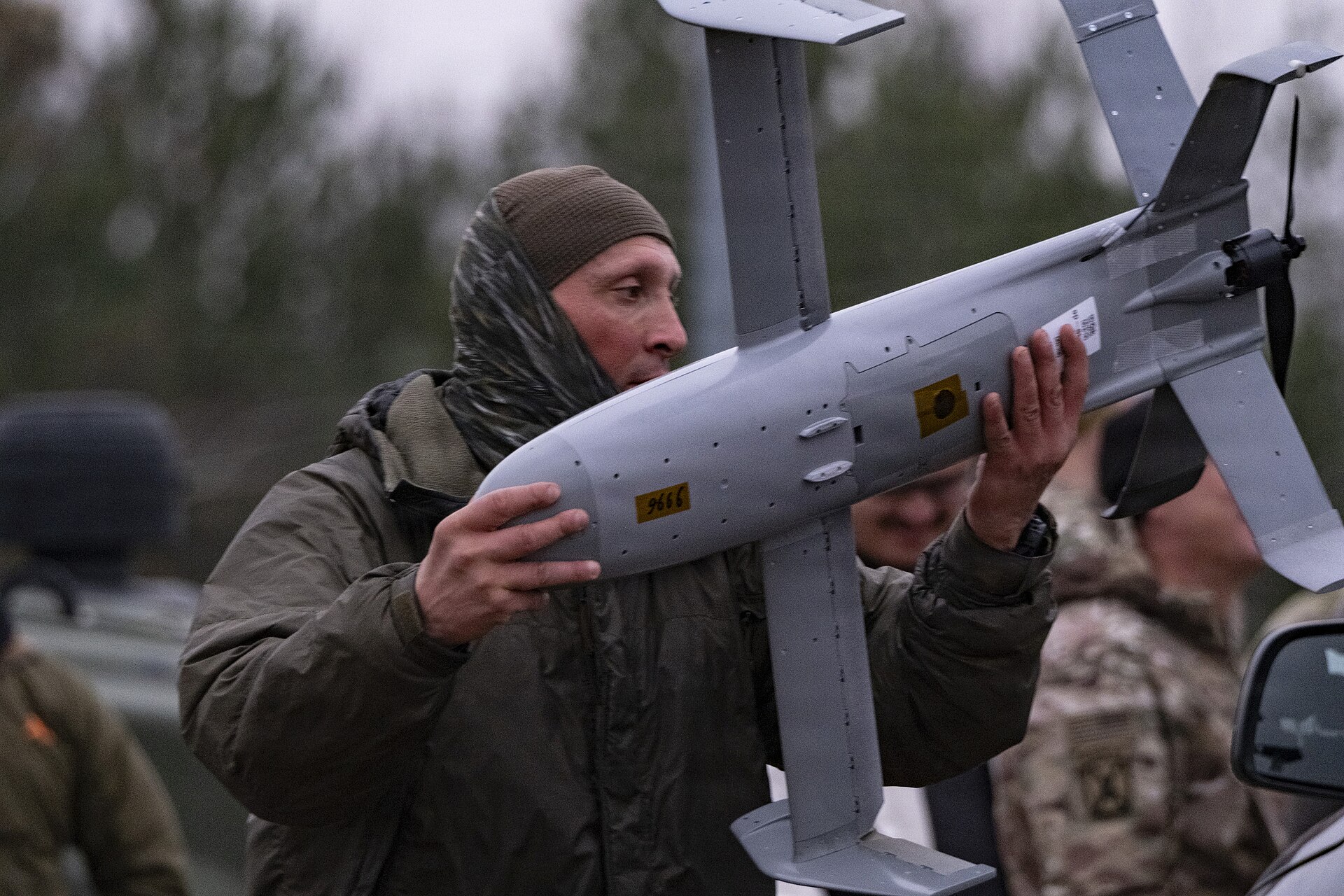
Sky Map — a command-and-control platform developed by Ukrainian firm Sky Fortress — is now operational at Prince Sultan Air Base, where Ukrainian personnel have trained US crews on the system. The platform integrates radar, acoustic sensor, and camera data into a unified air picture and coordinates counter-strikes via tablets carried by mobile fire teams, according to an Al-Monitor exclusive report on April 22.
Sky Fortress was founded in 2022, backed by Brave1, Ukraine’s military innovation accelerator. Its core innovation is acoustic detection. The firm deployed more than 14,000 acoustic sensors across Ukraine, each costing $400-$1,000, specifically calibrated to detect Shahed engine signatures at low altitudes where radar coverage fails (Defence Express Ukraine; United24 Media). The acoustic layer fills the gap that radar-centric systems leave open — the same gap that Iran’s drone tactics are designed to exploit.
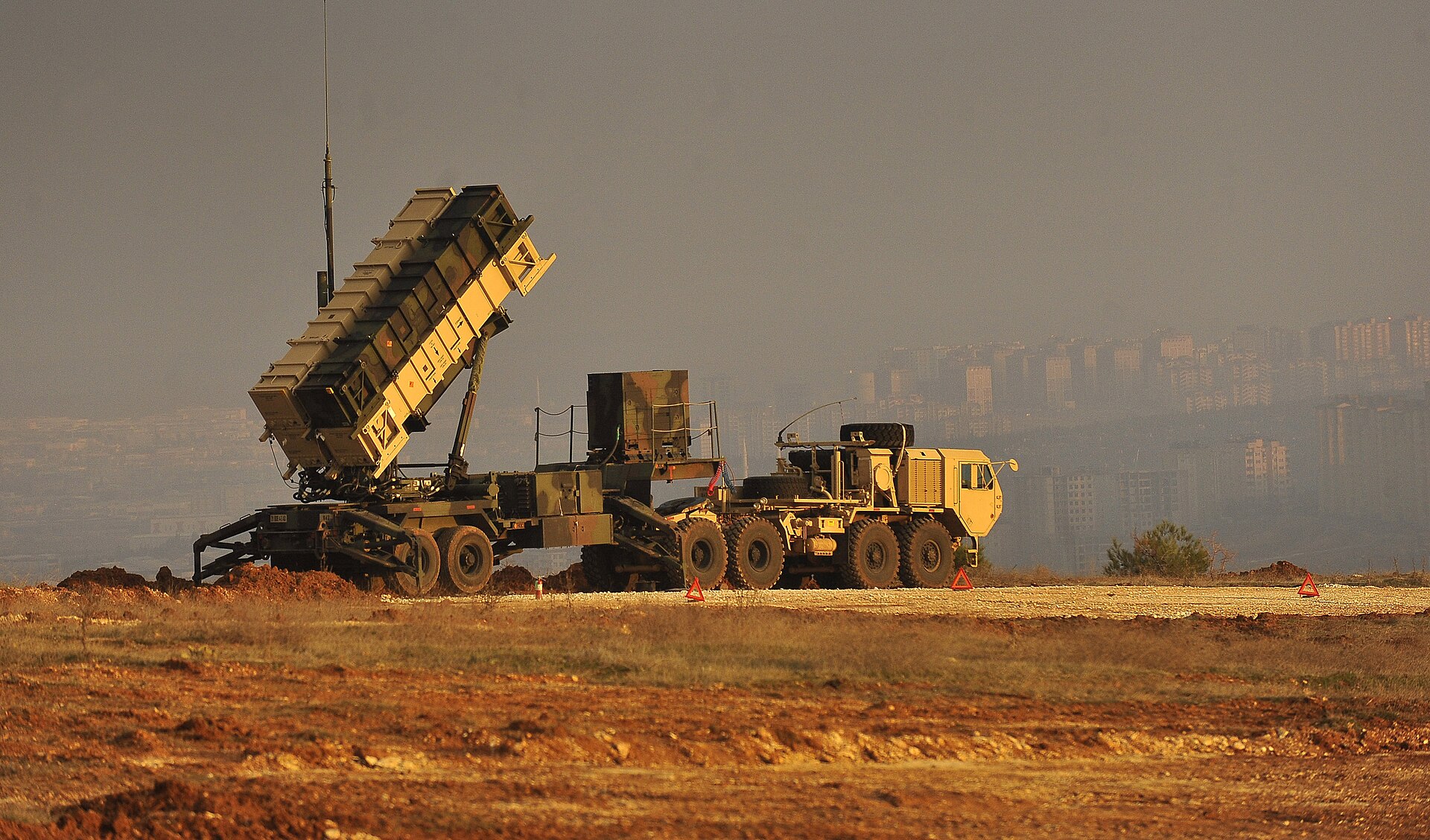
On March 6, 2026, Donald Trump told reporters: “We don’t need their help in drone defense.” By mid-April, the Pentagon had deployed Sky Map at Prince Sultan and the US Army had purchased 13,000 Merops interceptor drones — a Ukraine-tested platform developed with Eric Schmidt’s backing — within approximately eight days of the conflict’s start (Inside Unmanned Systems; Defense News, April 20). A US Army spokesperson framed the purchase: “puts us on the right end of the cost curve, and we will make that trade all day long.”
CENTCOM declined to comment on Sky Map’s deployment. Whether acoustic sensors have been installed at Prince Sultan is not confirmed publicly. No reporting establishes integration between Sky Map and Saudi Arabia’s King Abdulaziz Command and Warfare System (KACWS). The system appears to function as a parallel or additive layer — Ukrainian intelligence running alongside, but not inside, the existing allied command structure.
Timothy Walton, a senior fellow at the Hudson Institute, told Al-Monitor: “There’s been longstanding gaps in U.S. air missile defense coverage around the world.” Adam Scher, spokesperson for Joint Interagency Task Force 401 — the Pentagon’s counter-drone unit — added: “There is no ‘silver bullet’ tool that will stop every drone threat.”
That last statement carries weight. It is an implicit admission that the Pentagon’s existing toolkit was insufficient, and that the layered approach Ukraine has battle-tested is the direction of travel. A detailed analysis of the resulting six-country air defense stack — THAAD, PAC-3, KM-SAM, Sky Sabre, China’s Silent Hunter laser, and Sky Map — and the political insurance it builds into Saudi procurement is in The Six-Country Sky Over Saudi Arabia: Ukraine’s Sky Map Lands at PSAB Six Weeks After Trump Said No.
Why Does the Cost-Exchange Ratio Matter More Than the Hardware?
The economics of drone warfare favor the attacker unless the defender can match cost with cost. Ukraine’s primary sales argument to Gulf states is not any single weapon system but the cost-exchange ratio its doctrine achieves. A Ukrainian acoustic sensor costs $400-$1,000. A Ukrainian interceptor drone costs $2,000-$4,000. Against those figures, the existing US-supplied defense stack looks catastrophically mismatched.
Zelensky stated the math directly: “A Shahed can cost between $80,000 and $130,000 and will be destroyed not by a missile costing $3-4 million, but by an interceptor costing $10,000.”
| System | Unit Cost | Cost Ratio vs. Shahed ($80K-$130K) | Origin |
|---|---|---|---|
| Acoustic sensor (Sky Fortress) | $400-$1,000 | Detection layer — not an interceptor | Ukraine |
| Interceptor drone (Ukrainian) | $2,000-$4,000 | 20:1 to 65:1 cost advantage | Ukraine |
| Merops interceptor drone | ~$10,000 | 8:1 to 13:1 cost advantage | Ukraine / US Army |
| Patriot PAC-3 interceptor | ~$4,000,000 | 31:1 to 50:1 cost disadvantage | United States |
| SM-6 interceptor | ~$6,000,000 | 46:1 to 75:1 cost disadvantage | United States |
| Shahed-136 (target) | $80,000-$130,000 | Baseline | Iran |
This table explains why the Gulf’s existing air defense architecture — built around US FMS packages totaling more than $21 billion in Q1 2026 alone (Defense Security Monitor, April 23) — failed to prevent saturation. The systems were designed for ballistic missiles and manned aircraft, not swarms of $100,000 drones arriving in waves. Every Patriot round fired at a Shahed is a 50:1 cost loss at the low end of Shahed pricing. Over 2,155 drone strikes in eight days, the arithmetic becomes ruinous.
Joshua Segal, a senior national security consultant, told FPRI in March 2026 that Ukraine’s “good enough” philosophy — rapidly fielding inexpensive, effective systems — directly contrasts with Western procurement culture. “Less than 10% of Shahed drones penetrate Ukrainian defenses,” he noted, while Gulf states were seeing “video footage of Shaheds breaking through.”
The 13,000 Merops purchase by the US Army is the institutional concession. The Pentagon’s own procurement system could not produce an equivalent at equivalent cost on an equivalent timeline. Ukraine’s Brave1 accelerator — procurement-to-field cycles measured in weeks rather than years — delivered what the US defense industrial base did not.
The Shahed Library as Doctrine Product
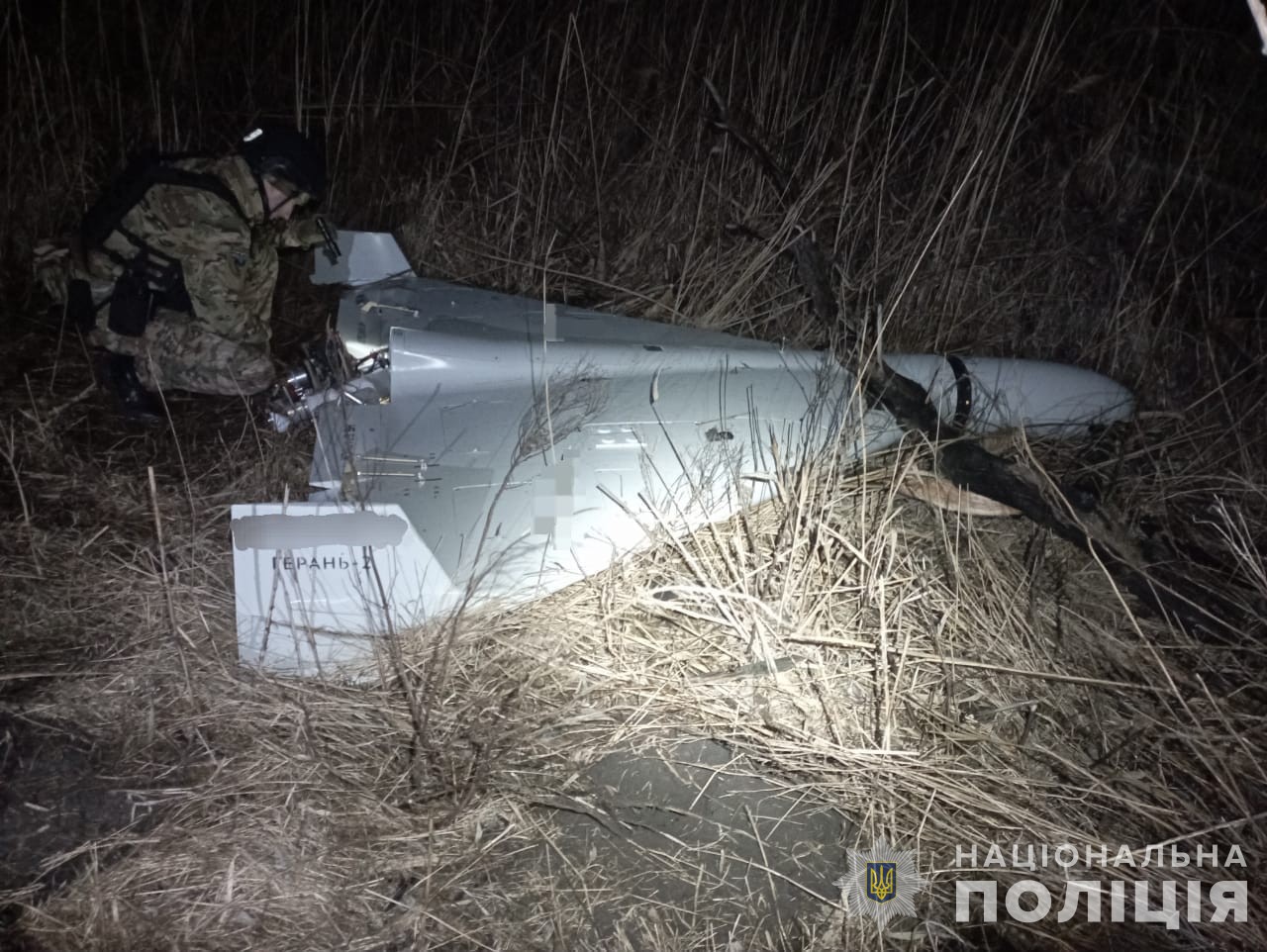
Ukraine’s real export is not hardware. It is the counter-Shahed data library accumulated between September 2022, when Russia first deployed Shahed-136 drones against Ukrainian civilian infrastructure, and April 2026 — the most sustained drone-saturation campaign in the history of mechanized warfare.
Over that period, Ukrainian forces achieved peak interception rates of 94-97% between August 2024 and February 2025, according to ISIS and ABC News reporting. Rates declined to 82-86% as Russian launch intensity escalated beyond 1,000 drones per week, but even at the lower bound, Ukraine was intercepting at rates Gulf defenses could not match during the March 2026 Iranian campaign.
In February 2026 alone — the month before the Iran-Gulf war began — Ukrainian interceptor drones flew 6,300 missions, destroying more than 1,500 Russian drones. More than 70% of Shahed downings in the Kyiv area were attributed to interceptor drones rather than missiles (CSIS; ISIS). That statistic represents a doctrinal shift: the transition from missile-based counter-drone defense (expensive, finite stockpile) to drone-on-drone defense (cheap, scalable).
Samuel Bendett, a researcher at the Center for a New American Security, told Breaking Defense that “Ukraine has been countering Shahed/Geran drones for years,” and that “all features of this defense are of interest to the Gulf — drone identification, data sharing, and interdicting UAVs.” Jean Marc Rickli of the Geneva Center for Security Policy added that Ukraine can “share its expertise in building and innovating very quickly so as to adapt to the very fast pace of innovation in the drone and counter-drone industry.”
Sky Map encodes this library into a deployable platform. More than 14,000 acoustic sensors across Ukraine captured Shahed engine signatures at every flight speed and altitude, building electronic profiles, mapping jamming-resistance characteristics, and identifying effective intercept geometries. No US FMS package offers this data set, because the United States has not fought a sustained drone-saturation campaign on its own territory.
On April 23 — one day before Zelensky’s Jeddah visit — Ukraine’s 412th Nemesis Brigade conducted the first documented interception of a Shahed drone by an interceptor launched from an unmanned surface vessel. The capability is directly applicable to Hormuz defense, where Iran’s IRGC Navy operates drone launch platforms from island positions and fast boats. Ukraine demonstrated maritime counter-drone intercept precisely when the Gulf partners were in the room.
How Did Russian Satellite Intelligence Accelerate the Deal?
Russia provided satellite targeting intelligence to Iran before the March 26 attack on Prince Sultan Air Base. Zelensky stated with “100% confidence” that Russian satellites imaged Prince Sultan on March 20, 23, and 25 — one day before the strike. The same satellite sweep covered Al-Udeid Air Base in Qatar, Incirlik Air Base in Turkey, and Shaybah oil field in Saudi Arabia (NBC News; Euromaidan Press, March 28-29).
This disclosure served two simultaneous functions. It was intelligence — actionable, specific, and verifiable by Gulf partners with their own overhead assets. And it was a sales pitch. Ukraine was demonstrating in real time that it occupied a unique position in the conflict’s intelligence architecture: the one country that both understood Russian ISR patterns from four years of being targeted by them, and had the motivation to share that understanding with Gulf states.
Max Boot, the Jeane J. Kirkpatrick Senior Fellow at the Council on Foreign Relations, framed the broader dynamic in April 2026: the conflict functions as a proxy war where Russia profits while backing Iran, and Ukraine uses Gulf partnerships to simultaneously degrade Russian financial networks. The Russia-ISR disclosure weaponized this framing. Every Russian satellite pass over Prince Sultan validated the argument that Ukraine’s intelligence was operationally necessary.
The causal chain runs directly: Russian satellites image Gulf bases. Iran strikes Gulf bases using that imagery. Ukraine — which has the world’s deepest understanding of Russian ISR timing, orbit patterns, and operational signatures — offers to help Gulf states anticipate and counter those strikes. The Drone Agreement is the institutional wrapper around that offer. Fortune reported on March 28 that Ukraine was exchanging counter-drone expertise with Gulf states for interceptors Kyiv needs against Russian attacks — Ukrainian doctrine for Gulf-supplied air defense missiles.
Andriy Kovalenko, a Ukrainian official, confirmed on March 6 that the United States had formally requested Ukrainian assistance in counter-drone operations — a reversal of the donor-recipient relationship that had defined the US-Ukraine dynamic since February 2022.
The Abqaiq Gap: Seven Years Unresolved
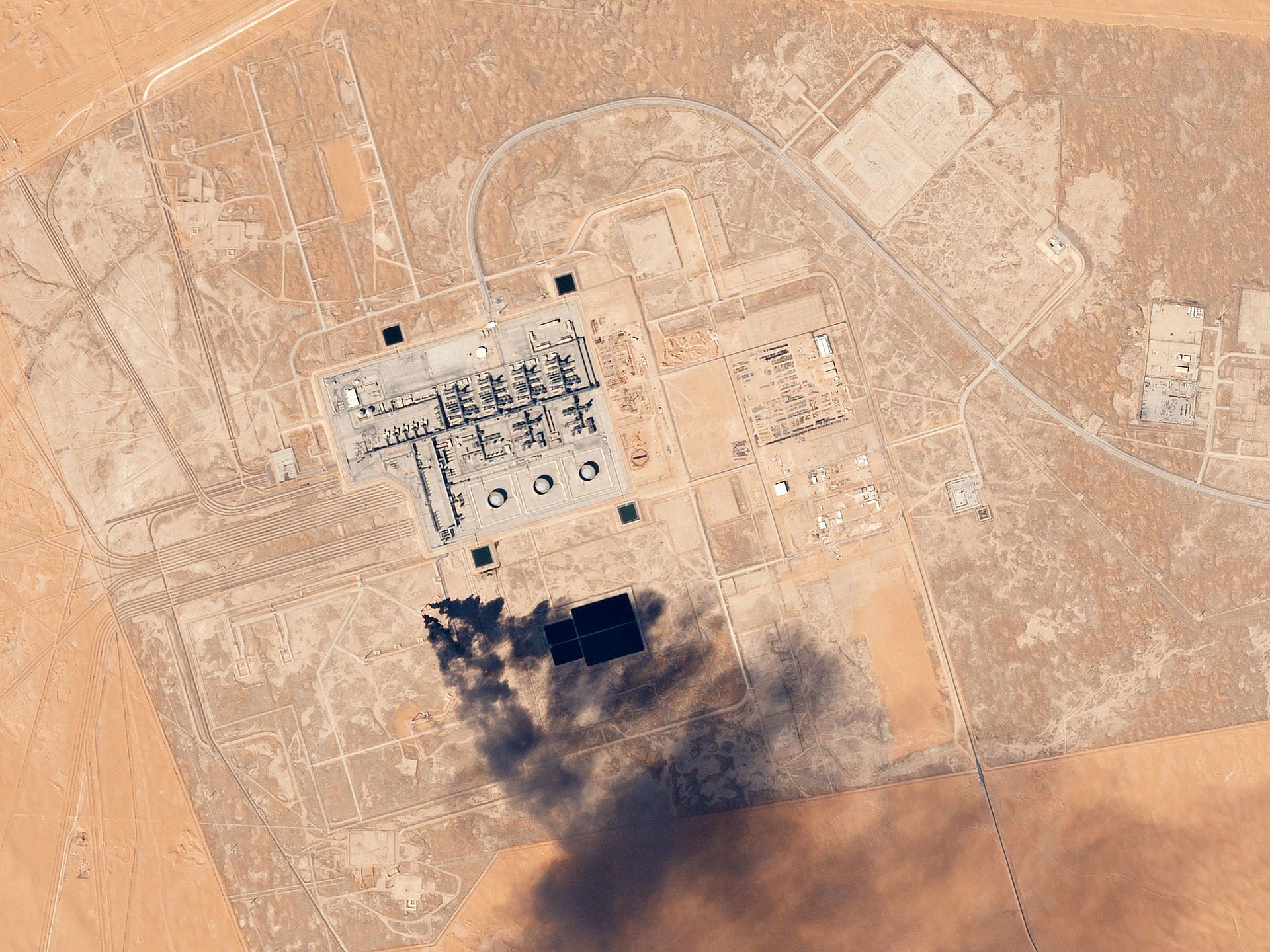
The structural vulnerability that Ukraine’s doctrine addresses is not new. On September 14, 2019, Iranian-origin drones and cruise missiles struck Saudi Aramco’s Abqaiq processing facility and the Khurais oil field without a single successful intercept. The attack removed approximately 5% of global oil supply overnight.
Post-attack analysis identified the root causes: forward-facing radar designed for ballistic missiles rather than low-altitude drones approaching from unexpected vectors, no dedicated counter-drone systems, and personnel operating on a peacetime footing (CNBC, November 2019; Washington Institute). The $110 billion in US arms sales to Saudi Arabia over the preceding decade had not addressed the drone gap because the gap did not exist in the threat models those sales were designed against.
Seven years later, four of seven planned THAAD sites in Saudi Arabia are expected to be operational — three remain unbuilt (Open the Magazine). Saudi Arabia’s air defense crisis is not a question of high-end capability. The PAC-3 and THAAD batteries perform their designed missions. The problem is the gap below their engagement envelope — the altitude band where Shahed-136 drones fly, where acoustic detection outperforms radar, and where a $4 million interceptor is the wrong tool.
Ukraine’s 201 specialists in the Gulf (confirmed by Zelensky on March 18) are not there to operate Patriot batteries. They are there to fill the Abqaiq gap with the layered doctrine — acoustic sensors, electronic warfare, interceptor drones, software integration — that Ukraine built because it had no choice. Saudi Arabia’s military modernization is increasingly defined by this pragmatic sourcing from countries that have actually fought the wars the Gulf is now fighting.
Can Saudi Arabia Maintain Neutrality with Ukrainian Officers on Base?
Saudi Arabia’s position in the Iran war has been described — by Riyadh, and for Riyadh — as studied neutrality: a country absorbing strikes while declining to formally join the US-led coalition. The parallel diplomatic track with Tehran, including Saudi FM Prince Faisal bin Farhan’s calls with Araghchi, reinforces the framing. Riyadh is in the war. Riyadh is not of the war.
Two hundred and one Ukrainian counter-drone specialists operating across Saudi, Emirati, and Qatari military installations strain that framing past its structural limits. Sky Map running at Prince Sultan Air Base — a facility jointly operated with US forces — means Ukrainian software is processing threat data from the same airspace Iran is contesting. Ukrainian officers trained US crews on the platform. The doctrine governing how Prince Sultan detects and responds to Iranian drone attacks was developed in Ukraine against Iranian-manufactured weapons supplied to Russia.
Iran’s ambassador to Saudi Arabia maintains near-daily contact with the Saudi foreign ministry. Zelensky has now visited Jeddah twice in four weeks. These two relationships are supposed to coexist. The Drone Agreement makes them structurally contradictory. Saudi Arabia cannot simultaneously host the intelligence architecture designed to defeat Iranian drone doctrine and maintain the diplomatic posture that it is not a participant in the campaign to defeat Iranian drone doctrine.
The fiction is useful, and Riyadh will maintain it as long as it can. But the ten-year structure of the Drone Agreement means Ukrainian presence is not a temporary wartime expedient. It is a permanent feature of the Gulf’s defense architecture. When the ceasefire comes — if it comes — the 201 specialists will still be there. The Sky Map terminals will still be running. The acoustic sensors, if installed, will still be listening.
What Does Ukraine’s Involvement Mean for a Hormuz Settlement?
Any eventual settlement of the Hormuz crisis — Araghchi’s stated desire to reopen the strait notwithstanding — must now account for a participant whose interests are structurally misaligned with a quick resolution. Ukraine’s Drone Agreement is a quid pro quo: Ukrainian counter-drone expertise in exchange for Gulf-supplied air defense missiles that Ukraine needs for its own war against Russia (Fortune, March 28).
Ukraine’s earning position depends on the threat persisting. Every month the Iran-Gulf conflict continues, the value of Ukrainian doctrine increases, the number of deployed specialists grows, the institutional relationships deepen. A rapid Hormuz settlement that eliminated the drone threat to Gulf states would reduce the urgency behind billions of dollars in Ukrainian defense contracts — contracts Kyiv needs not for profit but for survival against a Russian military that is still firing Shaheds at Ukrainian cities.
This does not mean Ukraine will sabotage a ceasefire. It means Ukraine now has a seat — informal but real — at a negotiating table where it was not previously present. Any settlement that diminishes the threat environment also diminishes the value proposition funding Ukraine’s access to Gulf interceptors. The incentive structure is not hidden. Fortune’s March 28 reporting made the exchange explicit.
Iran, for its part, must now negotiate around a permanent Ukrainian intelligence presence in the Gulf. Sky Map at Prince Sultan is nominally US-operated — CENTCOM’s asset, running on a US base. Iran cannot demand its removal in a bilateral or multilateral settlement without demanding the removal of US base infrastructure. Ukraine’s doctrine is embedded inside the US military’s operational layer, not beside it. Iran’s mine warfare command vacuum already complicates any Hormuz reopening. Ukrainian counter-drone architecture adds another layer of irreversibility.
The Iranian Silence
Iranian state media’s response to the Ukraine-Gulf Drone Agreement has been silence. No IRNA, Tasnim, or Fars News article naming the agreement was identified in open-source monitoring through April 24. PressTV ran triumphalist pieces claiming destruction of “170+ US-Israeli drones” and an MQ-4C Triton valued at $618 million — but nothing addressing Ukrainian involvement in Gulf defenses.
Fars News did publish an “expanded target list” naming oil fields and refineries across the UAE, Saudi Arabia, Kuwait, Qatar, and Bahrain, timed simultaneously with Zelensky’s Gulf diplomacy. The juxtaposition reads as an implicit counter-signal: the target list says we can hit you regardless of who you bring in, without ever naming who is being brought in.
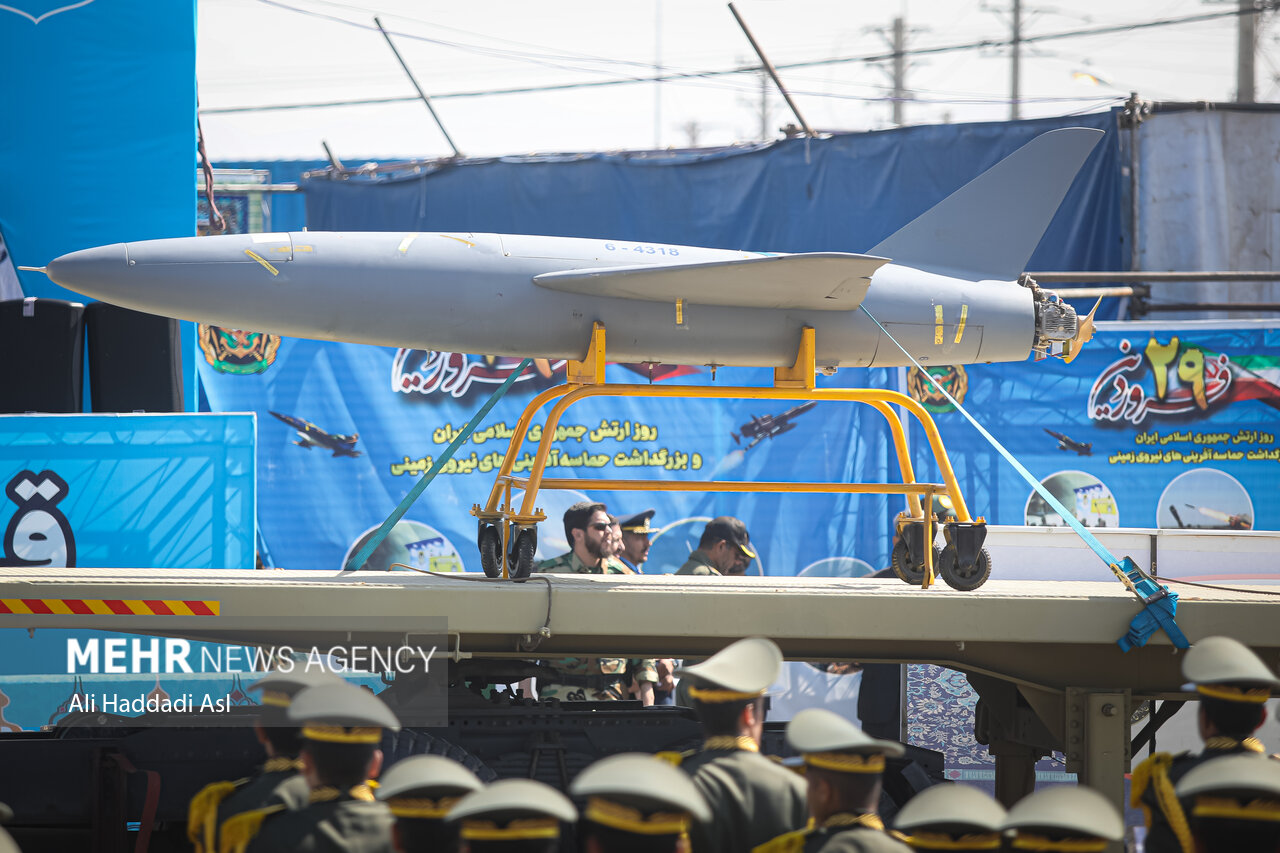
The silence is deliberate. Acknowledging Ukrainian counter-drone expertise in the Gulf would require acknowledging that the Shahed — Iran’s signature asymmetric weapon, the centerpiece of its cost-imposition doctrine — has a documented, exportable counter. It would also require acknowledging the Russia-Iran-Ukraine triangulation: that Russian Shaheds tested against Ukrainian defenses created the data set now being used to defeat Iranian Shaheds in the Gulf. Tehran’s information warfare apparatus, which INSS documented as producing 37,000 AI-generated content items reaching 145 million views with 72% distributed through TikTok, has found it more useful to ignore the Ukrainian dimension entirely.
The absence is the tell. Iran’s propagandists will engage with claims they believe they can rebut. Their silence on Ukrainian involvement suggests Tehran has concluded that amplifying the narrative would be more damaging than ignoring it — that drawing attention to 201 Ukrainian specialists in the Gulf, to Sky Map at Prince Sultan, to the acoustic sensor doctrine, would undermine the Shahed’s psychological deterrent value more than any rebuttal could restore.
FAQ
How many Ukrainian defense personnel are currently in the Gulf?
Zelensky confirmed 201 anti-drone specialists deployed across Saudi Arabia, the UAE, and Qatar as of March 18, 2026. The figure covers counter-drone experts specifically and does not include diplomatic, technical advisory, or intelligence liaison personnel whose numbers have not been disclosed publicly. The ten-year agreement structure suggests the deployed presence will expand substantially as contracts are executed through 2036.
Has Ukraine exported counter-drone systems to any country outside the Gulf?
The US Army’s purchase of 13,000 Merops interceptor drones — completed within approximately eight days of the Iran-Gulf conflict starting — represents the largest single foreign procurement of Ukraine-tested counter-drone systems. Merops was developed with backing from Eric Schmidt and battle-tested in Ukraine before the Gulf deployment. Several NATO members have also expressed interest in Ukrainian counter-drone technology, though no comparable agreements have been publicly announced at the scale of the Gulf Drone Agreement.
What is the Brave1 accelerator and why does it matter for Gulf procurement?
Brave1 is Ukraine’s military innovation accelerator, established to compress the development-to-deployment cycle for defense technology from years to weeks. Sky Fortress, the company behind Sky Map, was incubated through Brave1. The accelerator model matters for Gulf procurement because it produces systems calibrated against live threats on compressed timelines — a direct contrast with the US FMS process, where procurement cycles routinely exceed five years between requirement and fielding.
Could Iran target Ukrainian personnel in the Gulf as an escalation?
Targeting Ukrainian specialists in the Gulf would require Iran to formally identify Ukraine as a participant in the conflict — opening a second diplomatic front and potentially triggering Ukrainian intelligence-sharing on Iranian capabilities beyond counter-drone operations. It would also publicly validate the presence Iran has thus far declined to acknowledge. Iran’s current posture of silence is the less costly option: acknowledging and then striking Ukrainian personnel would confirm the Shahed has a documented counter, which carries its own deterrence cost.
Why is the April 23 naval drone intercept significant beyond Ukraine?
The 412th Nemesis Brigade’s interception of a Shahed from an unmanned surface vessel on April 23 is the first publicly documented kill of its kind — no Gulf state or US Navy unit has demonstrated an equivalent capability from an unmanned maritime platform. For Hormuz specifically, Iran’s IRGC Navy operates drone launch platforms from island positions and fast attack craft that are difficult to intercept using shore- or aircraft-based systems. A maritime interceptor platform changes that calculus and is directly transferable to Gulf partners under the Drone Agreement.