MUSCAT — Iran’s foreign minister is not negotiating a ceasefire. He is building the institutional architecture that would make Iran a permanent co-author of Gulf security — and he is doing it by visiting the same capitals, in the same sequence, that Saudi Arabia used to construct its own exclusionary coalitions a decade ago. Seyed Abbas Araghchi’s April 26–27 tour through Oman, with parallel calls to Riyadh and Doha and a flight to Moscow, is the most consequential Iranian diplomatic initiative since the war began on February 28 — not because it will produce a deal, but because it forces Saudi Arabia into a structural trap. Endorse the framework and Iran becomes a co-equal partner in Gulf security. Reject it and Riyadh becomes the obstacle to a regional peace path that Oman, Qatar, and Pakistan have already signaled willingness to discuss. The playbook is familiar. Saudi Arabia wrote it.
Why Did Araghchi Start in Oman?
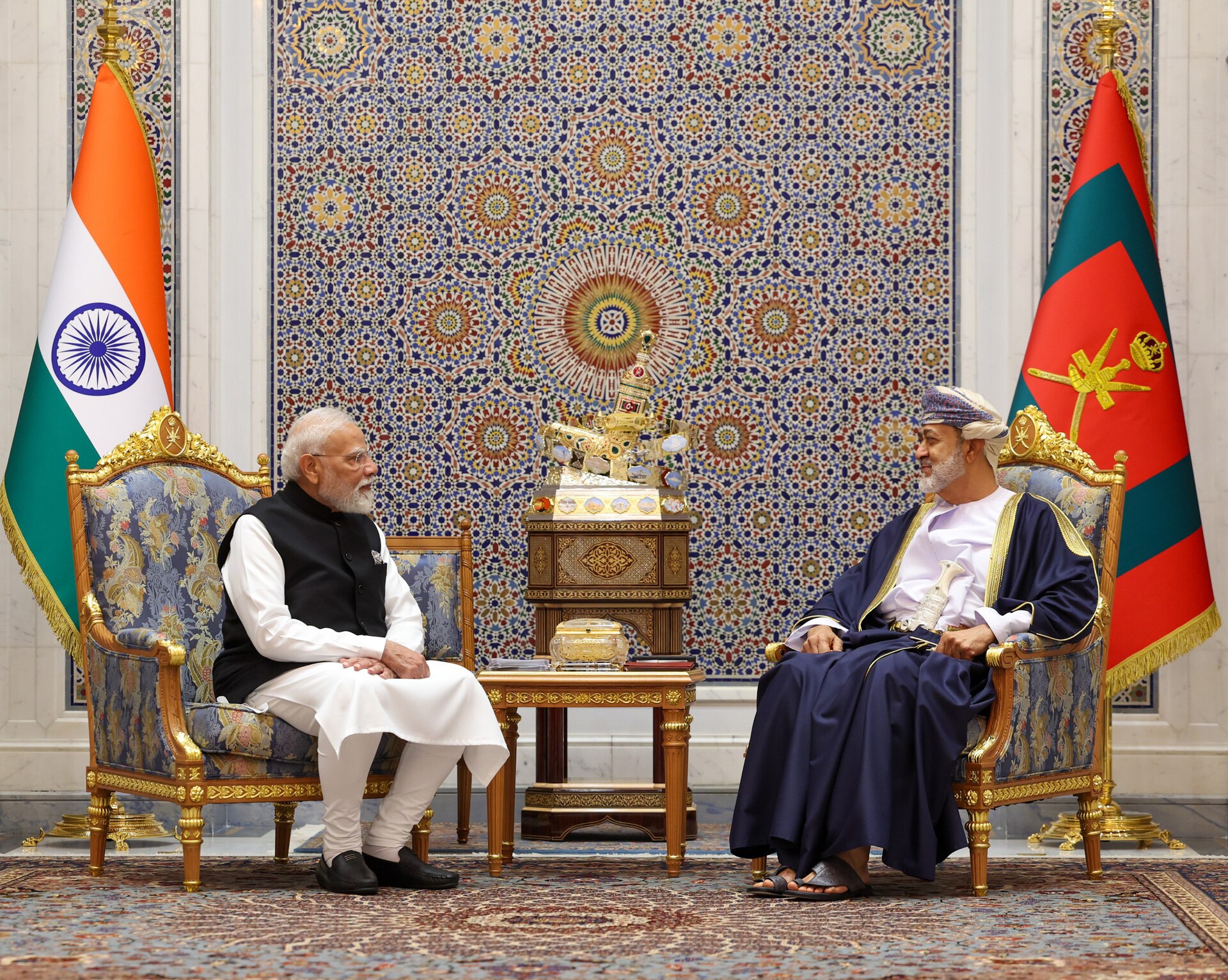
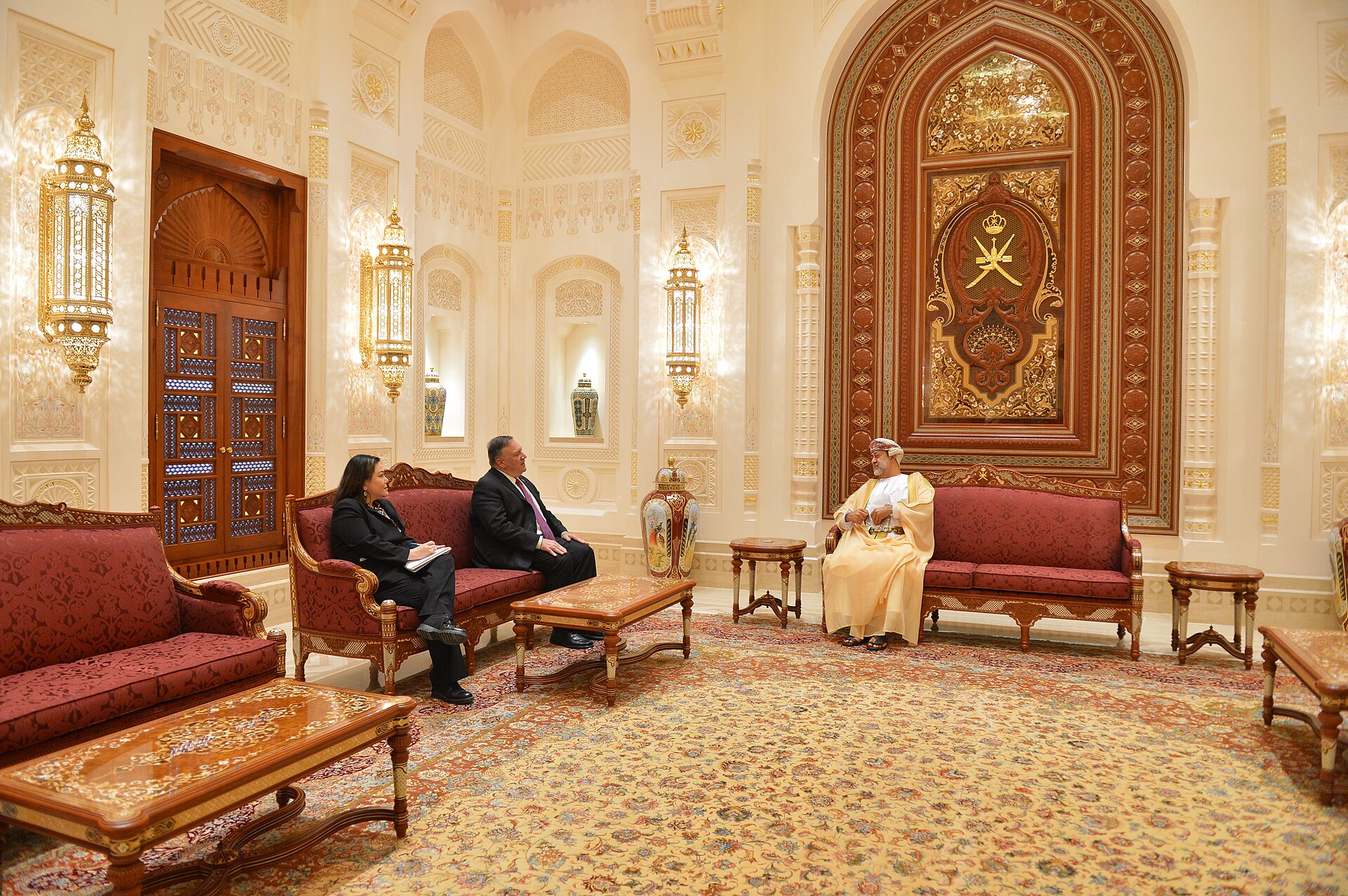
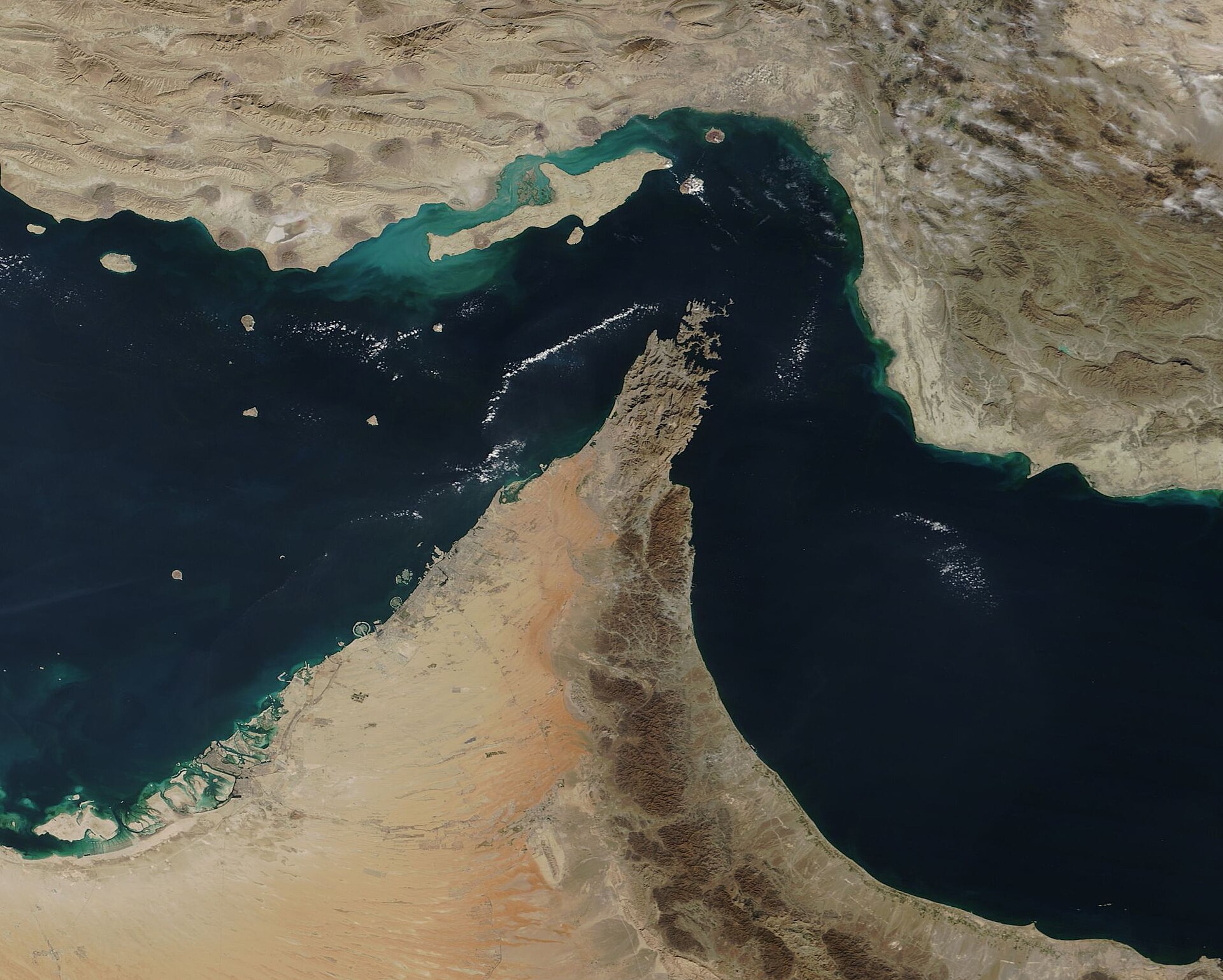
Araghchi began in Oman because Sultan Haitham controls the strait’s southern shore and maintains the only Gulf diplomatic channel simultaneously open to Washington and Tehran. By securing a head-of-state meeting in Muscat first, Iran established a geographic and institutional anchor for its security framework before Saudi Arabia was asked to respond.
Araghchi arrived in Muscat on the evening of April 25 and met Sultan Haitham bin Tariq Al Said at Al Baraka Palace on April 26, according to The National. It was his first visit to any Gulf state since the war began 58 days earlier. The choice of Oman was not diplomatic courtesy. It was structural engineering.
Oman facilitated eight rounds of secret US-Iran talks between 2012 and 2013 — negotiations led by William Burns and Jake Sullivan that remained classified throughout and produced the foundation for the JCPOA. Sultan Qaboos, and now Sultan Haitham, have maintained Oman’s position as the only Gulf state with functional diplomatic channels to both Washington and Tehran simultaneously. No other GCC capital can make that claim.
By anchoring his Gulf tour in Muscat, Araghchi accomplished three things before calling anyone else:
- He established a littoral-state anchor. Oman sits on the southern shore of the Strait of Hormuz. Any security framework governing the strait requires Omani participation — not as a favor, but as geography.
- He activated the back-channel precedent. Sultan Haitham “reiterated commitment to facilitating diplomatic solutions, emphasising the need to prioritise dialogue to mitigate the impact of crises on people across the region,” according to Gulf News. The language was anodyne. The signal was not: Oman is open for business.
- He created a fait accompli for Riyadh. By the time Araghchi called Saudi FM Prince Faisal bin Farhan on April 26–27, he could say Oman was already engaged. The framework had a Gulf anchor before Saudi Arabia was asked to respond.
This matters because Sultan Haitham’s decision to receive Araghchi in person — rather than routing the conversation through deputies — elevated the discussion from exploratory contact to head-of-state engagement. Araghchi’s agenda, as reported by CGTN citing Iran’s MFA readout, covered “safety and security of navigation in the Strait of Hormuz, the security of the Persian Gulf and the Sea of Oman region, economic cooperation among regional countries, and developments related to the negotiations.” That is the agenda of a regional institution, not a ceasefire discussion.
The Middle East briefing 3,000+ readers start their day with.
One email. Every weekday morning. Free.
The Anatomy of Iran’s “Endogenous Security” Pitch
Araghchi’s language in Muscat was precise. He told Sultan Haitham directly: “The experience of the 40-day imposed war against Iran showed that the U.S. military presence in regional countries only causes insecurity and division,” according to PressTV and US News. He followed with an explicit institutional demand: “It is expected that all countries adopt a constructive and responsible approach to shape endogenous collective security mechanisms free from American intervention,” per WANA News Agency.
The phrase “endogenous collective security mechanisms” is not casual. It describes an institution — a standing arrangement among littoral states that would govern Hormuz navigation, set transit rules, and adjudicate disputes without US participation. Iran has proposed versions of this architecture before (Rouhani’s HOPE initiative in 2019, Raisi’s regional-dialogue proposals in 2021–2022), but never from a position where it physically controlled one side of the strait while proposing to co-manage the other.
The International Crisis Group documented this strategy in its Crisis Monitor #2 on April 21: “Tehran’s strategy has been to convert the ceasefire into acknowledgement of its prerogatives, rather than merely a means of getting breathing space.” When Iran briefly reopened Hormuz in mid-April, the ICG noted, it did not accept the principle of free navigation. It presented “managed passage subject to Iranian routing, inspection and authorisation.” The reopening was a demonstration of authority, not a concession.
Iran’s 10-point ceasefire plan, confirmed by CNN on April 8, embeds this logic in Point 7: transit through Hormuz would occur “under coordination of the Armed Forces of Iran.” That is the IRGC veto rendered as treaty language. Araghchi’s “endogenous security” framework is Point 7 wearing a multilateral suit.
How Does Iran’s Framework Invert Saudi Arabia’s Own Playbook?
Iran’s “endogenous Gulf security” proposal uses the same institutional grammar as Saudi Arabia’s 2015 Islamic Military Counter Terrorism Coalition: a multilateral body that excludes a designated adversary by design. Where the IMCTC locked Iran out of a Saudi-led forum, Araghchi’s framework locks the United States out of a Gulf-led one. Riyadh invented this tool. Tehran is now pointing it at Washington.
On December 15, 2015, Saudi Arabia launched the Islamic Military Counter Terrorism Coalition — 43 member states, a joint operations center in Riyadh, and Pakistan’s General Raheel Sharif as its first commander (named January 6, 2017). The coalition was explicitly designed to establish Saudi multilateral leadership on security matters. Its most consequential feature was not who it included but who it excluded: Iran, Iraq, and Syria. Every Shia-majority government was structurally locked out.
The IMCTC was not a military alliance in any operational sense. It never conducted joint operations at scale. Its purpose was institutional: to create a multilateral body that Saudi Arabia chaired, that excluded Iran by design, and that could speak with the collective authority of 43 Muslim-majority states. Any Iranian objection to the coalition’s activities could be met with the argument that 43 nations had endorsed them. The exclusion was the point.
Araghchi’s “endogenous Gulf security” pitch inverts this logic with surgical precision. Where the IMCTC excluded Iran from a Saudi-led institution, Iran now proposes an institution that excludes the United States from a Gulf-led framework. Where Saudi Arabia used multilateral consensus to isolate Tehran, Tehran now uses multilateral consensus to isolate Washington. The structural grammar is identical. The subject and object have switched.
This is why Saudi Arabia’s response to Araghchi’s calls has been neither endorsement nor rejection. Prince Faisal received the call. He has not endorsed the framework, according to Xinhua and Arab News. Qatar’s FM Sheikh Mohammed bin Abdulrahman was slightly more forthcoming, “highlighting the importance of regional states’ constructive role in managing crises” and “calling for continuation of consultations and diplomatic coordination,” per Gulf Times. Neither response is a no. Neither is a yes. Both are holding patterns from governments that recognize the structural trap because they have deployed it themselves.
The Deliberate Sequencing: Pakistan to Oman to Moscow
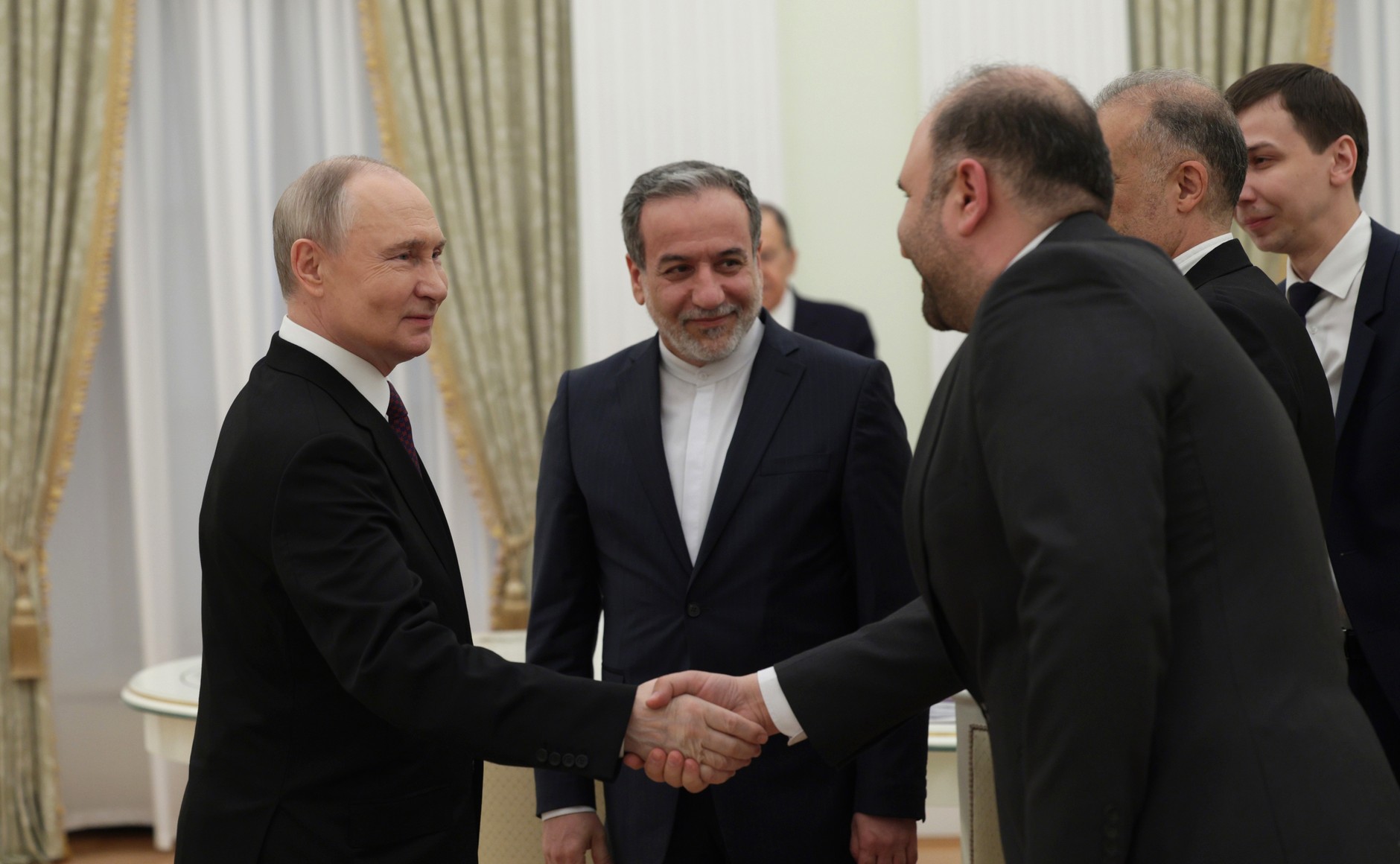
Araghchi’s tour follows a sequence that reveals its architecture. He visited Pakistan on April 24–25, sharing a “workable framework to permanently end the war” with Islamabad before any Gulf state heard the pitch, according to PressTV and GlobalSecurity.org. He then flew to Oman on April 25–26 for the in-person meeting with Sultan Haitham. He called Saudi and Qatari foreign ministers on April 26–27. He confirmed he would travel to Moscow on April 27 to meet Putin, per Sputnik and Al Jazeera.
The sequence is Pakistan → Oman (first Gulf state, in person) → Saudi Arabia and Qatar (phone) → Russia (in person). Each stop serves a distinct function:
- Pakistan provides the enforcement anchor. As Saudi Arabia’s Quartet diplomacy has demonstrated, Pakistan is the only state with simultaneous security relationships with Iran, Saudi Arabia, and the United States. Islamabad hosted the direct Vance-Ghalibaf talks. It has served as Iran’s protecting power in the US since 1992. Testing the framework with Pakistan first ensures it survives contact with the one state that would have to enforce it.
- Oman provides the littoral anchor. No Hormuz framework works without the state controlling the strait’s southern shore.
- Saudi Arabia and Qatar are called, not visited. The asymmetry is deliberate. Araghchi is informing them that a framework exists and has already been discussed with Pakistan and Oman. He is not asking for their input on its design.
- Russia provides the great-power endorsement. Moscow’s backing converts a regional proposal into one with Security Council weight — the same structural logic Iran used when it insisted on the P5+1 format for JCPOA negotiations rather than bilateral talks with Washington.
The JCPOA precedent is the skeleton key. In 2015, Iran used the P5+1 multilateral format to prevent the United States from dictating terms bilaterally. A multilateral container diffused American coercive leverage because Washington could not pressure Tehran without also pressuring its negotiating partners. Araghchi’s Gulf framework uses the same structural logic: embed Iran inside a regional institution that cannot function without Iranian participation, making unilateral American pressure structurally impossible.
Why Can’t Saudi Arabia Simply Reject the Framework?
Saudi Arabia cannot flatly reject Iran’s proposal because Oman, Qatar, and Pakistan have already engaged with it — making Riyadh the obstacle to Gulf peace if it refuses. Rejection also forfeits the only multilateral seat available to Saudi Arabia while bilateral US-Iran talks proceed without it. The trap works because the IMCTC established the precedent Iran is now using.
The trap has five walls.
First, rejection makes Saudi Arabia the obstacle to Gulf peace. If Oman, Qatar, and Pakistan have all engaged with Iran’s proposal — even cautiously — and Saudi Arabia flatly rejects it, Riyadh becomes the state blocking a regional solution. Iranian state media is already positioning for this framing. PressTV’s headline on April 26 read: “Iran ramps up regional diplomacy as embattled Trump looks for off-ramp.” The narrative is set: Iran is the diplomatically proactive actor. Whoever refuses engagement is the obstacle.
Second, the framework offers Saudi Arabia something it actually wants. Carnegie Endowment analysts noted in April 2026 that Gulf states seek “a more proactive approach to building their deterrence via capabilities rather than alliances” — accelerated indigenous defense industrialization and diversification beyond the American umbrella. Iran’s “endogenous security” pitch, stripped of its anti-American packaging, promises exactly this: Gulf states making security decisions “that cannot occur without substantive political involvement of the Gulf states themselves,” as Carnegie put it. Saudi Arabia bears the war’s highest cost and has no seat at any US-Iran negotiating table. A regional framework — even one co-authored with Tehran — at least guarantees Riyadh a chair.
Third, the bilateral alternative is worse. Gulf security analysts quoted by YourNews warned that “what alarms Gulf Arab states most is that while Iranian missiles, drones and proxies have repeatedly attacked their region, negotiations are increasingly framed almost exclusively around Hormuz” — marginalizing Gulf concerns about missile programs, drone arsenals, and proxy networks. A US-Iran bilateral Hormuz deal could reopen the strait while leaving Saudi Arabia exposed to everything else. At least Iran’s multilateral framework, by its nature, would require addressing the full spectrum of Gulf security concerns.
Fourth, Pezeshkian’s blockade precondition creates a timing trap. Iran’s president told Pakistan PM Sharif on April 25 that Iran will not negotiate “under siege” or “under pressure, threats, blockade,” per Al Jazeera. This means the Gulf-framework offer and the refusal to talk to the US are simultaneous — not contradictory. Iran is saying: we will not talk to Washington under duress, but we will build a regional institution with our neighbors right now. Saudi Arabia cannot wait for US-Iran talks to produce a framework because Iran has precluded those talks while the blockade persists.
Fifth, the historical memory is too precise. Saudi officials understand what Araghchi is doing because the IMCTC used the same structural grammar. You cannot credibly argue that multilateral institutional exclusion is illegitimate when you invented the modern Gulf version of it eleven years ago. The objection to Iran’s framework cannot be principled — it can only be positional.
The Antalya Quartet as Saudi Counter-Architecture
Saudi Arabia recognized this trap before Araghchi’s plane landed in Muscat. The Antalya Quartet — Saudi Arabia, Egypt, Turkey, and Pakistan — held its third ministerial at the Antalya Diplomacy Forum on April 18, according to Saudi Gazette and Daily K2. The meeting preceded Araghchi’s tour by eight days.
The Quartet is Saudi Arabia’s attempt to establish a regional mediation track that it co-chairs before Iran can claim co-authorship of the Gulf security framework. The composition is instructive: Turkey provides NATO credibility and Ankara’s own Iran channel. Egypt provides Arab League weight and the largest Arab military. Pakistan provides the enforcement mechanism and Iran relationship. Saudi Arabia provides the strategic direction and financing.
The Quartet excludes Iran by design — the same structural logic as the IMCTC, updated for wartime conditions. Its existence means that when Araghchi calls Prince Faisal to pitch “endogenous Gulf security,” Riyadh can point to an already-functioning regional architecture that addresses the same concerns without Iranian co-authorship.
But the Quartet has a structural vulnerability that Iran’s framework exploits. Prince Faisal’s urgent four-capital calling spree demonstrated that the Quartet functions as a consultation mechanism, not an institution. It has no standing secretariat, no permanent staff, and no treaty basis. Iran’s proposal, by contrast, describes a permanent framework — “endogenous collective security mechanisms” in the plural, suggesting standing institutions rather than ad hoc ministerials. The Quartet is a coalition. Iran is pitching an architecture.
Carnegie’s own assessment, published in April 2026, noted the paradox: “Despite Riyadh’s anger with Washington, Saudi Arabia most likely will still seek stronger military ties with the United States.” The Quartet cannot replace the US security guarantee. But neither can it prevent Iran from building a parallel framework that makes the American presence look like the obstacle to regional self-determination rather than its guarantor.
What Does the Toll Demand Reveal About Iran’s Endgame?
The toll demand, confirmed by Fortune on April 26, reveals that Iran’s framework is designed to be self-financing. A standing institution with transit-toll revenue has a permanent budget and staff, transforming the “endogenous security” proposal from a diplomatic concept into a funded bureaucracy with institutional interests in its own survival — one that would be structurally difficult to dissolve once operational.
Fortune reported on April 26 that Tehran is seeking to persuade Oman to support a mechanism to collect tolls from vessels passing through the Strait of Hormuz. This detail, absent from Iran’s official MFA readout of the Araghchi–Sultan Haitham meeting, reveals the commercial engine inside the security framework.
The toll demand is not new. Iran’s April ceasefire text, reported by the Associated Press, stated that “Iran and Oman will be able to charge ships.” Trump himself floated the concept as a “joint venture” in his April 8 ABC interview. But Araghchi’s pitch to Sultan Haitham embeds the toll inside the “endogenous security” institution rather than presenting it as a bilateral Iran-Oman arrangement. The institution would collect the toll. Iran and Oman would be its primary beneficiaries as the littoral states controlling the strait’s northern and southern shores.
Oman’s transport minister, Al Maawali, previously stated that “no tolls can be imposed for crossing Hormuz” — a position grounded in UNCLOS Article 26, which prohibits charges on vessels exercising transit passage. James Kraska of the Naval War College has stated there is “no legal basis under international law” for such tolls. But the legal objection assumes a rules-based framework that the war has already shattered. Both sides of Hormuz are now blocked, with only 45 transits since the April 8 ceasefire — 3.6% of the pre-war baseline of approximately 130 ships per day. When transit itself requires permission from armed actors on both sides of the strait, the question of whether a toll is “legal” under UNCLOS becomes academic.
Iran’s 12-article Hormuz sovereignty law, advancing through parliament with sponsors Ahmadi and Rezayi Kouchi, would codify this reality domestically. Ghalibaf formally conditioned Hormuz reopening on US blockade removal on April 22. The toll, the sovereignty law, and the framework are three faces of the same institutional project.
The Authorization Ceiling Problem Has Not Disappeared
Every element of Araghchi’s tour — the meetings, the calls, the language, the sequencing — assumes that Iran’s foreign minister speaks for Iran. He may not.
Pezeshkian publicly accused IRGC commanders Vahidi and Abdollahi of wrecking the Islamabad ceasefire talks in April. The SNSC deputy secretary Zolghadr’s report on April 14, describing “deviation from delegation’s mandate,” triggered the walkout that ended direct US-Iran talks. Under Article 110 of Iran’s constitution, the president has zero authority over the IRGC. The Supreme Leader does — but Khamenei has been absent from public view for over 50 days.
The ICG’s April 21 assessment laid out three scenarios: an MOU agreement, a ceasefire extension, or collapse and resumption of hostilities. All three depend on the authorization ceiling — the gap between what Iran’s diplomatic establishment can promise and what the IRGC will permit. Araghchi cannot open the Strait of Hormuz even if he wants to because the IRGC Navy, operating under “full authority to manage the Strait” as declared on April 5 and April 10, takes its orders from a command structure that Araghchi does not control.
This creates a specific problem for the “endogenous security” framework. Any institution co-authored by Iran requires Iran to have a unified negotiating position. If Araghchi commits to transit rules and the IRGC Navy enforces different ones — as happened when Araghchi declared Hormuz “completely open” on April 17 only for the IRGC to reverse him within hours — the framework collapses on first contact with reality. The IRGC seized the MSC Francesca (11,660 TEU) and the Epaminodas (6,690 TEU) on April 22, four days after Araghchi’s “completely open” declaration.
Gulf states understand this. It is one reason Prince Faisal received Araghchi’s call without endorsing the framework. Engaging with the proposal costs nothing. Endorsing it — and staking Saudi credibility on Iranian institutional coherence — costs everything if the IRGC operates outside the framework’s rules the next morning.
Trump’s Withdrawal From Shuttle Diplomacy
Araghchi’s tour gained structural significance from an American absence. Trump canceled the planned Witkoff-Kushner trip to Pakistan on April 25 and told Fox News on April 26: “By the time they get there, it’s hours and hours and hours of flying… We have all the cards. If they want to talk, they can come to us, or they can call us.”
The cancellation did not create Araghchi’s tour — the sequencing was planned before Trump’s decision became public. But it removed the American counter-narrative. While Araghchi was meeting Sultan Haitham in person, briefing Gulf foreign ministers by phone, and flying to Moscow, the United States was offering phone calls. Iranian state media exploited the contrast immediately. PressTV framed Iran as presenting a “workable framework” while the US “sinks deeper into internal turmoil.”
CFR’s Max Boot proposed an “open for open” formula — both sides end their blockades simultaneously — as a potential exit from the stalemate. But Boot’s proposal is bilateral by design. It addresses the Hormuz mechanism without engaging the multilateral architecture Araghchi is constructing. An “open for open” deal would reopen the strait without creating the regional institution Iran wants — which is precisely why Iran’s framework includes the toll mechanism, the sovereignty law, and the multilateral structure alongside any reopening. That gap between Western demands and Iranian architecture is the subject of the April 26 Trump-Starmer Hormuz call analysis, which examines how the two leaders’ agreement on unconditional reopening ran directly into the counter-architecture Araghchi was constructing the same day.
The Carnegie assessment captured the paradox: Gulf states want security autonomy from Washington but cannot achieve it without Washington’s military umbrella. Iran’s framework exploits exactly this tension. It offers the autonomy Gulf states claim to want while requiring them to accept Iranian co-authorship of the security architecture — a trade that the GCC’s European diplomatic campaign was designed to avoid by hardening Western terms before any Gulf-Iran institutional negotiation could begin.
The double blockade — US controlling Arabian Sea entry since April 13, IRGC controlling Gulf of Oman exit since March 4, with vessels needing both approvals — means that any framework resolving Hormuz must involve both Washington and Tehran. Iran’s “endogenous” proposal claims to exclude the US, but the blockade physics make American participation a precondition for any practical outcome. The framework is designed to fail on its own terms — and to blame Washington for the failure.
Frequently Asked Questions
Has any Gulf state formally endorsed Iran’s regional security framework?
No Gulf state has formally endorsed Araghchi’s proposal as of April 27, 2026. Oman received him at head-of-state level but issued only standard language about “prioritising dialogue.” Qatar called for “continuation of consultations.” Saudi Arabia received Araghchi’s phone call without public comment on the framework’s substance. The pattern — engagement without endorsement — allows Gulf states to keep the channel open while avoiding the institutional commitment Iran seeks. Kuwait, Bahrain, and the UAE have not been publicly contacted.
How does Iran’s proposal differ from previous Gulf security initiatives like the Hormuz Peace Endeavour?
Rouhani’s 2019 HOPE initiative was proposed from a position of economic pressure but military quiescence — Iran controlled Hormuz in theory but had not demonstrated physical control. Araghchi’s 2026 framework follows nearly two months of active war in which Iran has physically managed Hormuz transit, seized commercial vessels, and established routing authority through IRGC naval operations. The earlier proposals were aspirational. This one describes an institution that would formalize arrangements Iran has already imposed by force — including, per Fortune, a toll-collection mechanism that HOPE never included.
Could the United Nations Security Council impose a Hormuz navigation framework over Iran’s objections?
Russia and China would almost certainly veto any UNSC resolution imposing freedom of navigation at Hormuz against Iranian preferences. Russia’s hosting of Araghchi on April 27 — the final stop on his tour — signals Moscow’s investment in the multilateral-framework approach. China brokered the only successful laden transit through Hormuz since the ceasefire (the Al Daayen LNG carrier on April 6). Both permanent members have structural reasons to support an institutional alternative to unilateral US naval enforcement, making the Security Council route effectively closed.
What is the legal status of the 12-article Hormuz sovereignty law advancing through Iran’s parliament?
The bill, sponsored by parliamentarians Ahmadi and Rezayi Kouchi, would codify IRGC routing authority and transit-management prerogatives as domestic Iranian law. If passed by the Majlis and approved by the Guardian Council, it would create a domestic legal framework that Iranian courts and institutions must enforce regardless of any diplomatic agreement Araghchi negotiates. This is the legislative backstop to the authorization ceiling problem: even if the foreign ministry commits to a multilateral framework, domestic law could mandate IRGC operational control over the strait, giving hardliners a legal instrument to override diplomatic commitments.
Why did Araghchi call Saudi Arabia by phone rather than visiting in person?
The asymmetry between Araghchi’s in-person visit to Oman and phone calls to Saudi Arabia and Qatar serves a diplomatic signaling function. An in-person visit to Riyadh would require Saudi Arabia to either receive him — implicitly elevating Iran’s diplomatic standing during wartime — or refuse, creating a visible diplomatic rupture. The phone call format allows both sides to engage without the optics of a wartime state visit. It also preserves Araghchi’s narrative control: he can describe the call’s substance to other capitals without Saudi Arabia’s public framing competing with his own.