ROME — The fifth round of US-Iran nuclear negotiations concluded at the Omani Embassy in Rome’s Camilluccia neighbourhood on May 23, 2026, after approximately two and a half hours, with Omani Foreign Minister Badr al-Busaidi — serving as mediator — reporting “some but not conclusive progress” toward an agreement whose terms remain contested across three competing draft frameworks.
US Special Envoy Steve Witkoff and State Department policy planning director Michael Anton sat opposite Iranian Foreign Minister Abbas Araghchi in a session that was the first face-to-face exchange since the Islamabad collapse on April 11, when the previous round disintegrated within 21 hours. In the 42 days between rounds, the operational reality around the negotiations shifted in ways no subsequent meeting can undo: Iran’s Persian Gulf Security Authority toll regime went live on May 18, a formal Hormuz jurisdiction map was published on May 22, and two million Hajj pilgrims are now inside Saudi Arabia — the Day of Arafah is 72 hours away.
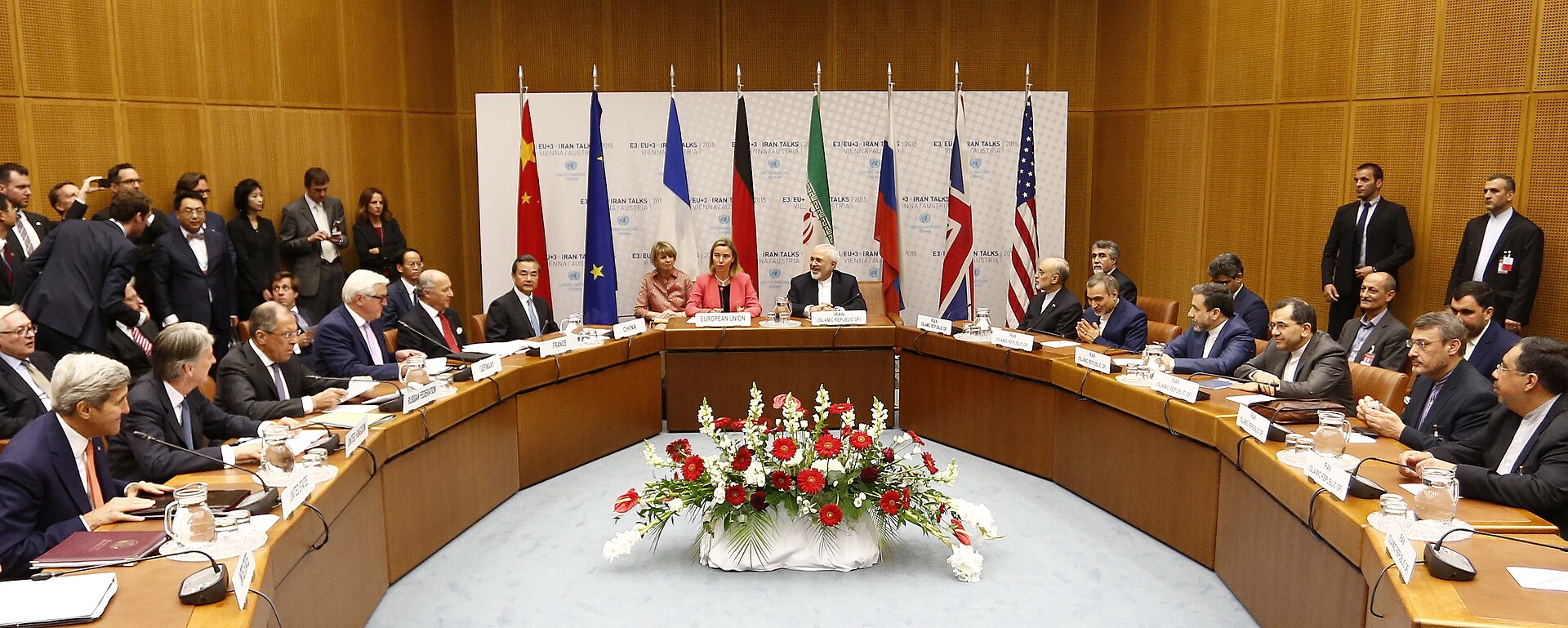
Table of Contents
Two and a Half Hours in Camilluccia
The Rome round brought the US, Iran, and Oman to the same table for talks that concluded with Araghchi characterising the negotiations as “too complex to be resolved in just two or three meetings,” according to the Times of Israel. Witkoff departed Rome to catch a flight shortly after the session ended. Al-Busaidi, in his official statement, said he hoped to “clarify the remaining issues in the coming days, to allow us to proceed towards the common goal of reaching a sustainable and honourable agreement,” per PBS NewsHour.
Araghchi arrived in Rome having posted on X that “figuring out the path to a deal is not rocket science” — provided the objective is preventing Iran from acquiring nuclear weapons rather than dismantling its enrichment infrastructure. “The enrichment of uranium is not a negotiable issue for us,” he told reporters before the session, per RFERL and PBS NewsHour. The distinction between security guarantees and dismantlement has been Araghchi’s framing since at least the Islamabad round, and Rome did nothing to bridge it.
On the US side, Secretary of State Marco Rubio had offered a dual message in the 48 hours before Rome. At Homestead Air Force Base on May 21, he declared Iran’s Hormuz tolls “can’t happen” and warned they would make any agreement “unfeasible,” per The National and UPI. One day later, at a NATO session in Helsingborg, Rubio acknowledged “slight progress” while adding the sides were “not there yet,” per The National News. An unnamed US official told Axios the negotiations were “agonizing,” with drafts “going back and forth every day.”
Days before the round, Supreme Leader Ali Khamenei called US demands for full enrichment dismantlement “excessive and outrageous,” according to Iran International. Separately, Axios reported on May 22 that Khamenei had issued a directive requiring Iran’s stockpile of 60%-enriched highly enriched uranium to remain inside the country — a position that conflicts directly with at least two of the three MOU frameworks currently in circulation.
The Middle East briefing 3,000+ readers start their day with.
One email. Every weekday morning. Free.
Why Is Round Five Different from Every Previous Round?
Each of the first four rounds — Muscat on February 6, Geneva on February 17, Muscat again on February 26, and Islamabad on April 11 — negotiated against the possibility that Iran might impose a formal toll regime on the Strait of Hormuz. Rome is the first round to negotiate against the fact that it already has.
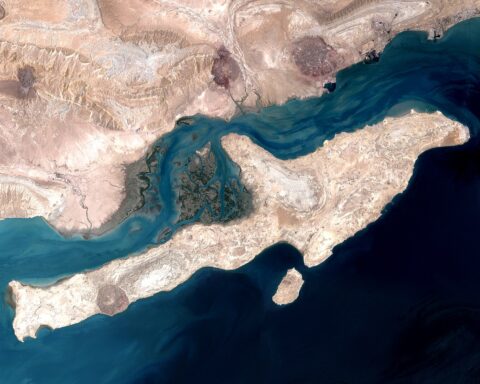
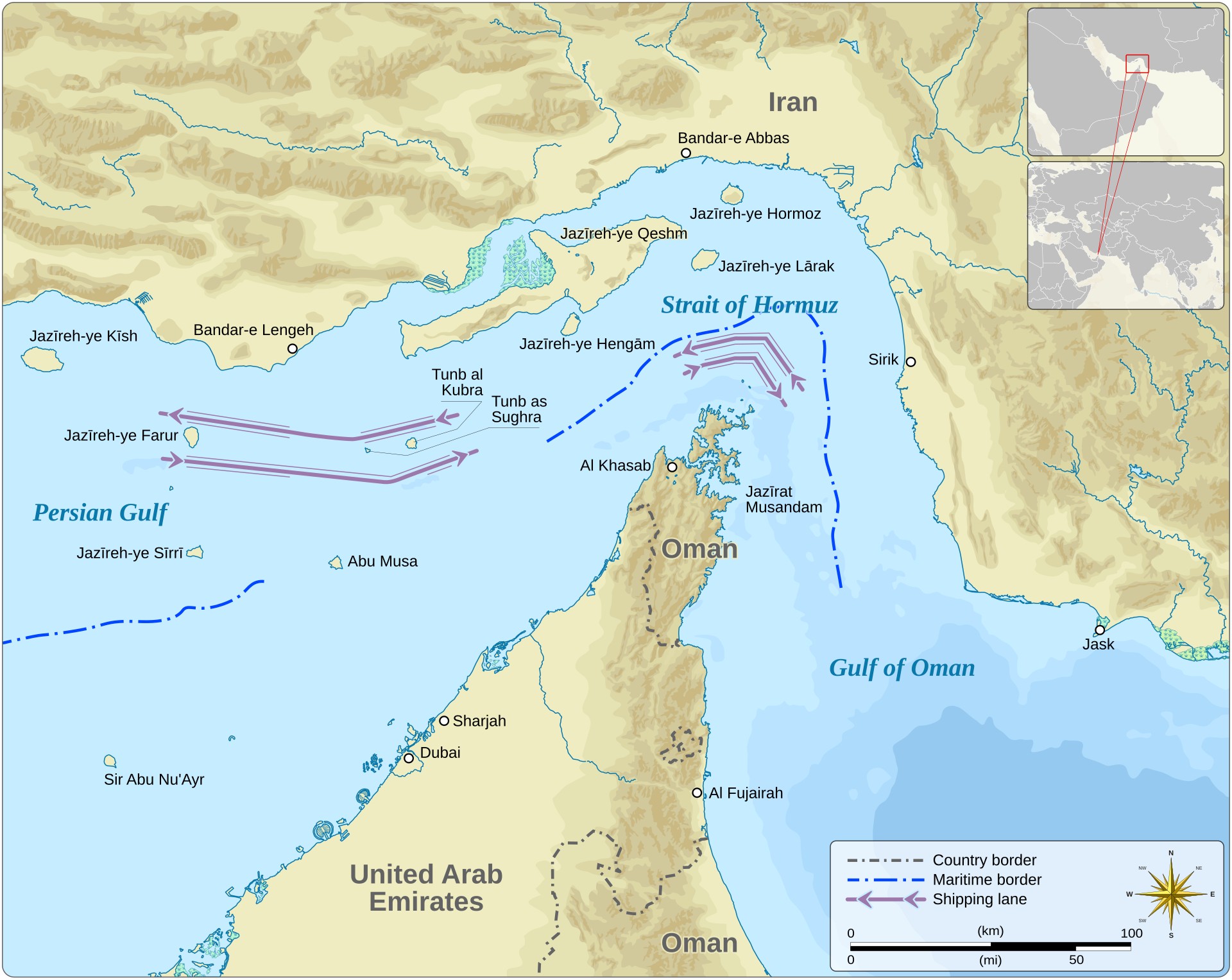
The Persian Gulf Security Authority became operational on May 18, five days before the Rome session. The PGSA imposes fees of up to $2 million per VLCC transit, payable in yuan or Bitcoin to IRGC-linked wallets, according to Windward AI and The Week India. Russia, China, India, Iraq, and Pakistan are exempt — a list that maps onto the UN Security Council’s veto-holders and the talks’ active mediators. One day before Rome, Iran published its second formal Hormuz jurisdiction map in 18 days, extending its claimed zone from Kuh-e Mubarak to Fujairah on the eastern boundary and from Qeshm to Umm al-Quwain on the western side — both anchor points falling on UAE sovereign territory. Rubio had declared the tolls “unfeasible” two days before the round, establishing a US red line that the PGSA’s continued operation violates daily.
In Rounds 1 through 4, a deal could have pre-empted the toll regime. After May 18, a deal must dismantle one. The Arms Control Association assessed in April 2026 that “US negotiators were ill-prepared for serious nuclear talks with Iran.” Whatever the validity of that judgment at the time, the preparation gap is now compounded by a structural one: every day without agreement is a day the PGSA operates, collects, and consolidates its administrative architecture on the water.
The Toll That Collects Itself
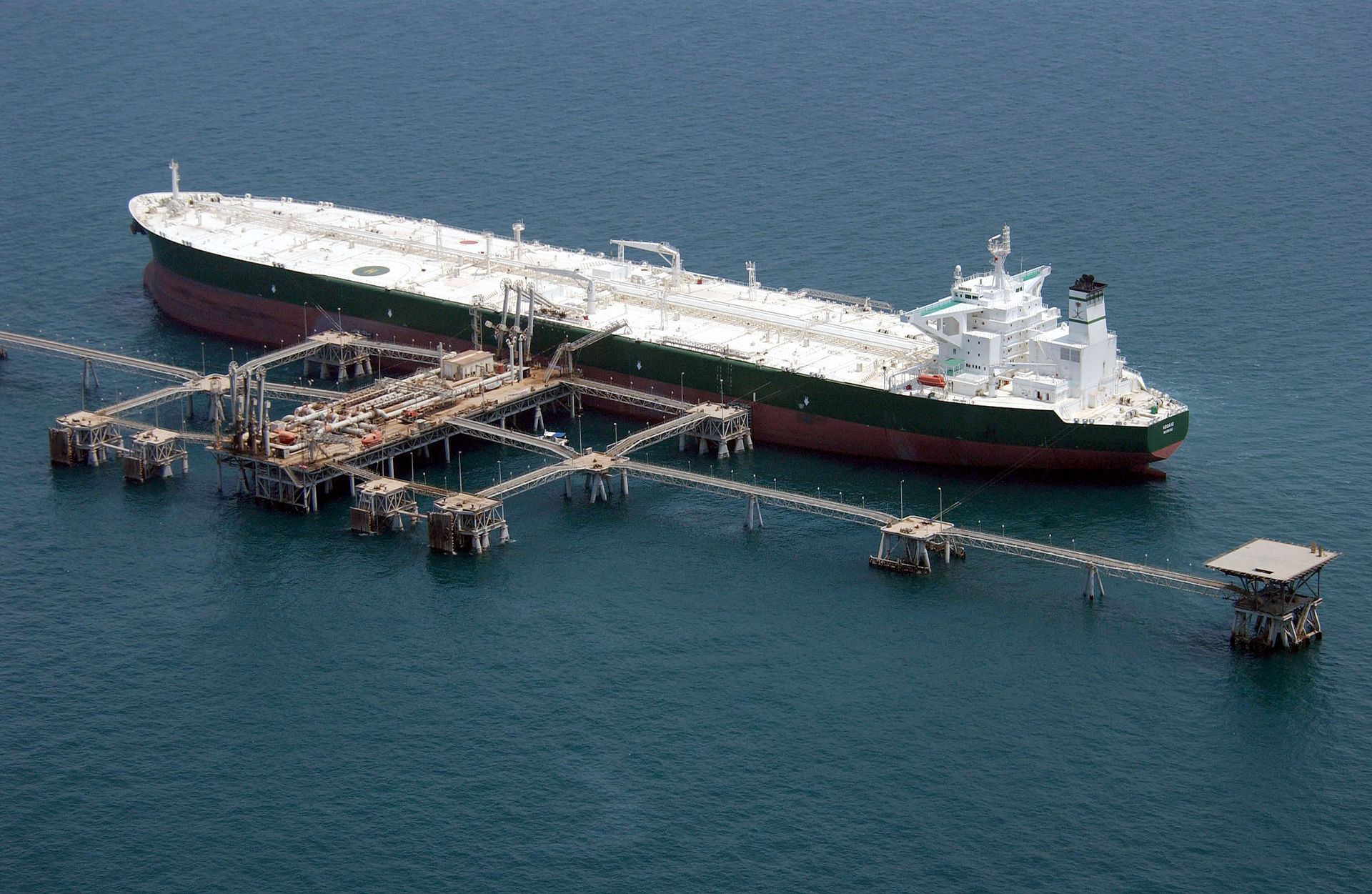
Windward AI data reported by Safety4Sea shows approximately two Hormuz transits per day as of late May, compared with 95 per day before the crisis — roughly 2% of normal flow. At Kharg Island, Iran’s primary crude export terminal, no confirmed crude departures have occurred since approximately May 7. Twenty-seven tankers were queued at Kharg anchorage as of May 21, including 18 VLCCs, representing a 93% increase from May 14, according to Windward AI.
The characterisation from Windward AI is direct: the Strait of Hormuz has “structurally shifted from a transit corridor with disrupted flow to a tanker holding queue with administrative governance layered on top.” On May 22, only two verified transits occurred against an IRGC claim of 35 — a discrepancy that suggests the toll regime’s revenue claims exceed its actual throughput, but also that the administrative framework exists regardless of volume.
The exemption list functions as a geopolitical map of the negotiating table itself. Russia and China — the two states that vetoed the UN Security Council’s Hormuz resolution on April 7 — transit free of charge. Pakistan, the current mediator state, is exempt. India and China, the two largest Asian crude buyers, pass through without paying. Iranian officials have framed the PGSA as the right of Iran “as a coastal nation of the waterway” under “a fundamental change of circumstances,” per UPI and The National. The Iran-Oman Hormuz governance mechanism, reported by Bloomberg on May 21, is being negotiated in parallel — with Oman, the Rome mediator, simultaneously co-drafting the toll system it is ostensibly mediating to resolve.
Does Saudi Arabia Have a Diplomatic Lever Left?
Saudi Arabia was not represented in Rome. It has not been represented in any of the five rounds. The kingdom has no bilateral channel to Iran outside the Omani-mediated framework, according to Chatham House — and Oman, as the mediating party, is simultaneously negotiating a permanent Hormuz toll system with Tehran.
The Carnegie Endowment assessed in April that the “GCC has no seat at the table” in US-Iran nuclear negotiations. The Atlantic Council’s Brian Alter described Gulf states as “largely sidelined.” The Arab Center in Washington concluded that “neither outcome lies within [Saudi Arabia’s] power to determine.” Each of these assessments was made before the PGSA became operational. Since May 18, the question is no longer whether Saudi Arabia can influence the deal terms — it is whether Saudi Arabia can influence the environment in which the terms are being negotiated. On the cost of that exclusion for Riyadh’s fiscal position, see Trump Can Wait on Iran — Saudi Arabia Cannot, which examines why Washington’s deceleration is a fiscal event for the kingdom even if it is not a diplomatic one.
The fragmentation extends across the Gulf. Qatar co-sponsored the five-nation GCC protest to the International Maritime Organisation against the PGSA while simultaneously dispatching a delegation to Tehran on May 22 “in coordination with the United States,” per Axios — one day before the Rome round. The Carnegie Endowment concluded separately that the “GCC [is] unlikely to unify on Iran,” a judgment the parallel signalling from Doha appears to confirm.
Foreign Minister Prince Faisal bin Farhan publicly endorsed Trump’s cancellation of the May 19 strike on May 20 — five days after Trump softened the US position on highly enriched uranium during a Hannity interview. Every diplomatic tool available to Riyadh routes through Washington: the Prince Sultan Air Base arrangement, the $142 billion arms deal signed May 13, the Major Non-NATO Ally designation. None of these instruments operates at the speed of the PGSA, which adds another day of operational precedent with each 24-hour cycle that passes without agreement.
The broader question of what Saudi Arabia actually gains from the deal it is lobbying for — a deal with enrichment terms Riyadh does not possess and a toll architecture Riyadh cannot remove — is the structural bind that five rounds of talks have not changed.
Netanyahu’s May 24 call to Trump raised the Lebanon clause as a separate operative obstacle — a blocking mechanism with no implementation architecture and no Saudi lever. Unlike the enrichment file, which carries a 30-day Track 2 window, the Lebanon clause has no designated future forum in any of the three MOU frameworks in circulation.
Hajj as Tehran’s Calendar Shield
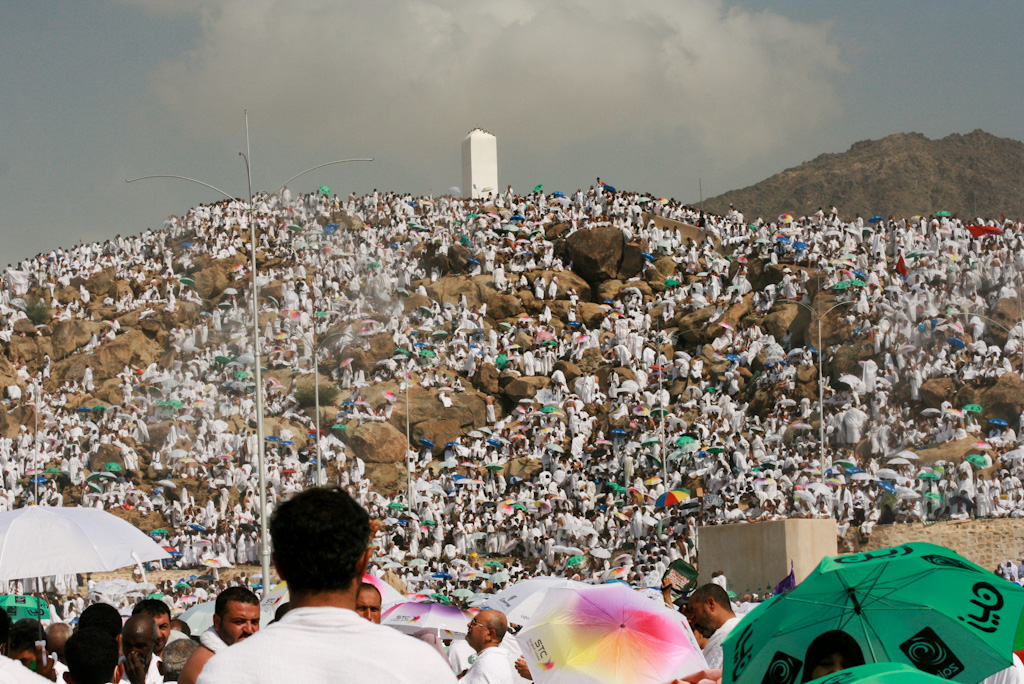
Approximately two million pilgrims are currently inside Saudi Arabia, with more than 1.5 million arriving from abroad, according to Saudi authorities reported by NewSX. The Day of Arafah falls on May 26 — 72 hours from the conclusion of the Rome round. Saudi Arabia explicitly urged President Trump to delay military action until after the Hajj period, per The New Arab.
The Hajj was once framed as a constraint on Iranian escalation — the assumption being that Tehran would avoid provocation during Islam’s most sacred pilgrimage. That logic has inverted. Any military strike against Iran during Hajj, or in the days immediately preceding Arafah, is politically unthinkable for both Riyadh and Washington. The pilgrims in Mecca and Mina are not hostages in any conventional sense, but their presence creates what analysts have described as a de facto no-escalation window — running from the conclusion of the Rome round through Eid al-Adha, a span of approximately 96 hours. During that window, the PGSA continues to operate, the tanker queue at Kharg continues to grow, and the jurisdiction map published the day before Rome continues to stand as Iran’s legal position.
The wartime Hajj airlift required extraordinary logistical coordination to bring pilgrims into the kingdom. Their safe departure will demand the same. Tehran does not need to threaten the Hajj to benefit from it. The sacred calendar and the toll clock run simultaneously, and both favour the party that gains from inaction.
What Comes After Rome
Al-Busaidi’s formulation — hoping to “clarify the remaining issues in the coming days” — left the timeline deliberately vague. Islamabad is under consideration as the venue for a sixth round after Hajj concludes, according to Shafaqna Pakistan, though neither the US nor Iran has confirmed this. Pakistan Foreign Minister Asim Munir was in Tehran before the Rome talks, received by Iranian Interior Minister Eskandar Momeni in what Axios described as an attempt to “seal” an agreement.
The substantive gap remains defined by the enrichment moratorium question. Iran has offered five years. The Axios MOU framework proposes 12 to 15 years. The original US negotiating position was 20 years. Khamenei’s directive that 60%-enriched HEU must remain in Iran contradicts at least two of the three documents in circulation. Araghchi’s insistence that enrichment is “not a negotiable issue” and Rubio’s declaration that tolls “can’t happen” leave both sides defending red lines that are mutually exclusive — yet neither side has walked away from the table.
Aramco CEO Amin Nasser told CNBC on May 11 that the oil market would “normalize only in 2027” if Hormuz does not reopen within “a few weeks from today” — a statement that placed a mid-June threshold on the commercial consequences of continued closure. ADNOC CEO Sultan Al Jaber offered a more pessimistic timeline, projecting normalisation no earlier than Q1-Q2 2027 even under immediate resolution, per the same Windward AI analysis. That mid-June threshold is now less than three weeks away. Between the Hajj buffer, the post-Hajj scheduling gap, and the time required to convene in Islamabad, a sixth round before mid-June is arithmetically improbable. The two-stage sequencing this creates — 60-day toll suspension followed by nuclear talks that Iran has already declared deadlocked — imposes a compounding wait on Saudi Arabia’s oil recovery and fiscal position that the kingdom has no mechanism to shorten. Adding a further dimension to this trap, the US forces stationed on Saudi bases depart only upon Iranian nuclear compliance — a withdrawal trigger Riyadh cannot influence and Tehran has publicly pre-rejected.
What has changed between Muscat and Rome is not the complexity of the nuclear question but the environment around it. In February, the waterway was contested. By May, it is administered. The 106 days from Round 1 to Round 5 did not move the parties closer to agreement, but they moved the Strait of Hormuz from a shipping lane under threat to one under management — and the entity managing it is not at the negotiating table as a party to be restrained, but as the counterparty setting terms.
Frequently Asked Questions
Why was the Rome round held at an Omani Embassy rather than a neutral venue?
Oman has served as the primary intermediary between the US and Iran since the earliest stages of the current crisis, a role rooted in Muscat’s decades-long position as a back-channel between Tehran and Washington. The choice of the Omani Embassy in Rome — rather than Italian or Swiss diplomatic facilities — preserved the mediation framework established in the first three rounds while moving the physical location to European soil. Oman hosted Rounds 1 and 3 in Muscat directly. The embassy arrangement also meant al-Busaidi controlled the venue’s access, communications, and protocol — maintaining Omani centrality in the process while accommodating the logistical preferences of the US and Iranian delegations for a European location.
What are the three MOU frameworks currently in circulation?
The first is the Axios-reported 14-point framework, which includes a 12-to-15-year enrichment moratorium, a cap at 3.67% enrichment levels, and requirements for HEU removal from Iranian territory. The second is the Al-Arabiya 8-point “final draft” published on May 22, which included provisions for a ceasefire, freedom of navigation, and a 7-day window for outstanding issues but contained no nuclear-specific clauses — an omission that drew immediate scrutiny from arms control analysts. The third is the Munir letter-of-intent, developed during Pakistan’s mediation efforts, whose full terms have not been publicly disclosed. Khamenei’s HEU directive contradicts the first and likely the third; the second avoids the issue entirely.
How does Pakistan’s dual role affect the next round?
Pakistan is simultaneously a treaty-bound Saudi defence partner under the September 2025 Saudi Mutual Defence Agreement and an active mediator between the US and Iran. Islamabad hosted Round 4 on April 11 and is under consideration for Round 6. Pakistan is also PGSA toll-exempt, meaning it benefits commercially from the very regime the negotiations are ostensibly trying to dismantle. The SMDA obligates Pakistan to coordinate with Saudi Arabia on defence matters, yet Munir’s Tehran trips position Islamabad as a neutral broker between parties whose interests diverge from Riyadh’s. No party has publicly addressed the structural conflict of interest.
What happened to Iran’s Kharg Island crude exports?
Kharg Island, which handled approximately 90% of Iran’s crude exports before the crisis, has recorded no confirmed crude departures since approximately May 7, according to Windward AI satellite tracking. The 27 tankers queued at Kharg anchorage as of May 21 — 18 of them VLCCs with a standard capacity of approximately two million barrels each — represent a calculated stranded loading capacity of roughly 36 million barrels, based on vessel counts from Windward AI. The stoppage is commercially punishing for Iran but does not appear to have softened Tehran’s negotiating position. If anything, it has reinforced Iran’s incentive to make the PGSA toll system — rather than crude exports alone — a primary revenue mechanism and governance instrument for Strait access.
Could the US bypass the PGSA with a naval escort operation?
The historical precedent is Operation Earnest Will (1987-88), during which the US Navy escorted reflagged Kuwaiti tankers through Hormuz during the Iran-Iraq War. A NATO Maritime Freedom Construct was discussed at the Helsingborg session on May 21, but Rubio described the alliance as “not there yet” on operational readiness. The distinction between 1987 and 2026 is that the original Tanker War involved operational harassment — mines, speedboat attacks — without a formal jurisdictional claim. The PGSA is a 12-article domestic statute backed by a published map with specific coordinates, a fee schedule, and an exemption list that includes two UN Security Council veto-holding nations. A naval escort would confront a legal architecture claiming sovereign jurisdiction, not just patrol boats — a distinction that raises escalation risks and legal ambiguity well beyond the Earnest Will precedent.
‘Largely Negotiated’ — What That Phrase Costs Saudi Arabia examines the structural cost of that exclusion across the 123 enrichment asymmetry, PGSA deferral, and oil revenue trap. The gap between positions hardened further on May 23, when Rubio told reporters from New Delhi that a deal was possible “as soon as today,” while Araghchi declared Rubio’s “as soon as today” statement and the enrichment deadlock that emerged from Round 5 confirmed the core dispute remained entirely unresolved.