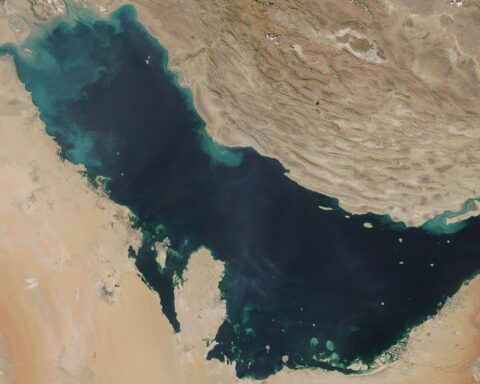
RIYADH — Iran allowed the first inbound commercial vessel through the Strait of Hormuz since the February 28 closure to dock at Umm Qasr, Iraq on June 1 — a 53,351-deadweight-ton Marshall Islands-flagged bulk carrier called the MV KSL XINYANG, carrying 29,720 tons of heavy equipment for Iraq’s oil infrastructure — while the IRGC’s Aerospace Force simultaneously struck Ali Al-Salem Air Base in Kuwait and warned that any further American aggression would draw a “completely different” response. The two events are not a contradiction. They are the compression of Iran’s entire leverage position into a single morning, arriving eight days before Saudi Arabia must pay a $21.89 billion Aramco dividend that its cash flow no longer covers.
Foreign Minister Abbas Araghchi told IRNA on the same day that “dialogue and an exchange of messages are ongoing” with Washington. The IRGC’s official statement, carried by CGTN, claimed it had destroyed predicted targets at the airbase from which CENTCOM launched strikes on a telecommunications tower on Sirik Island in Hormozgan Province. One arm of the Iranian state was talking about a deal. The other was hitting a US air base in a country that has invoked Article 51 at the Security Council. Both arms were advancing the same objective: demonstrating that Iran alone decides what moves through Hormuz, when, and for whom — and that every day of ambiguity costs Saudi Arabia money it cannot recover.
Table of Contents
- What Happened at Hormuz and Ali Al-Salem on June 1?
- The KSL XINYANG Is Proof of Control, Not Proof of Reopening
- Why Did the IRGC Strike Ali Al-Salem Hours After Allowing a Commercial Transit?
- The PGSA Collects Whether Iran Signs or Shoots
- How Does the Aramco June 9 Deadline Change Saudi Arabia’s Options?
- The Fiscal Trap at $91 Brent
- What Does the Sanmar Herald Tell Us About Iraq’s Exemption?
- Two Tracks, One Calendar
- Frequently Asked Questions
What Happened at Hormuz and Ali Al-Salem on June 1?
On June 1, 2026, Iran permitted the MV KSL XINYANG — the first commercial vessel to transit the Strait of Hormuz inbound since the February 28 closure — to dock at Iraq’s Umm Qasr port with 29,720 tons of cargo, while the IRGC struck Ali Al-Salem Air Base in Kuwait. Foreign Minister Araghchi simultaneously confirmed that diplomatic talks with Washington were “ongoing,” maintaining the MOU track on the same morning the Aerospace Force issued its most aggressive escalation warning since the conflict began.
The sequence began when Iran shot down a US MQ-1 drone operating over international waters over the weekend of May 31–June 1. CENTCOM responded on June 1 with fighter aircraft strikes on Iranian air defenses, a drone ground control station, and two one-way attack drones near Goruk — a port city in Sirik County, Hormozgan Province — and on Qeshm Island. This was the third post-ceasefire CENTCOM strike since the April 7 ceasefire, which has been nominally in force since its indefinite extension on April 25. CENTCOM’s statement described the targets as assets “that posed clear threats to ships transiting regional waters” — explicitly tying the strike to Hormuz navigation, not to the broader war.
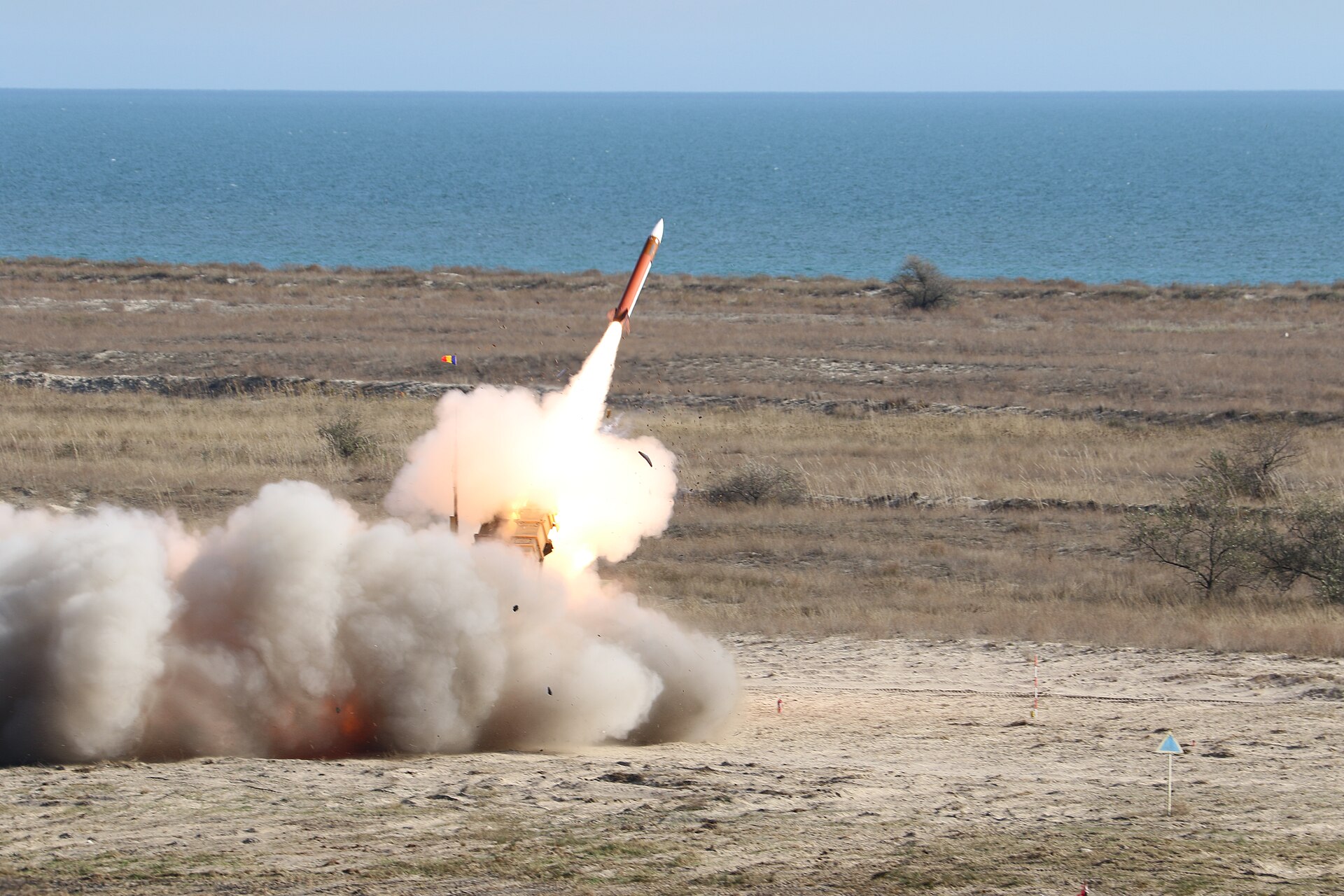
The IRGC’s response was immediate and specific. The Aerospace Force struck Ali Al-Salem Air Base in Kuwait, which it identified as the launch point for the Sirik operation. The official statement, carried by CGTN, left no ambiguity about the scope of the claim or the nature of the warning that followed it:
“Following the recent attack by the invading US army on a telecommunications tower on Sirik Island in Hormozgan Province, the Aerospace Force fighters of the IRGC targeted the airbase from which the attack originated, and the predicted targets were destroyed. This response is a serious warning so that the enemy knows that aggression will not go unanswered, and if repeated, our response will be more decisive.”
The HOS Daily BriefThe Middle East briefing 3,000+ readers start their day with.
One email. Every weekday morning. Free.
IRGC Aerospace Force, official statement via CGTN, June 1, 2026
Iran International and The National both described the “completely different” warning as the most aggressive escalation language from Tehran since the conflict began in February. Kuwait activated air defenses across the country. Civil aviation experienced disruptions and Kuwait International Airport imposed holding patterns. This was the same Kuwait that had assembled 135 co-sponsors for UN Security Council Resolution 2817 and signed a $1.02 billion NASAMS contract with Raytheon just five days earlier — legal architecture and defense procurement that offered no protection against the Aerospace Force’s decision to treat Kuwaiti territory as a theater of operations. Two days later, after drones struck Terminal 1 and killed a civilian, Kuwait translated that frustration into diplomatic action: Kuwait declared two Iranian diplomats persona non grata, shuttered Iran’s cultural mission, and gave both envoys 24 hours to leave the country.
While the IRGC was striking Kuwait, the KSL XINYANG was docking at Umm Qasr Northern Port. The Director General of Iraq’s General Company for Ports described the arrival as “a vital reassuring message regarding the stability of international maritime navigation,” confirming “the continuous flow of containerized goods into Iraqi waters despite the heavy geopolitical security challenges.” Iraqi News described the cargo as “highly critical heavy equipment and raw materials earmarked for Iraq’s oil and gas infrastructure alongside standard commercial consumer goods.” The celebration in Basra and the air-raid sirens in Kuwait were separated by 80 kilometers and zero minutes. Hours later, the IRGC struck the MSC Sariska V with two Noor cruise missiles near Umm Qasr — the first cruise missile attack on a commercial vessel inside the upper Gulf, testing the exemption corridor in a way no legal text could address.
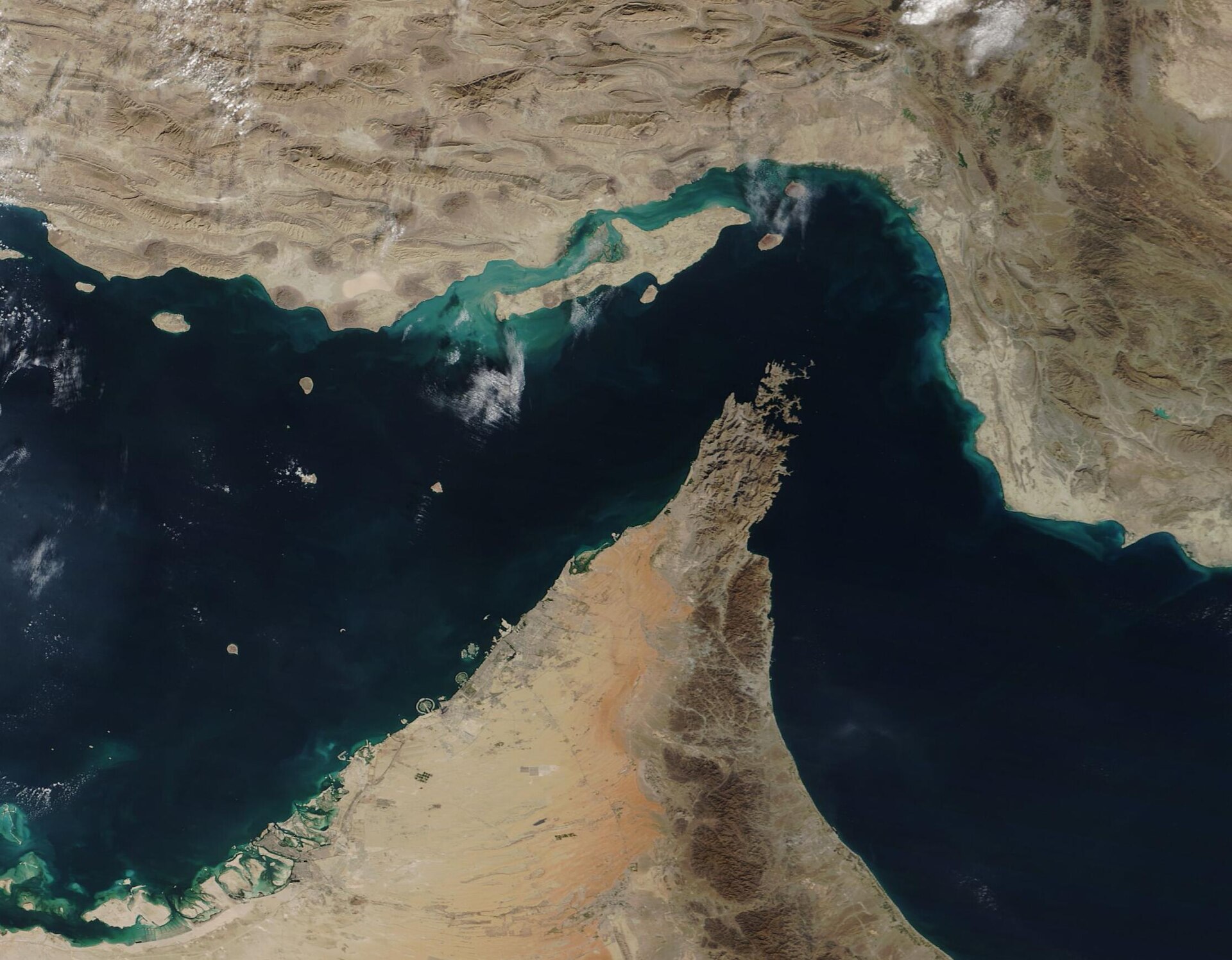
The KSL XINYANG Is Proof of Control, Not Proof of Reopening
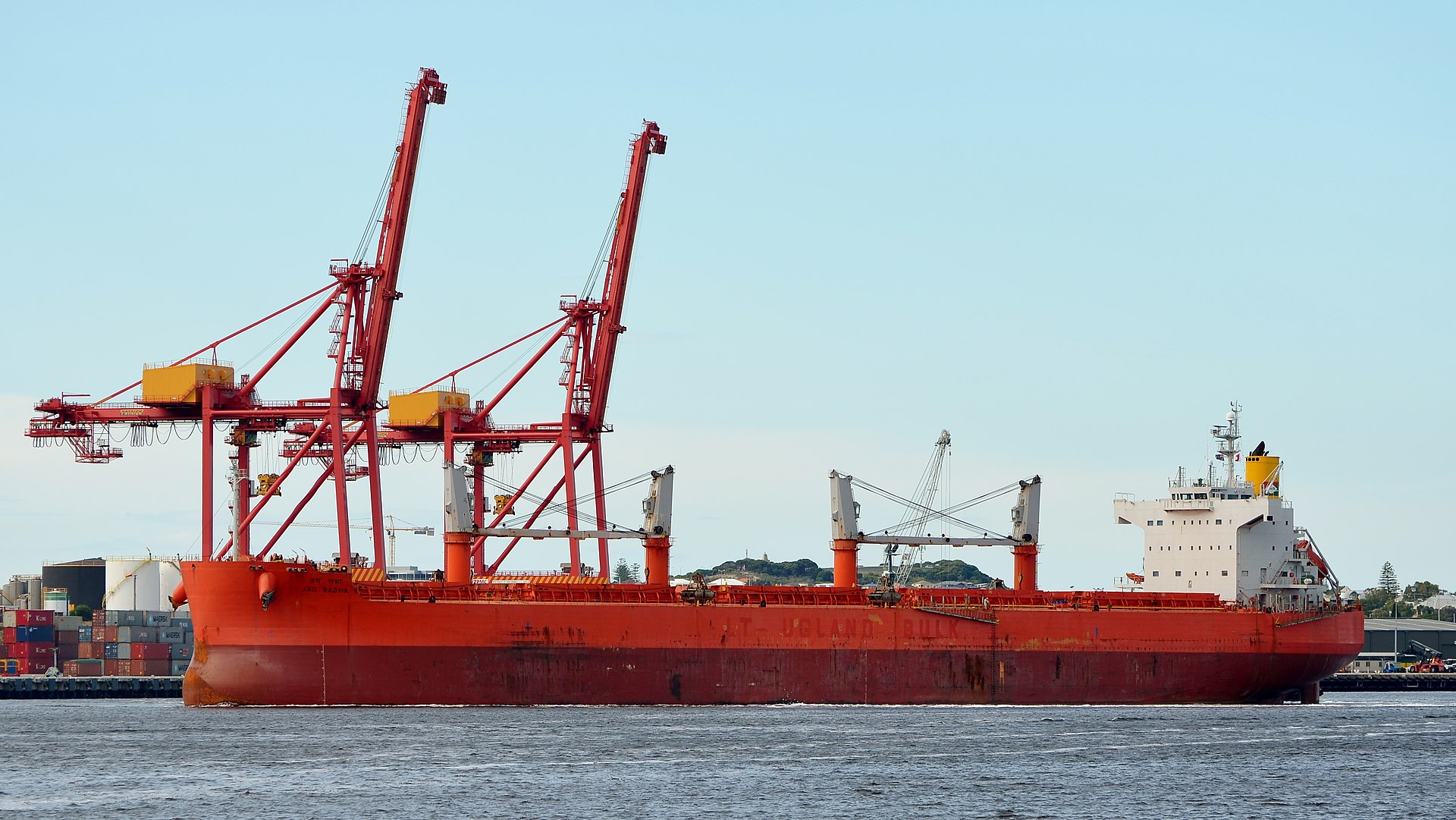
The KSL XINYANG is a Marshall Islands-flagged Supramax bulk carrier managed and beneficially owned by Nanjing King Ship Management Co. Ltd of Nanjing, China. Its designation as “Chinese” in regional coverage refers to management and beneficial ownership, not flag state — a distinction that matters because the vessel transited under Iraq’s bilateral exemption from the Persian Gulf Strait Authority, not under any Chinese arrangement with Tehran. Iraq holds one of three bilateral exemptions alongside India and Pakistan within the three-tier access architecture Iran established when the PGSA went operationally live on May 18. Exempt nations’ cargo transits freely; Chinese-linked gray fleet vessels pay up to $2 million per transit in yuan or Bitcoin to IRGC-linked wallets; Western-compliant vessels face enforcement exposure that the OFAC SDN designation of May 28 has now made a compliance binary.
The KSL XINYANG, despite its Chinese management, was carrying Iraqi-destined cargo — placing it in the exempt tier and sidestepping the SDN designation entirely. The US Treasury designated the PGSA under Executive Order 13224 on May 28, creating a sanctions trap for any entity paying tolls, but the exemption structure means Iraq-bound cargo never enters the toll system in the first place. Iran demonstrated that it can let a vessel through without any sanctions consequence to the transiting party, the receiving port, or the flag state — provided the destination is one Iran has chosen to exempt.
No competing outlet framed the transit accurately. Iraqi News covered it as proof of maritime stability. Al Jazeera mentioned it in its ceasefire-testing live coverage. Neither noted the structural point: one ship transiting under a bilateral carve-out is a demonstration of who controls access, not evidence that access has been restored.
As of May 29, gCaptain reported zero non-exempt commercial transits through Hormuz — a figure that the KSL XINYANG’s arrival did nothing to change. The Strait is not reopening; Iran is showing that it can open a door for one vessel, to one destination, on one morning, and close it again whenever the demonstration has served its purpose.
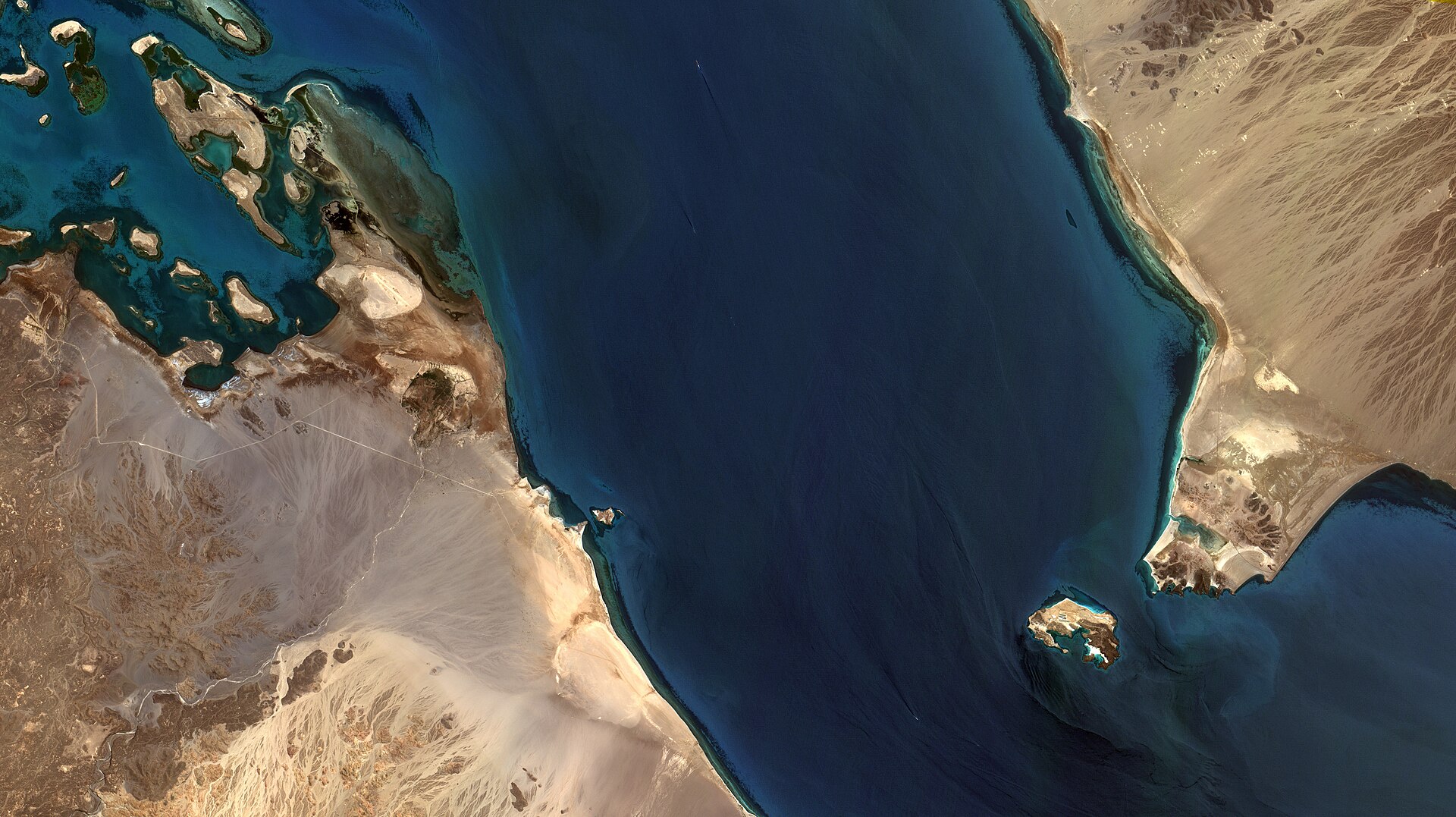
The distinction matters for Saudi Arabia more than for anyone else. Iran told the United States to leave Hormuz and invited only Oman to stay on May 29, when IRGC-affiliated Baqaei declared that the Strait “has nothing to do with the US.” The bilateral legal framework Iran is constructing with Oman — based on the 1974 Iran-Oman boundary treaty that places the inbound transit separation scheme lane in Omani territorial waters — would make the Strait a co-managed bilateral asset rather than an international waterway. Every vessel Iran permits through is not a step toward normalization but a line item in the demonstration that Iranian permission is required at all, and that Saudi Arabia is not among the nations to whom that permission has been extended.
Why Did the IRGC Strike Ali Al-Salem Hours After Allowing a Commercial Transit?
The IRGC struck Ali Al-Salem as retaliation for CENTCOM’s Sirik Island strikes, but the timing — simultaneous with the KSL XINYANG’s arrival at Umm Qasr — compresses two messages into one morning: Iran can wage war and manage commerce at the same time, through the same strait, under the same authority. The message to Gulf states and insurers is that Iran’s permission governs both violence and passage.
The operational logic is compression, not contradiction. The strike on Ali Al-Salem and the KSL XINYANG’s transit serve the same function: proving that Iran holds the access keys. The strike demonstrates that military escalation remains available and credible at any moment the IRGC chooses. The transit demonstrates that commercial access can be granted selectively to nations that cooperate with Tehran’s framework. Together, they communicate to every Gulf capital — and every insurance underwriter in London and Oslo — that both tracks operate at Iran’s discretion and on Iran’s calendar.
This is not new behavior, and the precedent is precise. In the summer of 2019, Iran seized the British-flagged Stena Impero while Foreign Minister Zarif simultaneously offered to ratify the Additional Protocol if Trump lifted sanctions. Maritime coercion and nuclear diplomacy ran in parallel for weeks, and the structural ancestor of June 1, 2026 was established seven years ago.
What has changed is the institutional infrastructure. The PGSA, which did not exist in 2019, now allows Iran to monetize the dual-track rather than merely weaponize it. The toll system collects revenue from the gray fleet while the selective transit system demonstrates benign intent to exempt nations. The Ali Al-Salem strike ensures that the threat underwriting the toll remains credible and current.
The IRGC’s reframing of the Sirik target as a “telecommunications tower” and “drone ground control station area” recharacterized what CENTCOM described as a military asset into dual-use infrastructure, loading the Ali Al-Salem retaliation with legal justification borrowed from the laws of armed conflict. Both characterizations may be accurate for the same site; what matters is that each side selected the description that legitimized its next move, and that the IRGC’s framing — carried by PressTV as “IRGC hits US air base behind attack on telecom tower in southern Iran” — positioned the Ali Al-Salem strike as proportionate self-defense rather than escalation.
The PGSA Collects Whether Iran Signs or Shoots
The Persian Gulf Strait Authority was founded on May 5, 2026, went operationally live on May 18, and was designated a Specially Designated National by OFAC on May 28 — a 23-day arc from creation to sanctions that reflects Washington’s recognition that the PGSA is not a temporary wartime toll booth but something more durable. Special Eurasia, in its June 1 analysis, described it as a mechanism that “transform[s] a wartime physical chokepoint into a permanent regulatory asset that challenges US leverage” using “a sanctions-resistant cryptocurrency toll regime and sophisticated information warfare.”
The three-tier access architecture operates as a sorting mechanism that monetizes every possible outcome. India, Iraq, and Pakistan hold bilateral exemptions — their cargo transits without tolls or enforcement, and each successful transit generates favorable coverage that reinforces the narrative of normalcy under Iranian management. Chinese-linked gray fleet vessels pay up to $2 million per transit, payable in yuan or Bitcoin to IRGC-linked wallets, creating a sanctions-resistant revenue stream that specifically targets Saudi crude while exempting India. Western-compliant vessels face a binary that the OFAC SDN designation sharpened but did not create: pay the toll and violate US sanctions, or avoid Hormuz entirely. Gray fleet operators already outside the US financial system face no additional compliance cost from the SDN designation.
The “Hormuz Safe” insurance platform extends the architecture into financial services. Operating on a Bitcoin-based system, it creates a self-contained maritime insurance ecosystem independent of Western protection and indemnity clubs — Gard, Skuld, and NorthStandard cancelled Gulf coverage on March 1, and the PGSA’s product fills the gap for operators willing to transact outside OFAC jurisdiction. Special Eurasia identifies a three-part information strategy behind the system: sovereign normalcy assertion, victimhood inversion that frames the OFAC SDN as “piracy,” and wedge messaging aimed at splitting exempt nations from the US sanctions architecture.
The economic logic is self-reinforcing, and it explains why the dual-track is an equilibrium rather than a contradiction. Each day the ambiguity persists, the PGSA collects toll revenue from the gray fleet while the MOU diplomatic track — between texts that describe two different deals — keeps Brent suppressed below the price that an outright closure would generate. Goldman Sachs projects $100 Brent if Hormuz fully closes; the MOU negotiation keeps alive the possibility that it won’t, anchoring the market near $91. Iran could collect more at $100 — but at $100 the international pressure to reopen the Strait and dismantle the PGSA would be correspondingly greater. The dual-track maximizes total Iranian leverage: enough war to collect tolls and demonstrate Hormuz control, enough diplomacy to suppress the price response that would mobilize a coalition to end both.
How Does the Aramco June 9 Deadline Change Saudi Arabia’s Options?
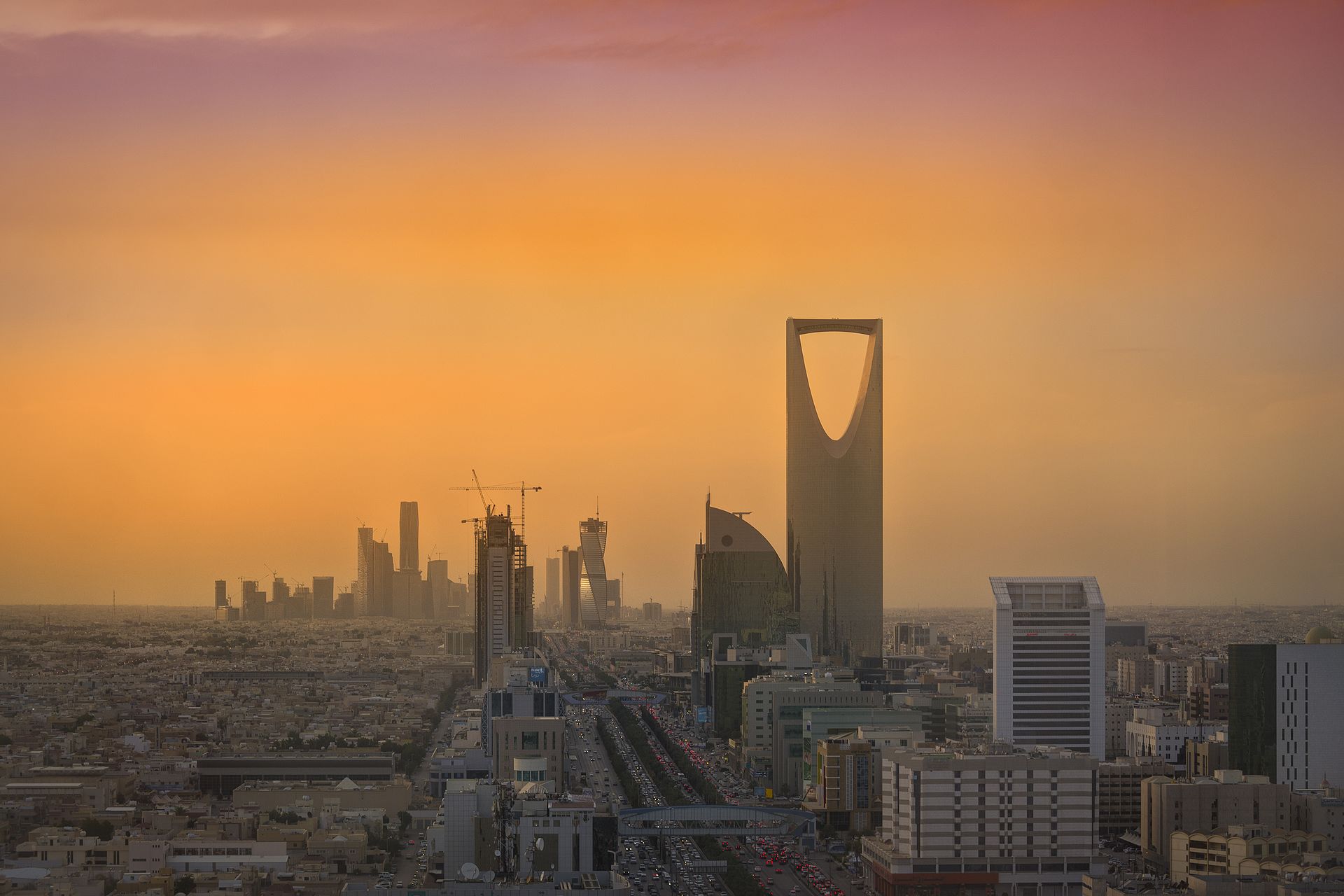
Aramco’s Q1 2026 dividend of $21.89 billion is payable June 9, with an ex-dividend date of June 2. Quarterly free cash flow of $18.6 billion covers only 85% of the dividend obligation — meaning the payment draws down reserves rather than distributing surplus. Performance-linked dividends have already been eliminated, and Fitch Ratings projects no restoration through 2028.
The dividend is not a line item in a quarterly filing. It is the load-bearing wall of Saudi Arabia’s fiscal architecture. The $87.6 billion annual base dividend funds the Public Investment Fund, which in turn funds Vision 2030 — the economic diversification program that justifies the Saudi state’s forward trajectory and underpins its sovereign credit rating. PIF liquid cash has already fallen to $15 billion, a six-year low representing 1.6% of assets under management. Aramco’s dividend is now larger than its cash flow, a structural inversion that means every quarterly payment erodes the buffer between the kingdom’s spending commitments and its capacity to fund them.
The June 9 payment arrives inside the dual-track window. Aramco CEO Amin Nasser publicly stated that if Hormuz does not reopen by mid-June 2026, supply disruption normalization will not arrive before 2027. That deadline is thirteen days away as of June 1. The MOU track, maintained by Araghchi’s “dialogue ongoing” statement, keeps the possibility of reopening alive — but the IRGC’s Ali Al-Salem strike and “completely different” warning simultaneously demonstrate that reopening requires Iranian consent that has not been given and may carry preconditions the United States cannot accept.
| Metric | Figure | Source |
|---|---|---|
| Aramco Q1 2026 dividend (payable June 9) | $21.89B | Sahm Capital |
| Q1 2026 free cash flow | $18.6B | Aramco Q1 filing |
| FCF-to-quarterly-dividend coverage | 0.85x | AGSI analysis |
| Annual base dividend commitment | $87.6B | AGSI |
| Performance-linked dividends (2026–2028) | $0 | Fitch Ratings |
| PIF liquid cash | $15B (6-year low) | PIF data |
| Nasser’s Hormuz reopening deadline | Mid-June 2026 | CNBC / The National |
| Brent crude (June 1) | ~$91.12/bbl | Bloomberg |
| PIF-inclusive fiscal breakeven | $108–111/bbl | Goldman Sachs / Bloomberg |
Saudi Arabia cannot accelerate the dividend to get ahead of the ambiguity, because the ex-dividend date is June 2 — tomorrow, as of the dual-track events. It cannot defer the payment without triggering a confidence crisis in the equity that PIF’s entire portfolio valuation depends on. And it cannot influence the dual-track’s resolution, because — as HOS has documented — every road to the Iran deal runs through Mojtaba Khamenei, who operates from an underground bunker and receives communications by motorcycle courier, and whose eight of ten conditions the current MOU draft already violates.
The Fiscal Trap at $91 Brent
Brent crude closed at approximately $91.12 on June 1, up roughly 1.5% on the session but still $17–20 below the PIF-inclusive fiscal breakeven of $108–111 per barrel that Goldman Sachs and Bloomberg Economics estimate Saudi Arabia requires. The gap is not closing. In May alone, Brent fell from $114.97 at the May 4 peak to the low $90s — a decline of roughly 19% in four weeks, the worst monthly performance since the pandemic crash of 2020. The price is moving in the wrong direction for Riyadh at the worst possible time.
The Q1 2026 budget deficit already reached SAR 125.7 billion ($33.5 billion), consuming 76% of the full-year SAR 165 billion deficit target in just 90 days. Saudi Arabia borrowed for a budget that no longer exists: the National Debt Management Center was approximately 90% funded before the Q1 overshoot, leaving residual capacity of roughly $5.8 billion to absorb what Goldman now projects as an $80–90 billion full-year deficit — six to six and a half percent of GDP. The budget was built for a world where Hormuz was open and oil traded above $100. That world ended on February 28.
The OPEC+ June output increase of 188,000 barrels per day, agreed May 3, assigned Saudi Arabia an additional 62,000 b/d. Saudi Arabia’s official quota now stands at 10.291 million barrels per day. Actual production is 7.76 million barrels per day. The 2.53-million-barrel-per-day gap between quota and production is a physical measure of what Hormuz denial costs. The East-West Crude Oil Pipeline to Yanbu has a capacity ceiling of approximately 4.5–5 million barrels per day, which means 2.5–3 million barrels per day of Saudi production remains Hormuz-dependent with no alternative export route at any price.
The dual-track compounds the fiscal damage in both directions. If Iran signs the MOU and Hormuz reopens, Goldman projects 800,000 barrels per day of Iranian supply returning within six months, pushing Brent toward Wood Mackenzie’s “Quick Peace” scenario of $80 by year-end and $65 through 2027. If Iran escalates and closes Hormuz entirely, Brent spikes above $100 — but Saudi Arabia’s Hormuz-dependent barrels remain stranded, and the kingdom collects nothing on the crude it cannot ship. The equilibrium near $91, where the threat is credible enough to constrain Saudi exports but the diplomatic possibility is alive enough to cap the price, is the worst of both worlds for Riyadh. It is precisely the point at which Iran’s leverage is maximized and Saudi Arabia’s fiscal pain is most acute relative to available response options.
What Does the Sanmar Herald Tell Us About Iraq’s Exemption?
The April 19 MT Sanmar Herald incident — in which the IRGC fired on a vessel despite it holding India’s bilateral transit clearance — demonstrates that PGSA exemptions are revocable access permissions, not guaranteed rights of passage. Iraq’s carve-out that protected the KSL XINYANG on June 1 operates under the same architecture and the same IRGC decision-making apparatus, and can be withdrawn at any time Tehran determines that withdrawal serves its interests.
On April 19, IRGC naval forces fired on the MT Sanmar Herald despite the vessel holding clearance under India’s bilateral transit exemption. The crew’s reported response — “You gave me clearance to go” — is the single sentence that best describes how the exemption architecture actually works in practice: clearance is not passage, it is permission that can be revoked mid-transit and mid-sentence. The Sanmar Herald survived, but the incident demonstrated to every shipowner and P&I club in the world that India’s exemption — the broadest of the three bilateral carve-outs, covering the Strait’s largest non-exempt cargo flow — did not reliably protect vessels from the IRGC’s enforcement apparatus.
The KSL XINYANG transited safely on June 1 under Iraq’s parallel carve-out, and Iraq’s General Company for Ports celebrated the arrival as proof of “the continuous flow of containerized goods.” The celebration is itself part of the architecture. Iran benefits when exempt nations publicize successful transits, because each celebration reinforces the narrative that the Strait is open for those who cooperate with Tehran’s framework and closed for those who don’t. The distinction between the Sanmar Herald (shot at with clearance) and the KSL XINYANG (transited safely with exemption) is not one of legal status or institutional guarantee. Both relied on the same IRGC decision-making apparatus. The difference is timing and purpose — on April 19, firing on a cleared vessel demonstrated that exemptions are conditional; on June 1, permitting a transit demonstrated that cooperation is rewarded.
France understood this dynamic when Paris positioned itself as the Hormuz intermediary that Saudi Arabia cannot be — the only power with coalition co-leadership, a direct Tehran channel, an $8 billion Rafale deal, and a permanent Security Council seat. Saudi Arabia, excluded from all three Hormuz negotiation tracks (the US-Iran MOU, the Oman co-management framework, and the UK-France coalition at Northwood), cannot influence whether Iraq’s exemption holds tomorrow, next week, or on June 9 when the Aramco dividend comes due. The KSL XINYANG docked safely this morning. That fact tells you nothing about what happens to the next vessel, because the exemption is not a rule. It is a decision that the IRGC makes fresh each time, and the Sanmar Herald’s crew can tell you exactly what that feels like at sea level.
Two Tracks, One Calendar
The split is institutional, not accidental. On June 1, Iranian state media operated two parallel narratives without acknowledging the tension between them. PressTV framed the Ali Al-Salem strike as defensive: “IRGC hits US air base behind attack on telecom tower in southern Iran.” IRNA, via Araghchi, maintained the diplomatic channel: “dialogue and an exchange of messages are ongoing.” Tasnim, the IRGC-affiliated outlet, has consistently insisted that the MOU is being negotiated “under Iran’s management” — not the American draft Axios published, not the harder terms Trump sent back via motorcycle courier to a man in an underground bunker.
The split maps onto Iran’s constitutional structure in ways that make it durable rather than contingent. The foreign ministry operates under presidential authority; the IRGC’s Aerospace Force reports to the Supreme Leader through a separate command structure. Both are constitutionally empowered — Articles 150 and 176 of the Iranian constitution place the IRGC and the Supreme National Security Council outside presidential control. When Araghchi says talks are ongoing and the IRGC fires on Kuwait, both statements are authoritative because they emanate from parallel authority structures that have operated independently since 1979.
This is what HOS documented when it reported that Iran and America are negotiating two different deals — the deals are different because the negotiators answer to different principals. The MOU cannot bind the IRGC any more than Araghchi’s assurances can prevent the Aerospace Force from launching.
Special Eurasia reported on June 1 that Iran’s negotiating team was instructed to insist on five preconditions for nuclear talks, the last of which — “formal recognition of Iran’s sovereign rights over the Strait of Hormuz” — is structurally irreconcilable with any American position, because recognition would implicitly legitimize the PGSA as a sovereign regulatory body rather than a sanctionable entity. That precondition ensures the negotiation cannot conclude on American terms. Its purpose is continuation, not resolution — and continuation is precisely what maximizes the value of the dual-track to Tehran.
The morning of June 1 was the system working as designed. The MOU track suppresses oil prices by keeping alive the possibility of a deal. The war track — the Ali Al-Salem strike, the “completely different” warning, the PGSA enforcement apparatus that fired on the Sanmar Herald and waved through the KSL XINYANG — keeps alive the threat that justifies tolls, insurance markets, and the entire regulatory architecture Iran has built around Hormuz since February.
Saudi Arabia, which cannot reach Mojtaba Khamenei, cannot influence Araghchi’s negotiations, cannot join the Oman co-management track, and cannot redirect 2.5–3 million barrels per day away from the Strait, absorbs the cost in both directions. The PGSA collected this morning while the KSL XINYANG was docking and Ali Al-Salem was burning, and it will collect again tomorrow — Aramco’s ex-dividend date — and again on June 9, when the $21.89 billion is due. The toll does not pause for diplomacy, ceasefires, or quarterly earnings calls.
Frequently Asked Questions
Has the Strait of Hormuz been fully reopened?
No. The KSL XINYANG transit was selective access under Iraq’s bilateral exemption, not a general reopening. As of May 29, gCaptain reported zero non-exempt commercial transits through Hormuz since the February 28 closure, and the KSL XINYANG’s arrival changed that count by exactly one vessel for exactly one exempt destination. For general commercial traffic to resume, Western protection and indemnity clubs would need to restore Gulf coverage — Gard, Skuld, and NorthStandard cancelled it on March 1 — or the PGSA’s “Hormuz Safe” Bitcoin-based insurance product would need to achieve sufficient market acceptance to underwrite non-exempt transits.
Neither condition is close to being met. Al Jazeera’s own analysis on May 31 warned that “even successful crisis management may leave behind a less reliable commercial order” and that treating any future agreement as resolution “would be premature.”
What is the MV KSL XINYANG?
A Supramax bulk carrier (IMO 9353216), built in 2007, with a deadweight tonnage of 53,351 tons. The vessel is flagged to the Marshall Islands and classified by ClassNK (Nippon Kaiji Kyokai), but is managed and beneficially owned by Nanjing King Ship Management Co Ltd, a Chinese firm. The “Chinese” label applied in regional media refers to management, not flag state — a distinction that determined which PGSA tier the vessel fell under.
Because the cargo was destined for Iraq (an exempt nation), the vessel transited under Iraq’s bilateral carve-out, not under the gray fleet’s $2-million-per-transit toll arrangement that applies to Chinese-linked commercial vessels without exempt-nation cargo. The 29,720-ton payload was described by Iraqi port authorities as oil-and-gas infrastructure equipment and consumer goods.
Can Saudi Arabia redirect all oil exports to avoid Hormuz?
Not without shutting in production and forfeiting revenue. The East-West Crude Oil Pipeline (Petroline) to Yanbu on the Red Sea has a capacity ceiling of approximately 4.5–5 million barrels per day, against Saudi production of 7.76 million b/d — leaving 2.5–3 million b/d structurally Hormuz-dependent. The Yanbu redirect has already absorbed much of that spare capacity: India, Saudi Arabia’s largest crude buyer, shifted from 89% Hormuz-dependent to 11% by April 28 by rerouting through Yanbu, consuming pipeline capacity that is no longer available for additional redirection. Full utilization of Yanbu at current production rates would require shutting in approximately 2.5 million barrels per day — equivalent to roughly $83 billion in annual revenue at $91 Brent. The production gap between Saudi Arabia’s 10.291 million b/d OPEC+ quota and its 7.76 million b/d actual output is the physical signature of this constraint. Iran’s suspension of MOU talks on June 1 added a second threat to this bypass route: the Yanbu corridor is 70–75% dependent on Bab al-Mandab, which Iran declared a “resistance front” on the same morning — meaning Saudi Arabia’s escape route from Hormuz now faces its own closure threat.
What are Iran’s five preconditions for nuclear talks?
According to Special Eurasia’s June 1 analysis, Iran’s negotiating team was instructed to insist on five conditions before nuclear discussions can proceed: (1) a complete end to war on all fronts; (2) lifting of all sanctions; (3) release of frozen Iranian assets held abroad; (4) compensation for war damages; and (5) formal recognition of Iran’s sovereign rights over the Strait of Hormuz. The fifth condition is the structural poison pill — no US administration can formally recognize Iranian sovereignty over an international waterway, because doing so would implicitly legitimize the PGSA as a sovereign regulatory authority rather than a sanctionable entity, undermine the OFAC SDN designation, and set a precedent for sovereign claims over other international straits (Malacca, Bab el-Mandeb, the Turkish Straits). The precondition’s function is to ensure that negotiations continue indefinitely without resolution — and indefinite continuation is precisely the condition under which the dual-track generates maximum leverage.
What does the IRGC mean by a “completely different” response?
The phrase represents a qualitative shift in IRGC escalation language. Prior retaliatory statements since February have framed strikes as “proportionate” or “defensive” — language calibrated to stay within the established pattern of tit-for-tat exchanges that both sides have tacitly accepted as manageable. The move to “completely different” breaks that frame by explicitly signaling that the next response would fall outside the established pattern. Regional analysts and Iran International interpreted this as a potential warning of strikes on non-military targets, broader geographic scope beyond the immediate theater, or deployment of weapons systems not yet used in the conflict — possibly including anti-ship ballistic missiles against naval assets in the Gulf, which Iran has demonstrated in testing but not yet employed operationally. The language was calibrated for maximum ambiguity: it does not commit the IRGC to a specific escalation path, but it revokes the implicit assurance that future exchanges will remain within the boundaries of what has come before.