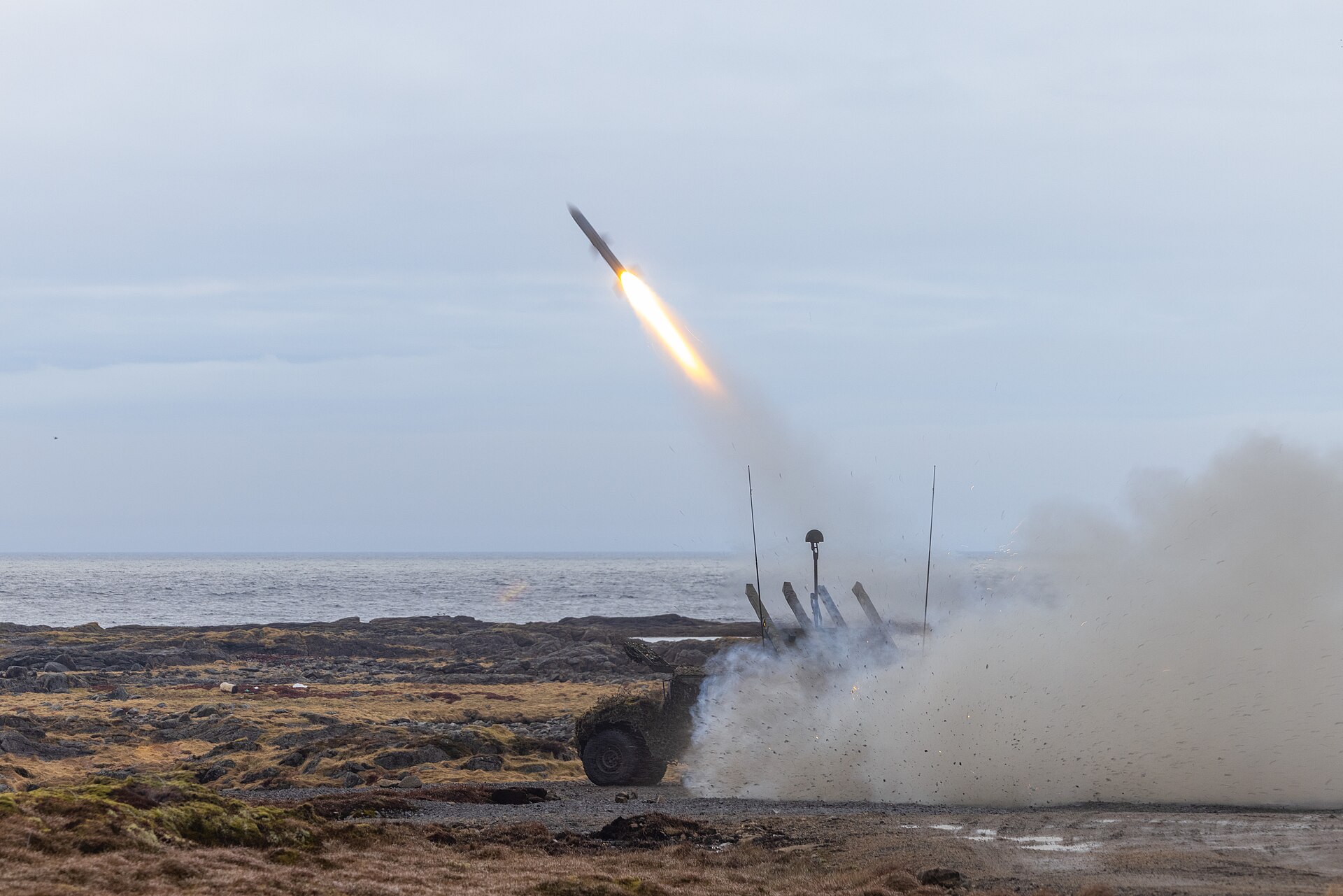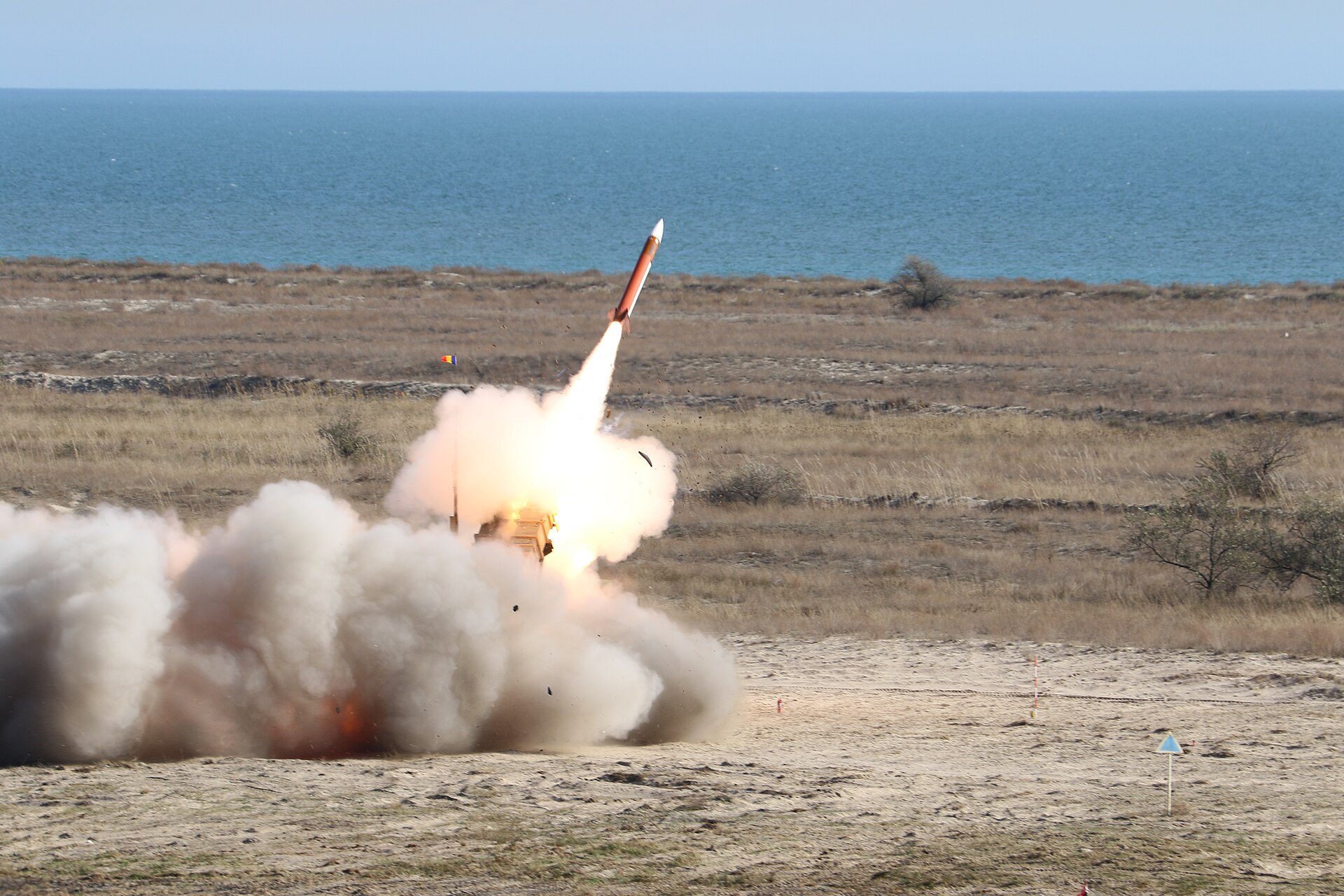
MANAMA — Iran fired seven ballistic missiles at Ali Al Salem Air Base in Kuwait and Naval Support Activity Bahrain on June 6, in the first all-ballistic salvo to target both Gulf states simultaneously during the 99-day conflict. US Central Command confirmed that six of the seven missiles were intercepted by American and Bahraini air defenses. The seventh “did not reach its intended target” — a formulation that RFE/RL and the Times of Israel reported reflected an in-flight failure, not a successful intercept.
Bahrain entered the day with approximately eight PAC-3 MSE interceptors remaining from a pre-war stock of roughly sixty. The first resupply rounds under a standard Foreign Military Sales notification filed June 1 cannot arrive before late 2027. Kuwait’s $3 billion air defense package, signed ten days earlier, purchases counter-drone and cruise missile systems — neither of which can engage a ballistic missile.
Table of Contents
The Salvo
CENTCOM’s statement, distributed through Bloomberg and posted to X, identified the targets as Ali Al Salem Air Base — which hosts US helicopter operations in Kuwait — and the headquarters of the US Fifth Fleet at NSA Bahrain’s Mina Salman and Juffair complex. “Six missiles were intercepted by US and Bahraini air defenses,” CENTCOM stated. “The seventh did not reach its intended target. There are currently no reports of harm to US personnel.”
The two installations anchor the US military presence in the northern Gulf. Ali Al Salem, approximately 65 kilometers west of Kuwait City, serves as a logistics hub for forces positioned in Kuwait since the 1991 Gulf War. NSA Bahrain houses approximately 9,000 US personnel under a 1992 bilateral agreement and functions as the operational headquarters for the Fifth Fleet’s patrol of the Persian Gulf, Arabian Sea, and Red Sea.
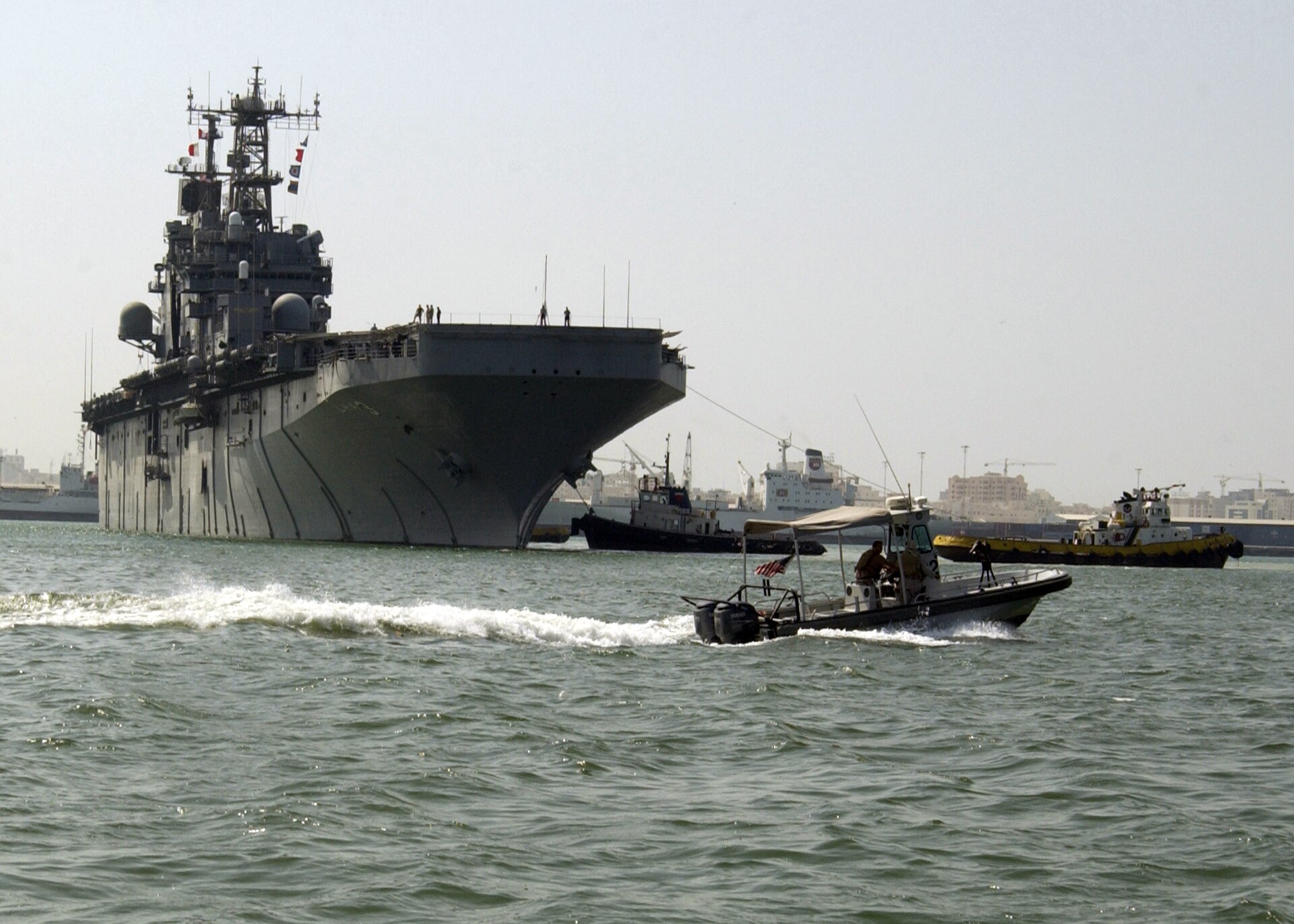
CENTCOM added that Iranian claims of damaging the US Fifth Fleet headquarters were “false.” Bahrain’s government issued a separate statement claiming all incoming missiles were “successfully intercepted” by its armed forces and praised the “vigilance” of its air defenses. CENTCOM’s account — that the seventh missile broke apart in flight — does not support Bahrain’s characterization of total interception.
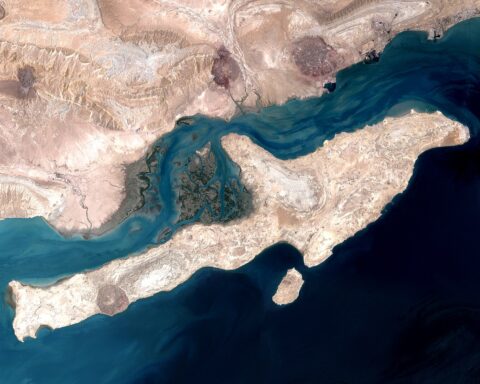
The IRGC, through PressTV, said its forces had targeted “Ali Al Salem Air Base in Kuwait, which hosts helicopters, as well as the headquarters of the US Fifth Fleet in Bahrain.” The Guards described the strikes as retaliation for US drone attacks on a telecommunications tower on Qeshm Island and a second tower in Sirik at approximately 2:30 a.m. local time. Iranian state media did not acknowledge that any of the seven missiles were intercepted.
The Middle East briefing 3,000+ readers start their day with.
One email. Every weekday morning. Free.
Kuwait’s Foreign Ministry called the strikes “a brazen assault” that “shows utter indifference to the direct threat they pose to the lives of citizens and residents, as well as to the security and stability of the region.” Bahrain condemned the attack as “a flagrant violation of sovereignty” and a threat to Gulf security.
What Did the Intercept Cost?
CENTCOM did not disclose how many interceptors were fired or which systems engaged the incoming missiles. PAC-3 MSE — the only operational system in Bahrain’s inventory capable of engaging a ballistic target — fires at minimum one round per engagement. Standard doctrine typically calls for two rounds against a confirmed ballistic track.
Bahrain began the war with approximately 60 PAC-3 MSE rounds. After three prior IRGC strikes on NSA Bahrain, the estimated inventory had fallen to roughly eight — an 87% depletion rate. At standard engagement ratios, the June 6 intercepts may have consumed three to four of those remaining rounds.
Each PAC-3 MSE round costs approximately $4 million. CENTCOM did not disclose how the six intercepts were divided between US and Bahraini batteries. At doctrinal ratios, Bahrain’s estimated three to four rounds represent $12 million to $16 million in interceptor ammunition from a supply that cannot be replenished before late 2027. The IRGC entered the conflict with an estimated 3,000 ballistic missiles, according to pre-war CSIS and IISS assessments.
| Country | System | Pre-War Inventory | Estimated Current | Resupply Status | Earliest Delivery |
|---|---|---|---|---|---|
| Bahrain | PAC-3 MSE | ~60 rounds | ~8 (87% depleted) | 50 rounds via standard FMS | Late 2027 |
| Kuwait | PAC-3 MSE | Classified | Near-depleted | No ballistic resupply announced | — |
| Saudi Arabia | PAC-3 MSE | ~2,800 rounds | ~80–150 (3–5%) | Ineligible — no SOFA | No timeline |
“The US used so many key offensive and defensive weapons that it will take three or more years to rebuild some of these stocks to pre-war levels.”
— CSIS, “Last Rounds? Status of Key Munitions at the Iran War Ceasefire”
The International Institute for Strategic Studies assessed in May 2026 that Iran’s campaign had “depleted magazines and highlighted capability gaps that Gulf countries are now seeking to fill.” The IISS added that the US and Israel “will still need to first re-stock their own inventories, having used hundreds to defend against Iranian attacks.”
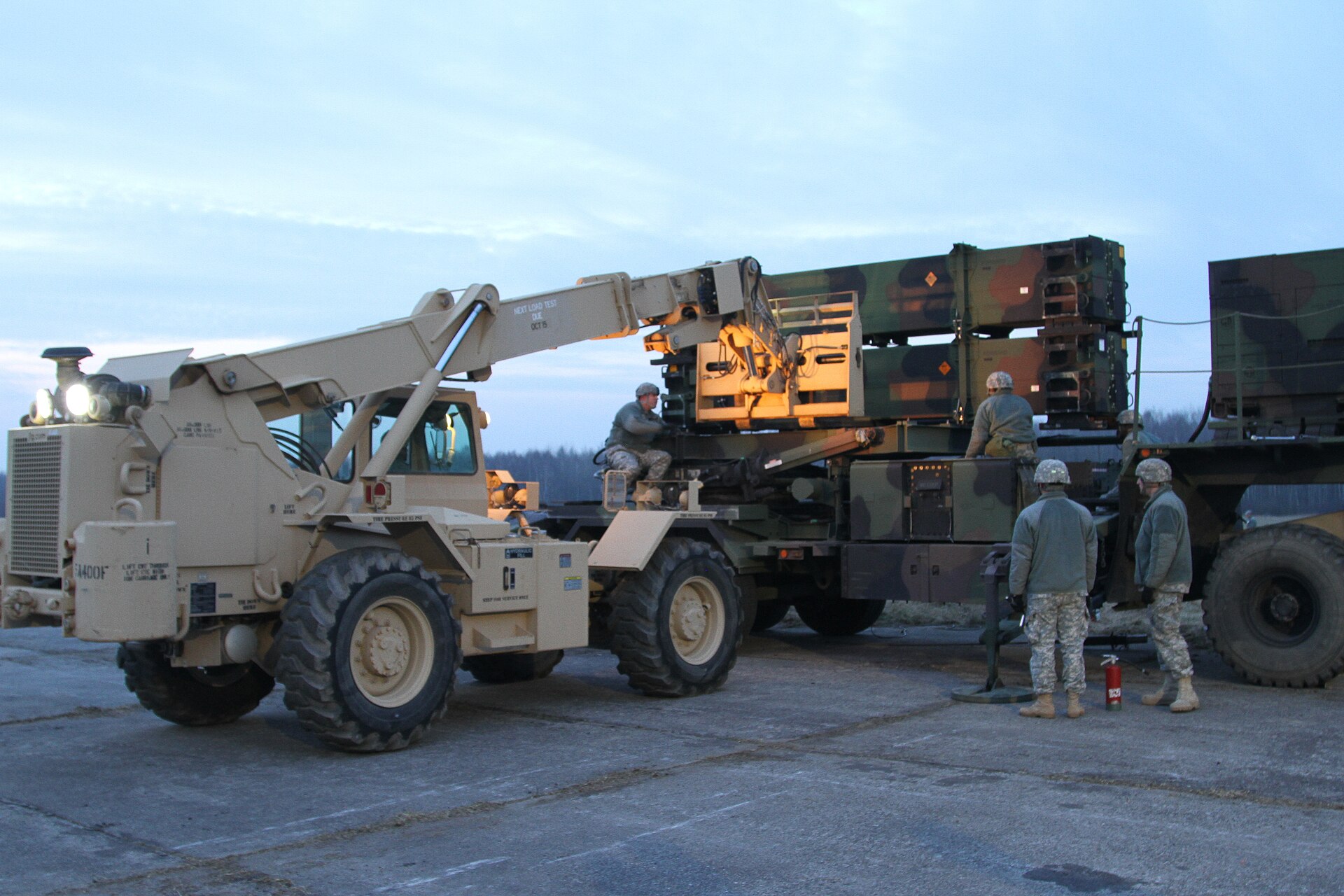
Bahrain’s sole announced resupply — 50 PAC-3 MSE rounds authorized under Federal Register Doc 2026-10920 on June 1 — travels through the standard Foreign Military Sales process: a 30-day congressional notification period followed by a minimum 18-month production and delivery timeline. Bahrain was excluded from Secretary Rubio’s $8.6 billion Section 36(b) emergency waiver of May 2. The standard FMS pipeline places delivery no earlier than late 2027.
Can Kuwait’s New Air Defenses Stop a Ballistic Missile?
Kuwait signed a $3 billion air defense package on May 26 — $1.98 billion for Anduril counter-unmanned aerial systems and $1.02 billion for Raytheon NASAMS batteries. The contracts were designed to close the cost-exchange gap that had drained PAC-3 reserves: NASAMS fires AMRAAM missiles at a fraction of the cost of a PAC-3 MSE round against the drones and cruise missiles that compose the majority of IRGC salvos.
NASAMS engages subsonic and transonic threats — cruise missiles, aircraft, helicopters, and drones. It was not designed to intercept ballistic missiles. The Anduril CUAS system addresses the lowest tier of the threat spectrum. The $3 billion contract does not include a ballistic missile defense component.
Kuwait’s PAC-3 inventory was already near-depleted before June 6. Three days earlier, 30 missiles and drones struck Kuwait International Airport’s Terminal 1, killing one Indian national and injuring 63 — 48 hours after the terminal had reopened. Kuwait expelled two Iranian diplomats the following day, the first GCC expulsion of Iranian diplomats since the UAE closed its Tehran embassy on March 1.
The Production Line
The Lockheed Martin facility in Camden, Arkansas produces approximately 620 PAC-3 MSE rounds per year across all global customers. The Pentagon’s FY2027 contract — 2,798 rounds at $12.2 billion — claims the facility’s projected output through 2030.
CSIS identified SM-3 and THAAD interceptors as particularly degraded after 99 days of conflict. The center’s assessment — titled “Last Rounds?” — concluded that rebuilding key munition stocks to pre-war levels would take three or more years even at accelerated production rates.
Saudi Arabia holds an estimated 80 to 150 PAC-3 MSE rounds — roughly 3 to 5 percent of its pre-war stock of 2,800. The kingdom has no status-of-forces agreement with the United States, rendering it ineligible for the Section 36(b) emergency Foreign Military Sales track — the mechanism through which every other regional recipient has accessed expedited resupply. The June 1 Federal Register notice that authorized Bahrain’s 50 rounds did not include Saudi Arabia.
Saudi Arabia’s pre-war FMS order — 730 PAC-3 MSE rounds at $9 billion, filed under standard rather than emergency procedures — carries a delivery timeline of mid-2027. Even if fulfilled on schedule, the order would bring the kingdom’s total to between 810 and 880 rounds, less than a third of its pre-war inventory of 2,800.
Why the IRGC Fired on June 6
The IRGC stated that the salvo was a direct response to US drone strikes on a telecommunications tower on Qeshm Island and a second tower in Sirik at approximately 2:30 a.m. local time. The IRGC Aerospace Force warned that continued attacks would result in a “complete closure of the Strait of Hormuz.”
The missile strikes fell on the same calendar day that Iran filed a formal counteroffer to Washington’s MOU proposal through Oman, demanding the release of $12 billion to $24 billion in frozen Iranian assets before any Hormuz arrangement — inverting the US sequencing that placed Hormuz normalization first. Mojtaba Khamenei, a senior IRGC adviser, told RFE/RL that negotiations were “at a deadlock” and conditioned any agreement on the release of “$24 billion in frozen Iranian assets.”
The convergence of military and diplomatic actions on a single date followed an established pattern. On June 1, Iran suspended MOU talks through Tasnim on the same day CENTCOM struck Qeshm and Goruk. On June 3, the IRGC struck Kuwait and Bahrain hours after the House passed the War Powers Resolution H.Con.Res.38 by 215 to 208. On June 6, Saudi Arabia condemned the dual-capital salvo without taking action — a response that maintained Riyadh’s verbal-only posture into the 99th day of the war.
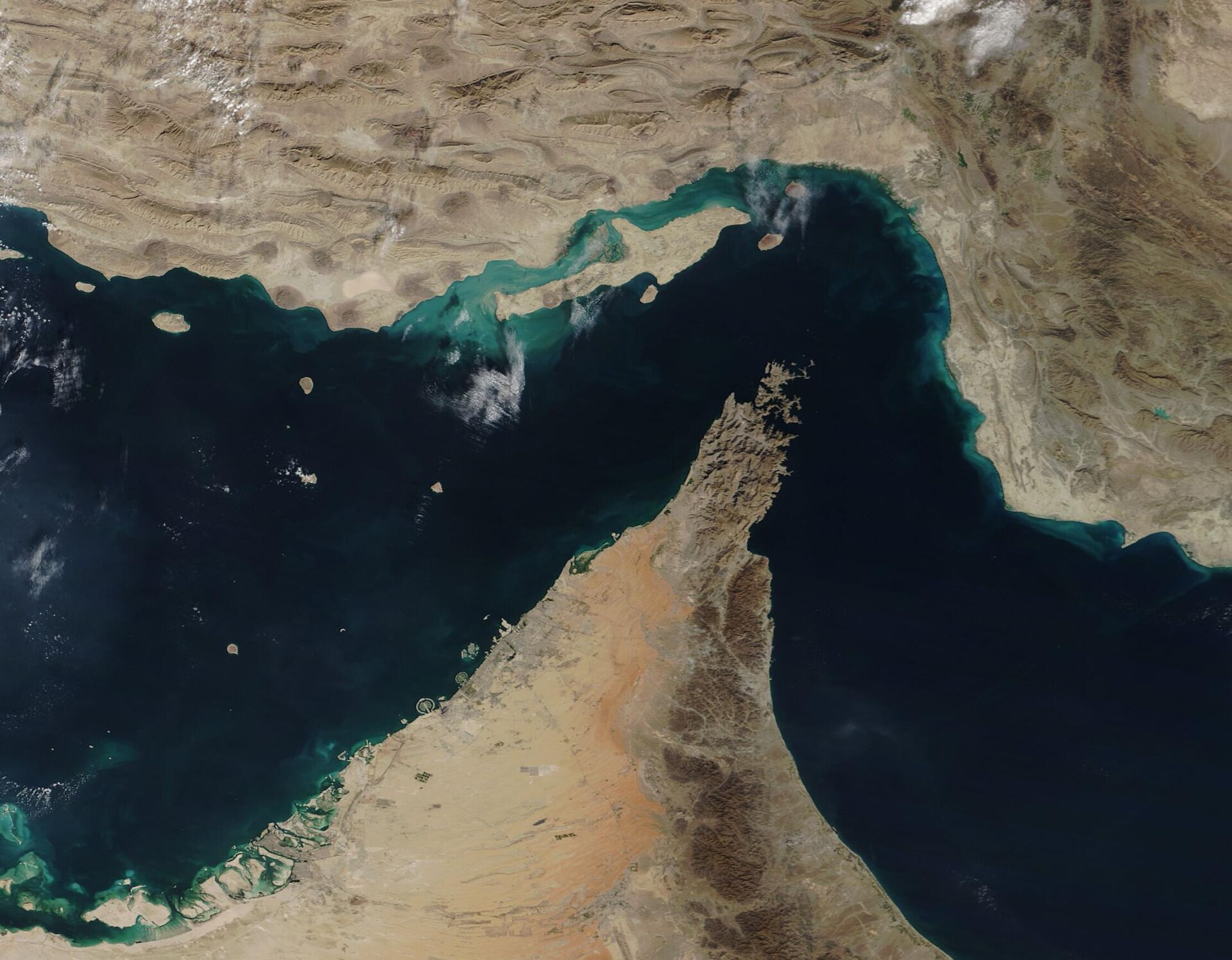
The June 6 salvo differed from the June 3 wave in composition. The earlier attack employed approximately 30 missiles and drones — what the IRGC described as a mix of Khorramshahr-4, Kheibar Shekan, and Fattah hypersonic missiles alongside one-way attack drones. The June 6 package was a discrete seven-missile ballistic-only salvo with no drone component.
Background
The June 6 strikes marked the fourth documented IRGC attack on NSA Bahrain and the third strike on Kuwait in four days. The conflict entered its 99th day with no ceasefire framework in place. The US had spent an estimated $29 billion on the conflict as of mid-May, according to Congressional Budget Office data. The House passed H.Con.Res.38 on June 3 by 215 to 208 — the first War Powers Resolution to clear either chamber on final vote since the conflict began — though the Supreme Court’s 1983 ruling in INS v. Chadha renders concurrent resolutions legally unenforceable without presidential signature.
Saudi Arabia has not been included in any emergency resupply mechanism activated since the war began. The kingdom’s exclusion from Section 36(b) tracks stems from the absence of a status-of-forces agreement — a structural limitation that predates the conflict and has not been renegotiated during it. Compounding the procurement gap is an intelligence gap: Trump publicly claims Iran retained 21 percent of its missiles while classified NSC briefings put the figure at 70 percent — and Saudi Arabia’s resupply arithmetic is unchanged at either end of that range.
Frequently Asked Questions
Why does the shift to an all-ballistic salvo matter?
Drones and cruise missiles can be engaged by cheaper, more plentiful systems such as NASAMS and CRAM. Ballistic missiles require PAC-3 MSE interceptors — rounds that cost approximately $4 million each and cannot be replenished in Bahrain before late 2027. A salvo composed entirely of ballistic missiles forces the defender to draw down the one inventory that cannot be quickly replaced, at a cost-exchange ratio that favors the attacker. The June 6 package was the first all-ballistic salvo documented in the conflict.
What missile types has the IRGC used against Gulf targets in this conflict?
The IRGC has publicly claimed the use of Khorramshahr-4 medium-range ballistic missiles, Kheibar Shekan solid-fuel ballistic missiles, and Fattah hypersonic missiles, supplemented by one-way attack drones. CENTCOM has not independently confirmed the specific types used in the June 6 seven-missile salvo; the weapon types listed above were attributed to the June 3 salvo. The June 3 package mixed ballistic missiles and drones; the June 6 package contained no drone component.
What is the IRGC’s claim regarding Kuwait’s Terminal 1 damage on June 3?
IRGC spokesman Hossein Mohebbi stated on June 4 that the Aerospace Division “had not fired at the passenger terminal” and claimed the damage was caused by “a US-made Patriot missile that fell on the terminal after it failed to intercept Iranian missiles.” CENTCOM called the claim “false.” The June 3 strike killed one Indian national and injured 63.
Would a Hormuz closure cut Bahrain off from resupply?
Bahrain imports virtually all food, consumer goods, and military materiel through Persian Gulf ports. The island has no overland supply route — unlike Kuwait, which borders Iraq, or Qatar, which shares a land border with Saudi Arabia. A Hormuz closure would leave the 25-kilometer King Fahd Causeway to Saudi Arabia’s Eastern Province as Bahrain’s sole logistics corridor — infrastructure designed for passenger traffic, not military resupply convoys.
Did Gulf states close airspace after the June 6 salvo?
Kuwait, Bahrain, and UAE airports closed during the June 3 strikes three days earlier. Saudi airports in Riyadh, Jeddah, and Dammam remained open during that wave and absorbed diverted commercial traffic. Airspace decisions following the June 6 salvo had not been publicly confirmed at the time of publication. The pattern of dual-capital targeting escalated further on June 10, when Iran struck US bases across three countries simultaneously; Iran Struck Three Capitals Overnight. The Fourth Is Counting Its Interceptors. documents the overnight US-Iran exchange and the interceptor costs it imposed on already-depleted GCC magazines.