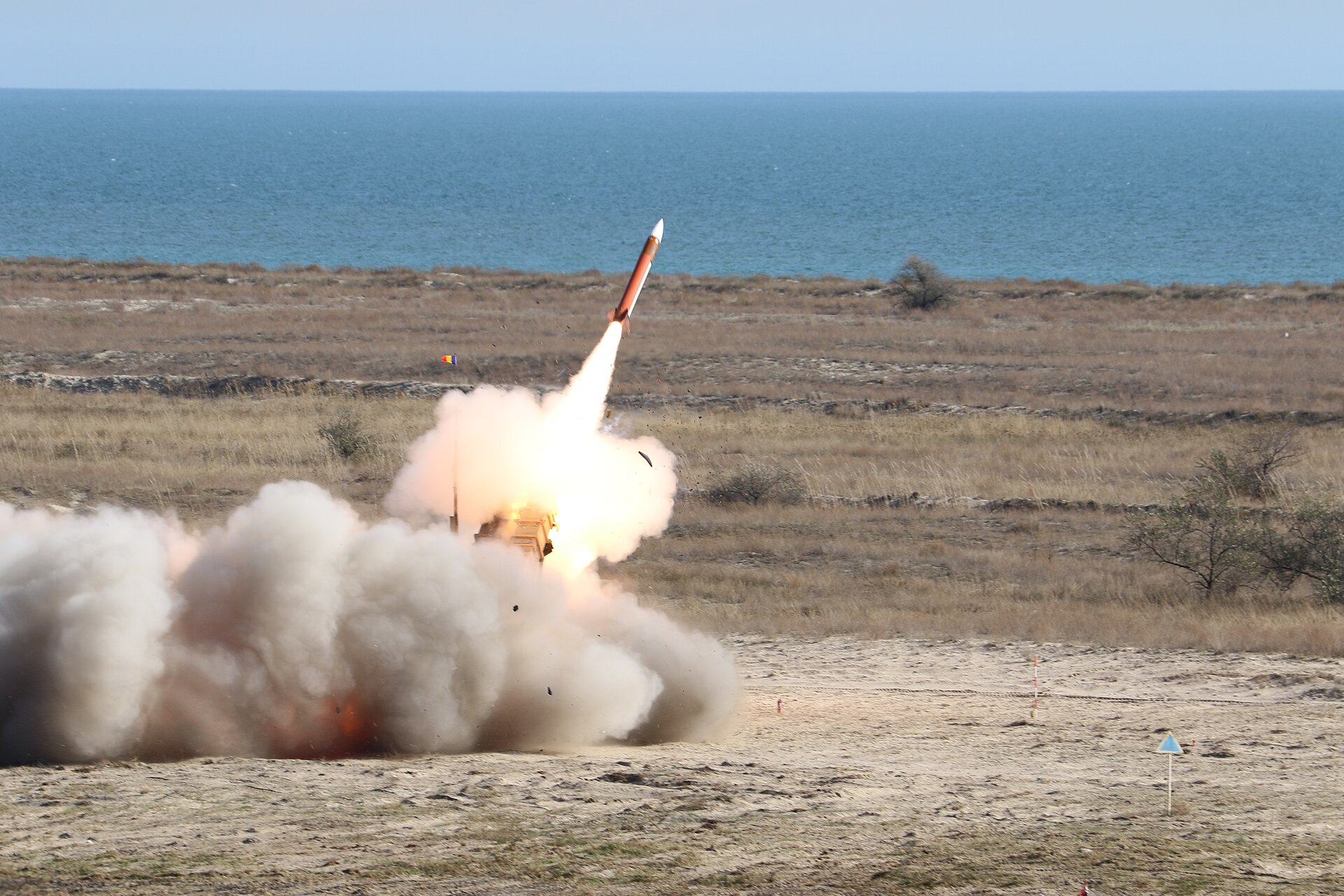

RIYADH — The State Department cleared $8.6 billion in emergency arms sales to four Middle Eastern partners on May 3, handing Qatar 300 PAC-3 MSE interceptors and Kuwait a $2.5 billion integrated battle command system — and for the second consecutive emergency authorization since the Iran war began, Saudi Arabia’s name was not on any of the paperwork. The kingdom holds somewhere between 80 and 150 PAC-3 rounds, roughly 3 to 5 percent of the 2,800 it stockpiled before the first IRGC salvo in March, and at the sustained drone rate the Islamic Revolutionary Guard Corps has maintained over the past ninety-six days those rounds represent three to five nights of full coverage over Aramco’s refining belt before the magazine goes empty.
The question Washington does not want to answer — and Riyadh cannot force it to — is whether the exclusion is a diplomatic signal or a legal inevitability. The answer, traced through the actual statutory mechanism that governs emergency arms transfers, is worse than either: it is both.
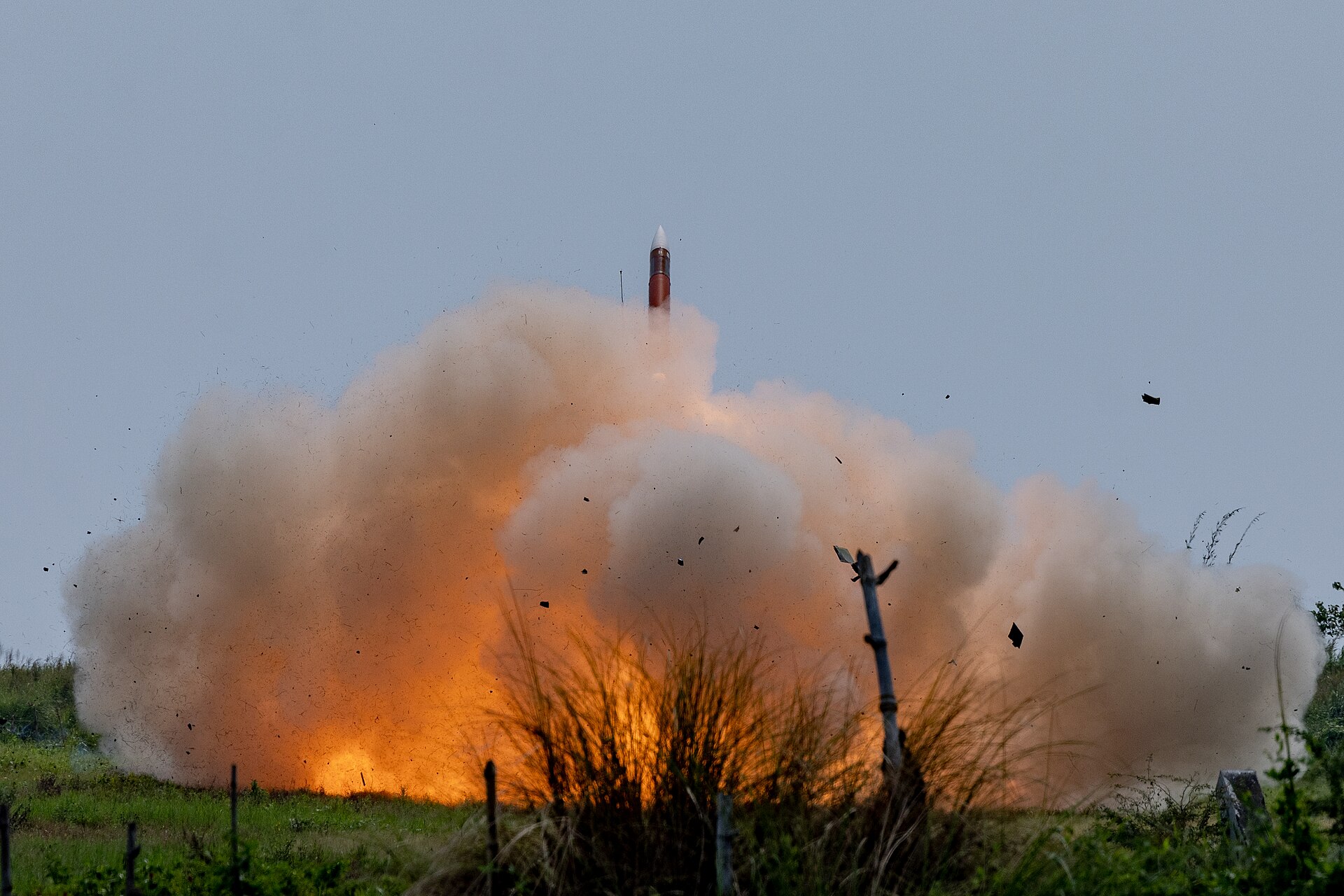
Table of Contents
- What Section 36(b) Actually Requires
- The SOFA Map: Who Has One, Who Doesn’t
- Why Was Saudi Arabia Excluded From Both Emergency Tranches?
- The Pompeo Precedent That Proves the Point
- What Does Saudi Arabia Have Left to Defend Itself?
- Can Saudi Arabia Buy Air Defense From Someone Else?
- The Ras Tanura Warning
- The $30,000 Problem
- Why Saudi Arabia Won’t Sign a SOFA
- Frequently Asked Questions
What Section 36(b) Actually Requires
Under the Arms Export Control Act, Section 36(b) gives the Secretary of State a specific power: certify in writing that “an emergency exists requiring the immediate sale” of defense articles to a foreign government, and the standard thirty-day congressional notification window collapses to zero. Marco Rubio signed that certification for Qatar on May 1. He signed it for Kuwait days later. He signed it for Israel and the UAE in the same batch. He did not sign one for Saudi Arabia, and he did not sign one for Saudi Arabia in the first emergency wave either — the $16.5 billion March authorization that fast-tracked arms to the UAE, Jordan, and Kuwait while the kingdom watched from the queue.
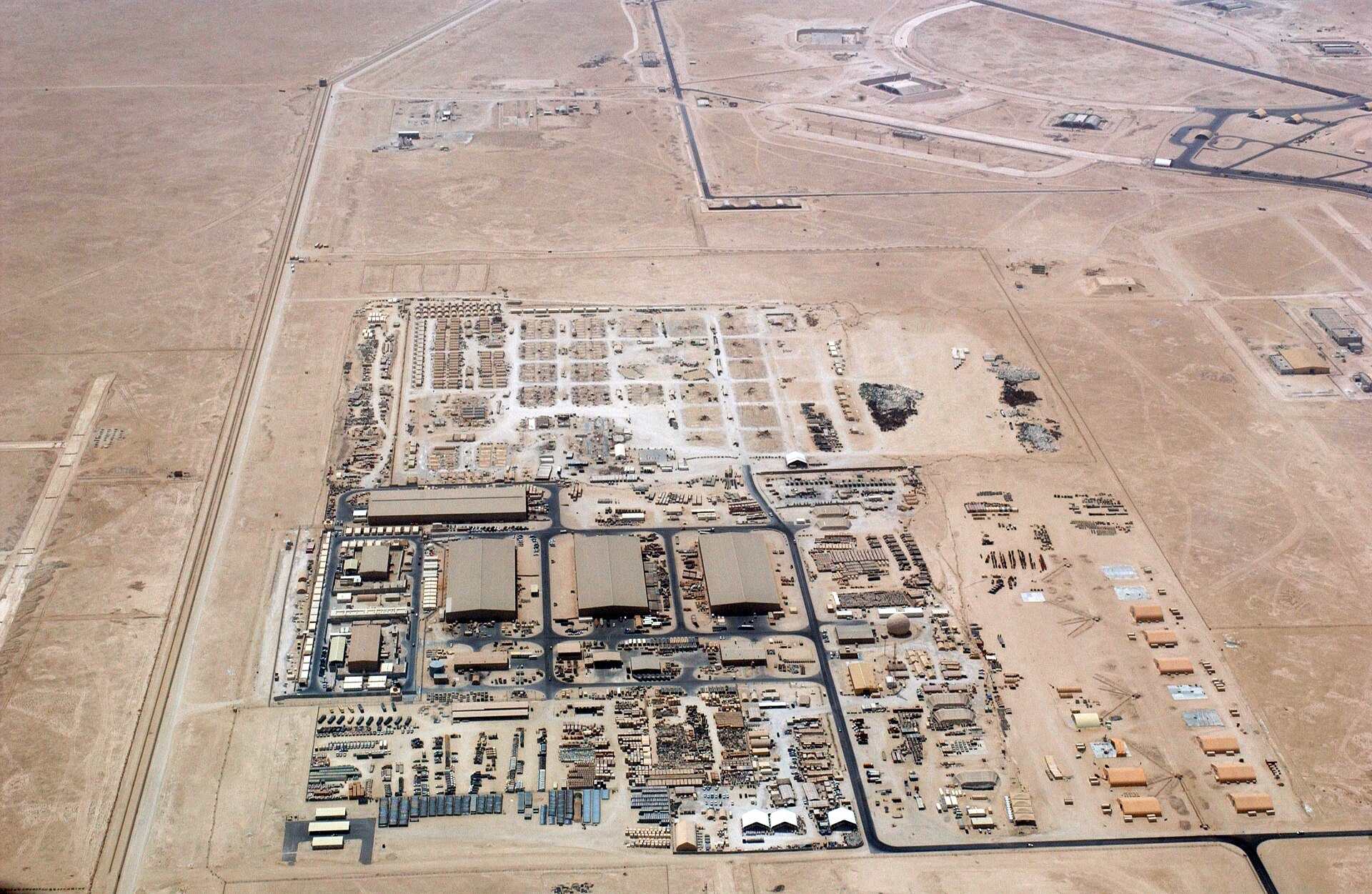
The justification chain for emergency certification runs through a simple structural logic that has nothing to do with whether the Secretary personally likes or dislikes Riyadh. When American troops are stationed on foreign soil under a formal legal framework — a Status of Forces Agreement or its equivalent — and those troops come under fire, the host nation’s ability to defend them becomes a direct American security interest. Qatar hosts CENTCOM’s forward headquarters at Al-Udeid with roughly 10,000 US service members under a 1992 Defense Cooperation Agreement. Kuwait holds 13,500 troops across four land bases under a full 1992 SOFA. Bahrain shelters the Fifth Fleet’s 9,000 personnel under its own 1992 SOFA. In each case, the legal architecture creates a functional dependency: American forces depend on the host’s air defense umbrella, the host’s umbrella is depleting, therefore the emergency is self-evident and the certification writes itself.
Saudi Arabia’s legal relationship with the US military runs through the United States Military Training Mission, established by a 1977 accord and constrained under Public Law 95-92 to foreign military sales program management only — a mandate that explicitly excludes advisory and training functions and contains no jurisdictional-protections clause over US personnel. A Government Accountability Office review (IA-77-19A) documented the gap between Saudi expectations and what American law permitted nearly fifty years ago. That gap was never closed, and now it is the gap through which $8.6 billion in emergency ammunition is flowing to everyone except the country that needs it most.
The SOFA Map: Who Has One, Who Doesn’t
| Country | Agreement Type | Year | US Personnel | Emergency Arms (2026) | PAC-3 MSE Remaining |
|---|---|---|---|---|---|
| Qatar | Defense Cooperation Agreement | 1992 | ~10,000 | $4.01B (PAC-3/PAC-2) | Resupplied |
| Kuwait | Status of Forces Agreement | 1992 | ~13,500 | $2.5B (IBCS) | Resupplied |
| Bahrain | Status of Forces Agreement | 1992 | ~9,000 | None | ~8 rounds |
| UAE | Defense Cooperation Agreement | 2017 | ~3,500 | $148M (APKWS) | Classified |
| Saudi Arabia | USMTM Accord (FMS admin only) | 1977 | Advisory only | None | ~80–150 rounds |
The table tells a story that the diplomatic language around the exclusion has tried very hard to obscure. Every GCC state that received emergency resupply in this conflict operates under a formal basing agreement that gives the United States jurisdiction over its own personnel on that nation’s soil. Saudi Arabia does not. The USMTM accord is a program-management instrument, not a security pact — it governs paperwork for weapons purchases, not the legal status of American soldiers, and it certainly does not create the mutual-defense dependency that makes an emergency certification a bureaucratic formality rather than a political fight.
The Middle East briefing 3,000+ readers start their day with.
One email. Every weekday morning. Free.
The same week Washington excluded Riyadh from emergency resupply, Saudi Arabia was in St. Petersburg as Russia’s guest of honor, signing thirty bilateral cooperation agreements with the government whose price interests inside OPEC+ directly conflict with Saudi Arabia’s own fiscal survival. The juxtaposition captures the structural bind: the kingdom courts Moscow in public while depending on Camden, Arkansas for the interceptors its cities require.
Bahrain is the instructive exception. It has a SOFA, it hosts the Fifth Fleet, the IRGC has fired on Mina Salman and Juffair three times, and it still received nothing from Rubio’s $8.6 billion authorization — sitting at roughly eight PAC-3 rounds, an 87 percent depletion rate that ought to qualify as an emergency by any definition. Having a SOFA does not guarantee inclusion, but not having one appears to be absolutely disqualifying, the threshold below which the certification pen never touches the paper. That same legal on-ramp also explains Kuwait’s simultaneous $1.98 billion Anduril counter-drone purchase approved on June 6 — a package that cleared the emergency track on the same day IRGC missiles struck the facility where it will be installed, and that Saudi Arabia cannot access through any comparable mechanism.
Why Was Saudi Arabia Excluded From Both Emergency Tranches?
The structural answer is that Saudi Arabia lacks the legal instrument — a Status of Forces Agreement or equivalent defense cooperation agreement — that forms the baseline justification for emergency foreign military sales certification under Section 36(b) of the Arms Export Control Act. Every GCC state that received emergency resupply in 2026 operates under a formal basing agreement establishing US jurisdictional protections; Saudi Arabia’s 1977 USMTM accord is limited to FMS program management and contains no such provisions, which breaks the justification chain connecting host-nation air defense depletion to direct US force protection needs.
The political answer sits on top of the structural one and makes it heavier. Saudi Arabia extracted $142 billion in arms commitments plus Major Non-NATO Ally designation from the May 13 Riyadh summit without offering normalization with Israel, without signing a defense pact that would have included SOFA provisions, and without conceding basing rights that would have given Washington the jurisdictional framework it needed to treat Saudi depletion as an American emergency. The kingdom wanted the weapons without the legal entanglement, and it got exactly what it asked for — a standard FMS order for 730 PAC-3 rounds at roughly $9 billion, placed in the normal production queue with an eighteen-month delivery window, no production priority, no emergency waiver, no queue-jumping. The DSCA notification for that order (FR Doc 2026-10920) reads like a commercial purchase order because, legally, that is what it is.
Prince Sultan Air Base, the primary American operating location in Saudi Arabia during the 1990s and the current hub for US Air Force operations in the kingdom, has been struck by IRGC missiles and drones three times during this conflict without triggering an emergency certification — establishing through repetition that attacks on Saudi soil, even on facilities where American aircraft operate, do not automatically activate the legal mechanism that attacks on Al-Udeid or Camp Arifjan activate. The difference is not the severity of the threat. The difference is the piece of paper underneath it.
The Pompeo Precedent That Proves the Point
In May 2019, Secretary of State Mike Pompeo invoked exactly the same Section 36(b) emergency mechanism to push through $8.1 billion in arms sales to Saudi Arabia, the UAE, and Jordan, citing Iranian threats after the Abqaiq-Khurais drone strike and tensions in the Strait of Hormuz. Congress reacted with twenty-two joint resolutions of disapproval — every major weapons system in the package drew its own resolution — and Trump vetoed all twenty-two. “The rapidly-evolving security situation in the region requires an accelerated delivery of certain capabilities to U.S. partners,” Pompeo wrote in his certification, language that describes the current situation with considerably more accuracy than it described 2019.
The Pompeo precedent demolishes the argument that Saudi Arabia cannot legally receive emergency arms under Section 36(b) because it lacks a SOFA. It received them before. The mechanism is available. Congress cannot stop it — the 2019 episode proved that with twenty-two separate failed attempts. What the Pompeo precedent actually proves is that the 2026 non-invocation is a deliberate policy choice by the current Secretary of State, not a constraint imposed by law, which makes the structural SOFA argument both true and incomplete: the SOFA gap makes it harder to justify the emergency certification, but a Secretary who wanted to certify could certify, because Pompeo already showed the path and absorbed the political cost.
Rubio’s choice not to follow that path — twice, across two separate emergency tranches totaling $25.1 billion in fast-tracked arms — tells Riyadh something specific about how Washington currently values the relationship. The $142 billion in standard arms commitments from the May 13 summit is not emergency resupply; it is a commercial contract that will deliver warheads on an eighteen-month production cycle while Saudi Arabia’s remaining interceptors deplete on a timeline measured in nights, not months. The gap between those two delivery schedules is the gap in which Aramco’s refining infrastructure sits undefended.
What Does Saudi Arabia Have Left to Defend Itself?
Between 80 and 150 PAC-3 Missile Segment Enhancement rounds — the interceptor designed to kill ballistic missiles, cruise missiles, and advanced drones at ranges that matter for point defense of high-value targets like refineries and desalination plants. At the IRGC’s sustained operational tempo of roughly thirty drones per night requiring thirty intercepts at a one-to-one engagement ratio, those rounds cover three to five nights of full-spectrum defense before the magazine is empty. Mark Cancian at the Center for Strategic and International Studies placed Saudi-UAE PAC-3 depletion at 86 percent of pre-war stockpile by early April, describing the resulting situation as “a window of vulnerability” — language that understates the problem the way calling a cardiac arrest “a window of medical concern” understates the problem.
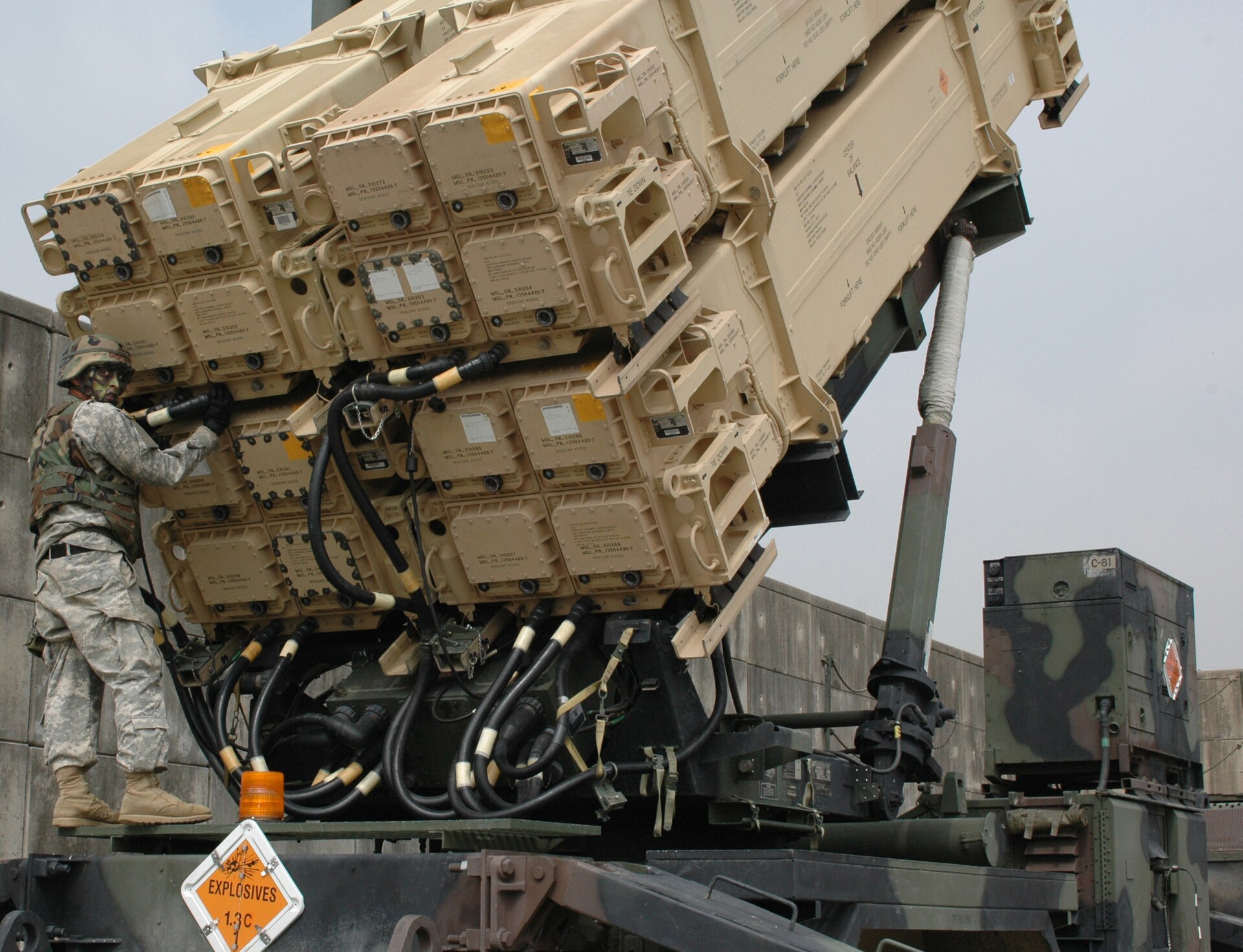
The kingdom’s standard FMS order — 730 rounds at $9 billion, DSCA notification January 30, 2026 — sits in the production queue at the Lockheed Martin plant in Camden, Arkansas, behind the Pentagon’s own FY2027 contract for 2,798 PAC-3 MSE rounds at $12.2 billion, a single order that claims the entire Camden production ramp through 2030. Camden currently manufactures between 620 and 650 rounds per year and is scaling toward 2,000 by the end of the decade, but Boeing’s seeker component remains the binding production bottleneck, and no amount of Saudi money can make a factory line move faster than its slowest subassembly. Qatar’s emergency order, by contrast, confers production priority — its 300 PAC-3 MSE rounds jump the queue that Saudi Arabia’s 730 rounds are waiting in.
The arithmetic of depletion is not abstract. Saudi Arabia entered this conflict with approximately 2,800 PAC-3 rounds, burned through roughly 95 percent of them in ninety-six days, and now depends on a production facility that makes fewer rounds per year than the kingdom consumed per month during the heaviest IRGC barrages. Even if every round Camden produces for the next twelve months went exclusively to Saudi Arabia — displacing the Pentagon’s own order, Qatar’s emergency allocation, and every other customer in the queue — the kingdom would receive enough interceptors to cover approximately three weeks of sustained IRGC operations at the tempo the Guards demonstrated in April. The size of the remaining Iranian arsenal — disputed between Trump’s 21 percent claim and intelligence briefings citing roughly 70 percent — does not change that arithmetic: both figures leave Saudi Arabia’s interceptor math at the same dead end.
Can Saudi Arabia Buy Air Defense From Someone Else?
The non-American alternatives exist on paper and arrive on timelines that do not match the threat. MBDA’s Aster 30 missile, fired from the SAMP/T ground system that France and Italy co-produce, has reduced its manufacturing cycle from forty-two months in 2022 to thirty months today, with a target of eighteen months by the end of 2026 — but Saudi Arabia holds no SAMP/T contract. A new order placed tomorrow delivers its first interceptors in mid-2028 at the absolute earliest, and MBDA’s order book hit a record €44.4 billion at the end of 2025, a backlog stuffed with European NATO orders from governments that discovered air defense mattered after Russia demonstrated as much in Ukraine. The Saudi queue position for a system it has not yet ordered sits behind countries that did order, years ago, and are still waiting.
The Chinese option is already physically present in the kingdom, though not in Saudi hands. Pakistan deployed 8,000 troops plus HQ-9 air defense batteries — Chinese-manufactured, Pakistani-operated — to Saudi Arabia under the September 2025 Saudi Multinational Defense Alliance agreement. The HQ-9 engages targets at ranges between 120 and 300 kilometers, performs credibly against aircraft and cruise missiles, and struggles against the fast ballistic missiles that constitute the IRGC’s most dangerous tools: the Fattah hypersonic, the Kheibar Shekan medium-range, and the Khorramshahr-4 that CENTCOM confirmed was used in the third strike on Bahrain’s Fifth Fleet facilities. The HQ-9 fills a layer of the defense architecture, but it is not the layer that keeps Fattah missiles from hitting Abqaiq, and pretending otherwise would be a more dangerous fiction than having no backup at all.
| Alternative | System | Delivery Timeline | Ballistic Missile Capable? | Status |
|---|---|---|---|---|
| US Standard FMS | PAC-3 MSE (730 rounds) | Mid-2027 (18 months) | Yes | In queue, no priority |
| MBDA (France/Italy) | SAMP/T Aster 30 | Mid-2028 at earliest | Yes | No contract exists |
| Pakistan/China (SMDA) | HQ-9 | Deployed | Limited | Operational, Pakistani-crewed |
| Domestic (SAMI) | None applicable | N/A | N/A | 19.35% localization rate; no interceptor line |
Saudi Arabian Military Industries, the kingdom’s domestic defense manufacturer under the Public Investment Fund, has achieved a defense-content localization rate of 19.35 percent against a Vision 2030 target of 50 percent. There is no air defense interceptor in SAMI’s production portfolio, no factory line being built to manufacture one, and no technology-transfer agreement that would seed one. The kingdom that conceived of economic self-sufficiency as a generational project cannot build the one weapon system it needs most, and the country that can build it will not sell it on emergency terms to a partner that declined the legal framework emergency sales require.
The Ras Tanura Warning
On March 2, 2026, an IRGC drone barrage targeted the Ras Tanura refining complex — Saudi Aramco’s primary crude export terminal and one of its largest refining nodes, processing roughly 550,000 barrels per day of refined products. The PAC-3 batteries defending the facility intercepted the incoming drones. The interception was successful. Ras Tanura shut down anyway, for sixteen days, because the falling debris from the intercept itself — shattered airframe fragments, spent propellant, kinetic scatter — landed on the refinery’s processing infrastructure and triggered safety protocols that required a full shutdown, inspection, and restart sequence.
This is what terminal defense actually looks like when it works, and it is the fact that should keep Aramco’s board awake at night as the interceptor count drops below 150. A successful intercept at Ras Tanura produced a sixteen-day outage. A failed intercept — the kind that becomes inevitable when the PAC-3 magazines run dry — would produce something categorically different, because a drone or cruise missile that reaches Abqaiq’s stabilization towers intact does not cause a safety-protocol shutdown. The world’s largest crude processing facility handles approximately 7 percent of global oil supply, and the distance between “intercepted with debris damage” and “not intercepted” is the distance between a quarter’s earnings miss and a global energy crisis.
The IRGC understands this arithmetic at least as well as Aramco does. Iran International reported on May 31 that internal IRGC assessments identify Saudi air defense depletion as creating a vulnerability window over Aramco facilities — language that frames the kingdom’s interceptor count not as an intelligence estimate but as leverage in the MOU negotiations with Washington, where Tehran’s willingness to de-escalate is priced partly against the damage it can credibly threaten to inflict if negotiations fail. An unnamed IRGC general’s statement that the Guards “would hit all economic hubs in the Middle East” was not aspirational rhetoric; it was a targeting declaration calibrated to an audience in Riyadh that knows exactly how many rounds stand between that declaration and its execution.
The $30,000 Problem
The cost-exchange ratio that governs this air defense war is the single most important number that almost nobody outside the defense-procurement community discusses. An IRGC Shahed-series drone costs approximately $30,000 to manufacture and deploy. A PAC-3 MSE interceptor costs approximately $4 million. At a one-to-one engagement ratio — one interceptor per drone, which is the minimum for reliable kill probability — every successful Saudi intercept costs 133 times more than the weapon it destroyed. The IRGC can afford to lose drones at a rate Saudi Arabia cannot afford to shoot them down, which means the Guards do not need to overwhelm the defense; they need only to sustain the tempo until the defense exhausts itself, a strategy that requires patience and cheap hardware rather than precision and expensive missiles.
At 150 remaining PAC-3 rounds and $4 million per round, Saudi Arabia’s entire residual air defense inventory is worth approximately $600 million — less than a single day’s revenue shortfall at current oil prices, where Brent at $95.25 sits $13 to $16 per barrel below the kingdom’s $108–111 fiscal breakeven, translating to roughly $100 million per day in lost revenue. The kingdom cannot buy its way out of the supply-chain problem because the supply chain is physically constrained by Camden’s production rate and contractually constrained by the Pentagon’s own order, and the revenue to fund alternative procurement is itself declining as the war drags the oil price in directions that help consumers and hurt producers. Saudi Arabia is spending more to defend its oil infrastructure than that infrastructure is generating in surplus revenue, a fiscal ouroboros that tightens with every drone the IRGC sends south.
“Without foundational changes in US-Saudi security relations that emphasize closer institutional and military linkages, no bilateral defense agreement will be effective.”
— Washington Institute for Near East Policy
Why Saudi Arabia Won’t Sign a SOFA
The political toxicity of American military basing in Saudi Arabia predates the current conflict by three decades and one catastrophic terrorist attack. The deployment of US forces to Saudi soil during the 1990–91 Gulf War became Osama bin Laden’s primary recruiting grievance — the presence of infidel soldiers in the land of the Two Holy Mosques, a framing that resonated across the Arab world with a force that the actual operational reality of the deployment never justified but could never overcome. The American drawdown from Prince Sultan Air Base in 2003, when CENTCOM moved its air operations center to Al-Udeid in Qatar, was partly a military decision and partly an acknowledgment that the political cost of visible American presence in the kingdom had become prohibitive. The kingdom has never reversed that judgment, even under a crown prince who has dismantled nearly every other political constraint his predecessors accepted.
A Status of Forces Agreement is not merely a basing arrangement — it is a sovereignty concession, a legal instrument that grants a foreign government criminal and civil jurisdiction over its personnel on your soil, that immunizes foreign soldiers from prosecution in your courts, that creates a permanent visible reminder of dependence that no amount of nationalist rhetoric can paper over. For Qatar, with 10,000 American troops at Al-Udeid, the tradeoff was obvious: a small country buying the world’s most expensive insurance policy against its larger neighbors. For Kuwait, which remembers August 1990 in cellular detail, the 13,500-troop presence is the physical guarantee that what happened once will not happen again. For Saudi Arabia — a country that styles itself as the Arab world’s leading power, that chairs the GCC, that hosts Islam’s two holiest sites — the tradeoff calculus is fundamentally different, and MBS has shown no inclination to resolve it.
The May 13, 2025 summit in Riyadh produced $142 billion in arms commitments and Major Non-NATO Ally designation without a defense pact, without a SOFA, without basing rights. The Hoover Institution framed this outcome as a strategic liability, noting that MNNA designation and commercial arms sales “do not substitute for treaty-based security commitments” — a polite way of saying that the kingdom paid the political price of hosting Trump for a photo opportunity and received weapons it cannot get on an emergency basis in exchange. The WINEP assessment was blunter: without foundational changes in US-Saudi security relations, no bilateral defense agreement will be effective. The foundational change that matters is the one Saudi Arabia will not make, and the weapons that would flow from making it are the ones the kingdom cannot get without it.
This is the structural trap, and it has no diplomatic exit. Signing a SOFA solves the arms-supply problem and creates a domestic legitimacy crisis that MBS, for all his power, may not survive — because the crown prince’s authority rests partly on the narrative of Saudi sovereignty and independence that a foreign-jurisdiction agreement directly contradicts. Not signing a SOFA preserves the sovereignty narrative and leaves the kingdom’s most valuable infrastructure defended by a stockpile that will not last the month. Both choices are bad. One of them ends with Abqaiq undefended. The other ends with American MPs conducting traffic stops in Jeddah, and if that image sounds absurd, it is only because the kingdom has spent thirty years making sure it stays hypothetical.
Frequently Asked Questions
Does Major Non-NATO Ally status give Saudi Arabia access to emergency arms sales?
MNNA designation, which Saudi Arabia received as part of the May 2025 Riyadh summit package, expands eligibility for certain categories of defense cooperation — priority delivery of surplus defense articles, stockpile agreements, cooperative research — but it does not create the jurisdictional framework that underpins Section 36(b) emergency certification. The MNNA countries that have received emergency arms in this conflict (Jordan, for example) also maintain separate bilateral defense agreements with SOFA provisions. MNNA is a status category, not a legal instrument, and the distinction matters precisely in moments like this one, when status confers prestige and legal instruments confer ammunition.
Could Congress block an emergency Saudi arms sale if Rubio certified one?
Congress attempted exactly that in 2019, when Pompeo certified $8.1 billion in emergency sales to Saudi Arabia, the UAE, and Jordan. Both chambers passed twenty-two separate joint resolutions of disapproval targeting individual weapons systems in the package — the most comprehensive congressional attempt to block an arms sale in modern history. Trump vetoed all twenty-two resolutions, and neither chamber achieved the two-thirds majority needed to override. Under current law and precedent, congressional disapproval of an emergency-certified sale is a political statement with no binding force, as long as the president is willing to veto, which means the only person who needs to agree to emergency Saudi arms is the Secretary of State who signs the certification.
What happens to Saudi oil exports if PAC-3 stocks reach zero?
The Ras Tanura precedent from March 2026 provides the closest available data point: even successful intercepts caused a sixteen-day refinery shutdown from debris damage, removing 550,000 barrels per day of refining capacity. Without intercept capability, IRGC drones and cruise missiles reaching Abqaiq — which processes approximately 7 million barrels per day of crude and represents about 7 percent of global supply — would produce damage measured in months of repair time rather than days, based on the facility’s 2019 precedent when Houthi drones temporarily knocked out 5.7 million barrels per day and required two weeks of emergency repair even with limited physical damage. Global oil prices spiked 15 percent overnight after the 2019 Abqaiq strike; an undefended strike with sustained structural damage would likely produce a price response several multiples larger.
Has Saudi Arabia ever hosted US forces under a formal SOFA?
Saudi Arabia hosted approximately 500,000 US troops during Operation Desert Shield/Desert Storm (1990–91) and maintained a continuous presence at Prince Sultan Air Base through 2003, but these deployments operated under ad hoc arrangements and executive agreements rather than a formal Status of Forces Agreement. The 1977 USMTM accord, which remains the governing framework, was designed for a peacetime training-and-procurement relationship and was never upgraded to cover the jurisdictional, criminal-liability, and force-protection provisions that define a SOFA. The GAO flagged this gap in review IA-77-19A nearly five decades ago, and no subsequent administration — Saudi or American — has closed it, despite multiple wars fought from Saudi soil in the interim.
Is the Kuwait IBCS contract relevant to Saudi Arabia’s defense?
Kuwait’s $2.5 billion Integrated Battle Command System contract covers six dismounted engagement operations centers, fourteen integrated fire unit modification kits, and thirty-five launcher integrated network kits — command-and-control architecture that coordinates missile defense across multiple platforms and sensors. Saudi Arabia operates its own Patriot batteries independently and has no equivalent IBCS integration, meaning its PAC-3 launchers function as standalone point-defense systems rather than nodes in a networked kill chain. IBCS integration would allow Saudi batteries to receive targeting data from Kuwait’s sensors and vice versa, creating a shared air picture across the northern Gulf, but that integration requires both the hardware Kuwait just purchased and the bilateral defense framework Saudi Arabia does not have.
The kingdom’s air defense inventory is approaching a threshold that defense planners describe clinically but that translates, in operational terms, to a choice between rationing interceptors for the targets that matter most — Abqaiq, Ras Tanura, Yanbu, the desalination plants that supply Riyadh’s drinking water — and accepting that everything else sits undefended, a triage decision that no Saudi leader has been forced to make since the kingdom’s founding and that the SOFA question, unanswered for thirty years, has now made inevitable. The missiles that would solve the problem exist, and the factory that builds them is running. The legal instrument that would deliver them on an emergency timeline is a document Riyadh has refused to sign for three decades, and the IRGC drone that tests whether that refusal was worth the cost is already being assembled on a launchpad in Khuzestan, fitted with a $30,000 airframe and aimed at a target that $600 million in remaining interceptors may or may not be enough to save. On June 6, that arithmetic became concrete: the IRGC fired seven ballistic missiles at Kuwait and Bahrain, leaving Bahrain with an estimated four or five PAC-3 rounds to defend the Fifth Fleet.
{“updated_len”: 35247, “changed”: true}