
Table of Contents
WASHINGTON — US President Donald Trump threatened on June 11, 2026, to seize Iran’s Kharg Island and “assume total control” of the country’s oil and gas markets, then told Fox News hours later he was unsure “America has the stomach for it.” Kharg handles 90 percent of Iran’s crude exports, according to the Council on Foreign Relations. Saudi Arabia, the only producer with a theoretical gap of 2.53 million barrels per day between its actual output and its OPEC+ quota, issued no public response to either statement.
The contradiction arrived in a single news cycle. Trump’s Truth Social post, published at approximately 11:12 AM EDT, framed the threat as imminent. His Fox & Friends appearance, aired shortly after, introduced doubt. Iran’s parliament responded within hours, calling the president “confused and erratic.” Aramco’s only public engagement on June 11 was a bilateral meeting in Beijing, where Downstream President Mohammed Y. Al-Qahtani discussed energy cooperation with China’s National Energy Administration, according to Zawya. Not Kharg.
Both statements, Iran’s response, and the structural constraints that prevent Saudi Arabia from taking a position on either version of Trump’s Kharg policy are examined below.
What Did Trump Say About Kharg Island?
Trump issued two statements on Kharg Island within hours of each other on June 11, 2026. The first appeared on Truth Social at approximately 11:12 AM EDT. The second came during a live phone call with Fox & Friends, broadcast shortly after.
The Truth Social post stated: “At some point in the not too distant future, we will be taking Kharg Island, and other oil infrastructure points, and assume total control of their Oil and Gas Markets, much like we have with Venezuela, which is working out brilliantly for both Venezuela and the United States of America.” The post was reported by Raw Story, CNBC, and the Times of Israel.
The Fox & Friends call introduced a different register entirely. “My preference has always been — take Kharg Island,” Trump said, according to the Washington Times. “I don’t know that America has the stomach for it, to be honest with you.” He added: “I don’t know that America has the appetite to do what I would really much prefer doing,” as reported by Al-Monitor.
The Middle East briefing 3,000+ readers start their day with.
One email. Every weekday morning. Free.
Trump also said he did not want “boots on the ground” but claimed that “a small group of soldiers” could “take over the whole place,” according to CBS News. In the same call, he escalated the broader bombing campaign: “There will be more bombing tonight. It will be bigger — bigger, more powerful,” as reported by NBC News and the Jerusalem Post.
The Venezuela comparison is central to Trump’s framing but historically inapt. In January 2026, US military intervention in Venezuela captured Nicolás Maduro, and Venezuelan oil revenues now flow into a US Treasury account. But Venezuela had no nuclear program, no IRGC-equivalent force, no 50,000-plus US troops within missile range of its territory, and no allied regional military infrastructure capable of retaliation. Iran has all four.
Senator Lindsey Graham called the Kharg threat “welcome news” and the “ultimate game changer,” according to the Washington Times. Senator John Kennedy expressed concern, comparing the escalation to Vietnam, CBS News reported. The responses from within Trump’s own party bracketed the same ambiguity the president introduced — seizure as strategic objective or seizure as rhetorical posture.
What Does Kharg Island Control?
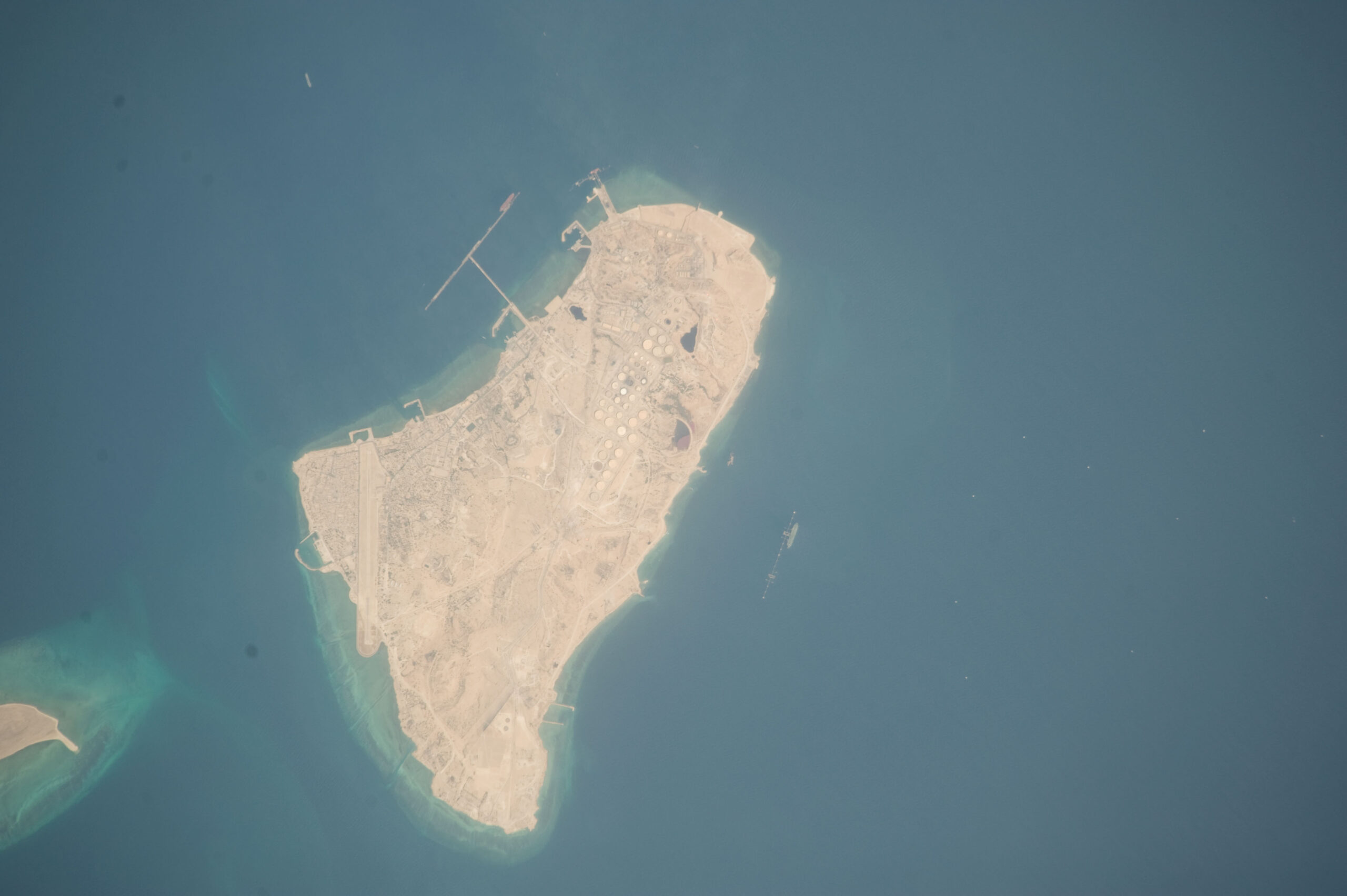
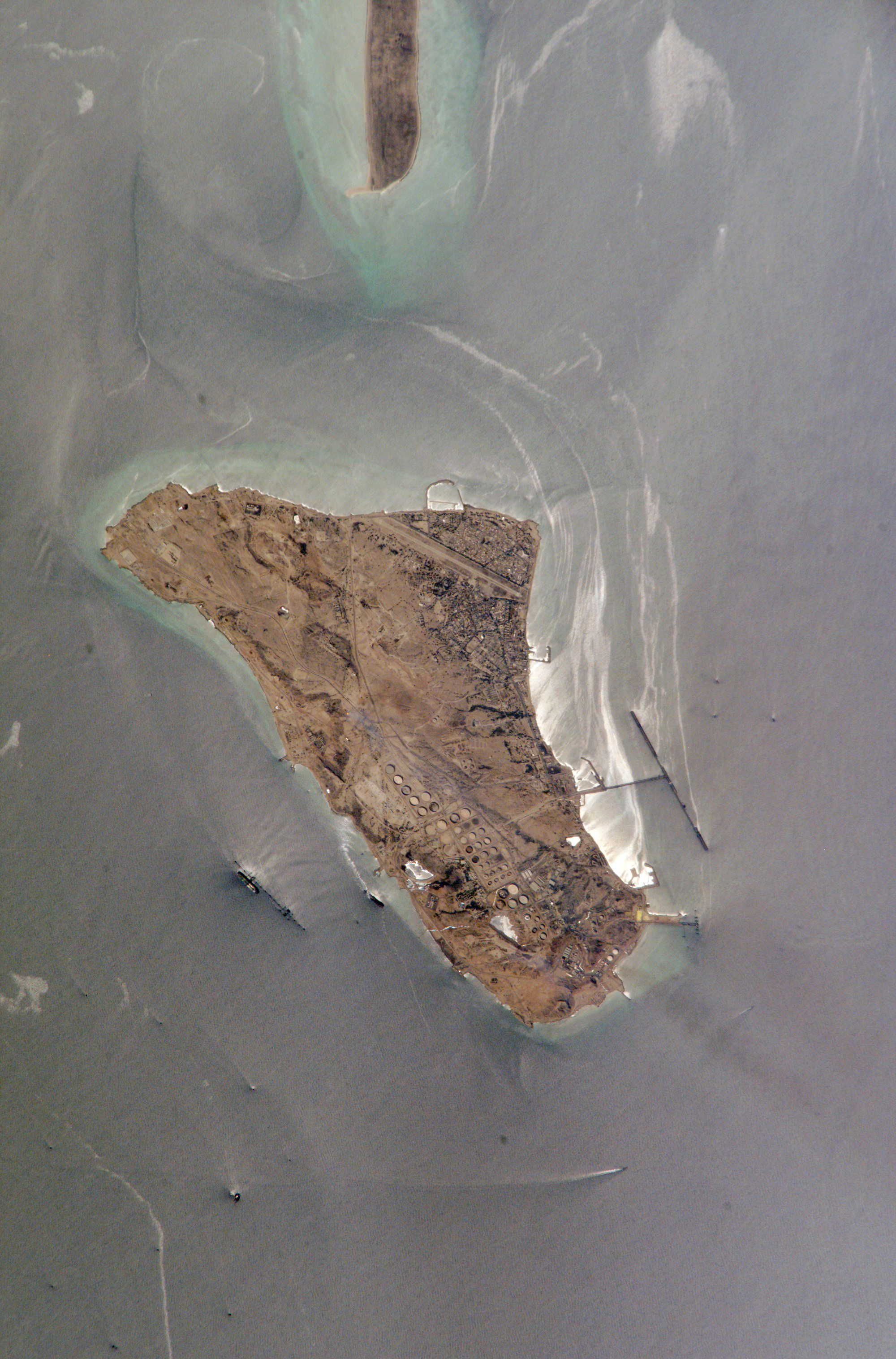
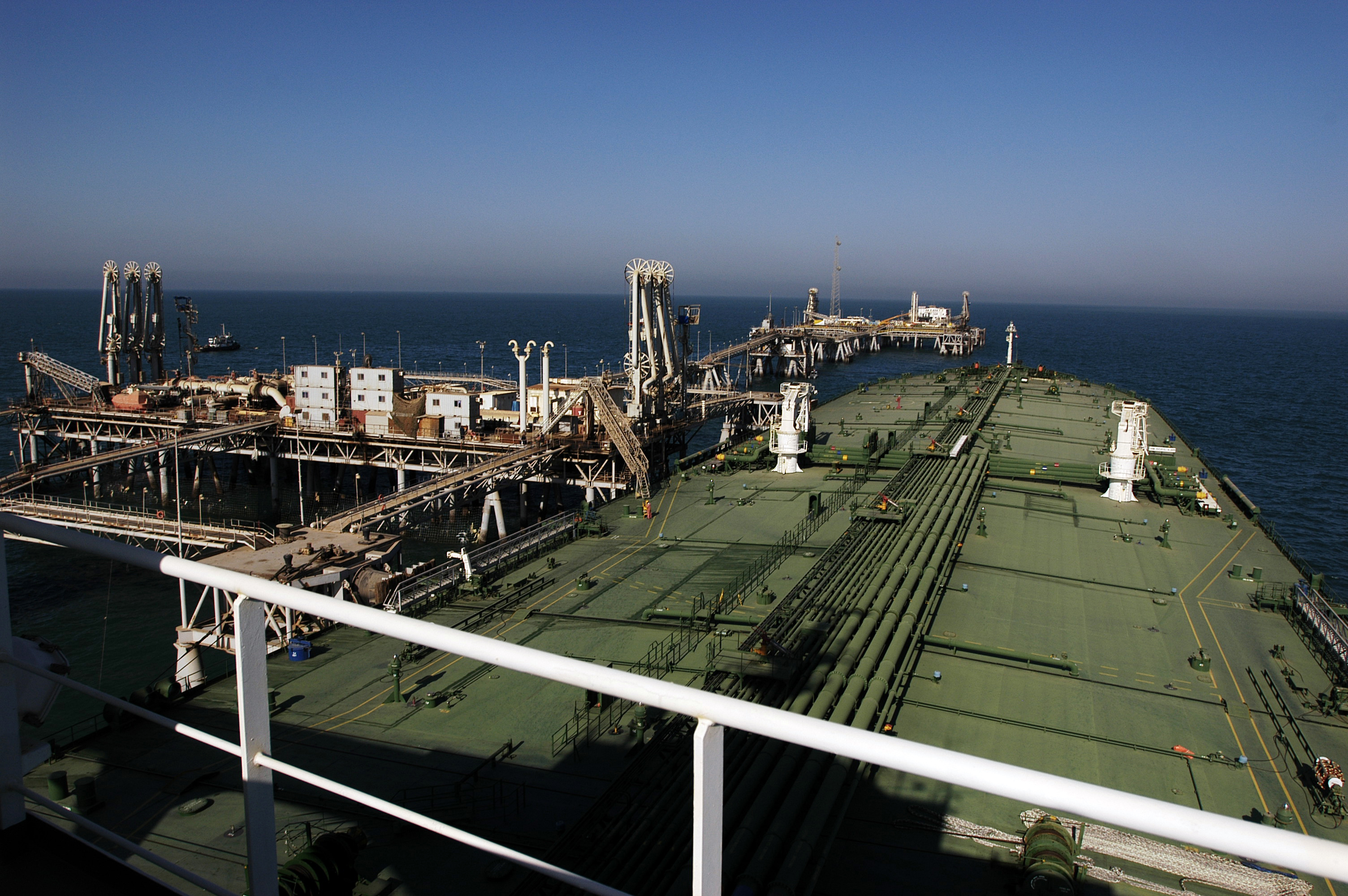
Kharg Island handles between 90 and 96 percent of Iran’s crude oil exports, according to the Council on Foreign Relations, CNN, and PBS. The island sits approximately 21 miles off Iran’s mainland coast in the northern Persian Gulf, measures roughly 8 kilometers long by 4 to 5 kilometers wide, and has served as Iran’s primary crude export hub for approximately 70 years.
The terminal’s theoretical loading capacity reaches 5 to 7 million barrels per day, supported by 55 storage tanks holding approximately 34 million barrels of crude, according to CFR. Iran’s actual throughput at Kharg totals approximately 1.5 to 1.64 million barrels per day — the terminal operates at roughly 20 to 25 percent of its theoretical capacity. Over 8,000 civilians live on the island.
The Iran-Iraq War provides a direct precedent for disruption. Iraqi airstrikes repeatedly disabled Kharg between 1982 and 1986. Iran responded by shifting exports to Lavan Island and Sirri Island, maintaining approximately 1.5 million barrels per day through alternative terminals, according to CBS News. Iran rebuilt and expanded Kharg after the war.
CAPT Lance B. Gordon, USN (Ret.), writing in Small Wars Journal on April 13, 2026, noted that Kharg processes “1.5 million barrels daily” and that “190,000 IRGC personnel are paid” from the revenues it generates — oil funds more than half of Iran’s defense and security budget. Danny Citrinowicz of Israel’s Institute for National Security Studies told PBS NewsHour that Kharg “will be hard to take, hard to hold.”
Petras Katinas of the Royal United Services Institute told PBS NewsHour that disrupting Kharg would force Iranian oil through “a much smaller, costlier and less efficient export system,” reducing government revenue without halting exports entirely. The Iran-Iraq War confirms this — Hormuz itself has proved resistant to full closure, and Kharg’s history suggests seizure would redirect rather than eliminate Iranian crude flows.
How Did Iran Respond to the Threat?
Iran’s political and military leadership issued coordinated rejection within hours of Trump’s statements on June 11, 2026. The speed and breadth of the response — spanning parliament, the foreign ministry, and the defense ministry — indicated pre-positioned messaging rather than improvised reaction.
Ebrahim Azizi, head of the Iranian Parliament’s National Security and Foreign Policy Commission, called Trump “confused and erratic” and warned that Iran would deliver a “firm, crushing, painful, and regret-inducing response” to any attack on Kharg, according to Tasnim News Agency and Iran’s IRNA state news agency. Azizi described Iranian force readiness at Kharg as at “maximum level of military preparedness,” Tasnim reported.
Our Powerful Armed Forces will leave no attack or threat unanswered.
— Abbas Araghchi, Iranian Foreign Minister, via X, June 11, 2026
Araghchi separately told EU foreign affairs chief Kaja Kallas that US strikes had “rendered the ceasefire ineffective,” according to PBS and the Jerusalem Post.
Parliamentary Speaker Mohammad Bagher Qalibaf warned that “wrong strategies and impulsive decisions” would disrupt energy markets and “create an endless quagmire that you will be stuck in for years,” according to the Philadelphia Inquirer. Qalibaf had previously named PSAB as a “legitimate target” — a declaration that converted the March 27 precedent into standing IRGC doctrine.
Defense Ministry spokesperson Reza Taleinik stated that “any crossing of the Islamic Republic’s red lines by the enemy will face a decisive, regret-inducing and harsh punitive response,” according to the Jerusalem Post.
Iran’s responses treated both versions of Trump’s statement — the Truth Social threat and the Fox News hedge — as a single escalatory signal. The distinction between intent and posture, which dominated Western analysis of the contradiction, did not appear in any Iranian official’s framing.
Can Saudi Arabia Replace Iranian Crude?
Saudi Arabia cannot replace Iranian crude if Kharg is disrupted. The theoretical gap between Saudi production and its OPEC+ quota does not represent deployable spare capacity, and the kingdom’s export infrastructure is already saturated.
Saudi Arabia produced 7.76 million barrels per day in March 2026, according to OPEC data. Its OPEC+ quota stands at 10.291 million bpd, creating a gap of 2.53 million bpd. This gap reflects OPEC+ production restraint discipline, not idle wells awaiting activation.
The binding constraint is infrastructure. Aramco CEO Amin Nasser confirmed during the Q4 2025 earnings call that the East-West Pipeline would hit “full capacity in the next couple of days,” according to S&P Global. The pipeline has been maxed at 7 million bpd since March 11, 2026. Yanbu, the Red Sea export terminal at the pipeline’s western end, has a nominal export ceiling of 4.3 to 4.5 million bpd. Roughly 2 million bpd of pipeline throughput supplies Red Sea refineries rather than export berths, and the remaining export capacity is saturated — a corridor already operating under Houthi threat.
Argus Media confirmed in June 2026 that the “Saudi East-West pipeline maxed out on Hormuz closure.” No incremental export capacity exists through Yanbu.
The Hormuz closure stranded approximately 8 to 10 million bpd of Saudi crude that previously transited Persian Gulf terminals at Ras Tanura and Ju’aymah. The East-West Pipeline absorbed what it could. The remainder is shut in. Insurance and compliance mechanisms effectively closed the strait before the IRGC formally announced it.
| Metric | Figure | Source |
|---|---|---|
| Saudi actual production (March 2026) | 7.76M bpd | OPEC |
| OPEC+ quota | 10.291M bpd | OPEC |
| Theoretical gap | 2.53M bpd | OPEC |
| East-West Pipeline capacity | 7M bpd (maxed since Mar 11) | S&P Global / Nasser |
| Yanbu export ceiling | 4.3–4.5M bpd nominal | Argus Media |
| Barrels stranded by Hormuz closure | ~8–10M bpd | Industry estimates |
| Iran exports through Kharg | ~1.5–1.64M bpd | CFR / EIA |
| Kharg share of Iran exports | 90–96% | CFR / CNN / PBS |
Even if production could physically increase, doing so publicly to fill an Iranian supply gap would carry a direct security cost. The IRGC operational exemption that has kept PSAB off the target list since March 27 rests on Saudi Arabia’s perceived non-participation in the campaign against Iran.
Why Has Riyadh Said Nothing?
Saudi Arabia issued no Ministry of Foreign Affairs statement, no Aramco comment, and no royal court readout in response to Trump’s Kharg threat on June 11, 2026. The silence is not a diplomatic choice. It is a structural condition imposed by three interlocking constraints.
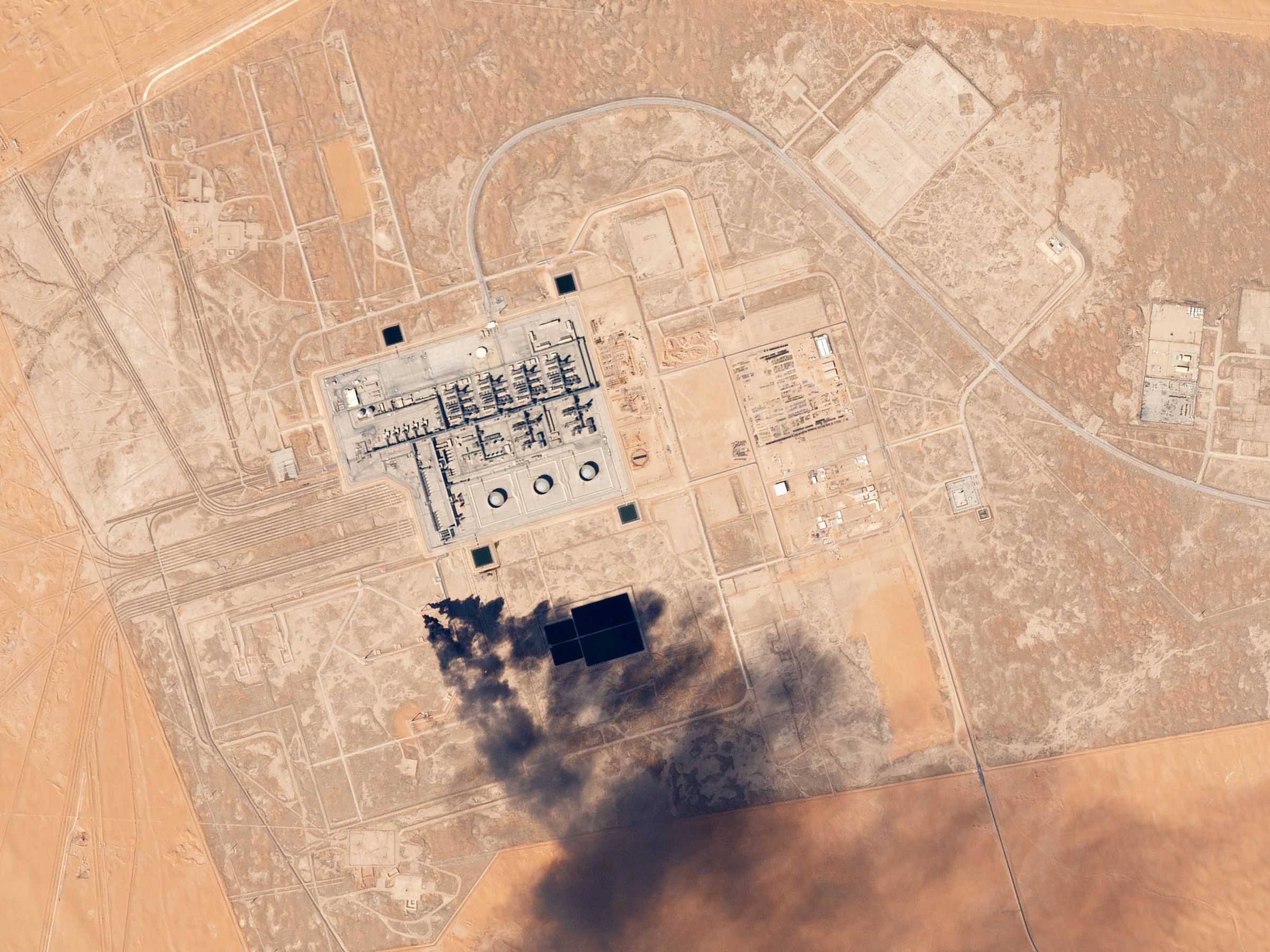
The first is the PSAB exemption. IRGC forces struck Prince Sultan Air Base on March 27, destroying an E-3G AWACS and causing over $4 billion in damage. Since then, PSAB has been excluded from every subsequent major IRGC operation — including the 18-target strike across Kuwait and Bahrain earlier on June 11. Any Saudi action interpreted as supporting a US move against Iranian oil infrastructure risks ending the exemption.
Seth G. Jones, the Harold Brown Chair at CSIS, identified three Saudi installations as Iran’s most likely escalation targets if the kingdom moves to fill a production gap: Abqaiq, which processes over 7 million bpd; Ras Tanura, at 3.4 million bpd; and Yanbu, at 1.3 million bpd. Mona Yacoubian of CSIS described the IRGC’s escalation doctrine as one that “rejects calibrated responses in favor of unbridled escalation” — horizontal across nations and vertical from military to civilian to energy infrastructure. Israel’s Mahshahr strikes demonstrated how dual-use targeting doctrine applies to petrochemical facilities.
The second constraint is fiscal. Saudi Arabia’s Q1 2026 deficit reached SAR 125.7 billion ($33.5 billion), or 76 percent of the full-year official projection of SAR 165 billion. Goldman Sachs estimates the fiscal year deficit at SAR 300 to 330 billion ($80 to $90 billion). If Trump’s threat proves hollow and Brent softens, Aramco’s compressed cash position deteriorates further. If the threat materializes and Kharg is disrupted, the kingdom lacks export infrastructure to capture the resulting demand.
The third constraint is diplomatic. Saudi Arabia has no direct channel to Tehran, no status-of-forces agreement governing PSAB, and no seat at any of the three active mediation tracks. Trump’s Iran communications have bypassed Riyadh entirely, and the kingdom has no mechanism to influence whether the Kharg threat is executed or abandoned.
Aramco’s June 11 activity — a bilateral in Beijing with China’s NEA Deputy Administrator Song Hongkun to discuss “energy security and bilateral oil and gas cooperation,” per Zawya and Middle East Monitor — contained no reference to Kharg. The meeting read as routine energy diplomacy, not crisis response.
What Would a Kharg Seizure Cost the Oil Market?
A Kharg disruption would add $10 to $12 per barrel to global crude prices if Iranian shipments were interrupted but contained, according to Clayton Seigle of CSIS. If facilities were physically damaged rather than seized intact, oil could exceed $100 per barrel. Seigle recommended a naval blockade as a safer alternative, executable “outside the range of the lion’s share of Iran’s weapon systems.”
The market’s June 11 reaction was muted. Brent closed at approximately $93.30 to $93.56 per barrel, up 0.3 to 0.5 percent, according to CNBC. WTI settled near $90.96, up roughly 1 percent. The restrained move suggested geopolitical risk was already substantially priced — the market read Trump’s statements as signaling rather than operational planning. War-risk premiums have proved structural rather than event-driven.
US crude inventories fell 7.2 million barrels in the latest reporting week — the seventh consecutive weekly draw, according to the EIA. The pattern reflects sustained supply tightness that a Kharg disruption would sharply accelerate.
The US maintains over 50,000 troops in the Middle East, with two Marine Expeditionary Units operationally present. Bilal Y. Saab of Chatham House and the Atlantic Council published “The Folly of Seizing Kharg Island” in War on the Rocks on April 1, 2026, arguing against the operation ten weeks before Trump revived it. The GCC Patriot belt’s synchronized depletion means any retaliatory strike campaign would encounter degraded regional air defense coverage.
Seigle warned that “Iran may indeed perceive an existential threat, bringing its counterthreat against regional oil supplies into play.” That counter-threat runs through the same Saudi installations Jones identified as primary IRGC targets — Abqaiq, Ras Tanura, and Yanbu.
Iran’s reclassification of Hormuz from a diplomatic concession to a financial instrument means any Saudi attempt to capture market share from a Kharg disruption would register in Tehran as participation in the economic campaign — regardless of Riyadh’s stated intent.
Frequently Asked Questions
Has the US military ever seized foreign energy infrastructure?
The closest precedent is the 2026 Venezuela intervention, which redirected oil revenues to a US Treasury account. Before that, the 2003 Iraq invasion secured the Rumailah oil fields within 48 hours. Neither operation faced an adversary with Iran’s ballistic missile inventory, IRGC force structure, or ability to strike 50,000-plus US personnel stationed within range across the Gulf.
How quickly could Iran rebuild Kharg if it were seized and returned?
Industry and defense analysts have estimated one to three years for major oil terminal restoration following sustained military damage. Iran expanded Kharg beyond its pre-war capacity after the 1982–1986 Iraqi air campaign — suggesting reconstruction would not simply restore the status quo ante but could yield a modernized facility. That timeline assumes physical damage, not mere occupation; a seized-and-returned terminal in working condition could resume operations within weeks.
Could Saudi Arabia increase production without triggering IRGC retaliation?
Unlikely. Any production surge would appear in OPEC monthly reports, tanker tracking data, and commodity pricing within days. The IRGC has demonstrated pattern-recognition in its targeting — excluding Saudi Arabia when Riyadh remains passive, striking PSAB when it hosted active US combat operations. Filling an Iranian supply gap would register as hostile economic action regardless of diplomatic framing.
What is the case against seizing Kharg Island?
Bilal Y. Saab’s April 2026 War on the Rocks analysis, “The Folly of Seizing Kharg Island,” argued that occupation would require sustained military presence on an island 21 miles from Iran’s mainland, within range of shore-based anti-ship missiles and coastal artillery. Saab contended that seizure would unify Iranian domestic opinion behind the regime and recommended a distant naval blockade as a less escalatory mechanism to achieve the same supply disruption.