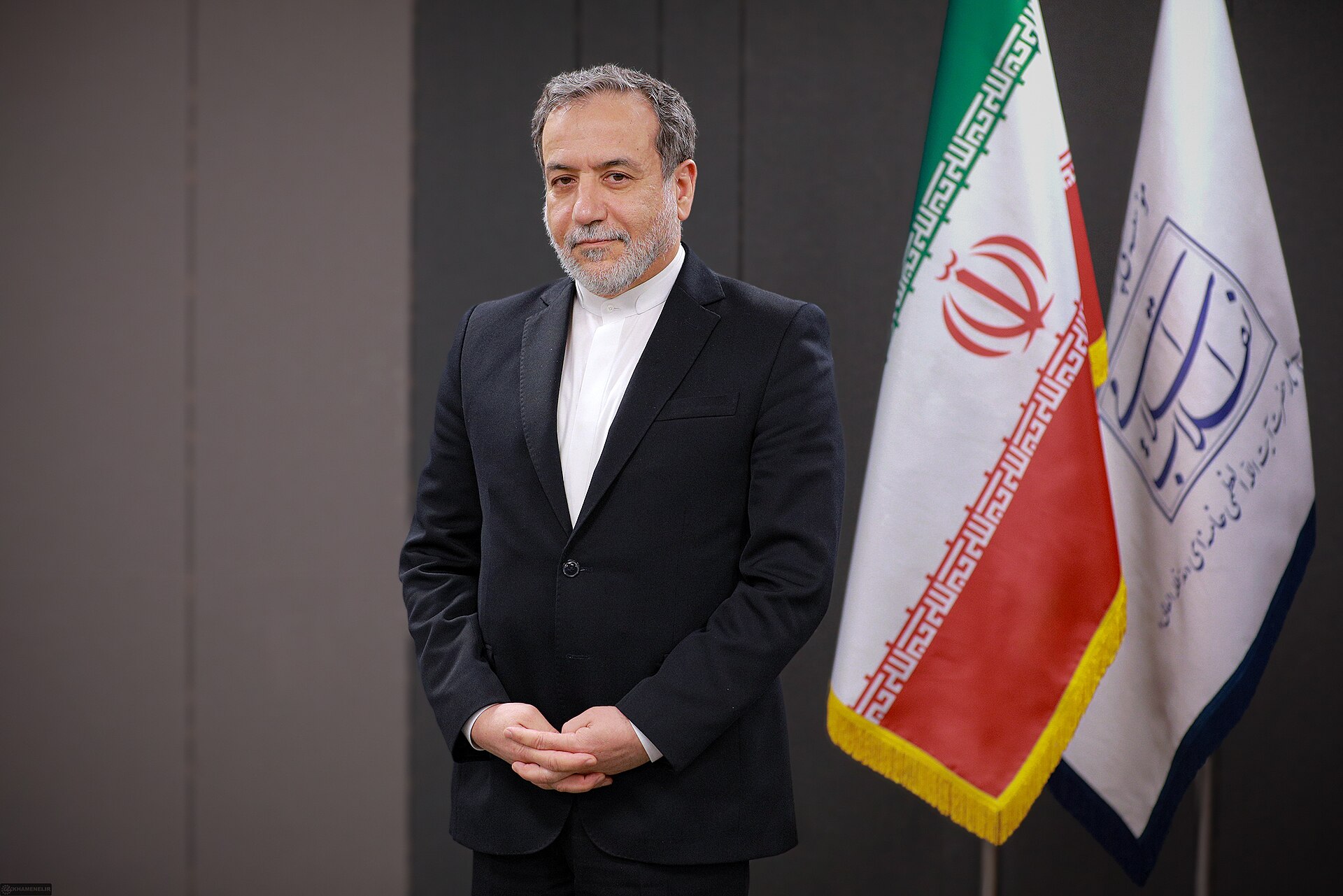
TEHRAN — Iran’s Foreign Minister Abbas Araghchi told state broadcaster IRIB on June 13 that any agreement ending the war must cover “all fronts, including Lebanon.” The condition depends on a Lebanon-Israel ceasefire framework whose terms Hezbollah formally rejected ten days earlier, when Secretary-General Naim Qassem called the US-brokered deal “absurd, humiliating and insulting.”
The demand links the MOU governing Hormuz reopening to a Lebanon outcome no party currently controls. That linkage inserts a precondition at the top of a chain that runs through Sadara’s $3.7 billion debt cliff expiring tomorrow, Brent crude trading more than $20 below Saudi breakeven, and a Saudi fiscal deficit that hit a quarterly record in Q1. Saudi Arabia has material stakes on both sides of this linkage and institutional footing on neither.
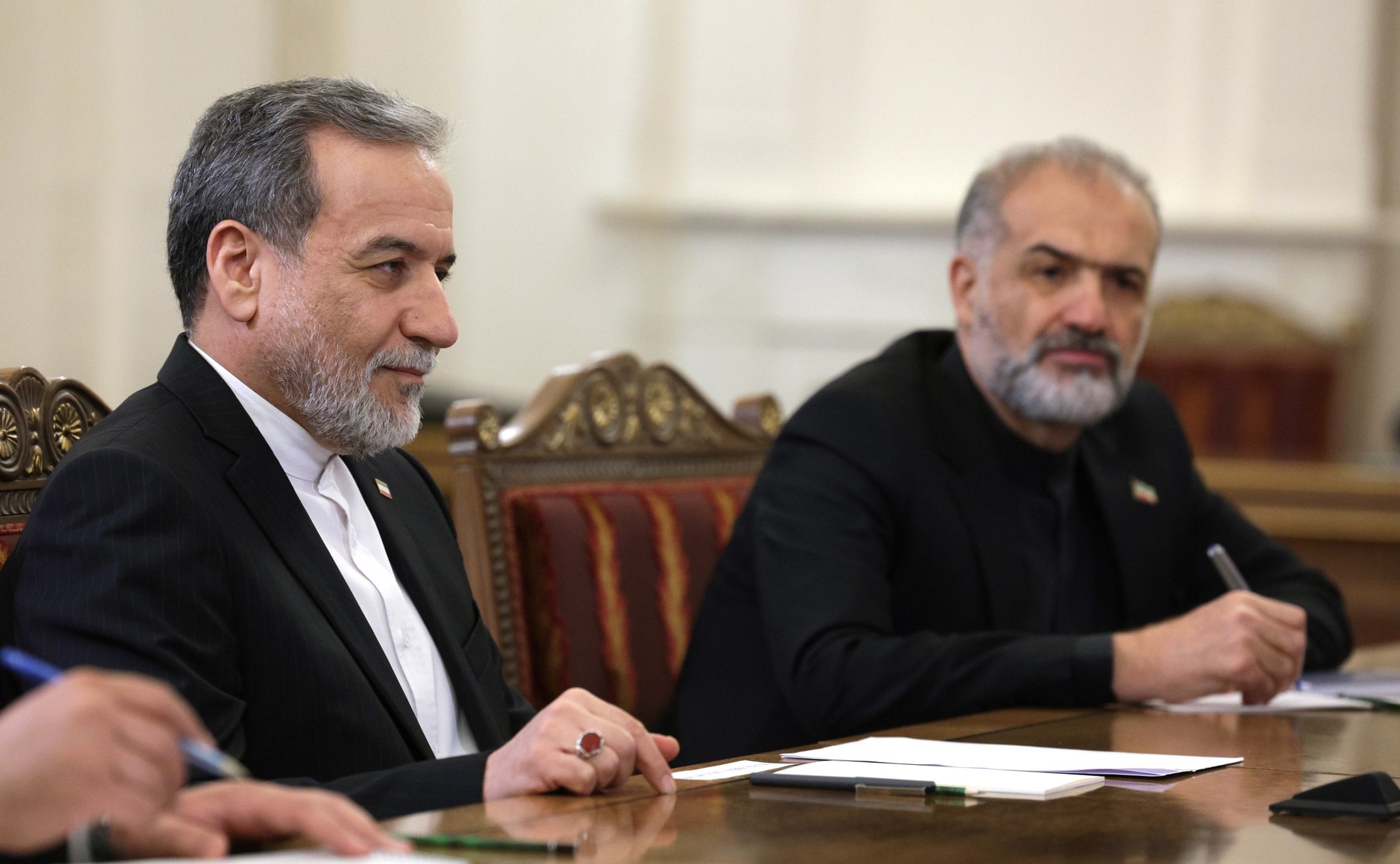
Table of Contents
Araghchi’s “All Fronts” Demand
Araghchi’s formulation, delivered to IRIB and independently confirmed by Fars News Agency, was unambiguous. “We will never leave Hezbollah in Lebanon alone,” he told Iranian state media, “and the end of the war in Lebanon will include all fronts.” The statement came hours after Foreign Ministry spokesperson Esmaeil Baghaei confirmed that the June 14 MOU signing would not proceed, attributing the delay to Washington “repeatedly changing its position.”
“We will never leave Hezbollah in Lebanon alone, and the end of the war in Lebanon will include all fronts.”
Abbas Araghchi, Iran’s Foreign Minister, IRIB, June 13, 2026
The Times of Israel reported on June 12–13 that the MOU draft would include Lebanon in a 60-day ceasefire extension — and that Israeli Prime Minister Benjamin Netanyahu had been kept in the dark during the relevant talks, learning the terms only after calling contacts inside the Trump administration. Netanyahu’s exclusion from the Lebanon dimension of the MOU mirrors Saudi Arabia’s exclusion from the broader deal framework, though Riyadh has issued no public complaint where Netanyahu demanded answers.
The Middle East briefing 3,000+ readers start their day with.
One email. Every weekday morning. Free.
Aaron David Miller of the Carnegie Endowment for International Peace framed the maneuver plainly: “I think they are using Lebanon now to try to push Trump to push Netanyahu and to establish a new equation.” Reuters, in a standalone analysis published June 11, described Iran as waging “a calculated campaign to preserve Lebanon as its last bastion of influence on the Mediterranean” — a campaign whose success now depends on an actor that torpedoed the only available ceasefire framework ten days ago.
What Did Hezbollah Reject on June 4?
Hezbollah Secretary-General Naim Qassem rejected the US-brokered Israel-Lebanon ceasefire deal on June 4 — the framework that Israel and the Lebanese government had provisionally accepted — calling the negotiations “absurd, humiliating and insulting,” according to the Washington Post and NPR. Qassem demanded a comprehensive cessation of hostilities and full Israeli withdrawal with no precondition requiring Hezbollah’s disarmament, terms that neither Washington nor Tel Aviv has shown willingness to accept.
The rejection was not a negotiating posture or a tactical pause. It was a formal, public, on-the-record refusal by the organization that controls southern Lebanon’s military reality and that Iran has now explicitly committed to defending inside the MOU framework. The ceasefire had already been extended four times — from a 10-day US-brokered truce on April 16, to a three-week extension on April 23, to a 45-day extension on May 15, to Hezbollah’s provisional participation on June 1 — before Qassem dismantled the entire architecture three days later.
Lebanese President Joseph Aoun, in a CNN exclusive with Christiane Amanpour on June 5, accused Iran directly of treating Lebanon as “a bargaining chip.” “The people of Lebanon are paying the price…for the sake” of Iran’s interests, Aoun said from the presidential palace. Araghchi fired back on state media the same day: “Save Lebanon from your real foe, Mr. President.” The exchange confirmed what the institutional architecture had already made visible — Iran claims guardianship of a Lebanon outcome that Lebanon’s own head of state identifies as hostage-taking.
The April 8 Gap
The Lebanon condition did not materialize on June 13 — its structural origin is April 8, the day Trump declared the Iran war ceasefire while Israel simultaneously launched what it described as its “most powerful attacks” on Lebanon, killing at least 357 people in a single day, according to NPR. Pakistan’s Prime Minister Shehbaz Sharif stated publicly that Lebanon was supposed to be included in the ceasefire; Netanyahu said the opposite; and the contradiction was never formally resolved, only left open with both sides citing their own version as operative.
For Iran, the April 8 gap was experienced not as ambiguity but as betrayal — a ceasefire that ended the war while accelerating its deadliest theater on the same day the agreement was announced. Araghchi’s “all fronts” demand is a retroactive correction: Iran is insisting that the condition it believed was implicit on April 8, and that was violated within hours, be made explicit and binding in the MOU text.
NBC News’s live blog recorded both Trump and Netanyahu stating that Lebanon was “not included” in the ceasefire at the time of the April 8 declaration. That public record now sits alongside the Times of Israel’s June 12–13 reporting that the current MOU draft includes Lebanon in a 60-day ceasefire extension — a reversal that neither Washington nor Jerusalem has publicly acknowledged, and that Iran is treating as confirmation of its original reading.
Where Does Saudi Arabia Sit in the Lebanon Track?
Saudi Arabia has invested in Lebanon’s stabilization through every channel available to a country with no enforcement role. Foreign Minister Prince Faisal bin Farhan lifted the kingdom’s five-year trade ban on Lebanese imports on June 11 via a phone call with Prime Minister Nawaf Salam — a ban imposed in two stages in 2021 over Captagon trafficking and a Lebanese cabinet minister’s televised criticism of Saudi Arabia’s Yemen intervention. The bilateral trade at stake is $230–240 million annually, representing 5.6% of Lebanese exports and 85% of Lebanon’s GCC trade share.
President Aoun visited Riyadh in March 2025 — his first foreign trip after taking office — and requested the reactivation of a $3 billion Saudi military grant to the Lebanese Armed Forces, suspended since 2016. No Saudi confirmation has been issued as of June 14. US envoy Amos Hochstein visited Saudi Arabia and met Faisal in a consultative capacity, but the meeting produced no Saudi role in the monitoring architecture — Hochstein consulted Riyadh as a stakeholder, not as a partner with operational authority.
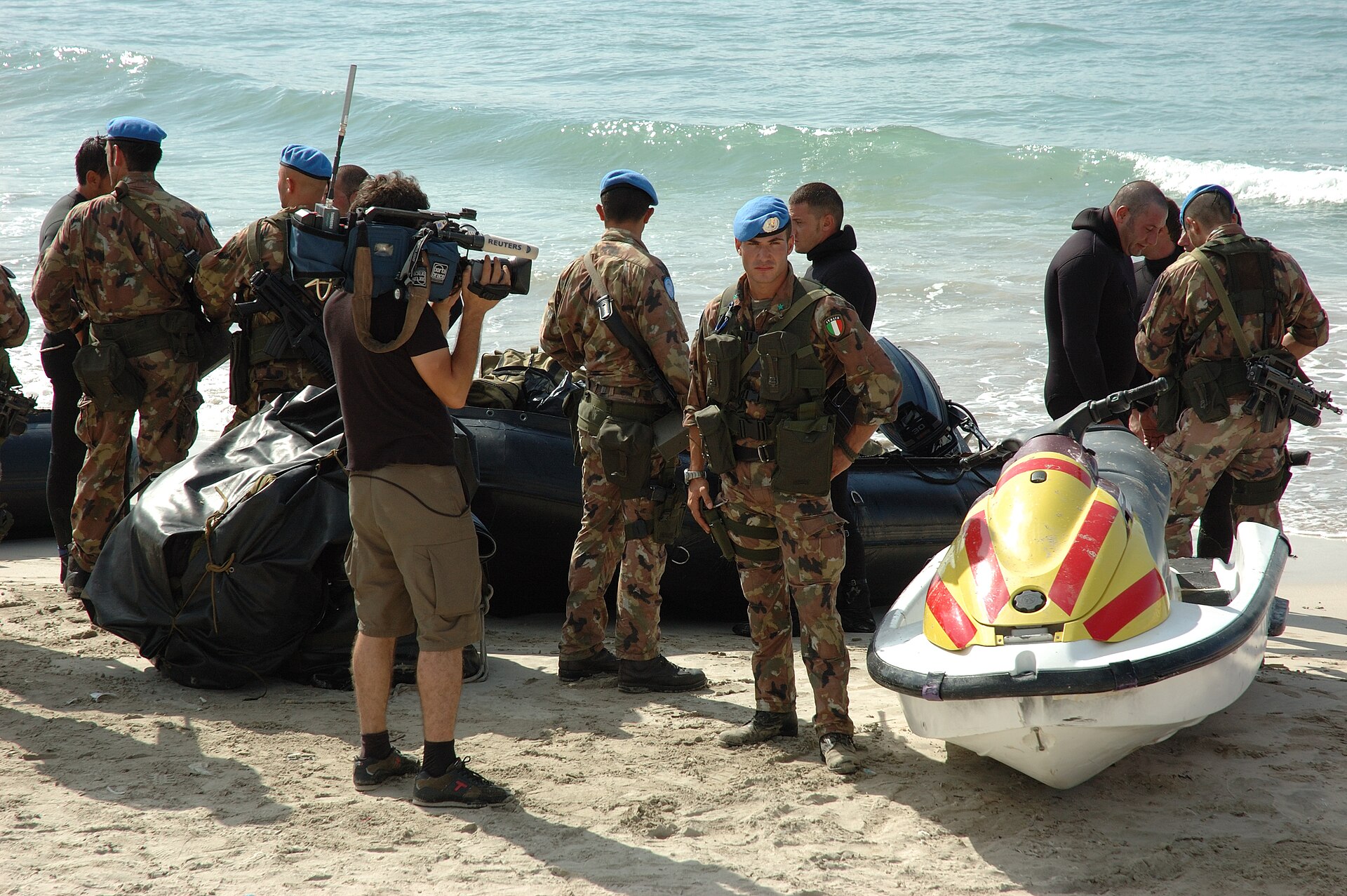
The Lebanon ceasefire monitoring committee, co-chaired by US CENTCOM’s Major General Jasper Jeffers and Hochstein, includes the United States, France, Israel, Lebanon, and UNIFIL. Saudi Arabia has no seat. The MOU negotiations, which now include Lebanon as a precondition, operate through Pakistan, Oman, and Qatar — none of which have offered Saudi Arabia a formal negotiating role. Riyadh is a financier and a well-wisher in a process that requires an enforcer.
Does Washington Treat the Tracks as Separate?
In public, yes — Trump said on April 8 that Lebanon was “not included” in the Iran ceasefire, and no formal State Department statement addressing the Lebanon condition has surfaced since Araghchi’s June 13 demand. In practice, the institutional overlap is total: US CENTCOM co-chairs the Lebanon monitoring committee while the White House simultaneously negotiates the MOU that now contains Lebanon as a precondition, placing Washington inside both tracks even as it publicly maintains they are distinct.
The structural bind Washington faces is that advancing the nuclear talks requires first stabilizing Lebanon, and stabilizing Lebanon requires either constraining Israel or engaging Hezbollah — neither of which is within Washington’s unilateral control. The canceled June 14 signing makes the convergence unavoidable: the ostensibly separate tracks now share a single deadline that neither can independently satisfy.
UNIFIL’s mandate, the only international monitoring mechanism in southern Lebanon, expires on December 31, 2026, under UN Security Council Resolution 2790. The MOU’s 60-day Phase 2 window — where nuclear terms are supposed to be negotiated — could overlap with or extend past that expiration, removing the monitoring architecture for the very Lebanon condition Iran has demanded before any replacement has been proposed.
From Lebanon to Hormuz to Jubail
Iran’s Lebanon condition now sits at the top of a chain that runs through every major financial exposure Saudi Arabia is managing. The Hormuz service fee regime, administered through the Persian Gulf Shipping Authority since May 5, charges approximately $1 per barrel — costing Saudi Arabia an estimated $5.5 million per day on 5.5 million barrels of daily Hormuz transit, or roughly $2 billion annually. The MOU is the diplomatic gate to Hormuz’s normalization, and Iran has placed Lebanon on the other side of that gate.
Sadara Chemical Company’s $3.7 billion in guaranteed senior debt — Aramco at $2.405 billion (65%) and Dow at $1.295 billion (35%) — exits its grace period on June 15, tomorrow. All 26 of Sadara’s Jubail industrial units have been offline since late March, generating zero revenue for eleven consecutive weeks. The Lebanon condition does not cause Sadara’s default directly, but it extends the timeline for the MOU resolution that was supposed to precede Hormuz reopening — the event Jubail needs before any of its units can resume production and service the debt. On the morning of June 14, Israel struck Dahiyeh and Iran’s designated signatory declared the signing had no point — the ceremony did not happen.
Brent crude closed at $86.50–$87.33 per barrel on June 13, after falling more than 4% on Iran’s denial of a Sunday signing. Saudi Arabia’s fiscal breakeven sits at $108–$111 per barrel — a gap of $21–$24 on every barrel sold. That deficit compounds a first-quarter shortfall that Argaam reported at SAR 125.7 billion ($33.5 billion), the largest on record. Every day the MOU remains unsigned, the condition blocking it is controlled by an organization in Beirut that takes its instructions from Tehran, not from any capital with a stake in resolving it.
Background
The Iran-US MOU has been under negotiation since the April 8 ceasefire, brokered through three parallel mediation tracks: Pakistan, which carried dual letters from PM Sharif and Army Chief Munir to Khamenei on June 7; Oman, which co-administers Hormuz shipping with Iran under a bilateral arrangement; and Qatar, which extended a $6 billion credit line to Iran on May 25 and sent a delegation to Tehran on June 10. Saudi Arabia participates in none of these tracks despite being named among twelve “approvers” by Trump on June 11.
Iran’s pattern of condition expansion has been consistent throughout the negotiations. Phase 1 of the MOU contains no nuclear terms — enrichment caps, stockpile disposal, and IAEA access were all deferred to a 60-day Phase 2 that has no agreed framework. Iran reframed Hormuz “tolls” as “service fees” to survive the MOU’s toll prohibition, and parliament codified the fee structure on March 30–31, before the MOU draft existed. The Lebanon addition follows the same logic: each time Washington announces proximity to a deal, Iran widens the scope rather than signing.
Frequently Asked Questions
Has Iran expanded MOU conditions before the Lebanon demand?
Yes, repeatedly. Khanalizadeh, an analyst appearing on Iranian state television in late May, said the current MOU draft violates eight of ten conditions Supreme Leader Khamenei set for any agreement with the United States. Iran’s IRNA published a seven-point MOU summary containing zero nuclear provisions in Phase 1 — all enrichment, stockpile, and IAEA terms were pushed to a 60-day Phase 2 with no agreed framework. The Hormuz fee rebranding from “tolls” to “service fees” was another scope expansion that survived the draft’s prohibitive language. Lebanon is the latest in a pattern where each announced proximity to signing triggers new conditions rather than a ceremony.
Does Pakistan have a role in the Lebanon dimension of the MOU?
Not formally, but Pakistan’s structural exposure is substantial. Islamabad has 13,000 troops stationed in Saudi Arabia’s Eastern Province under the Saudi Military Defense Agreement signed in September 2025, giving it a direct security interest in Hormuz and, by extension, in whatever blocks Hormuz reopening — though the Stimson Center has described the SMDA as “largely symbolic.” PM Sharif stated on April 8 that Lebanon was supposed to be included in the Iran ceasefire, a claim Netanyahu immediately contradicted, making Pakistan the only mediating party to have publicly endorsed Iran’s “all fronts” reading before Araghchi made it explicit on June 13.
What is the current status of Iran’s nuclear compliance?
The IAEA Board of Governors voted 21-10-3 on June 12 — one day before Araghchi’s Lebanon demand — to declare Iran in non-compliance with its safeguards obligations, the first such ruling in twenty years. The Institute for Science and International Security estimates that 440.9 kilograms of highly enriched uranium at 60% enrichment remains unverified for more than 97 days, with approximately 80 kilograms at the Fordow facility where roughly 70% of centrifuge infrastructure remains intact. At current enrichment levels, ISIS assesses Iran could produce enough fissile material for approximately nine weapons within three weeks — a timeline the MOU’s 60-day Phase 2, if it ever begins, would need to address before any nuclear terms take effect.
Has any major Western outlet covered Lebanon as a gating condition for the MOU?
Coverage has been fragmented rather than absent. Reuters published a standalone analysis on June 11 framing Iran’s Lebanon strategy as “a calculated campaign,” and Iran International reported on June 12 that “Lebanon may become the first test of the emerging Iran-US deal.” The Times of Israel’s liveblog on June 12–13 provided the most specific sourcing, reporting the MOU draft includes Lebanon in a 60-day ceasefire extension and that Netanyahu was kept in the dark. CNN’s June 5 exclusive with President Aoun produced the strongest third-party validation of the “bargaining chip” framing from a non-aligned head of state. No Financial Times or Bloomberg standalone analysis of Lebanon as a gating condition for the MOU signing delay has appeared as of June 14, and no formal Saudi MOFA response to the linkage has been issued.