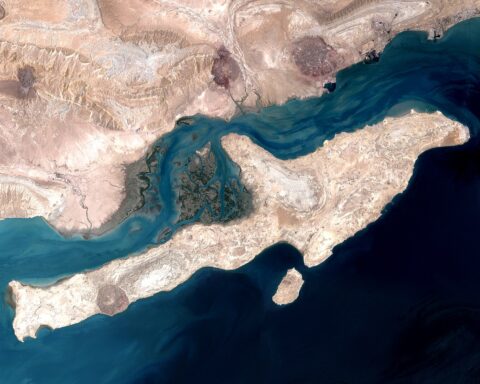
DUBAI — Saudi Arabia signed two documents in twenty-five days that cannot both be true. The first, dated May 21, 2026, was a joint letter to the International Maritime Organization in which five Gulf states told the world’s shipping operators to ignore the Persian Gulf Shipping Authority. The second, communicated through a June 13 call to Pakistan and a June 15 call to Tehran, was Riyadh’s formal welcome of a US-Iran agreement that leaves the same authority intact. Between those two acts, no Saudi statement reconciles them. The Geneva signing is scheduled for June 19. The gap between the IMO letter and the MOU is now the central exposure in Saudi Arabia’s Hormuz position — measurable in shipping insurance premia that have climbed from 0.25 to 3-8 percent of vessel value, in the PGSA’s continued operation under OFAC sanctions, and in a UAE jurisdictional map that places the disputed maritime zone on Emirati sovereign territory. The Washington Institute’s June 2026 audit of Saudi MOFA statements found zero on the toll mechanism, and neither the May 21 letter nor the June 15 welcome named the PGSA directly. What follows is the documentary record of a contradiction that the Geneva signing will not resolve.
Table of Contents
- What the GCC-IMO Letter Actually Says
- Why Oman Did Not Sign
- What Does the MOU Leave in Place?
- The Three-Document Sequence
- Why Are Shippers Caught in a Three-Way Bind?
- Service Fee or Toll? Iran’s Legal Engineering
- What Happens When the Map Lands on Emirati Soil?
- What Does Enforcement Look Like After Geneva?
- The Oman Back-Channel
- How Much Does the Contradiction Cost Saudi Arabia?
- Frequently Asked Questions
What the GCC-IMO Letter Actually Says
On May 21, 2026, Bahrain, Kuwait, Qatar, Saudi Arabia, and the United Arab Emirates filed a joint letter to the International Maritime Organization warning commercial and merchant vessels not to engage with the Persian Gulf Shipping Authority and not to transit the Strait of Hormuz using routes designated by Iran. Bloomberg, which obtained the text, reported the letter on the same day. It is the first multilateral instrument since the PGSA’s May 5 constitution in which a Saudi signature appears next to a direct repudiation of the authority’s legitimacy.
The letter is advisory, not coercive. It tells ship owners and flag states what five GCC capitals consider the authoritative reading of UNCLOS Article 38. It does not create a maritime exclusion zone. It does not authorise interdiction of vessels that pay PGSA fees. It does not require any IMO member state to deny port access to PGSA-compliant ships. What it does is establish a paper trail: five Gulf governments, on record, calling the PGSA a body whose claims international shipping should disregard.
Saudi Arabia is one of those five signatures. Iran’s foreign ministry, IRGC media outlets, and the PGSA itself have not been forced to respond to a Saudi statement by name — because Riyadh’s Ministry of Foreign Affairs has issued no individual public position on the toll mechanism. The Washington Institute, in its June 2026 brief “Countering Iran’s Latest ‘Smart Control’ Gambit in the Strait of Hormuz,” noted that Saudi Arabia’s MOFA made “zero public statements on the toll mechanism throughout the war.” The IMO letter is the only documentary record of the Saudi position, and it is a collective one.
Why Oman Did Not Sign
The sixth GCC member did not co-sign. Oman’s absence is the structural detail that defines the letter’s reach. Bloomberg’s May 21 report attributed the non-signature to Muscat’s 1974 bilateral treaty with Iran governing the Strait’s inbound shipping lane — the only standing bilateral agreement between a GCC state and Tehran on Hormuz navigation. That treaty predates UNCLOS itself, and Oman has shown no willingness to subordinate it to a multilateral statement that would force a choice between the two.
The consequence is geographic. The Strait has two lanes, separated by a traffic separation scheme administered jointly through IMO conventions. The inbound lane runs along the Omani side. If Oman is not a co-signatory, then the GCC letter speaks for the coastal states along only one side of the seaway — the side that does not include the lane Iran most needs to credibly constrain. Iran’s parliament codified the PGSA fee regime as compensation for “navigational services” on March 30-31, 2026, language engineered to fit UNCLOS Article 26(2)’s “specific services rendered” carve-out. If the Omani lane sits outside the GCC’s collective rejection, the legal asymmetry favours Iran’s framing.
The Middle East briefing 3,000+ readers start their day with.
One email. Every weekday morning. Free.
Bloomberg’s same report flagged a parallel track. Iran and Oman are in bilateral talks on joint management arrangements for the inbound lane. If those talks produce a written agreement, the PGSA would acquire the form of an international bilateral arrangement rather than a unilateral imposition. EJIL Talk, in its April 20 commentary “Codifying Coercion: Iran’s ‘New Legal Regime’ and the Law of International Straits,” set the analytical stake plainly: “a fee regime premised on bordering-state discretion to screen, price, and selectively deny passage would transform a legal right of passage into a purchased license.”
What Does the MOU Leave in Place?
The US-Iran MOU prohibits “tolls” for Hormuz transit. Iranian law calls the same per-vessel charge a “service fee.” This is the gap the agreement does not close. Iran’s parliament passed the PGSA fee-collection authority in late March — before any MOU draft existed — and the language used was deliberately drafted to fit a UNCLOS carve-out rather than to violate the convention’s core fee prohibition. By the time American negotiators wrote the toll ban into the MOU, the policy they intended to prohibit had already been renamed.
FM Abbas Araghchi made the position explicit on June 14, the day Geneva was originally scheduled to receive the signing. Speaking to RFE/RL, he said Iran “will charge ships for services rendered” at Hormuz. The same statement signalled that fee collection is compatible with — and will survive — the MOU framework. There is no public Iranian undertaking to dissolve the PGSA, refund collected fees, or withdraw the parliamentary legislation that established the authority’s jurisdiction. The MOU’s prohibition on tolls was drafted while Iran’s fee mechanism was already in statute, and the MOU’s drafting silence on these questions is what the GCC-IMO letter implicitly addresses, and what Saudi Arabia’s June 13-15 endorsement of the MOU implicitly accepts.
IMO Secretary General Arsenio Dominguez gave the multilateral system’s view six weeks before the GCC letter was filed. “There is no international agreement where tolls can be introduced for transiting international straits,” he said in an April 9 statement reported by Voice of Emirates on April 28. The MOU’s drafters had this language available. They chose the word “toll.” Iran’s lawyers had already chosen the word “fee.”
The Three-Document Sequence
The sequence is short enough to be tabulated. In twenty-nine days, three formal instruments issued or were scheduled alongside two diplomatic acts. None of them references the others.
| Date | Document | Saudi role | PGSA status implied |
|---|---|---|---|
| May 21, 2026 | GCC joint letter to IMO | Co-signatory (5 of 6 GCC) | Illegitimate; ignore |
| May 27, 2026 | OFAC sanctions designation | Not a signatory; aligned | “Extortion mechanism”; IRGC front |
| June 13, 2026 | Saudi FM call to Pakistan FM | Endorses MOU process | Not mentioned |
| June 15, 2026 | Saudi FM call with Araghchi | Welcomes the agreement | Not mentioned |
| June 19, 2026 | Geneva signing (scheduled) | Named “approver” without seat | Tolls prohibited; “fees” undefined |
The Asharq Al-Awsat readout of the June 15 call quoted Faisal bin Farhan as having “expressed the Kingdom’s welcome for the agreement reached between Iran and the United States to end military operations.” The PGSA is not named in the readout. The IMO letter is not referenced. Neither is the OFAC designation that called the same body an “extortion mechanism” eighteen days before Faisal’s welcome was conveyed. Arab News, repeating the same readout on June 16, used identical language and added nothing on the toll mechanism. The Saudi MOFA itself issued no direct statement on either date.
This is what it means to be on both sides of a document chain. The IMO letter is a multilateral rejection of PGSA legitimacy. The MOU endorsement is a bilateral welcome of an agreement that does not address PGSA legitimacy. The Saudi signature is on both. Neither side has been retracted, qualified, or reconciled.
Why Are Shippers Caught in a Three-Way Bind?
Ship operators transiting Hormuz now face three incompatible pressures simultaneously. Comply with PGSA routing and pay the fee, and they risk OFAC secondary sanctions exposure — the May 27 designation labelled the PGSA an “extortion mechanism” and an IRGC front, and US Treasury enforcement actions have followed similar designations for tanker operators. Ignore PGSA and they face IRGC interdiction in waters the authority claims to manage; the PGSA continued operating after the OFAC designation, and there is no indication enforcement has softened. Pay the fee and comply with GCC non-recognition, and they hold no documentation any IMO member state will treat as a transit authorisation.
The economic compression that bind produces is already visible in the war risk insurance market. Premiums rose from approximately 0.25% of vessel value pre-conflict to between 3% and 8% by mid-2026, according to Howden Group Holdings and the Irregular Warfare Journal. For a large tanker, that translates to between $3 million and $8 million per transit. Lloyd’s Joint War Committee redesignated the entire Arabian Gulf as a conflict zone, formalising a status that had been informally priced into rates since the spring. The industry trade associations — ICS, BIMCO, INTERCARGO, INTERTANKO, IMCA, and OCIMF — issued joint guidance in May 2026 titled “Industry Guidance on the Safe Management of Vessel Transit through the Strait of Hormuz,” warning of simultaneous kinetic threats, electronic warfare, mine risk, AIS spoofing, and congestion. A ship complying with PGSA routing is operating in a corridor where the coastal authority issuing the permit is also the entity associated, by the May 27 OFAC designation, with the electronic and kinetic risk.
Daily transit volumes reflect what insurers, operators, and crews are pricing. Hormuz averaged two to six commercial transits per day in mid-June 2026, against a pre-conflict norm of approximately sixty per day, according to Statista and Windward AI maritime tracking. That is a ninety percent collapse in throughput. The bind is not theoretical. Six hundred vessels were reported by Kpler as standing off in early June, declining to enter the Strait until the legal and operational picture clarified. The MOU was supposed to restore the flow. The GCC-IMO letter implicitly acknowledges that even if the MOU is signed, the PGSA’s presence in the seaway will not let it.
Service Fee or Toll? Iran’s Legal Engineering
UNCLOS Article 26 prohibits coastal states from charging foreign ships “by reason only of their passage” through territorial waters. Paragraph 2 of the same article carves out an exception: charges may be levied “as payment for specific services rendered” to the vessel. Iran’s March 30-31 parliamentary legislation, codifying the PGSA’s fee-collection authority, was written to claim that exception. The fee is not described as a transit charge. It is described as compensation for “navigational services” — vessel tracking, traffic separation enforcement, environmental compliance verification, and a single-window administrative interface.
No international tribunal has adjudicated whether a blanket per-barrel charge applied to all transiting vessels qualifies as payment for “specific services rendered” within the meaning of Article 26(2). The argument that it does not — that the charge is fee-coded transit revenue dressed in administrative language — is what Chatham House framed in its April 2026 commentary: “temporary measures cannot infringe on the iron-clad guarantee to shipping of all nations of unimpeded passage through straits used for international navigation.” EJIL Talk made the same point in stronger terms, warning that a discretionary fee regime “would transform a legal right of passage into a purchased license.”
Iran’s lawyers know this. The March 30-31 timing was the point. By codifying the fee mechanism eight weeks before the PGSA’s formal constitution and roughly seventy days before the MOU draft circulated, Iran’s parliament locked in a domestic legal claim that the charge predates and is independent of any bilateral negotiation. Iranian parliamentarian Ebrahim Azizi told Maritime Executive on May 16 that the PGSA would “soon reveal the detailed mechanics of the toll regime,” and indicated vessels would be required to submit ownership details, insurance coverage, crew manifests, and cargo specifications before receiving a transit permit. The administrative apparatus is calibrated to look like a port-state inspection regime — which, under UNCLOS Article 26(2), would be lawful.
What Happens When the Map Lands on Emirati Soil?
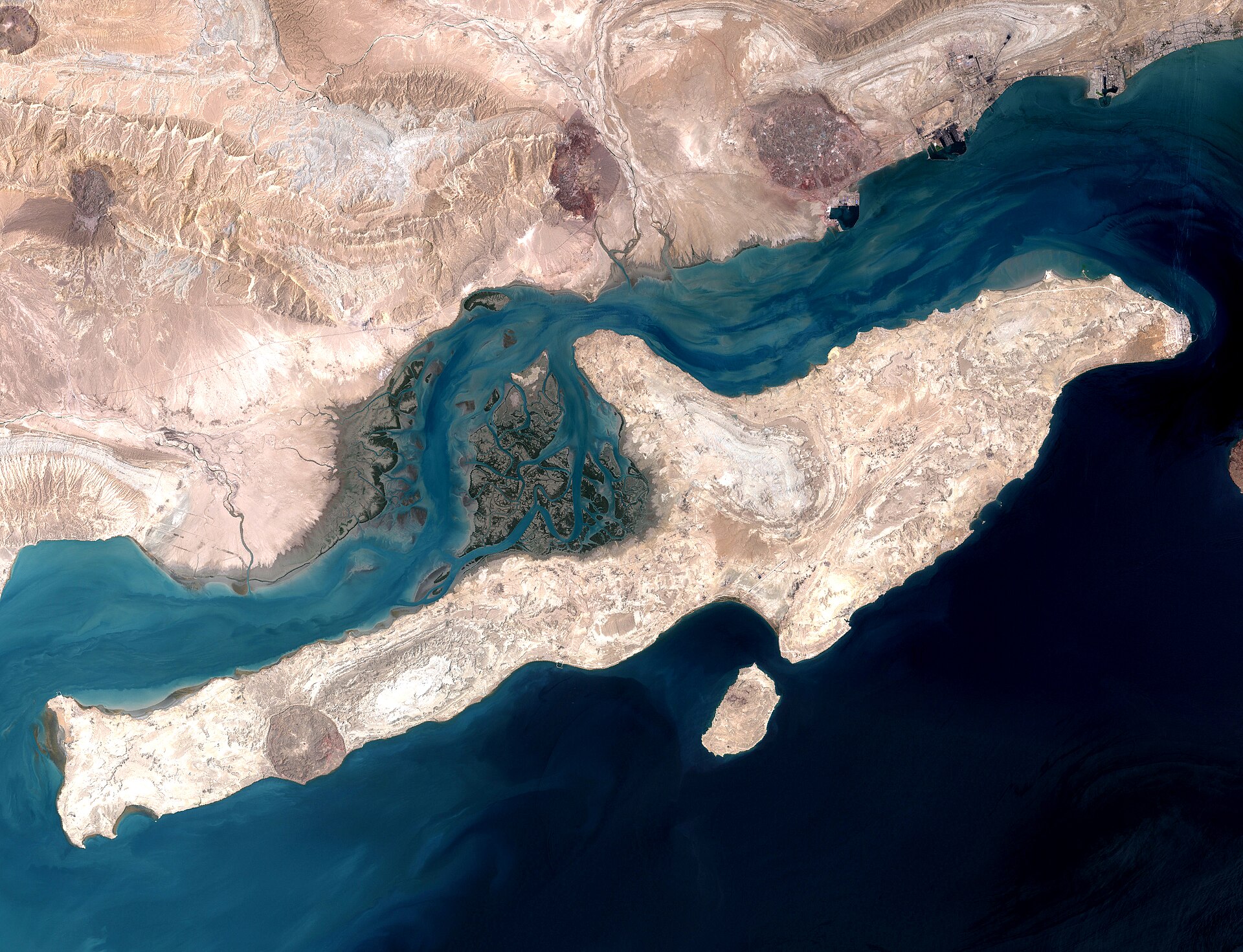
The PGSA published its jurisdictional map on May 22, the day after the GCC-IMO letter was filed. Euronews’s May 22 reporting confirmed the geographic anchors: the eastern boundary of the claimed maritime management zone runs south of Fujairah, and the western boundary runs to Umm al-Quwain. Both are UAE sovereign territory. The PGSA is asserting administrative jurisdiction over waters that abut, and in places intersect, Emirati coastal claims.
This is the detail that turned the GCC-IMO letter from a Saudi-Iranian dispute into a multilateral one. The UAE is one of the five signatories. Its territorial waters are now the documented western edge of an Iranian-claimed jurisdiction the UAE has formally repudiated. If the MOU signing produces no language nullifying the PGSA’s geographic claims — and as of June 15 the draft did not — the Emirates will hold a co-signed multilateral rejection of an Iranian map whose lines touch its shore, alongside a Saudi-co-endorsed bilateral agreement that the same lines may continue to define.
Iran’s response has been operational rather than diplomatic. The PGSA continued operating after the OFAC designation. PressTV, the Iranian state-affiliated outlet, described the body as a “sovereign governance system” providing “a verifiable single window” for Hormuz transit. GlobalSecurity.org reported a PGSA statement on May 29 declaring that “sanctions won’t help US gain waterway’s control.” No formal Iranian diplomatic rebuttal of the GCC-IMO letter has been issued. The functional reply is that the authority is still issuing transit permits and the Iranian navy continues to enforce them. The IRGC maritime radio broadcast obtained by Xinhua on June 14 made the enforcement posture explicit.
What Does Enforcement Look Like After Geneva?
The MOU’s drafting silence on PGSA enforcement is what will determine whether the GCC-IMO letter remains a paper position or becomes a maritime confrontation. If the Geneva text is signed without language requiring Iran to dissolve the authority, refund collected fees, or withdraw the March 30-31 legislation, the operational status quo persists. Iranian permits continue to be issued. IRGC patrols continue to enforce them. OFAC sanctions continue to bar US-linked operators from paying them. The five GCC capitals that signed the IMO letter continue to maintain that the permits are not authoritative.
The choice each shipping operator makes after Geneva will compress into one document: the war risk insurance binder. Underwriters set premia based on the documented legal posture of the route. With the GCC letter on file and the OFAC designation in force, the legal posture is hostile to PGSA compliance. With Iranian enforcement on the water, the operational posture is hostile to PGSA non-compliance. Howden Group Holdings’ 3-to-8 percent of vessel value premium is the price of that gap, and the gap does not close on June 19. The six-association joint industry guidance described above instructs operators to treat the Strait as a high-threat environment regardless of what governments sign.
For Saudi Arabia specifically, the post-Geneva position is the IMO letter without a back-out clause. If Riyadh does not raise the PGSA question publicly before June 19, the signature stands. If it does raise it, the welcome conveyed to Araghchi on June 15 becomes an open question. The Washington Institute’s documentation of MOFA silence is the public record on how that question has been handled to date.
The Oman Back-Channel
Iran-Oman bilateral management talks, reported by Bloomberg on May 21 alongside the GCC-IMO letter coverage, are the legal hedge. If the two states reach a written joint-management arrangement covering the inbound lane, the PGSA acquires bilateral cover. Oman’s 1974 treaty already gives Tehran a partner. A new arrangement built on top of it would, in EJIL Talk’s framing, make the PGSA something other than the unilateral imposition the GCC letter describes.
Saudi Arabia has no equivalent instrument. There is no Saudi-Iranian bilateral treaty covering Hormuz transit. There is no Saudi-Iranian working group on maritime fees. The Beijing-mediated Saudi-Iran restoration of ties in March 2023 covered diplomatic relations and consular access; it did not address the Strait. The Washington Institute’s June 2026 brief is the public record on this point.
That absence is what made the May 21 GCC letter the only Saudi documentation of a position. It is also what makes the June 13 and June 15 endorsements of the MOU look like a substitute rather than a complement. The Pakistan call relayed Saudi endorsement to Tehran via a third party — Faisal bin Farhan to Ishaq Dar — without any direct MOFA statement. Two days later the Araghchi call carried the welcome directly. Neither readout mentioned the IMO letter. Neither mentioned the OFAC designation. Neither mentioned the PGSA.
How Much Does the Contradiction Cost Saudi Arabia?
The Washington Institute’s June 2026 estimate of Saudi exposure to the PGSA’s $1-per-barrel charge — applied to the 5.5 million barrels per day that constitute Saudi Arabia’s pre-war Hormuz crude volume — was approximately $2 billion per year, or $5.5 million per day. That figure assumes the PGSA collects the fee. The OFAC designation does not stop it from collecting; PGSA operations continued after May 27. The GCC-IMO letter does not stop it either; the letter is advisory.
The fiscal context is the squeeze. Saudi Arabia has been rerouting crude exports through the East-West Pipeline to the Yanbu terminal on the Red Sea, running at maximum capacity of approximately 7 million barrels per day since late March 2026, according to SPGlobal and Bloomberg. That capacity ceiling means roughly 1.5 to 2 million barrels per day of pre-war Hormuz volume — depending on the demand mix — still has to transit the Strait. The PGSA fee survives the MOU’s “toll free” framing as a “service fee”, and any Saudi cargo that moves through Hormuz pays it or risks IRGC interdiction.
The structural cost is the more durable one. Saudi Arabia is now formally on record — through the IMO letter — telling the world’s shipping community that PGSA permits are not legitimate transit authorisations. It is also on record — through the MOU endorsement — accepting an agreement that does not eliminate those permits. The MOU’s prohibition on “tolls” does not reach what Iran has legally reclassified as “fees,” and Riyadh’s welcome of the framework did not condition itself on closing that gap.
The Geneva signing is on June 19. The IMO letter has not been withdrawn. The Saudi MOFA has not issued a public position reconciling the two. The Washington Institute’s audit of the silence is the public record; the Asharq Al-Awsat readout is the public welcome; the Bloomberg report is the public rejection. Iran is monetising Hormuz, not closing it, and the documents Saudi Arabia has signed and endorsed describe that fact in mutually exclusive terms.
Frequently Asked Questions
Is the GCC-IMO letter legally binding on shippers?
No. The letter is an advisory submission to the International Maritime Organization, not a binding flag-state regulation. It tells IMO members and shipping operators how five GCC governments interpret UNCLOS Article 38, but it imposes no penalty for compliance with PGSA routing. The instrument that could give it teeth — a coordinated GCC flag-state advisory denying port access to PGSA-permitted vessels — has not been issued. As of the May 21 filing, it remains a documentary record of position, not a maritime enforcement tool.
Has Iran formally responded to the GCC-IMO letter?
No diplomatic rebuttal has been issued through Iran’s foreign ministry. The functional response came from PressTV and the PGSA itself, which characterised the body as a “sovereign governance system” and asserted on May 29 that “sanctions won’t help US gain waterway’s control.” Iran’s response has been operational — continued PGSA permitting and IRGC enforcement — rather than legal. No counter-letter to the IMO has been filed by Tehran, and no Iranian official has named Saudi Arabia in connection with the letter.
Could Saudi Arabia withdraw its signature from the IMO letter to align with the MOU?
Technically yes, but it would require a formal communication to the IMO and the consent of the other four GCC signatories, since the letter was filed jointly. No mechanism for unilateral withdrawal of a joint submission exists in IMO practice. A withdrawal would also publicly signal Saudi acceptance of PGSA legitimacy, which neither the Asharq Al-Awsat readout nor any Arab News reporting has indicated Riyadh is prepared to do. The more likely path is silent non-enforcement.
What does UNCLOS Article 26(2) actually allow?
Article 26(2) permits a coastal state to charge a foreign vessel for “specific services rendered” — defined in state practice as services with a measurable cost to the coastal state, such as pilotage in specific waters or icebreaker assistance. A flat per-barrel fee applied to all transits, without itemised service provision, falls outside most interpretations of the provision. The unresolved question is whether Iran’s parliamentary framing of “navigational services” can survive challenge in a tribunal, none of which has yet been seized of the question. How Iran structured the post-waiver charge under international maritime law — specifically the use of UNCLOS Art.26(2)’s service-fee exception — is examined in detail separately.
Why has Saudi MOFA not issued a direct statement on PGSA?
The Washington Institute’s June 2026 brief documented the absence without explaining it. Two structural factors are visible. First, any direct Saudi rejection of the PGSA risks Iranian retaliation against the 1.5-2 million barrels per day that still transit Hormuz beyond Yanbu’s pipeline capacity. Second, any direct Saudi acceptance would contradict the IMO letter signed on May 21. The silence is what the contradiction looks like in operation — neither endorsement nor rejection, communicated through proxies and readouts rather than through the MOFA’s own podium.
Saudi Arabia’s absence from the G7 Arab session on Hormuz — held at Evian on June 16–17 with Egypt, Qatar, and the UAE present — extended the same pattern of proxy positioning documented here. The PGSA legitimacy challenge that the GCC-IMO letter initiated was taken up at a multilateral table Riyadh chose not to occupy. That article is here: Saudi Arabia’s absence from the G7 Arab session on Hormuz.