
DHAHRAN — The deal that reopens the Strait of Hormuz sent Brent crude to $80.67 a barrel on June 15 — twenty-seven dollars below the price Saudi Arabia needs to balance its consolidated budget, according to Goldman Sachs. Donald Trump announced the US-Iran agreement “complete” on Truth Social, authorized what he called the “toll free opening” of the strait, and ordered “immediate removal of the United States Naval blockade,” drawing confirmation from Iran’s Supreme National Security Council and praise from Emmanuel Macron at the G7 summit in Evian (RFE/RL; Times of Israel; Al Jazeera, June 14-15, 2026).
Saudi Arabia appears in the public framing as a beneficiary — a kingdom whose crude will flow freely again through Hormuz after months of near-total shutdown. But Riyadh holds no seat in any of the three mediation tracks that produced the agreement, no enforcement role in its implementation, and no exemption from the Iranian fee-collection apparatus that survived the deal’s carefully worded prohibition on “tolls.” On the same calendar day Trump declared victory, Sadara Chemical Company’s $3.7 billion in guaranteed senior debt — backed by Aramco at $2.405 billion and Dow at $1.295 billion — expired without a public filing.
Table of Contents
- How Far Is Brent From Saudi Arabia’s Breakeven Price?
- The Iranian Supply Wave Nobody Priced In
- Why Does the PGSA Survive a Deal That Bans Tolls?
- Sadara’s Grace Expired the Day the Deal Closed
- Can Aramco’s Dividend Survive Eighty-Dollar Oil?
- PIF at the Cash Floor
- What Role Does Saudi Arabia Hold in Enforcing This Deal?
- The JCPOA Precedent and What It Forecasts
- Frequently Asked Questions
How Far Is Brent From Saudi Arabia’s Breakeven Price?
Brent crude traded at $80.67 on June 15, approximately $27-30 below the $108-111 consolidated breakeven Goldman Sachs calculates for Saudi Arabia when including PIF spending and Aramco’s dividend obligations. The IMF’s narrower central-government estimate puts the gap at roughly $6 per barrel, but that figure excludes the off-budget entities that account for most of Riyadh’s spending commitments.
The distance between the sticker price and the real one depends on which accountant you ask and which obligations you include. The IMF’s standalone central-government breakeven for Saudi Arabia sits at $86.60 per barrel (IMF Fiscal Monitor 2026), Bloomberg Economics measures it at $94, and Goldman Sachs — which folds in PIF capital deployment and Aramco’s $87.56 billion annual dividend commitment — puts the consolidated figure between $108 and $111 (Business Standard, 2026). At $80.67, the kingdom is underwater on every measure.
| Measure | Breakeven ($/bbl) | Gap at $80.67 Brent | Source |
|---|---|---|---|
| IMF central government | $86.60 | −$5.93 | IMF Fiscal Monitor 2026 |
| Bloomberg Economics consolidated | $94.00 | −$13.33 | AGBI / Bloomberg 2026 |
| Goldman Sachs consolidated (incl. PIF) | $108–111 | −$27 to −$30 | Business Standard / Goldman 2026 |
The Brent trajectory tells its own story of compounding hits: from a peak near $113-115 in early 2026, prices fell to $93.09 after OPEC+ announced its fourth consecutive 188,000 barrels-per-day quota hike on June 7, slid to $86.50 by June 12 as deal rumors gathered mass, and dropped nearly five percent on June 15 when Trump declared it finished (Trading Economics, June 15, 2026). Each of those legs down represented a distinct catalyst — the OPEC+ supply decision, the ceasefire narrative, and then the formal reopening announcement — and together they compressed six months of downside into nine days.
Goldman Sachs projected the 2026 Saudi fiscal deficit at 6.6 percent of GDP, roughly $80-90 billion, more than double Finance Minister Mohammed al-Jadaan’s stated target of 3.3 percent (Investing.com/Reuters, 2026). The first quarter alone produced a deficit of SAR 125.7 billion ($33.5 billion), already the largest quarterly shortfall in Saudi fiscal records, driven by a 170 percent year-on-year surge in subsidies and a 26 percent increase in military spending while non-oil exports contracted 27 percent (Saudi MOF). Al-Jadaan has not publicly revised his forecast, but Goldman’s number — which assumed a more moderate oil-price decline than what June 15 delivered — may itself prove conservative if Brent settles closer to the $60-90 band Goldman identified as its year-end scenario range.
The Middle East briefing 3,000+ readers start their day with.
One email. Every weekday morning. Free.
| Date | Event | Brent ($/bbl) | Cumulative Change |
|---|---|---|---|
| Early 2026 | Peak | ~$113–115 | — |
| June 7 | OPEC+ 4th consecutive 188K bpd hike | $93.09 | −17.5% |
| June 12 | Deal rumors consolidate | $86.50 | −23.5% |
| June 15 | Trump declares deal “complete” | $80.67 | −28.6% |
The Iranian Supply Wave Nobody Priced In
The IEA estimates that Iranian crude production could recover to 3.4-3.6 million barrels per day within months of blockade relief, up from an estimated 3.1-3.2 million barrels per day before the Hormuz shutdown, adding approximately 1.2-1.4 million barrels per day of net new supply to a market that has already absorbed four consecutive OPEC+ quota increases since April (IEA Oil Market Report, April/May 2026). The initial surge will come from roughly 30 million barrels of floating storage — crude trapped on tankers during the blockade — which can reach refineries within weeks rather than months. In the 2015-2016 JCPOA precedent, a floating-storage release of comparable scale contributed to an immediate supply glut that held Brent below $60 through most of 2016 (EIA; The Diplomat, January 2016).
What makes 2026 structurally worse than 2016 is the layering of supply increases. The JCPOA re-entry happened into a market where OPEC members were debating cuts, not accelerating production; the current market faces Iranian barrels returning on top of 188,000 bpd of added OPEC+ supply per month, a cadence that has already pushed production quotas to 10.291 million barrels per day for Saudi Arabia while actual Saudi output sits near 7.76 million due to Hormuz-related shipping disruption (OPEC records, June 2026). Riyadh holds a 2.5-million-barrel-per-day gap between what it is allowed to pump and what it can ship, and that gap will narrow at exactly the moment Iranian volumes re-enter the same waterway.
The four consecutive OPEC+ hikes of 188,000 barrels per day — a pace that has added roughly 750,000 barrels of daily supply authorization since April — were themselves a response to the demand contraction caused by the Hormuz shutdown, an attempt by the cartel to compensate for lost Gulf volumes with increased production from members whose export routes bypass the strait. Saudi Arabia participated in authorizing those hikes from a quota it was physically unable to fill, and the result is structural: the kingdom voted for supply increases it couldn’t deliver, and now those increases will persist alongside the returned Iranian volumes that the deal introduces to the same market.
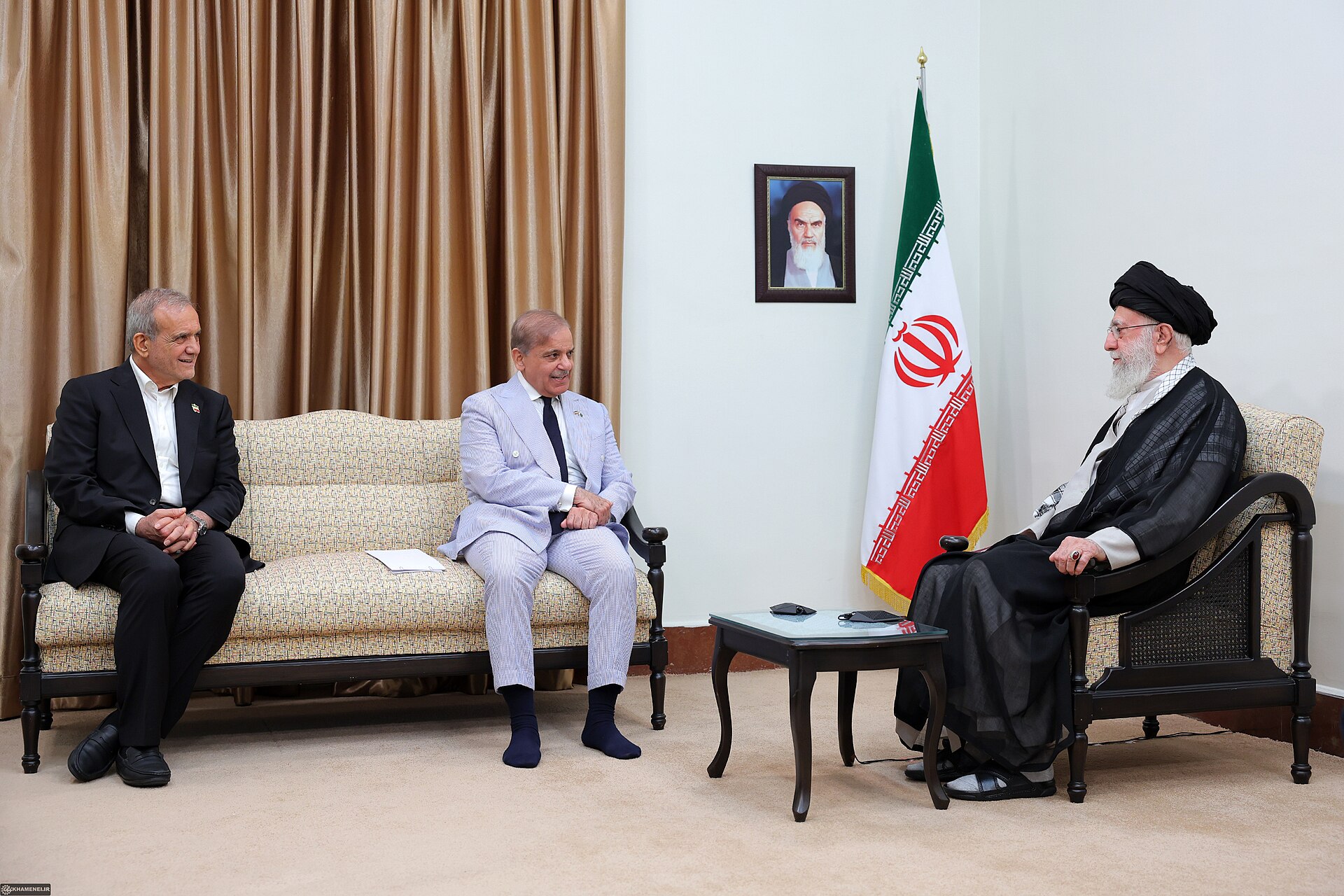
Pakistani Prime Minister Shehbaz Sharif stated a 30-day timeline for Hormuz reopening, and the formal signing ceremony is scheduled for June 19 in Switzerland, with Vice President JD Vance, Parliament Speaker Mohammad Bagher Ghalibaf, and Foreign Minister Abbas Araghchi named as signatories (CBS News; NPR; PBS NewsHour, June 14-15, 2026). But Morgan Stanley cautioned that oil supply chains would take “months to normalise” even after a formal reopening, citing mine-clearing operations, field restarts, and infrastructure repair across the Gulf (CNBC/Capital.com, 2026). The IEA’s cumulative damage estimate — more than one billion barrels of lost Gulf production and more than 14 million barrels per day shut in at peak — suggests the recovery path will not mirror the shutdown’s speed, and that price will respond to the signal of reopening well before the physical volumes arrive. The PGSA toll is itself contingent on the mines being cleared first: Hormuz mine clearance is projected to take 40 days to six months before any commercial vessel can transit — making the toll a cost layer that sits behind a physical barrier Saudi Arabia has no role in removing. On top of the PGSA financial exposure, the MOU’s Point 6 authorized a $300 billion Iran reconstruction fund with a “regional partners” clause that could draw Gulf capital into financing Iran’s recovery — a double-bind Faisal’s trust condition is the only Saudi instrument to slow, as analyzed in Faisal’s Trust Condition and the $300 Billion Fund Saudi Arabia Cannot Block.
Why Does the PGSA Survive a Deal That Bans Tolls?
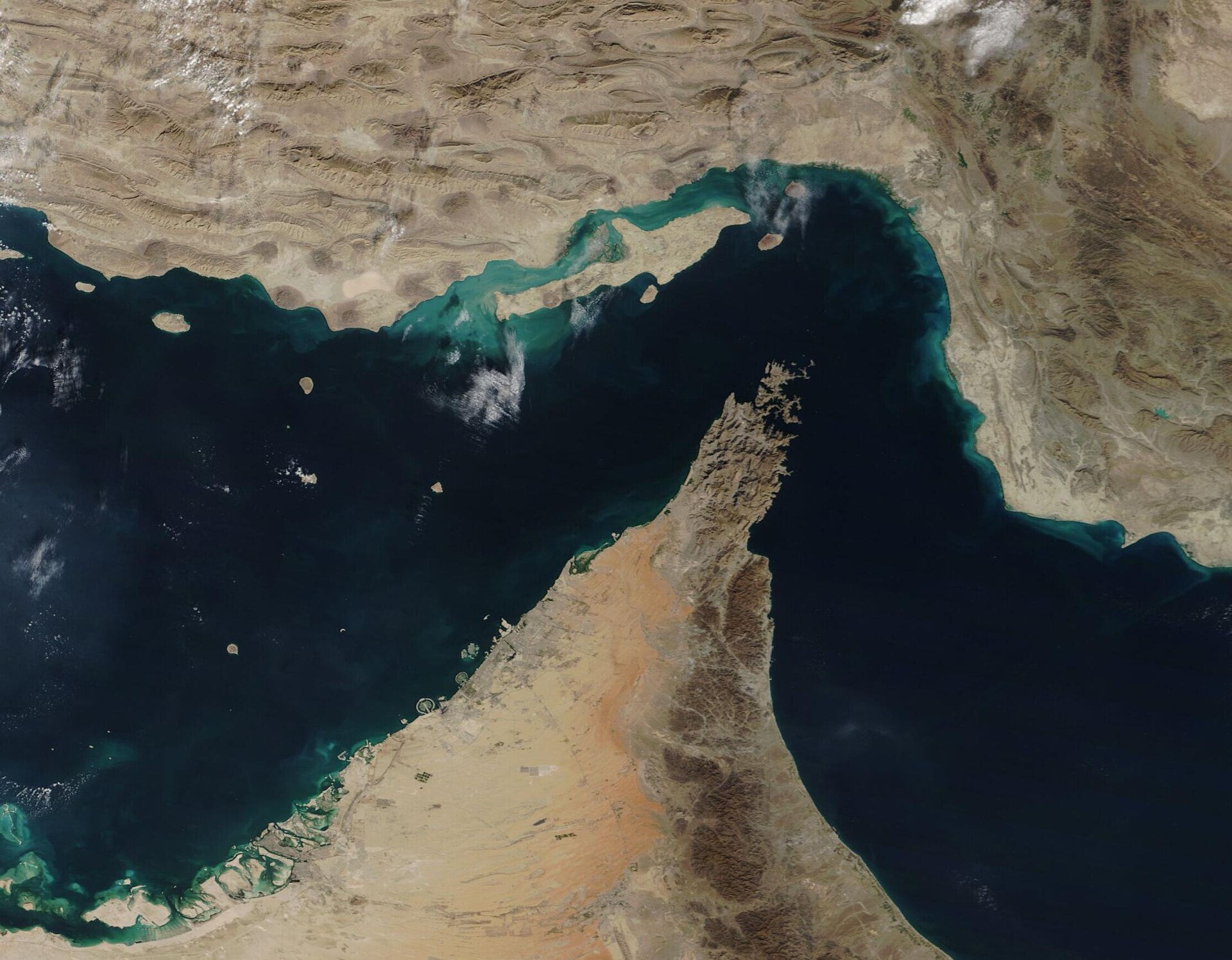
The MOU prohibits “tolls” on Strait of Hormuz transit but does not address “service fees” — the term Iran’s Majlis adopted when it codified the Persian Gulf Shipping Authority’s fee-collection mechanism on March 30-31, 2026, weeks before the MOU draft existed. The PGSA has processed over 300 non-Iranian vessel transit requests since May operations began, and it continued operating through OFAC sanctions imposed on May 27 (Argus Media; GlobalSecurity.org, June 1, 2026). The EU went further on June 8, designating the PGSA’s operator and the official overseeing Iran’s Hormuz fee-collection apparatus — a measure that remained in force as G7 members simultaneously endorsed the MOU at Évian.
Iran’s legislative calendar tells the story Washington’s negotiators either missed or chose to ignore. The Majlis codified the PGSA’s fee-collection authority as payment for “navigational services” on March 30-31 — before any MOU draft existed — and formally reclassified what had been discussed internationally as a “toll” into a domestic “service fee” (Euronews, May 25, 2026; PressTV, May 22). When US negotiators subsequently drafted the MOU’s prohibition on transit tolls, the Iranian legal architecture was already immunized against it. Foreign Minister Araghchi made this explicit on June 14, the day before Trump declared the deal complete, stating that Iran “will charge ships for services rendered” at Hormuz — framing fee collection not as a violation of the agreement but as a condition of it. The precise mechanism by which the MOU’s language banned tolls while institutionalizing the fee structure — including Oman’s co-management role — is the subject of The MOU Banned Tolls and Built the Fee Collector.
“I authorize the toll free opening of the Strait of Hormuz.”— Donald Trump, Truth Social, June 14-15, 2026
The PGSA has operated continuously despite OFAC sanctions. IRNA and Tasnim frame the authority as “a sovereign governance system” providing “a verifiable single window” for Hormuz passage — language designed to insulate it from any accusation of deal-breaking, because a navigation safety authority is not, by Tehran’s definition, a toll collector.
The exemption list matters as much as the fee itself. Russia, China, India, Iraq, and Pakistan are exempt from PGSA charges; Saudi Arabia is not (Windward.ai; Euronews, May 25, 2026). At a rate of approximately $1 per barrel across Saudi Arabia’s roughly 5.5 million barrels per day of Hormuz-transiting crude, the kingdom faces an estimated liability of $5.5 million per day — roughly $2 billion per year — payable to an Iranian-administered authority in which it has no representation, from which it has received no exemption, and whose dissolution the deal it endorsed does nothing to require. Trump’s “toll free” Hormuz and Iran’s “service fee” Hormuz are the same waterway, governed by two irreconcilable legal descriptions — and the industrial complex that depended on that waterway’s unimpeded function just ran out of time.
Sadara’s Grace Expired the Day the Deal Closed
Sadara Chemical Company’s $3.7 billion in guaranteed senior debt crossed its grace-period expiry on June 15 — the same day Trump announced the Iran deal “complete” — with all 26 of its Jubail Industrial City manufacturing units offline since late March and revenue at zero for eleven consecutive weeks. Aramco, which backstops 65 percent of the debt, and Dow, which guarantees 35 percent, have filed no SEC 8-K or equivalent disclosure acknowledging a material event, despite a 28-bank syndicate holding exposure to a joint venture that cannot produce, cannot sell, and cannot service its own obligations.
The timing is not coincidental in the way that reassures analysts — it is coincidental in the way that unsettles them. The Hormuz blockade shut Jubail’s feedstock supply; the deal that notionally reopens Hormuz arrives the day the financial consequence of that shutdown becomes contractually inescapable. Morgan Stanley’s assessment that supply chains will take “months to normalise” means Sadara’s production restart is not proximate to its debt obligation, and the 28 banks holding that syndicated exposure — each with its own political and commercial incentives to avoid triggering formal default — now face a choice between recognizing reality and extending forbearance on a venture whose guarantors are themselves under fiscal pressure.
The syndicate spans institutions headquartered in Riyadh, London, New York, and Tokyo, and each carries its own calculation about whether declaring a formal event of default serves or damages its broader Saudi relationship. For Aramco’s share of the guarantee, a Sadara default would not threaten the company’s solvency — $2.4 billion against a $460 billion market capitalization is a rounding error — but it would represent the first time the kingdom’s national oil company was called upon to make good on a guarantee for an industrial venture built to prove Saudi Arabia could manufacture world-scale downstream products without relying on the crude price that is currently collapsing.
Jubail Industrial City accounts for roughly 7 percent of Saudi GDP by AGSI estimates, and the Sadara complex was the flagship of Saudi-American petrochemical cooperation — the largest integrated chemicals facility built in a single phase, a proof-of-concept for post-wellhead value addition. Its $3.7 billion cliff arrives in a quarter where Aramco’s own free cash flow cannot cover its dividend, PIF’s cash has hit a six-year floor, and the Q1 fiscal deficit already set a national record.
Can Aramco’s Dividend Survive Eighty-Dollar Oil?
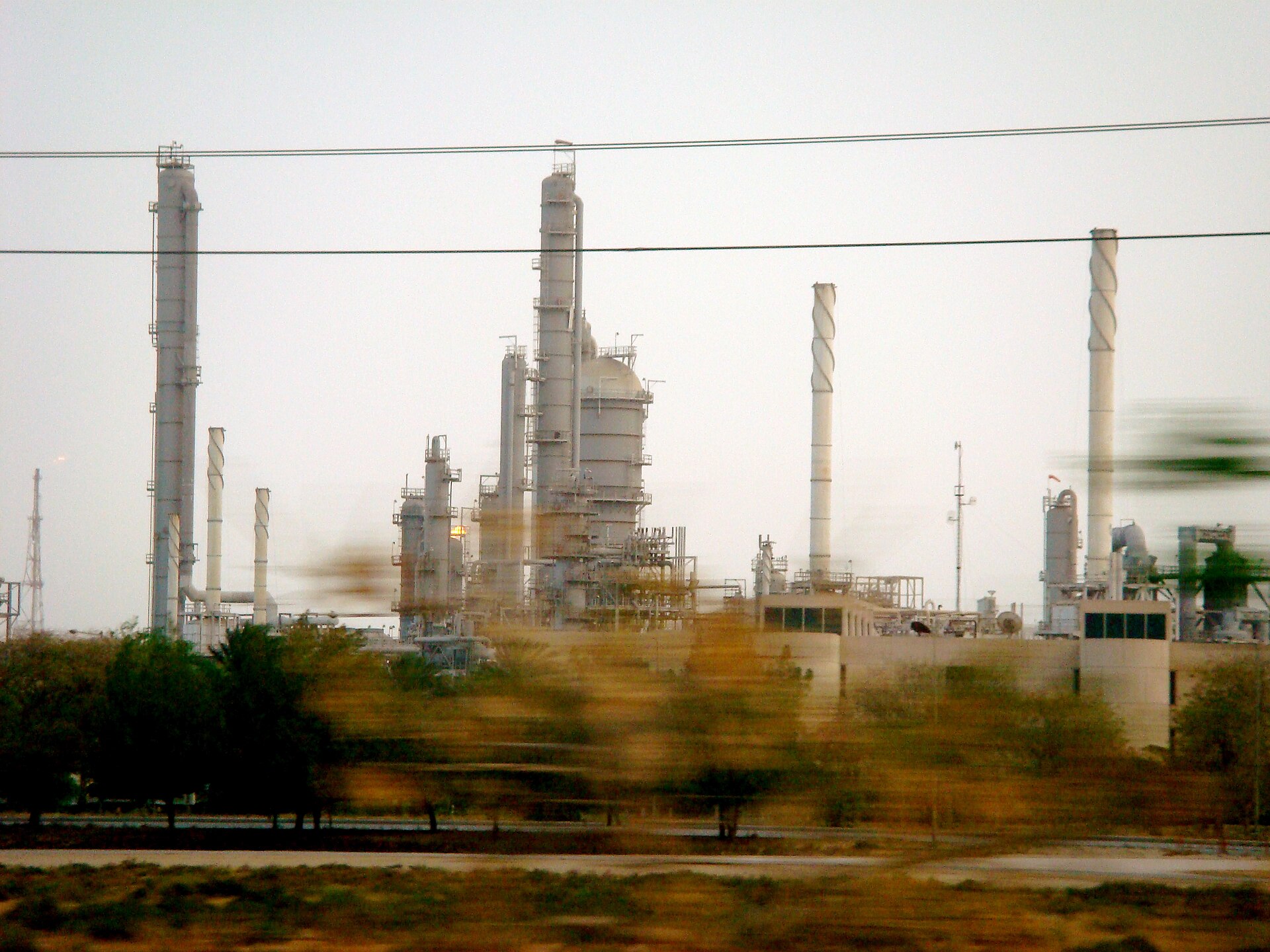
Aramco’s Q1 2026 free cash flow of $18.6 billion fell $3.3 billion short of its $21.89 billion quarterly dividend commitment — the first sub-1.0x coverage ratio since the pandemic — while the company realized crude at $76.9 per barrel across the quarter (CNBC, May 10, 2026). At $80 Brent, the gap between cash generation and shareholder obligations remains structurally negative, and the deal’s downward pressure on prices will widen rather than close it.
The Saudi government owns 98.5 percent of Aramco and depends on the dividend as the single largest component of its revenue architecture. That 0.85x shortfall was not an anomaly driven by temporarily depressed prices but a structural condition embedded in the spread between crude realizations and payout commitments — and Brent on June 15 settled below Aramco’s Q1 realized price of $76.9, meaning Q2 began from a worse starting point than the quarter that first broke coverage.
Aramco has three options, and none of them are painless: cut the dividend, which sends a sovereign credit signal and punishes the minority shareholders who bought at IPO and subsequent listings on the explicit promise of payout stability; fund the gap from reserves or borrowing, which accelerates the depletion of a balance sheet already strained by the Sadara guarantee; or maintain the payout through some combination of capital-expenditure cuts and asset sales, which undermines the long-term production capacity the kingdom needs to defend market share against returning Iranian volumes. In the 2020 COVID downturn, Aramco cut its special dividend and reduced the base — a precedent that Saudi officials spent years trying to erase from investor memory.
The Q1 results also carry a detail that has received less attention outside specialist coverage: Dow suspended equity-method loss recognition on its Sadara stake under GAAP, recording a $292 million EBIT impact. Aramco, which reports under IFRS and consolidates Sadara rather than equity-accounting it, has not disclosed equivalent treatment, leaving investors to infer whether the Sadara impairment is flowing through Aramco’s consolidated numbers or being deferred into future quarters where the price environment will be worse.
PIF at the Cash Floor
The Public Investment Fund’s cash reserves have fallen to $15 billion — a six-year low — against approximately $16 billion in identified exit liabilities from NEOM alone, according to Capital Economics and AGBI reporting. The fund has ordered minimum 20 percent spending cuts across more than 100 portfolio companies, with some budgets reduced by 60 percent (Middle East Briefing, 2026), a pattern of forced austerity that bears no resemblance to the strategic deployment the fund’s architects envisioned when they placed it at the center of Vision 2030’s post-oil economic diversification.
“The closure of the Strait of Hormuz has revealed a key threat to Saudi Arabia’s Vision 2030 strategy and plans for economic transformation.”— Chatham House, May 2026
PIF was designed to be Saudi Arabia’s bridge from hydrocarbon dependence to a diversified economy — the institution that would build NEOM, capitalize the entertainment sector, invest in global technology, and generate returns that could eventually replace crude revenue. At $15 billion in cash, with oil at $80 and the deal’s price trajectory pointing downward, the fund cannot simultaneously cover NEOM’s exit liabilities and continue financing the gigaprojects that constitute its reason for existing. The spending cuts hit Vision 2030’s most visible commitments: NEOM, the Red Sea Tourism Company, Qiddiya, Roshn, and dozens of smaller ventures that were supposed to generate the non-oil GDP growth the kingdom’s post-hydrocarbon future depends on.
The $25 billion in Iranian frozen assets to be released under the deal terms — confirmed by Pakistani Prime Minister Sharif (CBS News; PBS NewsHour, June 14-15, 2026) — will recapitalize Tehran’s ability to invest, subsidize, and arm at a moment when Riyadh’s equivalent investment vehicle is at its cash floor. The asymmetry is not an accident of timing but a structural feature of a deal that rewards the party with frozen assets and punishes the party whose assets were never frozen but whose revenue depends on the price those unfrozen barrels will suppress.
What Role Does Saudi Arabia Hold in Enforcing This Deal?
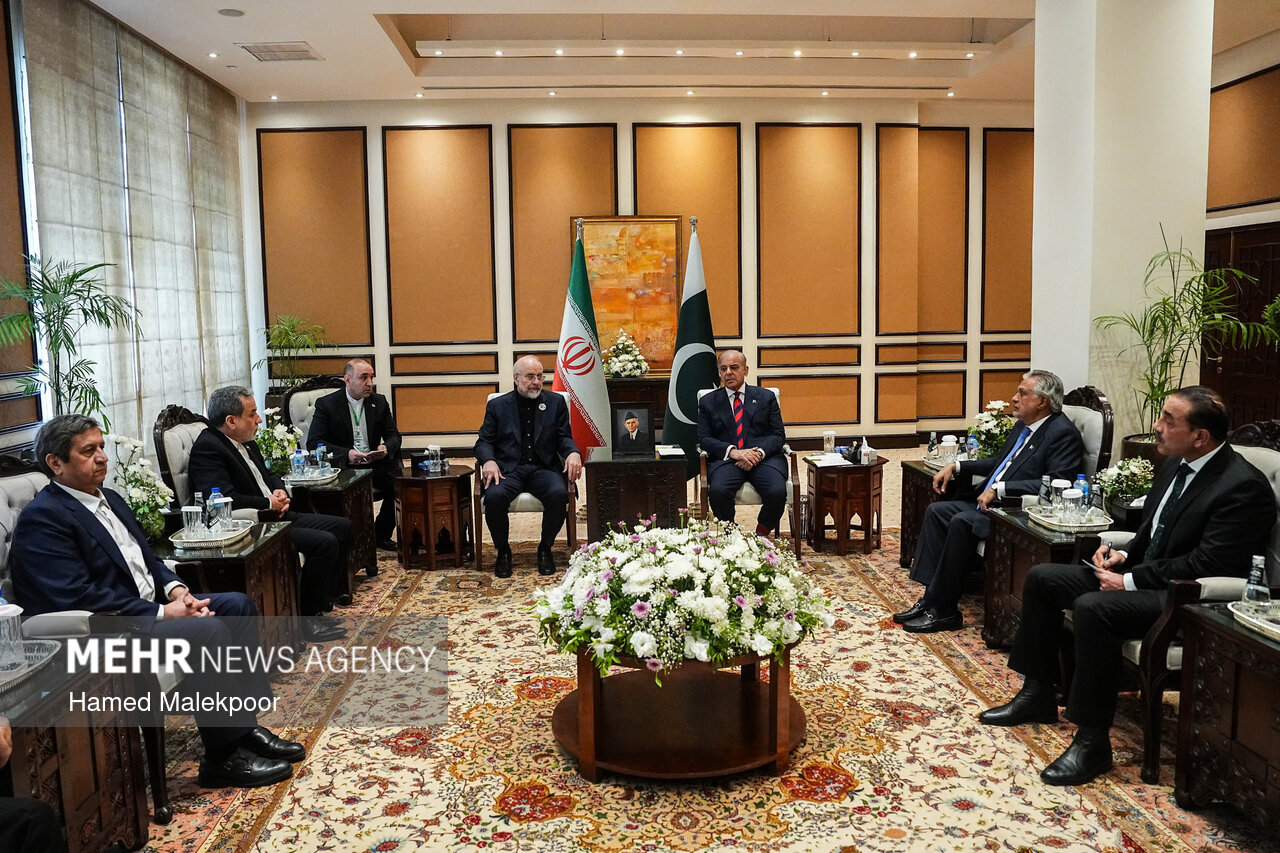
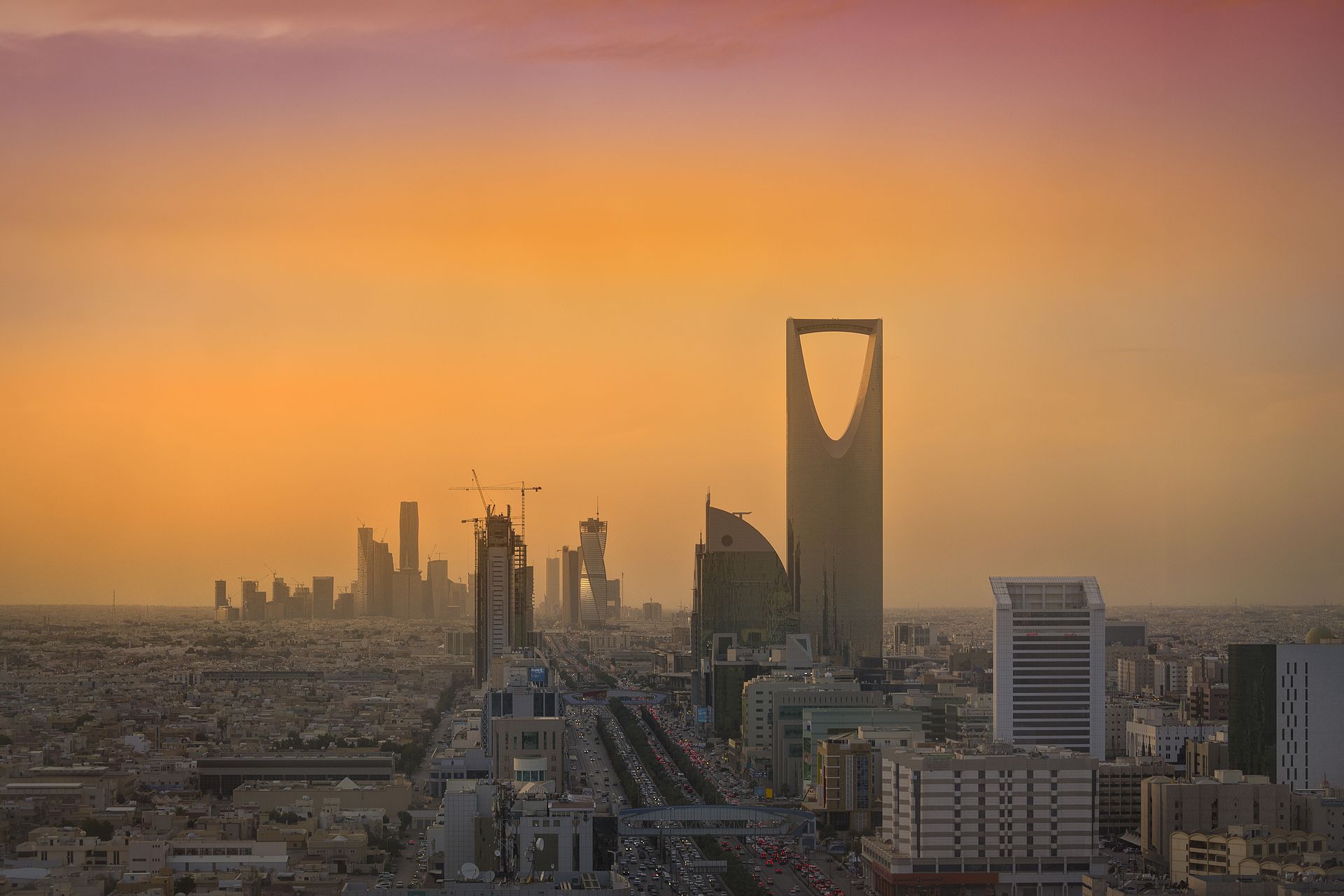
None. Saudi Arabia holds no seat in any of the three mediation tracks that produced the US-Iran agreement, no named role in its enforcement, and no presence at the June 19 signing in Switzerland. Riyadh endorsed the deal through a June 13 phone call between Saudi Foreign Minister Prince Faisal bin Farhan and Pakistani counterpart Ishaq Dar — not through a direct MOFA statement.
The kingdom’s 26-day silence from the Ministry of Foreign Affairs — broken only by that single phone call to Dar, in which both sides “welcomed” the deal’s “final stage” — stands as the longest consecutive period of Saudi diplomatic non-engagement on a security matter affecting its primary revenue stream in the post-Gulf War era. No official SPA statement addressed the deal’s completion on June 15; no Saudi spokesperson appeared at the G7 in Evian, where Macron called for “rapid and complete implementation by all belligerents” and stated the summit would address “consequences of this agreement, support for Lebanon, lasting reopening of Hormuz” (TechTimes/CNBC, June 14-15, 2026). Crown Prince Mohammed bin Salman declined the G7 invitation.
The deal that governs the waters Saudi Arabia depends on was negotiated by the United States and Iran, mediated by Pakistan and Qatar, and will be signed by Vance, Ghalibaf, and Araghchi — with Sharif as witness — in a ceremony where Saudi Arabia is mentioned as a regional beneficiary but not as a party with enforcement authority. The 30-day Hormuz reopening timeline runs from a starting gun Riyadh did not fire, through a waterway it does not control, under terms it did not draft, to an outcome — lower oil prices — it cannot afford. Sharif’s confirmation that “both sides have declared the immediate and permanent termination of military operations on all fronts, including in Lebanon” (CBS News/NPR, June 14, 2026) encompassed security commitments that directly affect Saudi interests — Hezbollah’s posture, the Lebanese deployment south of the Litani, the monitoring committee architecture — without any Saudi input on the terms governing those commitments. Pakistan Named the Date Saudi Arabia Was Not Asked For documents how Sharif’s June 14 announcement of the June 19 signing date — not a Saudi statement — became the first public confirmation of the deal’s timeline.
The structural exclusion is bilateral: Saudi Arabia was not at the table because neither Washington nor Tehran needed it there. The US wanted a deal it could announce before the G7; Iran wanted sanctions relief and asset releases; Pakistan wanted to demonstrate mediation capacity to both its SMDA sponsors and Chinese partners. None of those objectives required Saudi consent, even though Saudi Arabia absorbs a disproportionate share of the deal’s fiscal and energy-market consequences — and being named a beneficiary of a deal you had no role in shaping means absorbing its costs without having had any power to distribute them.
The JCPOA Precedent and What It Forecasts
The 2015 JCPOA offers the closest precedent, and the comparison is not reassuring for Riyadh. Iranian production rose from approximately 2.8 million barrels per day to 3.9 million within one year of sanctions relief — adding roughly 1 million barrels per day to global supply — with an initial market impact driven by approximately 30 million barrels of floating storage that reached refineries in the first weeks after implementation (EIA; The Diplomat, January 2016). The surplus contributed to a global supply glut that held Brent below $60 through most of 2016, and Saudi Arabia responded by drawing down central bank reserves from $750 billion to $500 billion, issuing its first-ever international sovereign bonds at $17.5 billion in 2016, cutting fuel subsidies, and eventually introducing VAT in 2018.
The 2026 version of that story begins from a weaker starting position across every buffer the kingdom relied on a decade ago. In 2015, PIF had not yet been loaded with its current portfolio obligations; Aramco’s dividend was not a publicly traded commitment; Sadara’s debt was performing; and the kingdom’s central bank reserves provided more than 30 months of import cover. In 2026, PIF is at its cash floor, Aramco’s free cash flow does not cover its dividend, Sadara’s grace period has expired, the Q1 deficit has already broken records, and the levers Saudi Arabia used to survive the 2015-2016 crash — subsidy cuts, VAT, sovereign bonds, reserve drawdowns — have already been partially deployed, leaving less fiscal room for the same maneuver.
The one variable that cuts in Riyadh’s favor, at least superficially, is infrastructure damage. Morgan Stanley’s assessment — noted above — that supply chains will take months to normalise means Iranian production will not surge as quickly as it did post-JCPOA, when sanctions were economic rather than kinetic and the physical infrastructure was intact. That slower recovery buys Saudi Arabia time — but it also extends the period of uncertainty during which Brent trades on expectations rather than actual volumes, and expectations, as the June 15 price demonstrated, move oil faster than tankers do.
Goldman Sachs’ year-end scenario range of $60-90 per barrel for Q4 2026 (Investing.com/Reuters) captures the width of the uncertainty, and the IEA estimates that Brent will average $79 per barrel in 2027 once Hormuz flows normalize (IEA OMR, 2026) — a figure that would represent the most sustained period of sub-breakeven pricing Saudi Arabia has faced since the fund created to end its oil dependence was capitalized. The kingdom’s fiscal architecture was built for a price band it no longer inhabits, and the deal announced on June 15 did not just fail to restore it — it guaranteed the band will keep moving lower.
That fiscal exposure became more acute when the IRGC issued a “last warning” to a US minesweeper on the same day Iran signed the MOU, signaling that the mine clearance which must precede any crude flow remains contested: Iran signed the deal and kept the minefield.
Frequently Asked Questions
When is the US-Iran deal formally signed, and who are the signatories?
The formal signing ceremony is scheduled for June 19 in Switzerland. Vice President JD Vance will sign for the United States, while Iran has named both Parliament Speaker Mohammad Bagher Ghalibaf and Foreign Minister Abbas Araghchi as co-signatories — an unusual dual-signatory arrangement, since most bilateral security agreements designate a single representative per side. Pakistani Prime Minister Shehbaz Sharif will attend as witness, reflecting Pakistan’s mediating role. The JCPOA in 2015 had Foreign Minister Javad Zarif as Iran’s sole signatory; the decision to elevate Ghalibaf (a legislative, not executive, figure under Iran’s Article 89) breaks that precedent and reflects the Majlis’s expanded role in post-war Iranian foreign policy (RFE/RL; CBS News, June 14-15, 2026).
Will OPEC+ adjust production quotas in response to the deal?
No OPEC+ extraordinary ministerial session has been announced as of June 15 in response to the deal’s completion. The next scheduled OPEC+ meeting has not been advanced, and the four consecutive 188,000 bpd quota hikes remain in effect. Internal compliance disputes complicate any coordinated response: Kazakhstan and Iraq have been overproducing their quotas by a combined 300,000 barrels per day throughout the Hormuz crisis, and the UAE has pushed for higher baseline allocations since 2021. Any meaningful production cut to offset returning Iranian volumes would require Saudi Arabia to absorb a disproportionate share of the reduction — further widening the gap between its quota and actual output at a time when it needs every barrel of revenue it can ship (OPEC records, June 2026).
What happens to war risk premiums on Gulf shipping after the deal?
War risk premiums surged 340 percent during the Hormuz blockade, triggering BIMCO CONWARTIME clauses across the commercial fleet (BIMCO, 2026). Even after the June 15 deal announcement, Lloyd’s of London market practice typically maintains elevated premiums for 60-90 days pending confirmation of mine-clearing, safe passage verification, and resumption of underwriting survey access to Gulf terminals. The 46 IMO-reported incidents and 14 fatalities during the blockade period established a loss history that will keep reinsurance pricing elevated well beyond the 30-day physical reopening timeline Sharif stated — meaning war-risk surcharges will continue depressing Gulf shipping economics into the third quarter of 2026 at minimum, regardless of when physical transit resumes. As of June 15, six hundred vessels remain stationary at Hormuz — the commercial architecture preventing transit has not changed despite the June 14 announcement.
Has Saudi Arabia commented directly on the PGSA fee mechanism?
Saudi Arabia’s Ministry of Foreign Affairs has made zero public statements referencing the Persian Gulf Shipping Authority specifically, and the 123 Agreement signed with the United States on May 13, 2026 — the $142 billion defense-and-nuclear cooperation package — does not address Hormuz transit fees. Saudi Aramco’s shipping subsidiary Bahri has not disclosed whether any of its vessels have submitted transit information to the PGSA, and Aramco’s Q1 2026 earnings call included no analyst questions about the PGSA’s fee exposure despite the potential $2 billion annual liability. The Chatham House May 2026 report noted a “deepening rift” between Saudi Arabia and the UAE over Hormuz policy, suggesting Abu Dhabi may be pursuing its own bilateral accommodation with Tehran on transit terms — a track that would further isolate Riyadh (Chatham House, May 2026). The full documentary record of what Saudi Arabia has and has not said — including its May 21 co-signature of the GCC-IMO letter rejecting PGSA legitimacy alongside its June 15 welcome of an MOU that leaves the same authority intact — is examined in detail.
How does the deal affect Saudi Arabia’s sovereign credit outlook?
S&P maintains Saudi Arabia at A/A-1 with a stable outlook but has cited oil price dependency and fiscal consolidation pace in prior reviews. Moody’s holds the kingdom at Aa3 stable, though it flagged fiscal consolidation delays in its most recent sovereign assessment. Fitch rates Saudi Arabia at A+. None of the three agencies had issued formal commentary on the June 15 deal as of publication, but the combination of a record Q1 deficit, sub-breakeven oil prices, and the Sadara guarantee exposure would typically prompt a negative outlook revision at the next scheduled review if sustained. The 2015-2016 oil crash triggered S&P to downgrade Saudi Arabia from AA- to A+ in early 2016 — a sequence that began when Brent was roughly $10 above where it settled on June 15, 2026. Aramco’s own pricing signal arrived on June 8 — a week before the deal was announced — when it published the largest July Arab Light OSP cut since 2022, discounting Asian cargoes by $6 per barrel against a backdrop where zero commercial ships had transited the strait. The first Saudi commercial transit occurred on June 18, when three Bahri supertankers crossed carrying 6 million barrels — the first Saudi crude transit since the war began, with PGSA fee status still unconfirmed.