PARIS — France, Germany, Italy, the United Kingdom, and Canada issued a joint statement at Évian on June 16 calling the US-Iran memorandum of understanding a “diplomatic breakthrough” and urging “quick implementation” to reopen the Strait of Hormuz to tanker traffic. The statement contained no language on the Persian Gulf Strait Authority’s service-fee mechanism, no mine-clearance mandate, no timeline for Hormuz reopening, and no arbitration framework for the charges Iran’s parliament codified into domestic law six weeks before any MOU draft existed — because the five governments that signed it had not read the document they were congratulating.
Trump confirmed the same day that the MOU text would not be published until after the formal signing ceremony in Geneva on June 20, at least four days after the endorsement was issued. When the statement circulated at Évian, two materially irreconcilable versions of the MOU — one published by Iran’s Mehr News Agency, one reported by Axios from US officials — were competing in public, and neither had been verified against the sealed original. Saudi Arabia, the state with the highest financial exposure to the deal’s unresolved fee architecture at an estimated $5.5 million per day, had endorsed the agreement three days earlier through a phone call relayed via Pakistan’s foreign minister. It holds no seat at any of the three mediation tracks that produced the MOU. Its foreign ministry has not spoken publicly on the deal in over 25 days.
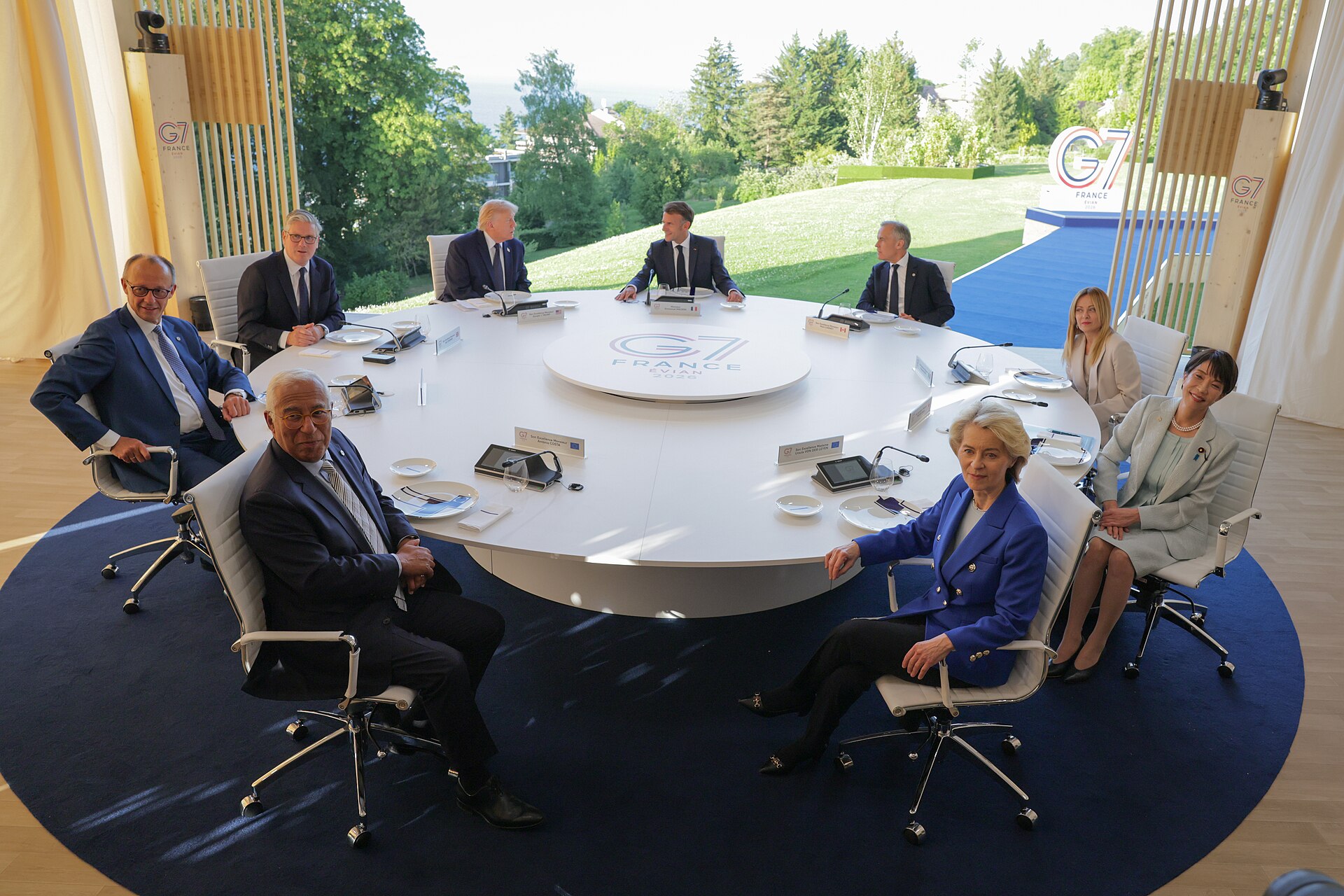
Table of Contents
- What Did the G7 Endorsement Say?
- Two Texts, One Congratulation
- A Page and a Half
- How Does the 2026 Endorsement Compare to the JCPOA?
- The Fee the Statement Did Not Name
- What Does Saudi Arabia Know About the Deal It Endorsed?
- Does the Market Believe What the G7 Congratulated?
- Frequently Asked Questions
What Did the G7 Endorsement Say?
The joint statement from France, Germany, Italy, the UK, and Canada — issued at the G7 summit at Évian on June 16, which for the second consecutive year produced no formal communiqué — called the US-Iran MOU a “diplomatic breakthrough.” It said “it was vital for detailed negotiations to take place and for the deal to be quickly implemented so the Strait of Hormuz could be reopened to tanker traffic.” The statement contained no binding provisions. European Commission President Ursula von der Leyen, in a separate declaration, called for “swift and full implementation” and demanded “toll-free navigation” and an end to “Iran’s nuclear and ballistic programmes.” European Council President António Costa said “weapons must now fall silent, and outstanding differences must be resolved by peaceful means.”
None of these statements named the Persian Gulf Strait Authority. None addressed the distinction between “tolls” — which the MOU reportedly bans — and “service fees,” which Iran’s foreign minister confirmed on the same day would continue to be collected. None established a timeline for mine clearance, identified which nations would conduct it, or proposed a mechanism for arbitrating disputed transit charges. The closest any leader came to specificity on fees was Macron, who told TF1 on June 15 — the day before the joint statement — that “we defend international law and we will do everything in our power to ensure there is no toll.” This was a bilateral interview remark. It did not appear in the joint text.
Von der Leyen’s demand also extended beyond the MOU’s reported scope. She called for an end to “Iran’s nuclear and ballistic programmes,” but neither the Iranian nor the American public account of the MOU addresses ballistic missiles.
Araghchi stated on June 16 that Iran “would not charge tolls but service fees.” The PGSA, which Iran’s parliament codified into law on March 30–31, does not call its per-barrel charge a toll. The leaders who pledged to prevent tolls addressed a word Iran’s domestic legislation never used.
The Middle East briefing 3,000+ readers start their day with.
One email. Every weekday morning. Free.
Two Texts, One Congratulation
When the five G7 nations issued their endorsement, at least two materially different accounts of the MOU’s contents were in public circulation. Iran’s Mehr News Agency published a 14-point version between June 12 and 14 that included: no requirement for uranium removal from Iran, $24 billion in frozen assets to be released, explicit exclusion of Iran’s missile program from negotiations, discussions “limited to fate of enriched uranium, enrichment activities, sanctions relief and economic reconstruction,” and Hormuz reopening “under Iranian arrangements.” Trump called the Mehr version fabricated. The terms “have NOTHING to do with the terms that were agreed to, in writing,” he said, adding that Iran had “apologized for putting out false information.”
The competing account, reported by Axios’s Barak Ravid and sourced to US officials, described an agreement requiring nuclear dismantlement, removal of highly enriched uranium from Iran, toll-free Hormuz transit, and mine clearance within 30 days. Sanctions relief would be tied to verified nuclear compliance. These are opposite outcomes on every material point.
| Provision | Iranian / Mehr Version | US / Axios Version |
|---|---|---|
| Highly enriched uranium | Remains in Iran; discussions only | Removed from Iran |
| Frozen assets | $24 billion released | Tied to nuclear compliance verification |
| Missile program | Explicitly excluded from talks | Not addressed in available reporting |
| Hormuz transit fees | “Under Iranian arrangements”; service fees | Toll-free; no charges |
| Mine clearance | Not specified | Within 30 days |
| Reconstruction | $300 billion US/ally commitment | Not reported |
The G7 joint statement endorsed neither version. It praised the “diplomatic breakthrough” without referencing uranium, frozen assets, missile exclusions, fee structures, or clearance timelines — any of which would have required the endorsing nations to declare which account was accurate. Xinhua, China’s state news agency, was the only international wire service on June 16 to frame the contradiction explicitly: “Iran, US both claim win over MoU amid deep rifts.”
The nuclear provisions carry the highest stakes in the two-version gap. The IAEA Board of Governors voted 21 to 10, with 3 abstentions, on June 12 to find Iran in non-compliance — four days before the G7 endorsement. The Institute for Science and International Security estimates Iran holds 440.9 kilograms of uranium enriched to 60 percent, with the Fordow facility approximately 70 percent intact — enough material, by ISIS’s assessment, for approximately nine weapons within three weeks. Ray Takeyh of the Council on Foreign Relations described the verification challenge the sealed text is supposed to resolve: “By building many small workshops containing advanced centrifuges, Tehran can challenge the prying foreigners to find them all.”
A Page and a Half
Trump described the sealed document as “about a page and a half” — approximately 600 to 800 words. If accurate, this is the instrument governing a fee dispute worth an estimated $2 billion per year to Saudi Arabia, a mine-clearance operation that Western naval sources estimate at 40 to 50 days and the Pentagon internally assesses at up to six months, a strait closure now entering its fourth month with some 850 vessels stranded, and the framework for 60 days of nuclear negotiations over the uranium stockpile the IAEA cannot fully verify.
“This memorandum does not mean trusting the enemy; it has been written with active distrust.”
— Kazem Gharibabadi, Iranian Deputy Foreign Minister, Tasnim News Agency, June 16, 2026
Vance, speaking to ABC’s Good Morning America on June 16, confirmed the digital signing but offered nothing about the document’s contents. “We already signed the deal digitally yesterday,” he said. A senior US official told the Washington Examiner that “more information about the memorandum would be provided in the next 24 to 48 hours.” The Examiner reported that “comprehensive details about what is included in the deal have not been released.”
Deputy Foreign Minister Ali Takht-Ravanchi added on June 16: “The issue of Iran’s blocked funds is also included…they have been illegally blocked and must be made accessible.” This directly contradicts the US-sourced Axios account, which ties sanctions relief to verified nuclear compliance. Both characterizations were issued on the same day the G7 endorsed the agreement. The text that would resolve the contradiction between them remained sealed.
Both US and Iranian accounts of the MOU indicate a two-phase structure. The first phase — activated by the June 15 digital signature and congratulated by the G7 the following day — reportedly contains no nuclear provisions. All nuclear terms, including the disposition of Iran’s enriched uranium stockpile and the status of enrichment facilities, are deferred to a 60-day second-phase negotiation. The G7 endorsement cited nuclear concerns as central. The phase it congratulated does not address them. A point-by-point analysis of all fourteen MOU clauses maps the full text against Saudi exposure across fees, nuclear sequencing, Lebanon, mine clearance, and Phase 2 scope. Khamenei’s June 18 authorization statement — endorsing the Islamabad MOU while pre-authorizing Iran’s withdrawal if US demands were “excessive” — means Phase 2 opened with Iran’s exit conditions already framed; the permission to negotiate and the permission to leave were issued in the same document.
How Does the 2026 Endorsement Compare to the JCPOA?
The sequencing is inverted. In 2015, the United Nations Security Council endorsed the JCPOA six days after signing, with the full 159-page text — including five technical annexes — publicly available for review by every legislature, analyst, and journalist in the world. In 2026, the G7 endorsed the MOU four days before the formal signing, before any text was released, while two irreconcilable accounts of the document circulated in public. The 2015 norm — sign, publish, review, then endorse — has been reversed.
“The text of the MoU with Iran will be published after Friday, when the two sides will sign the document in Switzerland.”
— Donald Trump, June 16, 2026
The JCPOA was published simultaneously with its signing announcement on July 14, 2015, and was immediately subjected to line-by-line scrutiny. Congressional review under the Iran Nuclear Agreement Review Act of 2015 ran for 60 days before the agreement could take effect. No comparable review has been initiated for the 2026 MOU, and cannot be until a text exists to review. The administration has characterized the MOU as a framework for further negotiations rather than a binding agreement — a distinction that may place it outside INARA’s scope entirely.
That sequencing gap sharpened on June 16 when Trump publicly dismissed the uranium red-line at Évian as commercially trivial — describing removal of Iran’s enriched stockpile as “half a million dollars worth” — hours after CIA Director Ratcliffe had warned him privately that Iran’s private nuclear positions diverge materially from its public commitments. The American demand softened at the exact moment the G7 was endorsing a document that left nuclear terms unwritten.
| Element | JCPOA (2015) | US-Iran MOU (2026) |
|---|---|---|
| Document length | 159 pages including 5 annexes | ~1.5 pages (Trump’s characterization) |
| Text released | At signing (July 14) | After formal signing (after June 20) |
| Multilateral endorsement | UNSC Resolution 2231 — July 20 (6 days after signing) | G7 joint statement — June 16 (4 days before formal signing) |
| Text available at endorsement | Full text public for 6 days | Sealed; two competing versions in circulation |
| Legislative review | 60-day congressional review (INARA) | None initiated; no text available |
| Disputed provisions at endorsement | None; parties agreed on text | All major provisions contested between signatories |
In 2015, Gulf Arab states were excluded from the P5+1 negotiations but had immediate access to the published JCPOA text before any multilateral body endorsed it — and no Gulf state bore direct financial exposure to the JCPOA’s terms at the scale of Saudi Arabia’s current $2-billion-per-year PGSA liability. In 2026, Saudi Arabia is excluded from both the negotiations and the text, and the endorsement has already been issued.
Steven Cook of the Council on Foreign Relations wrote on June 16: “We have been here before only to discover the parties cannot bridge the remaining gaps. Negotiations on the outstanding issues, especially on Iran’s nuclear program, will be long and difficult.” His assessment was published before anyone outside the US and Iranian negotiating teams had seen the document that defines what the remaining gaps are.
The Fee the Statement Did Not Name
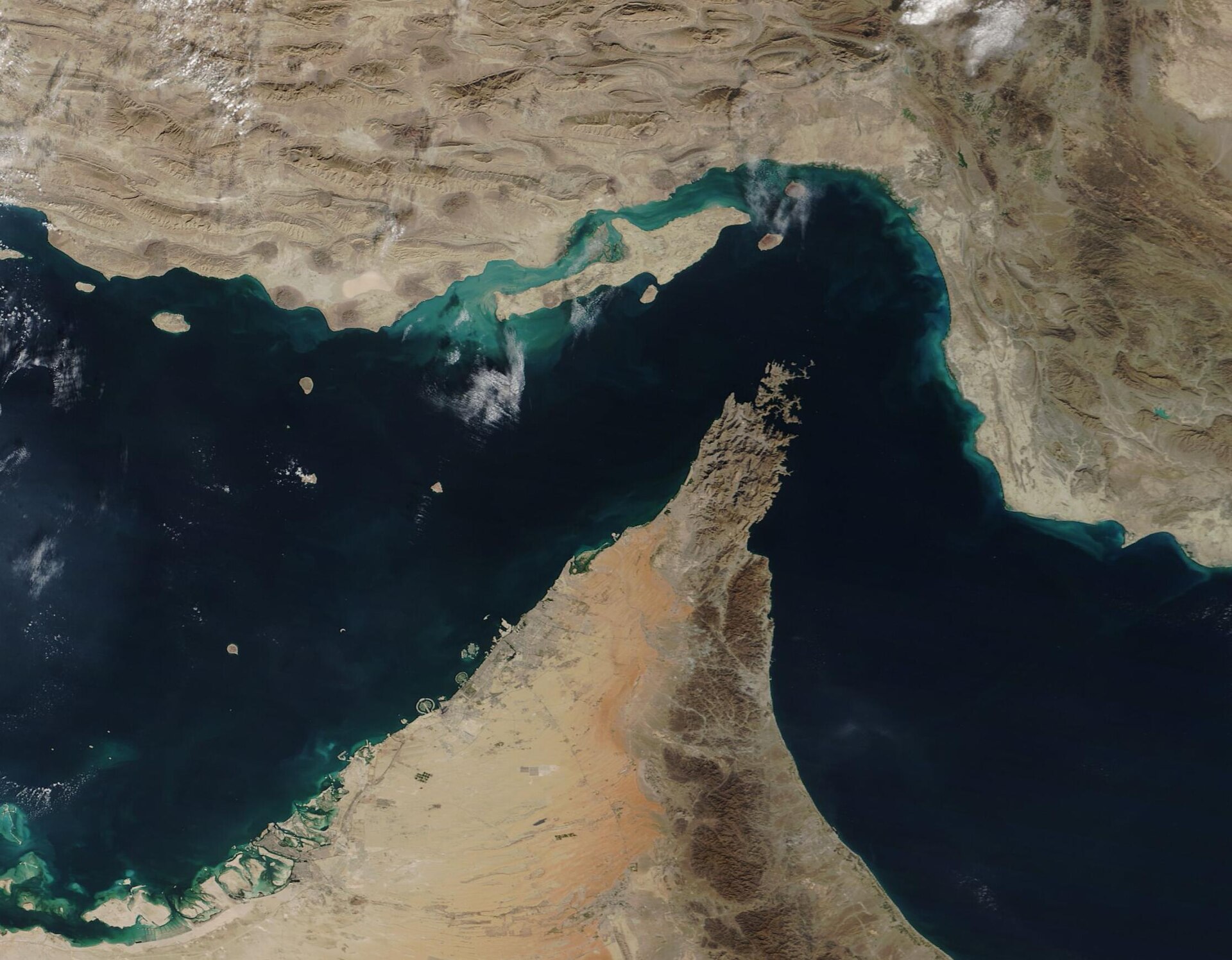
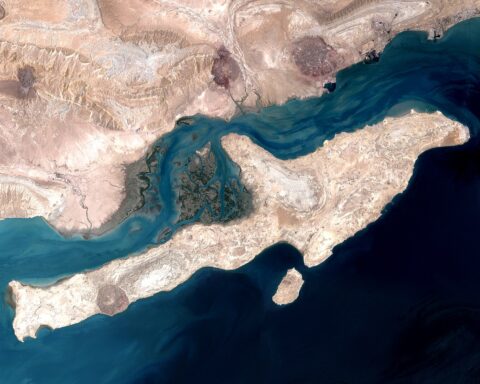
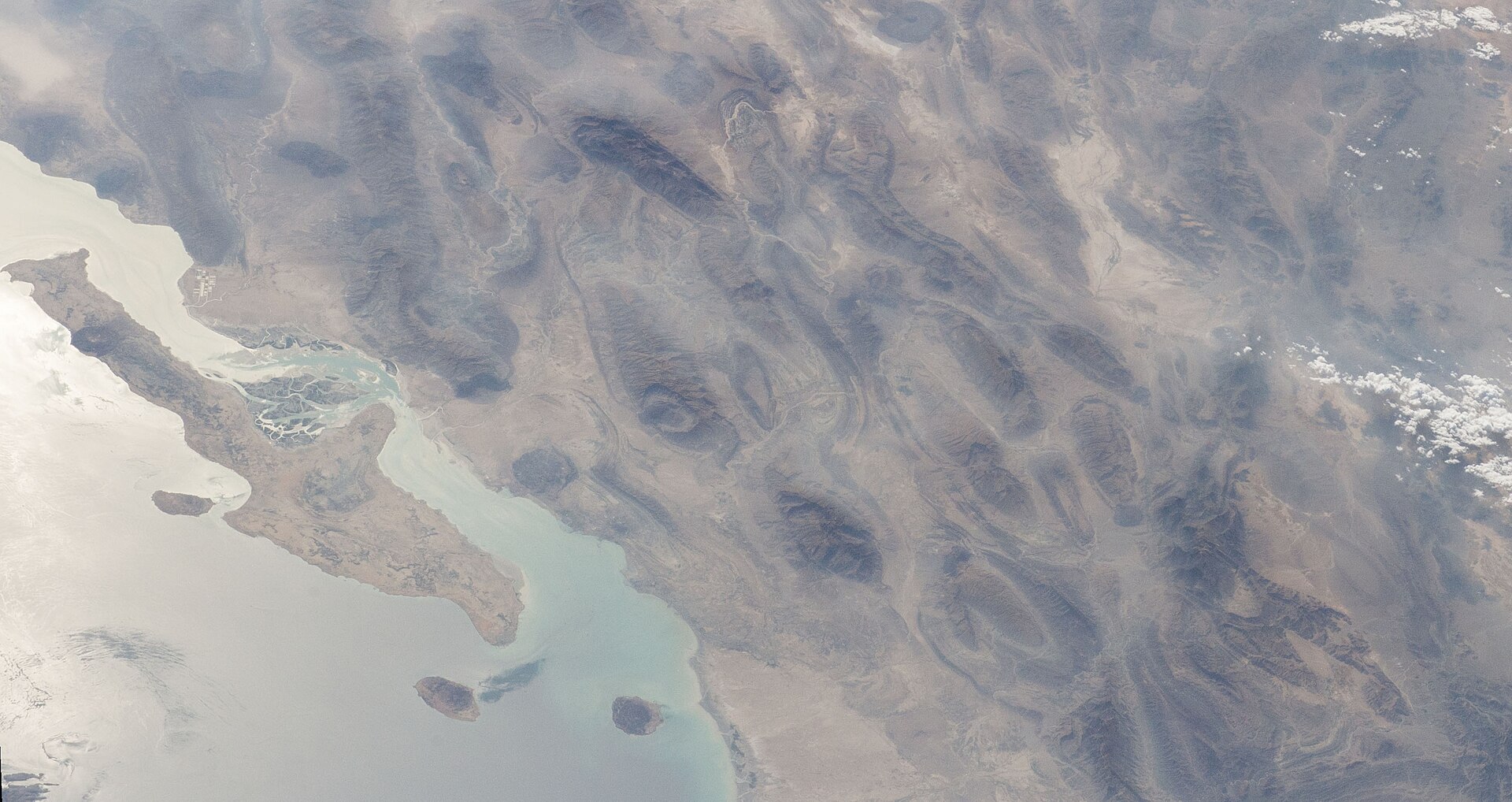
The G7 endorsement’s most consequential absence is the Persian Gulf Strait Authority. The PGSA was established by Iran’s parliament on March 30–31 — before the April 8 ceasefire, before any MOU draft existed, and before any of the three mediation tracks that produced the agreement had begun. It charges approximately $1 per barrel in a five-nautical-mile corridor between Qeshm and Larak islands, extracting up to $2 million per VLCC transit. India, Pakistan, China, Iraq, and Russia are exempt. Saudi Arabia — the largest single-nation source of crude transiting Hormuz at 5.5 million barrels per day, 38 percent of pre-war volume — is not.
The MOU reportedly bans “tolls.” Spokesman Mohammad Baghaei framed the legal distinction on June 16: “Tolls could not be imposed under international law, but ‘service fees’ are part of the negotiations.” Araghchi separately confirmed on the same day that the Strait “would not return to how it operated before the war.” Iran’s legal position invokes UNCLOS Article 26(2), which permits charges tied to “specific services rendered to the ship.” No international tribunal has adjudicated whether a blanket per-barrel charge in a transit strait qualifies under that exception. The PGSA is not a negotiating position Iran adopted for the MOU talks. It is statutory domestic law, codified weeks before the talks began. Iran and Oman have separately discussed bilateral co-administration of the Hormuz corridor, according to Bloomberg — a framework that would give PGSA fee collection regional legitimacy independent of any MOU provision and independent of any G7 endorsement.
OFAC sanctioned the PGSA on May 27, eight weeks after its establishment. The sanctions have not halted fee collection — the authority continued operating through June in the same corridor. The G7 leaders who endorsed the deal did not name the PGSA, did not address the toll-versus-service-fee distinction that determines Saudi Arabia’s annual exposure, and could not have evaluated how the sealed MOU text resolves a mechanism they did not acknowledge. Eight days after the Évian endorsement, the EU’s June 8 designations targeting Iran’s Hormuz fee-collection apparatus remained in force — unmentioned at the summit and unaddressed in the joint statement.
What Does Saudi Arabia Know About the Deal It Endorsed?
Saudi Arabia endorsed the MOU on June 13 through a phone call between Foreign Minister Faisal bin Farhan and Pakistan’s Ishaq Dar, without having seen the sealed text. Both ministers “welcomed” the deal’s “final stage, with an electronic signing ceremony expected the following day.” No direct SPA or MOFA statement was issued — only Arab News relayed the call. The Saudi foreign ministry has not made a public statement on the Iran deal in over 25 days.
The kingdom holds no seat at any of the three tracks that produced the agreement: the US-Oman channel through which the final text was mediated, the Pakistan civilian track through which Prime Minister Sharif’s letter was carried to Khamenei on June 7, or the Pakistan military track through which General Munir delivered a separate communication. Saudi Arabia was named among 12 “approvers” of the deal alongside Pakistan, Oman, and Qatar — but approval conferred no access to the sealed text, no seat at the table, and no role in drafting the provisions that determine its financial exposure. Crown Prince Mohammed bin Salman declined the G7 Évian invitation — his third consecutive G7 refusal — citing prior commitments.
The financial exposure this informational position creates is specific. Under the PGSA fee structure, Saudi Arabia’s estimated daily liability stands at $5.5 million, approximately $2 billion annually. The G7 nations that congratulated the deal are not subject to the PGSA. The states exempt from it — India, Pakistan, China, Iraq, Russia — include three of the five nations involved in the mediation tracks from which Saudi Arabia was excluded.
The broader fiscal context compounds the asymmetry. Sadara Chemical Company’s $3.7 billion guaranteed senior debt grace period expired June 15 — the same day as the digital MOU signing — without an SEC filing from either guarantor, Aramco or Dow. Saudi Arabia’s Q1 2026 fiscal deficit reached SAR 125.7 billion ($33.5 billion), the largest quarterly shortfall on record. Brent crude closed the week at approximately $82–84, against the kingdom’s fiscal breakeven of $108–111 per barrel. PIF cash reserves stood at approximately $15 billion, a six-year low.
MBS’s absence from Évian left the drafting session for the congratulatory statement without Saudi representation. The five nations that signed it do not transit Hormuz and are not subject to PGSA fees. Like Saudi Arabia, they had not seen the text.
Does the Market Believe What the G7 Congratulated?
Trump told Macron at Évian on June 16 that the Strait of Hormuz would be “completely opened” by Friday, June 20 — the same day as the formal Geneva signing ceremony. “I am very happy to say the deal’s all signed and the strait is already partially opened,” he said. “They are doing a little hunt for a couple of mines they’ve already found. But essentially, ships are starting to go out now.” Western naval sources estimate mine clearance at 40 to 50 days minimum. The Pentagon’s internal assessment extends to six months. At least 20 GPS-guided, remote-floating mines — including Iran’s sonar-evading Maham-7 variant — are estimated to remain in the Strait.
Polymarket, where $23.8 million has traded on the question, assigned a 21.5 percent probability on June 16 that Hormuz traffic would normalize by June 30 — and a 78.5 percent probability that it would not. The resolution threshold is an IMF Portwatch seven-day moving average of 60 or more transit calls per day. Current traffic runs at 5 to 17 ships daily, against a pre-conflict baseline of 100 to 140. Approximately 850 vessels remain stranded or queued around the Strait: 300 loaded tankers inside the Persian Gulf, 250 empty vessels inside, and 300 empty tankers in the Gulf of Oman waiting to enter.
War-risk insurance premiums stand at 1 to 4 percent of vessel value per transit — approximately $8 million per crossing for a $200 million VLCC, against a prewar norm below 0.1 percent. Industry sources describe rates as “quick to raise and slow to come down.” BIMCO, the international shipping trade association, called for “verified mine-free routes before commercial traffic resumes in volume.” Capital Economics estimated 80 percent traffic recovery by September 2026 — three months after the G7 endorsement.
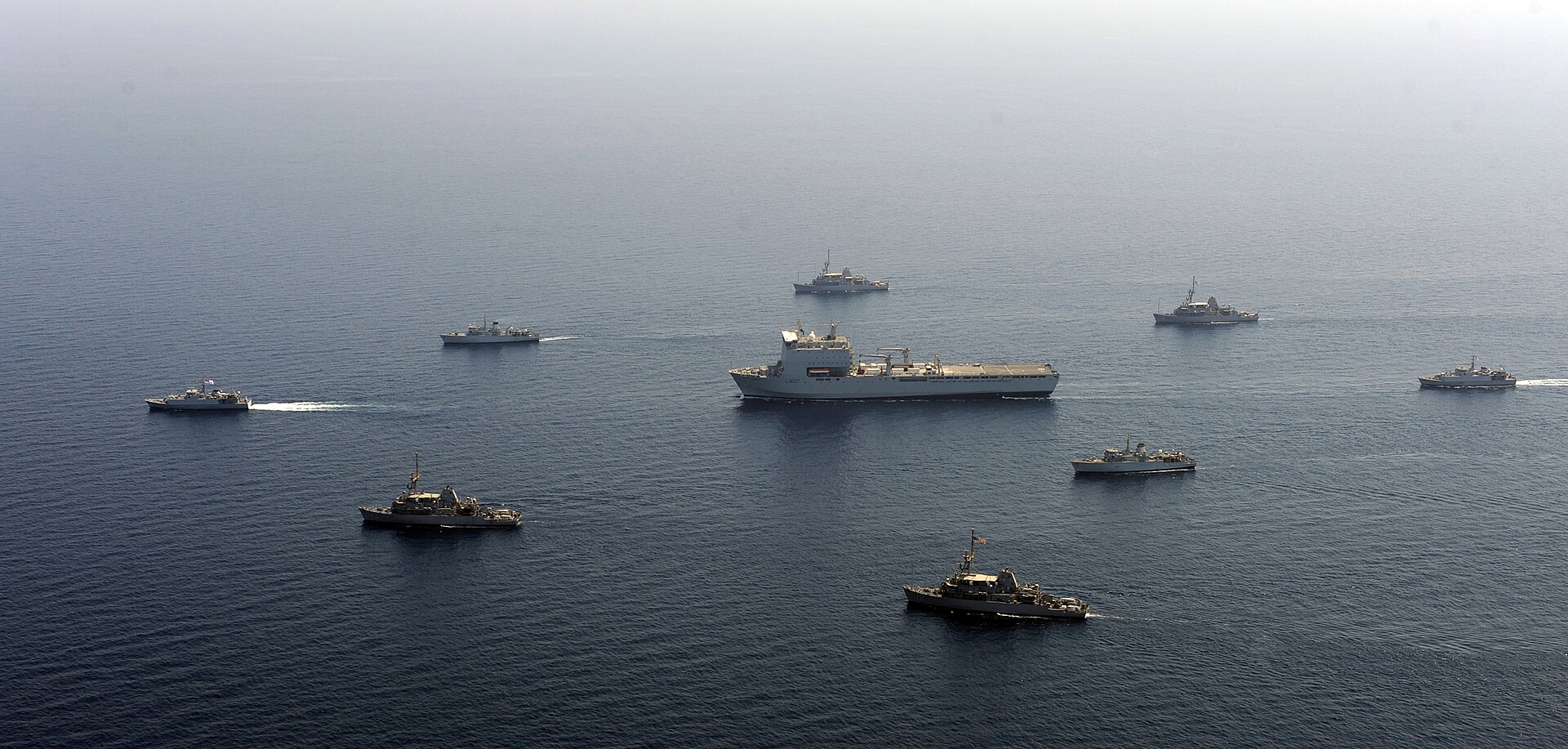
Macron separately confirmed that the French aircraft carrier Charles de Gaulle could deploy “within two to three days following confirmation” and that France leads a demining coalition encompassing more than 40 nations, with plans drawn up at Évian. None of these plans constitutes the “verified mine-free routes” BIMCO requires for commercial volume. The gap between political readiness and mine-clearance certification — the verification BIMCO and underwriters require before commercial traffic resumes — remains measured in months, not the days Trump described at Évian.
The IRGC, less than 24 hours before the G7 issued its statement, radioed “this is the last warning” to the USS Frank E. Petersen Jr. (DDG-121) while the destroyer conducted mine-clearance operations in the Strait. Iran’s military command treated the removal of its own mines — the mines the MOU reportedly requires cleared within 30 days — as an unauthorized act requiring IRGC permission. The sealed text may address mine-clearance authority. The IRGC’s radio transmission on June 15 did not indicate awareness of any such provision.
Frequently Asked Questions
Has any multilateral body previously endorsed a bilateral agreement before its text was published?
No clear modern precedent exists. Article 102 of the United Nations Charter, adopted in 1945, requires all international agreements to be registered with the UN Secretariat and published — a provision drafted specifically in response to the secret treaties of World War I, which diplomats of the era blamed for escalating a regional crisis into a continental war. The JCPOA in 2015 followed Article 102’s logic: the full text was released at signing, and the Security Council endorsed it six days later with the document on public record. The 2026 MOU’s status — acknowledged by both parties, digitally signed, congratulated by five G7 nations, but sealed from public view — has no direct parallel in the postwar treaty framework.
Can Saudi Arabia challenge PGSA service fees under international law?
Saudi Arabia could invoke UNCLOS Article 26(1), which prohibits charges on ships “by reason only of their passage” through international straits, at the International Tribunal for the Law of the Sea in Hamburg. Iran’s defense would cite Article 26(2), permitting fees for “specific services rendered to the ship.” However, Iran has accepted ITLOS compulsory jurisdiction only for seabed disputes under Part XI of UNCLOS, not for navigation disputes under Part III — a procedural barrier Saudi Arabia would need to overcome before reaching the substantive question. No tribunal has adjudicated whether a blanket per-barrel charge in a transit strait qualifies under the Article 26(2) exception.
How long is the MOU compared to prior US-Iran agreements?
Trump described the MOU as “about a page and a half,” approximately 600 to 800 words. The JCPOA (2015) ran to 159 pages including five technical annexes, designated IAEA INFCIRC/887. The Algiers Accords (1981), which resolved the Iran hostage crisis, comprised two declarations and 12 implementing documents totaling over 30 pages. The 1955 Treaty of Amity between the United States and Iran — the last bilateral treaty between the two nations, invoked by Iran at the International Court of Justice as recently as 2018 — was 11 articles across six pages. If Trump’s characterization is accurate, the 2026 MOU is the shortest US-Iran agreement governing issues of comparable scope on record.
What happens if the published text contradicts the G7 endorsement?
The G7 statement’s language — “diplomatic breakthrough” with calls for “detailed negotiations” and “quick implementation” — does not commit the five endorsing nations to any specific provision. By congratulating the existence of a deal rather than its contents, the five nations retain the ability to contest individual provisions after June 20 without formally retracting their endorsement. The European Union’s handling of the JCPOA offers a partial precedent: the EU endorsed the 2015 deal, maintained that endorsement after the US withdrew in 2018, and selectively enforced its provisions through the INSTEX trade mechanism — demonstrating that multilateral endorsement can be narrowed, reinterpreted, or partially abandoned without formal retraction. Aramco had already answered the MOU’s uncertainty in pricing terms: Aramco’s $6/barrel July OSP cut — the steepest since 2022 — was locked in on June 8, before the G7 endorsement and before a single commercial vessel had transited the strait.
At the G7 closing press conference the same day, Trump delivered a further concession: invoking Saudi Arabia’s ballistic missile holdings to justify Iran retaining its own arsenal — a statement that retroactively undermined the threat premise of the $142 billion arms deal Washington had sold Riyadh specifically to counter that threat.