TEHRAN — Iran’s Paydari Party and the allied Jalili faction have formally accused President Masoud Pezeshkian and Parliament Speaker Mohammad Bagher Ghalibaf of staging a constitutional coup through the Doha MOU — and the five-day funeral pause for Ayatollah Ali Khamenei, running July 4 through 9, gives them uncontested political time to harden that accusation before Mojtaba Khamenei assumes formal authority. At Day 17 of the MOU’s 60-day window, Article 12’s enforcement mechanism has no named arbiters, leaving no institutional channel through which the deal’s defenders can formally rebut the charge on the treaty’s own terms.
The accusation rests on Article 77 of Iran’s constitution, which mandates Majlis approval for all international treaties, protocols, contracts, and agreements. Paydari-aligned MP Mahmoud Nabavian posed the question directly on X: “People of Iran, is a coup underway?” Fellow MP Abol-Fazl Abootorabi accused Ghalibaf of “playing with words” by calling the accord a memorandum rather than a treaty, and announced that legislators were preparing a formal legal complaint. Saudi Arabia holds no seat at the Majlis, the Guardian Council, or the incoming Supreme Leader’s office — the three bodies where the MOU’s domestic legitimacy will be adjudicated.
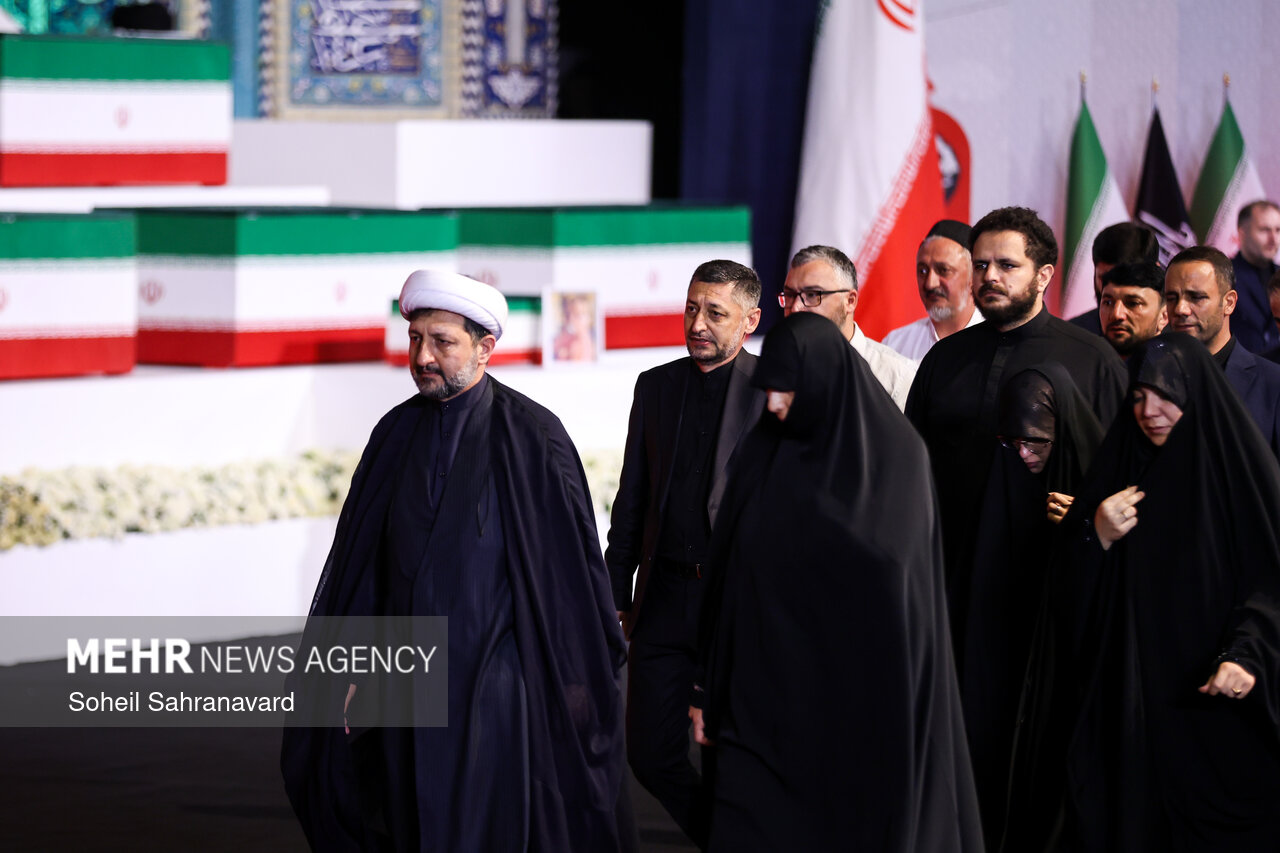
Table of Contents
- The Coup Accusation and Its Constitutional Basis
- Why Does Article 77 Threaten the MOU?
- The Funeral Pause as Uncontested Runway
- What Can the Paydari Faction Accomplish Before July 9?
- Vahidi Beside the Coffin
- The Hormuz Bill That Does Not Need to Mention the MOU
- Where Is Riyadh While Tehran Litigates the Deal?
- Can Mojtaba Khamenei Afford to Validate the MOU?
- Frequently Asked Questions
The Coup Accusation and Its Constitutional Basis
The word koudeta carries specific weight in Iranian political discourse. It invokes 1953 and the CIA-MI6 overthrow of Mosaddegh — the foundational grievance of the Islamic Republic — and implies the illegitimate seizure of constitutional authority. When Nabavian deployed it against the sitting president and parliament speaker around June 30, he was making a precise constitutional claim: that the MOU, signed June 17 as an executive instrument, required Majlis ratification under Articles 77 and 125, and that bypassing parliament constituted an unauthorized exercise of sovereign power.
People of Iran, is a coup underway?
Mahmoud Nabavian, MP, Paydari-aligned, X post, circa June 30, 2026
Article 125 is explicit. The president may sign treaties only “after obtaining the approval of the Islamic Consultative Assembly.” The MOU’s architects avoided this requirement by classifying the document as a memorandum of understanding rather than a treaty or protocol.
The Middle East briefing 3,000+ readers start their day with.
One email. Every weekday morning. Free.
Abootorabi’s accusation — that Ghalibaf was “playing with words” — targeted this semantic gap. No settled Iranian constitutional jurisprudence distinguishes an MOU from a “contract” under Article 77, and the Guardian Council, which holds interpretive authority over such questions, draws half its membership from appointees of the conservative-aligned judiciary.
Pezeshkian’s defense was procedural. The MOU, he told reporters, was reached “in full and continuous coordination with Supreme Leader Mojtaba Khamenei” and approved by a three-quarters SNSC supermajority. But the SNSC approval pathway does not negate the Majlis ratification requirement for instruments meeting Article 77’s broad definition. Ghalibaf ally Mojtaba Zarei dismissed the accusation as “the fantasy of the super-revolutionary camp and an election slogan aimed at rivals” — a characterization that concedes the factional dimension without addressing the constitutional one.
The Assembly of Experts gave the hardliner position institutional depth beyond parliamentary politics. On June 29, more than 70 percent of the body’s 88 members — 62 or 63 by the available count — issued a statement urging negotiators to hold to the elder Khamenei’s “red lines.” The AoE is constitutionally mandated to supervise the Supreme Leader under Article 111 — the body that selects and can dismiss the Leader. Sixty-two members of the elder Khamenei’s own supervisory institution endorsed the position the Paydari faction had been articulating for days.
Why Does Article 77 Threaten the MOU?
Article 77 mandates Majlis approval for all “international treaties, protocols, contracts, and agreements.” The MOU was never submitted to the Majlis — its framers classified it as an executive memorandum below Article 77’s threshold. But Iran’s constitution provides no formal taxonomy distinguishing memoranda from contracts, and the Guardian Council that adjudicates such ambiguities is structurally sympathetic to the hardliner reading.
The Guardian Council’s 12 members include six jurists appointed by the head of the judiciary (currently Gholam-Hossein Mohseni-Eje’i) and six clerics selected by the Supreme Leader. Both appointment tracks favor a textualist reading of Article 77 — one that treats the MOU’s four corners, not its diplomatic label, as dispositive. If Abootorabi’s formal legal complaint reaches the Council, a ruling that the MOU required Majlis ratification would retroactively strip it of domestic legal standing without voiding it as an international instrument.
The gap between domestic invalidity and international validity is where the hardliner strategy becomes operational. Iran could tell Washington that the MOU exists as an international commitment while treating it domestically as constitutionally unauthorized — permitting selective compliance or abandonment of individual provisions. Pezeshkian accused “some groups” of conducting “psychological operations of hostile media” by questioning the MOU’s legitimacy, a framing oriented toward media narratives rather than constitutional text. The Article 77 argument itself — the specific claim that the MOU required and did not receive Majlis ratification — remained unanswered as the funeral pause began.
The Funeral Pause as Uncontested Runway
The five-day mourning period for Khamenei’s funeral is not diplomatically neutral time. Doha talks are suspended. The MOU’s 60-day clock continues — Day 17 through 22 will pass during the pause — but no negotiating sessions will produce counter-narratives, no joint statements will issue, and no American or Qatari mediators will be positioned to push back on domestic Iranian constitutional arguments about the agreement’s validity.
The MOU contains no provision for suspending its 60-day window during mourning periods or diplomatic breaks. Days 17 through 22 will count against the deadline whether or not any party is negotiating. The Article 12 enforcement body — intended as the mechanism for adjudicating violations — remains unstaffed 17 days after signing, and the funeral pause eliminates the diplomatic setting in which the appointment might have been negotiated.
The funeral itself traverses four cities over five days: the body lies in state at Tehran’s Mosalla on July 4 and 5, the main procession runs 10 kilometers from Imam Hossein Square to Azadi Square on July 6, ceremonies move to Qom on July 7, then to Najaf and Karbala in Iraq on July 8 before burial at the Imam Reza shrine in Mashhad on July 9. The geographic breadth ensures national media saturation with funeral coverage — coverage that displaces, rather than coexists with, the factional argument over the MOU.
In IRGC-aligned outlets such as Raja News — which amplified the Assembly of Experts’ “red lines” framing and cast the 62-member statement as a channeling of the elder Khamenei’s will — the hardliner constitutional argument circulates through the funeral news cycle without rebuttal. Ghalibaf, who would ordinarily counter through parliamentary floor speeches or scheduled media appearances, is constrained by mourning protocols through July 9. Pezeshkian faces the same constraint.
| Date | MOU Day | Event |
|---|---|---|
| June 17 | 0 | MOU signed (14 points, 60-day window) |
| June 29 | 12 | Assembly of Experts statement (62/88 members) |
| June 30 | 13 | “Coup” accusation emerges (Nabavian, Abootorabi) |
| July 3 | 16 | Vahidi re-emerges beside Khamenei’s coffin |
| July 4–9 | 17–22 | Funeral pause — Doha suspended, five cities |
| August 18 | 62 | PGSA fee waiver expires |
| August 21 | 65 | General License X expires |
When talks resume after July 9, the MOU will have 40 days remaining before the PGSA waiver expires on August 18 — the deadline that holds in public and dies in private. General License X, the US waiver permitting Iranian crude sales, lapses three days later on August 21. The funeral week has since produced documented on-camera commitments that have narrowed Ghalibaf’s mandate further, with every hour of oath-taking at the Grand Mosalla generating sworn public positions that close off the negotiating room Ghalibaf needs for round three.
What Can the Paydari Faction Accomplish Before July 9?
The Paydari pathway does not require legislation during the mourning period — it requires narrative entrenchment. Five days of unchallenged domestic media access allow the hardliner constitutional argument to set the interpretive frame that Mojtaba Khamenei will inherit when formal authority transfers.
Saeed Jalili, who finished second in the 2024 presidential election with 13 million votes, commands a constituency that regards the MOU as capitulation. Unconfirmed reports from mid-June indicated Jalili had been removed from his position as the Supreme Leader’s representative on the SNSC and replaced by Ali Bagheri Kani. Iran scholar Raz Zimmt assessed that “if true, the move is likely related to Jalili’s and the Paydari Front’s” opposition to the MOU.
Sources close to Jalili denied the removal. Whether or not he retains formal SNSC access, his faction’s media infrastructure — Raja News, sympathetic Majlis members, X accounts with substantial domestic reach — operates independently of any single institutional position.
The pre-funeral pattern suggests coordination rather than spontaneous outrage. Between June 25 and July 3, Abootorabi demanded Majlis legislation on Hormuz sovereignty, Nabavian posted the “coup” accusation, Abootorabi announced the legal complaint, and Iranian state television cut short a pre-recorded Ghalibaf interview in which the parliament speaker was explaining the MOU’s frozen-asset release mechanism. The broadcast interruption, reported by Iran International on July 1, triggered protests from parliamentarians who accused IRIB of undermining the speaker’s ability to defend the agreement on air. Mourning protocols now constrain Ghalibaf and Pezeshkian from public counter-programming through July 9.
Vahidi Beside the Coffin
IRGC caretaker commander Ahmad Vahidi made his first public appearance since February 8 on July 3, sitting beside Khamenei’s coffin as funeral ceremonies began. Vahidi had been absent from public view for nearly five months — a period spanning the MOU negotiations, the Doha rounds, and the entire hardliner counter-mobilization. His positioning beside the coffin on the day the funeral pause commenced placed a senior IRGC figure at the center of the succession ceremony at the moment the pragmatist camp was being forced into silence by mourning protocols.
Vahidi’s re-emergence connects to the structural fact that shapes the MOU’s domestic trajectory: Mojtaba Khamenei will not attend his father’s funeral. The incoming Supreme Leader, appointed March 9 at age 56, has not been seen publicly since February 28. The Stimson Center assessed that “it will take time for him to command the absolute authority his father once wielded, and until then, the new leader is likely to preserve his father’s conditional, two-track approach to the West: authorizing talks while working to keep hard-line elements anchored inside the system rather than alienated from it.”
Preserving that two-track approach requires the capacity to balance factions — and Mojtaba’s absence from the funeral cedes the symbolic terrain to whoever fills it. Under a functioning Supreme Leader, a public accusation of coup against the president and parliament speaker would produce immediate institutional rebuke from the top. Mojtaba’s invisibility is the permissive condition for the Paydari campaign’s escalation.
The dependency is structural. The IRGC and Jalili-aligned factions were the primary force behind Mojtaba’s selection. Both the Gulf International Forum and Janes assessed in 2026 that Mojtaba lacks independent revolutionary legitimacy — his authority depends on continued hardliner support in a way his father’s, after four decades of accumulated institutional control, did not. The elder Khamenei managed factional disputes by deploying presidential authority and IRGC authority against each other — a two-vector control system built over decades. The office that ran the two-vector system is currently occupied by his absence.
Vahidi’s institutional role during the transition carries a specific weight beyond symbolism. As a former defense minister now serving as the IRGC’s caretaker commander, with deep organizational roots, his physical presence beside the coffin — while the incoming Supreme Leader remained invisible — signaled to the IRGC officer corps and the security establishment that the hardliner camp held the institutional ground during the succession. The Paydari faction’s “coup” accusation gains force not from parliamentary rhetoric alone but from the visible alignment of senior IRGC figures with the constitutional argument against the MOU.
The Hormuz Bill That Does Not Need to Mention the MOU
Alireza Salimi, a member of parliament’s presiding board, told ISNA in late May that legislation “exercising the Islamic Republic’s management and sovereignty over the Strait of Hormuz” would “soon be passed and become law.” Abootorabi told Didban Iran separately that Ghalibaf was “preventing parliament from legislating on Iran’s sovereignty over the Strait of Hormuz.” The bill’s design, as described in public statements, would assert comprehensive Iranian sovereign control over Hormuz transit — a framework that directly contradicts MOU Article 5’s provisions on Hormuz management.
The bill does not need to reference the MOU. A standalone assertion of Hormuz sovereignty, once enacted and reviewed by the Guardian Council, would create a parallel domestic legal reality. The MOU would not be formally nullified — it would coexist with a domestic statute asserting the opposite of its core provision. In Iranian constitutional hierarchy, legislation passed through the Majlis and approved by the Guardian Council carries greater weight than an executive memorandum that never received Majlis ratification under Article 77.
The Persian Gulf Security Authority, established May 5 and paused but not dissolved by the MOU, provides the enforcement mechanism. The PGSA’s fee waiver expires August 18 — Day 62, two days after the MOU’s 60-day window closes. At Saudi Arabia’s approximately 5.5 million barrels per day of output, the $1-per-barrel transit fee would impose costs of $5.5 million daily. No declaration of MOU invalidity is required for the fee to activate — and if the Hormuz sovereignty bill has passed by then, the PGSA collects under domestic legal authority that postdates the memorandum.
Where Is Riyadh While Tehran Litigates the Deal?
Saudi Arabia’s exposure to the hardliner campaign is informational rather than kinetic — and structurally more dangerous because Riyadh possesses no mechanism to counter it. The kingdom holds no seat at the Majlis where the Hormuz sovereignty bill will be debated, no representative on the Guardian Council that will adjudicate the Article 77 complaint, and no access to Mojtaba Khamenei’s incoming office where the political cost of validating the MOU will be weighed.
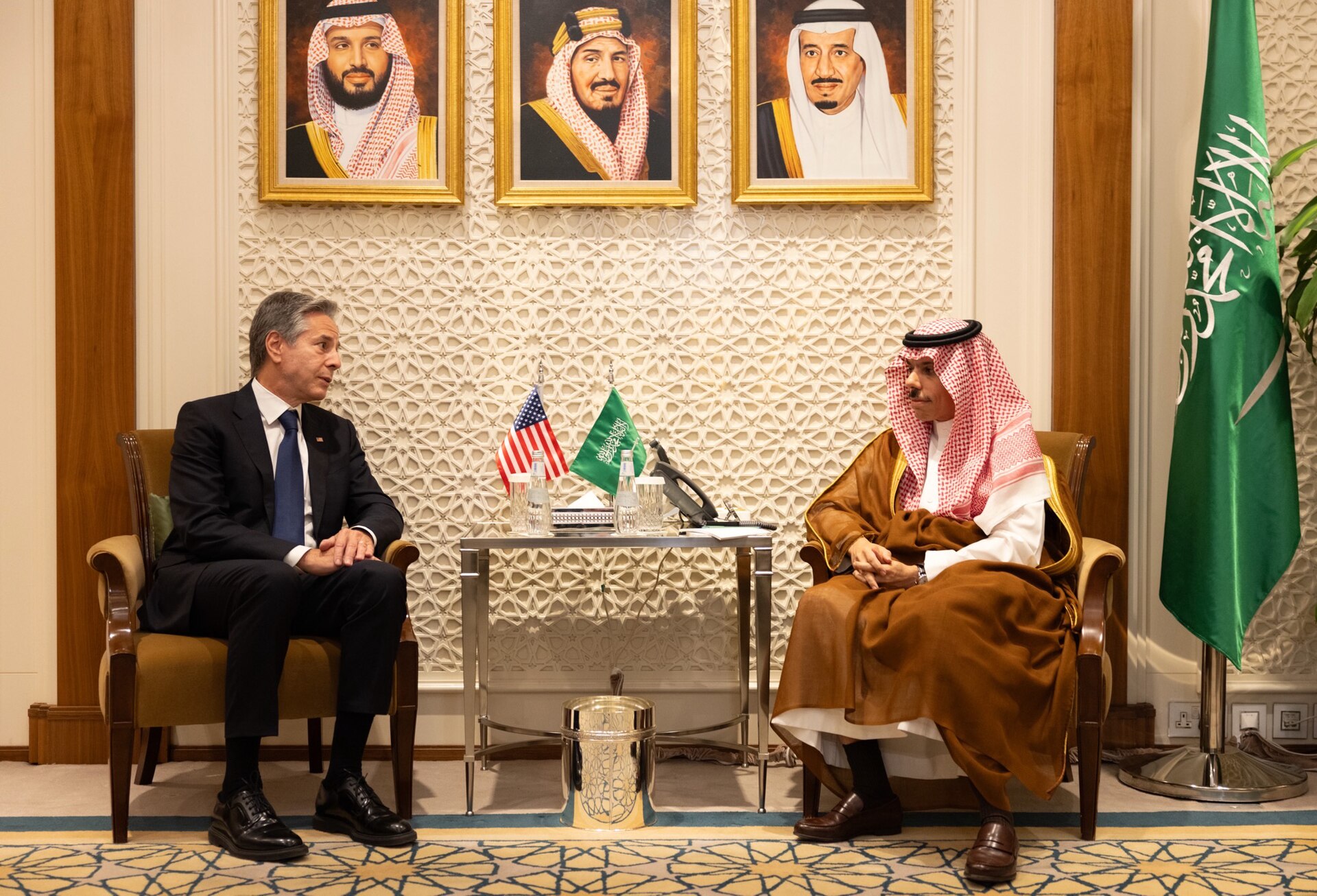
Saudi Arabia’s last senior diplomatic presence in Tehran was Foreign Minister Prince Faisal at President Raisi’s funeral in May 2024. The military attaché was expelled in March 2026. No formal Saudi channel into the Iranian political system remains through which Riyadh could influence the constitutional debate over the MOU’s legitimacy.
The IISS captured the Gulf position in a June 2026 assessment: Arab Gulf states are “publicly supporting the US–Iran MoU to avoid further hostilities” but “the associated concessions from the US in the MOU come with numerous security concerns for the region.” The concessions include provisions on Hormuz management that the Paydari faction is now working to override through domestic legislation. If the hardliner campaign succeeds — if the MOU loses domestic constitutional standing inside Iran — Saudi Arabia will have publicly endorsed an agreement that its adversary’s own legislature declared unauthorized.
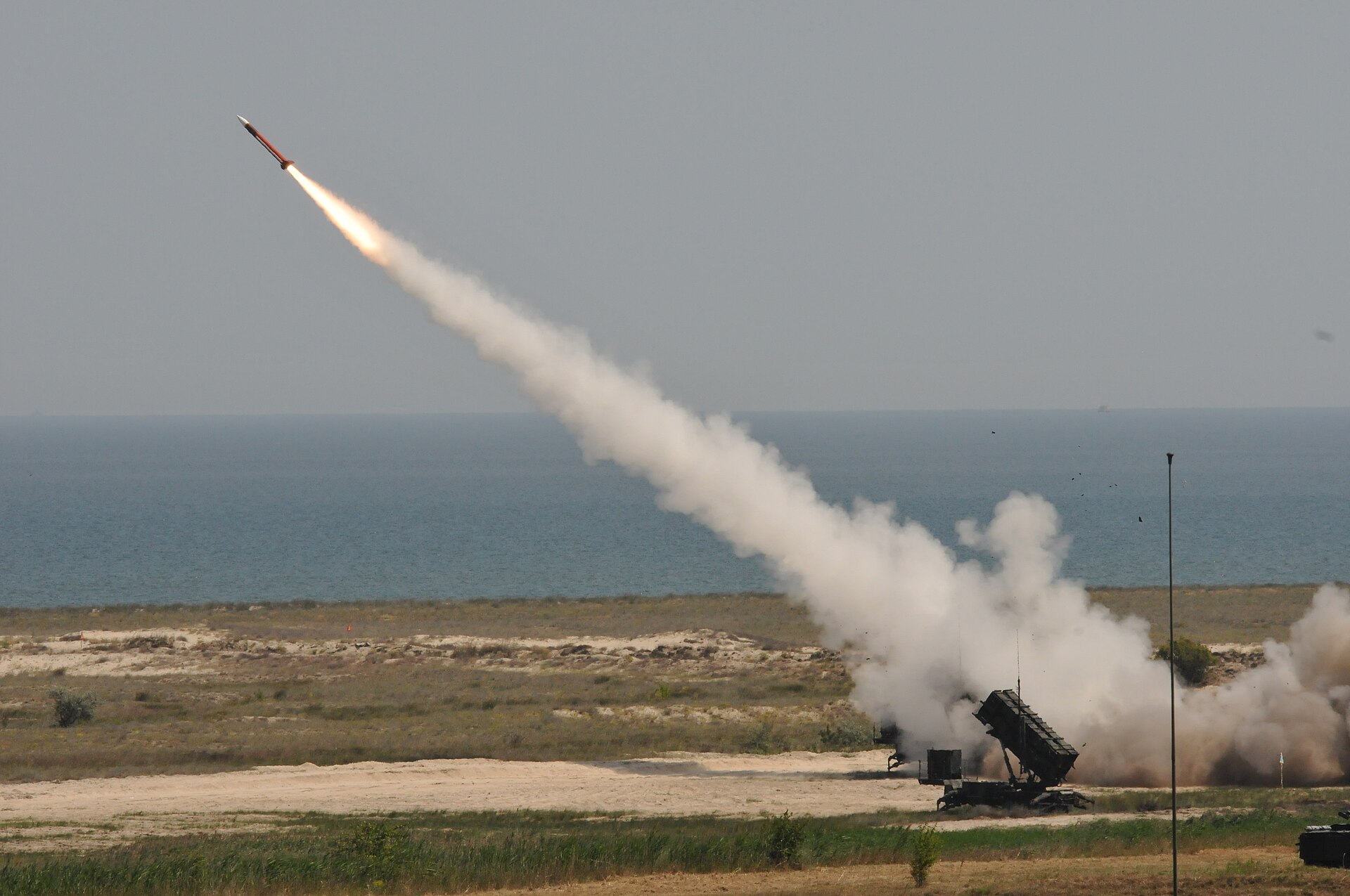
Material exposure compounds the informational deficit. Saudi PAC-3 MSE interceptor stocks stand at approximately 400 of an original 2,800 — 86 percent depletion, with the Camden, Arkansas production line manufacturing 620 per year and unable to fulfill Saudi orders before mid-2027. The Q1 2026 budget deficit reached SAR 125.7 billion against a full-year target of SAR 165 billion, with Brent trading near $70.57 per barrel versus a fiscal breakeven estimated between $80 and $96. Riyadh’s capacity to absorb the consequences of MOU collapse has narrowed since June 17.
Ghalibaf’s own counter-moves deepen Saudi uncertainty without intending to. Rather than directly rebutting the coup charge, the parliament speaker has issued deliberately hawkish statements — warning the US to honor its Lebanon commitments, declaring Iran’s nuclear rights non-negotiable, and telling ISNA that Iran would “resume proportionate actions” if the US and “Zionist regime” failed to fulfill their obligations. This rhetoric, designed to outflank the Paydari camp domestically, simultaneously signals to external observers that even the MOU’s defenders frame it as conditional and reversible.
Ghalibaf’s declaration that IAEA access to bombed nuclear sites is barred “under any circumstances” was directed at the Paydari faction’s domestic audience. Saudi Arabia’s military and intelligence apparatus processes the same public statements without access to the domestic factional context that produced them.
Can Mojtaba Khamenei Afford to Validate the MOU?
The question facing Mojtaba when formal authority transfers is not whether the MOU serves Iran’s interests but whether validating it costs more domestic political capital than abandoning it costs in international standing. The hardliner campaign is designed to ensure the answer is yes — to raise the domestic price of validation above the international price of walking away before the funeral pause ends.
The 1989 precedent cuts in a direction the pragmatists prefer to cite but that structural comparison does not support. Khomeini’s death did not void the Algiers Accords, and the succession preserved existing international commitments. But Khamenei I inherited the Algiers framework from a consensus figure with uncontested authority. Mojtaba inherits the MOU from a factional coalition — Pezeshkian, Ghalibaf, the SNSC supermajority — that his own political base has publicly labeled illegitimate. The analogy fails where it matters: at the question of the predecessor’s authority to commit.
Pezeshkian’s claim that the MOU was reached “in full coordination” with Mojtaba is the pragmatists’ strongest card and their most dangerous one. If true, it implicates the incoming Supreme Leader in the instrument the hardliners have labeled a coup — forcing Mojtaba to either defend the MOU or disavow it. Iran International reported on June 15 that experts assessed the regime was “closing ranks” around institutional survival, overriding factional opposition — but closing ranks requires a center, and the Doha round that ended without resolving the Hormuz fee dispute produced no outcome strong enough to serve as one.
If the MOU loses domestic standing through the combination of Guardian Council adjudication and Hormuz sovereignty legislation, Mojtaba would not need to formally withdraw from it. He could treat the memorandum as an instrument the previous government lacked constitutional authority to sign — not a treaty violation but a constitutional correction. Saudi Arabia would face the consequences — PGSA fee activation, potential Hormuz disruption, loss of the ceasefire framework — without any mechanism under the MOU to contest the domestic legal process that produced the outcome.
The MOU’s clock reaches Day 22 when the funeral pause ends on July 9. The Article 12 enforcement mechanism will still have no named arbiters. The Hormuz sovereignty bill will have advanced through five uncontested days of legislative positioning. On August 18, the PGSA fee waiver lapses without requiring a decision from any Supreme Leader’s office — it activates by default.
Among the most visible things the hardliners did with those five days: the state funeral’s IRGC-managed emcee delivered a podium declaration that killing Trump was a religious duty. What the hardliners actually used the funeral to accomplish is the follow-through on the runway this article identified.
Frequently Asked Questions
Has Iran previously used Article 77 arguments to challenge an international agreement?
The JCPOA, signed in 2015, was also never ratified by the Majlis. Like the current MOU, it was approved through the SNSC and endorsed externally by UNSC Resolution 2231 — but Iranian hardliners made the identical Article 77 argument throughout its lifespan. When Iran began exceeding enrichment limits in 2019, hardliners argued that the lack of Majlis ratification meant the JCPOA was not domestically binding in a way that prevented withdrawal — a position the Rouhani government did not formally dispute. The precedent supports the Paydari faction’s position: an instrument that bypasses the Majlis is structurally easier to abandon than one that passes through the full constitutional ratification process.
What is the significance of Jalili’s 13 million votes in the 2024 election?
Saeed Jalili’s 13 million votes in the 2024 presidential election give the Paydari faction’s MOU opposition a quantified popular mandate beyond parliamentary procedure. The Paydari Party — formally the Front of Islamic Revolution Stability (Jabhe Paydari), founded in 2011 — maintains dedicated media outlets, Majlis representatives, and relationships adjacent to the SNSC. The 13-million-vote base means the “coup” accusation is not confined to elite factional maneuvering; it carries a mass constituency whose mobilization potential shapes Mojtaba’s cost-benefit calculation independently of any Guardian Council ruling.
Could the Guardian Council intervene before the funeral pause ends?
The Guardian Council has constitutional authority to adjudicate the Article 77 question, but intervention during an active mourning period for the Supreme Leader would be procedurally unprecedented. The more likely timeline begins after July 9, either through adjudication of Abootorabi’s formal complaint or through constitutional review of the Hormuz sovereignty bill once the Majlis passes it. The Council’s review process has no fixed statutory timeline — it can take days or months. If the Hormuz bill reaches the Council before August 18, a favorable ruling would create domestic legal authority for PGSA fee collection that predates the waiver’s expiration date.
What role does the state broadcaster play in the factional contest over the MOU?
Iranian state television (IRIB) on July 1 cut short a pre-recorded interview with Ghalibaf while the parliament speaker was explaining the MOU’s frozen-asset release mechanism. The interruption — of a taped segment, not a live broadcast — triggered protests from parliamentarians who accused IRIB management of sabotaging the pragmatist camp’s defense of the agreement. IRIB’s management structure includes appointees with security-apparatus and IRGC connections. The incident indicated that the hardliner campaign extends beyond parliamentary rhetoric into control of the information environment — an institutional tool that operates without obstruction during a funeral pause when counter-programming is constrained by mourning protocol. The physical dimension became clearer on July 5, when Reuters sources confirmed Mojtaba Khamenei’s injuries barred him from attending his own father’s funeral — a constraint with direct implications for the MOU signing-authority gap the hardliners were already exploiting.