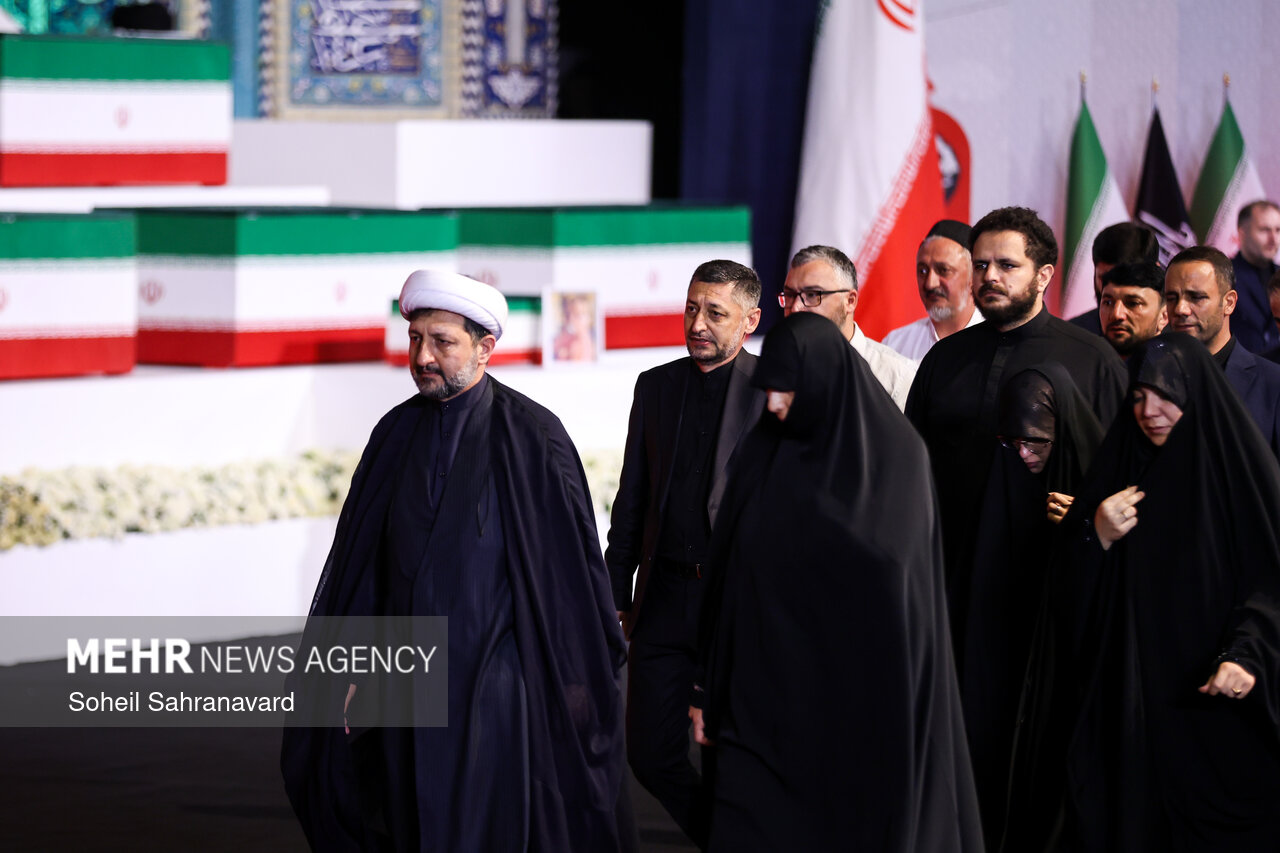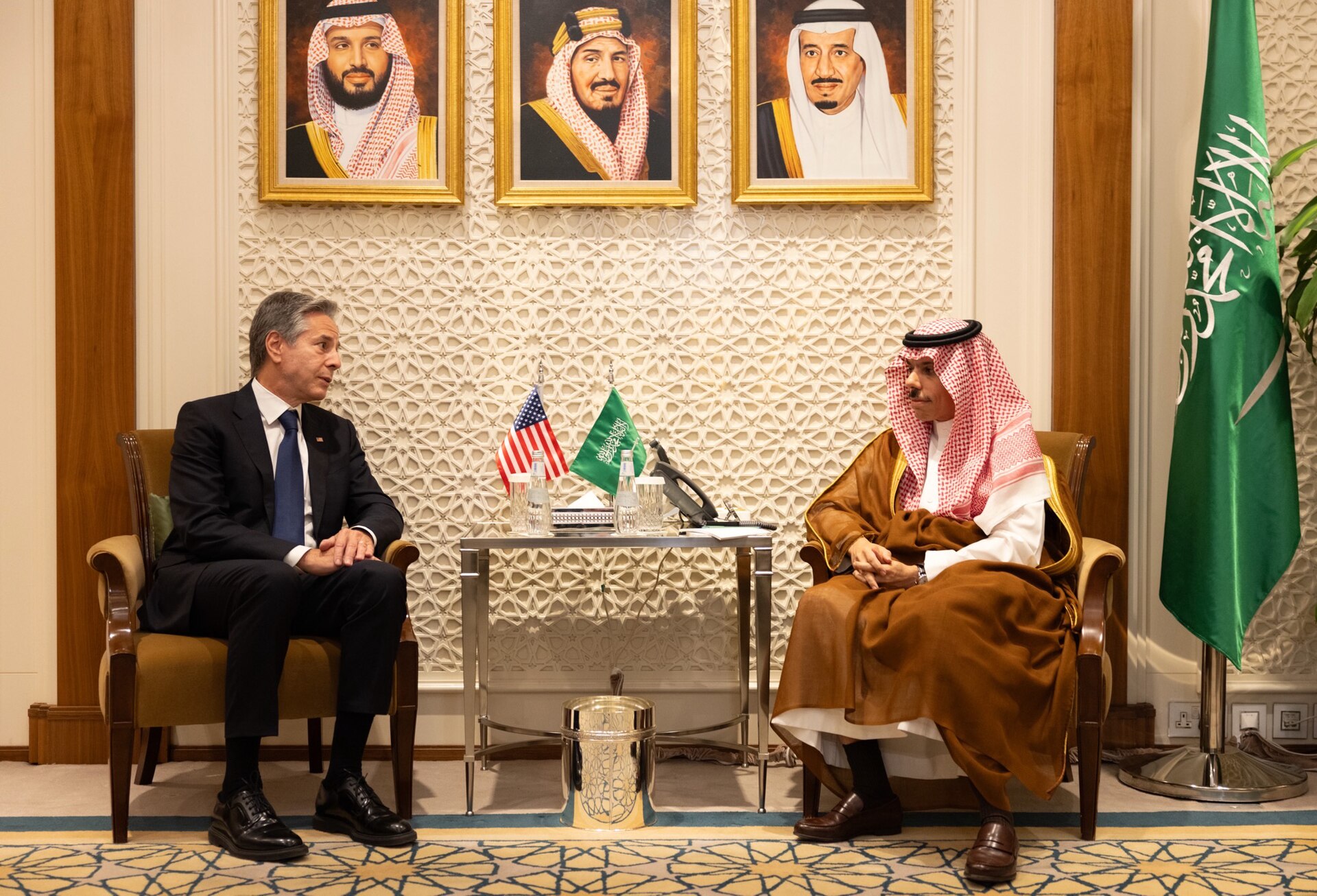

RIYADH — Saudi Arabia sent Deputy Foreign Minister Waleed El-Khereiji to the state funeral of Ali Khamenei in Tehran on July 3–4 and addressed King Salman’s formal condolences to President Masoud Pezeshkian — not to Mojtaba Khamenei, the man who has held the title of Supreme Leader since March 9. The addressee line is protocol, and in the grammar of Middle Eastern diplomacy protocol is policy: Riyadh attended a ceremony memorializing a Supreme Leader whose successor it does not recognize, purchasing time during the 60-day MOU ceasefire while resolving nothing about the chain of authority that governs Iran’s foreign policy, its nuclear program, and the Persian Gulf Security Authority fee architecture set to auto-activate on August 18.
The calibration extended to every tier of the delegation — a deputy foreign minister rather than the FM Prince Faisal who attended the constitutionally lower-ranked Raisi funeral in May 2024, condolences routed through the presidency rather than the Supreme Leader’s office that controls the Supreme National Security Council, and no statement of recognition at any point during the four months since Mojtaba’s selection by the Assembly of Experts. What Riyadh demonstrated in Tehran was not diplomatic ambiguity but a structural bet with mounting costs and a visible expiry date, a wager that Mojtaba’s authority will prove temporary enough that formal recognition can be indefinitely deferred — even as every mechanism the kingdom depends on, from the 2023 Beijing normalization agreement to the PGSA toll regime, runs through the office he now occupies.
Table of Contents
- Who Did El-Khereiji Deliver the Condolences To?
- Why a Deputy FM for a Supreme Leader’s Funeral?
- The GCC Attendance Matrix
- Where Does the 2023 Normalization Live Now?
- What Mojtaba Controls That Riyadh Cannot Reach
- The PGSA Counterparty Paradox
- Does Non-Recognition Cost More Than Recognition?
- Frequently Asked Questions
Who Did El-Khereiji Deliver the Condolences To?
Saudi Arabia addressed King Salman and Crown Prince Mohammed bin Salman’s formal condolences to Iranian President Masoud Pezeshkian, bypassing Supreme Leader Mojtaba Khamenei entirely. Deputy FM Waleed El-Khereiji delivered the message in person at the July 3–4 state funeral in Tehran, making Saudi Arabia one of the few attending states to engage with the presidency while avoiding any acknowledgement of Mojtaba’s authority over the office being mourned.
El-Khereiji’s attendance was itself described as “unexpected” by Al Jazeera, which is the word you reach for when a country that issued no condolences for the assassination (February 28), did not recognize the successor (March 9), and expelled the military attaché along with four embassy staff (March 21, citing “blatant attacks” on Saudi territory under Article 51 of the UN Charter) then sends a mid-ranking diplomat to the funeral with a carefully addressed envelope. The civilian ambassador was retained when the military attaché was expelled — a calibrated decision that kept one diplomatic wire open while cutting the other — but the condolence addressee tells you which wire Riyadh intends to use going forward.
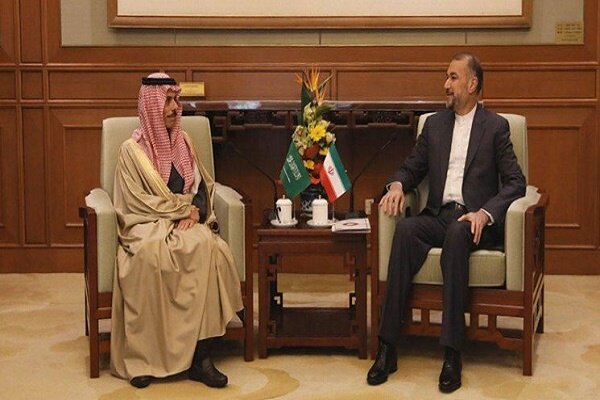
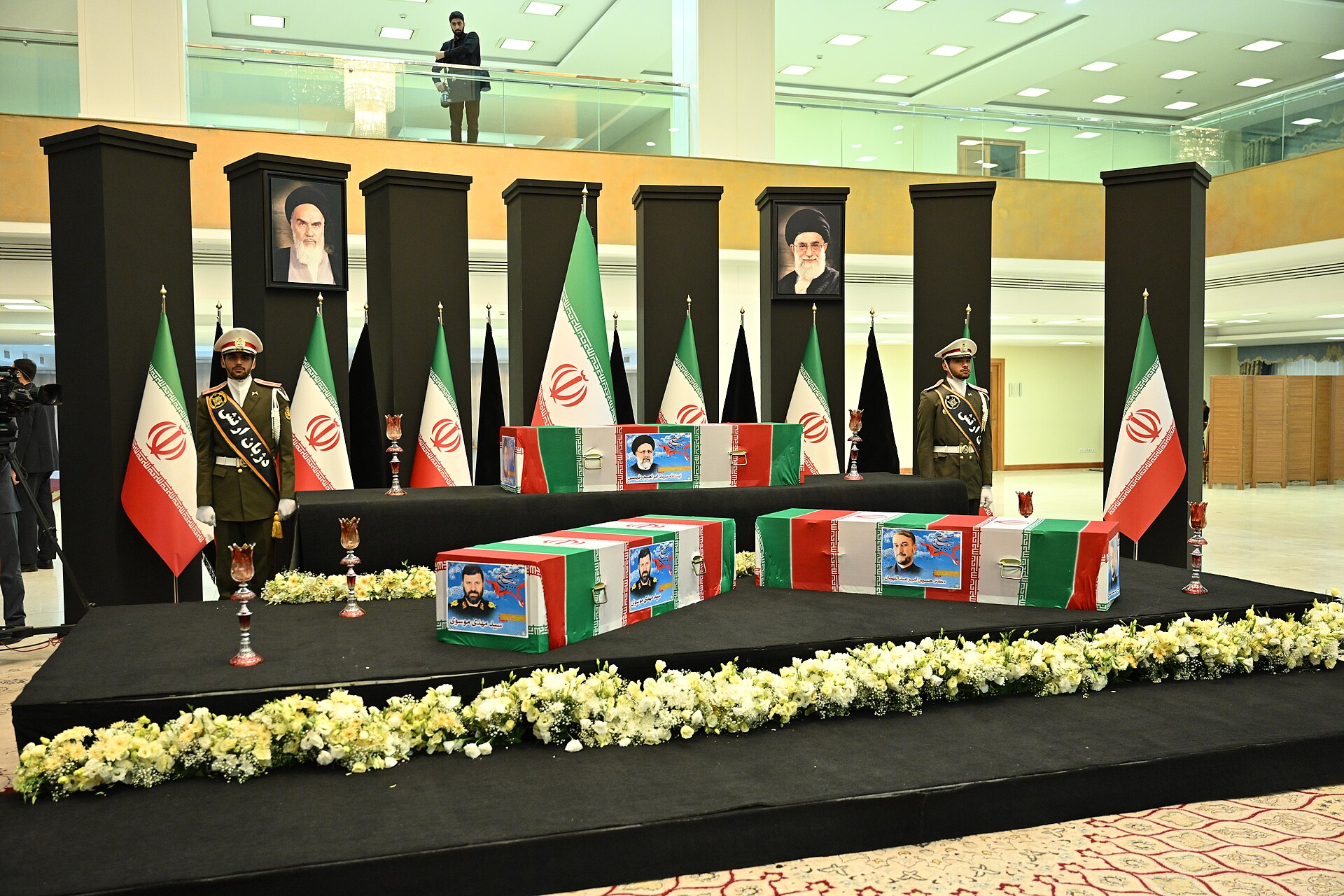
Iran itself, perhaps inadvertently, validated the Saudi protocol choice by making Pezeshkian the official who received foreign delegations at the funeral ceremony. Heads of state and senior envoys were greeted by the president, Parliament Speaker Mohammad Bagher Ghalibaf, Foreign Minister Abbas Araghchi, and Judiciary Head Gholam-Hossein Mohseni-Ejei — a receiving line that conspicuously excluded the man whose father’s funeral they had come to attend, Mojtaba having been absent from his own father’s ceremony due to what Israel’s Defense Minister Katz described as being “marked for death,” a threat specific enough that Mojtaba has not been seen publicly since the February 28 airstrike and communicates instead through written statements delivered by motorcycle courier.
Russia followed the same presidential-track convention when Ali Khamenei died: Vladimir Putin addressed condolences to “President of the Islamic Republic of Iran, Masoud Pezeshkian,” and sent Dmitry Medvedev (Deputy Security Council Chairman) to the funeral rather than attending himself. The difference that separates Riyadh from Moscow is what happened next — Russia subsequently accepted Mojtaba’s succession, turning what for Putin was a temporary diplomatic reflex into what for MBS remains a permanent structural position whose costs compound with every passing day of the MOU’s remaining window.
The Middle East briefing 3,000+ readers start their day with.
One email. Every weekday morning. Free.
Why a Deputy FM for a Supreme Leader’s Funeral?
When President Ebrahim Raisi died in a helicopter crash in May 2024, Saudi Arabia sent Foreign Minister Prince Faisal bin Farhan — two full tiers above El-Khereiji in the Saudi diplomatic hierarchy. The Khamenei funeral was constitutionally a higher-order occasion (the Supreme Leader outranks the president under Iran’s Article 110, which vests the office with sole authority over foreign policy, the armed forces, and war-and-peace decisions), yet Riyadh sent a lower-ranked envoy to the more consequential event — a rank inversion that Tehran reads fluently.
Sending FM Faisal to the Raisi funeral was a warm gesture calibrated to a presidential-track relationship at a moment when the 2023 Beijing normalization was still fresh and Ali Khamenei’s authority was unchallenged, the kind of attendance that cost Riyadh nothing because the constitutional structure it interacted with (president dies, president is mourned, new president takes office) did not threaten the normalization’s institutional anchors. Sending El-Khereiji to the Supreme Leader’s funeral inverts every variable: higher constitutional office, lower-ranked envoy, and a succession that directly threatens the authority chain through which the normalization agreement was originally signed.
This pattern was already visible when El-Khereiji appeared at the Doha round 2 talks, where a deputy-FM-level engagement replaced what had previously warranted FM Faisal’s direct involvement. HOS covered the rank calibration when Riyadh initially said no to the funeral and then sent the deputy: the Saudi Iran file has been systematically downgraded from FM-track to deputy-FM-track — a demotion that coincided with the refusal to recognize the man who now controls the Supreme Leader’s office, and one that El-Khereiji himself embodied when he chaired the December 9–10, 2025 China-Iran-Saudi Trilateral from the same sub-ministerial position.
Pakistan’s delegation provides the contrast that makes the calibration unmistakable. Prime Minister Shehbaz Sharif brought Army Chief Field Marshal Asim Munir, Interior Minister Mohsin Naqvi, and additional senior officials — a full-spectrum investment covering every civilian and military tier, the kind of delegation you send when you intend to maintain relationships with whichever authority survives the succession. Islamabad had already briefed Saudi FM Faisal before the funeral, making the asymmetry between a five-person Pakistani delegation and a single Saudi deputy foreign minister impossible for either Riyadh or Tehran to ignore.
The GCC Attendance Matrix
The funeral produced a precision map of Gulf state Iran postures, with three distinct strategies visible in a single Tehran ceremony — each calibrated to a different bet about Mojtaba’s durability and each carrying costs the others avoid. The attendance matrix below records who showed up, whom they addressed, and whether they have recognized the man Saudi Arabia will not name.
| Gulf State | Envoy Sent | Condolence Addressee | Mojtaba Recognition | Feb 28 Condolences |
|---|---|---|---|---|
| Saudi Arabia | Deputy FM El-Khereiji | Pezeshkian (President) | No | None issued |
| Oman | Parliament Speaker | Mojtaba (Supreme Leader) | Yes (March 9) | Issued |
| Qatar | Parliament Speaker | Not specified publicly | Not stated | Issued |
| UAE | None | None | No | None issued |
| Bahrain | None | None | No | None issued |
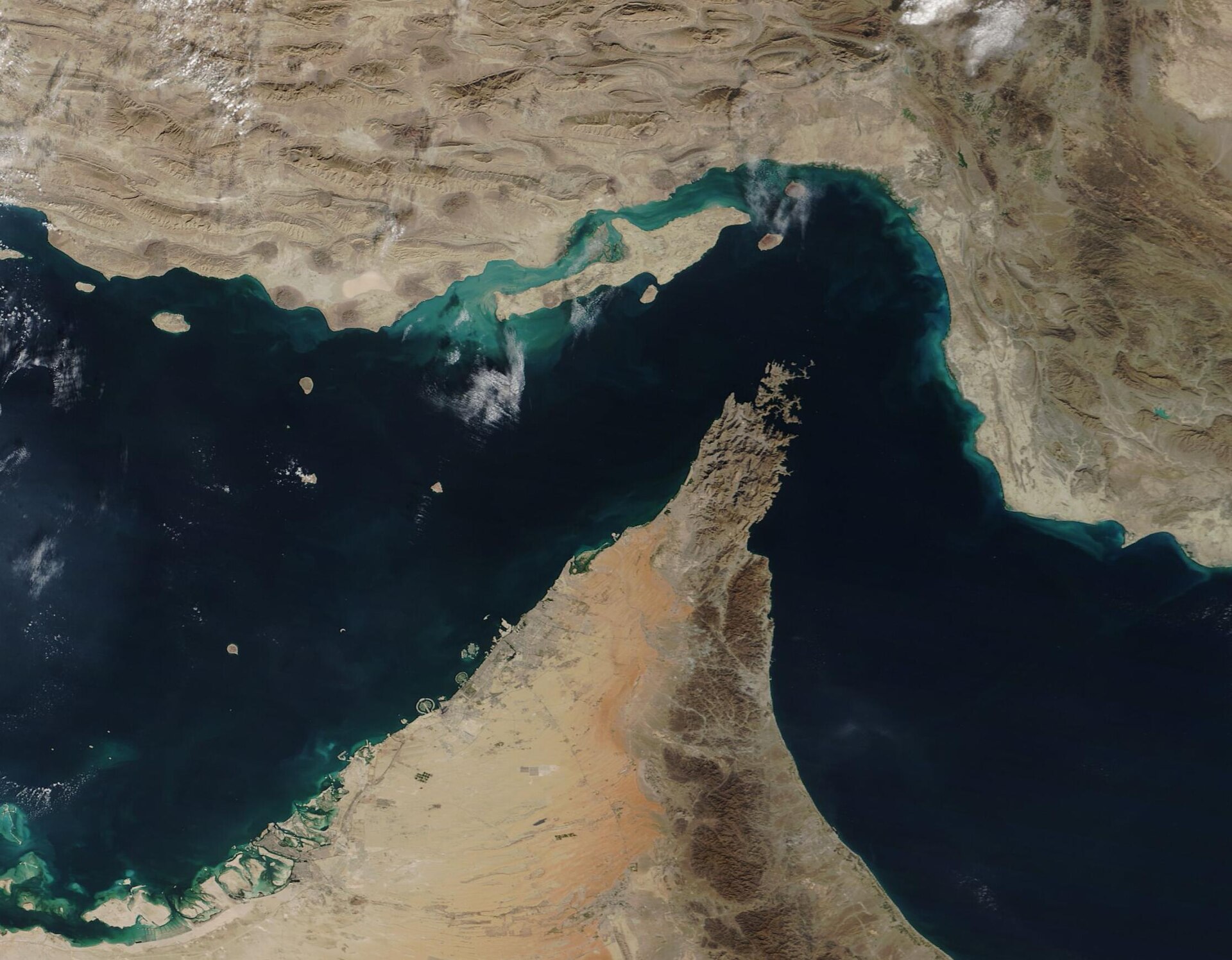
Oman took the opposite bet from Riyadh, and it took it first. Sultan Haitham’s recognition of Mojtaba on March 9 — expressing “sincere wishes of success to Mojtaba Khamenei in assuming his leadership responsibilities,” the first Arab leader to do so, despite Iranian forces having struck Omani territory during the conflict — preserved Muscat’s role as the permanent back-channel to Tehran, the role that produced the JCPOA secret talks in 2012–13 and the Houthi ceasefire negotiations of 2022. The bet is asymmetric in Oman’s favor: if Mojtaba consolidates, Sultan Haitham has a direct relationship with the authority that controls Iranian foreign policy; if Mojtaba falls, recognition of a transient leader costs Muscat nothing, because Oman’s strategic value to any Iranian government is geographic (the Strait of Hormuz’s southern shore) rather than political.
Qatar’s parliament speaker attendance maintained the mediator infrastructure without forcing a recognition decision, a position enabled by Qatar’s hosting of the Doha talks, which give Doha a procedural relationship with Iran that does not require institutional recognition of the Supreme Leader’s office. Oman, which is co-developing the PGSA fee regime and needs operational coordination with the SNSC-level authority that administers the strait, cannot sustain that procedural ambiguity — which is why Sultan Haitham recognized Mojtaba and Qatar’s Emir Tamim did not.
UAE and Bahrain’s total absence — no envoy, no condolences, neither for the assassination in February nor the funeral in July — is the cleanest signal in the matrix. Abu Dhabi has been recalibrating its Iran exposure since the September 2019 Aramco attack revealed the limits of collective GCC defense, and Bahrain, home to the US Fifth Fleet headquarters, has never maintained an independent Iran relationship and does not pretend otherwise. Their absence is not a decision but a default, one that carries no diplomatic cost precisely because neither Abu Dhabi nor Manama has any normalization agreement, PGSA exposure, or Beijing-brokered institutional channel that Mojtaba’s authority could complicate.
Where Does the 2023 Normalization Live Now?
The March 10, 2023 Beijing normalization agreement was signed by SNSC Secretary Ali Shamkhani — a direct appointee of Supreme Leader Ali Khamenei — Saudi national security adviser Musaad bin Mohammed Al-Aiban, and China’s Wang Yi. The normalization’s legal foundation ran through the Supreme Leader’s security apparatus from its inception, deliberately structured through the SNSC track rather than the foreign ministry, with the Saudi counterpart being a security adviser rather than a foreign minister — a pairing that placed the agreement where the Supreme Leader’s constitutional authority is absolute.
That chain of authority transferred to Mojtaba when Ali Khamenei was assassinated, and the institutional disruption compounded when SNSC Secretary Ali Larijani was himself assassinated on March 17 in what Iranian media attributed to a follow-up Israeli operation. Mojtaba appointed Mohammad-Bagher Zolghadr — a hardline former IRGC deputy commander-in-chief with eight years leading the IRGC Joint Staff — as the new SNSC Secretary on March 24. Zolghadr was not confirmed by the Majlis, not proposed by the president, and not selected through any process Saudi Arabia recognizes; his authority derives exclusively from Mojtaba, and the Washington Institute assessed that “in some operational respects he probably will matter even more than Supreme Leader Mojtaba Khamenei himself.”
The SNSC that Zolghadr now runs has two vacant seats — Chief of General Staff (empty since the February 28 strikes) and Minister of Intelligence (empty since March 18) — leaving the body operating at reduced capacity while carrying the full weight of Iran’s war-and-peace decisions. Zolghadr’s son-in-law is Kazem Gharibabadi, the deputy foreign minister and former nuclear negotiator who has been Iran’s primary interlocutor at the MOU implementation talks, a family connection that routes the normalization’s diplomatic track through the same institutional network as its security track. The agreement’s anchor and its implementation lead are now connected through kinship rather than constitutional mandate.
China’s position deepens the structural problem for Riyadh. Wang Yi co-signed the Beijing agreement and sent He Wei — a sub-foreign-minister-level envoy, Vice Chairperson of the NPC Standing Committee — to the funeral, initially defaulting to the Pezeshkian track in a pattern shared by most attending states. Beijing subsequently recognized Mojtaba’s succession, which means China’s normalization channel now runs through the Supreme Leader’s office while Saudi Arabia’s is routed around it, a divergence that gives Beijing institutional access to the decision-maker while Riyadh talks to the implementer.
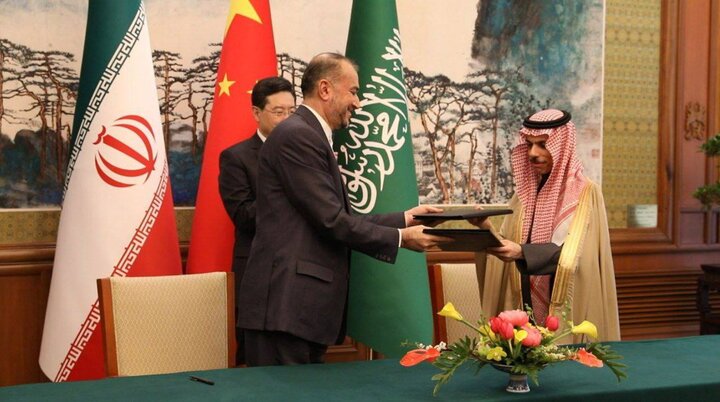
Saudi Arabia’s working channel to Tehran now terminates at FM Araghchi, who reports to Pezeshkian, who under Article 110 “implements” policy set by the Supreme Leader through the SNSC. The condolences went to the implementer, not the decision-maker, and the implementer’s constitutional authority over the mechanisms Saudi Arabia cares most about — PGSA fee structure, nuclear program, IRGC force posture — is constrained by a constitution that vests those powers in the office Riyadh will not acknowledge.
What Mojtaba Controls That Riyadh Cannot Reach
Iran’s constitution under Article 110 grants the Supreme Leader authority over the “delineation of general policies of the Islamic Republic” including foreign affairs, the power to declare war and peace, command of all armed forces including the IRGC and its Quds Force, and final authority over the SNSC. The president executes policy the Supreme Leader approves through the SNSC, signs treaties only after Majlis ratification under Article 77, and has no independent authority over the military, nuclear, or security instruments that are the subject of every active Saudi-Iranian negotiation.
Mojtaba’s exercise of these Article 110 powers is contested inside Iran, but the contestation is political rather than constitutional — the Assembly of Experts elected him by the same mechanism that selected his father in 1989, and the Majlis has not challenged his authority despite 62 of 88 Assembly members (70%) signing a June 30 letter calling the Hormuz reopening a “strategic mistake” and classifying both Trump and Netanyahu as “Mahdur al-Dam” (blood forfeit). The Carnegie Endowment has assessed that Mojtaba “lacks the religious credentials traditionally required” for the position, and the New Lines Institute described his authority as resting “more on wartime expediency and factual deals than on broad institutional or popular legitimacy” — but neither institutional weakness nor theological inadequacy diminishes his constitutional control over the IRGC, the nuclear program, or the PGSA.
In some operational respects he probably will matter even more than Supreme Leader Mojtaba Khamenei himself.
Washington Institute assessment of SNSC Secretary Zolghadr, March 2026
A military council of senior IRGC commanders reportedly controls information flow to Mojtaba, preventing government reports from reaching him and isolating him from the elected government, an arrangement that Grey Dynamics characterized as “a decisive shift toward regime consolidation, coercive control, and the prioritisation of military survival over diplomatic flexibility.” This isolation from the civilian government does not diminish Mojtaba’s constitutional authority over the instruments of power Saudi Arabia is most concerned about — it concentrates them further within the IRGC-SNSC axis that Riyadh cannot access through the presidential track it chose at the funeral.
Pezeshkian flew to Qom on June 30 to meet the Society of Seminary Teachers and claimed the MOU was “in full and continuous coordination with the supreme leader,” a phrase that either validates Mojtaba’s authority over the ceasefire architecture or was calculated to imply it. Saudi Arabia addressed its condolences to the man who made that claim, not to the supreme leader he claimed to be coordinating with — a distinction Iran’s hardliners will parse during the five-day funeral window (July 4–9) when the Doha talks are paused and the institutional pressure on Mojtaba to demonstrate authority is at its peak.
The PGSA Counterparty Paradox
The Persian Gulf Security Authority’s $5.5 million per day fee auto-activates on August 18, Day 60 of the MOU, with no affirmative Iranian action required — the fee structure defaults to activation upon lapse, making inaction the only prerequisite. The entity that administers the fees is the PGSA, an Iranian state body sanctioned by OFAC on May 27, whose authority chain runs through the SNSC to the Supreme Leader. Saudi Arabia, at Day 17 of the MOU, has approximately six weeks until it faces a fee demand from an institutional structure whose apex it does not recognize.
The trap has three layers, each compounding the others. If Saudi Arabia pays PGSA fees, it transacts with an entity whose authority derives from Mojtaba — a de facto recognition through financial action that contradicts the de jure non-recognition expressed through the condolence addressee line in Tehran. If it refuses to pay, it accumulates $5.5 million per day in claimed liability ($165 million per month, approaching $1 billion over six months) with no diplomatic channel to the decision-maker who could waive, restructure, or defer the fee. And if it attempts to negotiate the fee through Araghchi or Pezeshkian, it discovers what Article 110 makes explicit: the president’s authority over a body operating under SNSC mandate is constitutionally nil.
The Doha round 2 talks ended July 2 with the Hormuz fee architecture unresolved, Iran’s UNCLOS Article 26(2) position (that fees are charges for services rendered, not transit tolls) still on the table, and Secretary Rubio’s rejection of what he called a “game of semantics” still standing. The fee dispute is now structurally entangled with the recognition question, because any bilateral negotiation over the fee framework requires engagement with the SNSC’s authority, and the SNSC’s authority derives from the same office Riyadh declined to acknowledge when it addressed condolences to Pezeshkian.
Pakistan’s role as an intermediary may offer a procedural workaround, since Islamabad maintains channels to both the presidency and the IRGC and sent five senior officials to the funeral while Saudi Arabia sent one. But intermediation adds time, reduces precision, and depends on Pakistan’s willingness to keep carrying messages for a kingdom whose delegation in Tehran was calibrated to avoid the very relationships Islamabad invested in — an asymmetry in commitment that predicts an asymmetry in bargaining power when the PGSA activation date arrives.
Does Non-Recognition Cost More Than Recognition?
Saudi Arabia’s non-recognition of Mojtaba Khamenei generates compound costs that increase with each passing day of the MOU: it severs the kingdom’s channel to the office that controls Iran’s foreign policy under Article 110, it complicates the PGSA fee architecture activating August 18, and it forces Riyadh to route every engagement through a president whose constitutional authority to independently authorize concessions on Hormuz transit, the nuclear program, or IRGC force posture does not exist under the Iranian constitution. Non-recognition carries costs — that much is already visible at Day 17 — and the calculation Riyadh has to make is whether recognition would carry higher ones.
Oman’s contrasting bet illuminates what recognition purchases. Sultan Haitham recognized Mojtaba within a day of the Assembly of Experts vote, preserving institutional relationships with the SNSC and maintaining Muscat’s role as Tehran’s preferred intermediary — the role that positions Sultan Haitham as the only Arab leader with a direct line to the authority that controls Iran’s war-and-peace decisions. The risk profile is asymmetric: if Mojtaba consolidates, Oman’s early recognition becomes an asset worth more than any diplomatic gesture Riyadh can retroactively offer; if he falls, the recognition is forgotten because Oman’s value to Tehran has always been geographic rather than personal.
Trump’s own assessment — “I don’t know if it’s going to last” and “I think they made a big mistake” — suggests Washington is running a version of the same non-recognition calculation as Riyadh, but with fundamentally different exposure. The United States has no PGSA liability, no Beijing-brokered normalization agreement whose legal chain runs through the Supreme Leader, no border within IRGC Zolfaghar range, and the 2,300 US troops being withdrawn from Saudi Arabia will not be replaced while the PAC-3 interceptor stockpile protecting Saudi airspace sits at approximately 400 rounds (86% depleted from pre-war levels). Saudi Arabia carries every exposure Washington does not, making its non-recognition not a mirror of the American position but a more dangerous version of the same bet.
The MOU’s remaining window — through August 18 — represents the period in which non-recognition carries its lowest cost, because the ceasefire freezes most of the mechanisms through which Mojtaba’s authority would otherwise force Riyadh’s hand. Once the MOU lapses, the PGSA fees auto-activate, the Doha framework loses its diplomatic scaffolding, and Iran’s military posture is no longer constrained by even the MOU’s weak enforcement provisions — non-recognition stops being a diplomatic abstraction and becomes an operational liability measured in dollars per day and interceptors per salvo.
We will seek compensation for the war through any possible means. If they refuse, we will take from their assets.
Mojtaba Khamenei, first written statement as Supreme Leader, March 12, 2026 — Soufan Center IntelBrief
That statement, delivered by courier from a location Israeli intelligence is actively hunting, was not addressed to any president, not routed through the foreign ministry, and not subject to Majlis approval under Article 77. Riyadh’s condolences, addressed to Pezeshkian and hand-delivered by a deputy foreign minister, reached the presidential palace — the office that, under Article 110, cannot independently answer what Mojtaba wrote.
Frequently Asked Questions
Did any country address funeral condolences directly to Mojtaba Khamenei?
Oman’s Sultan Haitham addressed Mojtaba directly when he recognized his succession on March 9, the day after the Assembly of Experts vote — the first and, for several days, only Arab head of state to do so, despite Iranian forces having struck Omani territory during the conflict. Turkey’s President Erdogan recognized Mojtaba on March 11, two days after the vote, and maintained that recognition through the funeral period with Vice President Cevdet Yilmaz leading Ankara’s delegation. The majority of attending states followed the Pezeshkian convention for the July funeral itself, a choice enabled by Iran’s own decision to position the president as the receiving official and keep Mojtaba out of the ceremony entirely.
Has Saudi Arabia formally stated its reasons for not recognizing Mojtaba?
No formal Saudi statement explains the non-recognition. The March 21 expulsion of Iran’s military attaché and four embassy staff was framed as a security response under Article 51 of the UN Charter, citing “blatant attacks on Saudi territory,” rather than a succession position, and the Saudi Foreign Ministry’s funeral condolence statement referenced only Pezeshkian without explaining the omission of Mojtaba. The non-recognition is expressed entirely through protocol — the absence of congratulatory messages, the addressee choice on condolences, the deliberate rank calibration of envoys — a method that avoids forcing Tehran into a public response and preserves Riyadh’s option to recognize later without formally reversing a declared policy.
What happens to the 2023 Beijing normalization if Saudi Arabia never recognizes Mojtaba?
The agreement contains no public sunset clause or recognition requirement, and its operational viability depends on whether working-level contacts between Saudi and Iranian security officials continue regardless of formal non-recognition. Before the 2016 diplomatic break (triggered by the Saudi execution of Shia cleric Nimr al-Nimr and the subsequent storming of the Saudi embassy in Tehran), back-channel contacts between the two countries’ security establishments persisted even without embassy-level relations. If similar informal channels survive the current rupture, the agreement may function in practice while remaining constitutionally unanchored; if they atrophy because Saudi officials cannot engage with Mojtaba-appointed SNSC officials without implying recognition, the normalization becomes a dead letter that neither side formally withdraws from.
Could Saudi Arabia recognize Mojtaba later without political cost?
The longer non-recognition persists, the higher the reversal cost — every week transforms what could have been framed as bureaucratic delay into what increasingly reads as deliberate policy. Turkey recognized Mojtaba within 48 hours; for Riyadh, the gap is now approaching four months, and the funeral condolence addressed to Pezeshkian makes the non-recognition harder to walk back as an oversight. The most likely path to eventual recognition, if it comes, would be embedded in a broader diplomatic package (a new agreement, a crisis that forces direct communication, or a US recognition that provides political cover) rather than issued as a standalone statement that would invite questions about why it took so long.
How does Iran view the condolence addressee distinction?
Tehran has not publicly protested Saudi Arabia’s decision to address condolences to Pezeshkian rather than Mojtaba, consistent with an Iranian strategy of avoiding public confrontation over the recognition question while MOU talks remain live and the Doha pause (July 4–9) has not yet expired. Iran’s own choice to have Pezeshkian receive delegations — driven partly by Mojtaba’s security-enforced invisibility — gave diplomatic cover to every state that preferred the presidential-track convention, a tactical accommodation that IRGC-aligned media (particularly Raja News and Kayhan) have framed internally as evidence that Mojtaba’s external legitimacy remains contested, a narrative that serves hardliner interests in expanding IRGC control over the succession consolidation rather than deferring to the elected government’s diplomatic preferences.