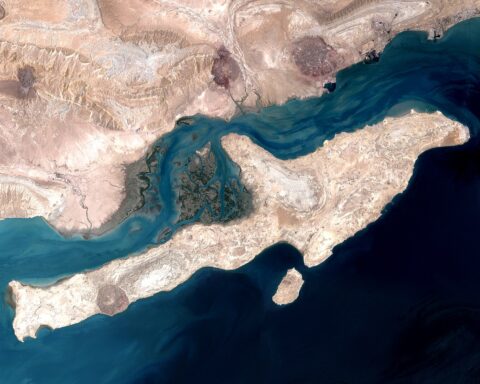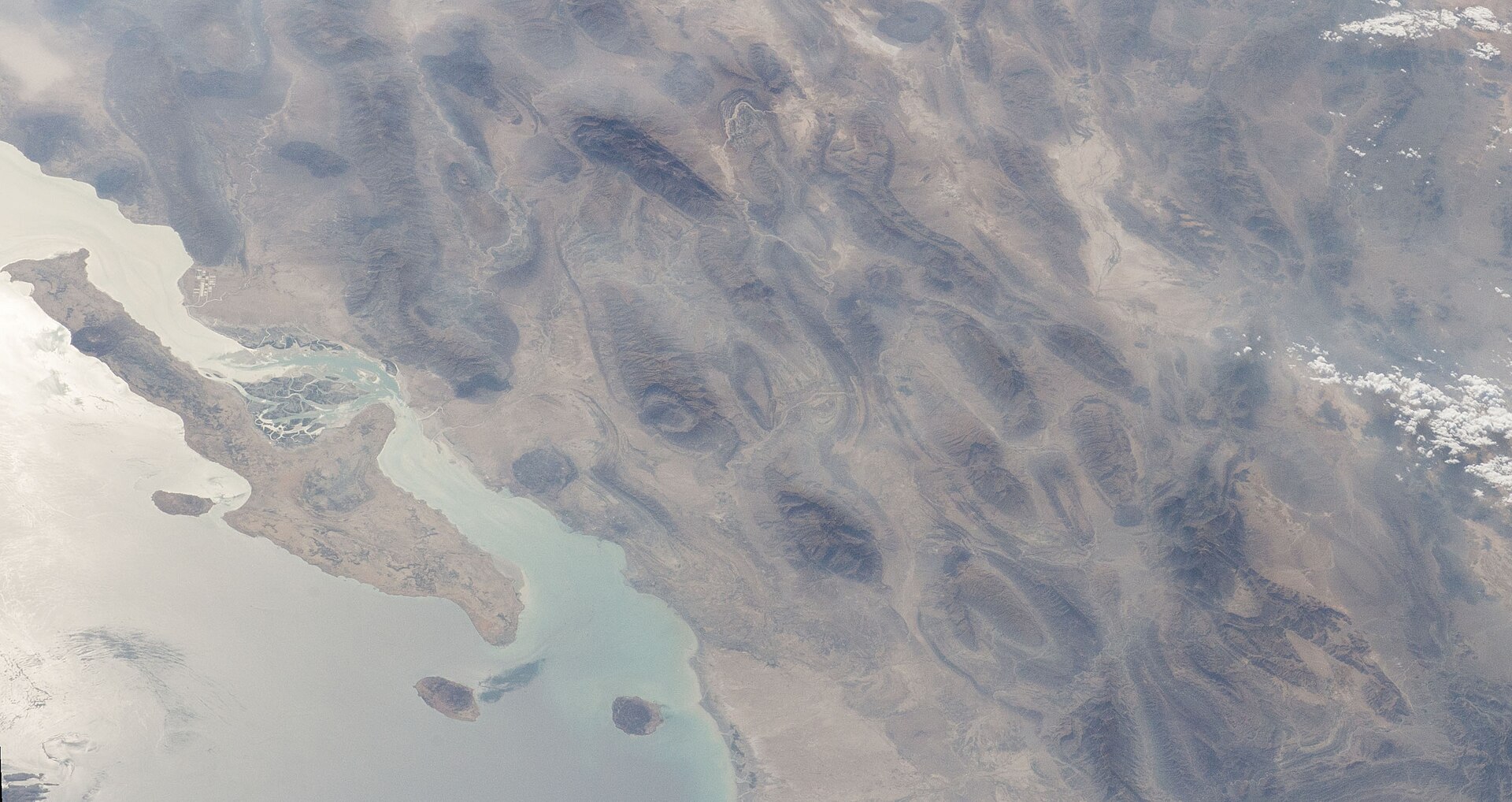

TEHRAN — On July 1, the Doha talks confirmed working groups, a shuttle format, and a dispute over $3 billion in frozen assets that neither side could agree had actually been released. What the talks did not produce — what no diplomatic track in this conflict has produced — is a single mechanism for determining who controls commercial transit through the Strait of Hormuz after Day 60 of the Islamabad MOU expires on August 16.
The Islamic Revolutionary Guard Corps, which operates the de facto toll system from the northern Larak Island corridor, collects fees in Chinese yuan and cryptocurrency, and threatened on June 25 to close the strait entirely if Doha fails to guarantee sole Iranian control, has no representative at the table. Saudi Arabia, whose fiscal exposure to any Hormuz governance decision is larger than any other party at the table, holds no seat either. The Pezeshkian government’s negotiators are in the room. The IRGC owns what the room is negotiating over, and Riyadh is paying for the privilege of watching both.
Table of Contents
Who Is Doha Negotiating With?
The Doha diplomatic track operates on the assumption that Iran’s elected government can deliver commitments on behalf of Iran. The assumption is testable: on June 28, the IRGC declared the strait fully closed, and Iran’s Foreign Ministry told Tasnim within hours that shipping was “operating normally.” Traffic followed the IRGC’s directive, not the diplomat’s correction — Hormuz transit fell to zero tankers by July 1, with a seven-day average at 14 percent of pre-war volume according to Windward AI tracking data.
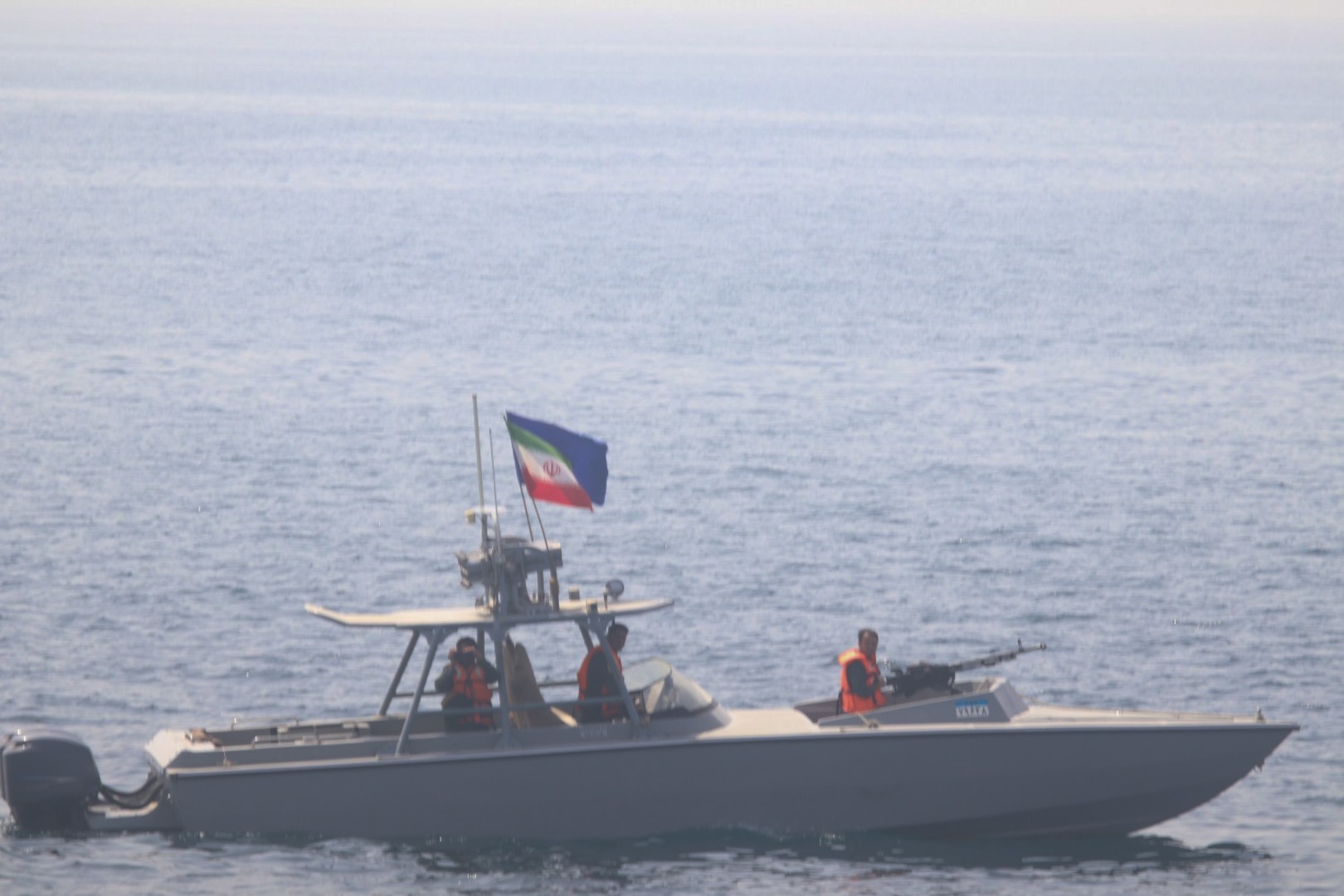
This is not a communications breakdown between parallel institutions. As a Foreign Policy analyst wrote on June 30, “The meaningful fault line today runs through Iran’s institutions, not neatly between them.” The IRGC controls the northern Larak Island corridor through which all remaining commercial traffic is routed, broadcasts enforcement warnings on VHF Channel 16 that vessels “not complying will be dealt with,” and specifically demanded on June 25 — via Al Jazeera — that all plans to reroute ships through the strait’s southern Omani corridor be abandoned. The Foreign Ministry’s role, in this configuration, is to provide vocabulary — “maritime service fee,” “navigational assistance,” “environmental protection” — for decisions the IRGC has already made and enforced with fast-attack craft.
The contradiction extends to the MOU itself. When the IRGC struck four US-linked bases on June 27 — Al Udeid, Ali Al Salem, Al Dhafra, and Juffair — it cited Articles 1 and 5 of the Islamabad MOU as legal justification, claiming the strikes constituted compliance with the agreement’s terms. Iran’s Foreign Ministry then spent the following 72 hours insisting that the MOU was intact, that diplomatic channels remained open, and that the oral stand-down brokered by Qatar’s Emir Tamim had restored the framework. Both claims cannot be true simultaneously: either the IRGC’s strikes violated the MOU, in which case the Foreign Ministry’s assurance is misleading, or the strikes were MOU-compliant, in which case the agreement authorises military attacks on the territory of its own guarantor state.
That ambiguity hardened into institutional design on July 3, when Majlis Speaker Ghalibaf formally conditioned all further talks on implementation of the same five MOU articles the IRGC had selectively invoked. Ghalibaf’s MOU implementation gap — five articles, four US obligations, zero arbiters — converts the enforcement absence that allowed the June 27 strikes into a permanent structural feature of the compliance architecture.
The Middle East briefing 3,000+ readers start their day with.
One email. Every weekday morning. Free.
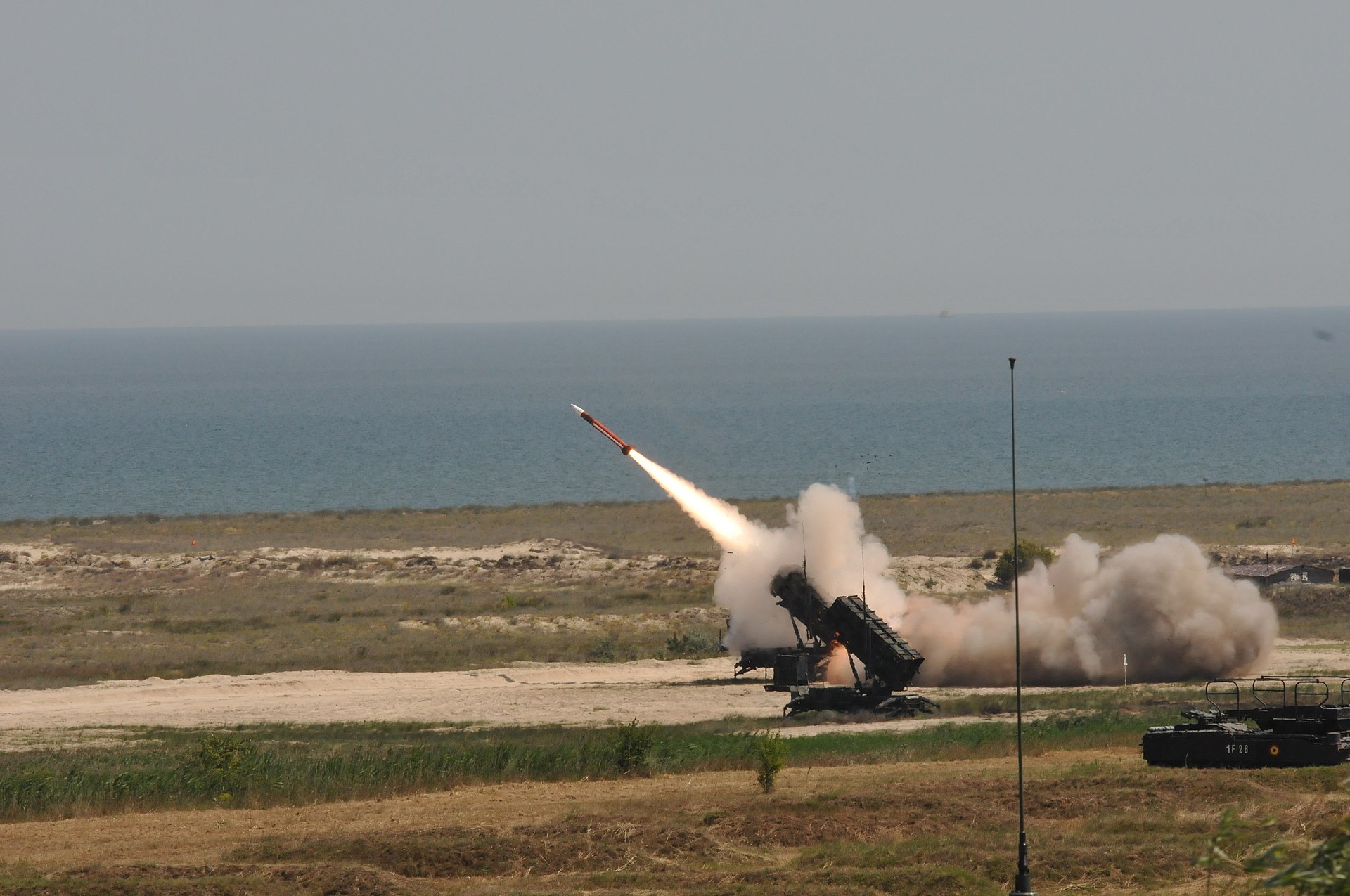
The working groups that emerged from the July 1 Doha session negotiate with an Iranian government whose authority over Hormuz exists in communiques but not on the water. The IRGC has twice re-closed the strait since the MOU was signed, and it does not need to attend a meeting, issue a communique, or consult a diplomat to void whatever Doha produces. It needs only to instruct its coastal batteries and fast-attack craft to resume the posture they held in March, when the strait was closed and the toll system was born.
What Happens When Military Orders Become Law?
On March 30-31, 2026, a committee in Iran’s parliament approved the “Strait of Hormuz Management Plan,” a bill that formally codifies the IRGC’s fee system into domestic statute. The legislation establishes Iranian sovereignty, control, and oversight over the strait, creates a legal basis for collecting transit fees as state revenue, and explicitly bans US- and Israel-linked vessels from passage at any price. It awaits Guardian Council review and the president’s signature, but its passage through committee has already created a legislative trajectory that no one at Doha is positioned to reverse.
The bill’s significance is structural, not symbolic: it converts military decree into law. The IRGC’s toll system, which has operated since mid-March 2026, currently rests on the same informal authority the Guards have used to seize tankers, harass naval vessels, and declare exclusion zones throughout the conflict. That authority can in theory be reversed by executive decision — a president who wanted to abandon tolls could, at least in principle, order the IRGC Navy to stand down. A ratified statute cannot be reversed that way. It would require a legislative repeal through the same parliament that drafted the bill and the same Guardian Council that will approve it, both of which operate under the IRGC’s institutional shadow.
This is the trap that the Doha track has not accounted for. The US negotiating position, as Axios reported on July 1, rests on the argument that Iran would gain “100 times more” from a nuclear deal than from toll revenue — a message US negotiators summarised as “think bigger.” The implicit assumption is that the toll system is a bargaining chip, something Pezeshkian’s team can trade away. If the Strait of Hormuz Management Plan receives the Guardian Council’s approval and Pezeshkian’s signature before Day 60, no Iranian president will have the legal authority to abandon tolls without initiating a legislative repeal — a process requiring the approval of the same parliamentary majority that voted the bill through committee in March.
An Iranian parliament official described the bill’s rationale to Anadolu Agency in terms that leave little room for ambiguity: the plan aims to “formally codify Iran’s sovereignty, control and oversight over the Strait of Hormuz, while also creating a source of revenue through the collection of fees.” The revenue language is the part that matters most for Day 61. Once Hormuz fees are written into law as a revenue source, eliminating them becomes a budgetary question — and no Iranian government has voluntarily surrendered a revenue stream that the IRGC considers both a strategic instrument and a financial entitlement.
The Only Strait State That Ever Charged Fees
The legal architecture of international straits does not favour Iran’s position. UNCLOS Articles 37 through 44 establish transit passage rights through international straits that “may not be suspended.” Article 26 prohibits charges for “mere passage.” Article 42 permits strait states to regulate safety and pollution, but as Just Security’s legal analysis noted in 2026, “tolls are absent from that list.” Iran signed UNCLOS in 1982 but never ratified it, and customary international law — under which transit passage rights are generally held to bind all states — fills the gap.
Only one modern precedent exists for a strait state collecting vessel fees: Turkey, under the 1936 Montreux Convention. The comparison is instructive precisely because of how it differs. Turkey charges for lighthouse services, sanitation, and pilotage — not transit itself — under an agreement negotiated multilaterally among Black Sea and Mediterranean states over several months. Iran’s toll regime was declared unilaterally by a military commander, enforced by fast-attack craft, and collected in a currency and through a banking system specifically designed to circumvent the financial infrastructure through which Turkey settles its Montreux fees.
Iran’s Foreign Ministry has anticipated the UNCLOS objection. Its framing of Hormuz charges as a “maritime service fee” — covering navigational assistance, vessel insurance, and environmental protection, jointly administered with Oman — mirrors the language of Turkey’s Montreux regime almost word for word, while the Iran-Oman Joint Hormuz Committee formed under MOU Article 5 provides the multilateral governance veneer that Gamal Abdel Nasser lacked when he nationalised the Suez Canal in 1956 and provoked military intervention from three countries. Chatham House assessed in April 2026 that “such temporary measures cannot infringe on the iron-clad guarantee to shipping of all nations of unimpeded passage through straits used for international navigation under all circumstances.” But Chatham House’s position assumes a party willing to adjudicate, and Iran has proposed no international arbiter, accepted no international court’s jurisdiction over the fees, and structured the toll’s legal basis as domestic legislation that places the question beyond the reach of any agreement negotiated in Doha or anywhere else.
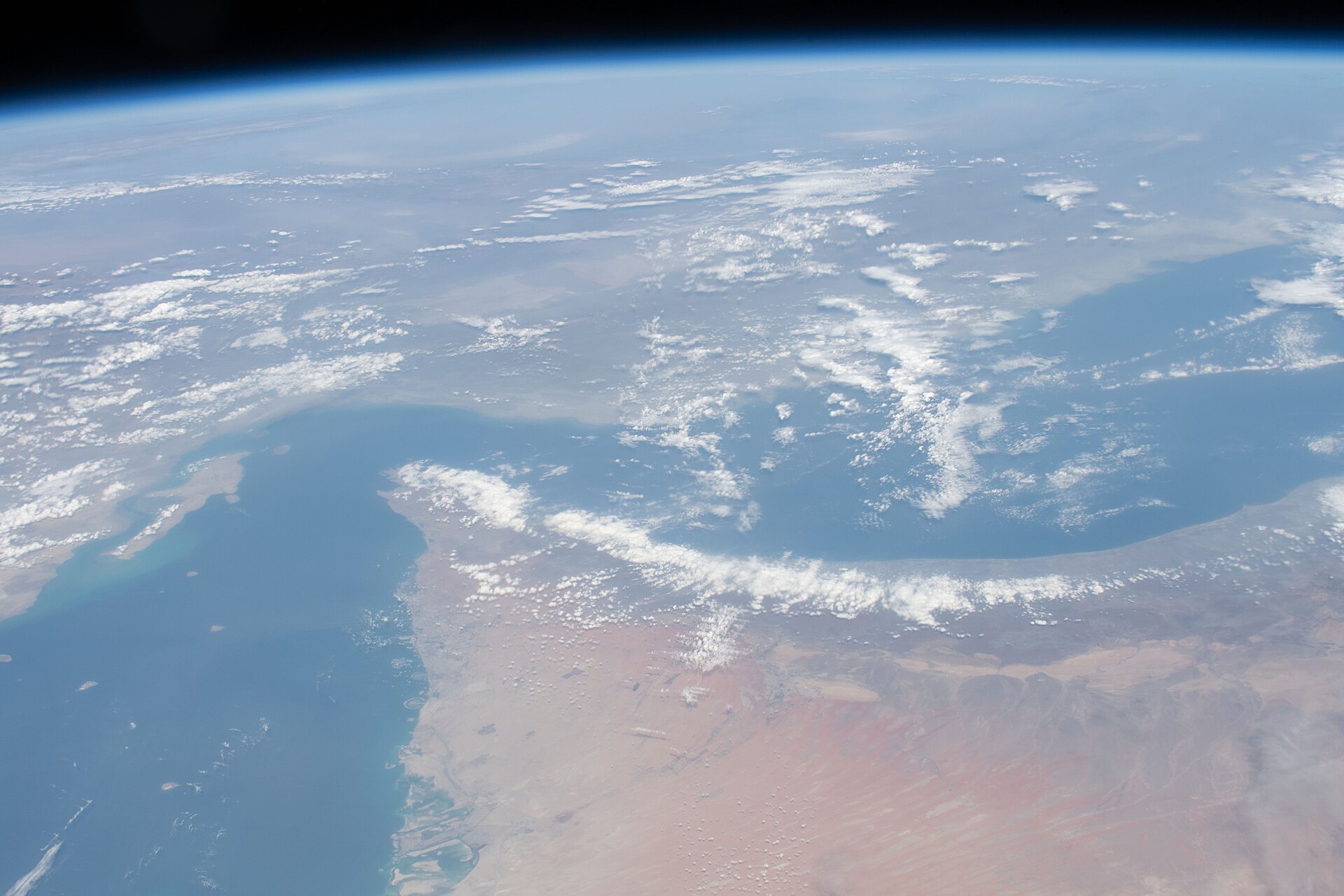
The 1949 Corfu Channel case before the International Court of Justice established that navigation through an international waterway linking high seas in peacetime requires no authorisation, provided passage is “innocent.” The ICJ’s ruling remains the foundational precedent in international maritime law on strait passage. Iran’s position, advanced through the Strait of Hormuz Management Plan, is that its own parliament can supersede it.
The Toll System Is Already Running
The debate over whether Iran will impose tolls after Day 60 obscures the fact that the toll system has been operational since mid-March 2026. Bloomberg reported on April 1 that the IRGC was charging up to $2 million per vessel to transit the northern corridor around Larak Island, with payments collected in Chinese yuan via Kunlun Bank and the CIPS settlement system — a routing architecture that operates entirely outside SWIFT. Additional payment channels in Bitcoin and USDT were confirmed by TRM Labs, the blockchain analytics firm, making the system resistant to the financial sanctions that US Treasury Secretary Scott Bessent threatened in late June when he declared that “the US will not tolerate any effort to impose a tolling system in the Strait of Hormuz.”
Bessent’s warning was specific: “Oman, in particular, should know that the US Treasury will aggressively target any actors involved — directly or indirectly — in facilitating tolls for the Strait.” Secretary of State Marco Rubio made a parallel declaration on June 24, telling Al Jazeera that Iran “cannot charge tolls in Hormuz.” Neither statement addressed the fact that Iran had been collecting them for over three months, and had routed the payment infrastructure through channels the US Treasury does not control. The yuan-denominated CIPS system and cryptocurrency wallets operate outside the correspondent banking network that underpins US sanctions enforcement.
At pre-war traffic volumes, the toll system would generate an estimated $20 million per day — roughly $600 to $800 million per month including LNG, according to TRM Labs and Chainalysis estimates. Iran’s state media has adopted the framing explicitly: Press TV described Hormuz as a “golden card” and the toll system as a permanent sovereign revenue stream, not a negotiating chip to be surrendered for a nuclear deal. The IRGC’s VHF Channel 16 directive to commercial shipping called the Oman-IMO southern route “highly dangerous and prohibited,” funnelling all remaining traffic through the fee-collecting northern corridor it controls.
The MOU text, per IRGC-affiliated Fars News, explicitly states that toll-free passage lasts 60 days only. The US interpretation holds that toll-free passage is unconditional and permanent. This is a live textual dispute between two signatories to the same document — a dispute that Doha has produced no mechanism to resolve, no arbiter to adjudicate, and no enforcement body to implement even if both sides agreed on a reading.
How Much Does Saudi Arabia Pay for a Decision It Cannot Make?
Saudi Arabia holds zero seats in the Doha diplomatic track, zero seats at the Geneva nuclear talks, zero seats in the Lake Lucerne monitoring group, and zero representation on the IRGC-CENTCOM deconfliction cell in Doha. It is a party to neither the Islamabad MOU nor the Iran-Oman Joint Hormuz Committee formed under Article 5 of that agreement. The decisions that will determine whether Saudi crude can transit the Strait of Hormuz, at what cost, and under whose jurisdiction are being made entirely by actors who have never acknowledged Riyadh’s interest in the outcome.
The fiscal exposure is not abstract. Saudi Arabia’s first-quarter 2026 deficit reached $33.5 billion — the largest quarterly deficit in the kingdom’s history — at a moment when Brent crude trades at approximately $73 per barrel, some $35 to $38 below even the most conservative fiscal breakeven estimate of $108 to $111 per barrel. Aramco’s free cash flow fell to 0.85 times its dividend obligation in the first quarter, the first time the ratio dropped below 1.0 since the pandemic, meaning the company is borrowing to pay a dividend the Saudi state depends on for roughly 60 percent of government revenue. The East-West Pipeline runs at its full 5-million-barrel-per-day net export capacity through Yanbu, bypassing Hormuz — but against a pre-war Hormuz throughput of roughly 20 million barrels per day, that leaves a 15-million-barrel-per-day gap with no alternative route and no timeline for when the strait might reopen under terms Riyadh can accept.
Meanwhile, Saudi Arabia pays $5.5 million per day in PGSA surcharges — the Persian Gulf Shipping Authority fee that the IRGC’s administrative arm has levied since May 5, 2026 — for vessels attempting to approach its own export terminals. Iran’s proposed five-tier nationality ranking system for post-Day-60 toll access would place Saudi Arabia, as a US-aligned state that co-signed Rubio’s Manama Joint Statement, in the highest-fee or total-exclusion tier. The ranking system tracks the PGSA’s existing 40-category vessel identification database, which already classifies ships by flag state, ultimate beneficial owner, insurance provider, and cargo destination — a bureaucratic apparatus designed to extract maximum revenue from states the IRGC considers adversarial. Aramco has already been forced to sell crude at steep discounts to keep Asian buyers willing to lift cargoes from facilities that sit inside the IRGC’s enforcement zone.
The commercial inversion is complete: the country that closed the strait is earning a premium on its exports, while the country that had nothing to do with the closure is discounting its barrels, bleeding its reserves, and paying a daily surcharge to an entity that has explicitly excluded it from the governance framework determining whether the surcharge becomes permanent. Iran’s parliament speaker, Mohammad Bagher Ghalibaf, boasted on CNBC on July 1 that Iran had exported more than 40 million barrels since the blockade began at a 20 percent premium above pre-war prices.
The Oman Variable
On June 29, the Iran-Oman Joint Hormuz Committee held its inaugural session in Muscat, formed under Article 5 of the Islamabad MOU. The committee represents the only institutional framework for Hormuz governance that exists outside the IRGC’s unilateral control — and its structure reveals both its promise and its constraints. On June 30, Oman delivered a formal Hormuz governance proposal to US envoys Witkoff and Kushner via the Qatari Prime Minister, a proposal that CNN reported was closer to the US position than Iran’s and drew on the Malacca Strait model, where Singapore, Malaysia, and Indonesia jointly administer the waterway under international maritime law with no transit charges.
If adopted, the Omani framework would replace the IRGC’s unilateral toll system with a multilateral governance structure — the kind of architecture that gave Turkey’s Montreux regime its legal durability over nine decades. Oman’s interest is not altruistic: Muscat sits on the southern side of the strait, its ports at Duqm and Salalah have been positioned as alternative loading terminals, and an internationally governed Hormuz protects Omani commercial relevance in a way the IRGC’s northern-corridor monopoly does not. The proposal’s Malacca model would also restore the insurance framework that has collapsed since March — a precondition for any meaningful resumption of tanker traffic.
But Bessent’s Treasury warning was aimed squarely at Muscat, and the IRGC’s June 25 demand — that all plans to use the strait’s southern Omani corridor be abandoned, calling it “highly dangerous and prohibited” — treats Oman’s own territorial waters as subordinate to an Iranian military directive. Saudi Arabia is not a party to Article 5, not a member of the joint committee, and not represented in the Omani proposal’s chain of delivery to US envoys, despite the fact that its vessels cannot load without insurance that only a recognised governance framework can restore, and whose air defense systems depend on US contractors and data links that depart with any drawdown from Prince Sultan Air Base. Iran’s Foreign Minister Araghchi urged “all parties not to interfere” in the strait’s management — a statement whose definition of “parties” does not appear to include the kingdom whose crude transited Hormuz in greater volume than any other nation’s before the war.
Can Day 61 Be Stopped?
The clock is not ambiguous. Day 14 of the 60-day MOU fell on July 1, leaving 46 days until the fee waiver that the IRGC considers time-limited expires on August 16. The US negotiating position, relayed through Axios on July 1, rests on the argument that Iran could earn “100 times more” from a nuclear deal — the lifting of sanctions, the unfreezing of assets, the reopening of trade channels — than from toll revenue. “Think bigger,” was the message to Iranian negotiators, delivered through a shuttle format in which the two sides sat in separate rooms and communicated through Qatari intermediaries.
The argument assumes the IRGC thinks in terms of maximising national revenue, and it does not. The toll system’s value to the Guards is not primarily financial — the $20 million per day in theoretical maximum revenue is meaningful but not transformational for an economy of Iran’s size. Its value is institutional: Hormuz sovereignty gives the IRGC a permanent veto over Gulf commerce, a revenue stream independent of the civilian budget it has fought to control for decades, and a physical chokepoint whose closure can alter global oil prices within hours. Surrendering the toll in exchange for a nuclear deal would require the IRGC to give up the one instrument that makes it indispensable to any Iranian government, including governments the IRGC might otherwise seek to constrain or replace.
This is why the Strait of Hormuz Management Plan matters more than Doha’s working groups. If the bill passes the Guardian Council and receives Pezeshkian’s signature before August 16, it converts the toll from a military improvisation — one that a president could theoretically reverse — into a legislative fact that no executive order can undo. The PGSA pre-clearance system, the 40-category vessel identification database, and the Larak corridor’s navigational infrastructure are already operating as though the law has passed. The parliamentary committee’s approval in late March gave the IRGC four and a half months of runway before Day 60 to build the bureaucratic and legal architecture that makes the toll permanent — and two weeks of that runway have already been consumed by talks that have not yet acknowledged the toll system’s existence as a live agenda item. The calculus shifted further when the WSJ reported that Trump has privately told staff he will not resume military operations against Iran regardless of the deadline outcome: as that private abandonment of the August 18 deadline shows, the toll system’s permanence is now a question of Iranian political will alone, not American enforcement.
The MOU’s other clocks are running out in parallel. Iran has barred IAEA inspectors since June 10, 2025 — a verification blackout now in its 387th day — leaving 440.9 kilograms of highly enriched uranium unmonitored at declared and undeclared sites across the country. The International Institute for Science and International Security has stated that no breakout timeline estimate is possible without physical access to assess centrifuge survival at struck facilities. Day 60 and the inspection blackout converge on the same structural failure: neither the toll question nor the nuclear question has a mechanism that can deliver an answer within the timeline the MOU imposes, and the IRGC — which has never attended a single session of any diplomatic track — has already told the world what it will do when the clock runs out.
On July 1, the day the Doha working groups were confirmed, zero tankers crossed the Strait of Hormuz. Saudi Arabia paid its 58th consecutive daily PGSA installment of $5.5 million — a cumulative $319 million since May 5 — to an institution that has never once included Riyadh on a meeting agenda, a negotiating document, or a governance proposal for the waterway that carries its economic future.
Frequently Asked Questions
Has any country successfully challenged strait fees at an international court?
The closest precedent is the 1949 Corfu Channel case, in which the International Court of Justice ruled unanimously that Albania was liable for damage to British warships from mines in the strait and ordered Albania to pay £843,947 in compensation — a sum Albania never paid. The case established that states cannot obstruct innocent passage through international waterways, but it addressed mines and military obstruction, not transit fees. No comparable case has tested whether a strait state may charge commercial vessels for passage. The legal question Iran’s toll system raises has no direct judicial precedent, which is part of what makes the Strait of Hormuz Management Plan’s domestic-law strategy effective: there is no existing ruling for another state to enforce against it.
How much revenue has the IRGC actually collected from Hormuz tolls since March?
No verified total is publicly available. Bloomberg estimated the $2 million per-vessel fee in April 2026, and TRM Labs tracked yuan and cryptocurrency transactions consistent with toll payments through Kunlun Bank and Bitcoin wallets. The total depends on daily traffic volume, which has fluctuated between 4 and 70 crossings since March — and on July 1 stood at zero. At pre-war volumes of approximately 30 to 50 daily tanker crossings and 20 million barrels per day of throughput, annual toll revenue would range between $7 billion and $10 billion, according to industry estimates extrapolated from Bloomberg and Chainalysis data. At current depressed traffic, the toll’s financial yield has been paradoxically destroyed by the same closure policy that created the toll system — but the IRGC appears to value the sovereignty claim and institutional control more than the revenue itself.
Could the UN Security Council override Iran’s domestic toll legislation?
In theory, a binding UNSC resolution under Chapter VII could require Iran to dismantle the toll system, and MOU Article 14 references exactly this kind of resolution as the agreement’s ultimate enforcement mechanism. In practice, Russia and China have vetoed or abstained on every substantive Iran-related UNSC enforcement resolution since 2010. China’s position is particularly relevant because its banks — Kunlun Bank and Bank of China — are the primary payment channel for the toll system, and the CIPS settlement infrastructure through which tolls are collected in yuan is a Chinese state-backed financial network. A UNSC resolution targeting the toll system would constitute a direct challenge to Chinese commercial interests in the strait, making a veto from Beijing almost certain.
What is Iran’s legal basis for claiming sovereign authority over Hormuz transit?
Iran has never formally argued that Hormuz is not an international strait. Its position is more specific: Iran claims sovereign rights over the strait’s northern waters as part of its territorial sea, and argues that the 1958 Convention on the Territorial Sea and the Contiguous Zone — which Iran ratified, unlike UNCLOS — permits coastal states to regulate passage through their territorial waters in ways that UNCLOS’s transit passage regime does not. The distinction matters because UNCLOS transit passage “may not be suspended,” while the 1958 convention’s territorial sea passage can be temporarily suspended for security reasons. Iran’s Strait of Hormuz Management Plan appears to build its legal architecture on this 1958 framework rather than UNCLOS, positioning the toll as a regulatory measure within sovereign territorial waters rather than a transit charge on an international strait — a framing the IRGC reinforced by routing all traffic through the northern corridor, which falls within Iran’s claimed territorial sea.
That framing gained a significant external variable on July 1: China’s bilateral freedom-of-navigation co-endorsement with Saudi Arabia introduced a third party’s position on strait passage rights that neither the IRGC nor the Doha working groups had anticipated.
The Article 77 question gained an additional dimension during the July 4–9 funeral pause, when the Paydari Party filed a formal constitutional challenge arguing the MOU required Majlis ratification. Iran’s hardliner coup framing during the funeral window documents how the five-day pause became uncontested framing time for those most opposed to the Doha process.