WASHINGTON — The United States withheld deliveries of PAC-3 and THAAD interceptors from Saudi Arabia in May 2026, using the kingdom’s depleted air defence stockpile as direct coercive leverage to reverse Riyadh’s refusal to grant airspace access for Operation Project Freedom, the Hormuz tanker-escort mission — the first confirmed instance of Washington weaponising the interceptor supply line against an ally whose air defences had already been depleted to 14 percent of their pre-war level. Secretary of State Marco Rubio met Saudi Ambassador Princess Reema bint Bandar Al-Saud at the White House on July 9, the highest-level US-Saudi diplomatic contact since the alliance ruptured over the same operation two months earlier, in what amounted to a carefully sequenced reopening: demonstrate the coercive instrument first, extend the diplomatic hand second.
The channel narrowed further on July 10. Rubio met Reema again at ambassador level on the eve of the Islamabad talks that will shape whether the MOU survives. The July 10 meeting, and what the ambassador channel reveals about Saudi Arabia’s reduced diplomatic standing, tracks how the relationship has shifted from the FM-level contacts of January to the current configuration.
The mechanism worked in four days. Saudi Arabia blocked US access to Prince Sultan Air Base and national airspace within hours of Trump’s May 3 announcement of Project Freedom; by May 7-8, after the interceptor-withholding threat landed, Riyadh and Kuwait lifted all restrictions. A country with 400 PAC-3 rounds left from a pre-war stockpile of 2,800 — facing an Iranian missile campaign that has consumed the other 2,400 — found that the only producer of the munitions keeping its cities, oil infrastructure, and desalination plants intact was also the party demanding something it had just refused to give.
Table of Contents
- The Refusal That Lasted Four Days
- How Did Washington Force Saudi Arabia to Reverse?
- Why Can’t Saudi Arabia Replace the Interceptors?
- The Legal Void That Made the Blockade Possible
- What Did the Rubio-Reema Meeting Signal?
- The Fiction Both Sides Need
- Does the Lever Get Stronger as the Stockpile Shrinks?
- Frequently Asked Questions
The Refusal That Lasted Four Days
President Trump announced Operation Project Freedom on social media on May 3, 2026, without notifying Saudi Arabia, Kuwait, or the UAE in advance — a sequencing failure that guaranteed the refusal it provoked. The operation, designed to escort commercial tankers through the Strait of Hormuz after the IRGC declared the waterway closed to “unfriendly nations” in early March, required overflight of Saudi national airspace for the defensive air component and staging from Prince Sultan Air Base southeast of Riyadh for a substantial share of its land-based architecture.
The operational design demanded Saudi cooperation not as a diplomatic courtesy but as a physical requirement. Project Freedom’s air umbrella used more than 100 land- and sea-based aircraft, guided-missile destroyers, and multi-domain unmanned platforms, according to CENTCOM and Army Recognition reporting — assets whose reach into the operational theatre depended on the same geographic constraints that had already limited Washington’s force-projection options in the Gulf. A US official, speaking to NBC News, acknowledged that “due to the geography of the region, in some cases, utilizing an ally’s airspace is the only option” — a statement that amounted to a public admission that Saudi Arabia held a veto over the mission’s viability.
Saudi Arabia’s response was immediate and unambiguous: no aircraft would fly from PSAB, and no US military flights would transit Saudi airspace in support of the operation, while Kuwait imposed a parallel restriction within hours. A direct Trump-MBS phone call — the kind of head-of-state intervention that had resolved lesser disputes in earlier cycles of the relationship — failed entirely, with MBS telling the president, according to US officials who spoke to NBC News, that the operation was “not well thought-out” and risked dragging Saudi territory into direct Iranian retaliation. The call’s failure was itself a data point: if a sitting US president could not persuade the Crown Prince to grant airspace access over a secure line, the blockade was not a negotiating posture but a policy decision.
The Middle East briefing 3,000+ readers start their day with.
One email. Every weekday morning. Free.
The operation collapsed within 36 to 48 hours. CENTCOM commenced escort operations on May 4, managed a handful of transits — Al Jazeera and Army Recognition confirmed one vessel through a Maersk subsidiary — and paused by May 5, the same day an IRGC strike hit a CMA CGM container vessel in the strait and injured crew members.
The CMA CGM strike exposed the gap between Project Freedom’s ambition and its operational capacity without regional cooperation — an escort mission launched to protect commercial shipping through the world’s most contested chokepoint had gone forward without secured basing, without assured airspace, and without the ground-based radar and command-and-control integration that Saudi and Kuwaiti facilities would have provided. What followed the operational pause was not a negotiation but a coercive exchange, with the White House turning to the one instrument Riyadh could not afford to ignore.
How Did Washington Force Saudi Arabia to Reverse?
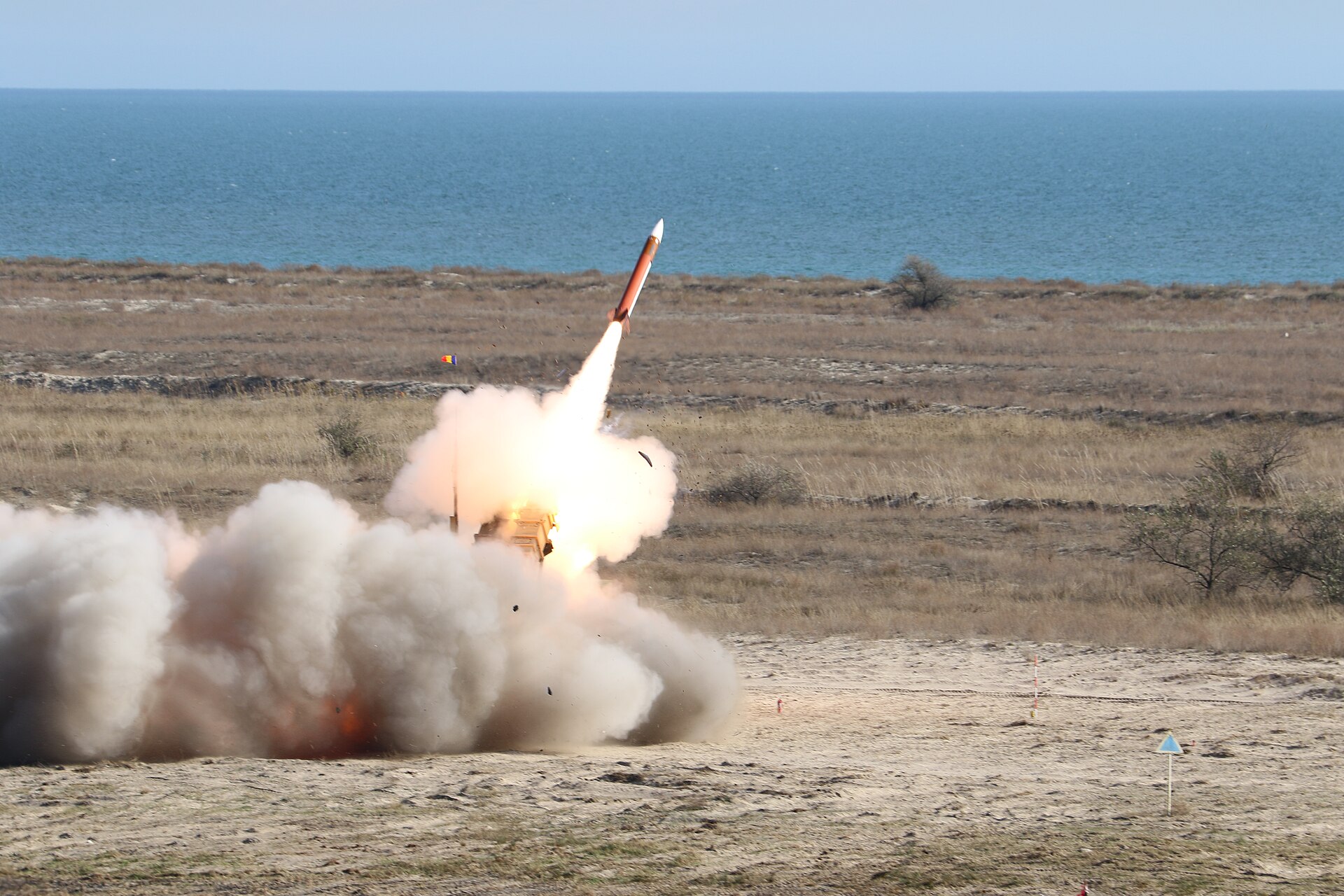
The White House threatened to withhold deliveries of PAC-3 and THAAD interceptors — the munitions Saudi Arabia depends on to defend oil infrastructure, desalination plants, and population centres against Iranian ballistic missiles. With Saudi stockpiles at 14 percent of pre-war levels and no alternative supplier, the threat converted a passive military vulnerability into an active diplomatic instrument within days.
The coercive logic was structurally simple. Saudi Arabia had played its strongest unilateral card — grounding all 43 American warplanes at PSAB and denying national airspace — and discovered that Washington held a stronger one. The warplane grounding was a demonstration of sovereignty; the interceptor withholding was a reminder of dependency, and dependency, unlike sovereignty, has a shelf life measured in incoming missile salvos. Riyadh could keep US aircraft on the ground for as long as it chose, but every day it did so was a day closer to the next Iranian barrage with a shrinking defensive stockpile and no resupply in the pipeline.
The timeline tells the story more precisely than any official statement. Saudi Arabia imposed its restrictions within hours of the May 3 announcement, and the interceptor-withholding threat materialised in the days that followed. By May 7-8, according to the Wall Street Journal and DefenseNews.com, Saudi Arabia and Kuwait had lifted all restrictions on US military access to bases and airspace, clearing the path for a Project Freedom restart. Four days from refusal to reversal — a speed that reflected not a change of heart but a forced calculation about which threat was more immediate: Iranian missiles or American displeasure.
The reversal also confirmed something the PSAB drawdown reporting had established structurally: Saudi Arabia’s security relationship with the United States is not a partnership of equals but a dependency with a single point of failure, and that point of failure sits in a Lockheed Martin production facility in Camden, Arkansas. The speed of the Saudi capitulation — four days, after a presidential phone call had already failed — suggests that Riyadh’s own internal assessment of its interceptor position is at least as grim as the public numbers indicate.
The coercive use of arms supply is not unprecedented in US alliance management, but the Saudi case differs from the most cited examples in a way that matters. When Washington removed Turkey from the F-35 programme in 2019 after Ankara purchased the Russian S-400, the punishment targeted a future capability — fighters Turkey wanted but did not yet depend on for survival. When the US pressured Israel in 2005 to cancel drone-technology transfers to China by threatening F-35 exclusion, the coercion targeted a foreign-policy choice, not a defensive lifeline. The Saudi interceptor case is structurally different because the withheld item is not a future asset or a diplomatic bargaining chip but an active necessity: the munitions Saudi Arabia is firing, in real time, to keep Iranian missiles from reaching populated areas and economic infrastructure that the kingdom cannot function without.
The withholding mechanism itself exploits a structural feature of the Foreign Military Sales process that gives Washington discretion at every stage. FMS deliveries require export licences, end-use monitoring clearances, transportation coordination through the Defense Logistics Agency, and final release authorisation from the State Department — each a gate where Washington can slow, pause, or halt delivery without formally cancelling the underlying sale, creating a spectrum of coercive options that range from bureaucratic delay to outright embargo and that can be made to look, from the outside, like routine process rather than deliberate punishment.
Why Can’t Saudi Arabia Replace the Interceptors?
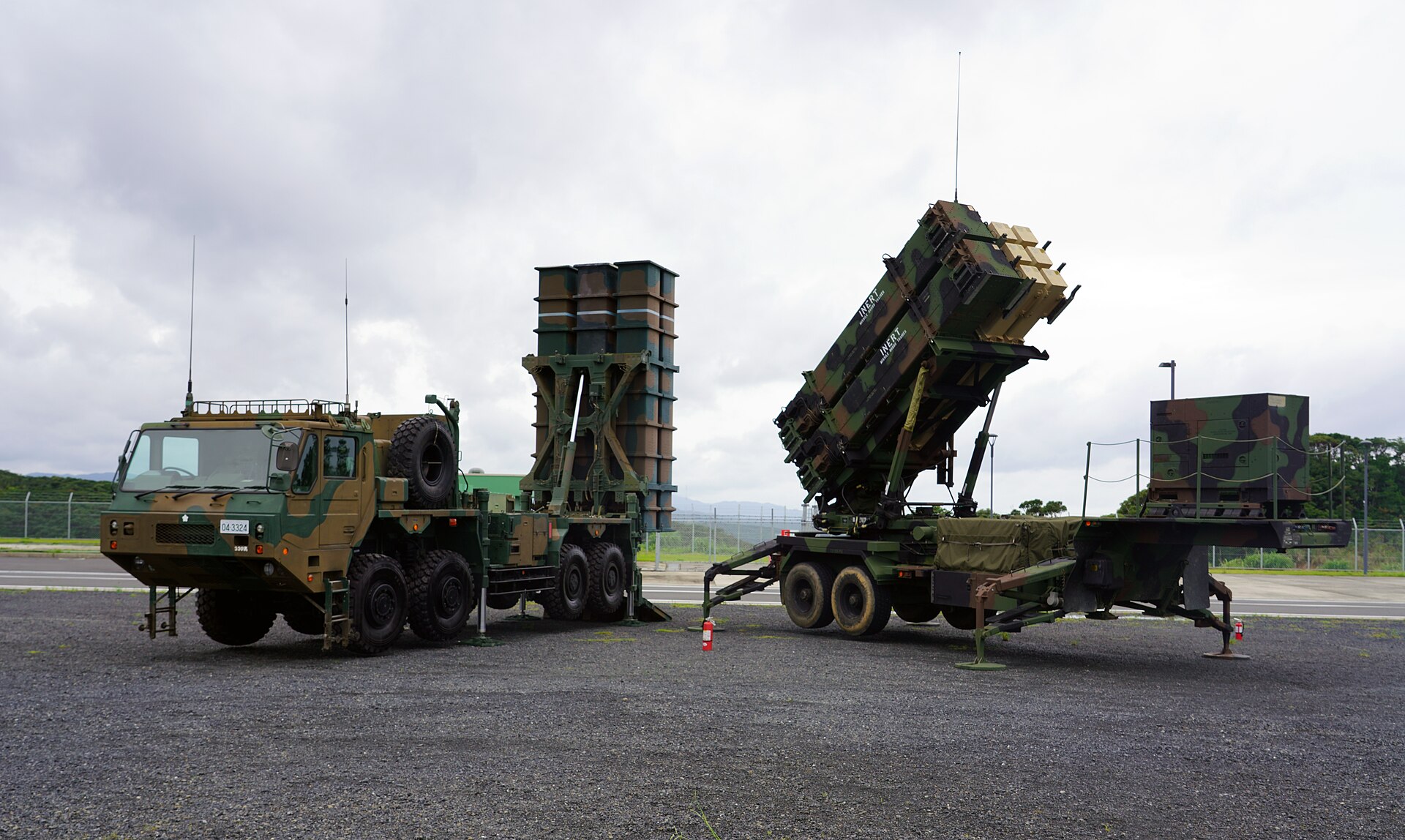
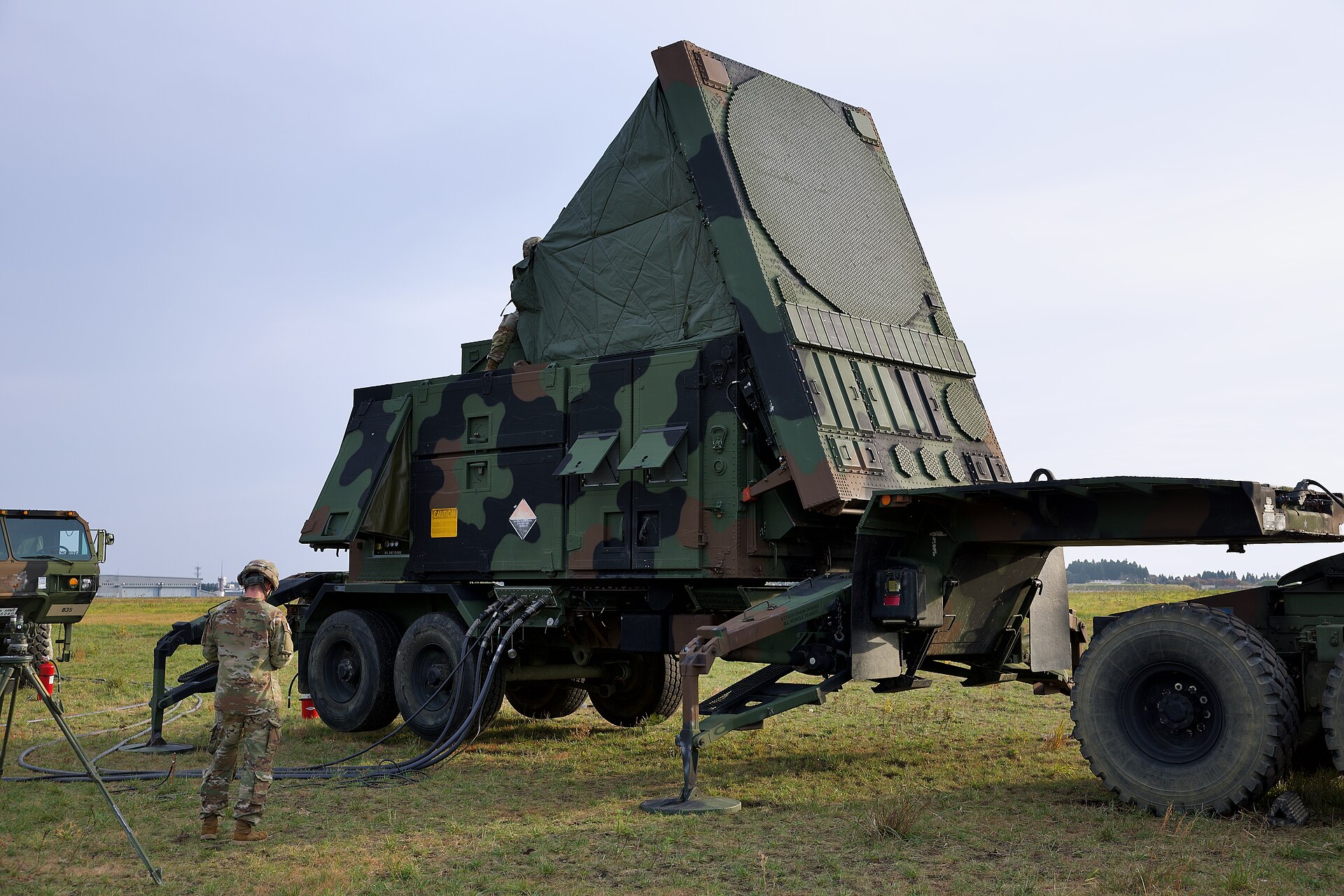
Saudi Arabia’s $9 billion Foreign Military Sales request for 730 PAC-3 MSE interceptors — notified to Congress on January 30, 2026 — represents approximately 14 months of the entire world’s annual production capacity. Lockheed Martin’s Camden, Arkansas facility produces roughly 620 PAC-3 MSE rounds per year globally, and meaningful deliveries to Saudi Arabia are not projected before 2028.
The production bottleneck is not a bureaucratic delay but a physical constraint rooted in the industrial base. The US Army awarded Lockheed Martin a $4.761 billion PAC-3 MSE production contract in April 2026, with deliveries running through June 30, 2030, but the Camden line serves every PAC-3 customer on earth — the US Army, NATO allies, Japan, the UAE, and now Saudi Arabia — from the same production run. Saudi Arabia’s 730-round request does not sit at the front of that queue; it competes within it, behind customers whose orders were placed earlier and whose relationships with Washington were not recently ruptured by an airspace standoff.
The constraint tightened further when Poland’s Defence Minister Wladyslaw Kosiniak-Kamysz rejected a US request to transfer one Patriot battery and its PAC-3 MSE load to the Middle East, removing approximately 200 rounds from the pool theoretically available for Gulf redeployment. “Our Patriot batteries and their armament serve to secure the Polish skies and NATO’s eastern flank,” Kosiniak-Kamysz said. “Nothing is changing in this field.” NATO’s eastern flank would not subsidise the Gulf’s air defence gap — a rational decision from Warsaw that narrowed Riyadh’s options to the single production line it was already dependent on.
“Our Patriot batteries and their armament serve to secure the Polish skies and NATO’s eastern flank. Nothing is changing in this field.” — Wladyslaw Kosiniak-Kamysz, Polish Defence Minister
Between the January 2026 FMS notification and the projected 2028 delivery date, the number of new PAC-3 MSE rounds entering Saudi inventory through the contract pipeline is, by the Pentagon’s own timeline, zero. Every interceptor Saudi Arabia fires between now and then comes from the 400 remaining — a stockpile that the IRGC’s July 8 ballistic barrage and the four-country strike sequence on July 8-9 have continued to draw down with no contract deliveries before 2028.
| Metric | Figure | Source |
|---|---|---|
| Pre-war PAC-3 stockpile | ~2,800 rounds | Multiple defence sources |
| Current stockpile (July 2026) | ~400 rounds | Multiple defence sources |
| Depletion rate | 86% | Calculated |
| FMS request (DSCA case 26-13) | 730 PAC-3 MSE | DoD / DSCA, Jan 30, 2026 |
| FMS case value | $9 billion | DSCA congressional notification |
| Global annual production | ~620 rounds/year | Army Recognition / Zona Militar |
| Saudi share of annual output | ~14 months’ production | Calculated |
| Lockheed Martin MSE contract | $4.761 billion | US Army, April 2026 |
| Earliest projected Saudi delivery | 2028 | Pentagon timeline |
| Polish transfer refused | ~200 MSE rounds | Polish Ministry of Defence |
The Legal Void That Made the Blockade Possible
Saudi Arabia is the only major GCC security partner without a Status of Forces Agreement with the United States. The sole governing instrument is the 1977 USMTM Memorandum of Understanding, a document drafted to cover Foreign Military Sales administration and training advisors — containing no combat-operations language, no airspace-use provisions, and no criminal jurisdiction clause. When Riyadh decided to deny airspace on May 3, there was no treaty mechanism that compelled it to do otherwise, no legal framework Washington could invoke, and no prior agreement it breached.
The SOFA void functions as an enabling architecture for both sides’ coercive instruments. It allowed Saudi Arabia to ground 43 American warplanes at PSAB without violating any agreement, because no agreement governed their operational use, and it allowed the kingdom to deny airspace without triggering treaty-dispute mechanisms, because no treaty exists. But the same legal vacuum that gave Riyadh its veto also left it without the institutional protections a SOFA would provide — protections that might, in a different legal framework, have constrained Washington’s ability to condition interceptor supply on operational cooperation.
The 1977 MOU contains no mechanism for either party to compel operational cooperation from the other, which means the 2,300 US military personnel currently stationed in the kingdom operate under an arrangement that governs their training and advisory functions but says nothing about the combat-support role they have been performing since the Iranian campaign began. The destruction of the E-3G Sentry at PSAB on March 27 — an operational asset, not a training platform — occurred in a legal environment where the aircraft’s presence was covered by no formal combat-operations agreement, a gap that creates continuing ambiguity about the terms under which remaining US assets at the base can be used, withdrawn, or conditioned on Saudi behaviour.
The absence of a SOFA is not accidental. Saudi Arabia has resisted a comprehensive agreement for decades, preferring the flexibility of ad hoc arrangements to the formalised obligations — and formalised protections — that a SOFA would impose on both parties. That preference served Riyadh well when the kingdom’s primary concern was limiting the visible American military footprint on Saudi soil, a domestic political sensitivity that successive kings managed carefully. It serves Riyadh badly when the kingdom’s primary concern is ensuring the continued flow of the munitions keeping Iranian ballistic missiles from reaching Aramco processing facilities and desalination plants serving millions of people.
What Did the Rubio-Reema Meeting Signal?
The July 9 Rubio-Reema meeting at the White House — reported by Arab News and Times of Israel — was the highest-level US-Saudi diplomatic contact since the alliance rupture over Project Freedom. Conducted at ambassador level rather than foreign-minister level, and in Washington rather than Riyadh, the meeting signalled a calibrated de-escalation — enough to reopen the diplomatic channel, not enough to rehabilitate MBS’s standing within the administration.
The diplomatic sequencing was precise. Rubio had conspicuously excluded Riyadh from his June 23-25 Gulf tour, visiting the UAE — where Washington’s basing relationship remained intact — Kuwait, whose initial airspace denial had been resolved alongside Saudi Arabia’s, and Bahrain, home to the US Fifth Fleet and a country that had not participated in the May blockade. The tour’s route read as a hierarchy of cooperation: allies who had complied were rewarded with diplomatic attention; Saudi Arabia, whose compliance had been coerced rather than offered, was pointedly left off the itinerary.
Al-Monitor reported that Riyadh “viewed the skip as a snub” — a characterisation that captured the essential message, even if understated. The July 9 meeting reversed the exclusion, but on Washington’s terms: Princess Reema came to the White House, not Rubio to Riyadh, and the meeting occurred after Saudi Arabia had demonstrated compliance with the airspace demand, not before.
Princess Reema’s public characterisation was carefully anodyne. “Productive discussions with Rubio on regional developments and the strong, enduring partnership between the Kingdom of Saudi Arabia and the United States,” she said, adding that she looked “forward to continuing their close cooperation across shared priorities.” The State Department’s readout was a near-mirror: Rubio and Princess Reema “reaffirmed the strength of the US-Saudi relationship and the importance of continued close cooperation to promote regional security.” Neither statement referenced Project Freedom, airspace access, interceptors, or the two-month rupture that preceded the meeting — omissions that carried more meaning than anything either side chose to say.
The meeting format told its own story about where the relationship now sits. Princess Reema, a member of the Al Saud royal family who has served as ambassador since 2019, was originally appointed as a signal of Riyadh’s investment in the US relationship — a senior royal in Washington, not a career diplomat. By meeting Reema at secretary-of-state level rather than dispatching Rubio to Riyadh or inviting Foreign Minister Prince Faisal to Washington, the State Department chose a channel that acknowledged Saudi importance while calibrating the rank to reflect unresolved tension, communicating through the level of interlocutor rather than the content of the conversation.
The Fiction Both Sides Need
Saudi Arabia’s official position is that the airspace blockade never happened. An anonymous Saudi government source told AFP on May 8-9 that the NBC News reporting on MBS pressuring Trump to suspend Project Freedom was “incorrect,” insisting that Washington “continues to have regular access to Saudi airspace and military bases.” The denial was published while Saudi Arabia and Kuwait were simultaneously lifting the restrictions the denial claimed had never been imposed — a temporal overlap that made the fiction visible to anyone watching the calendar but apparently necessary for Riyadh to maintain domestically.
Washington, for its part, has not publicly claimed credit for the interceptor lever. No administration official has gone on the record to confirm the withholding threat, and the State Department’s July 9 readout treated the Rubio-Reema meeting as routine bilateral engagement rather than the first diplomatic contact following a coercion cycle. The asymmetry is instructive: Saudi Arabia actively denies, while Washington passively declines to confirm — two different strategies for maintaining the same structural fiction.
The fiction serves concrete purposes for both capitals. Riyadh cannot publicly acknowledge that it was coerced into granting airspace access by a threat to withhold the missiles it needs to defend its own territory, because the admission would confirm the dependency and invite its repetition at the next point of disagreement. Washington cannot publicly advertise that it weaponised an allied country’s air defence supply during an active threat environment, because the precedent would unsettle every other arms-supply relationship in the US alliance network — from Tokyo to Warsaw, from Canberra to Taipei. The structural trap facing MBS is mirrored by a reputational trap Washington has chosen not to spring.
Iran has constructed a third narrative around the same events. When Project Freedom paused on May 5, Iranian officials framed the outcome as the product of diplomatic progress rather than Saudi capitulation, with state media citing assurances that Hormuz passage would “be ensured” once the US withdrew its escort provocation, as Al Jazeera reported at the time. Tehran’s version — that Iranian diplomacy, not American coercion applied to American allies, ended the standoff — serves the regime’s interest in positioning itself as the reasonable party, but it reinforces the fact all three narratives are constructed to manage: that Project Freedom failed because the Gulf allies whose cooperation it required had the capacity to deny it, and that capacity was broken not by diplomacy but by a threat to cut off the interceptors.
Does the Lever Get Stronger as the Stockpile Shrinks?
Every Iranian missile salvo that depletes Saudi Arabia’s PAC-3 stockpile further increases Washington’s coercive position over Riyadh. The dependency is not static but compounding: the 400 rounds remaining in July 2026 will be fewer after the next Iranian strike, and the urgency of resupply will be correspondingly greater — making the threat of withholding correspondingly more powerful each time it is invoked or implied.
The IRGC’s four-country strike on July 8-9 — hitting US bases in Bahrain, Kuwait, Qatar, and Jordan — and the Artesh kamikaze-drone wave that followed, targeting Patriot batteries and early-warning sensors across the Gulf, illustrate the compounding dynamic with uncomfortable clarity. Every barrage that consumes PAC-3 rounds without a corresponding resupply tightens the dependency, and the dependency is what gives Washington its coercive position. Iran, in degrading Saudi and US air defences, is inadvertently strengthening the American hand against Riyadh — a strategic irony neither Tehran nor Riyadh appears positioned to resolve.
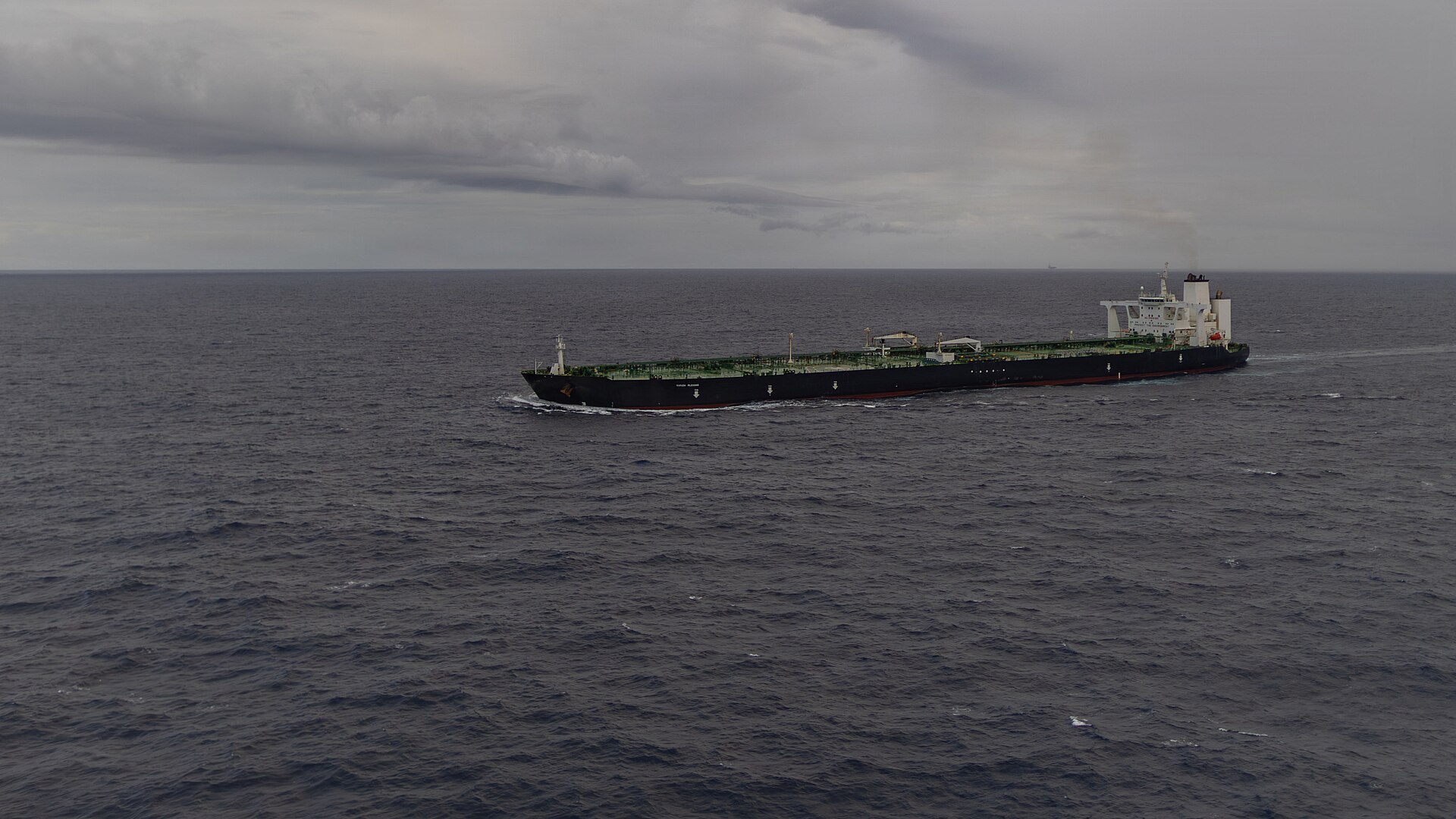
The NCAGS corridor attack on July 6-7 added operational urgency to the financial pressure already bearing on the kingdom. The IRGC struck two laden tankers on the US-designated safe transit route — the Qatari LNG carrier AL REKAYYAT, hit for the third time in 2026, and a Saudi-owned ULCC — challenging the escort mission’s operational premise at the same moment Saudi Arabia faces $253 million in Persian Gulf Security Arrangement liability at $5.5 million per day, with the August 18 trigger date now 39 days away. The PGSA exposure creates a second channel of financial pressure running parallel to the interceptor dependency, and both channels pull Riyadh toward compliance with Washington’s operational requirements in the strait.
The financial and military pressures are not merely parallel — they compound on each other. Saudi Arabia cannot resolve the PGSA liability without an operational presence in the strait, which requires the US escort mission to function, which requires Saudi airspace access, which Washington has demonstrated it can price in interceptors. The circularity is the point: every pressure Riyadh faces connects, eventually, to the interceptor supply line, because the interceptor supply line has become the bottleneck through which all of Saudi Arabia’s security arrangements with Washington now pass.
The arithmetic of a major Iranian strike before 2028 — the earliest date new PAC-3 MSE rounds might arrive under the FMS contract — is not ambiguous. If the current rate of Iranian attacks continues or accelerates, as the escalation cycle around Bushehr suggests it may, the 400-round stockpile could fall below the threshold at which Saudi Arabia can mount a full defensive engagement against a concentrated salvo. The E-3G Sentry destroyed at PSAB on March 27 is not being replaced, and its absence degrades the targeting data that maximises each remaining interceptor’s intercept probability — meaning Saudi Arabia is defending itself with fewer rounds, guided by a diminished sensor network, against an adversary whose missile production is accelerating, supplied by a single foreign producer that has shown it is willing to condition resupply on political compliance.
Whether Washington will use the lever again depends on whether Riyadh gives it reason to. Saudi Arabia’s exclusion from both the Doha and Islamabad diplomatic tracks has left the kingdom without a seat at the table where the war’s terms may be set, reducing its ability to shape events through diplomacy and increasing the probability that its interests will diverge from Washington’s operational demands — divergences that, as May demonstrated, Washington now has the means and the demonstrated willingness to resolve unilaterally. When those divergences arrive, the interceptor question will not need to be reopened — it was never closed.
Frequently Asked Questions
Has the United States ever withheld arms deliveries from Saudi Arabia before?
The Obama administration suspended sales of cluster munitions to Saudi Arabia in 2016 over civilian-casualty concerns in Yemen, and the Biden administration imposed a temporary freeze on offensive weapons sales in early 2021 as a policy-review measure that was later partially reversed. Congress has periodically blocked or delayed specific Saudi arms packages, including a bipartisan 2019 effort to halt precision-guided munitions transfers. The May 2026 interceptor withholding differs from all prior instances in that it targeted defensive munitions — air defence interceptors rather than offensive weapons — during an active threat to Saudi territory, making it coercive in character rather than punitive or policy-driven, and setting a precedent for which there is no direct historical parallel in the US-Saudi relationship.
Could Saudi Arabia source PAC-3-equivalent interceptors from another country?
No near-term alternative exists at the required scale. The Franco-Italian SAMP/T system uses Aster 30 missiles with a comparable engagement envelope but requires a different fire-control architecture that is incompatible with Saudi Arabia’s existing Patriot batteries — an integration effort that would take years even if the political approvals came immediately. Russia’s S-400 remains theoretically available, but the US removed Turkey from the F-35 programme in 2019 after Ankara acquired the system, a precedent Saudi Arabia has consistently cited as the reason it has not pursued the Russian option. South Korea’s L-SAM and Israel’s David’s Sling are not export-available at the volumes Riyadh requires, leaving the PAC-3 MSE as a functional monopoly product for Saudi Arabia’s air defence architecture — a monopoly that Washington demonstrated, in May, it is prepared to exploit.
What is the M-SAM-II and why doesn’t it fill the PAC-3 gap?
South Korea’s M-SAM-II (Cheolmae-4-II) is a medium-range surface-to-air missile with an engagement ceiling of roughly 15 to 40 kilometres, designed for threats at higher altitudes. The gap it leaves is at the terminal phase: Iranian ballistic missiles like the Zolfaghar execute their final approach below 10 kilometres altitude, beneath the M-SAM-II’s effective floor and precisely within the engagement band where the PAC-3 MSE operates. Even if Saudi Arabia had access to the system in operational quantities, the M-SAM-II addresses a different layer of the air defence problem entirely and cannot substitute for the terminal-phase intercept role that only the PAC-3 currently performs against the specific Iranian missile threats Riyadh faces.
What happens between the DSCA notification and actual interceptor delivery?
The January 30 DSCA notification to Congress was the first formal step in a multi-stage FMS process that involves several additional gates before a single round ships. Congress has 30 calendar days to raise formal objections; if none are sustained, the Defense Security Cooperation Agency issues a Letter of Offer and Acceptance to the purchasing government, which must then be signed and payment terms established before Lockheed Martin allocates production slots within its existing order book. Industrial lead times for PAC-3 MSE rounds typically run 24 to 36 months from production-slot allocation to physical delivery, which is why the Pentagon’s projected 2028 delivery date already represents an optimistic reading of the timeline rather than a conservative one — and why the window between now and first delivery remains, from Saudi Arabia’s perspective, a period of maximum vulnerability.
A parallel analysis examines how Operation Project Freedom may have lowered PSAB’s deterrence threshold: Prince Sultan Air Base Lost Its Deterrent Before Iran Fired.