ADEN — The Houthis sank two commercial vessels in forty-eight hours this week — the Liberian-flagged Magic Seas on July 6 and the Liberian-flagged Eternity C, which went down on the morning of July 9 after a two-day assault that killed four crew members and left eleven in Houthi custody — and the Saudi-led coalition, which had promised “unprecedented determination and force” against exactly this kind of escalation seventy-two hours earlier, did nothing. The double sinking doubled the Houthis’ total ship-kill count from two to four since the campaign began in November 2023, and it landed inside the funeral pause for Iran’s Supreme Leader Ali Khamenei, during which the third Doha negotiation round was suspended and the coalition’s own spokesman, Turki al-Maliki, had explicitly named Hodeidah port, Ras Isa, As-Salif, and Sanaa International Airport as targets for retaliation. The Houthis did not misread the pause — they read it precisely: no coalition air capacity, no international naval presence, no American political will to enforce the August 18 MOU deadline, and no multilateral cover after the UAE refused to expand the coalition. The coercion gap between what Riyadh threatens and what it can execute is no longer analytical inference. It is wreckage on the floor of the Red Sea.
Table of Contents
- Forty-Eight Hours, Two Ships, Four Dead
- What Did Al-Maliki’s Ultimatum Actually Threaten?
- The Funeral Pause as Operational Permission
- Why Did No One Fire Back?
- How Far Does the Targeting Logic Reach?
- The Transit-Permission Bureaucracy
- What Happens After July 9?
- The Red Sea Belongs to Whoever Is Willing to Sink Ships in It
- Frequently Asked Questions
Forty-Eight Hours, Two Ships, Four Dead
The escalation followed a deliberate two-day ladder. On July 6, eight Houthi skiffs and four unmanned surface vessels swarmed the Magic Seas, a bulk carrier hauling fertilizer and steel billets toward Turkey, in the southern Red Sea. Two USVs struck the port side below the waterline; the twenty-two crew abandoned ship before it sank. Houthi military spokesman Yahya Saree claimed the vessel belonged to a company “that violated the entry ban to the ports of occupied Palestine,” a characterization that Human Rights Watch flatly rejected — the Magic Seas had no documented connection to Israel, its cargo was agricultural and industrial, and its destination was a NATO-member port. The attack was unclaimed for several hours, a deliberate ambiguity designed to test whether any naval force in the region would respond, and none did.
Twenty-four hours later, the Houthis struck the Eternity C, a bulk carrier managed by Athens-based Cosmo Ship Management that was returning from Berbera, Somalia, where it had just delivered a World Food Programme humanitarian cargo. The ship was heading to Jeddah for refueling — bound, in other words, for Saudi Arabia’s own premier Red Sea port. The first assault came on the afternoon of July 7: gunfire from skiffs, RPG volleys, explosive-laden sea drones, and a barrage that the Washington Institute’s Noam Raydan and Farzin Nadimi described as a “coordinated, multipronged approach” employing Asef missiles, Qasim antiship ballistic missiles, and Mandab-2 radar-guided cruise missiles simultaneously. A second assault came the following night, when Houthi forces closed on the crippled vessel and compelled the twenty-five persons aboard — twenty-two crew and three private security contractors — to abandon ship into the open sea.
Three Filipino crew members were confirmed dead by EU Operation Aspides. A fourth, who jumped overboard during the assault, is presumed dead. Eleven were taken into Houthi custody: nine Filipinos, one Indian national, and one Russian. The Eternity C sank on the morning of July 9 — the day the coalition’s funeral pause expired. Saree described the seizure of eleven crew members as a “rescue,” claiming the Houthis had provided “medical care” and transported the captives to “a safe location,” language the US Embassy in Yemen identified as hostage-taking. The captured sailors were subsequently compelled to record televised statements claiming the Eternity C had been bound for Eilat, a claim for which the Sana’a Center for Strategic Studies found no supporting evidence.
Raydan and Nadimi observed that “no single previous Houthi operation blended all these domains into two well-planned and successful consecutive raids,” and warned that “the Houthis have both the will and the military capability to sink more ships.” The two sinkings — which brought the campaign’s confirmed hull losses to four, adding to the Rubymar in March 2024 and the Tutor in June 2024 — arrived after seven months of relative maritime quiet following the Gaza ceasefire.
| Vessel | Date Sunk | Flag | Cargo / Mission | Crew Killed | Crew Taken Hostage | Primary Method |
|---|---|---|---|---|---|---|
| Rubymar | March 2, 2024 | Belize | Fertilizer (41,000 t) | 0 | 0 | Anti-ship missile |
| Tutor | June 12, 2024 | Liberia | Coal | 1 | 0 | USV + missile |
| Magic Seas | July 6, 2026 | Liberia | Fertilizer / steel billets | 0 | 0 | 8 skiffs + 4 USVs |
| Eternity C | July 9, 2026 | Liberia | WFP humanitarian (returning) | 4 | 11 | Multi-domain swarm assault |
| Total | 5 | 11 | ||||
Sources: EU Operation Aspides; Washington Institute; Crisis24; Human Rights Watch; gCaptain.
The Middle East briefing 3,000+ readers start their day with.
One email. Every weekday morning. Free.
What Did Al-Maliki’s Ultimatum Actually Threaten?
On July 4, Saudi coalition spokesman Turki al-Maliki issued what appeared to be a decisive escalatory statement: “The coalition will respond with unprecedented determination and force to any and all attempts to target the Kingdom, its citizens and residents and national assets, or any attempt to violate the sovereignty of the brotherly Republic of Yemen.” He named four specific targets — Hodeidah port, Ras Isa terminal, As-Salif port, and Sanaa International Airport — the critical infrastructure nodes through which the Houthis sustain their war economy and maintain control of northern Yemen’s sixteen million people. In standard deterrence logic, naming targets signals willingness to strike, and the targets al-Maliki named were the ones Israel had already hit during Operation Black Flag in July 2025, establishing a precedent of international tolerance for strikes on Houthi-held ports. The Houthis treated al-Maliki’s statement as a signal of the opposite.
Within twenty-four hours of the ultimatum, Houthi ground forces killed fifteen government troops in a dawn assault on the 14th Infantry Brigade at Jabal Dabbas in Hodeidah Governorate — inside the very province al-Maliki had identified as a coalition target. Within forty-eight hours, they swarmed and sank the Magic Seas. Within seventy-two hours, they began the two-day operation against the Eternity C that would kill four crew, seize eleven more, and put a bulk carrier delivering UN food aid on the bottom of the Red Sea. At no point during those seventy-two hours did the coalition launch an airstrike, and the four targets al-Maliki named remain untouched. The deterrence claim — that naming Hodeidah’s infrastructure would impose costs on Houthi escalation — has been tested kinetically, and it has failed kinetically.
The structural reasons for the failure are not new, but they are now confirmed by enemy action rather than by the spreadsheet logic of depleted inventories and expired mandates. The coalition has not conducted offensive air operations over Yemen in four years, and the infrastructure to reconstitute them — targeting intelligence networks, forward logistics, coordinated rules of engagement with partner air forces — does not exist in operational form. Saudi Arabia’s PAC-3 interceptor inventory stands at approximately 400 rounds, 86 percent depleted from pre-war levels, and the M-SAM-II system Riyadh purchased from South Korea’s LIG Nex1 to supplement it does not arrive until 2028 and intercepts at 15–20 kilometers altitude — above the terminal-phase envelope where IRGC-supplied Zolfaghar missiles strike. The UN Mission to Support the Hudaydah Agreement expired on March 31, 2026, removing the institutional buffer that had protected Hodeidah’s status as a humanitarian corridor and given the coalition legal and diplomatic cover for restraint that could be reframed as compliance. And in May 2026, Saudi Arabia itself grounded forty-three US warplanes at Prince Sultan Air Base for four days during Operation Project Freedom — demonstrating that even Riyadh’s own alliance management creates windows in which coalition air power simply does not exist.
The Funeral Pause as Operational Permission
The third Doha round was suspended July 4–9 for Khamenei’s six-day state funeral, a pause intended as diplomatic restraint — a recognition that negotiations could not proceed while Iran buried its supreme leader and managed a succession crisis in which Mojtaba Khamenei, 127 days absent from public life, assumed power without ever appearing in public. For the coalition and the broader negotiation framework, the pause was a concession to protocol and an acknowledgment of geopolitical reality. For the Houthis, it was a confirmed window in which the consequences for escalation had been diplomatically suspended.
The timing of the two attacks was precise to the point of choreography. Magic Seas was hit on Day 3 of the funeral. Eternity C was first assaulted on Day 4. The ship sank on Day 6 — the morning the pause expired. The Houthis understood that neither the coalition nor the United States would authorize kinetic escalation during a funeral observance that their own diplomatic framework had sanctioned, and they understood that Operation Aspides, the EU’s Red Sea naval mission, maintained only three warships in the region — a force incapable of providing convoy escort, let alone rapid response to simultaneous attacks across hundreds of nautical miles. They also understood, as the Wall Street Journal reported, that President Trump had privately told Defense Secretary Pete Hegseth and General James Caine that he would not resume strikes against the Houthis and was “comfortable” with allowing the August 18 MOU deadline to slip without enforcement action.
| Date | Pause Day | Event | Coalition Response |
|---|---|---|---|
| July 4 | 1 | Al-Maliki ultimatum names Hodeidah, Ras Isa, As-Salif, Sanaa Airport | Statement only |
| July 5 | 2 | Houthis kill 15 government troops at Jabal Dabbas, Hodeidah | None |
| July 6 | 3 | Magic Seas swarmed and sunk; 22 crew evacuated | None |
| July 7 | 4 | Eternity C first assault — gunfire, RPGs, sea drones, missiles | None |
| July 8 | 5 | Eternity C second assault — crew forced to abandon ship; 11 seized | None |
| July 9 | 6 | Eternity C sinks; funeral pause expires | None |
Sources: EU Operation Aspides; Crisis24; Washington Institute; Al Jazeera; Security Council Report July 2026.
The result is that a five-day diplomatic courtesy became a five-day operational permission slip. The Houthis ran a calibrated escalation ladder inside a window where retaliation was structurally impossible, and they timed the destruction of the Eternity C to coincide with the pause’s expiration — forcing the coalition to re-enter the diplomatic arena having just absorbed a double sinking, four dead crew, eleven hostages, and a humanitarian-aid carrier on the seabed, without having fired a single round in response.
Why Did No One Fire Back?
The absence of a military response to the Magic Seas and Eternity C attacks has three distinct causes, and none of them reflects a deliberate policy choice in which a decision-maker weighed options and selected restraint. The first is capacity. The coalition’s offensive air capability over Yemen has been dormant for four years, and the forward-deployed architecture required to reconstitute it does not exist in a form that could be activated within the seventy-two-hour window between al-Maliki’s statement and the first sinking. Saudi Arabia’s PAC-3 inventory is a defensive asset, not an offensive one, and its 86 percent depletion constrains even the Kingdom’s ability to absorb the retaliatory strikes that would follow any coalition offensive action. The approximately 2,300 US military personnel at Prince Sultan Air Base, whose presence underpins the coalition’s integrated air-defense architecture via Link-16 data links and IESP contractor maintenance, are themselves subject to a drawdown timeline that compounds Saudi vulnerability with each month it advances.
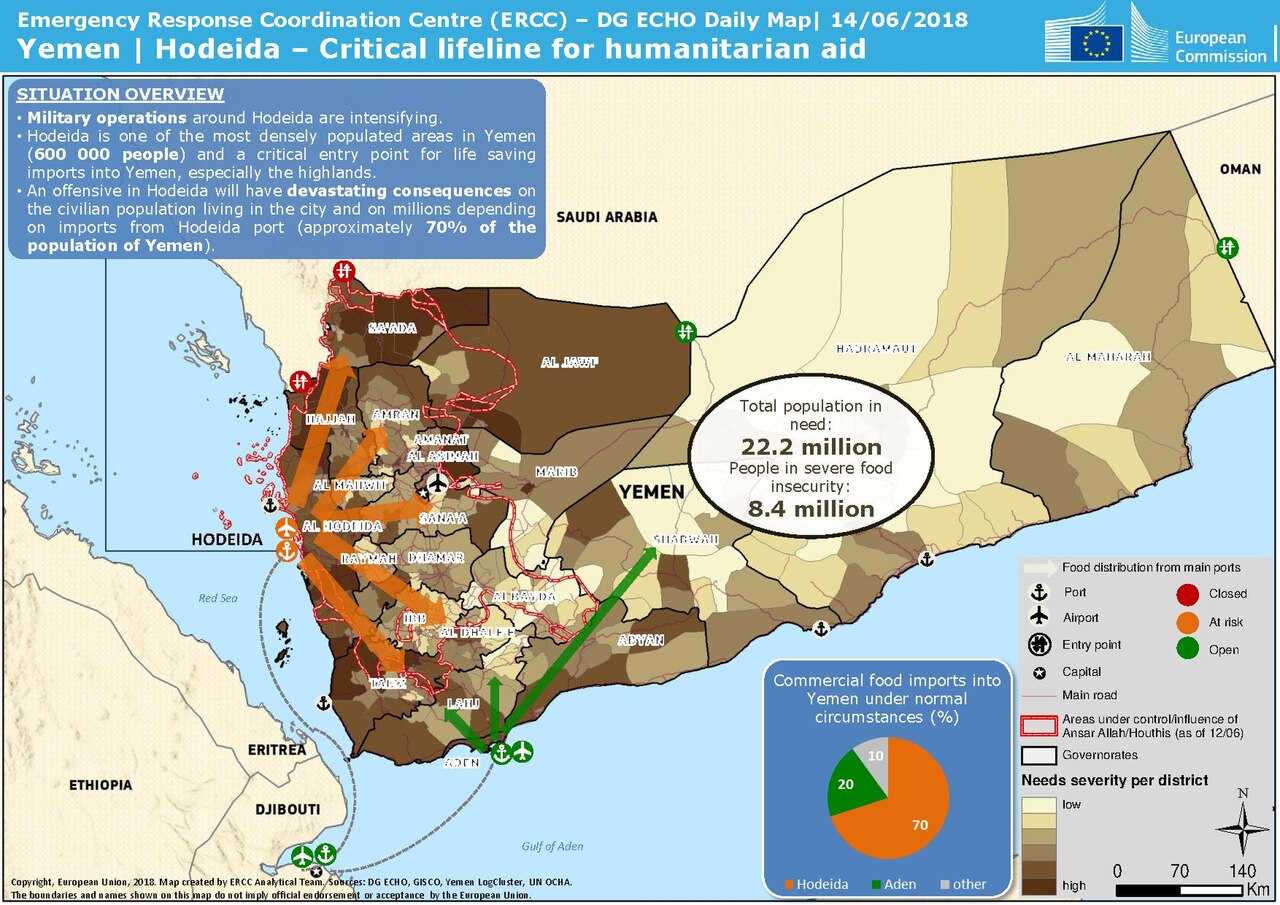
The second cause is political. The US-Iran MOU, now at Day 20 of its 60-day term, imposes a de facto ceiling on coalition escalation that neither Washington nor Riyadh can breach without collapsing the negotiation framework. Striking Houthi infrastructure in Yemen — particularly Hodeidah, which handles 70 percent of Yemen’s commercial imports and 80 percent of its humanitarian aid according to UN data — would generate humanitarian consequences that the UN, the EU, and most of the coalition’s own donor partners would refuse to absorb, and it would do so at a moment when Washington has signaled through both private communication and public inaction that it does not intend to enforce its own deadlines. Trump’s private comfort with an August 18 slip, combined with the $253 million in outstanding Saudi obligations under the PGSA reactivation schedule accruing at $5.5 million per day after that date, means that the political incentive structure runs against escalation from every direction simultaneously.
The third cause is multilateral collapse. The UAE refused to expand the coalition’s operational footprint, leaving Saudi Arabia as the only Gulf state with a nominal stake in Yemen’s airspace. UNMHA’s March 31, 2026, expiry removed the neutral verification mechanism that had constrained Houthi port operations and given the coalition institutional cover since the 2018 Stockholm Agreement. Operation Aspides fields three warships for a maritime area stretching from the Bab el-Mandeb to the central Red Sea, a force that the Washington Institute’s Raydan and Nadimi identified as directly enabling the attacks through its “absence” in the southern Red Sea — but the absence is not an oversight or a budget shortfall. It is the material expression of a strategic consensus among every navy with the capacity to patrol the Red Sea that none is willing to absorb the political, financial, and operational cost of doing so indefinitely against an adversary that treats attrition as a strategy rather than a problem.
How Far Does the Targeting Logic Reach?
The Houthis’ stated justification for both attacks rested on a fleet-contagion doctrine that has been expanding since the campaign began: any vessel operated by a company whose ships have called at any Israeli port is subject to attack across the company’s entire fleet, regardless of that specific vessel’s cargo, route, destination, or flag state. The US Maritime Administration’s Advisory 2026-006, valid through September 22, 2026, confirmed that this logic renders flag changes ineffective as an evasion strategy — the targeting follows the operating company, not the hull, and MARAD warned that risk extends to any vessel in a fleet where the operator has made even a single Israeli port call.
The practical consequence is that the Houthis have manufactured a compliance trap in which adherence to their targeting criteria is impossible for any major commercial operator. Global shipping companies with hundreds of vessels cannot certify that none of their fleet has ever called at Haifa or Ashdod, and the Houthi demand effectively requires commercial operators to choose between the Israeli market and Red Sea transit — a choice that restructures global trade routes regardless of enforcement capacity. Human Rights Watch’s Niku Jafarnia found that neither the Magic Seas nor the Eternity C was a military target under applicable international humanitarian law, noting that the first was carrying fertilizer and steel to Turkey and the second had just completed a World Food Programme delivery to Somalia. The disconnect between the Houthis’ stated criteria and their actual target selection confirms what BIMCO’s Jakob Larsen warned: “Ships with business connections to US or Israeli interests are more likely to be targeted, but other ships may also be targeted deliberately or in error.”
The cumulative effect on the maritime insurance market is approaching a structural inflection point that matters more to global shipping than the sinkings themselves. Lloyd’s List reports war-risk premiums for Gulf and Red Sea transits “topping double-digit millions of dollars per trip,” and Larsen warned that rates would escalate “severely” if attacks resumed at the pace demonstrated on July 6–7. The Suez Canal, which handled roughly eighty containerships per week before the Houthi campaign began in November 2023, had collapsed to twenty-six per week by mid-January 2026 — a 68 percent decline that rerouted approximately 60 percent of Red Sea commercial traffic via the Cape of Good Hope, adding ten to fourteen days per voyage at costs that compound through every node in global supply chains. The resumption of sinkings after seven months of relative quiet, combined with the demonstrated Houthi willingness to kill crew and seize hostages from humanitarian-linked vessels, will deepen the diversion and accelerate the point at which Red Sea transit becomes functionally uninsurable for operators without state-backed guarantees.
The Transit-Permission Bureaucracy
What the Houthis have built since August 2025 — and what the July attacks enforce — is not a blockade in any conventional or legal sense. It is a transit-permission regime, a bureaucratic architecture of control that functions identically to a toll system backed by the threat of lethal force. After the May 2025 US-Houthi ceasefire, which Trump announced with the assurance that “we will take their word — they say they will not be blowing up ships anymore,” the Houthis distributed detailed FAQs to commercial shipping companies outlining conditions for safe passage through waters they claim: two days’ advance notice, automatic identification system transponders must remain active at all times, port of arrival must be declared in advance, and masters must respond to radio calls from “Yemeni Armed Forces.” Lloyd’s List published the FAQ document in full, and shipping industry associations circulated it as practical guidance for operators — an acknowledgment, however grudging, that the Houthi transit regime had achieved a degree of functional legitimacy through the simple mechanism of being the only authority in the Red Sea willing to sink ships that fail to comply.
The parallel with Iran’s Persian Gulf Strait Authority is structural, not metaphorical. Both systems claim sovereign authority over international waterways. Both require advance notification and identification from commercial vessels. Both impose escalating consequences on non-compliance — the PGSA levies financial penalties; the Houthis deploy torpedoes, sea drones, and boarding teams. The PGSA enforces compliance through fee schedules and OFAC sanction chains — Saudi Arabia’s outstanding liability now stands at $253 million; the Houthis’ enforcement mechanism is measured in hulls and lives. That both systems are asserting authority simultaneously, while the MOU framework governing US-Iran relations limps toward an August 18 deadline that neither side appears willing to enforce, suggests a coordination between Tehran and its Houthi proxies that extends well beyond coincidence — by late March 2026, IRGC officials had already indicated that Iran might push its Houthi allies to obstruct Bab el-Mandeb as direct pressure in the PGSA fee negotiations.
The weapons deployed against the Eternity C confirm the point. Asef missiles, Qasim antiship ballistic missiles, and Mandab-2 radar-guided cruise missiles are Iranian-supplied systems whose deployment requires technical support, spare parts, and logistical chains that run through IRGC networks into Yemen. The Houthis did not develop multi-domain naval-assault doctrine — combining stand-off missile strikes with close-in swarm boats, RPG fire, and boarding operations — from YouTube tutorials. The tactical sophistication demonstrated on July 6–7, which Raydan and Nadimi assessed as unprecedented in the campaign’s history, reflects an Iranian investment in Houthi maritime capability that has continued through the ceasefire period and produced results that serve Tehran’s broader negotiating posture at the precise moment they are most useful.
On Day 20 of the same ceasefire, the IRGC escalated from proxy support to direct action: a missile struck the Al Rekayyat, a Qatari state-owned LNG carrier transiting the Strait of Hormuz, while US negotiators were seated inside Doha, the mediator’s capital. The IRGC framed the strike as route-compliance enforcement — the same operational logic governing its Houthi supply chain. Iran Hit the Host documents the strike and its implications for the Islamabad round.
What Happens After July 9?
The funeral pause expired on July 9, the same morning the Eternity C slipped beneath the surface, and the coalition now faces a decision matrix in which every available option has been degraded by the preceding seventy-two hours. Resuming airstrikes against Hodeidah would threaten a port that carries the bulk of Yemen’s commercial and humanitarian imports — a catastrophe that the UN, the EU, and most of the coalition’s own donor partners would condemn, and one that would hand the Houthis the civilian-casualty narrative they have spent years cultivating. Resuming airstrikes against Houthi military targets outside Hodeidah would require offensive air capabilities the coalition has not employed since 2022 and forward logistics it does not currently possess. Escalating the US naval presence in the southern Red Sea would require a political commitment from a president who has privately indicated he will not make one, at a cost the Pentagon has not budgeted and Congress has not authorized.
The Houthis, by contrast, have expanded their operational repertoire in a direction that is specifically designed to exploit these constraints. The transition from stand-off missile and drone attacks — the predominant method during the 2023–2024 campaign — to close-in swarm-and-sink operations using skiffs, boarding teams, explosive USVs, and combined-arms barrages represents a tactical evolution that is fundamentally harder to defend against at sea. Stand-off attacks can be intercepted by shipboard missile defenses; swarm attacks saturate those defenses, exploit rules of engagement designed for identifiable military threats rather than commercial fishing boats modified with explosive payloads, and force engagement decisions within time frames that negate the advantages of superior sensors and weapons. Crisis24 analysts Alex Watt and Danielle Marais assessed that the Houthis intended both attacks to demonstrate that Iran’s “Axis of Resistance” retained operational potency following Iranian setbacks — including Khamenei’s death and the succession uncertainty surrounding Mojtaba — and the demonstration succeeded on its own terms.
The Eternity C had just delivered humanitarian aid to one of the world’s poorest countries and was heading to a Saudi port for refueling when the Houthis sank it. Its crew included twenty-one Filipinos, a Russian, two Indians, and a Greek — citizens of countries with no involvement in the Israeli-Palestinian conflict and no strategic interest in the Red Sea dispute beyond the safe passage of their nationals. Saree’s claim that the Houthis “rescued” the crew they had shelled, boarded, and seized is hostage-taking dressed in humanitarian vocabulary, and the televised statements extracted from captive sailors claiming a Turkish-bound fertilizer route was actually heading to Eilat is the information architecture of a captor, not a rescuer. IMO Secretary-General Arsenio Dominguez called for “intensified diplomatic efforts,” which is the international community’s standard formulation for events it cannot prevent and will not punish.
The Red Sea Belongs to Whoever Is Willing to Sink Ships in It
Since November 2023, when Houthi forces seized the Galaxy Leader in the opening act of a campaign that has now struck more than 145 commercial vessels, the pattern has repeated with the regularity of a tide table: each period of reduced international enforcement is followed by Houthi capability-building, each capability-building phase is followed by escalation, and each escalation is met with statements of concern and calls for diplomacy that the Houthis correctly interpret as confirmation that no one will stop them. Operation Rough Rider, the seven-week US air campaign that preceded the May 2025 ceasefire, degraded Houthi launch sites and weapons depots but did not eliminate the group’s maritime-attack capability — a fact the Houthis proved within sixty days by resuming lower-level targeting, and which they confirmed conclusively on July 6–7 by executing what the Washington Institute assessed as the most sophisticated paired naval operation in the campaign’s history.
Al-Maliki’s promise of “unprecedented determination and force” has been met by the Houthis’ demonstrated willingness to sink humanitarian-linked vessels, kill crew, take hostages, and fabricate targeting justifications — all within the coalition’s own funeral-pause window, all without consequence. The coercion gap is no longer a planning assumption or an analytical inference drawn from depleted interceptor counts and expired UN mandates. It is four dead sailors and eleven hostages and two ships on the bottom of the Red Sea, and a coalition spokesman’s words sinking alongside them.
Frequently Asked Questions
What is MARAD Advisory 2026-006 and what does it mean for commercial shipping?
The US Maritime Administration issued Advisory 2026-006 on the basis of the expanded Houthi targeting doctrine, with validity through September 22, 2026. The advisory warns that risk extends beyond vessels with direct Israeli port connections to any ship in a fleet where the operating company has made any Israeli port call — a “fleet contagion” standard that renders traditional evasion measures like flag changes, route adjustments, or crew-nationality swaps ineffective. For practical purposes, the advisory means that any vessel managed by a company whose fleet includes even one ship that has docked at Haifa, Ashdod, or Eilat faces elevated risk in Houthi-claimed waters, regardless of the specific vessel’s history or current voyage.
What happened to the Rubymar after it sank, and why does it matter environmentally?
The Rubymar, a UK-owned Belize-flagged bulk carrier sunk by the Houthis on March 2, 2024, went down carrying approximately 41,000 tonnes of ammonium phosphate sulfate fertilizer and a substantial quantity of heavy fuel oil. The wreck lies in the shallow waters of the southern Red Sea, an ecologically sensitive zone of coral-reef habitat, and environmental assessments have identified ongoing nutrient pollution from the fertilizer cargo and the risk of a fuel-oil release as the hull degrades — a slow-motion environmental disaster that has received minimal international attention because no state or international body has asserted responsibility for remediation in Houthi-controlled waters.
What were the specific terms of the May 2025 US-Houthi ceasefire?
The ceasefire was brokered by Oman and announced by President Trump on May 6, 2025, following Operation Rough Rider, a seven-week US air campaign against Houthi positions. The agreed terms specified that the arrangement would ensure “the smooth flow of international commercial shipping” through the Red Sea and Bab el-Mandeb strait. Trump publicly stated: “We will take their word. They say they will not be blowing up ships anymore.” The Houthis, however, stated explicitly at the time of announcement that the ceasefire did not “in any way, shape, or form” apply to Israeli-linked shipping — a carve-out that Washington did not publicly challenge and that the July 2026 attacks have now exploited to its logical conclusion. Iran has since escalated the maritime threat further: Tehran transmitted a conditional directive through Houthi channels instructing the group to close Bab al-Mandeb if US strikes reach Iranian power infrastructure — a threat that would effectively seal both the Red Sea and Hormuz simultaneously. Iran’s conditional order to close Bab al-Mandeb traces that directive and its implications for Saudi Arabia’s export architecture.
How many crew members are currently held by the Houthis from the Eternity C?
Eleven persons from the Eternity C are in Houthi custody as of July 9, 2026: nine Filipino nationals, one Indian national, and one Russian national. The Philippine Department of Foreign Affairs confirmed that it was coordinating with Oman and other intermediaries for information on the condition and location of the nine Filipino captives, but as of publication no direct communication with the hostages has been established through diplomatic channels. Two of the three private security contractors aboard the Eternity C — one Indian and one Greek — are among the ten persons who escaped or were rescued during the abandonment; the third Indian security contractor is among the eleven in Houthi custody, and all three statuses have been confirmed by their respective contracting firms.
Has any international body formally classified the Houthi Red Sea campaign as piracy?
No. The International Maritime Organization has issued statements calling for diplomatic resolution but has not classified the attacks as piracy under the UN Convention on the Law of the Sea (UNCLOS) Article 101, which defines piracy as illegal acts committed on the high seas “for private ends.” The Houthis claim to act as a state authority engaged in an armed conflict — a framing that, if accepted, would reclassify the attacks as belligerent acts subject to the laws of armed conflict rather than criminal piracy. Human Rights Watch has taken the position that both the Magic Seas and Eternity C attacks violated international humanitarian law because neither vessel constituted a military objective, but this legal finding carries no enforcement mechanism absent a state or international tribunal willing to pursue it.
A July 10 report documented the confirmed six-day gap between al-Maliki’s July 4 threat and the absence of any airstrike — with both ships on the seabed and four crew dead and eleven in Houthi custody as of July 10, 2026.