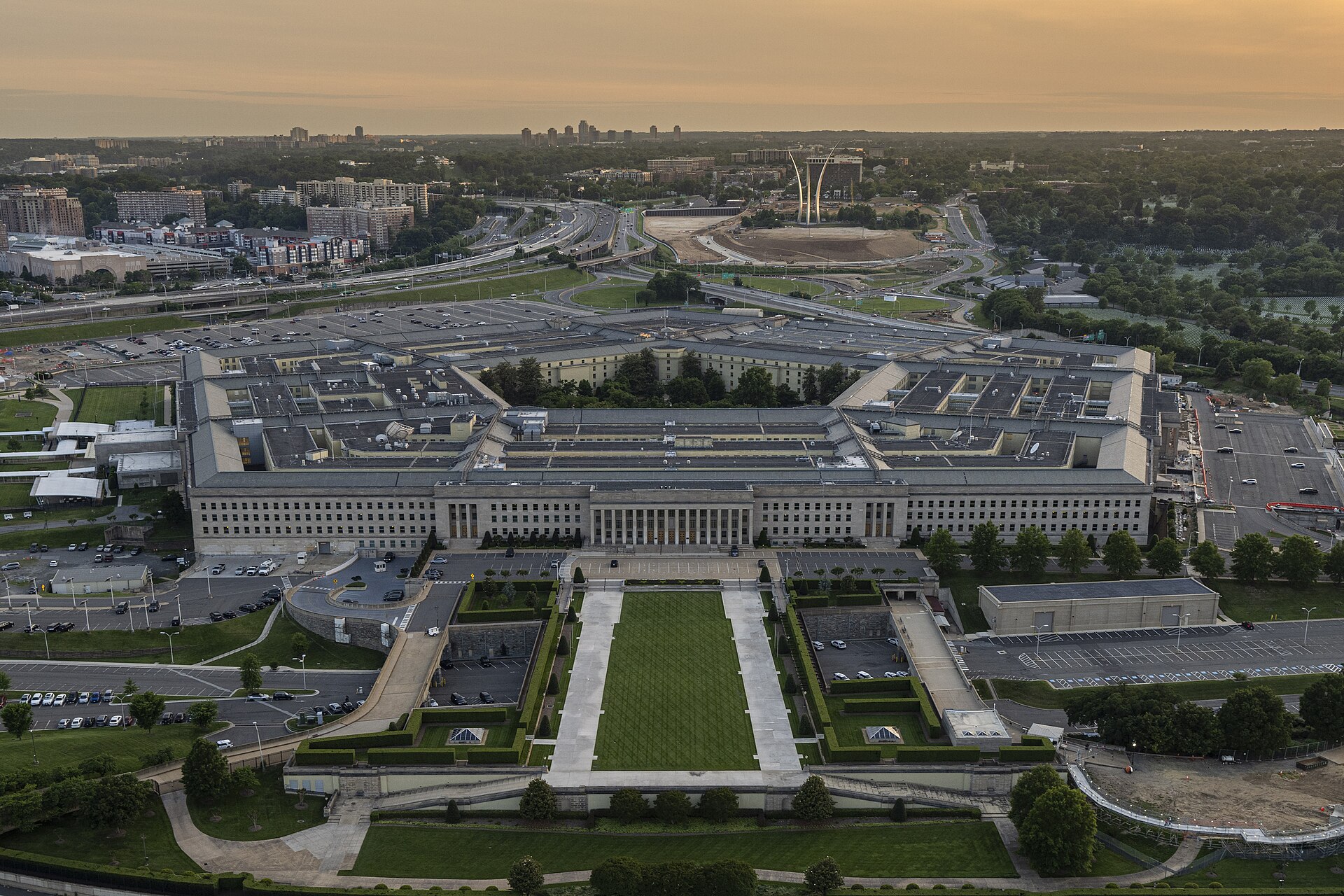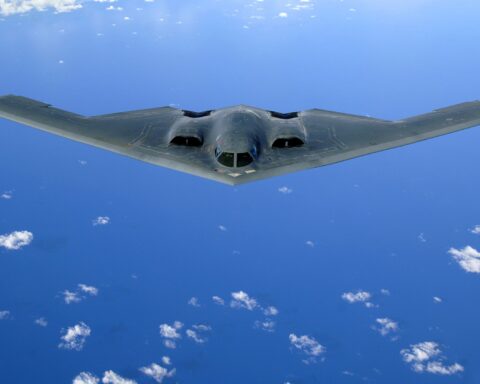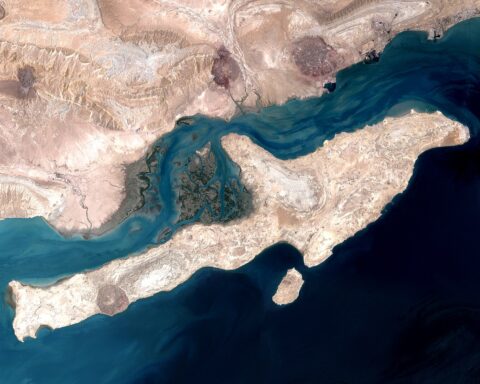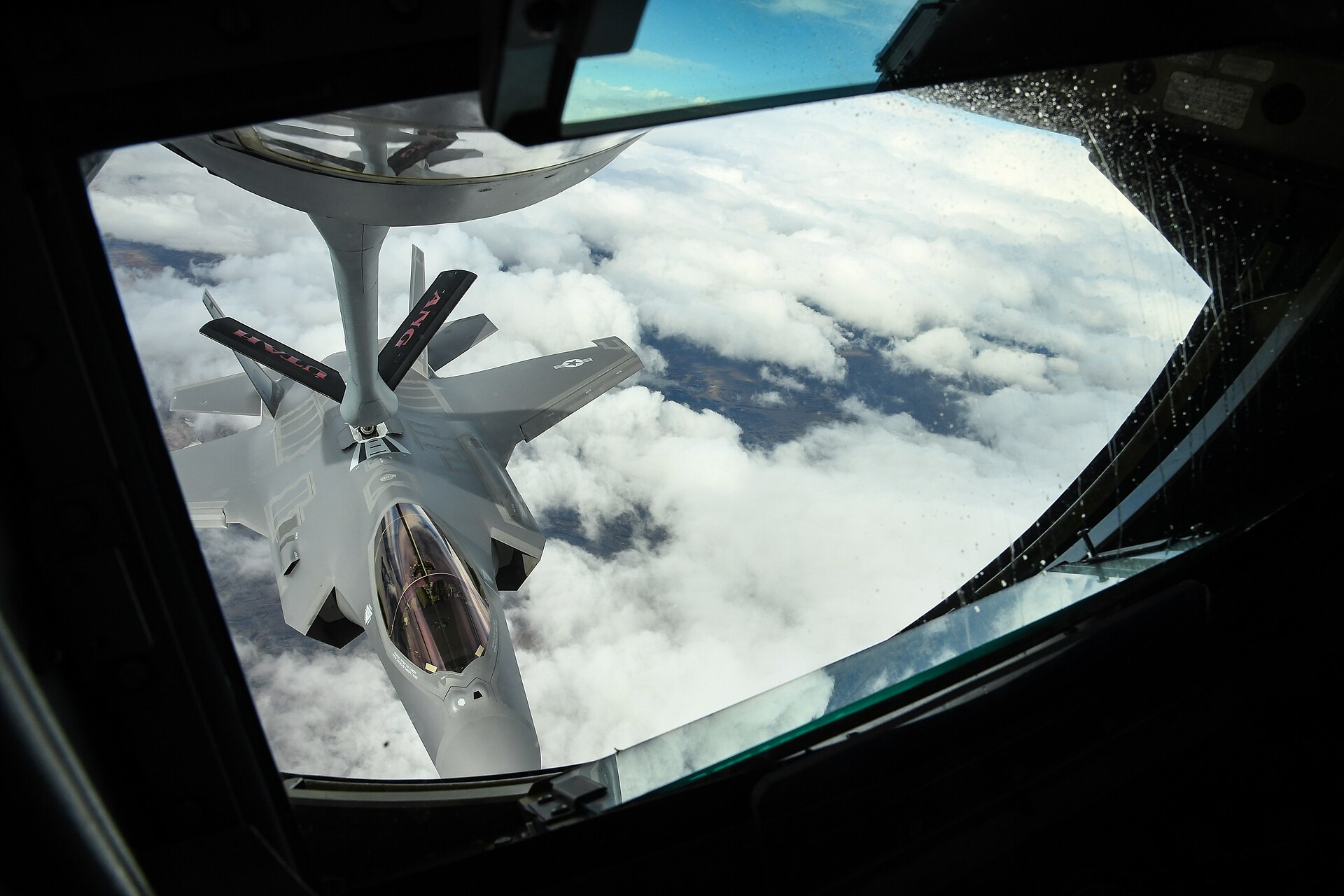

RIYADH — Iran launched missiles and drones at targets in six countries on July 17 — Syria, Kuwait, Jordan, Oman, Qatar, and Bahrain — the broadest single-day retaliation since the Nasr-2 campaign began, and Prince Sultan Air Base was not among them. The exemption, sustained across every Nasr-2 wave since March, is not an operational gap. It is the behavioral signature of a covert Saudi-Iranian de-escalation framework that neither capital will name.
The Financial Times disclosed on May 14 that a bilateral framework — referred to in diplomatic circles as the Helsinki bilateral — had been operational since late March or early April, carrying no signatories, no written document, and no public acknowledgment from either government. Its existence is inferred from behavioral compliance. Iran hit Prince Sultan Air Base on March 14 and March 27, destroying the theater’s E-3G AWACS. Then it stopped. Iran chose not to hit it again, and Riyadh chose not to ask why. MBS’s response to July 17 was a phone call with Secretary Rubio — the thirteenth since the campaign escalated. He did not invoke the Sakhir Declaration or request a GCC collective defense response. Saudi Arabia has no seat at the July 19 Oman talks.
Table of Contents
- What Iran Hit on July 17
- Why Has Prince Sultan Air Base Been Exempt Since March?
- The Helsinki Bilateral and the Architecture of Reciprocal Silence
- What Did Saudi Arabia’s Covert Strikes Accomplish?
- The SOFA Gap and Why It Matters
- Does MBS’s Silence Constitute Acknowledgment?
- The Abqaiq Precedent
- What Breaks the Arrangement?
- Frequently Asked Questions
What Iran Hit on July 17
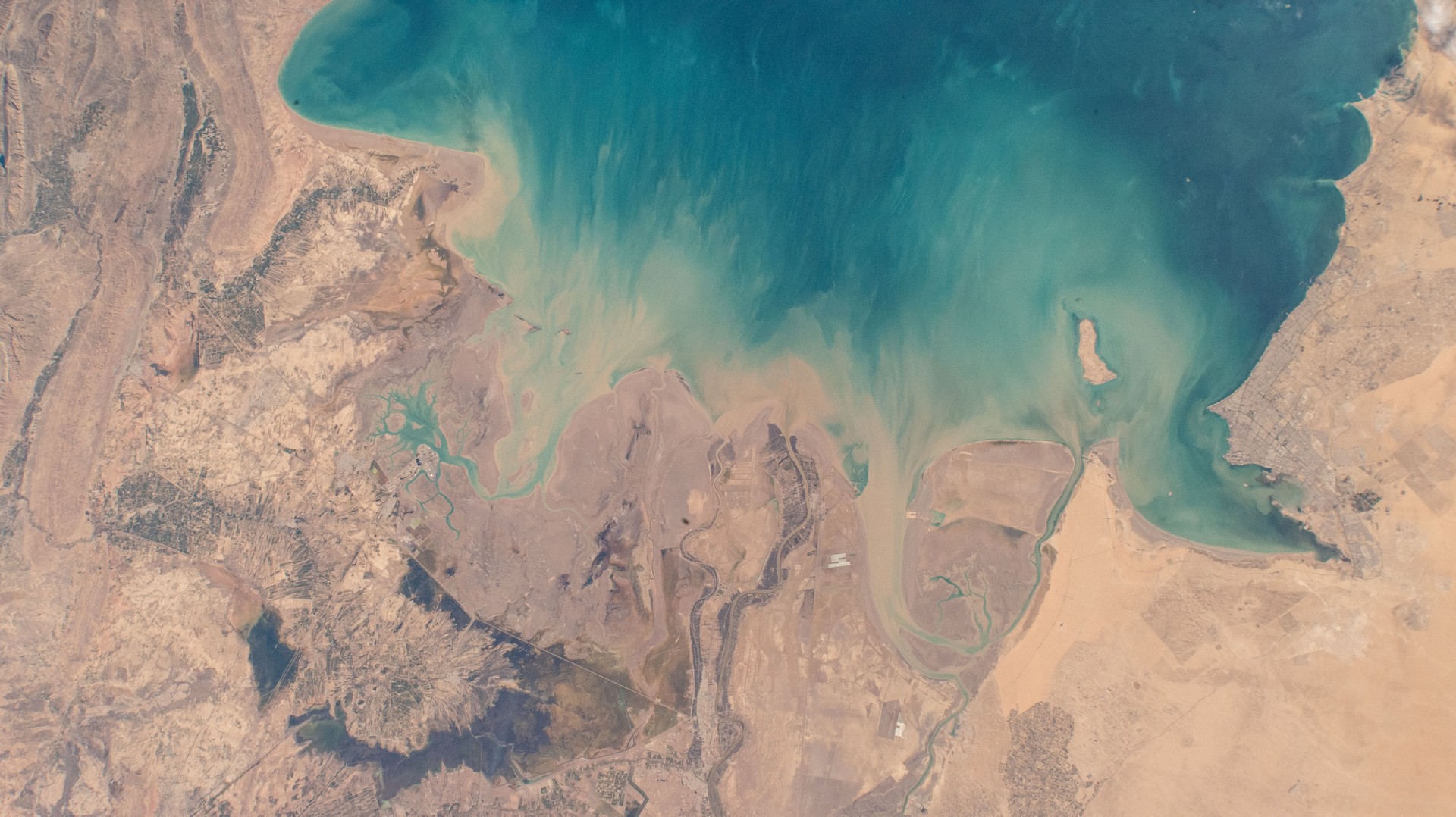
The IRGC’s July 17 wave was the first to span six sovereign territories in a single operational cycle. Al-Tanf, the US special operations garrison in southeastern Syria near the Iraqi and Jordanian borders, absorbed its first-ever Iranian strike — a facility that had previously been targeted only by Iranian-backed militias and ISIS remnants, and whose inclusion in the Nasr-2 target set represents an expansion of the campaign’s geographic ceiling. Kuwait’s Shuwaikh power generation and water desalination station sustained confirmed damage; the Kuwait Ministry of Electricity acknowledged the hit on a facility that contributes a major share of the country’s potable water supply. Three ballistic missiles aimed at Jordanian territory were intercepted, with no reported casualties.
In Oman, maritime control radar on Salama Island and US air control radar installations on the Musandam Peninsula near Ghanam were struck — the first Iranian targeting of Omani sovereign infrastructure, carrying particular weight given Muscat’s role as the sole remaining interlocutor between Washington and Tehran ahead of the July 19 talks. Muscat responded with language it had withheld across every prior Iranian strike: a formal “condemnation and denunciation.” The significance of Oman breaking forty-six years of neutrality posture toward Iran — forty-eight hours before hosting ceasefire talks — is examined here.
Al Udeid Air Base in Qatar absorbed its second wave in forty-eight hours, with two distinct alerts separated by roughly an hour — the third and fourth Iranian strikes on the installation since June 2025. Air raid sirens sounded across Bahrain, where Sheikh Isa Air Base and the US Naval Support Activity at Juffair have been targeted in prior Nasr-2 waves.
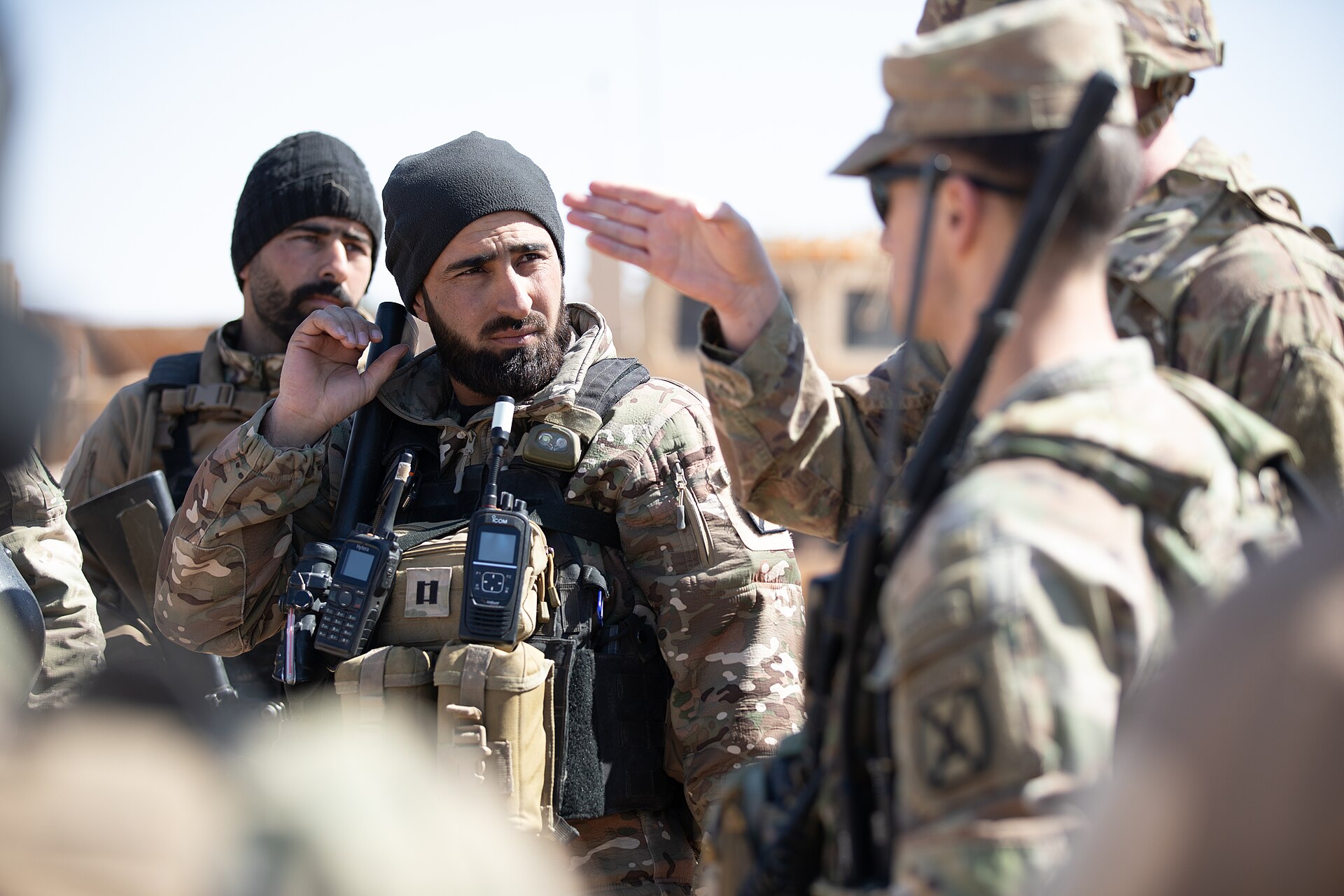
The targeting progression across the Nasr-2 campaign has moved in identifiable phases — from air superiority infrastructure (ISR kill chains, refueling capacity) to force protection systems (C-RAM radars, air surveillance) to economic and civilian-adjacent infrastructure. The Kuwait desalination strike crossed a line the IRGC had previously observed. A sustained hit on Shuwaikh would have created a humanitarian emergency within days, a coercive instrument that dwarfs anything a ballistic missile aimed at a runway can accomplish. Six countries absorbed Iranian ordnance or credible threat on July 17 — every Gulf state and regional partner hosting US forces or US-linked command infrastructure. The exemption list contains exactly one entry.
The Middle East briefing 3,000+ readers start their day with.
One email. Every weekday morning. Free.
Why Has Prince Sultan Air Base Been Exempt Since March?
Iran struck Prince Sultan Air Base twice in March 2026 — destroying a $270 million E-3G Sentry AWACS on March 27 and damaging five KC-135 Stratotankers on March 14. The base sits 850 kilometers from Iran’s western launch sites, well within the Fattah-2 hypersonic missile’s 1,400-kilometer range. The same weapon struck Muwaffaq Salti Air Base in Jordan — 1,050 kilometers from Iranian territory — during the July 9 wave. The exemption is not operational incapacity.
PSAB hosts what remains of the American air campaign’s enabling infrastructure: thirteen KC-135 Stratotankers that refuel strike packages over the Gulf and Arabian Sea, four E-11A BACN relay aircraft that serve as airborne communications bridges between stealth platforms and ground controllers, and the wreckage of the E-3G that once provided the theater’s only sovereign airborne early warning capability. Without the KC-135 fleet, US strike aircraft cannot maintain combat air patrols over the Strait of Hormuz for more than a single rotation. Without the E-11A fleet, F-35 communications relay degrades to line-of-sight. As HOS reported in July, the base lost its deterrent value before Iran fired its first Nasr-2 volley — but it retains its operational value as the refueling and relay node that makes the US air campaign physically possible.
Iran’s own media provides a secondary signal. PressTV, Mehr News Agency, and the West Asia News Agency covered the July 17 strikes by naming targets in Kuwait, Bahrain, Jordan, Qatar, Oman, and Syria. None mentioned Saudi territory. IRGC communiqués since March 27 have not publicly listed PSAB as a target. The silence is bilateral: Iran does not threaten the base, and Saudi Arabia does not demand that Iran account for not striking it.
The Helsinki Bilateral and the Architecture of Reciprocal Silence
The Financial Times reported on May 14 that a covert Saudi-Iranian de-escalation framework had been operational for approximately six weeks, placing its origins in late March or early April 2026 — immediately after the March 27 PSAB strike and Saudi Arabia’s covert counter-strikes on Iranian launch sites. The framework carries no signatories and no written document. Its existence is inferred from behavioral compliance: Iran stopped striking Saudi territory, Saudi Arabia stopped striking Iran, and PSAB was excluded from every subsequent Nasr-2 wave. The FT’s sourcing, which included officials from both capitals, drew an explicit parallel to Basket I of the 1975 Helsinki Accords, where Cold War adversaries codified behavioral norms without resolving underlying disputes. Subsequent reporting — tracked by HOS through the Nasr-2 context and analyzed as a broader de-escalation architecture — confirmed the framework’s durability through multiple escalation cycles.
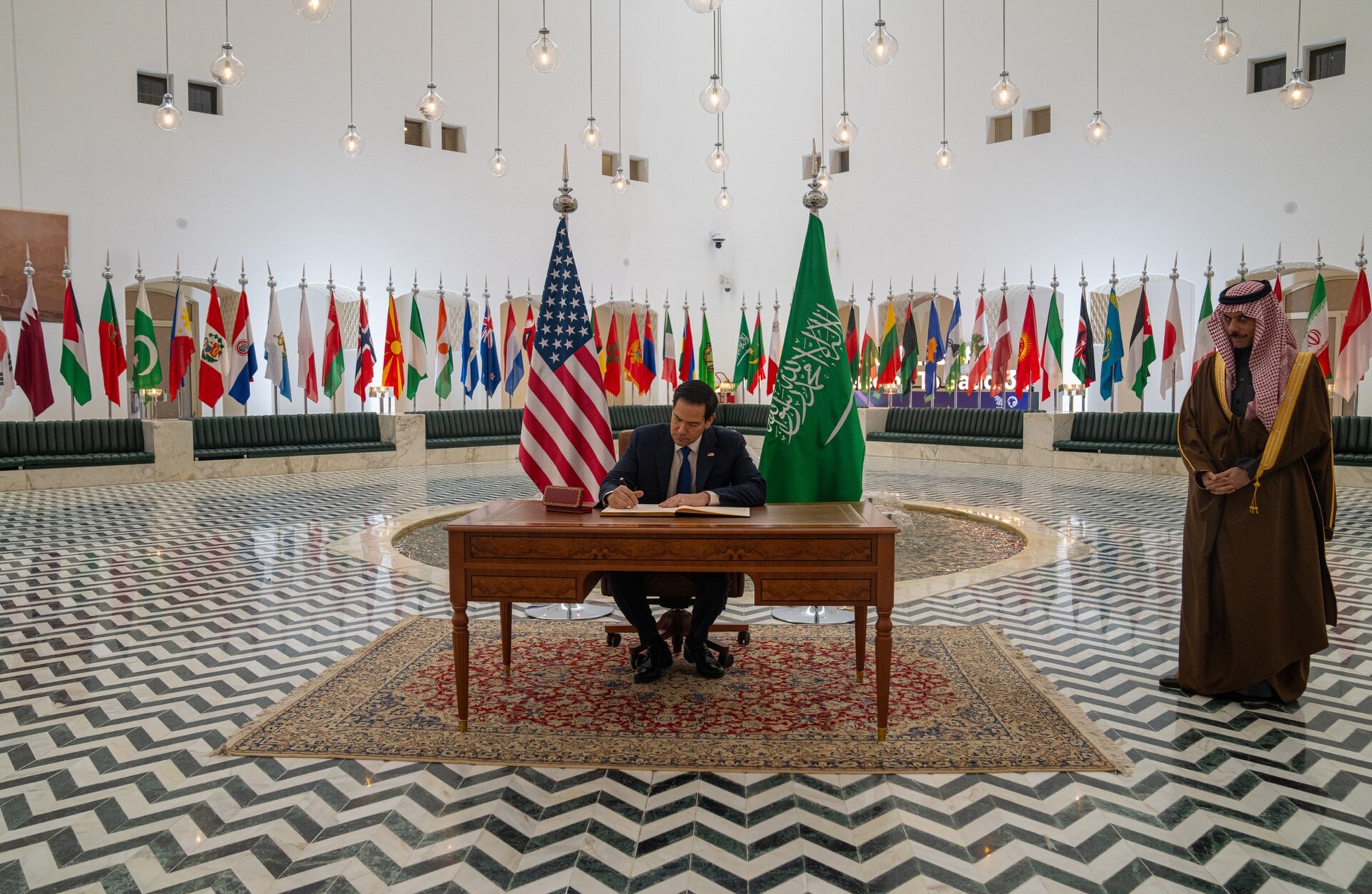
The architecture has a specific logic. Iran continues to strike US installations across the Gulf — Kuwait’s Camp Arifjan and Ali al-Salem, Bahrain’s Juffair and Sheikh Isa, Qatar’s Al Udeid, Jordan’s Muwaffaq Salti — while exempting the one US installation on Saudi sovereign territory where no formal Status of Forces Agreement separates the host government from the American military presence. The distinction is not between targets that are easy to hit and those that are hard. It is between host nations where a SOFA creates a legal membrane around the US presence, and Saudi Arabia, where no such membrane exists.
The reciprocal silence extends beyond targeting decisions. Reuters reported on May 12 that the Royal Saudi Air Force conducted covert strikes on Iranian drone and missile launch sites inside Iran in late March — the first known direct Saudi military action against Iranian territory. Two Iranian officials served as Reuters sources. Iran did not publicly retaliate, did not name Saudi Arabia as an aggressor, and did not adjust the Nasr-2 campaign to include Saudi targets. As HOS covered at the time, the bystander struck Iran and Tehran chose to absorb the blow without public acknowledgment. That choice — Iran’s decision to be struck by Saudi Arabia and say nothing — is the Helsinki bilateral’s founding act.
What Did Saudi Arabia’s Covert Strikes Accomplish?
RSAF strikes on Iranian launch sites in late March 2026 — the first known Saudi military action on Iranian soil — produced a 76 percent drop in Iranian attacks on Saudi territory within one week, from approximately 105 per week to 25. Reuters attributed the drop to Saudi strike degradation of launch infrastructure in Iran’s western provinces, and to a pre-notification that Riyadh delivered to Tehran through an undisclosed channel before the strikes began. Saudi Arabia told Iran it was coming, and Iran let it happen.
The structure mirrors, almost precisely, the logic that the United Against Nuclear Iran (UANI) project attributed to Khamenei’s 2019 Abqaiq decision: demonstrate reach, demonstrate restraint, leave a channel open. MBS demonstrated that the RSAF could reach Iranian territory, but the pre-notification ensured the strikes arrived as an opening bid rather than a surprise. The channel stayed open because Riyadh never claimed credit — Saudi Arabia has not publicly acknowledged the strikes, even after Reuters published its account with two Iranian officials as sources.
Iran’s response to being struck by Saudi Arabia was to not respond — no public acknowledgment, no retaliatory wave against Saudi targets, no rhetorical adjustment to name Riyadh as a combatant. The 76 percent drop held. Saudi territory has not absorbed a confirmed Iranian strike since late March. The behavioral compliance that the FT would later describe as the Helsinki bilateral was already visible in the data before any diplomat named it.
The SOFA Gap and Why It Matters
The legal frameworks governing US military presence across the Gulf are not uniform, and the variation maps precisely onto Iran’s targeting decisions. Every SOFA-protected base has been struck; the one base operating under a pre-revolutionary memorandum has not.
| Installation | Host Country | Legal Framework | Struck in Nasr-2? |
|---|---|---|---|
| Camp Arifjan / Ali al-Salem | Kuwait | SOFA (1991, renewed) | Yes — multiple waves |
| NSA Juffair / Sheikh Isa | Bahrain | DCA (SOFA equivalent) | Yes — multiple waves |
| Al Udeid | Qatar | DCA (2003, extended 2024) | Yes — four strikes since June 2025 |
| Muwaffaq Salti | Jordan | SOFA | Yes — July 9 wave (10 missiles) |
| Prince Sultan Air Base | Saudi Arabia | USMTM MOU (1977) | March only — exempt since |
The pattern is legible. Kuwait, Bahrain, Qatar, and Jordan all have formal SOFAs or functionally equivalent defense cooperation agreements with Washington. These agreements create a legal separation between the host government and the US military presence — Iran can strike the American installation without, in formal terms, attacking the sovereign territory of the host state. The distinction is artificial in kinetic terms. A Fattah-2 warhead does not observe legal membranes. But it provides diplomatic cover for a regime that needs to demonstrate capability against the United States while managing relationships with Gulf neighbors it is simultaneously courting for a regional security framework.
PSAB has no such membrane. The 1977 USMTM MOU predates the current Saudi security architecture, does not reference base access rights, and does not create mutual defense obligations. When Saudi Arabia grounded all 43 US warplanes at PSAB on May 3 under Operation Project Freedom — closing 2.15 million square kilometers of Saudi airspace and suspending all US military operating authority from the base — the legal framework that would have prevented such action simply did not exist. PSAB is a Saudi base with American guests, not an American base on Saudi soil. For Iran, this distinction carries operational meaning: striking Al Udeid is striking a US installation in Qatar under a SOFA. Striking PSAB is striking Saudi Arabia itself.
Does MBS’s Silence Constitute Acknowledgment?
Saudi Arabia has condemned Iranian aggression in general terms while avoiding any action that would require naming the PSAB arrangement. Riyadh has not invoked the Sakhir Declaration, not requested GCC collective defense, and not demanded a seat at the Oman nuclear talks.
Foreign Minister Prince Faisal bin Farhan’s July 12 statement warned that “Saudi Arabia’s patience with Iranian attacks is not unlimited,” per Global Defense Corp. Riyadh supported UN Security Council Resolution 2817. These are calibrated signals — strong enough to satisfy domestic and international audiences, vague enough to avoid triggering obligations that would force Riyadh to confront the arrangement publicly. The July 17 Faisal-Rubio call, confirmed as the thirteenth in the State Department’s sequential numbering (readout “-13”), produced no public demand for a Saudi seat at the July 19 Oman nuclear talks. Riyadh is talking to Washington at a pace that suggests urgency and producing outcomes that suggest restraint.
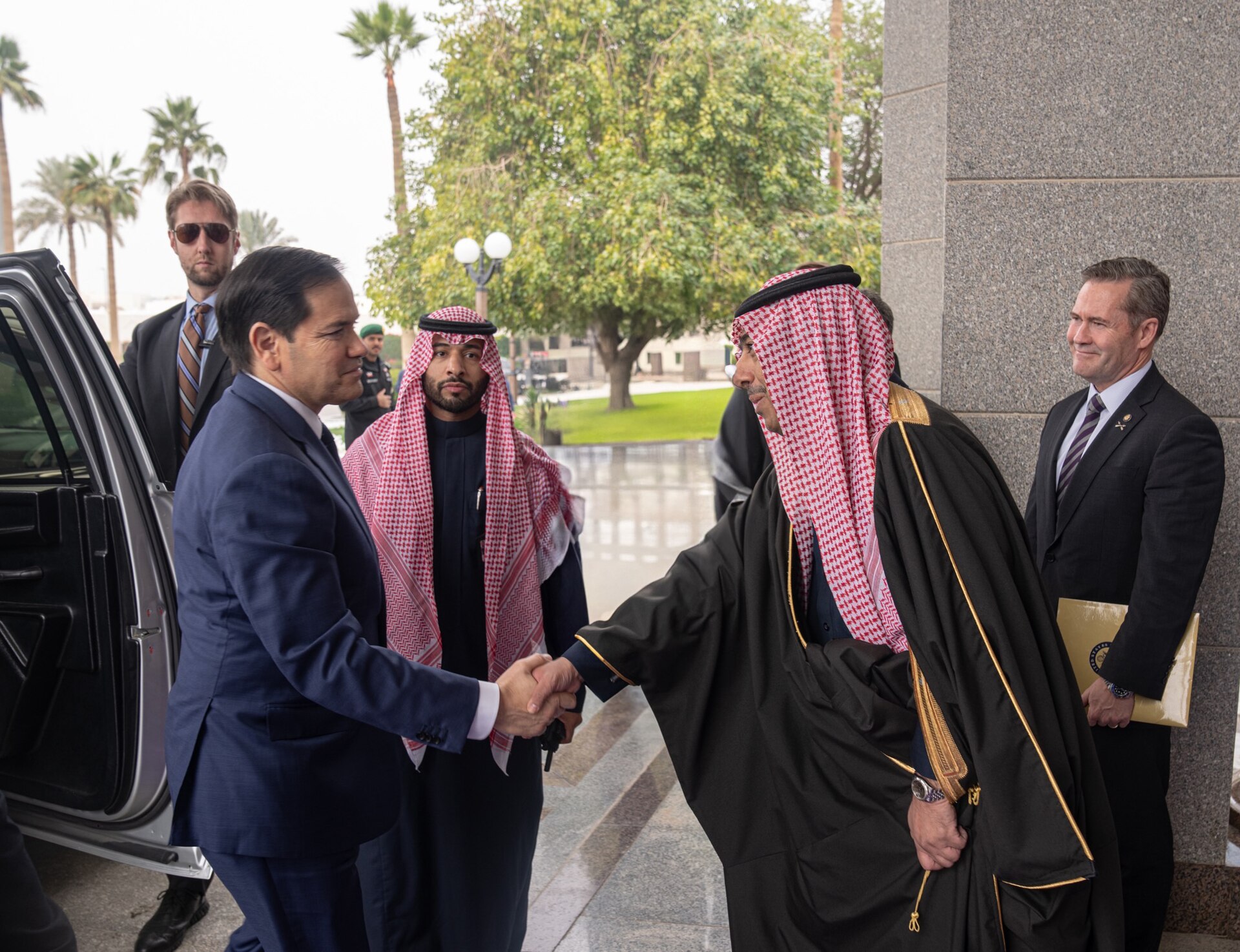
The Araghchi-Faisal channel complicates the picture further. On July 7, Foreign Minister Araghchi called Prince Faisal on the same day the IRGC struck the Saudi-flagged VLCC Wedyan. IranWire reported that Araghchi “commends Saudi Arabia’s role in ending conflict.” Iran proposed a regional security framework — six GCC states plus Iran and Iraq at September’s UNGA sidelines, excluding the United States — on a day its forces attacked a vessel flying the Saudi flag. As HOS reported, Faisal took the call. No Saudi protest over the Wedyan was registered publicly.
MBS told Trump during the Project Freedom standoff that the US campaign was “not well thought-out” and risked dragging Saudi territory into direct Iranian retaliation, per The Eastern Herald and The Week. The statement reads differently in July than it did in May. MBS was not predicting a risk — he was describing the structure of an arrangement in which Saudi territorial exposure to Iranian strikes is a variable that Riyadh manages bilaterally with Tehran, not a problem it delegates to Washington. The war he cannot end is also a war he has found a way to partially opt out of, so long as the opt-out remains unspoken.
The International Crisis Group’s Ali Vaez captured the broader dynamic in a phrase: the region is converging on “a concept of a forever war.” Within that concept, the PSAB exemption is not a peace agreement. It is an arrangement for managed hostility — a bilateral decision by Riyadh and Tehran to carve Saudi sovereign territory out of a conflict that continues to consume everything around it.
The Abqaiq Precedent
The 2019 Abqaiq-Khurais attack remains the most instructive analogue for understanding how Iranian strategic communication operates through targeting decisions. On September 14, 2019, a coordinated drone and cruise missile strike knocked out approximately 5.7 million barrels per day of Saudi oil processing capacity — roughly 5 percent of global supply — and briefly doubled the price of Brent crude. The attack was attributed to Iran despite Houthi claims of responsibility and represented, at the time, the single most consequential act of state-on-state economic sabotage since Iraq’s 1990 invasion of Kuwait.
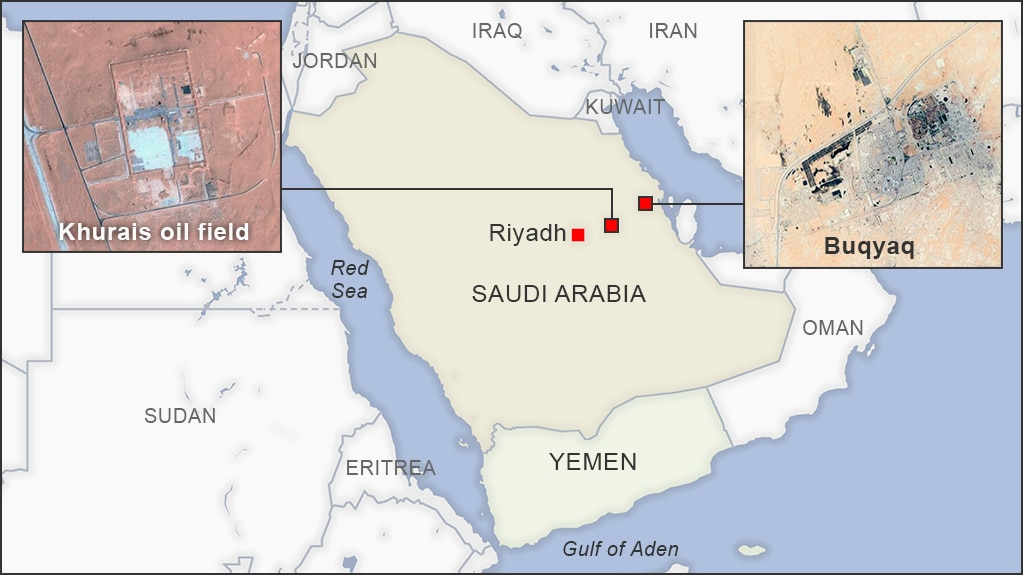
What the strike did not do is equally important for understanding 2026. According to UANI and NPR, Khamenei signed off on the Abqaiq operation “on the condition it would not target civilians or US military personnel.” The planners chose Aramco processing facilities specifically “because it would not cause mass casualties, allowing Tehran to send a message while lessening the chance of reprisals.” The strike demonstrated that Iran could shut down a measurable fraction of global energy supply in a single night. It also demonstrated that Iran chose not to cause casualties, not to target the US military presence in the Gulf (then at its largest since the Iraq War drawdown), and not to cross the threshold that would have compelled an American kinetic response. Trump’s decision not to retaliate militarily validated the calibration.
The PSAB exemption inverts the 2019 logic but preserves its grammar. In 2019, Iran struck Saudi economic infrastructure while sparing US military targets to keep the Washington channel open. In 2026, Iran strikes US military infrastructure across the Gulf while sparing the one base that sits on Saudi sovereign territory without SOFA protection, keeping the Riyadh channel open. The constant is the deliberate exemption of a specific target category to preserve a diplomatic relationship — in 2019, between Tehran and Washington (via Oman’s mediation); in 2026, between Tehran and Riyadh (via the Helsinki bilateral).
What Breaks the Arrangement?
The Helsinki bilateral survives as long as both sides find its ambiguity more useful than clarity would be. Three developments could dissolve it: a US demand for transparency, an IRGC hardline fracture, or a Saudi provocation that exceeds the framework’s tolerance.
Washington has conducted thirteen Faisal-Rubio calls without — as far as public records indicate — requiring Riyadh to disclose the terms of its bilateral understanding with Tehran. The political sustainability of that posture depends on the costs remaining diffuse. American installations are absorbing strikes in Kuwait, Qatar, Jordan, Oman, and now Syria while the Saudi-hosted base — the one without a SOFA, the one whose host government grounded US warplanes for four days in May — remains untouched. The PAC-3 inventory, now at approximately 400 of an original 2,800 rounds (86 percent depleted), creates its own arithmetic: the United States has a quantifiable interest in understanding why one major base is exempt from the consumption rate afflicting every other Gulf installation.
US Night 6 strikes on July 17 hit six bridges in Iran’s Khamir County cutting Bandar Abbas access routes, destroyed Chabahar’s Shahid Kalantari Port control tower for the third time, and killed eight and wounded twenty in Chabahar alone — thirty-eight killed and more than four hundred wounded across the past week of strikes on Iranian territory. Washington is escalating against Iran’s economic infrastructure with increasing severity while its Gulf bases absorb Iranian ordnance. The PSAB anomaly sits inside that asymmetry like an unexplained variable in an otherwise legible equation.
The second risk is internal to Iran. The IRGC’s July 17 statement — “time for restraint is over” — may be rhetorical positioning or may reflect genuine pressure from hardline commanders who view the PSAB exemption as an unjustified concession to Saudi Arabia. IRGC spokesperson Mohebbi’s earlier warning that “next phases will then begin” suggests an internal argument about targeting scope that the civilian government and the supreme leader’s office may not be able to contain indefinitely. On the same day, Mohsen Rezaei, Supreme Leader military adviser and the longest-serving IRGC commander in the Corps’ history, made those “next phases” explicit: declaring on state television that “the conditions for both war and negotiation are over.” Rezaei’s 48-hour ultimatum — and what it means for Saudi Arabia’s 400 remaining interceptors is analyzed here. If Mojtaba Khamenei — absent from public life for 127 days — is the guarantor of the Helsinki bilateral on the Iranian side, his continued absence leaves the arrangement resting on an authorization structure that cannot be verified or renewed. The MOU, suspended since July 8 at Day 31 of 60, has no pathway to resumption.
The third is a Saudi misstep. The covert RSAF strikes in late March bought Riyadh a 76 percent reduction in attacks on Saudi territory and, apparently, a durable bilateral exemption. A second round — or a public one — might not produce the same response. Araghchi stated in June that “negotiations on a final deal will not commence if threats continue.” If Riyadh concludes that the Helsinki bilateral has outlived its utility — or if MBS judges that the domestic cost of appearing to tolerate Iranian strikes on Gulf allies while Saudi territory goes untouched has become unsustainable — the arrangement’s ambiguity becomes its vulnerability. Faisal warned that Saudi patience “is not unlimited.” Whether the limit is defined by Iranian action or Saudi exposure to allied criticism is the question neither capital has answered.
An anonymous investor told the Atlantic Council’s MENASource: “The perception of the Gulf Arab states as safe havens in a tough region is shattered and will be challenging to reverse for some time.” The PSAB exemption complicates that assessment in a way the investor may not have intended. Saudi Arabia is not a safe haven because the region is safe. It is, for the moment, a safe haven because it has negotiated — covertly, deniably, without paper — a bilateral exemption from the campaign that is making the rest of the region dangerous. The durability of that exemption depends on how long both sides find silence more useful than speech, and on how long the countries absorbing strikes on Iran’s target list accept that one member of their coalition has quietly stepped off it.
Frequently Asked Questions
Has any Western government publicly acknowledged the Helsinki bilateral framework?
No government has publicly confirmed or denied the framework. The Financial Times disclosed its existence on May 14, 2026, sourcing officials from both Saudi and Iranian capitals. bne IntelliNews and Middle East Monitor subsequently covered the disclosure. The US State Department has not referenced the framework in any of its thirteen Faisal-Rubio call readouts, and the White House has not addressed the PSAB exemption in press briefings. The framework’s utility depends on deniability — public acknowledgment by any party would force formal responses from the others, potentially collapsing the arrangement it describes.
Could PSAB’s exemption be explained by Saudi air defenses rather than a bilateral arrangement?
Saudi Arabia’s PAC-3 inventory has been degraded alongside every other Gulf installation — from 2,800 rounds to approximately 400, an 86 percent depletion rate. The M-SAM-II system that supplements PAC-3 at PSAB has documented altitude gaps against the Zolfaghar’s terminal dive phase. Iran successfully struck the base twice in March using the Fattah-2, destroying a $270 million AWACS aircraft and damaging five aerial refueling tankers. Air defense capability at PSAB has not improved since March — if anything, continued PAC-3 consumption makes the base more vulnerable now than when Iran last struck it four months ago.
What would it mean for Gulf security if the PSAB arrangement became public?
Public disclosure would create immediate pressure on Kuwait, Bahrain, Qatar, Jordan, and Oman — each absorbing Iranian strikes on US installations within their borders — to demand equivalent bilateral arrangements or to question why their territory bears the cost of hosting US forces while Saudi Arabia has negotiated an exemption. The Gulf Cooperation Council’s collective defense framework (the Sakhir Declaration) would face a legitimacy test if its largest member is shown to have secured a private deal that functionally shifts Iranian targeting to smaller GCC states. Kuwait, which lost a major desalination facility on July 17, would have particular grounds for grievance.
How does the PSAB exemption affect the July 19 Oman nuclear talks?
Saudi Arabia has no seat at the Oman talks despite thirteen Faisal-Rubio calls and despite Iran’s own proposal for a regional security framework (six GCC states plus Iran and Iraq, excluding the United States) at UNGA September sidelines. The exemption may function as Tehran’s incentive structure: Riyadh’s continued silence on the bilateral arrangement preserves Saudi territorial immunity, while any Saudi push for formal inclusion in the nuclear track — which would require articulating Riyadh’s interests as distinct from Washington’s — might dissolve the ambiguity that protects PSAB. Iran’s September UNGA proposal offers Riyadh a future forum that would not require addressing the bilateral arrangement directly, keeping the two tracks separate.
What is the Persian Gulf Security Agreement and how does it relate to the PSAB arrangement?
The PGSA is Iran’s unilateral surcharge on Strait of Hormuz transits — $5.5 million per day per vessel, with $253 million in outstanding fees and a payment deadline of August 18. The PGSA and the Helsinki bilateral operate on parallel but distinct tracks: the PGSA is an economic coercion instrument applied to all Gulf shipping regardless of flag state, while the Helsinki bilateral is a Saudi-specific military de-escalation framework. Saudi Arabia’s exemption from military targeting does not extend to economic exposure — Saudi-flagged vessels remain subject to PGSA fees, and the IRGC struck the Saudi-flagged VLCC Wedyan on July 7, the same day Araghchi called Faisal to “commend Saudi Arabia’s role.” The arrangement has visible boundaries, and they appear to end at the waterline.
The civilian threshold was crossed in the same wave cycle: the first confirmed attack on civilian water infrastructure in Nasr-2 hit Kuwait’s Shuaiba desalination complex on July 17, demonstrating that Iran’s willingness to exempt certain targets from targeting does not extend to the GCC’s critical water and power production facilities.
On the eighth night the campaign widened further: CENTCOM introduced fighter jets and extended strikes to central Iran, reaching Yazd 650 kilometres from the Gulf coast — the deepest inland targeting since the campaign began, and the first use of tactical aircraft rather than stand-off munitions alone.