RIYADH — The Islamic Revolutionary Guard Corps claimed on July 21 that its Aerospace Force struck “the central data infrastructure of the American company Amazon in Bahrain” with cruise missiles and destroyed it. Neither Amazon, Bahrain, nor the United States confirmed or denied. The target was not a radar array, a desalination plant, or an air base. It was a commercial cloud region — and for seven years it was where Saudi Arabia’s digital government lived.
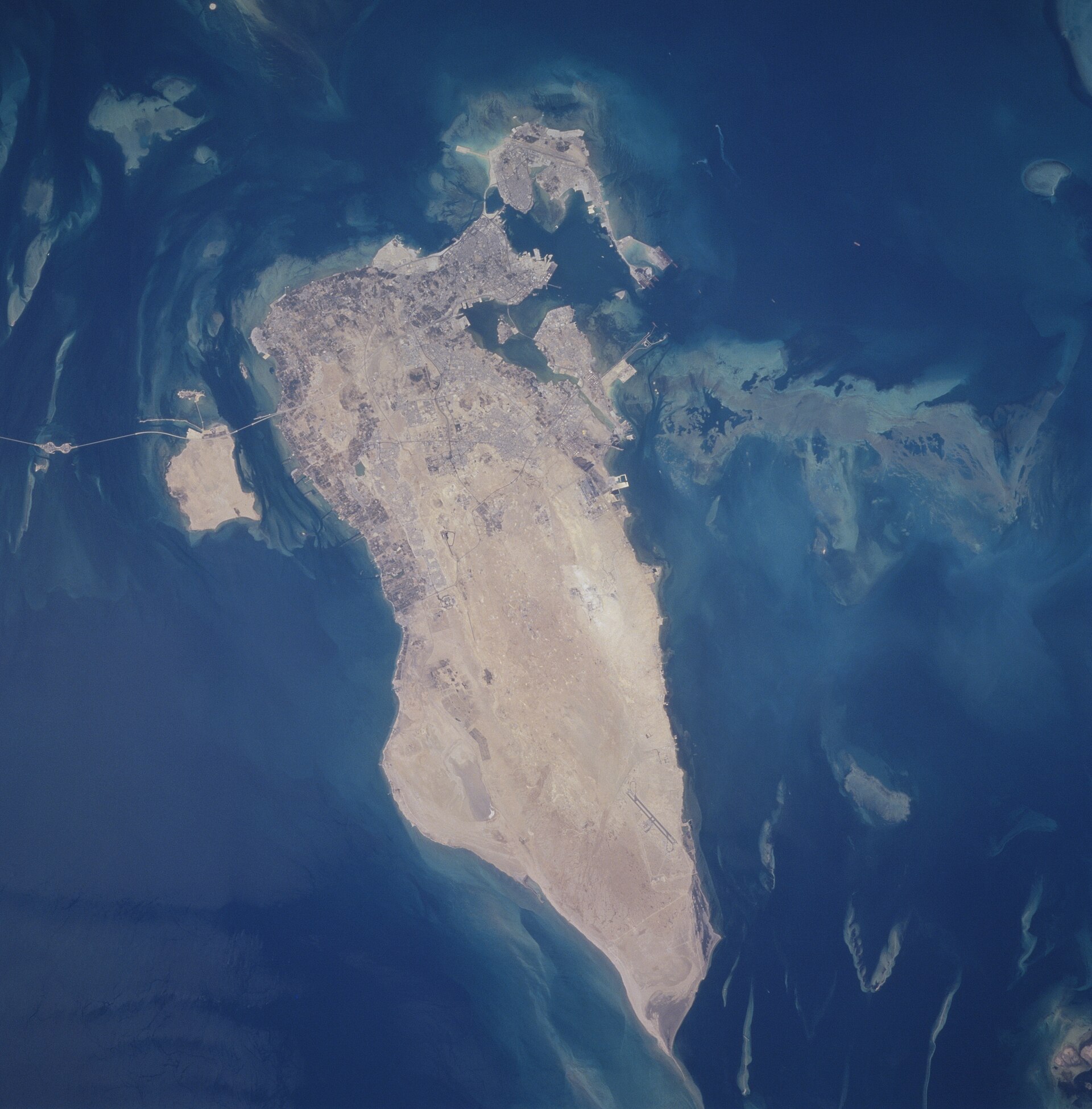
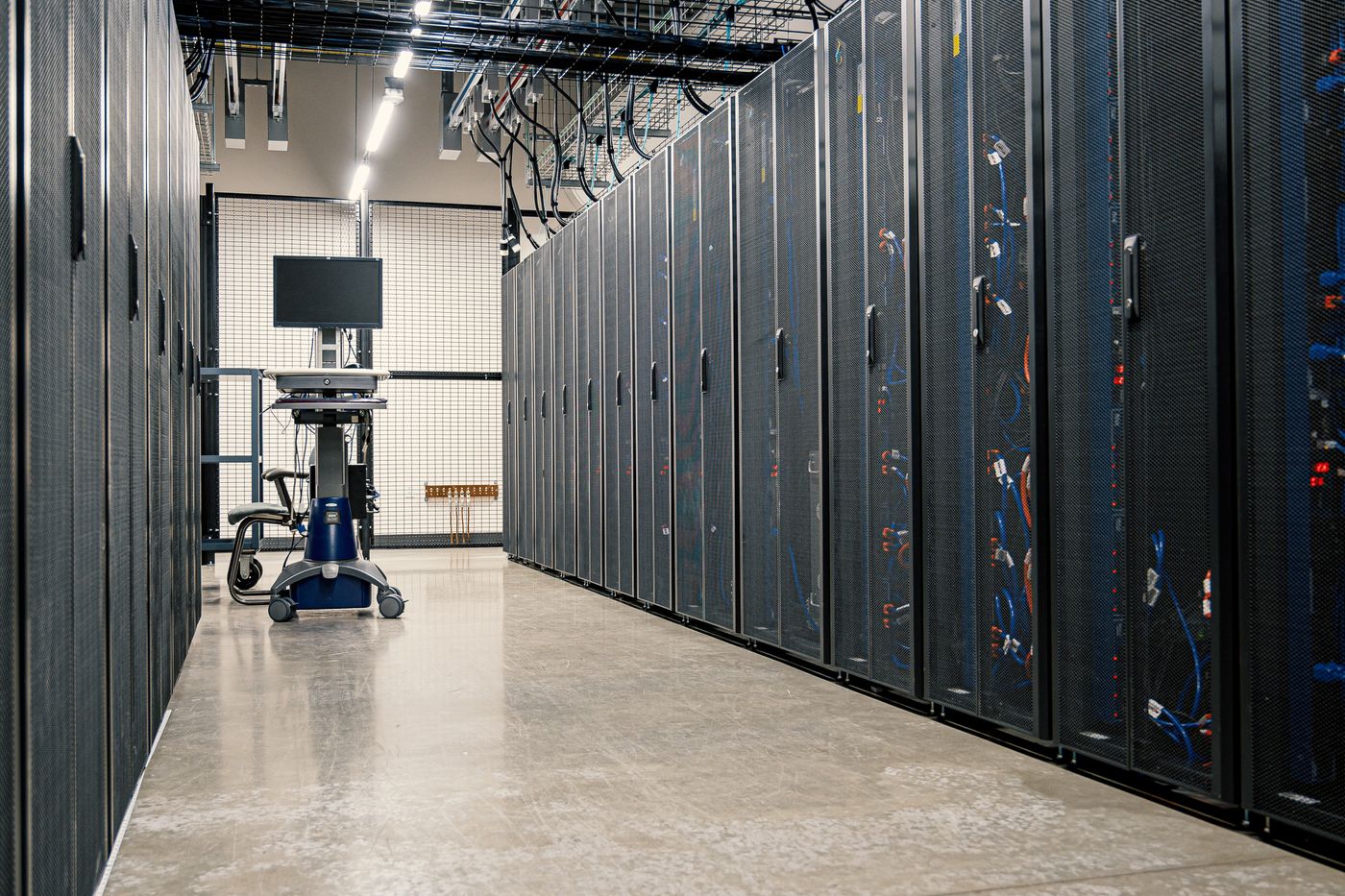
The strike, designated Wave 24 of Operation Nasr 2, also hit US air defense radar installations at Muharraq and Riffa. But the data center claim carried a different weight. Amazon Web Services’ ME-South-1, launched in 2019 as the company’s first Middle East cloud region, hosted government services, banking platforms, and enterprise workloads for clients across the Gulf — including Saudi Arabia. The in-kingdom alternative, AWS me-central-2 in Riyadh, only reached general availability in January 2026. Migration was six months old when the war began.
The IRGC did not frame the strike as an attack on Saudi Arabia. It framed it as retaliation for the US strike on Iran’s under-construction Darkhovin nuclear power plant in Khuzestan province the previous day — civilian for civilian, infrastructure for infrastructure. That framing left Riyadh trapped. The kingdom cannot invoke collective defense for a facility it does not own, in a country it does not govern, operated by a company whose targeting the IRGC announced four months ago.
What the IRGC struck was not just a building in Bahrain. It was the premise that Saudi Arabia could digitize its way to economic resilience while someone else fought its war.
Table of Contents
- What Did the IRGC Strike on July 21?
- Why Was Saudi Arabia’s Cloud in Bahrain?
- How Many Times Has This Target Been Hit?
- What Made a Cloud Provider a Military Target?
- Where Does Saudi Arabia’s Cloud Migration Stand?
- What Does Saudi Arabia’s AI Pillar Look Like Now?
- Can Riyadh Defend a Data Center It Does Not Own?
- What Does the Escalation Sequence Tell Riyadh?
- Frequently Asked Questions
What Did the IRGC Strike on July 21?
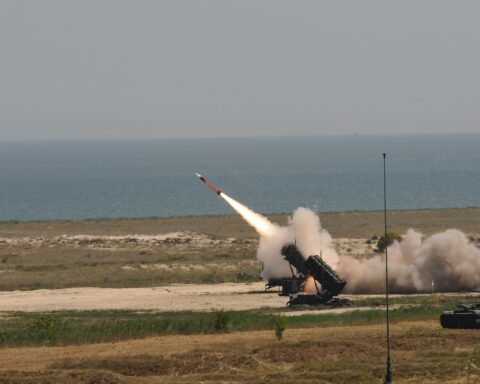
The IRGC’s public relations department stated that “IRGC’s aerospace warriors, in the continuation of the 24th wave of Operation Nasr 2, in response to the aggression and assault yesterday by the ‘child-killing’ U.S. army on the civilian facilities under construction in Dar Khuyin, attacked the central data infrastructure of the American company Amazon in Bahrain with several cruise missiles and destroyed it.” The claim was carried by IRNA, Tasnim, and Iran International on July 21, 2026.
The strike package extended beyond the data center. The IRGC also claimed hits on US air defense systems and radar installations in the Bahraini areas of Muharraq and Riffa. The combination matters: Muharraq and Riffa host components of the air defense architecture that would nominally protect Bahrain’s commercial and military infrastructure. By striking the radars and the data center in the same wave, the IRGC demonstrated it could suppress the defense and reach the target in a single operation.
The Middle East briefing 3,000+ readers start their day with.
One email. Every weekday morning. Free.
The stated justification was explicitly retaliatory. The US struck Iran’s Darkhovin nuclear power plant site in Khuzestan province on July 20 — a facility the International Atomic Energy Agency confirmed was in preliminary stages of construction and contained no nuclear material at the time of its most recent inspection. Iran’s deputy foreign minister Kazem Gharibabadi called it “a dangerous assault on Iran’s peaceful infrastructure.” The IRGC response followed within twenty-four hours: civilian infrastructure for civilian infrastructure.
As of publication, neither Amazon Web Services, the Bahraini government, nor the US Department of Defense had confirmed or denied the IRGC’s claim. No independent damage assessment was publicly available.
Why Was Saudi Arabia’s Cloud in Bahrain?
AWS ME-South-1 launched in Bahrain in 2019 as Amazon’s first cloud computing region in the Middle East. It comprised three Availability Zones — me-south-1a, me-south-1b, and me-south-1c — supporting 146 AWS services. For the next seven years, until January 2026, it was the only AWS cloud region within latency range for Gulf-based enterprise and government workloads.
Saudi Arabia’s digital transformation accelerated through that entire period. The kingdom’s government ICT spending reached SAR 31.9 billion, approximately $8.5 billion, in 2025, with cloud computing expenditure rising 42 percent year-on-year according to the Digital Government Authority. Platforms such as Absher, which provides approximately 280 electronic government services for Saudi residents including passport renewals, residency permits, and appointment scheduling, expanded their capabilities on cloud-dependent architectures. Saudi Aramco, STC, the Saudi Electricity Company, and multiple government ministries adopted AWS services during the period when Bahrain was the only regional option.
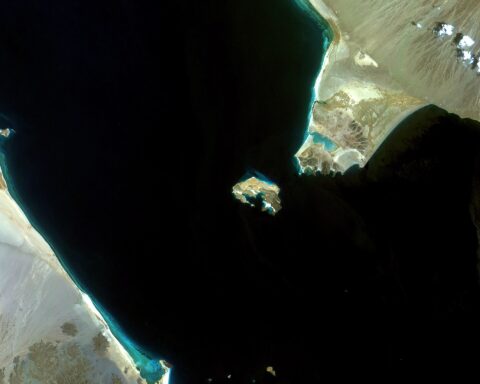
The kingdom recognized the dependency. AWS announced plans for an in-kingdom region, me-central-2, in the Riyadh metropolitan area in March 2024, backed by a $5.3 billion investment commitment. But general availability did not arrive until January 2026. That left a seven-year window — 2019 to January 2026 — during which Saudi Arabia systematically moved its digital government offshore, to a facility sitting approximately 25 kilometres across the causeway from Dammam.
The offshore model was not unusual by commercial standards. AWS designs its global infrastructure around regional hubs, and Bahrain served the entire Gulf. But the model carried a geopolitical assumption: that the 25-kilometre stretch of water between Bahrain and Saudi Arabia’s Eastern Province would not become a conflict zone. That assumption expired in March 2026.
How Many Times Has This Target Been Hit?
The July 21 strike was at minimum the third distinct IRGC kinetic action against AWS cloud infrastructure in the Gulf this year. The targeting of ME-South-1 is not an improvisation. It is a campaign.
| Date | Target | Method | Confirmed Impact |
|---|---|---|---|
| March 1, 2026 | Two AWS facilities in UAE; one in Bahrain (ME-South-1) | Drones | Structural damage, fires, power outages, water damage from fire suppression; multiple Availability Zones offline for 24+ hours |
| Late March 2026 | AWS Bahrain (ME-South-1) | Drones | Power outages, water shortages; AWS advised all Middle East customers to migrate to alternate regions |
| July 21, 2026 | AWS Bahrain (ME-South-1) | Cruise missiles (IRGC claim) | IRGC claims facility “completely destroyed”; no independent confirmation at time of publication |
The March 1 strike was, by any available account, the first kinetic attack on hyperscale cloud infrastructure. Amazon confirmed that drone activity caused disruption to ME-South-1, with structural damage taking multiple Availability Zones offline for more than 24 hours. The outage rippled through Gulf financial services: ADCB, Emirates NBD, and other banking providers experienced disruptions. Consumer applications including Careem, Alaan, and Hubpay went down. Enterprise platforms such as Snowflake reported degraded service across the region.

Less than four weeks later, Bahrain’s ME-South-1 was hit again. AWS reported further power outages and water shortages and issued an advisory unprecedented for a hyperscaler: it told all customers with Middle East workloads to consider migrating to alternate regions. The advisory confirmed what the first strike had demonstrated — the operational environment in the Gulf had become incompatible with the uptime guarantees on which cloud computing depends.
The July 21 escalation from drones to cruise missiles represents a step-change in lethality. Drones damaged and disrupted. If the IRGC’s claim is accurate, cruise missiles destroyed. The distinction matters for every Saudi entity that still had workloads running in Bahrain and assumed the facility could be repaired between strikes.
What Made a Cloud Provider a Military Target?
The IRGC pre-designated the answer. On March 31, 2026, the Guard formally declared 18 US technology companies “legitimate military targets.” The list included Amazon alongside Microsoft, Nvidia, Google, Apple, Meta, Oracle, Boeing, Cisco, IBM, HP, Tesla, Intel, Dell, JPMorgan Chase, General Electric, Palantir, and G42, the Abu Dhabi-based AI firm. The declaration was reported by CNBC, Time, and The Next Web.
The stated rationale was dual-use classification. Iranian state media asserted that AWS and other hyperscalers hosted artificial intelligence systems used by the US military for intelligence analysis and war simulations, making their physical infrastructure legitimate military assets. Palantir’s chief technology officer had described the Iran conflict as the first major war driven by AI, a statement Bloomberg reported in late March 2026. The IRGC seized on the admission.
An IRGC-affiliated Telegram channel stated the operating principle: “From now on, for every assassination an American company will be destroyed.” The IRGC also issued an evacuation warning, urging anyone within one kilometre of these companies’ Middle East facilities to leave immediately. The March 31 declaration converted a threat into a targeting doctrine — one with a named list, a stated legal rationale, and a demonstrated willingness to execute.
The doctrine followed a broader escalation in civilian infrastructure targeting. Foreign Policy reported on July 17, 2026, that the US and Iran had widened attacks to target civilian infrastructure. The IRGC’s earlier waves had already struck Kuwait’s desalination capacity and Kuwait’s electrical grid. The progression from power and water to telecommunications and radar to commercial cloud infrastructure was sequential, public, and deliberate.
Sam Winter-Levy, a fellow at the Carnegie Endowment for International Peace, wrote in 2026 that “physical attacks on data centers are only going to become more common moving forward as AI becomes more and more significant.” The July 21 strike suggests the prediction arrived ahead of schedule.
Where Does Saudi Arabia’s Cloud Migration Stand?
AWS me-central-2, the in-kingdom Saudi region based in the Riyadh metropolitan area, reached general availability in January 2026. It mirrors the core architecture of ME-South-1 and is backed by Amazon’s investment commitment announced in March 2024. It was, on paper, the answer to the offshore dependency problem.
In practice, the answer arrived six months before the war and seven years after the dependency began. Cloud migrations at national scale are measured in years, not months. Enterprises must re-architect applications, re-certify compliance frameworks, retrain operations teams, and renegotiate contracts. Government services must meet the National Cybersecurity Authority’s Cloud Cybersecurity Controls (CCC-2: 2024), which mandate documented and tested business continuity plans with defined recovery-point and recovery-time objectives.
The NCA framework sets a high standard for data residency. Cloud service providers operating in Saudi Arabia must keep sensitive data within approved jurisdictions, with controls to prevent unauthorized cross-border transfers. The framework requires data residency to be technically enforced, not merely contracted. But the framework was designed to regulate peacetime data governance. It did not anticipate — and does not address — the scenario in which the approved offshore jurisdiction is struck by cruise missiles three times in five months.
The migration gap is structural. Legacy workloads built on ME-South-1 between 2019 and 2025 were optimized for Bahrain’s specific Availability Zones, network peering arrangements, and compliance certifications. Migrating them to me-central-2 is not a configuration change. It is, for many organizations, a rebuild.
The timeline pressure is compounded by cost. Saudi Arabia’s current fiscal position — a record SAR 125.7 billion deficit in Q1 2026, with Goldman Sachs projecting $80 to $90 billion for the full year — does not favor the kind of unplanned capital expenditure that emergency migration demands. The organizations least able to absorb that cost are the government ministries and quasi-governmental entities whose workloads were the deepest into ME-South-1 and are the slowest to migrate.
What Does Saudi Arabia’s AI Pillar Look Like Now?
Saudi Arabia declared 2026 the “Year of AI.” According to the Saudi Authority for Data and Artificial Intelligence, the kingdom’s AI spending was projected to surpass $800 million in 2025 and reach $2.1 billion by 2027, growing at approximately 40 percent annually. In a single year, Saudi Arabia attracted $9.1 billion in AI-related investment. The numbers were designed to signal that the kingdom’s post-oil economic identity would be built on computation as much as crude.
The institutional anchor is HUMAIN, the national AI infrastructure entity chaired by Crown Prince Mohammed bin Salman. HUMAIN began construction of data centers across two major campuses in Riyadh and Dammam, each comprising 11 facilities at 200 megawatts capacity, targeting 1.9 gigawatts of AI compute by 2030 and scaling to 6.6 gigawatts by 2034. The facilities are designed to run on US-sourced semiconductors, including 18,000 of Nvidia’s Blackwell chips received as of late 2025. Initial data centers were expected to launch in the second quarter of 2026.

At NEOM, the strategic pivot from urban megaproject to digital infrastructure hub produced a $5 billion deal with DataVolt for what is described as the world’s first fully sustainable data center campus at Oxagon, with a first-phase capacity of 1.5 gigawatts and operations from 2028. Microsoft committed $2.1 billion to build an Azure cloud region in the kingdom, with data centers expected to become operational in 2026.
| Project | Location | Capacity | Investment | Status (July 2026) |
|---|---|---|---|---|
| AWS me-central-2 | Riyadh metro | 3 AZs (capacity not publicly disclosed) | $5.3 billion | GA since January 2026; migration ongoing |
| HUMAIN Campus | Riyadh and Dammam | 22 facilities at 200 MW; 1.9 GW target by 2030 | Not disclosed | Under construction; Q2 2026 initial launch expected |
| DataVolt / NEOM | Oxagon | 1.5 GW first phase | $5 billion | Under development; operations from 2028 |
| Microsoft Azure | Saudi Arabia | Not disclosed | $2.1 billion | Construction complete; operational date unconfirmed |
None of this capacity was operational at scale when ME-South-1 was struck on July 21. HUMAIN’s Riyadh and Dammam campuses are under construction. DataVolt’s Oxagon facility is two years from first-phase delivery. Microsoft’s Saudi region has not been publicly confirmed as live. The AI pillar that replaced LIV Golf and The Line in PIF’s strategic narrative depends on physical infrastructure that does not yet exist at the capacity required to absorb the workloads that just lost their offshore home.
The IRGC’s March 31 doctrine does not distinguish between American cloud providers in Bahrain and American cloud providers in Saudi Arabia. If AWS is a legitimate military target in Bahrain, the logic extends to AWS me-central-2 in Riyadh. It extends to Microsoft Azure in the kingdom. It extends, by the IRGC’s own stated reasoning, to any facility hosting AI workloads that could support US military intelligence.
Can Riyadh Defend a Data Center It Does Not Own?
The political architecture of the July 21 strike was as precise as the military one. The IRGC targeted “the American company Amazon in Bahrain.” Not a Saudi facility. Not Saudi infrastructure. An American company, on Bahraini soil. Riyadh occupies no part of that sentence.
This is the sovereign dependency trap. Saudi Arabia cannot invoke collective defense under the Sakhir Declaration or any bilateral framework for an asset it does not own, in a country it does not administer, against a threat it has publicly declined to confront. Bahrain’s defense is nominally Bahrain’s responsibility, backstopped by US forces — the same US forces whose radar installations at Muharraq and Riffa were struck in the same Wave 24 package. If the radars protecting the data center are themselves targets, the protection model has a circularity problem.
The kingdom’s air defense posture compounds the issue. PAC-3 interceptor stocks have been severely depleted since the war began — 400 of an original 2,800 remaining as of early July. The M-SAM-II system has demonstrated altitude gaps against certain Iranian ballistic missile terminal phases. Prince Sultan Air Base, the primary US air installation in the kingdom, has been operationally constrained since Saudi Arabia’s Operation Project Freedom grounded 43 coalition warplanes in May.
The kingdom cannot reliably defend its own airspace. It certainly cannot extend that defense to a commercial facility in a neighboring country.
The NCA’s Cloud Cybersecurity Controls require cloud tenants to maintain business continuity plans with defined RPO and RTO targets. They do not require — and cannot provide — physical infrastructure redundancy across sovereign borders during active hostilities. The gap between regulatory compliance and kinetic reality is the gap the IRGC exploited. Saudi organizations that met every NCA requirement on paper discovered on July 21 that compliance does not stop a cruise missile.
What Does the Escalation Sequence Tell Riyadh?
The IRGC’s civilian infrastructure campaign has followed a legible escalation ladder. Earlier waves struck power and water infrastructure, including Kuwait’s desalination plants and electrical grid. Mid-conflict waves targeted telecommunications systems and air defense radars. Wave 24 added commercial cloud infrastructure to the target set — and struck the radars meant to protect it in the same operation.
The progression reveals a doctrinal logic. Each phase targets a higher-value, more technologically complex layer of civilian infrastructure. Power and water are essential but replaceable on relatively short timelines. Telecommunications require longer recovery windows. Cloud infrastructure — the substrate on which digital government, financial services, and AI development depend — is the most complex to restore and the most consequential to lose.
The IRGC stated its escalation principle explicitly: “If you hit electricity, we hit electricity.” Applied to the Darkhovin strike, the equation became: if the US hits Iran’s civilian nuclear infrastructure, the IRGC hits America’s civilian digital infrastructure. The symmetry is deliberate and expandable. If the US or its allies strike Iranian civilian infrastructure again, the IRGC has pre-authorized itself to hit the next layer of American commercial presence in the Gulf.
For Saudi Arabia, the next layer is already under construction. HUMAIN’s Dammam campus — eleven data centers at 200 megawatts each — sits on the Gulf coast, within range of every weapon system the IRGC has used against Bahrain. The DataVolt facility at NEOM’s Oxagon sits on the Red Sea coast, within Houthi range. The $46 billion in foreign direct investment the kingdom is trying to attract into its digital economy requires investors to believe those facilities will not be struck. After July 21, that belief requires evidence Riyadh has not yet produced.
The IRGC did not confine its doctrine to Bahrain. Its March 31 designation named Amazon as a legitimate military target regardless of where it operates. The kingdom’s answer to that question — what protects a Saudi-hosted American cloud region from the logic the IRGC applied in Bahrain — is the answer Vision 2030’s digital pillar cannot currently provide.
Frequently Asked Questions
What is AWS ME-South-1?
AWS ME-South-1 is Amazon Web Services’ cloud computing region in Bahrain, launched in 2019 as the company’s first Middle East region. It comprises three Availability Zones and supports 146 AWS services. It served as the primary cloud region for Gulf-based government and enterprise workloads until Saudi Arabia’s in-kingdom region, me-central-2, reached general availability in January 2026.
Does Saudi Arabia have its own cloud region?
Yes. AWS me-central-2, based in the Riyadh metropolitan area, reached general availability in January 2026 with a $5.3 billion Amazon investment. Microsoft is also building an Azure region in the kingdom, backed by a $2.1 billion commitment. However, migration of legacy workloads from ME-South-1 was still ongoing when the July 21 strike occurred, and the NCA’s compliance requirements mean that migration cannot be completed by configuration change alone.
Why did the IRGC declare US tech companies military targets?
On March 31, 2026, the IRGC formally designated 18 US technology companies — including Amazon, Microsoft, Nvidia, and Apple — as “legitimate military targets.” The stated rationale was that these companies’ cloud and AI platforms host systems used by the US military for intelligence analysis and operational planning, making their physical infrastructure dual-use military assets under the IRGC’s interpretation of international humanitarian law.
How many times has AWS infrastructure in the Gulf been attacked?
At minimum three times in 2026. Drone strikes hit two UAE and one Bahrain AWS facility on March 1, taking multiple Availability Zones offline for more than 24 hours and disrupting ADCB, Emirates NBD, Careem, and Snowflake among others. A second drone strike hit the Bahrain facility in late March, prompting an advisory to migrate workloads out of the region — unprecedented language for a hyperscaler. The IRGC claimed a cruise missile strike destroyed the Bahrain facility on July 21, though this has not been independently confirmed. The Wave 24 cruise missile strike and what it means for Saudi Arabia’s cloud dependency is covered in full.
What is HUMAIN and why does it matter?
HUMAIN is Saudi Arabia’s national AI infrastructure entity, chaired by Crown Prince Mohammed bin Salman. It is constructing data center campuses in Riyadh and Dammam totaling 22 facilities at 200 megawatts each, targeting 1.9 gigawatts of AI compute capacity by 2030. HUMAIN represents the physical foundation of Saudi Arabia’s post-oil economic strategy, but the IRGC’s targeting doctrine — which designates US tech companies as military targets regardless of location — places any facility running American AI workloads inside the declared threat envelope.