RIYADH — Donald Trump said on October 10 that the United States “may” join Saudi strikes against the Houthis, then reversed within hours, calling Saudi Arabia “capable of defending itself” and its forces “good fighters.” The walk-back was not a shift in policy — Trump had announced on Truth Social two days earlier that the US would not attack Iran before the November 3 midterms — but it publicly designated Riyadh as a self-sufficient ally at the moment a Houthi missile had just killed twelve people at its main airport, including one American. Secretary of State Marco Rubio confirmed the American death, called the attack “reprehensible,” and offered no operational commitment. The 25th World Petroleum Congress opened the next morning at Riyadh Front with 100 energy ministers and 500 CEOs in a city whose airport was under its second suspension in four days, whose air defence interceptors are 86 percent depleted, and whose principal security partner had just told the world it could manage alone.
Table of Contents
- What Did Trump Say About Joining Saudi Arabia’s War?
- The Constraint Trump Set on October 8
- What Happened at King Khalid Airport on October 10?
- Rubio Condemned the Strike and Offered Nothing Operational
- What Does ‘Capable of Defending Itself’ Mean for Saudi Air Defence?
- The Congress Opens Under Missile Threat
- How Did Washington’s Position Form Before the Walk-Back?
- What Did Five Hundred CEOs Witness on Opening Day?
- Frequently Asked Questions
What Did Trump Say About Joining Saudi Arabia’s War?
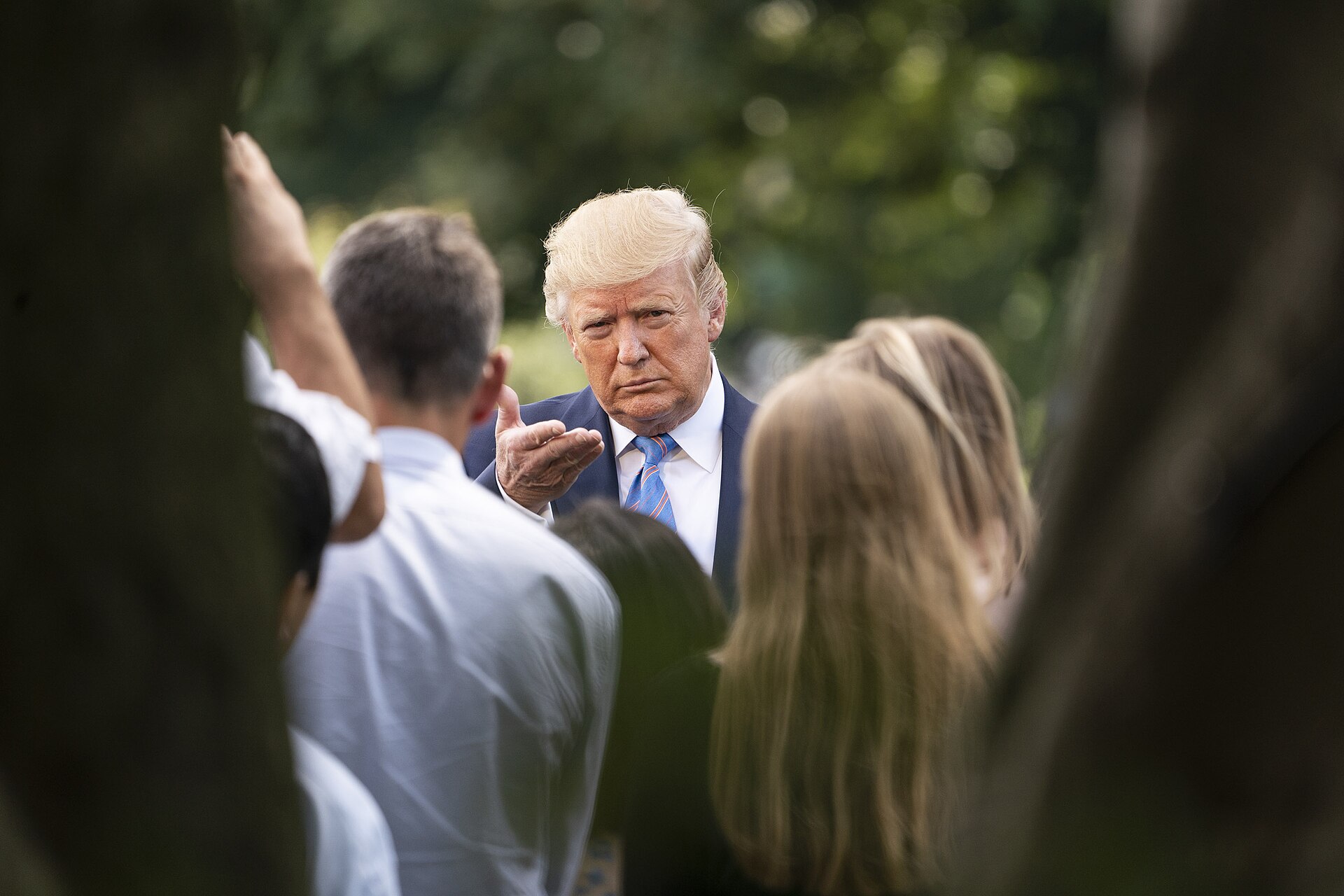
On October 10, 2026, President Trump told reporters at the White House that the US was considering joining Saudi strikes against the Houthis. “We may. We’re going to look at it,” he said. Within hours, he reversed, calling Saudi Arabia “capable of defending itself” and its forces “good fighters” — language of praise, not partnership.
The initial statement came in the informal register Trump uses at helicopter departures — shouted over Marine One’s engines on the South Lawn, addressed to the press pool, committing to nothing specific. “We just found out about the recent attack, so we’ll make a decision. We move very quickly.” The syntax carried no operational weight. It was a holding statement dressed in the vocabulary of momentum.
The reversal, hours later, came in the register Trump uses when a position is settled. “Capable of defending itself” is declarative. “Good fighters” is conclusive. The first comment invited follow-up questions. The second foreclosed them. The distance between the two was measured in hours, but one was improvised and the other was policy — and the policy had been established in writing on Truth Social two days prior.
In the context of the 2026 war, “self-sufficient” is not a neutral adjective. It is the designation Washington has used when it intends to withhold rather than provide. In May 2026, the same classification — Saudi Arabia as a self-sufficient actor — was the mechanism the US used to justify withholding PAC-3 and THAAD interceptor shipments during the Operation Project Freedom airspace dispute.
The Constraint Trump Set on October 8
Two days before the “we may” comment, Trump had posted on Truth Social a statement that made the comment structurally impossible to fulfil. “We will not be attacking Iran at any time prior to the Midterm Elections,” he wrote on October 8. The midterm elections are November 3 — twenty-six days from the date of the post.
The Middle East briefing 3,000+ readers start their day with.
One email. Every weekday morning. Free.
The statement appeared on the same day the first Houthi missile struck KKIA, destroying a Saudia Airbus A320 at its gate and killing three — including the aircraft’s captain, Hamoud Ali Alkalthami. Trump’s response to that strike was not a military commitment but a domestic political boundary: no action before voters went to the polls. The timeline was visible to every actor in the theatre — Riyadh, Tehran, Ansar Allah, CENTCOM — and it told each of them the same thing. Washington had given itself a calendar, and the calendar ran through November.
Secretary Rubio had reinforced the framing five days before the second strike. On October 5, he told reporters that Saudi Arabia “has the right to defend itself” from the Houthis. “Has the right” is permission language. It is the formulation of a patron granting latitude, not an ally assembling forces. Rubio placed Saudi Arabia’s defence inside Saudi Arabia’s responsibility with three words that were grammatically supportive and operationally empty.
Bloomberg reported on October 6 — four days before Trump’s reversal — that the administration was “reluctant to get more involved” in Saudi Arabia’s Houthi offensive and had “tried to restrain Riyadh from sparking a major new conflict in Yemen.” The US, the report stated, “largely sees the current fighting as a Saudi problem.” Saudi Arabia had “cast about unsuccessfully for more countries to join its military operation.” When Trump said “we may” on October 10, these positions — the Truth Social post, Rubio’s statement, and the Bloomberg reporting — were already part of the public record. The walk-back restored the sequence the “we may” had briefly interrupted.
What Happened at King Khalid Airport on October 10?
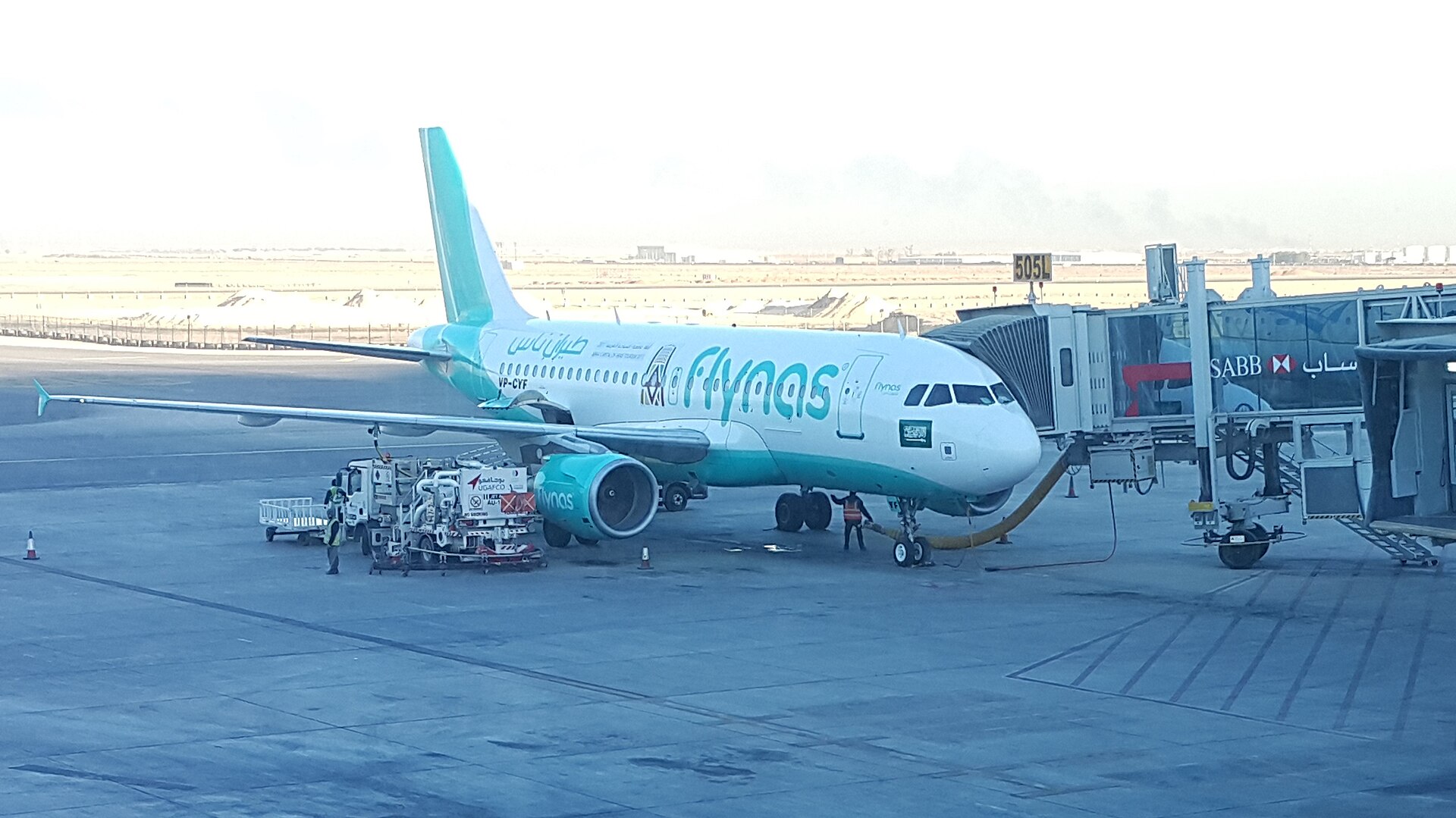
A Houthi ballistic missile struck the complex housing Terminals 3 and 4 at King Khalid International Airport in Riyadh on October 10, 2026. Saudi Arabia’s General Authority of Civil Aviation confirmed twelve killed — including one American citizen — and 309 injured. It was the deadliest single attack on Saudi soil in more than a decade and the second full suspension of KKIA operations in four days.
Houthi military spokesman Yahya Saree claimed the attack within hours: “Our armed forces targeted King Khalid Airport in Riyadh at midday with a ballistic missile that hit its target.” The Houthis framed the strike as retaliation for Saudi military operations in Yemen, directly contesting the coalition’s characterisation of the attack as an act of terrorism. Saree named the airport and described the strike as precision targeting — the language of a military operation, not of an indiscriminate act.
Coalition spokesperson Turki al-Maliki called it a “fully-fledged war crime” and vowed to “respond decisively to this terrorist attack in accordance with the Customary International Humanitarian Law.” His statement named no timeline, no operational specifics, and no coordinating partner. The absence of any reference to US military support — even in the formulaic language of coalition communiqués — was consistent with what Trump had said hours earlier on the South Lawn.
The October 8 strike had destroyed a parked A320 and killed three. The October 10 strike killed twelve and injured 309. Between the two attacks, KKIA — Saudi Arabia’s busiest airport and the primary international gateway to Riyadh — processed zero commercial departures for the better part of three days. More than ten airlines suspended Saudi routes after October 8: British Airways through November 3, Air France through October 24, Lufthansa through October 16. Approximately half of KKIA’s scheduled departures were cancelled in the days surrounding the strikes.
The European Union Aviation Safety Agency broadened its Saudi airspace conflict zone advisory on October 9 — the day between the two strikes — to encompass Riyadh, Dammam, and Madinah. It was the first time EASA formally flagged the Riyadh Flight Information Region. The three airports under advisory handle the vast majority of Saudi Arabia’s international commercial traffic. By the time the second missile struck on October 10, the regulatory architecture over Saudi airspace had already shifted.
Rubio Condemned the Strike and Offered Nothing Operational
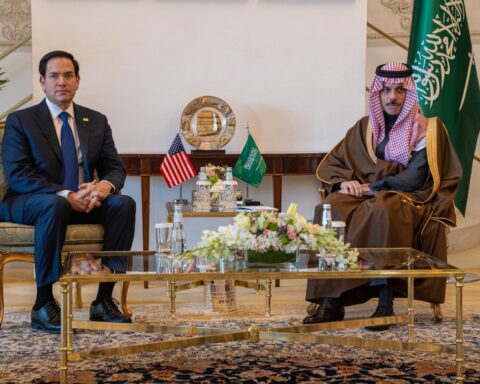
Rubio confirmed on October 11 that an American citizen was among the twelve dead at KKIA. He called the attacks “reprehensible” and “shameful” and urged the Houthis to stop immediately. He expressed solidarity with the Saudi government and people.
The statement contained no military content. Rubio did not announce a change in US operational posture, reference interceptor deliveries, mention THAAD deployment, or address the kill-chain integration that would allow Saudi forces to engage incoming missiles earlier in their trajectory. An American citizen died in a ballistic missile strike on a civilian airport terminal, and the secretary of state’s response occupied the space between the word “shameful” and silence.
Trump’s broader reversal on Iran in the preceding days had already compressed the available space for a US military response. Rubio’s October 11 statement confirmed that the death of an American did not expand it. His October 5 formulation — “has the right to defend itself” — survived the killing of a US citizen without revision. The language that had been set before the crisis continued after it.
The historical contrast is instructive. The 1996 Khobar Towers bombing in Dhahran killed nineteen American servicemen and produced a years-long US investigation, diplomatic confrontation with Iran, and sustained military presence adjustments. The 2019 Abqaiq-Khurais drone and cruise-missile attack — which struck Saudi oil infrastructure but killed no one — prompted Trump to declare the US “locked and loaded” before choosing not to strike. In October 2026, a missile killed twelve people including an American at the kingdom’s largest airport, and the secretary of state’s public response was a condemnation that named no action, referenced no capability, and proposed no timeline.
What Does ‘Capable of Defending Itself’ Mean for Saudi Air Defence?
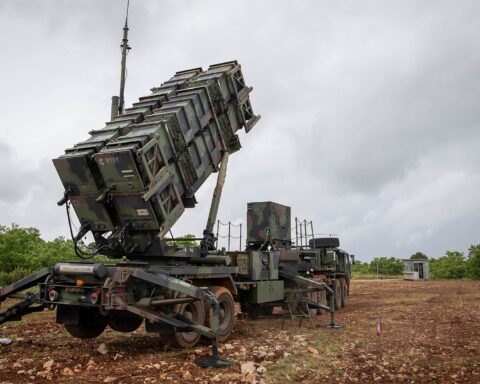
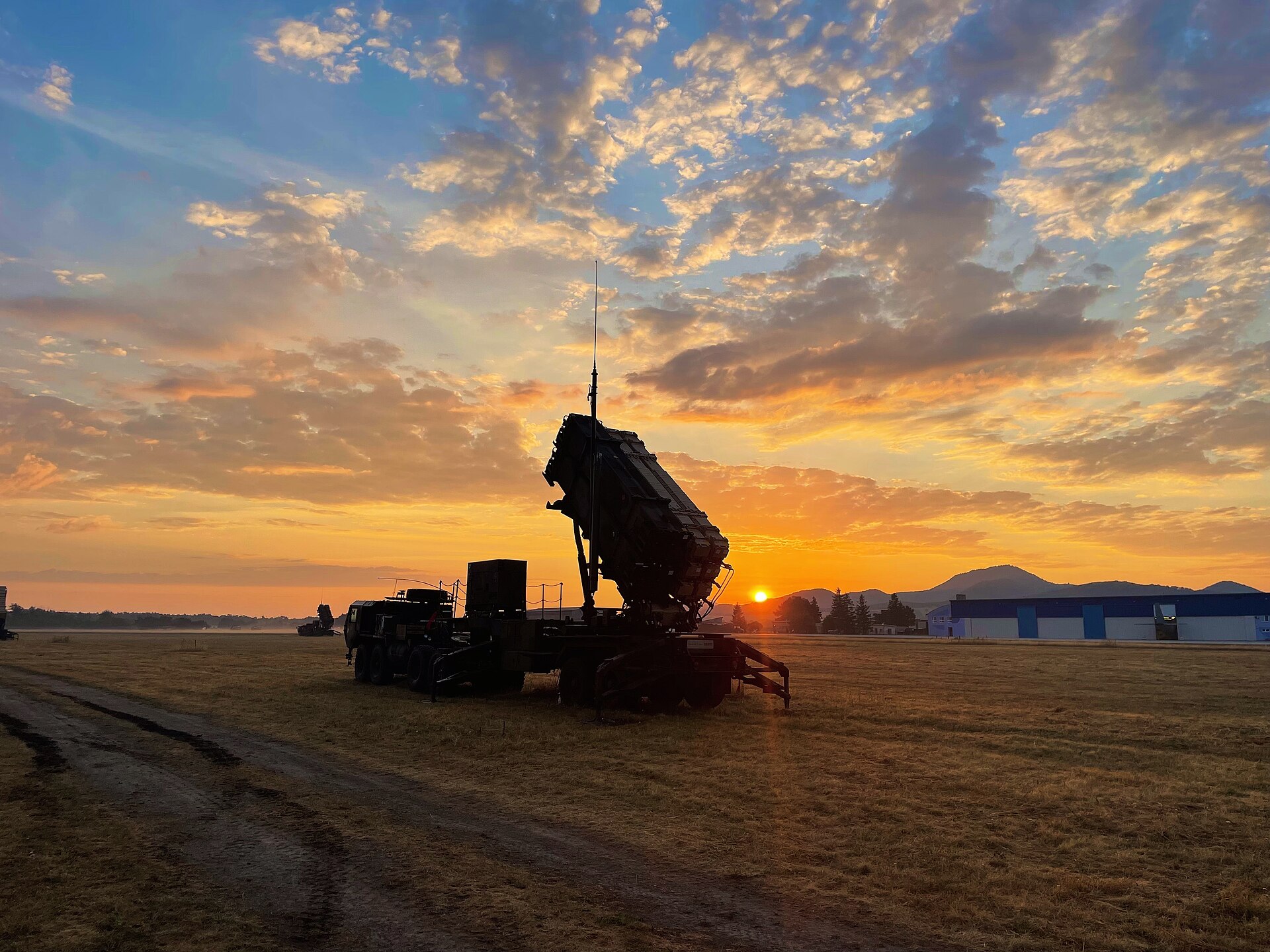
Saudi Arabia’s PAC-3 MSE interceptor inventory stands at approximately 400 rounds, down from a pre-war stockpile of 2,800 — an 86 percent depletion rate. No replacement rounds can arrive before mid-2027 under existing production schedules. The $9.4 billion DSCA-approved sale of 730 rounds, authorised in January 2026, cannot be fulfilled within the current conflict window.
Trump described Saudi Arabia as capable of defending itself on the same day its air defences failed to prevent the deadliest Houthi strike of the war. The PAC-3 MSE is the primary terminal-phase interceptor in the Saudi inventory — the system designed to stop exactly the kind of ballistic missile that struck KKIA. At 400 rounds and a sustained Houthi launch tempo, each interception reduces the remaining stockpile against a threat that shows no sign of diminishing. The mathematics run in one direction.
Lockheed Martin’s facility in Camden, Arkansas — the sole global production line for PAC-3 MSE — cannot accelerate delivery to match the consumption rate. The January 2026 Defence Security Cooperation Agency notification approved the sale of 730 rounds in principle. Production schedules push first deliveries to mid-2027 at the earliest, with full completion not expected until 2028. Saudi Arabia holds the contract. It does not hold the rounds. The distinction is the distance between an approved purchase and a functioning air defence.
The phrase “capable of defending itself” has a specific institutional history in this war. In May 2026, the US withheld scheduled PAC-3 and THAAD shipments to coerce Saudi Arabia into opening its airspace for Operation Project Freedom. The justification for the withholding was that Saudi Arabia could manage its own air defence needs — a “self-sufficient actor” designation that permitted Washington to delay deliveries without formally breaching the DSCA framework. Twenty-nine days into the current escalation cycle, the same language carries the same operational consequence: Riyadh is told it is strong enough not to need what Washington has chosen not to send.
The Congress Opens Under Missile Threat
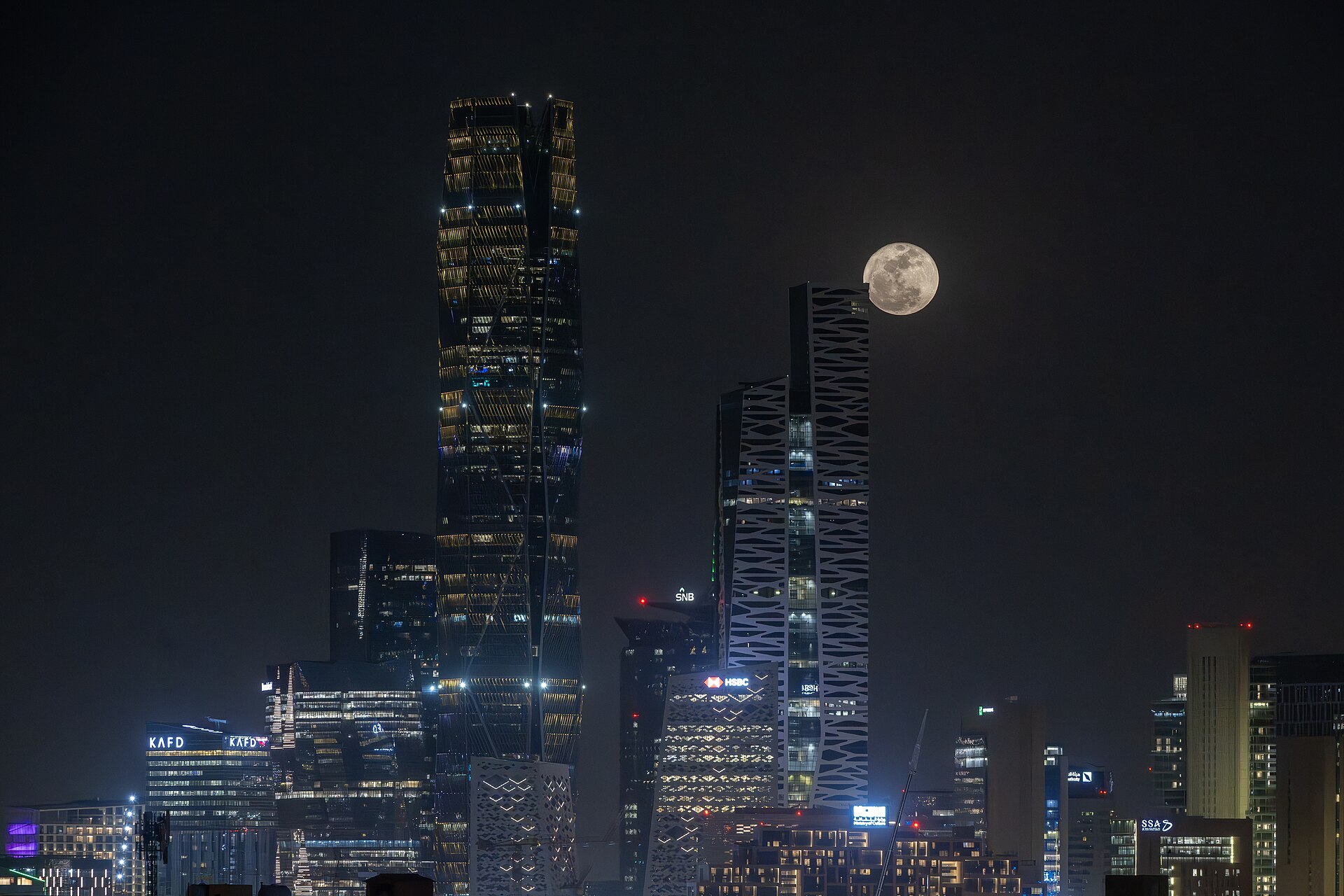
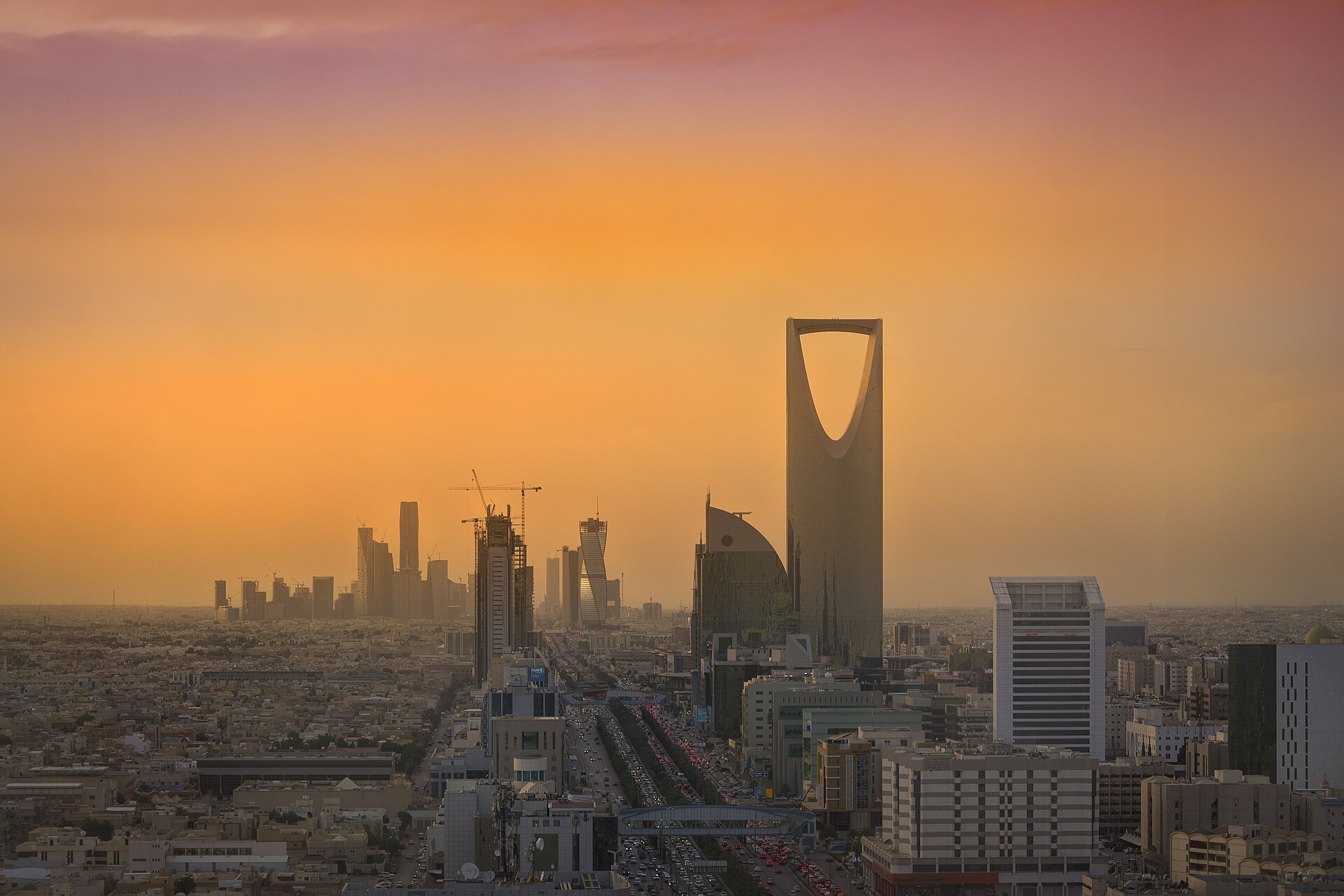
The 25th World Petroleum Congress opened on October 11 at Riyadh Front Exhibition and Conference Centre. Saudi Arabia had spent three years securing the hosting rights — the first time in the WPC’s ninety-year history that the congress came to the kingdom. The official programme listed 800 speakers, 1,000 companies, and projected attendance of 25,000 delegates from more than 70 countries.
The airport thirty kilometres to the north had been struck the previous day. Twelve people were dead. The terminal complex was damaged. Operations remained suspended. The congress Riyadh had built as a showcase for its energy ambitions opened in a city that could not guarantee its delegates a functioning airport for the return flight.
WPC organisers directed incoming delegates to King Fahd International Airport in Dammam — approximately four hours by road from central Riyadh. Some executives and delegation heads had already relocated to Doha and Abu Dhabi after the October 8 strike, attending sessions by video link from hotel conference rooms in cities where the airports were operational and the airspace was uncontested.
Italian Energy Minister Gilberto Pichetto Fratin declined to fly to Riyadh for the International Energy Forum Ministerial on the WPC sidelines. He participated by video link — the first ministerial-level absence from the event. The decision was a personal risk calculation by a G7 cabinet minister, and it was made publicly enough that every delegation and corporate board in the programme would have registered it.
The Houthis had warned airlines to avoid Saudi airspace entirely, framing civil aviation disruption as a deliberate instrument of their campaign — not collateral damage but stated policy. The congress was open. The European regulatory framework above it said the airspace was contested.
How Did Washington’s Position Form Before the Walk-Back?
Bloomberg reported on October 6 that the Trump administration was “reluctant to get more involved” in Saudi Arabia’s Houthi offensive, had “tried to restrain Riyadh from sparking a major new conflict in Yemen,” and “largely sees the current fighting as a Saudi problem.” Trump separately cited Operation Rough Rider — the failed 2025 US airstrike campaign against the Houthis — as evidence that direct American military action did not work.
The October 10 walk-back did not create a new position. It restored one that had been forming since at least early October and arguably since Rough Rider ended without degrading Houthi launch capability in any sustained way. Trump referenced that failure explicitly: the previous US campaign “failed to achieve its objectives,” and the current administration was not inclined to repeat it. The lesson Trump drew was not that the campaign needed more force but that the campaign was not America’s to fight.
Washington’s position was assistance without participation. The support architecture — intelligence sharing, targeting data, aerial refuelling — remained intact. The offensive commitment remained absent. October 10 confirmed that the “we may” remark had not altered the underlying structure; it had only briefly obscured it.
Iran’s foreign ministry used the moment to address Trump’s rhetoric directly. Spokesman Esmaeil Baghaei responded to Trump’s claim that “nobody knows who the hell is running” Iran: “Washington knows very well who its counterpart is in Iran and how the country’s decision-making system works.” The statement was a correction aimed at Trump’s public posture, but it carried a secondary function — a reminder that the Houthi campaign operates within a decision-making architecture Iran considers fully legible to the US government, whatever Trump’s public performance of confusion might suggest.
The walk-back sat inside a fixed calendar. Trump’s October 8 Truth Social post established the outer boundary for any US military action against Iran: nothing before November 3. The midterms were twenty-three days from the WPC opening. Between October 11 and the first Tuesday in November, the Houthis and their sponsors in Tehran operated inside a publicly announced window of American inaction — a window the president of the United States had posted on social media for anyone to read.
What Did Five Hundred CEOs Witness on Opening Day?
The 500 CEOs at WPC 2026 are not a diplomatic audience — they price risk and allocate capital for a living. On October 11 they watched Trump offer and withdraw military support within hours, heard Rubio condemn a strike that killed an American without announcing any operational response, and saw EASA flag the airspace above the congress venue where they sat.
The WPC was designed as a platform for Saudi Arabia’s energy transition ambitions — downstream investment, petrochemical capacity expansion, the hydrogen corridor, the broader Vision 2030 programme. Aramco’s pricing and fiscal pressures were already under scrutiny from the audience in the room. What October 11 added was a physical context for evaluating those decisions. The executives who heard Trump’s reversal are the same executives who approve capital allocation for Saudi downstream projects, who set political-risk premiums on Gulf investments, and who structure insurance for facilities inside the Houthi targeting envelope.
Trump’s walk-back reached this audience not as a diplomatic cable or a classified briefing but as a wire story on every phone in the congress hall. The implication was precise and quantifiable: when a missile killed twelve people including a US citizen at Saudi Arabia’s main airport, the American president’s stated willingness to intervene lasted hours before reverting to a baseline established days earlier. For an audience that builds thirty-year project models and prices country risk into joint-venture agreements, that data point did not expire with the news cycle.
The Italian energy minister’s decision to attend by video — a minor diplomatic detail in isolation — was a visible signal in this room. If a G7 cabinet minister calculated that the flight to Riyadh was not worth the risk for the kingdom’s most prominent energy event, the corporate boards making parallel calculations about site visits, facility inspections, and executive travel would have arrived at similar arithmetic. Risk calculations at the cabinet level are read closely by the private sector, particularly when they involve physical safety rather than regulatory or commercial risk.
The actual attendance figure for opening day has not been confirmed. What is confirmed is the arrival route many delegates took: a four-hour highway drive from Dammam, through a country whose airspace the European aviation regulator had formally flagged, to a congress about the future of energy in a city that could not guarantee a departing flight.
Frequently Asked Questions
Did any other countries offer military support to Saudi Arabia after the October 10 KKIA strike?
No country announced new offensive military support following the October 10 attack. France maintained its existing deployment at Yanbu under a bilateral defence arrangement concluded in September 2026 but did not expand that mandate to cover air defence over Riyadh or KKIA. The United Kingdom, which suspended British Airways flights through November 3, offered diplomatic solidarity but no operational military commitment. Saudi Arabia’s coalition response, articulated by Turki al-Maliki, referenced international humanitarian law without naming any multinational military coordination mechanism or allied contribution. Bloomberg had reported on October 6 that Saudi Arabia had “cast about unsuccessfully for more countries to join its military operation” — a search that the October 10 strike did not appear to resolve.
Has the United States intervened directly against the Houthis before?
Yes, on multiple occasions. Operation Rough Rider, a sustained US airstrike campaign against the Houthis conducted in 2025, was the most recent direct American military action against the group. Trump cited its failure — it did not degrade Houthi launch capability in a lasting way — in his October 2026 reasoning for restraint. Before Rough Rider, the US conducted airstrikes against Houthi positions in Yemen in January and February 2024 in response to Houthi attacks on Red Sea commercial shipping. Earlier, from 2015 to 2022, the US provided intelligence, logistics, aerial refuelling, and precision-guided munitions to the Saudi-led coalition fighting the Houthis in the Yemen civil war, though it did not conduct direct strikes during that period. Congress restricted some forms of support in 2018 and 2019, and the Biden administration formally ended offensive support in February 2021.
What alternate routes were available for WPC delegates after KKIA closed?
The primary alternate route was through King Fahd International Airport in Dammam, roughly 400 kilometres east of Riyadh — a drive of approximately four hours by highway. WPC organisers communicated this route to delegates after the October 8 closure. Some delegations explored private aviation charters to Al-Ahsa Domestic Airport and Prince Nayef bin Abdulaziz Regional Airport in Qassim, though neither facility has full international customs and immigration processing for most nationalities. A number of executives and senior delegates — particularly from European and Asian energy companies — relocated to Doha and Abu Dhabi entirely and participated via video link, bypassing Saudi airspace. The Riyadh-Dammam highway, an established multi-lane expressway, became the de facto arrival corridor for most delegates who chose to attend in person on October 11.
What is the current global production capacity for PAC-3 MSE interceptors?
Lockheed Martin operates the sole PAC-3 MSE production line at its facility in Camden, Arkansas. Annual production capacity is not publicly disclosed, but defence industry analysts and congressional budget documents indicate output of approximately 300 to 400 rounds per year across all customers. Saudi Arabia’s January 2026 DSCA-approved order of 730 rounds competes in the production queue with US Army restocking requirements (the US expended interceptors during the April 2024 Iran-Israel exchange and the 2025 Rough Rider support operations), orders from other Gulf Cooperation Council states, NATO allied procurement, and growing Pacific-theatre demand from Japan, South Korea, and Taiwan. Even under a prioritised production schedule, Saudi deliveries cannot begin before mid-2027, with full fulfilment projected for late 2028.
Did the Houthis claim responsibility for both KKIA strikes?
Houthi military spokesman Yahya Saree publicly claimed both the October 8 and October 10 attacks on KKIA. The October 8 claim described the strike as targeting airport operational infrastructure; the October 10 claim specifically named Terminals 3 and 4 as the target and described the weapon as a ballistic missile launched at midday. In both cases, Saree framed the attacks as retaliation for Saudi military operations in Yemen, directly contesting the coalition’s “war crime” designation. The Houthis also issued broader warnings to commercial airlines to avoid Saudi airspace, positioning sustained civil aviation disruption as an intentional and ongoing element of their strategy. Ansar Allah’s media wing subsequently published coordinates it claimed were within KKIA’s terminal perimeter, a step beyond the standard post-strike claim and consistent with the Houthis’ broader effort to demonstrate precision-strike capability against Saudi civilian infrastructure.