Correction, October 12, 2026: An earlier version of this article said King Salman condemned the targeting of Mecca in a UN General Assembly speech; he did so while chairing the Saudi cabinet on September 22. It said Riyadh had launched a 100,000-troop ground offensive into Yemen; the October 4 offensive was launched by Yemen’s government forces with Saudi air support, and no troop figure was reported. It cited a 29-day war timeline and a 60-day deployment schedule that no source reported, misdated President Trump’s October 8 statement on Iran to October 9, and described a “43-warplane grounding” and months of withheld Patriot supplies for which we have no source. It also attributed a denial to the Houthi leader that came from a Houthi politburo member, gave a translation of Prince Khalid bin Salman’s statement that differed from published versions, and included unsourced details on the Pakistani delegation, the new secretary-general’s career, Global Firepower figures, and quotations attributed to Carnegie, IISS, CFR, Middle East Eye and Iranian officials. These have been corrected or removed.
RIYADH — Saudi Arabia activated the Makkah Joint Defence Agreement on October 5, agreeing to deploy Pakistani and Turkish forces to the kingdom — on the same day US Secretary of State Marco Rubio reaffirmed Washington’s own defence commitment to the kingdom. The simultaneous moves confirmed what months of war had made plain: Riyadh now operates two parallel security architectures because it does not trust either guarantor enough to rely on one alone.
An emergency meeting of the Strategic Political and Defence Committee in Riyadh authorised “rapid deployment” of agreed forces, appointed a Pakistani retired lieutenant general as the alliance’s first secretary-general, and condemned an alleged Houthi attempt to target Makkah and Madinah. The pact was signed fifty-nine days earlier without a standing force, a permanent command, or a trigger mechanism. Those gaps are now being addressed — while the Houthis continue to strike Saudi cities and the Americans continue to affirm commitments they have not yet been required to enforce.
The House of Saud Daily Briefing
Saudi Arabia's news in 3 minutes, every morning. Free. See today's issue
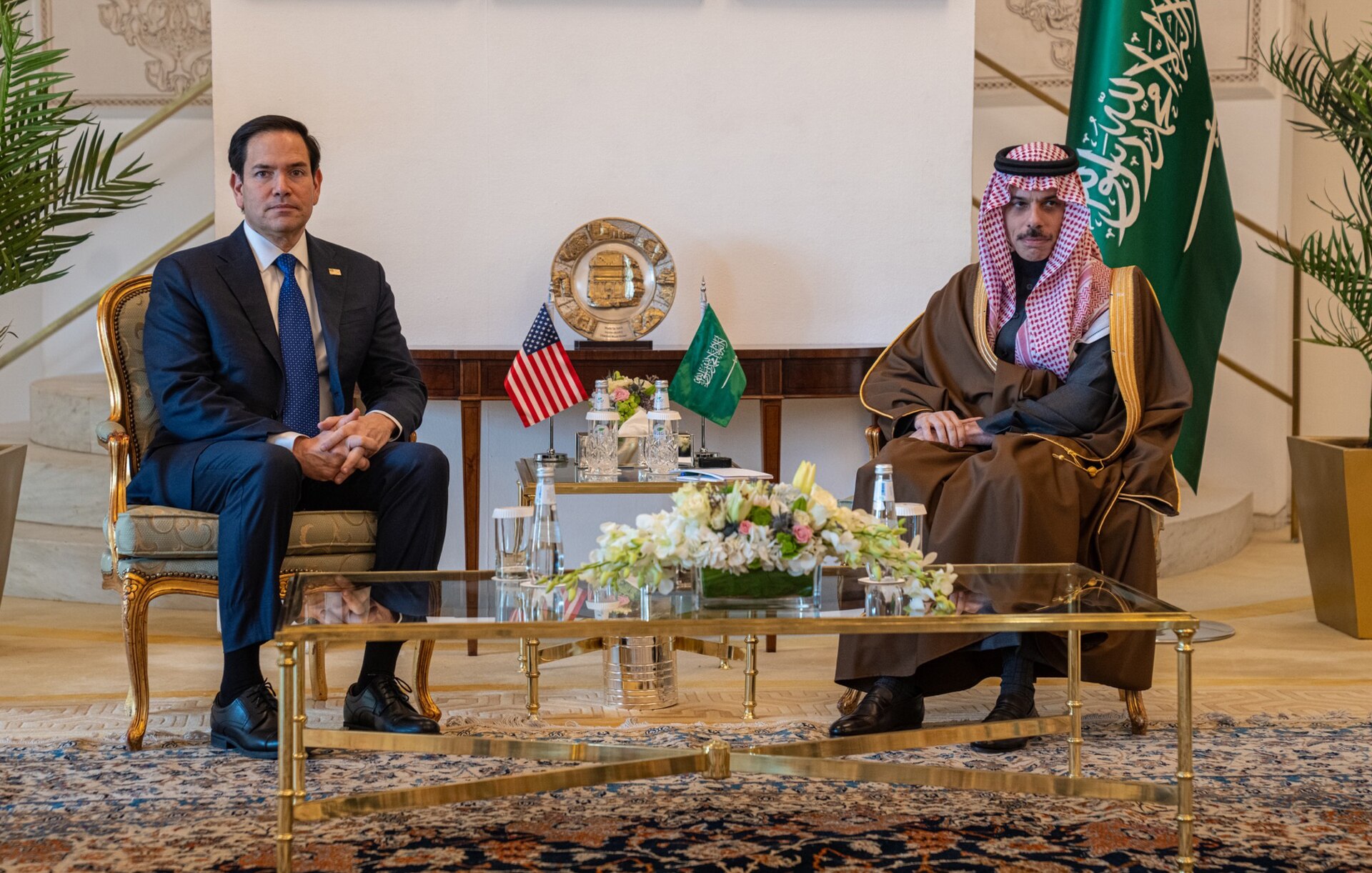
Table of Contents
- What Did the SPDC Emergency Meeting Decide?
- Two Shields on the Same Day
- How Large Is the Force Pakistan Has Pre-Positioned?
- A Secretary-General Before a Secretariat
- Why Did Riyadh Invoke the Pact Two Months After Signing?
- What Has Washington Offered — and What Has It Withheld?
- Tehran’s Calculated Silence
- The Pact the Region Has Seen Before
- Frequently Asked Questions
What Did the SPDC Emergency Meeting Decide?
The emergency SPDC meeting on October 5 in Riyadh produced three outcomes: immediate practical implementation of collective defence commitments with rapid deployment of agreed forces and capabilities to Saudi Arabia; the appointment of retired Pakistan Army Lieutenant General Numan Mahmud as the alliance’s first secretary-general for a three-year term; and formal condemnation of an alleged Houthi attempt to target the holy cities of Makkah and Madinah.
Pakistan’s Defence Minister Khawaja Asif attended the meeting in Riyadh. The joint statement, shared by Pakistan’s Foreign Office, committed the three states to “take the necessary measures to provide the agreed military forces and capabilities and ensure their rapid deployment in the Kingdom, in accordance with the approved arrangements and the national legislation of the parties.”
The caveat — “national legislation of the parties” — is not ornamental. Turkish overseas military deployments require parliamentary authorisation under Article 92 of the Turkish constitution, and Turkey’s parliament has yet to ratify the pact. The language preserved each government’s domestic exit while projecting alliance unity to an audience of Houthi commanders and their Iranian sponsors.
“The Emergency Meeting of the Strategic Political and Defense Committee under the Makkah Alliance for Defense reaffirmed the solidarity and unity of our countries in confronting the heinous attacks against the Kingdom and the holy sites. The committee agreed to activate collective deterrence measures within the framework of the Alliance in response to the attacks and all those responsible for them.”
Pakistan’s defence minister subsequently said that Turkish and Pakistani forces were “playing a supporting role,” with Pakistan involved in reconnaissance while Saudi forces handle combat operations. The distinction matters: the alliance activated collective defence commitments without collective combat. When the Makkah pact was signed in August, the commitment to collective defence had no joint command beneath it. Now it has a secretary-general — but the forces’ role remains described as “supporting.”
Two Shields on the Same Day
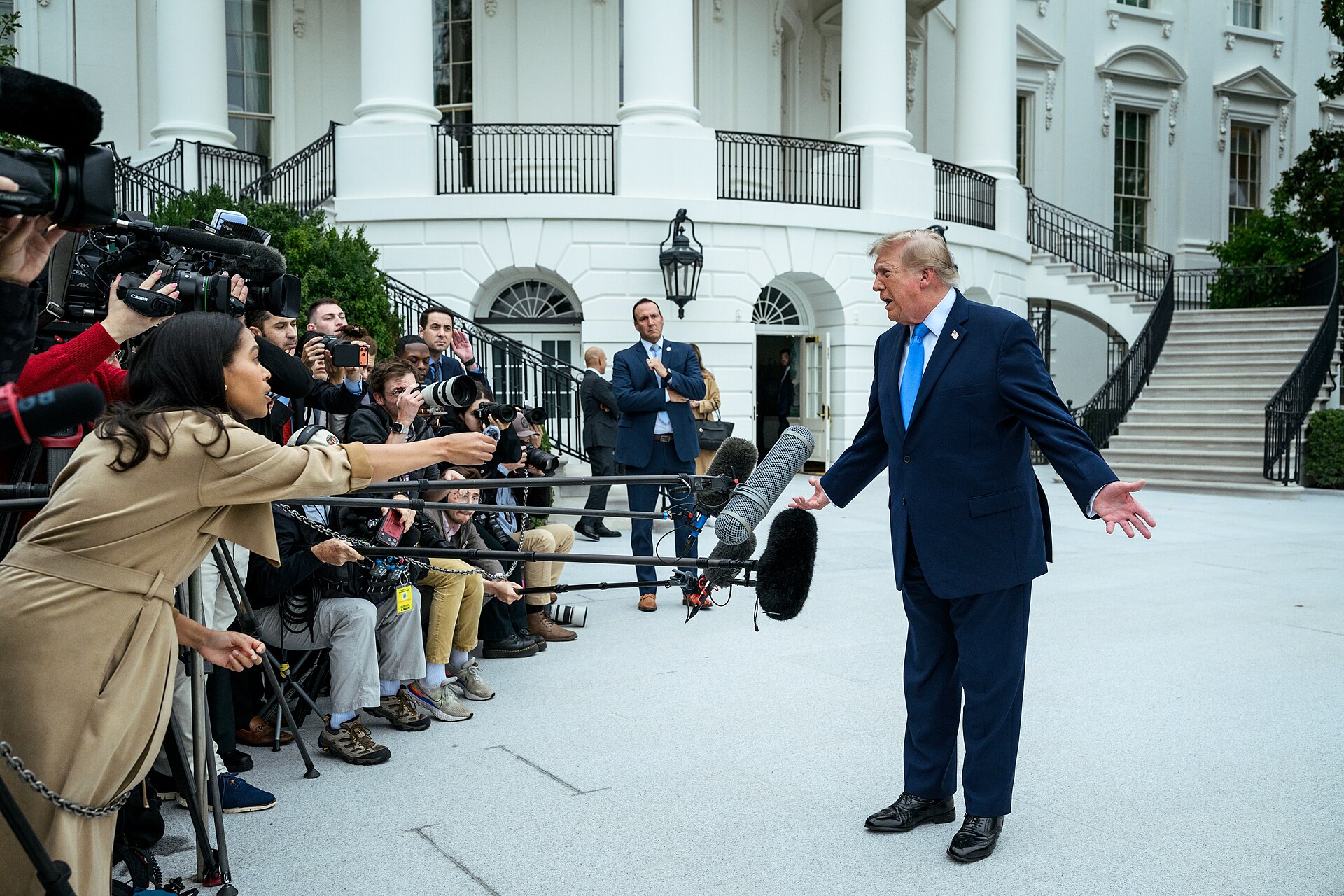
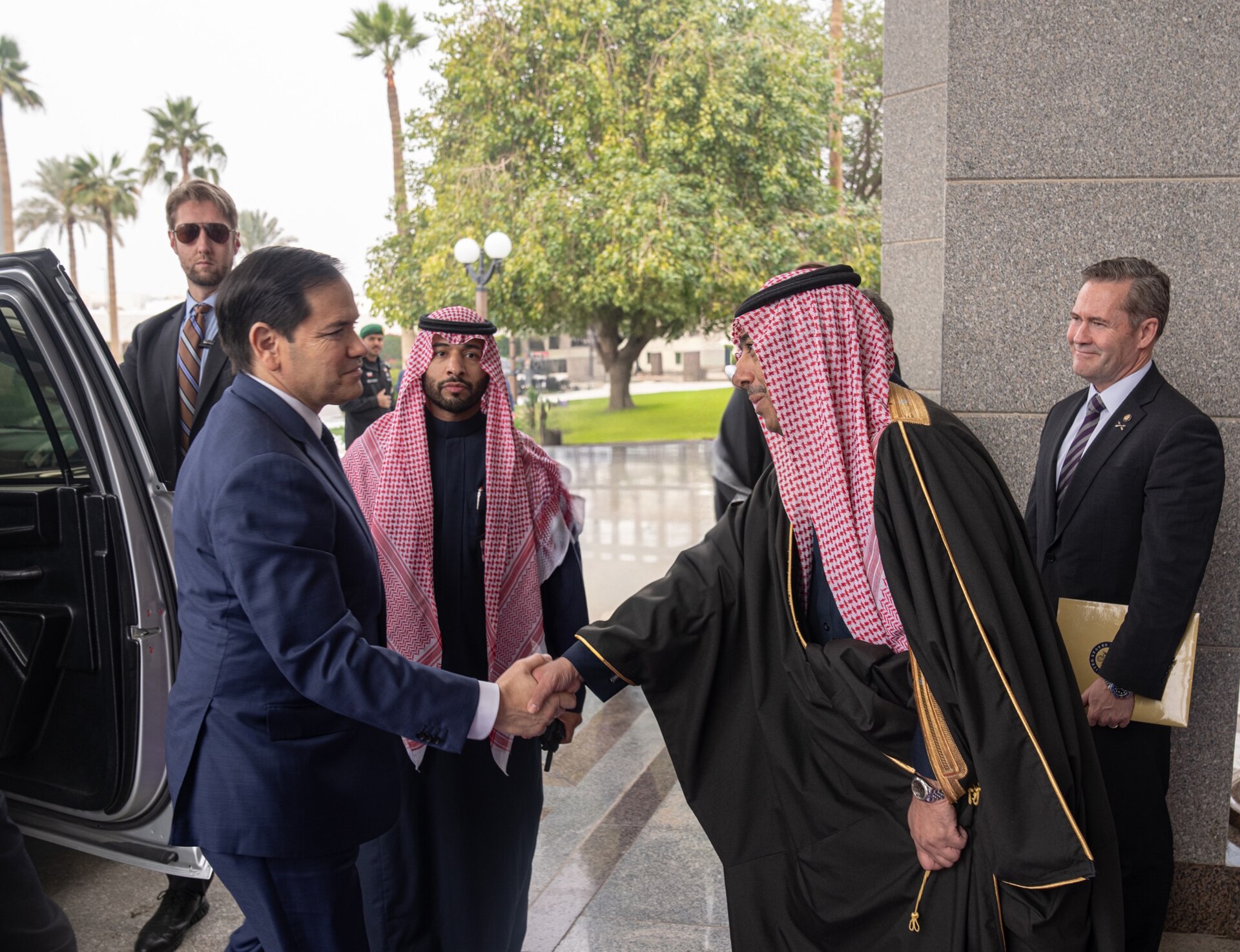
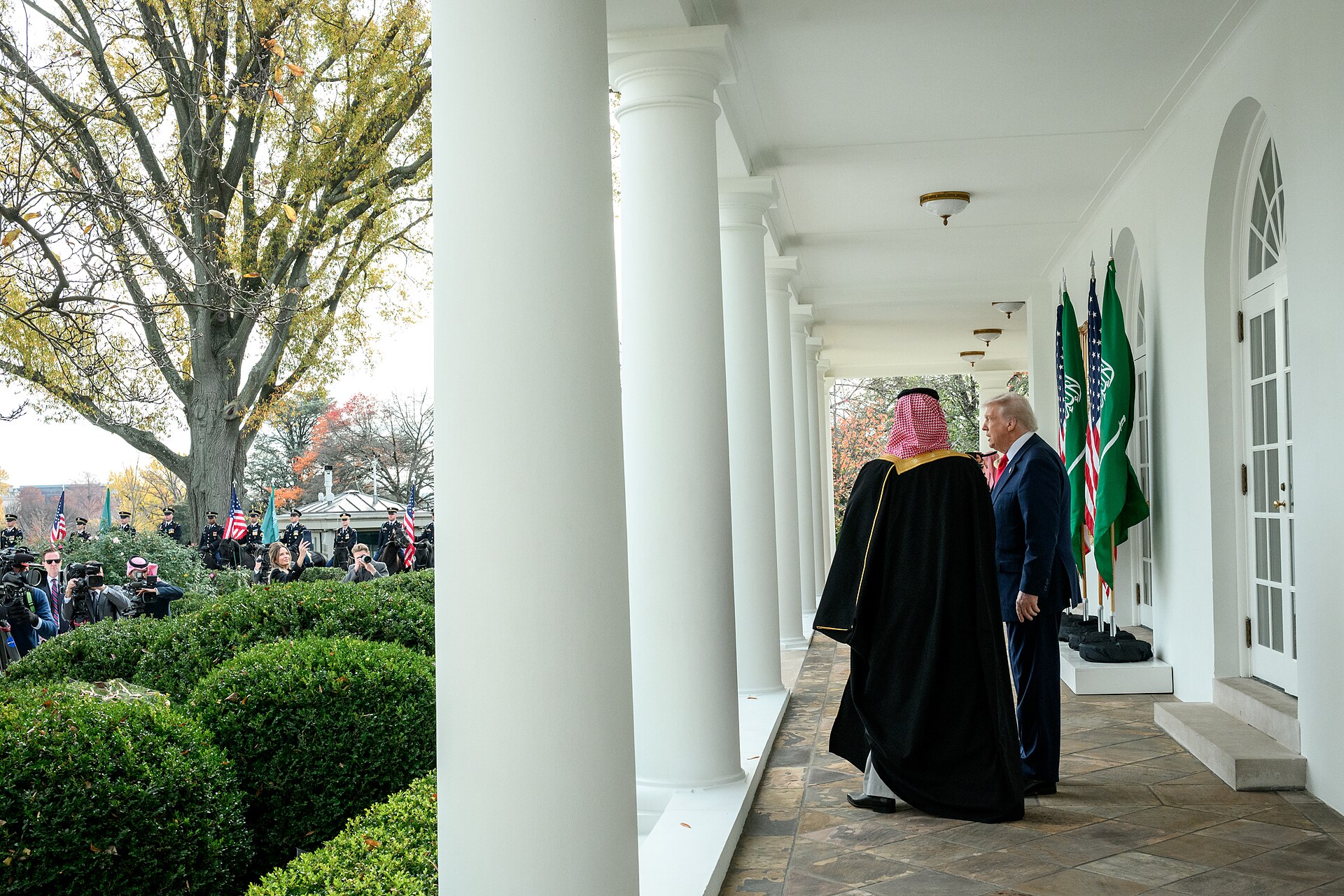
The sequencing of October 5 carries the argument that no single statement can. On the same day, before departing for Iceland and mainland Europe, Rubio told reporters: “The United States has a defense and security agreement with Saudi Arabia, and we intend to live by it.” He said the Saudis “have a right to defend themselves” against Houthi attacks.
The statement was a reaffirmation, not an escalation. Rubio did not commit to direct US participation in airstrikes or ground operations supporting the Saudi campaign. He did not elaborate, according to The National. The words carried the authority of the office and the caution of a secretary of state choosing his commitments carefully before a European tour.
In Riyadh, on the same day, Khalid bin Salman and the allied delegations activated a parallel framework. The two announcements — Rubio’s verbal reaffirmation and the SPDC’s operational activation — were made on the same day. If Rubio’s words were read in Riyadh as an ironclad operational commitment, there would have been less reason to invoke the Makkah pact that same day.
The pattern behind October 5 is legible in a series of prior episodes. The Abqaiq-Khurais attack of September 2019 — the most consequential strike on oil infrastructure in decades — drew no US military response. In May 2026, Riyadh warned it could deny US aircraft its airspace during Operation Project Freedom, and Trump paused the operation, without any formal change to the bilateral defence relationship. In September, Trump declined two appeals from the crown prince for US strikes on the Houthis. Each time, the question of who closes the kill chain when the Americans say no went unanswered.
The gap between Rubio’s assurance and Trump’s “I can’t tell you that” is the subject of What Defends Saudi Arabia When Washington Cannot Answer.
Each episode followed the same grammar: Washington affirmed the relationship and restricted the substance. Riyadh cited the defence agreement, and each time the agreement proved incapable of compelling the response its language promised.
How Large Is the Force Pakistan Has Pre-Positioned?
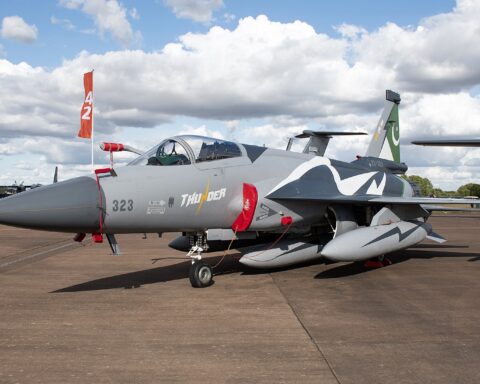
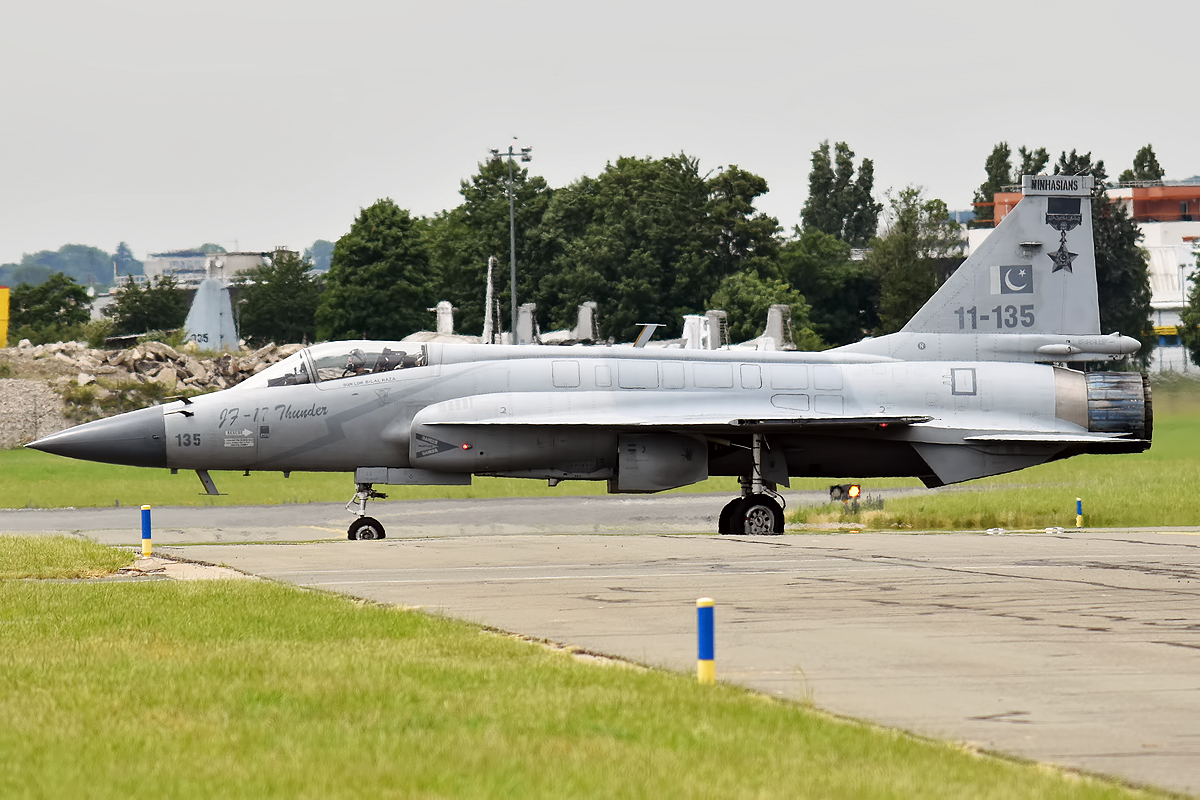
Pakistan deployed about 8,000 troops, around 16 mostly JF-17 aircraft, two drone squadrons and an HQ-9 air defence system to Saudi Arabia from April 2026, financed by Riyadh, according to Reuters. The October 5 activation did not say whether these forces would be placed under alliance command.
| Asset | Quantity | Deployment | Status (Oct 6) |
|---|---|---|---|
| Ground troops | ~8,000 | April 2026 | In-country |
| JF-17 Thunder fighters | ~16 | April 2026 | Deployed |
| Drone squadrons | 2 | April 2026 | Pakistan says its role includes reconnaissance |
| HQ-9 air defence battery | 1 | April 2026 | Deployed |
The deployment had been made under the bilateral Strategic Mutual Defence Agreement between Pakistan and Saudi Arabia, signed in September 2025, which treats aggression against either country as aggression against both — the Makkah pact’s bilateral precursor. Turkey’s inclusion in August 2026 made the framework trilateral; the three states have said the security of each is “an indivisible part of the collective security of the three states.”
When France deployed troops to Yanbu in September, it did so outside the pact. The October 5 activation narrows the gap between signing ceremonies and operational reality. With Pakistani forces assigned to reconnaissance and Saudi forces handling combat, it does not close it.
A Secretary-General Before a Secretariat
The appointment of retired Lieutenant General Numan Mahmud as the Makkah Alliance’s first secretary-general reveals the institutional reality behind the pact. The role is new. The bureaucracy beneath it does not yet exist.
The appointment of a Pakistani national to the top institutional role reflects the bilateral foundation beneath the trilateral pact: Pakistani forces were already in Saudi Arabia when Turkey joined in August, and Pakistan’s bilateral agreement with Riyadh predated the trilateral arrangement by nearly eleven months.
As of October 6, no secretariat, headquarters or joint operations centre had been announced beyond the secretary-general’s appointment — the SPDC authorised deployment before any such structures existed.
The three-year term beginning October 5 runs to October 2029 — a period that may encompass the entirety of the current Houthi campaign and whatever political settlement follows it.
In mature alliances, the institutional architecture precedes the first operational invocation. NATO built its standing command structures during peacetime, across years of negotiation and integration exercises. The Makkah Alliance is assembling its institutional skeleton during its first operational deployment — a sequence forced by the tempo of the Houthi campaign rather than chosen by the planners.
Why Did Riyadh Invoke the Pact Two Months After Signing?
The Makkah Alliance was signed on August 7, 2026. Riyadh activated it on October 5 — fifty-nine days later. The trigger was a series of Houthi strikes that escalated from military and economic targets to the holy cities of Makkah and Madinah.
On September 16, the Saudi-led coalition said it had destroyed a Houthi drone south of Makkah — the second Houthi attempt to target the holy city since 2017, according to the coalition. The coalition warned that the security of the holy sites was a “red line.” The Houthis denied the accusation; Hazem al-Assad of the Houthi politburo called it “a worn-out lie.”
Two weeks later, on September 29, a drone struck a power distribution station in Madinah that supplies the Prophet’s Mosque. Coalition spokesman Major General Turki al-Maliki confirmed one transformer was put out of service, though the broader electricity grid was not affected. An investigation of drone wreckage confirmed Houthi involvement, al-Maliki said.
King Salman, chairing the cabinet on September 22, condemned the Houthi “terrorist militia’s” attempt to repeat its targeting of Makkah. The SPDC communiqué echoed the framing, condemning the alleged attempt to target Makkah and Madinah along with the continuing attacks on cities, civilian facilities and economic installations in the Kingdom. The communiqué’s language prioritised the holy sites over the military and economic targets that had preceded them — giving the activation a register that threats to bases or pipelines alone could not have provided.
The concentration of holy-city incidents in September 2026 — after the Houthis declared a blockade of Saudi shipping in July — created the political conditions for activation that the broader Houthi campaign, ongoing for months, had not.
Foreign Minister Ishaq Dar spoke about the pact at a news conference in Islamabad on October 2, calling it “defensive in nature.” The emergency meeting followed three days later. The Aramco pricing decisions of October 4–5 — which cut Asia OSPs to a six-year low while the Saudi-backed Yemeni government launched a ground offensive with Saudi air support — provided the economic and military context against which the alliance’s activation was announced.
What Has Washington Offered — and What Has It Withheld?
Rubio’s October 5 reaffirmation — “we intend to live by it” — came after a sustained period in which the American commitment had been tested by omission rather than repudiation.
The record since 2019 follows a consistent pattern. The Abqaiq-Khurais attack of September 14, 2019 — after which Saudi officials said output fell by 5.7 million barrels per day — drew public support from Washington but no military response. During the 2026 Iran war, the Project Freedom dispute in May strained basing arrangements without a formal break in the bilateral alliance. In September, Trump declined two appeals from the crown prince for US strikes on the Houthis. The terminal-phase gap that a depleted interceptor stock leaves exposed was visible at King Khalid Airport, where Houthi attacks on October 6 and 7 killed a resident.
The Makkah pact is one response to that pattern — but the US relationship has not been discarded. Rubio’s reaffirmation and the SPDC activation occurred on the same calendar day, addressed the same audience, and were issued from capitals that did not coordinate the reassurances they offered.
Rubio referenced “a defense and security agreement” without specifying which agreement or what obligations it imposed. The Makkah arrangement, by contrast, rests on a stated principle that the security of each member is indivisible from the others’.
Tehran’s Calculated Silence
Iran’s response has been cautious. On October 4, Iranian Foreign Ministry spokesperson Esmaeil Baghaei said Tehran hoped reports of a Pakistani deployment for war in Yemen were untrue, and warned that any new intervention would only complicate the situation.
Pakistan’s deployment to Saudi Arabia predated the formal Makkah Alliance, and Islamabad has also acted as a diplomatic intermediary between Washington and Tehran during the 2026 conflict, hosting the talks that produced the June Islamabad memorandum. The pact’s activation tests whether Islamabad can sustain both roles — military partner to Riyadh and interlocutor for Tehran — without one compromising the other.
The Pact the Region Has Seen Before
The Makkah Alliance is not the first regional mutual defence arrangement to include Turkey and Pakistan. The Cold War-era Baghdad Pact, which also joined Iraq, Iran and the United Kingdom, carried similar aspirations: collective security, regional deterrence, great-power supplementation. It did not survive Iraq’s withdrawal after the 1958 revolution.
Whether the Makkah pact follows the Baghdad Pact’s trajectory depends on variables the signatories cannot yet control: the duration of the Houthi campaign, the scope of Turkish parliamentary authorisation, the willingness of Pakistani forces to move from reconnaissance to combat, and whether a secretary-general’s office — appointed on the same day the pact was first invoked — can build an institutional base before the next crisis arrives. Saudi Arabia diversified its economy before the war on the premise that dependence on a single revenue source was a vulnerability. On October 5, two announcements from two capitals applied the same premise to the kingdom’s defence.
Three days later, on October 8, Trump announced that the United States would not strike Iran before the midterm elections — a public reversal that decouples US kinetic posture from the threat environment Rubio’s reaffirmation was designed to address. The implications for Riyadh’s GCC-EU Summit and the shield that just shifted are the subject of the analysis that follows the October 8 KKIA strike.
Frequently Asked Questions
What is the legal basis for the Article 5-equivalent clause?
The full text of the Makkah Joint Defence Agreement has not been publicly released. The joint statements describe the security of each member as “an indivisible part of the collective security of the three states”; the bilateral Saudi-Pakistan agreement of September 2025 treats aggression against either country as aggression against both. NATO’s Article 5 uses the formulation “such action as it deems necessary,” which allows each member to determine its own response. Whether the Makkah pact’s commitment is similarly permissive or more binding cannot be determined without the full text.
Does the Makkah pact reduce Saudi dependence on US weapons systems?
Not in the near term. Saudi Arabia’s front-line air defences remain built around US-origin Patriot and THAAD systems. The Pakistani HQ-9 deployed in April 2026 supplements rather than replaces the Patriot network, and France sent radars and defence systems to Yanbu in September. The pact diversifies security partnerships without diversifying the arms supply chain that sustains Saudi combat operations.
The House of Saud Daily Briefing
Saudi Arabia's news in 3 minutes, every morning. Free. See today's issue