
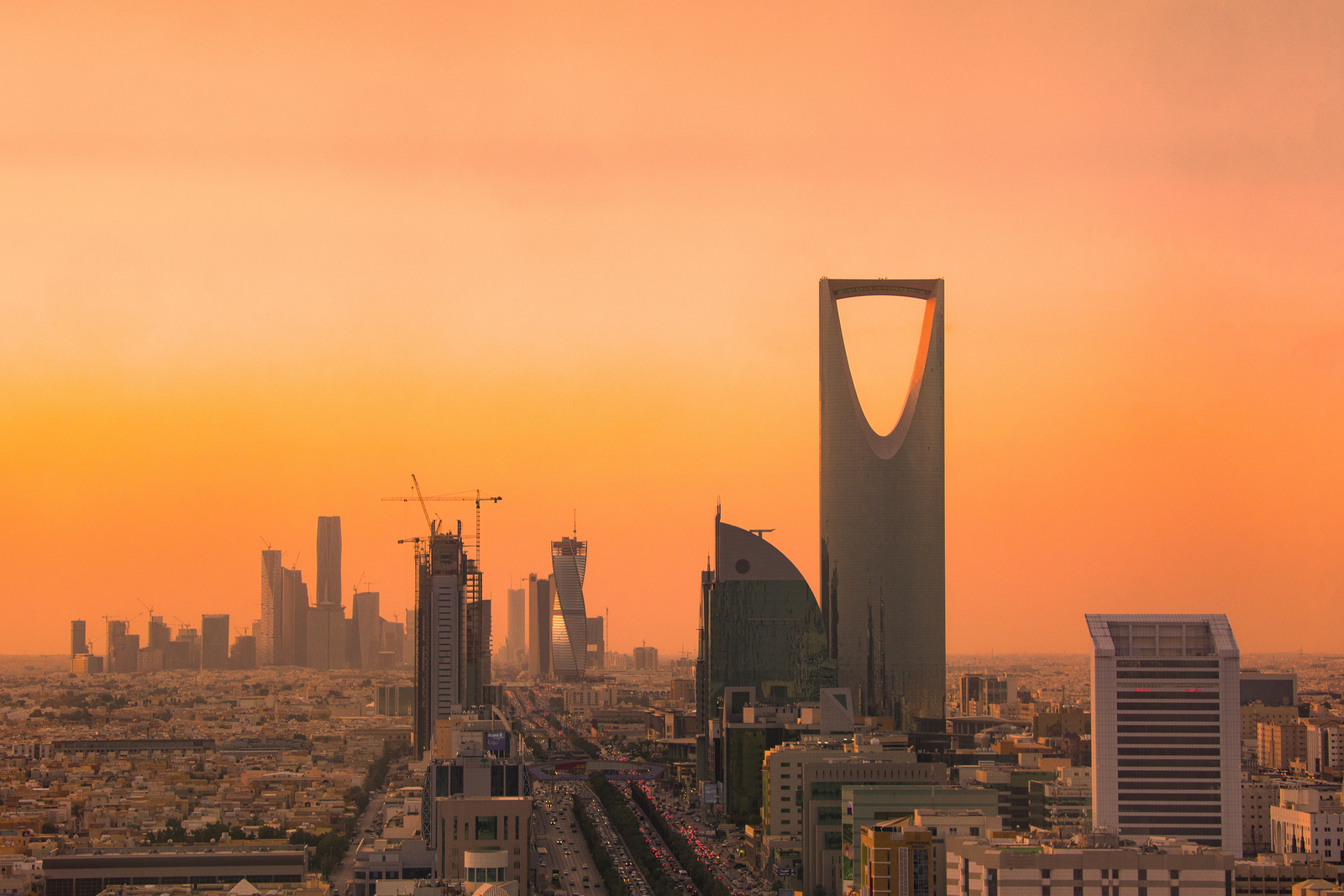
RIYADH — The Houthis struck King Khalid International Airport for the second time in twenty-four hours on 11 October, killing a Pakistani resident at Terminal 4, and declared every Saudi airport outside Mecca and Medina a legitimate target. The declaration converts six days of escalating airport attacks into a stated siege policy against Saudi civilian aviation.
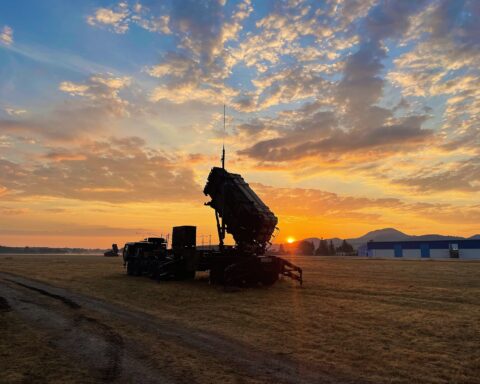
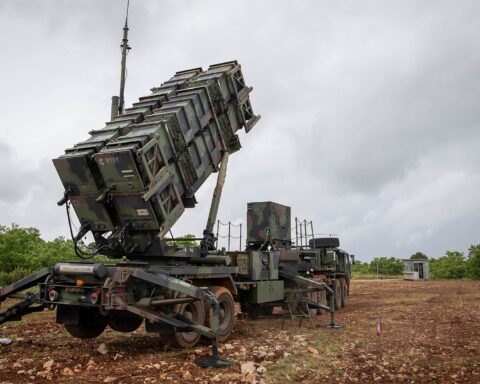
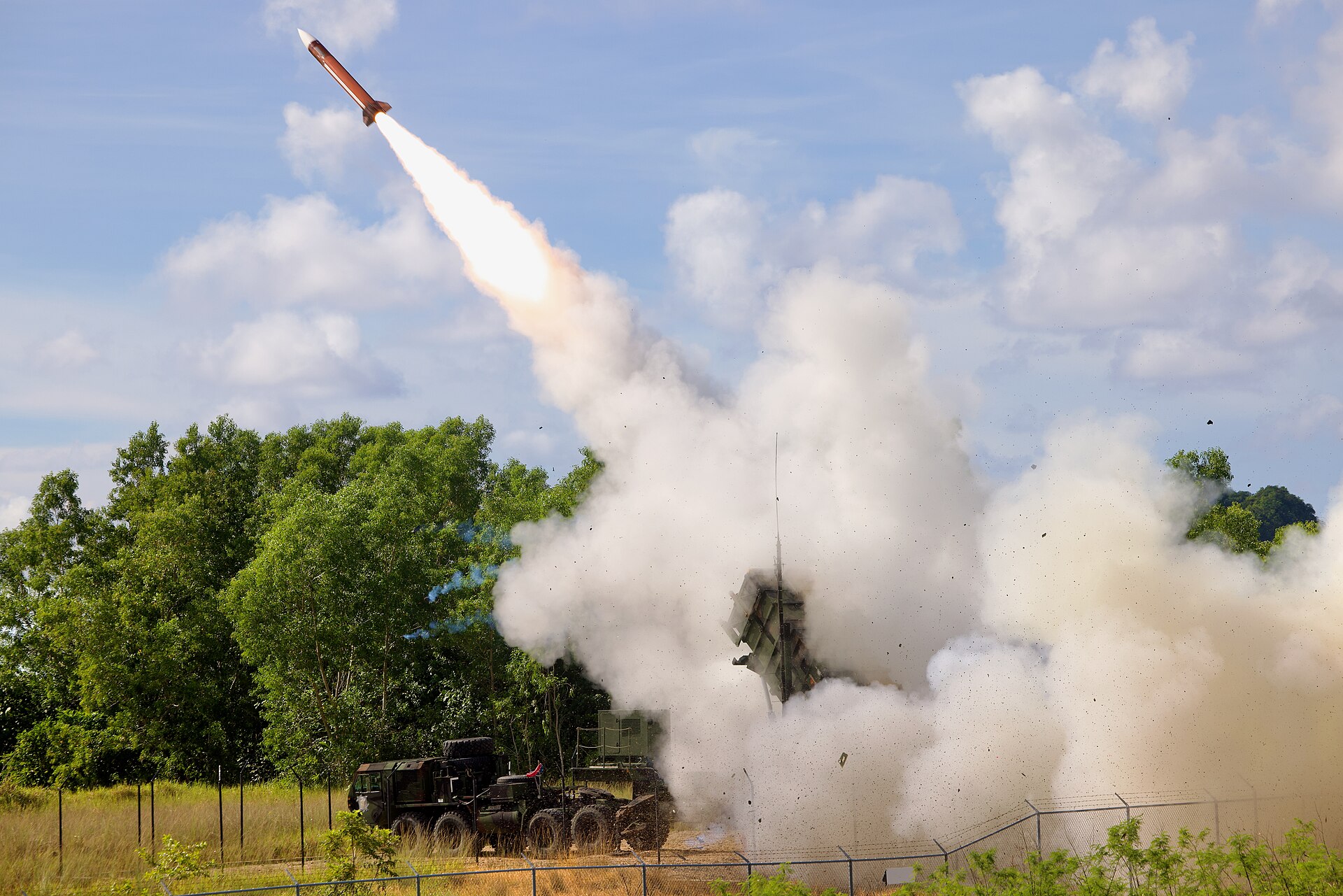
The Saudi-led coalition said it intercepted a cruise missile near the airport that evening. A separate coalition statement described the Terminal 4 impact as “an unidentified projectile.” Both descriptions exist in the same day’s official record. The Wall Street Journal, citing Saudi officials, reported the kingdom is running low on interceptors and moving batteries between palaces and energy infrastructure.
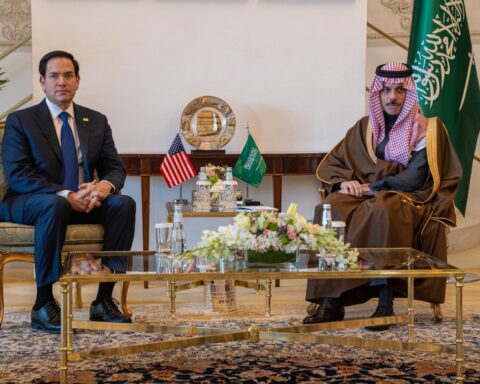
Iran’s foreign minister telephoned his Saudi counterpart on the same day and offered to “facilitate dialogue between Saudi Arabia and Yemen.” The head of Iran’s Supreme National Security Council said separately that Tehran is “no longer in the process of responding to the Americans.” All of this arrived as the World Petroleum Congress opened in Riyadh, the EU-GCC summit approached on 24 October, and the Future Investment Initiative followed on 26–29 October.
Table of Contents
- What Happened at King Khalid Airport on 11 October?
- How Many Have Died in Saudi Airport Attacks?
- Why Did the Interceptors Fail?
- The Siege Declaration
- Why Did Iran Offer Dialogue the Same Day?
- Who Flies to Riyadh When the Airports Are Under Fire?
- From Abha to Riyadh
- Can Saudi Arabia’s Allies Close the Gap?
- Frequently Asked Questions
What Happened at King Khalid Airport on 11 October?
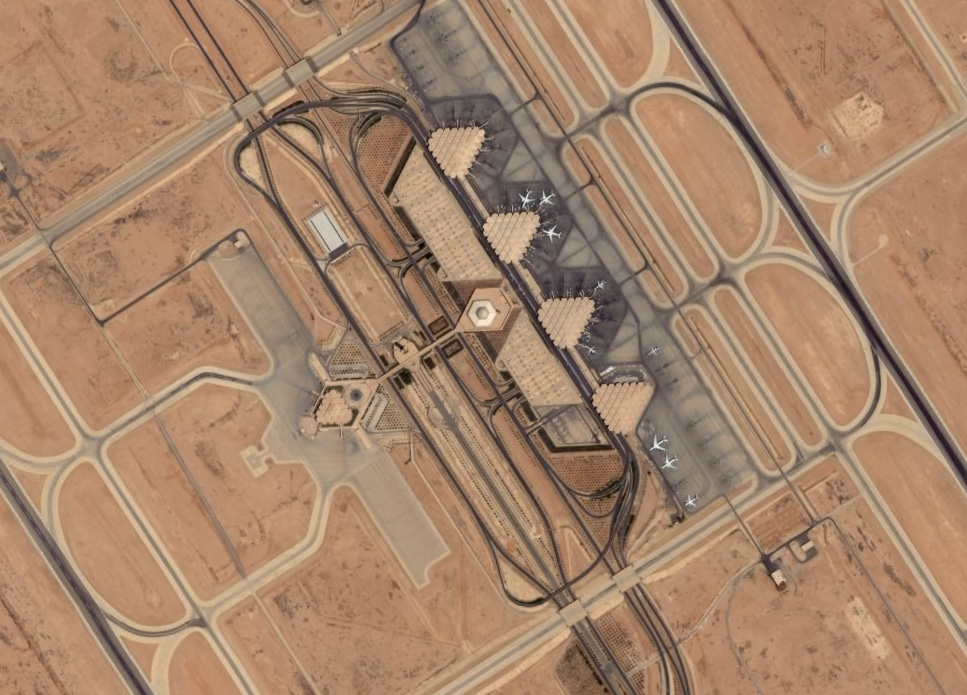
A projectile struck Terminal 4 at King Khalid International Airport at approximately 20:30 local time on 11 October, killing one Pakistani resident and injuring eleven others, according to GACA (Asharq Al-Awsat, 2026-10-11). A fire broke out. Aircraft returned to gates and passengers were evacuated (Al Jazeera, 2026-10-12).
The Saudi-led coalition said it “intercepted and destroyed a cruise missile” near the airport in the same window (France 24, 2026-10-11). GACA separately described the Terminal 4 impact as “an attack involving an unidentified projectile” (Asharq Al-Awsat, 2026-10-11). Two weapon narratives exist in the same evening’s official record: a cruise missile the coalition says it stopped, and a projectile it does not identify that killed a resident and started a fire at a passenger terminal.
No source has confirmed whether the Terminal 4 projectile was debris from the nearby intercept or a separate weapon that penetrated the air-defence layer.
The Middle East briefing 3,000+ readers start their day with.
One email. Every weekday morning. Free.
GACA also confirmed that King Fahd International Airport in Dammam, roughly 400 kilometres east of Riyadh, was attacked on the same day. No casualties were reported there (CNN, 2026-10-11).
The 11 October strike came less than twenty-four hours after the deadliest single airport attack of the current escalation — a strike on KKIA that killed thirteen and wounded more than three hundred. Maj. Gen. Turki al-Maliki, the coalition spokesperson, called that attack “a full-fledged war crime” (Jerusalem Post, 2026-10-11).
How Many Have Died in Saudi Airport Attacks?
At least twenty people have died in Houthi attacks on Saudi airports between 6 and 11 October, according to the BBC (2026-10-11). The deadliest single strike killed thirteen at KKIA on 10 October. The victims that day held twelve nationalities, including four Saudi citizens, two Bangladeshis, and one American.
The 10 October strike killed twelve people initially. An Indian national’s death raised the figure to thirteen (BBC, 2026-10-11). Al Jazeera put the injured at 309; the BBC said 308 (Al Jazeera, 2026-10-10; BBC, 2026-10-11).
The full list of 10 October nationalities: four Saudi citizens, two Bangladeshis, one American, one Egyptian, one Jordanian, one Syrian, one Palestinian, and one Sudanese (Al Jazeera via NBC News, 2026-10-11). The list traces KKIA’s function as a transit hub for the kingdom’s migrant workforce and regional travellers.
Attacks on KKIA and Abha on 6 and 7 October killed three and wounded thirty-six (BBC, 2026-10-08). On 8 October, two further attacks on KKIA killed three Saudi nationals, including Saudia captain Hamoud Ali Al Kalthami, and damaged a Saudia aircraft on the ground (GDN, 2026-10-09).
US Secretary of State Marco Rubio, confirming an American was among the dead, called the attacks “reprehensible” and said they “demonstrate a blatant disregard for innocent civilian life” (Jerusalem Post, 2026-10-11).
| Date | Target | Killed | Injured | Source |
|---|---|---|---|---|
| 6–7 Oct | KKIA and Abha | 3 | 36 | BBC, 2026-10-08 |
| 8 Oct | KKIA | 3 | Not disclosed | GDN, 2026-10-09 |
| 10 Oct | KKIA | 13 | 308–309 | BBC / Al Jazeera |
| 11 Oct | KKIA Terminal 4 | 1 | 11 | GACA via Asharq Al-Awsat |
| 11 Oct | King Fahd (Dammam) | 0 | Not disclosed | CNN, 2026-10-11 |
Why Did the Interceptors Fail?
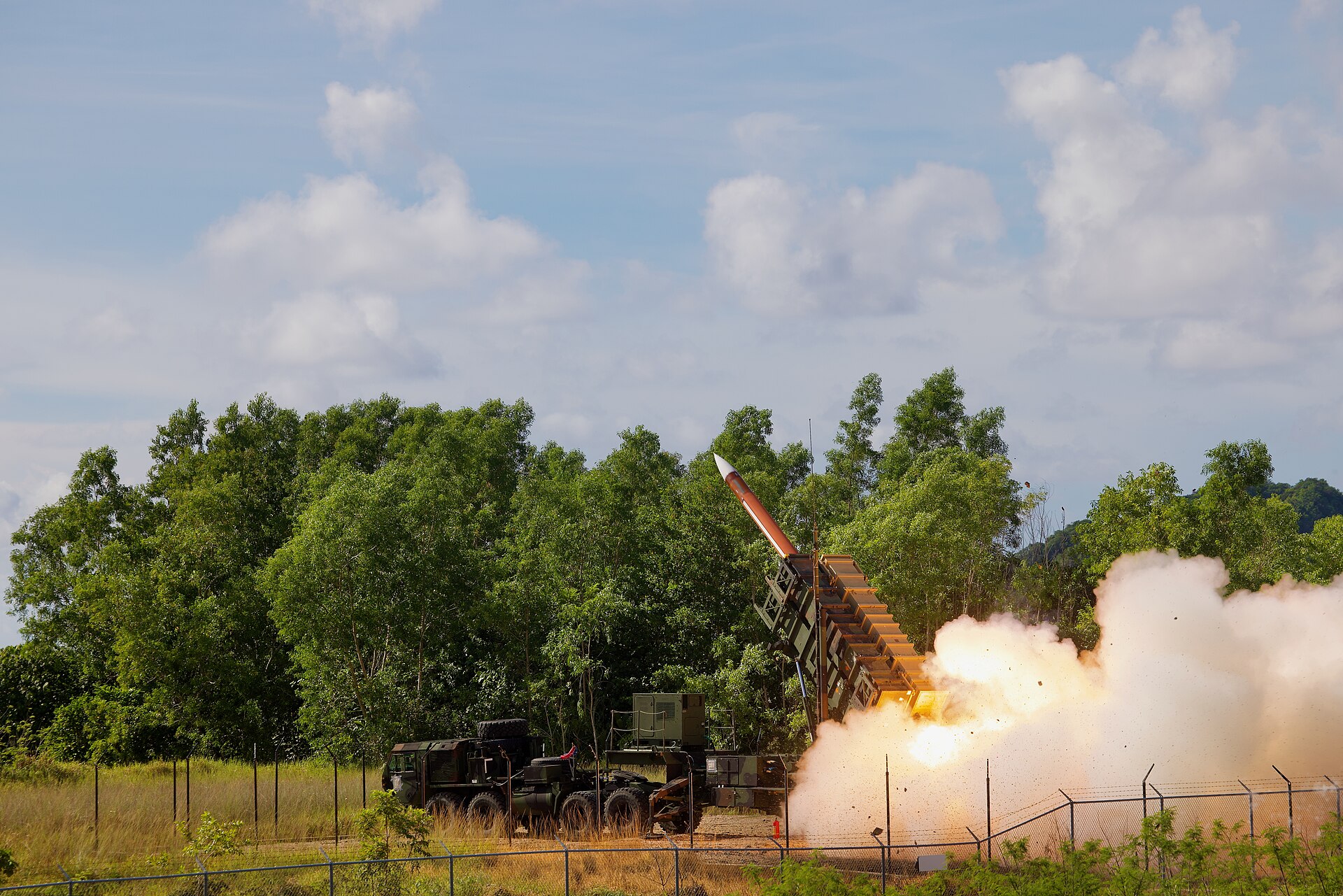
The coalition’s own statements on 11 October describe both a successful interception and a terminal hit in the same attack window. The Wall Street Journal, citing Saudi officials, reported the kingdom is running low on interceptor missiles, is “struggling to cover the vast country with air defense,” and has been moving batteries between palaces and energy infrastructure (WSJ via Times of Israel, 2026-10-12; WSJ via ANI, 2026-10-12).
The WSJ report describes a coverage trade-off. A battery assigned to guard a royal residence is a battery not available at an airport terminal. Saudi officials asked France, Britain, Egypt, and Pakistan for additional air-defence support, a request that indicates domestic stocks cannot sustain the current rate of engagement.
The coalition said it intercepted two ballistic missiles fired at Riyadh and one at Khamis Mushait on 8 October (AP via NY1, 2026-10-08). Those intercepts consumed interceptors but prevented casualties. Two days later, the 10 October strike killed thirteen. The sequence — successful intercepts followed by a mass-casualty event — is consistent with either an increase in attack volume beyond the layer’s capacity or the introduction of weapon types the system cannot reliably engage.
Each engagement depletes interceptors that Saudi Arabia cannot rapidly replace. The Houthis have forced four engagements over KKIA in four days — 8, 10, 10, and 11 October — a tempo that draws down stocks regardless of the intercept rate. The WSJ described batteries being moved across the country. Every deployment to one location is a withdrawal from another.
On 10 October, hours before the mass-casualty strike, President Trump was asked whether the United States would intervene. “They’re able to defend. The Saudis are good fighters,” he said. He added: “We may. We’re gonna look at it… We’ll make a decision. We move very quickly” (CNN, 2026-10-10). No US decision on Houthi strikes had been announced as of 12 October.
Trump had said on 8 October that the United States “will not be attacking Iran at any time prior to the midterm elections” on 3 November (The National, 2026-10-08). The airport attacks of 10 and 11 October fell inside that window.
Washington sent more than one hundred military advisers to Saudi Arabia under a new joint intelligence command (CNN, 2026-10-11). The advisers provide intelligence support. Their deployment is non-kinetic.
Fawaz Gerges of the London School of Economics said Houthi targeting systems have “grown increasingly effective” (NBC News, 2026-10-11). The Houthis announced their siege doctrine after the interceptor shortage, the American non-intervention window, and the improving accuracy of their own weapons were all public knowledge.
The Siege Declaration
Houthi military spokesperson Yahya Saree declared on 11 October that all Saudi airports except those serving Mecca and Medina are legitimate targets.
“We renew our warning to all airlines, experts, employees, workers and travellers against using Saudi airports and airspace, as they are vulnerable to attack and have become a theatre of operations for our forces.”
— Yahya Saree, Houthi military spokesperson (Irish Times, 2026-10-12)
The Mecca and Medina exemption is calibrated. Striking airports serving Islam’s two holiest cities would cost the Houthis their claim of defending Muslim interests. The remaining airports carry no such protection.
Saree added: “Take our warnings seriously, and Saudi Arabia bears responsibility for any failed interceptions” (Al Jazeera, 2026-10-11). The second clause pre-empts the coalition’s intercept narrative. If debris from a nearby intercept kills a passenger, the Houthis assign the blame to Riyadh’s air-defence decisions rather than to their own weapon.
He warned that “the worst is yet to come” if Saudi military operations in Yemen continue (Irish Times, 2026-10-12).
Before 11 October, each strike could be read as an opportunistic escalation. After the declaration, every Saudi airport outside the two holy cities is formally inside the Houthi target set. The shift is from tactical harassment to a stated targeting policy.
Yasmeen al-Eryani, executive director for knowledge production at the Sanaa Center, said: “We could see further mobilisation; they have very high momentum. They will probably continue to capitalise on that momentum, internally” (Al Jazeera, 2026-10-11). Thomas Warrick of the Atlantic Council said the Houthis aim “to put pressure on Saudi Arabia in a vital sector” and “exert broader political pressure” (The Week India, 2026-10-12).
The UN-brokered truce between the coalition and the Houthis collapsed in July (BBC, 2026-10-11). The 4 October Yemeni government offensive, backed by coalition air support, triggered the escalation to capital-city airport strikes (CNN, 2026-10-04). The Houthis frame each airport attack as retaliation for Saudi strikes on Sanaa airport and the broader military campaign.
Why Did Iran Offer Dialogue the Same Day?
Iranian Foreign Minister Abbas Araghchi called Saudi Foreign Minister Prince Faisal bin Farhan on 11 October and said Tehran is “ready to provide any assistance to facilitate dialogue between Saudi Arabia and Yemen,” according to Al-Monitor (2026-10-11). Araghchi posted the statement on Telegram. He added that “the region’s crises could not be resolved through military means.”
Saudi state news agency SPA confirmed the call took place. It did not disclose what, if anything, Riyadh said in response (Al Jazeera, 2026-10-11).
On the same day, Mohsen Rezaei, head of Iran’s Supreme National Security Council, told state agency IRNA that the latest US response to Iran’s conditions for reopening Hormuz was “insufficient.” He said Iran is “no longer in the process of responding to the Americans.” In their response, Rezaei said, the Americans “have accepted some of our conditions, while others remain unclear” (CBS News, 2026-10-11).
Rezaei also threatened that if intense fighting resumes, Iran would target “cables, data centers, AI facilities and other sites in the region” (Fortune, 2026-10-11).
The two statements arrive from different institutions but serve a single structure. Araghchi offers Riyadh a path out of the airport siege through direct Houthi–Saudi talks, which would bypass Washington and position Iran as the indispensable intermediary. Rezaei’s dismissal of US diplomacy narrows the field to Tehran’s channel.
Araghchi’s framing — positioning Tehran as a go-between for Saudi Arabia and “Yemen,” using the term preferred by the Houthi administration — presents Tehran as a broker rather than a party to the conflict. The mediation offer arrived on a day when the Houthis, whom Iran arms and advises, had struck a Saudi airport for the second time in twenty-four hours.
Araghchi’s use of Telegram rather than a formal diplomatic communiqué directed the message at a public audience as much as at Prince Faisal. Tehran has positioned itself as a peace-seeking party throughout the crisis. The groups it supports have meanwhile escalated: drones from Iraq hit Saudi oil facilities in the Eastern Province on 27 July, which Saudi Arabia blamed on “terrorist militias affiliated with Iran” (Gulf Times/QNA, 2026-07-27).
CENTCOM said on 10 October that 135 ships had been turned around since the US blockade of Iranian ports began on 14 July (CBS News, 2026-10-10). Rezaei’s characterisation of the US response as “insufficient” means the seven conditions Iran set for reopening Hormuz remain unresolved. The Houthi airport strikes and the Hormuz closure apply pressure on the same country from different directions.
“These attacks by Iran’s proxies are pushing the region into a spiral of violence. They are destabilizing crucial global transport and energy nodes.”
— Ursula von der Leyen, European Commission President (Kuwait Times, 2026-10-11)
EU foreign policy chief Kaja Kallas called the airport strikes “an appalling act of terror” and said there “can be no justification for indiscriminate attacks on civilians and civilian infrastructure” (Kuwait Times, 2026-10-11).
Who Flies to Riyadh When the Airports Are Under Fire?
Air France and KLM suspended Riyadh flights, with KLM extending its suspension through 31 October (Travel and Tour World, 2026-10-10). British Airways scheduled its resumption no earlier than 3 November (The National, 2026-10-08). Those dates bracket the EU-GCC summit on 24 October and the Future Investment Initiative on 26–29 October.
The European Union Aviation Safety Agency widened its Saudi airspace guidance after the 8 October strike, and Lufthansa Group suspended Riyadh flights through 16 October (Fortune, 2026-10-09). The EASA advisory applies to all EU-licensed carriers.
European Council President Antonio Costa’s invitation letter, dated 6 October, set the summit for Riyadh on 24 October, co-chaired with Crown Prince Mohammed bin Salman (The National, 2026-10-08). Twenty-seven EU heads of state are scheduled to attend. No state has officially withdrawn. The operational question — whether heads of government fly into an airport that has absorbed four attacks in four days — has not been addressed publicly by any EU capital.
The World Petroleum Congress opened in Riyadh on 11 October, the same day as the Terminal 4 strike. Saudi officials said the congress was proceeding (CNN, 2026-10-11). The Financial Times reported that executives from ExxonMobil, TotalEnergies, Shell, and BP cancelled their attendance (FT via Enterprise AM, 2026-10-12). The congress runs through 17 October.
Saudi Arabia’s pre-budget statement in September revised the 2026 deficit upward to 245 billion riyals from a budgeted 165 billion, on a projected 21.8 percent decline in oil activities (Reuters via Zawya, 2026-09-30).
Riyadh Season, the annual entertainment programme, is scheduled to open on 21 October (Gulf News, 2026-09-27). The 10th Future Investment Initiative follows on 26–29 October (Kuwait Times/KUNA, 2026-08-04). The New York Times reported that the airport strikes threaten Riyadh’s events calendar (New York Times, 2026-10-10).
Saudi Arabia has used the concentration of international summits, conferences, and cultural events as a signal that the kingdom functions as a global destination despite the war. The Houthi siege declaration and the airline suspensions now bracket those events.
Dania Thafer, executive director of the Gulf International Forum, said: “I still think that the Saudis probably want de-escalation. They don’t want long-term escalation, but the Houthis are making it very difficult by not only being a threat to Saudi national security but also a threat to international maritime security” (Al Jazeera, 2026-10-11).
From Abha to Riyadh
In June 2019 the Houthis attacked Abha International Airport, a regional airport in southern Saudi Arabia near the Yemen border. One person was killed and forty-seven were injured. The Houthis said it was retaliation for the Saudi-led coalition’s closure of Sanaa airport. Human Rights Watch declared it an apparent war crime (HRW, 2019-06-14).
The 2026 airport campaign applies the same logic at a different scale. In 2019 the target was a provincial airport less than 100 kilometres from the border. In 2026 it is KKIA in the capital. In 2019 the attack was a single incident. In 2026 it is a sustained series — four strikes in four days on KKIA alone, plus attacks on Dammam and Abha — and a declared open-target policy covering all airports outside Mecca and Medina.
The justification has not changed. Saree’s framing throughout the current escalation refers explicitly to Saudi airstrikes on Sanaa airport. Yemen’s government said the Sanaa strike on 13 July aimed to stop an Iranian plane returning a Houthi delegation; the Houthis said the runway was hit (News4Jax/AP, 2026-07-13). The Houthis treat every airport attack as reciprocal.
The doctrinal escalation is in the scope, not the rationale. What HRW called an apparent war crime in 2019 is now the Houthis’ stated operational posture.
Between the truce’s collapse and October, the Houthis moved their targeting northward. Attacks wounded thirteen civilians in Khamis Mushait, Abha, and Taif on 14 September (Khaleej Times, 2026-09-14). On 16 September the coalition said it downed a drone heading for Makkah (Khaleej Times, 2026-09-22). A drone struck a transformer at a Medina power station serving the Prophet’s Mosque on 29 September (GDN, 2026-10-01). Smoke rose near KKIA on 19 September in what appeared to be the first Houthi strike on Riyadh in the current escalation (Kathmandu Post/Reuters, 2026-09-20). The Houthis moved from southern border cities through the Eastern Province and into the capital.
The airport siege declaration has a maritime parallel. On 20 July the Houthis declared a maritime blockade of Saudi Arabia, citing what they called a nearly twelve-year siege of Yemen (Al Jazeera, 2026-07-28). The blockade extended Houthi targeting from land-based infrastructure to shipping lanes. The 11 October airport declaration extends it from shipping to aviation. Both follow the same escalation pattern: a series of initial attacks, then a formal policy statement converting them from incidents into doctrine.
That offensive, combined with the coalition’s claim of striking more than eighty Houthi military sites on 7 October (BBC, 2026-10-08), gave the Houthis both a stated provocation and a domestic audience for the escalation.
Can Saudi Arabia’s Allies Close the Gap?
The Mecca pact, signed on 7 August, commits member states to treat an attack on one as an attack on all (Kuwait Times/AFP, 2026-08-07). On 5 October the pact’s committee met in Riyadh and agreed to deploy Pakistani and Turkish forces and to “activate collective deterrence measures,” in the words of Defence Minister Prince Khalid bin Salman (Al Jazeera, 2026-10-06).
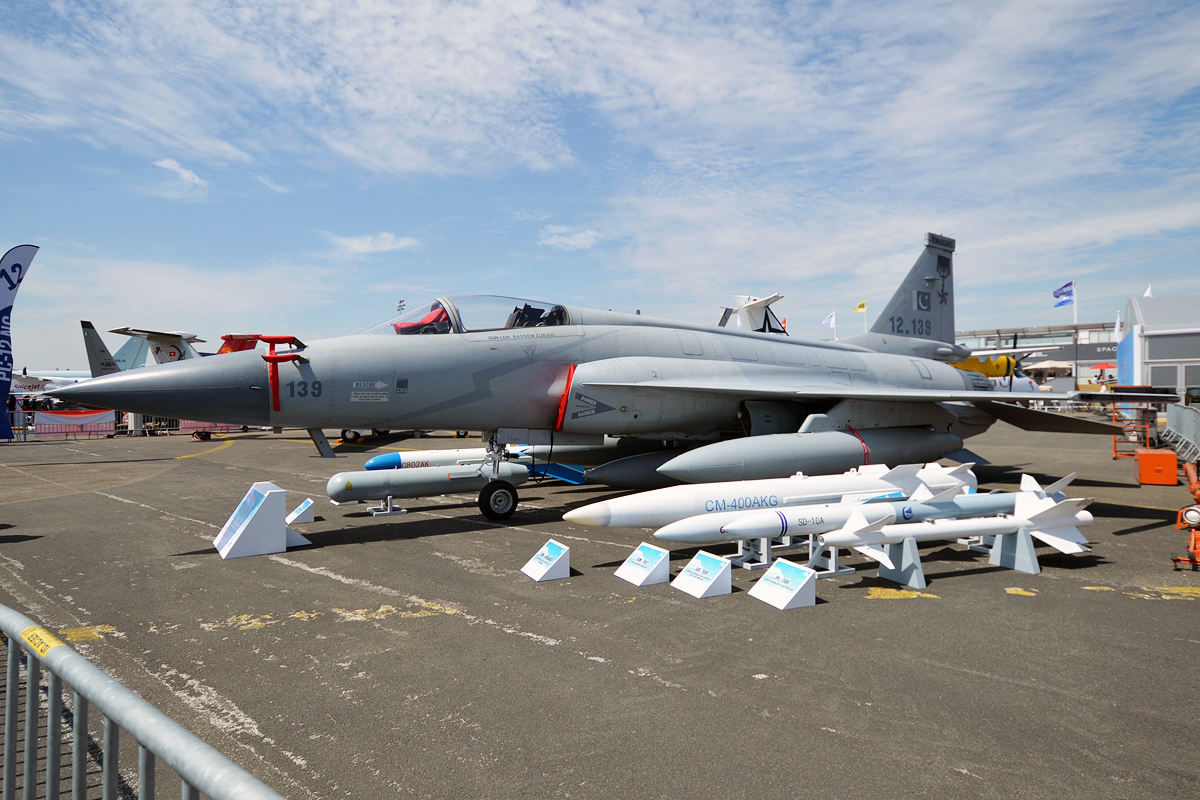
About 8,000 Pakistani troops and roughly sixteen JF-17 aircraft were already in the kingdom as of May, according to Reuters (2026-05-20). Pakistan’s defence minister said combat “is practically being conducted by Saudi Arabia’s own forces” (Al Jazeera, 2026-10-06). What role, if any, Pakistani forces play in airport air defence has not been disclosed.
Turkey’s parliament has not ratified the Mecca pact (Al Jazeera, 2026-10-06). Turkey’s formal military commitment to Saudi defence therefore has no legal basis, though Ankara participates in the pact committee. Trump called the Turkish and Pakistani deployments “good” on 7 October (Gulf News, 2026-10-07).
France confirmed troops, radars, and air-defence systems for the Yanbu oil terminal, with President Macron saying the deployment would not involve France in the conflict (Al Jazeera, 2026-09-25). Britain sent an RAF Voyager tanker for air-to-air refuelling of Saudi jets (The National, 2026-09-22). Both commitments are tied to specific assets — Yanbu and fighter operations — not to airport terminal defence.
Saudi Arabia, Egypt, Pakistan, and Turkey issued a joint statement calling the attacks “a blatant violation of international law” (CBS News, 2026-10-11). The UAE declared “full solidarity” with the kingdom (CBS News, 2026-10-11).
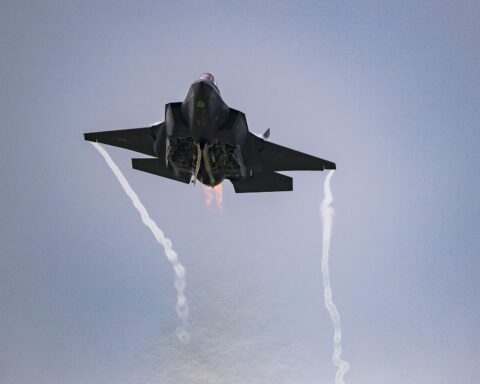
The US approved a possible $24.3 billion sale of 48 F-35A fighter jets to Saudi Arabia on 17 September (The Aviationist, 2026-09-17). The sale must clear congressional review before delivery. The F-35 is a strike aircraft; it addresses the coalition’s offensive capability, not the defensive interceptor gap that the airport attacks have exposed.
Washington’s contribution to the immediate crisis is intelligence support through over a hundred military advisers under a joint command (CNN, 2026-10-11). Crown Prince Mohammed bin Salman made two appeals in September for US strikes on the Houthis; both were declined (CNN, 2026-10-10). Rubio said on 5 October that the United States has a defence agreement with Saudi Arabia and “we intend to live by it” (The National, 2026-10-05). That agreement has not produced any kinetic American action against the Houthis in the current escalation.
Frequently Asked Questions
Has Saudi Arabia formally responded to Iran’s offer to mediate?
Saudi state news agency SPA confirmed the 11 October call between Prince Faisal and Araghchi but did not disclose Riyadh’s response. Saudi Arabia confirmed a previous call between the two in August about “reducing Gulf tensions” (Trend, 2026-08-03). The pattern — confirming contact while withholding substance — has characterised Saudi responses to Iranian diplomatic overtures throughout the current conflict. No Saudi official has publicly commented on the mediation offer.
What weapons are the Houthis using against Saudi airports?
The Houthis and the coalition give conflicting descriptions of the same attacks. The Houthis described the 8 October weapon as a ballistic missile, according to Al Jazeera (2026-10-09), while GDN and Reuters reported two cruise missiles. The coalition has identified threats as ballistic missiles, cruise missiles, and drones across different engagements. GACA described the 11 October Terminal 4 impact only as “an unidentified projectile.” No party has disclosed the specific system used in the 10 October mass-casualty attack.
Is King Khalid International Airport currently open?
KKIA was closed after the 11 October strike and remained closed as of 12 October, according to Al Jazeera. Saudi authorities reopened the airport briefly after the 8 October attacks (Al Jazeera, 2026-10-09) only for it to be struck again on 10 October. GACA has not announced a reopening timeline following the 11 October attack.
What is the Mecca pact and which countries are members?
The Mecca Joint Defence Agreement, signed on 7 August 2026, treats an attack on one member state as an attack on all (Kuwait Times/AFP, 2026-08-07). By 13 August, fifteen countries had formally joined a related Saudi-led maritime coalition declaration (Al Jazeera, 2026-08-14). The pact committee met on 5 October and agreed to deploy forces, but neither operational timelines nor rules of engagement have been made public. The pact’s full membership list has not been disclosed by Saudi Arabia.