RIYADH — The International Monetary Fund’s October 2026 World Economic Outlook projects Saudi Arabia’s GDP will contract 3.3 percent in 2026, a 5.0-percentage-point downgrade from the 1.7 percent growth forecast issued in July. The figure confirms what Saudi Arabia’s own finance ministry conceded two weeks earlier when it projected a contraction of 3.6 percent: the wartime economy has entered a structural downturn, and the diversification programme designed to prevent it was not built for the shock that caused it.
Vision 2030 was constructed as a hedge against oil-price volatility. It assumed open sea lanes, functioning airports, and a US security umbrella that would deter kinetic threats to the kingdom’s export infrastructure. Every one of those assumptions has failed since February. The IMF’s revision trajectory — from +3.1 percent in April to -3.3 percent in October — is not an incremental adjustment. It is a collapse in the multilateral assessment of Saudi economic resilience, and the first wartime verdict on whether Vision 2030’s economic model can hold.
Table of Contents
- How Did the IMF’s Saudi Forecast Collapse in Seven Months?
- What Does -3.3 Percent Actually Measure?
- The Oil Production Collapse Behind the Number
- Did Non-Oil Diversification Provide a Buffer?
- Can the Giga-Projects Survive a Wartime Budget?
- The Breakeven Price Riyadh Cannot Reach
- What Tehran Reads in the Same Data
- The Events Calendar and the Confidence Gap
- A Hedge Against Price, Not Against War
- Frequently Asked Questions
How Did the IMF’s Saudi Forecast Collapse in Seven Months?
The IMF’s 2026 Saudi GDP forecast fell from +3.1 percent in April to -3.3 percent in October — a 6.4-percentage-point swing in seven months driven by the full onset of war, the Strait of Hormuz blockade, and pipeline interdiction. The April figure assumed manageable disruption. By October, the Fund was modelling a wartime economy rather than a disrupted one.
The trajectory is instructive.
| Date | IMF Forecast | Revision | Source |
|---|---|---|---|
| April 2026 (WEO) | +3.1% | — | Enterprise, Apr 14 |
| June 2026 (Article IV) | +2.0% | -1.1pp | The National, Jun 3 |
| July 2026 (WEO Update) | +1.7% | -0.3pp | News24, Jul 8 |
| October 2026 (WEO) | -3.3% | -5.0pp | AFP/Yahoo Finance, Oct 13 |
In April, the IMF’s Saudi team modelled disruption as temporary and largely maritime. Azim Sadikov, the Fund’s mission chief for Saudi Arabia, said in June that “the Saudi economy is demonstrating agility and resilience,” but flagged that “the main risk is an escalation of the conflict, which could further impair shipping routes, damage energy infrastructure with associated output losses, and heighten uncertainty and financial sector risks,” according to The National. By July, Hormuz was closed for the second time and the Fund cut to 1.7 percent. The October revision prices in the full effect of the blockade, the pipeline suspension, and the production collapse that followed.
IMF Chief Economist Silvana Tenreyro framed the broader picture at the WEO press conference on October 13: “The global economy has been resilient, but that resilience is under strain, with risks to growth tilted to the downside,” according to Al-Monitor. For Saudi Arabia, the strain is measured in barrels per day that can no longer reach market.
The Middle East briefing 3,000+ readers start their day with.
One email. Every weekday morning. Free.
The Fund noted Saudi Arabia’s position relative to its Gulf neighbours. Most Gulf states face double-digit GDP contractions in the October WEO, according to AGBI. Saudi Arabia’s -3.3 percent is among the smaller falls — a fact the IMF attributed to “more-diversified energy export routes,” principally the East-West pipeline. The broader MENA and Central Asia region is projected to contract 0.3 percent, a 2.2-percentage-point downward revision from April, per AFP via Yahoo Finance.
What Does -3.3 Percent Actually Measure?
The -3.3 percent figure measures the total output loss from oil-production collapse, infrastructure strikes, trade-route disruption, and war-related uncertainty — net of the cushion from high oil prices, remaining non-oil sector activity, and continued government spending. It is, notably, smaller than the kingdom’s own projection of -3.6 percent.
The gap between the two numbers deserves attention. Saudi Arabia’s pre-budget statement on September 30 projected a 21.8 percent decline in oil activities for 2026 and revised the annual deficit to SAR 245 billion — 48 percent above the original SAR 165 billion budget target, according to Reuters via Zawya. The finance ministry was more pessimistic than the Fund.
When a government forecasts worse than the multilateral institution tasked with impartial assessment, it signals either that the government holds more granular data on the damage or that it is preparing domestic expectations for a deeper fiscal adjustment. In either case, the ministry’s willingness to publish -3.6 percent before the IMF’s -3.3 percent suggests that Riyadh’s own economists view the Fund’s estimate as conservative.
The quarterly data supports the gloomier reading. GASTAT flash estimates put second-quarter real GDP down 4.8 percent year on year, with oil activity plunging 24.7 percent, according to TradeArabia. Non-oil private activity grew just 0.6 percent and government activity rose 0.9 percent in the same quarter — a fraction of the pre-war growth rates that Vision 2030 was delivering.
The fiscal trail confirms the deterioration. The first-quarter deficit alone was SAR 125.71 billion, with spending up 20 percent to SAR 387 billion, according to Argaam. The first-half deficit reached SAR 160 billion, per Asharq Al-Awsat. The IMF’s Article IV consultation, completed July 29, placed Saudi public debt at 32.1 percent of GDP — a figure that predates the October deterioration.
The Oil Production Collapse Behind the Number
Saudi oil output fell from approximately 10.5 million barrels per day before the war to 5.97 mb/d in August, according to the IEA — a drop of more than 40 percent. That single statistic accounts for most of the GDP contraction.
The loss was not price-driven. Brent crude stood at $102.94 on October 9, according to CNBC. Saudi Arabia was not suffering from low oil prices. It was suffering from an inability to deliver its oil to market.
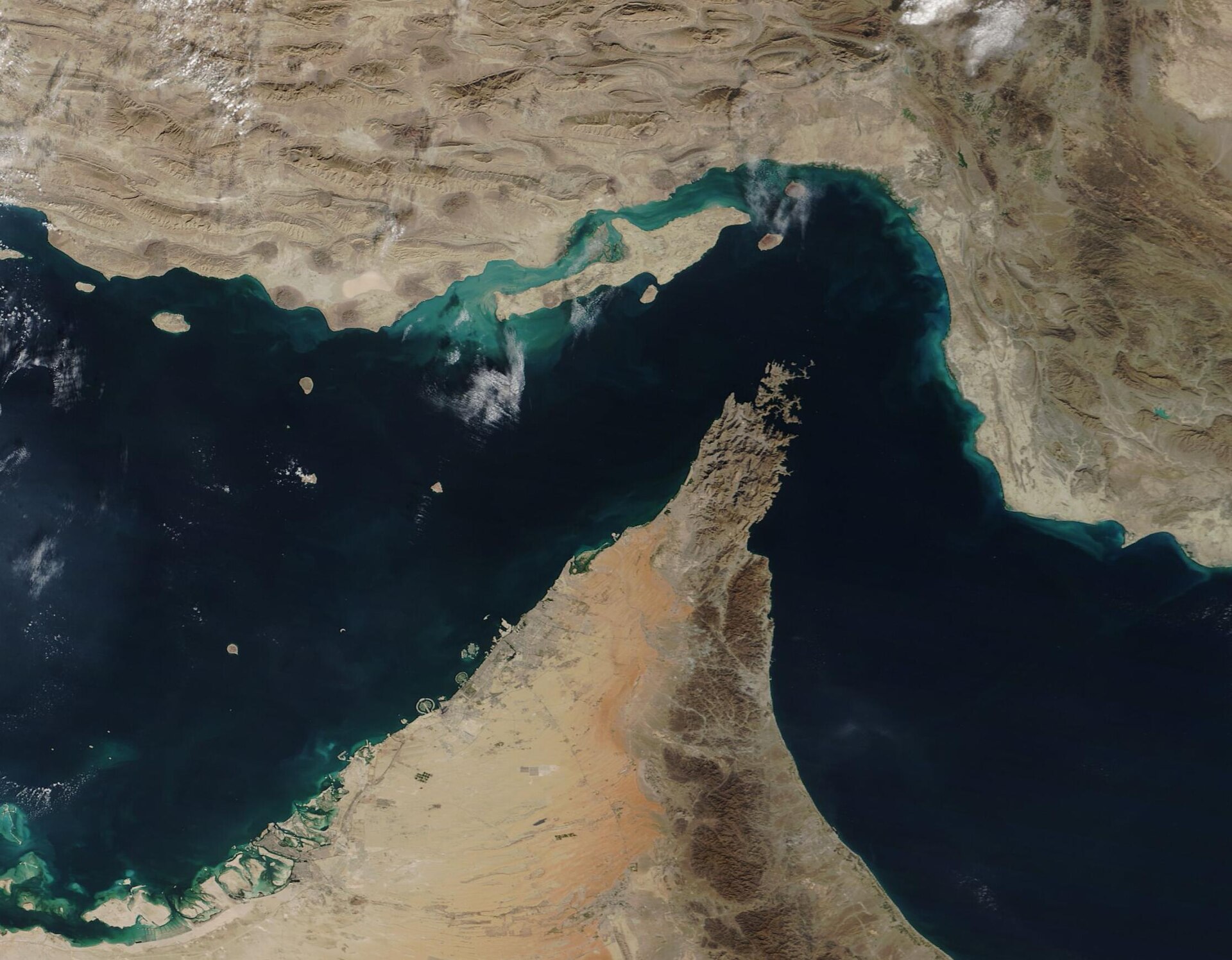
The Strait of Hormuz, through which the kingdom once shipped the majority of its crude, has been under blockade since July 14. CENTCOM reported that 135 ships had been turned around since the blockade began, according to CBS News on October 10. The East-West pipeline — with a capacity of approximately 7 million barrels per day, about 5 million exportable, according to Saudi Gazette via Zawya — was suspended on September 12 after being targeted. It restarted on September 22, but full-capacity restoration could take six weeks or more, according to Reuters via Baird Maritime.
The pipeline is Vision 2030’s most consequential piece of infrastructure, and its ten-day shutdown exposed the fragility of the only export corridor that the Hormuz blockade had left open. The targeting of the corridor Saudi Arabia built to outlast Hormuz demonstrated that diversification of export routes does not eliminate vulnerability — it redistributes it.
The pricing data reflects the logistical crisis. Aramco cut its November Arab Light official selling price to Asia by $3, to $5 below Oman/Dubai — the widest discount since June 2020, according to Reuters. The discount did not reflect weak demand. It reflected prohibitive freight costs: VLCC rates on the Gulf-to-China route reached $1.2 million per day, against approximately $80,000 a year earlier, according to LSEG data via Reuters. Saudi crude was discounted because the tanker, not the barrel, had become the bottleneck.
The production figure understates the infrastructure damage. The 400,000 bpd Jazan refinery has been shut since a July 27 strike, according to IIR via Hydrocarbon Processing. The 465,000 bpd SATORP refinery at Jubail closed after overnight attacks on April 7–8, per The New Arab. The SAMREF refinery at Yanbu was struck on March 19, according to Marine Insight. Each facility represents lost refining capacity and a repair bill that competes with Vision 2030 investment for the same fiscal space.
The production collapse also carries an OPEC+ dimension. Saudi Arabia’s November production target stands at 10.5 mb/d, according to Enerdata. Actual output is roughly half that figure. The gap between quota and reality is the measure of involuntary production loss — a category that OPEC+ was not designed to manage.
Did Non-Oil Diversification Provide a Buffer?
Non-oil GDP now accounts for approximately 55 to 56 percent of Saudi output, up from 47 percent in 2016, according to CSIS — but short of the 65 percent Vision 2030 target. The diversification accrued in tourism, aviation, entertainment, and construction: sectors that airport strikes, travel warnings, and investor flight hit first. The hedge worked against price. It did not work against war.
The structural irony is precise. Vision 2030 deliberately shifted the economy toward services and experiences. Riyadh Season, the Formula E races, the conferences — all of these required a functioning King Khalid International Airport and a security environment that global insurers and airlines could underwrite. The airport has been struck repeatedly since October 6, killing 20 people between October 6 and 11, according to BBC tallies. EASA widened its Saudi airspace warning, per Fortune. Airlines cancelled flights to Riyadh.
Foreign direct investment, the lifeblood of the programme, reached $31.7 billion in 2024 — against a Vision 2030 target of $100 billion annually, according to CSIS. The gap was already large before the war. Neil Quilliam, Associate Fellow at Chatham House, warned in April that the conflict was “directly affecting Saudi Arabia’s ability to drum up funding” and that “instability is a great deterrence for international investors to come into the country,” noting that Vision 2030 is “based on attracting foreign direct investment,” as reported by ABC News Australia.
Saudi Arabia diversified into the sectors the war hit first. That structural vulnerability is not a discovery — it was the foreseeable consequence of building a services economy inside a conflict zone without the security architecture to protect it.
Former US Ambassador Michael Ratney characterised the conflict as the “worst-case scenario” for Saudi Arabia’s grand vision, according to ABC News Australia. The description is accurate on its own terms. Vision 2030 was never stress-tested against simultaneous Hormuz closure, pipeline interdiction, airport bombardment, and the withdrawal of the implicit US deterrent that underpinned investor confidence. It was tested against $40 oil. It was not tested against $103 oil that cannot reach the customer.
Can the Giga-Projects Survive a Wartime Budget?
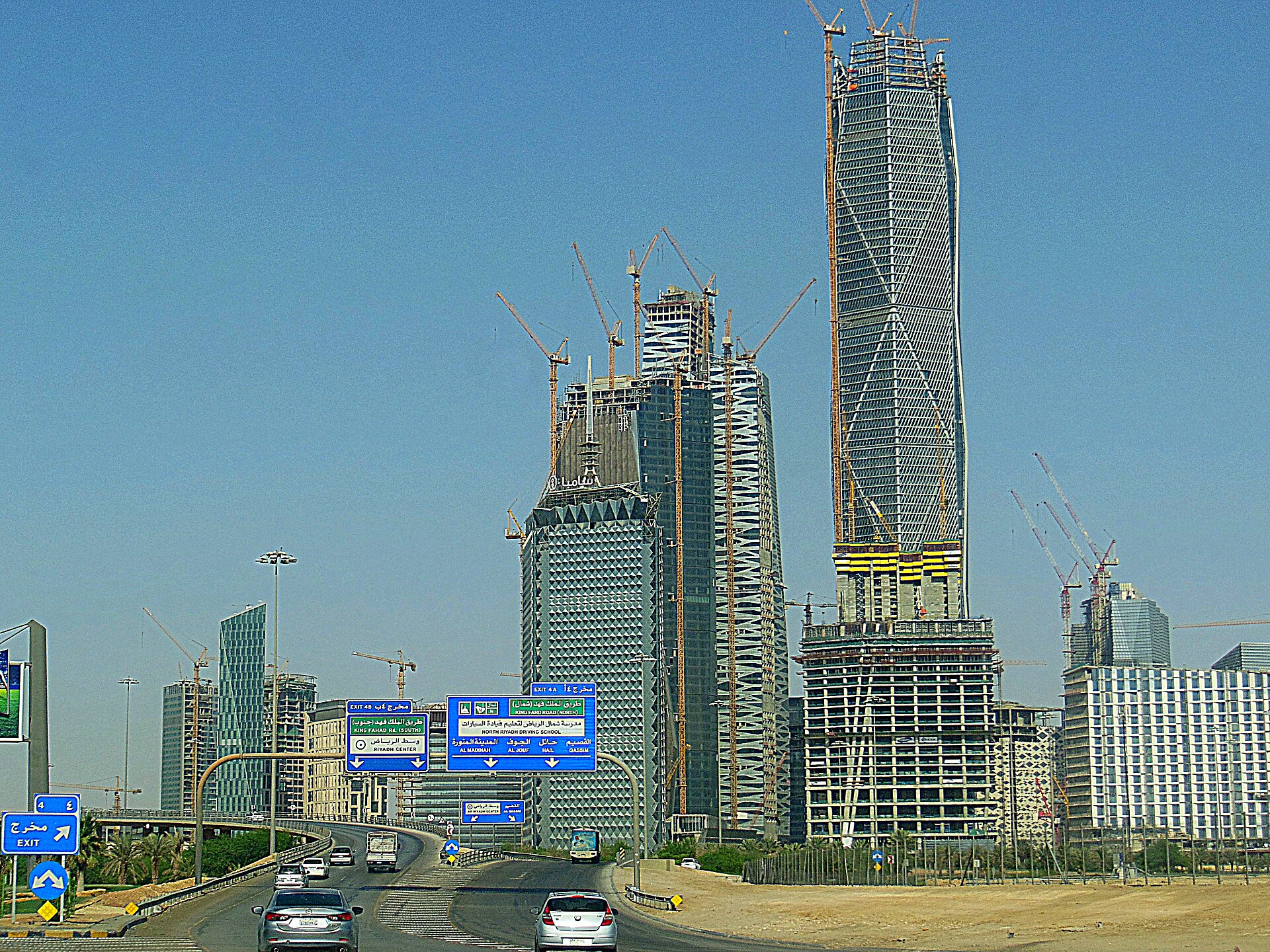
The giga-project retrenchment began before the war and has accelerated under it. The Line is halted until after 2030, Trojena contracts worth billions have been terminated, and the Asian Winter Games are indefinitely postponed. Finance Minister Mohammed al-Jadaan told the Gulf International Forum that the kingdom is willing to defer or cancel Vision 2030 projects “without blinking” if they no longer make economic sense.
NEOM terminated Webuild’s SAR 20 billion Trojena dams contract, about 30 percent complete, effective March 29, citing “geopolitical developments in the Middle East,” according to MEED. Eversendai’s Trojena ski-village steel contract was terminated the same week, per ME Construction News. Semafor reported on May 22 that NEOM had halted further work on The Line until at least after 2030, cut its 2030 population target to up to 100,000, and frozen new Trojena investment. The Olympic Council of Asia and the Saudi Olympic and Paralympic Committee agreed on January 25 to indefinitely postpone the 2029 Asian Winter Games at Trojena, according to MEED.
PIF Governor Yasir Al-Rumayyan offered a qualified denial in April: “No project in NEOM has been cancelled. Has anything been postponed? Certainly, yes,” as reported by ABC News Australia. The distinction between cancellation and indefinite postponement is the kind of semantic precision that satisfies a boardroom but not a budget sheet. NEOM’s exit bill is denominated in sunk contracts, terminated partnerships, and opportunity cost.
Economy Minister Faisal al-Ibrahim described 2026 as Vision 2030’s “third phase,” shifting from launching reforms to “maximising their impact,” according to the Gulf International Forum. Kristian Coates Ulrichsen, Non-resident Senior Fellow at the Baker Institute, assessed the war as “an acceleration of trends already underway rather than a major change of course,” noting that Saudi leadership is “more receptive to financial constraints and fiscal realities” than at megaproject launch, as reported by the same outlet.
The PIF itself redirected its strategy. In its 2026–2030 plan, the fund shifted 80 percent of its portfolio to domestic investments and reduced international exposure from 30 to 20 percent, according to The National and IMF data. PIF reported 2025 net profit of $17 billion and assets under management above $900 billion, per Asharq Al-Awsat. But domestic deployment occurred precisely when the domestic economy entered contraction — an investment thesis that requires the economy it is investing in to remain functional.
The Breakeven Price Riyadh Cannot Reach
The fiscal breakeven oil price — the price at which Saudi Arabia balances its budget — sits between $80 and $96 per barrel for central government operations, according to estimates by Goldman Sachs and Wood Mackenzie as reported by discoveryalert.com. At current Brent levels, the kingdom clears that threshold.
But when PIF obligations are included, the breakeven rises to $108–113 per barrel, per the same estimates. The gap between the two thresholds explains why a kingdom with one of the world’s largest sovereign wealth funds is running a deficit that has exceeded its annual budget target by nearly 50 percent.
The PIF’s domestic spending commitments — accounting for 11 percent of non-oil GDP, per Asharq Al-Awsat — are not discretionary in the way a private equity portfolio might be. They employ the workers, build the infrastructure, and fund the entertainment ecosystem that is Vision 2030. Cutting them does not merely affect the fund’s returns. It removes the diversification itself.
Major rating agencies maintained positive assessments of Saudi creditworthiness earlier in 2026, reflecting large fiscal buffers and Aramco’s continuing cashflow. Those assessments predated the October WEO downgrade and the September pipeline shutdown. Whether they survive the next review cycle depends on a question the agencies did not face when they issued them: what is the credit profile of a country whose flagship development programme has become a net contributor to the deficit it was designed to eliminate?
What Tehran Reads in the Same Data
Iran’s state-affiliated media has framed the economic contraction as strategic vindication. Tasnim News Agency and Press TV have presented the GDP data as evidence that economic pressure is working and that the cost of continuing the war falls more heavily on Riyadh than on Tehran.
Tasnim, closely associated with the IRGC, published an analysis on October 12 citing second-quarter GDP contraction, declining FDI, and Houthi claims against Aramco facilities. The headline: “War Threatens Saudi Arabia’s Economic Ambitions as Yemen Attacks Pressure Aramco.” Press TV was more direct in May: “Saudi Vision 2030 in freefall as fiscal woes from US-Israeli war on Iran deepens,” citing NEOM contract cancellations and the widening deficit, as reported by GlobalSecurity.
The framing is propaganda, but the underlying data points are real. Tehran’s analytical apparatus has identified precisely the structural vulnerability that the IMF’s forecast trajectory confirms: Saudi Arabia’s diversification programme did not diversify away from the physical infrastructure — ports, pipelines, airports — on which it depends.
For Tehran, the economic damage figures are not warnings. They are metrics of strategic leverage.
This creates a feedback loop. The worse the GDP data, the more Tehran’s narrative of economic attrition gains credibility — and the harder it becomes for Riyadh to attract the foreign investment that Vision 2030 requires. The IMF’s -3.3 percent, published the same day as the WEO press conference, provides the adversary with a multilateral stamp on the damage assessment.
The Events Calendar and the Confidence Gap
Riyadh’s October schedule was designed to project normalcy. Riyadh Season opens October 21, according to Gulf News. The EU-GCC summit is set for October 24, co-chaired by Crown Prince Mohammed bin Salman, according to The National. The 10th Future Investment Initiative runs October 26–29, per Kuwait Times. The World Petroleum Congress began as scheduled on October 11, though it is unclear how many delegates attended, according to CNN.
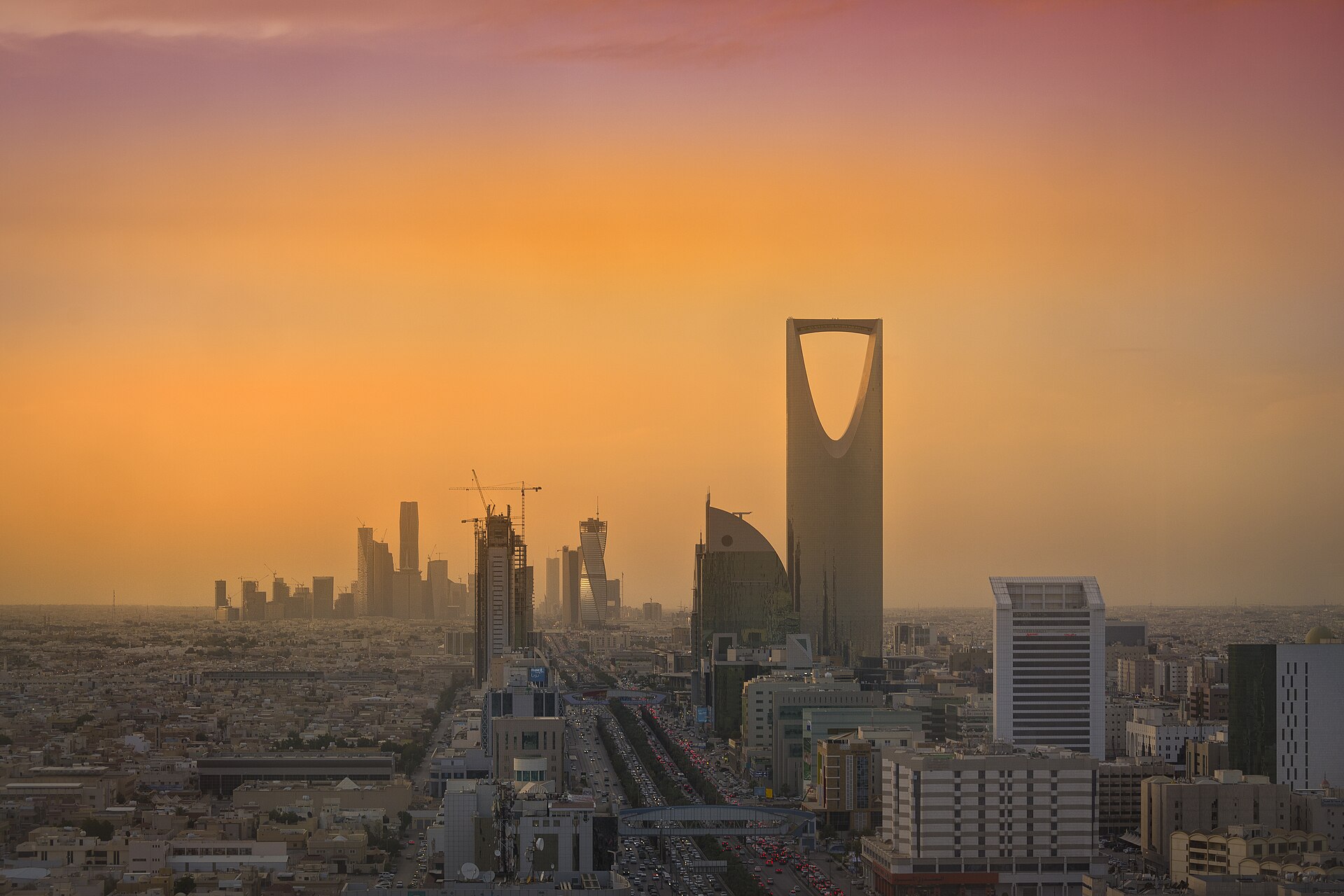
The timing compounds the signal. The IMF published -3.3 percent on the same day the kingdom is preparing to welcome European and Gulf heads of state. The FII — Vision 2030’s premier investor conference — will convene against the backdrop of the worst growth forecast the kingdom has received from the Fund in the current cycle. Riyadh built the congress, and the war built the agenda.
The question for FII attendees is not whether Vision 2030 is worth investing in. It is whether the physical security of the investment can be guaranteed — and the IMF’s revision trajectory suggests the market has already priced in the answer.
The New York Times noted on October 10 that airport strikes threaten Riyadh’s events calendar. The deeper issue is that events-driven economic activity — tourism, hospitality, conferences — requires a credibility threshold that repeated airport bombardment erodes. Aramco CEO Amin Nasser told Saudi Gazette that disruptions typically last “days, not weeks or months.” The Hormuz blockade has lasted months. The airport strikes have recurred weekly since October 6.
A Hedge Against Price, Not Against War
Vision 2030 was designed in 2016, when Saudi Arabia’s existential economic risk was a sustained decline in oil prices. The programme assumed that if oil dropped to $40 or $50 a barrel, the kingdom needed a non-oil economy large enough to sustain public spending, employment, and social stability. The IMF, in its Article IV consultations from 2017 to 2025, consistently stress-tested Saudi fiscal resilience against price shocks. It never stress-tested against volume shocks caused by war.
The distinction between price risk and volume risk is the gap that 2026 exposed. In a low-price scenario, Saudi Arabia produces its full output at a lower margin. The diversified economy compensates. In a wartime volume scenario, production collapses regardless of price. The pipeline is targeted. The airports close. The tourists cancel. The investors withdraw. Every pillar of Vision 2030 fails simultaneously — not because diversification was the wrong strategy, but because it was built on load-bearing assumptions about physical security that no longer hold.
Sadikov captured the conditional nature of the pre-war assessment in the same June interview with The National. He warned: “Beyond near-term effects, a prolonged conflict could erode investor confidence and weaken medium-term growth and diversification prospects.” The conflict has prolonged. The erosion is measured at -3.3 percent.
The IMF frames its Saudi forecast as conditional. The October WEO noted, according to AGBI, that its projections “reflect the extended closure of the Strait of Hormuz and a corresponding larger pick-up when it reopens.” Saudi Arabia’s own finance ministry projects a 12.8 percent GDP rebound in 2027, according to Reuters via Zawya. Both forecasts assume Hormuz reopens. Neither specifies when.
The 1990–91 Gulf War cost Saudi Arabia $55 billion, cancelled a dozen major projects, and depressed GDP per capita in some years, according to MERIP. That war lasted seven months and did not target Saudi export infrastructure directly. The current conflict has lasted eight months, has struck every major export corridor, and shows no ceasefire timeline. Trump stated on October 8 that the US “will not be attacking Iran at any time prior to the midterm elections” on November 3, per The National — a statement that effectively set a floor on the duration of the Hormuz blockade. No Saudi official has responded publicly to the October 13 WEO figure.
The -3.3 percent is not the verdict on Vision 2030. It is the first page of the verdict. Whether the programme emerges as a resilient framework that absorbed a wartime shock or as a fiscal liability that compounded one depends on a variable the IMF cannot forecast and Riyadh cannot control: when the war ends.
Frequently Asked Questions
What was Saudi Arabia’s original 2026 budget before the war?
The Cabinet approved the 2026 budget on December 2, 2025, with projected revenues of SAR 1,147.4 billion, expenditures of SAR 1,312.8 billion, and a planned deficit of SAR 165.4 billion, according to Argaam. Public debt was forecast at SAR 1.62 trillion, or 32.7 percent of GDP. The pre-war budget assumed Saudi output near its OPEC+ target and made no provision for infrastructure damage or trade-route disruption. The revised 2026 deficit of SAR 245 billion represents a 48 percent overrun against that baseline.
How much has Aramco earned during the war despite the production collapse?
Aramco reported second-quarter 2026 adjusted net income of $33.4 billion, according to QNA. The high earnings reflect elevated oil prices — Aramco’s average realised crude price was $108.1 per barrel in Q2, according to Zawya — which partially offset volume losses. Aramco’s $21.9 billion base quarterly dividend constrains how much of its earnings can be redirected to closing the fiscal gap, as the dividend supports both government revenue and PIF capital flows.
When is the next OPEC+ meeting and what is Saudi Arabia’s production target?
The next OPEC+ ministerial meeting is scheduled for November 1, 2026, according to Nation Thailand. Saudi Arabia’s production target exceeds its actual output by roughly half, as detailed in the production data above, but OPEC+ compliance frameworks were not designed to distinguish between voluntary restraint and involuntary loss from war disruption. The November 1 meeting will be the first since the IMF published its -3.3 percent figure, and the kingdom faces the unusual position of arguing for quota relief on production it physically cannot deliver.
What is the status of US-Iran diplomacy that could reopen Hormuz?
Iran submitted a seven-day roadmap via Qatar in September to reopen the Strait of Hormuz, requesting that the US lift its counter-blockade, grant sanctions waivers, and release approximately $12 billion in frozen assets, according to Al Jazeera. The Wall Street Journal reported that Trump rejected the plan and expects renewed bombing after the midterms, according to Hurriyet. Iran’s Rezaei called the latest US response “insufficient,” per CBS News. No deal framework exists as of October 13, and neither the IMF nor Riyadh has specified a date for Hormuz reopening — the variable on which both forecasts rest.