
RIYADH — Saudi Arabia has no military response available that it has not already tried, and the promised answer that its Energy Minister delivered at the World Petroleum Congress on Sunday carries no operational weight beyond the air campaigns that have failed to stop Houthi ballistic missiles from reaching the kingdom’s airports. Prince Abdulaziz bin Salman — who holds no defence portfolio and was addressing an energy conference, not a military briefing — told delegates that the kingdom’s response to weeks of Houthi strikes would be “equally serious,” but named no weapon, no timeline, and no target the coalition has not already destroyed, while 508 flights sat cancelled at King Khalid International Airport across town and a government closure order kept Riyadh’s airspace shut through at least October 17 — four days before Riyadh Season is scheduled to open.
The coalition destroyed 136 Houthi military targets on October 10 and flew roughly a hundred aircraft in Operation Dawn of Yemen the week before. Neither operation prevented a projectile from striking KKIA’s Terminal 4 on October 11, killing a Pakistani resident and injuring eleven — the fourth airport attack in six days, bringing the total death toll across Saudi airports to twenty since October 6. Every instrument that might change the trajectory has been structurally foreclosed: Washington declined both of the Crown Prince’s September appeals for direct US strikes on Houthi targets, Turkey’s parliament has not ratified the Mecca pact, and Pakistan’s own defence minister acknowledged that combat “is practically being conducted by Saudi Arabia’s own forces.”
Table of Contents
- The Threat That Came From the Wrong Podium
- What Has Destroying 136 Targets Actually Stopped?
- Five Hundred and Eight Cancellations and Five Missing CEOs
- Who Fights Alongside Saudi Arabia?
- What Target Would Make the Houthis Stop?
- The Calendar That Cannot Move
- What Does a Sixty-Day FAA Notice Tell the Market?
- The Ceasefire That Runs Through Tehran
- Frequently Asked Questions
The Threat That Came From the Wrong Podium
The first indicator that Saudi Arabia’s promised escalation was rhetorically loaded and operationally hollow was the man delivering it. Prince Abdulaziz bin Salman, the kingdom’s Energy Minister, addressed the 25th World Petroleum Congress — an event Riyadh had lobbied for years to host, expecting 25,000 delegates, more than a hundred energy ministers, and roughly 500 oil industry executives — and declared that “the events of recent weeks are serious” and that “our response must be equally serious.” He added, in language that carried the cadence of a rally rather than a policy statement, that “the word ‘fear’ in the Saudi dictionary does not exist” and that Saudis are “fearless, combatant and determined people.”
The word ‘fear’ in the Saudi dictionary does not exist. We, as Saudis, are fearless, combatant and determined people.
Prince Abdulaziz bin Salman, Saudi Energy Minister, WPC Congress, October 12, 2026
The words were reported across the Gulf as a signal that Riyadh was preparing something consequential, but the platform undercut the message before it landed. The person speaking was a petroleum technocrat at a petroleum conference, not a military official at a command briefing, and the front rows of his audience were conspicuously missing the CEOs of ExxonMobil, TotalEnergies, Shell, Chevron, and BP — all of whom had dropped from or cancelled their speaker appearances by the time the congress opened on Sunday. Prince Abdulaziz told those who remained that “Riyadh is the capital of energy security and your presence here today proves that,” a claim that the five empty chairs at the top of the programme did rather more to undermine than his speech did to establish.
The Middle East briefing 3,000+ readers start their day with.
One email. Every weekday morning. Free.
The coalition’s actual military spokesman, Major General Turki al-Malki, offered a parallel statement that was more precise in its vocabulary and equally unspecific in its content. Al-Malki described the October 10 strike on King Khalid International Airport — which killed thirteen people and injured more than three hundred — as “a full-fledged war crime” and pledged that the coalition would “respond decisively to this terrorist attack in accordance with the Customary International Humanitarian Law.” On Sunday, al-Malki reported that the coalition had intercepted and destroyed a ballistic missile launched at Khamis Mushait — a defensive intercept, framed in the language of decisiveness, that bore no resemblance to the escalatory posture the Energy Minister was advertising in the conference hall next door. Neither official identified a capability, a target set, or an operational concept that differed from what the coalition has been doing for the past two weeks.
What Has Destroying 136 Targets Actually Stopped?
Saudi Arabia’s problem is not a shortage of sorties or ordnance. On October 4 and 5, the coalition launched Operation Dawn of Yemen with approximately a hundred aircraft, striking hundreds of Houthi positions across northern Yemen in what amounted to the heaviest sustained aerial operation Riyadh has mounted in months. On October 10 — the same day a Houthi ballistic missile killed thirteen people and injured more than three hundred at KKIA — the coalition conducted a separate large-scale raid that destroyed 136 military targets including ballistic missile launch sites, command-and-control centres, and weapons storage facilities across Saada, Hodeidah, al-Jawf, and Marib. Within twenty-four hours, Houthi military spokesman Yahya Saree announced what he called “four qualitative operations” — repeated strikes on Riyadh’s airport, an attack on King Fahd International Airport in Dammam, and claimed hits on the Shedgum gas plant and Tanajib oil facility in the Eastern Province, neither of which has been confirmed by Saudi authorities.
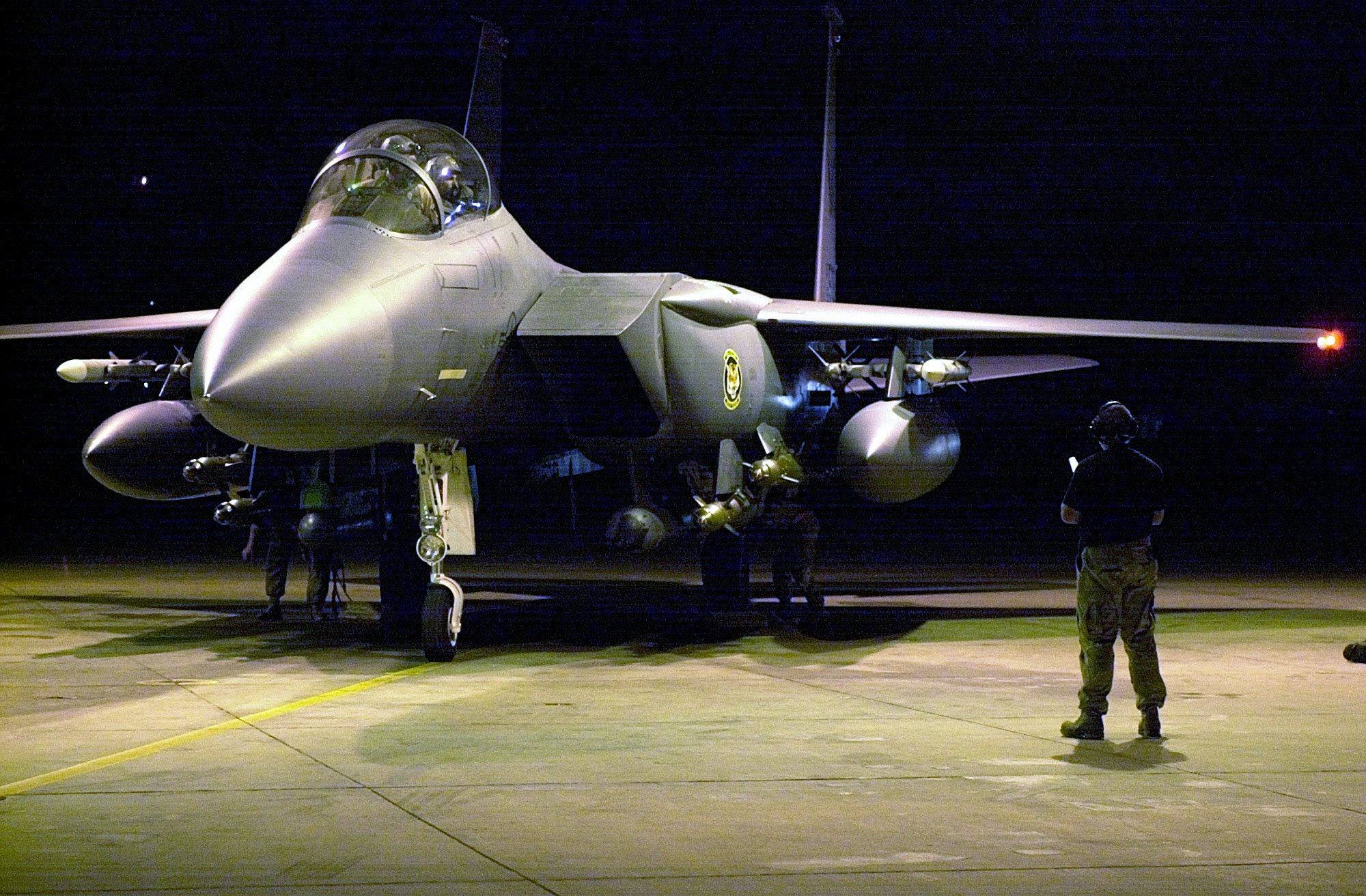
The operational pattern has become circular, and the Houthis understand that it favours them. Saudi Arabia destroys launchers and the Houthis launch from dispersed positions that can be reoccupied within hours; the coalition hits command centres and the targeting data continues to flow through networks that do not depend on fixed infrastructure. Riyadh’s air force can reach any point in Houthi-controlled Yemen within minutes, and the Houthis can reach Riyadh’s main airport with ballistic missiles that Saudi air defences have repeatedly but not always intercepted. Mohammed al-Basha, a Yemen analyst, offered a candid assessment of where that leaves the kingdom: “I’d hate to be a Saudi today. There is no easy solution to Yemen,” adding that a return to full-scale war carries, in his judgment, “50-50 odds of a Saudi victory.”
The Houthis have also demonstrated that the warning itself inflicts damage independent of whether a warhead reaches its target. On October 11, Saree issued a direct public advisory telling all airlines, oil workers, and travellers to avoid Saudi airports and airspace, declaring them “vulnerable to attack” and a “theatre of operations for our forces” — exempting only the airports serving Mecca and Medina. He added that “Saudi Arabia bears responsibility for any failed interceptions,” a line designed to shift the insurance and liability burden onto every carrier still scheduling flights into the kingdom. The advisory’s purpose was not to destroy infrastructure but to hollow out the commercial confidence on which Saudi Arabia’s aviation, tourism, and investment calendar depends, and by that measure it has been substantially more effective than any intercepted missile.
Five Hundred and Eight Cancellations and Five Missing CEOs
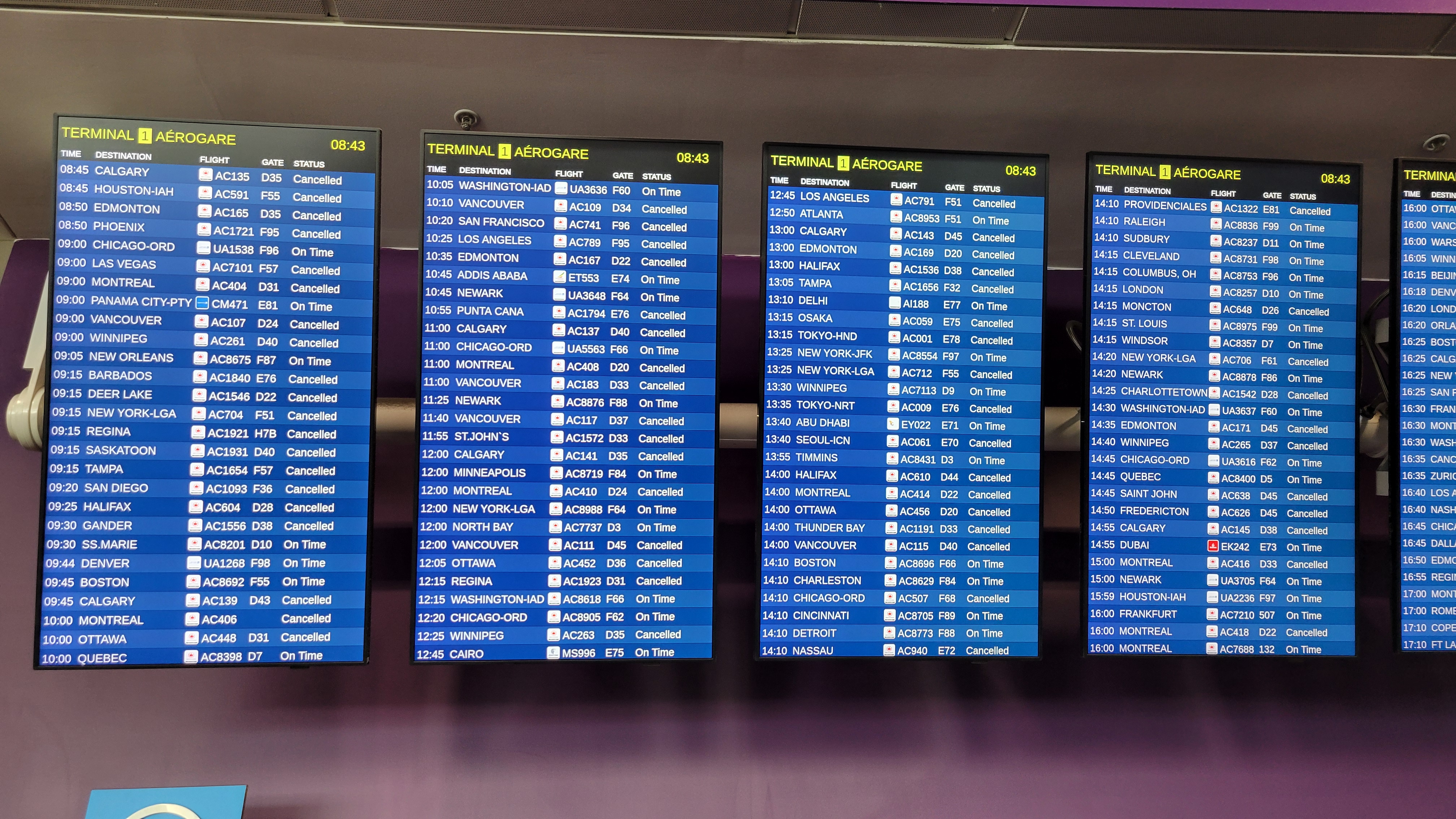
The commercial damage on Sunday was immediate, quantifiable, and severe enough that no amount of ministerial rhetoric could obscure it. Flightradar24 data showed 508 cancelled flights at KKIA, representing 74 per cent of the day’s scheduled services. Jeddah saw 130 cancellations — about 17 per cent of its schedule — and King Fahd International Airport in Dammam, which had itself been attacked the previous night, lost 70 flights, or 30 per cent of its departures. Across the kingdom, roughly 486 of 1,048 scheduled departures were cancelled, producing a national disruption rate approaching 46 per cent.
The airline decisions behind those numbers carry a signal that extends well beyond any single day’s disruption, because carriers do not suspend operations and resume them on forty-eight hours’ notice — they make scheduling, crewing, and insurance calculations that reflect their assessment of the threat environment weeks or months ahead. Lufthansa Group halted Saudi flights through October 16, Flydubai through October 14, and Air India through October 15, but the more instructive decisions came from carriers with longer horizons: Air France-KLM suspended through the end of October, SriLankan Airlines through October 18, Philippine Airlines through November 29, and Cathay Pacific through January 31, 2027. The sharpest commercial verdicts were delivered by Delta Air Lines and Singapore Airlines, neither of which has yet started flying to Riyadh — Delta postponed its planned Atlanta–Riyadh route to March 2027, and Singapore Airlines pushed its Riyadh inaugural to March 28, 2027, market-facing admissions that their risk departments do not believe the security environment will normalise on any timeline that matters for this calendar year.
| Airline | Action | Through / Until |
|---|---|---|
| Lufthansa Group | Suspended | October 16, 2026 |
| Flydubai | Suspended | October 14, 2026 |
| Air India / Air India Express | Suspended | October 15, 2026 |
| Etihad Airways | Suspended | No end date announced |
| SriLankan Airlines | Suspended | October 18, 2026 |
| Air France-KLM | Suspended | End of October 2026 |
| Philippine Airlines | Suspended | November 29, 2026 |
| Cathay Pacific | Suspended | January 31, 2027 |
| Delta Air Lines | Route launch postponed | March 2027 |
| Singapore Airlines | Route launch postponed | March 28, 2027 |
The World Petroleum Congress itself, which was designed to showcase Riyadh as a credible global energy capital, instead became a demonstration of the vulnerability the Houthis had just laid bare. The five oil-major CEOs who withdrew from the speaker programme were the most powerful figures the congress was supposed to attract, and their collective absence told the industry something that Prince Abdulaziz’s counter-claim — “Riyadh is the capital of energy security and your presence here today proves that” — could not overwrite: that the executives whose companies handle a substantial share of world crude production had concluded, individually, that the reputational or physical risk of appearing at a conference in a city under active missile attack outweighed whatever Riyadh was offering from the podium.
Who Fights Alongside Saudi Arabia?
The collective defence architecture that Saudi Arabia assembled was built for a moment like this, and it has produced nothing that functions as collective defence. Crown Prince Mohammed bin Salman appealed twice to President Trump in September for direct US strikes on Houthi targets in Yemen, and both requests were declined. Trump’s public response after the October 10 airport strike — “we may, we’re going to look at it” — was followed by the observation that “the Saudis are good fighters,” a compliment whose structure was indistinguishable from a justification for inaction. The administration subsequently deployed more than a hundred military advisers under a new joint command to provide intelligence and targeting support, but no offensive US air power has been committed, and Trump had already ruled out strikes on Iran before the November 3 midterm elections — a timeline that subordinates Gulf security to the American domestic calendar.
Secretary of State Marco Rubio said the US intends to live by the bilateral defence agreement, but the distinction between an intelligence partnership and an offensive military commitment is not academic when ballistic missiles are reaching a civilian airport terminal and killing passengers. The hundred-plus advisers can help Saudi Arabia refine its targeting; they cannot alter the fundamental asymmetry in which destroying Houthi targets does not prevent the next launch. CNN reported on October 11 that Riyadh had stopped “short of any major deployment of its own troops” into Yemen, which means the war is being fought exclusively from the air — the one dimension in which Saudi Arabia has already exhausted its escalatory range without changing the trajectory of the conflict.
The Mecca pact, which Saudi Arabia convened as a collective security framework to answer precisely this kind of threat, is functionally inoperative. Prince Khalid bin Salman, the Defence Minister, announced on October 5–6 that the pact committee had agreed to “activate collective deterrence measures … in response to the attacks and all those responsible for them,” but the two signatories with deployable military capacity have activated nothing resembling deterrence. Turkey’s parliament has not ratified the agreement, and no Turkish troops or air-defence systems have materialised on Saudi soil. Pakistan’s defence minister was more forthcoming than diplomatic convention usually permits, acknowledging that combat against the Houthis “is practically being conducted by Saudi Arabia’s own forces.” Grand Mufti Saleh al-Fawzan’s rare September call for troops to defend the kingdom — an extraordinary intervention by the religious establishment in what is usually a ministry-level military question — was itself an admission that the regular channels had failed to deliver a result.
What Target Would Make the Houthis Stop?
The question that the Energy Minister’s “severe response” cannot answer is not one of will or firepower but of targeting, and the constraint is structural rather than operational. The Jerusalem Post’s analysis captured the asymmetry in a single observation: “The Houthis have less to lose than Saudi Arabia. They don’t have a lot of strategic infrastructure.” Saudi Arabia operates a substantial portion of the global oil economy’s most critical facilities, runs an aviation sector that underpins a multi-billion-dollar tourism programme, and has staked its post-oil future on an events calendar that requires international airlines to fly into airports the Houthis have publicly designated as a war zone. The Houthis operate from dispersed positions in mountainous terrain with mobile launchers, decentralised command networks, and a population that has absorbed a decade of war without capitulating.
Baraa Shiban, a researcher at the Royal United Services Institute, framed the broader strategic arithmetic: Iran through the Houthis “is threatening almost a third of the global oil economy.” The threat works precisely because it is asymmetric — the cost of a Houthi ballistic missile is a fraction of the cost of the interceptor designed to stop it, the launch site can be reconstituted faster than the coalition can restrike it, and the reputational damage to Saudi Arabia’s standing as a stable commercial destination accumulates with each NOTAM extension whether or not a warhead actually reaches its target. Ibrahim Jalal, an independent Yemen and Gulf expert, observed that “the no war, no peace stalemate has not produced any outcome closer to a political settlement,” an assessment that implies the air campaign is too small to force a Houthi capitulation and too visible to serve as the backdrop to negotiations.
The coalition’s own operational record makes the ceiling visible. Saudi Arabia has bombed the same categories of targets — launchers, command posts, ammunition depots, communications infrastructure — across progressively larger operations and with progressively less deterrent effect, because the Houthis regenerate capacity faster than the coalition degrades it, and because the Houthis have calibrated their own campaign to inflict maximum reputational and economic damage on Saudi Arabia with minimum physical exposure of the kind of infrastructure a coalition air force could usefully destroy. The Houthis, as the Jerusalem Post noted, “have proven in the past that they can penetrate these defenses,” and the events of October 6 through 11 have confirmed that assessment in terms no air-defence ministry can argue with.
The Calendar That Cannot Move
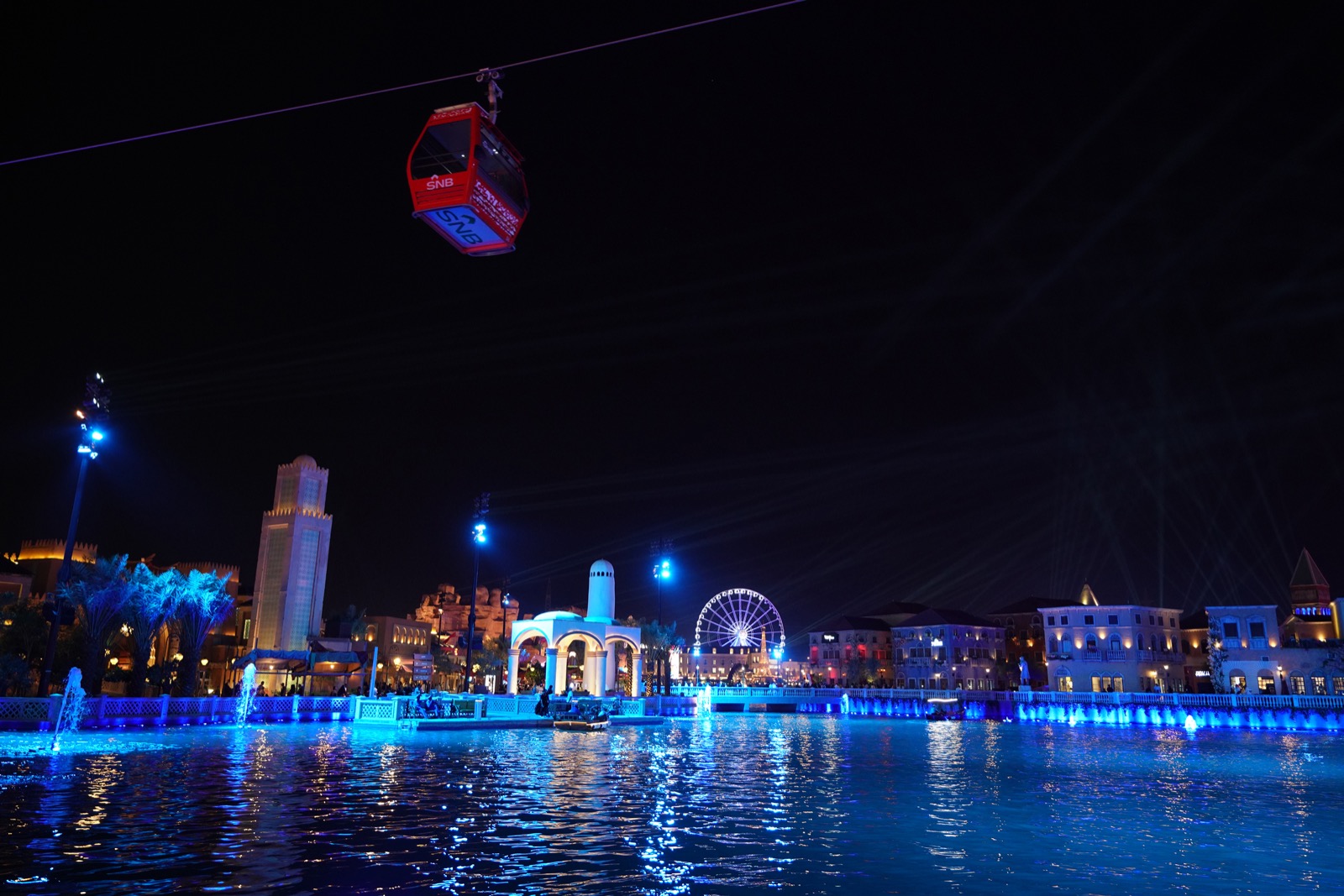
Saudi Arabia’s autumn events programme — the most concentrated period of international-facing activity on the kingdom’s annual schedule — runs directly through the threat window the Houthis have established and shows no sign of bending around it. The KKIA closure order extends through 21:00 UTC on October 17. Riyadh Season, the entertainment and tourism programme that has become the most visible expression of the kingdom’s diversification strategy, opens four days later on October 21. The EU-GCC Summit follows on October 24, and the Future Investment Initiative — the conference Riyadh uses to court global institutional capital — runs October 26 to 29.
None of these events has been officially postponed or modified, but none can proceed as advertised if KKIA remains closed or if the airlines that would carry delegates, investors, and performers continue to refuse service to the capital. The New York Times reported that the Houthi airport strikes directly threaten the events calendar, and the commercial decisions by Delta and Singapore Airlines to defer their Riyadh route launches to March 2027 suggest that the airline industry has priced in a resolution timeline that extends well past October. Dania Thafer, executive director of the Gulf International Forum, captured the bind: “I still think that the Saudis probably want de-escalation. They don’t want long-term escalation, but the Houthis are making it very difficult.”
Whether KKIA reopens after the October 17 deadline or whether the closure is extended remains unresolved at the time of writing, and neither outcome solves the underlying problem. If the closure is extended, Riyadh Season opens to a capital whose main airport is shut. If it expires and the airport reopens, the question becomes whether airlines — operating under a US regulatory advisory that runs through December 10 and a European safety warning widened on October 9 — will resume service on the strength of a four-day window between the end of a wartime airport closure and the launch of a tourism festival that depends on international arrivals.
What Does a Sixty-Day FAA Notice Tell the Market?
The Federal Aviation Administration issued Notice A0056/26 on October 11, effective at 21:00 UTC, advising all US operators to exercise caution across Saudi airspace at all altitudes including overflight traffic. The notice is valid through 05:00 UTC on December 10 — a sixty-day window that covers every major event on the Saudi autumn calendar and extends six weeks beyond the last of them. The European Union Aviation Safety Agency widened its own Saudi airspace advisory on October 9. Together, the two regulatory frameworks treat Saudi airspace as a risk environment on a timeline that has nothing to do with the KKIA NOTAM’s October 17 expiry and everything to do with their assessment that the threat will not resolve on a predictable schedule.
A sixty-day validity does not mean the FAA forecasts sixty days of conflict, but it is the framework within which every US and European carrier must now make scheduling, insurance, and crewing decisions for Saudi routes — and the FAA does not issue advisories at that duration lightly or retract them quickly. The insurance market will follow the regulatory signal: war-risk premiums for Saudi airspace were already climbing after the first airport strikes on October 6, and the October 10 mass-casualty event will drive a repricing that airlines cannot absorb without either passing costs to passengers or pulling routes. Twenty people have died in Saudi airport attacks across four incidents in six days, thirteen of them in a single strike at the kingdom’s busiest air terminal, and the insurers who underwrite the hull and liability coverage for every flight into that airspace will set their premiums according to that record, not according to Prince Abdulaziz bin Salman’s assertion that the kingdom does not know fear.
The Ceasefire That Runs Through Tehran
Iran’s foreign minister, Abbas Araghchi, offered on October 11 to “facilitate dialogue between Saudi Arabia and Yemen” — a formulation that positions Tehran as a neutral intermediary in a conflict that Iranian-supplied weapons, training, and intelligence have sustained and sharpened for a decade. Mohsen Rezaei, secretary of Iran’s Expediency Council, simultaneously described the American response as “insufficient,” a statement whose implicit message required no diplomatic training to decode: if Washington does not escalate enough to deter Iran, Tehran’s proxies will continue to define the pace and the targets. A senior Houthi official extended the deterrent in the other direction, warning that the US would receive a “swift and painful response” if it intervened militarily in Yemen — a threat aimed squarely at the only external actor whose air power could change the campaign’s outcome.
The diplomatic bind facing Saudi Arabia is that the negotiated settlement its own analysts acknowledge as the only viable exit runs through the same capital whose proxy closed the airports. Every week the Houthis demonstrate they can reach KKIA with ballistic missiles increases Tehran’s value as the interlocutor capable of making the strikes stop, and every week Riyadh declines to engage through that channel adds pressure on the aviation schedules, the insurance premiums, and the events calendar on which the kingdom’s post-oil narrative depends. Saudi Arabia asked the UN Security Council to act on October 9 and issued a joint condemnation with Egypt, Pakistan, and Turkey on October 11, but neither action produced a mechanism that stops a missile, and neither addressed the underlying reality that Prince Abdulaziz’s “severe response” was constructed to obscure: that Saudi Arabia’s available instruments have already been deployed, that its allies have not materialised, and that the adversary it faces has less to lose and no infrastructure worth trading for a ceasefire.
Prince Abdulaziz told the congress that Saudis do not know fear, but the carriers and insurers whose decisions will determine whether any of those events proceeds have been measuring something different, and their assessments — suspensions running into 2027, a US advisory that does not expire until December — have been consistent.
Frequently Asked Questions
Has the US committed to direct military strikes against the Houthis?
No. President Trump declined both of Crown Prince Mohammed bin Salman’s September appeals for US strikes on Houthi targets in Yemen and separately ruled out military action against Iran before the November 3 midterm elections. The US response has been limited to intelligence and targeting support via more than a hundred military advisers deployed under a new joint command structure, with no offensive air commitment announced. While Secretary of State Rubio affirmed that Washington intends to live by the bilateral defence agreement, the proposed $24.3 billion sale of 48 F-35A fighters to Saudi Arabia remains before Congress and would not deliver operational aircraft for years even if approved — a procurement timeline, not a crisis-response capability.
Which Saudi airports has GACA closed beyond KKIA?
The General Authority of Civil Aviation ordered around-the-clock closures of Gizan and Najran airports — both near the Yemen border — through October 15 at 18:00 local time. Abha Regional Airport was placed under nightly closures from 18:00 to 06:00 through the same date. Jeddah’s King Abdulaziz International Airport remains operational, as do the airports serving Mecca and Medina, the only two cities the Houthis have publicly exempted from their targeting declaration. King Fahd International Airport in Dammam was struck on October 11 and underwent a GACA safety assessment; its operational status beyond that assessment had not been publicly clarified as of October 12.
Who was killed in the October 8 KKIA attack?
Three Saudi nationals died in the October 8 strike on King Khalid International Airport, among them Captain Hamoud Ali Al Kalthami, a Saudia airline pilot. The October 8 attack was the second airport strike in three days, following an October 6 incident that killed three people. Combined with thirteen dead on October 10 and one Pakistani resident killed on October 11, at least twenty people have been killed and more than three hundred injured in Saudi airport attacks across four incidents in six days — the deadliest sustained period of Houthi strikes against Saudi civilian infrastructure since the war began.
Has Riyadh announced changes to its autumn events calendar?
No official postponement or modification of Riyadh Season (October 21), the EU-GCC Summit (October 24), or the Future Investment Initiative (October 26–29) had been announced as of October 12. The World Petroleum Congress opened on its scheduled date despite the withdrawal of five oil-major CEOs from the speaker programme. Historically, Saudi Arabia’s major conferences and investment summits have required delegate assurances on aviation access, security, and insurance availability that the current environment — with the capital’s airport closed under a government NOTAM, the FAA advising caution through December 10, and ten international carriers suspending or deferring service — cannot currently provide.