
DHAHRAN — On October 20, Saudi Arabia said Dammam’s King Fahd International Airport had been targeted in a fresh attack — the second reported strike on the facility in nine days, coming after a confirmed Houthi hit on October 11 that landed on the tarmac and started a fire beside parked aircraft. The world has spent two weeks fixated on the carnage at Riyadh’s King Khalid International, where attacks have killed at least twenty people and wounded more than 370 across Saudi airports since early October. Dammam has generated no confirmed fatalities, and that is precisely why its strategic significance has been missed.
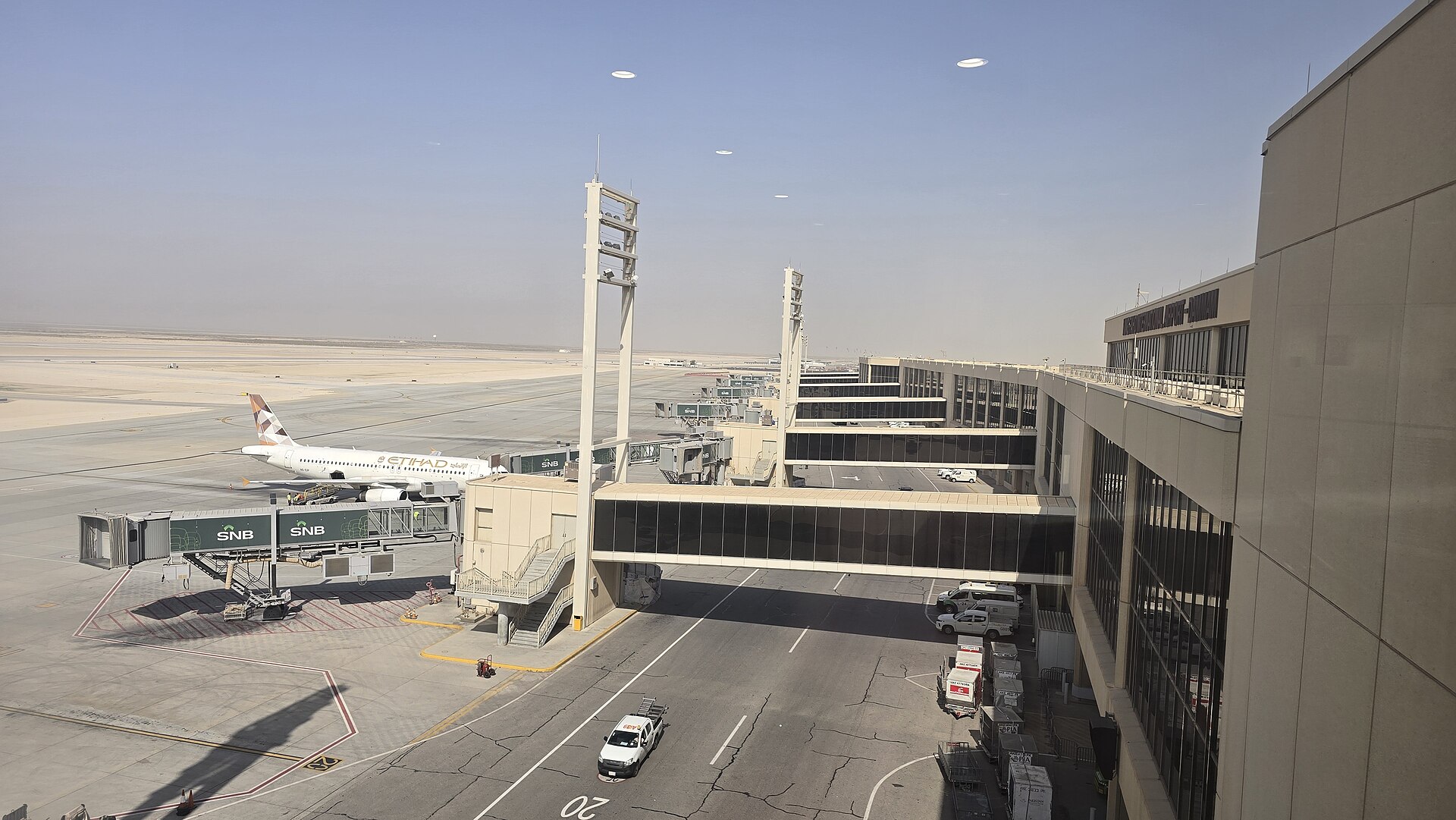
King Fahd International Airport handles 13.7 million passengers a year, making it the kingdom’s third busiest, but its value to Saudi Arabia is not measured in boarding passes. Behind the commercial terminals, it houses a dedicated Aramco Terminal and serves as the home base for Al Oula Aviation — the sixty-aircraft airline that Aramco owns to rotate technical crews into oil fields, gas plants, and export terminals scattered across a region where roads do not always reach. When the Houthis struck KFIA on October 11, they did not hit a symbol of Saudi prestige. They hit the supply chain that keeps Aramco producing.
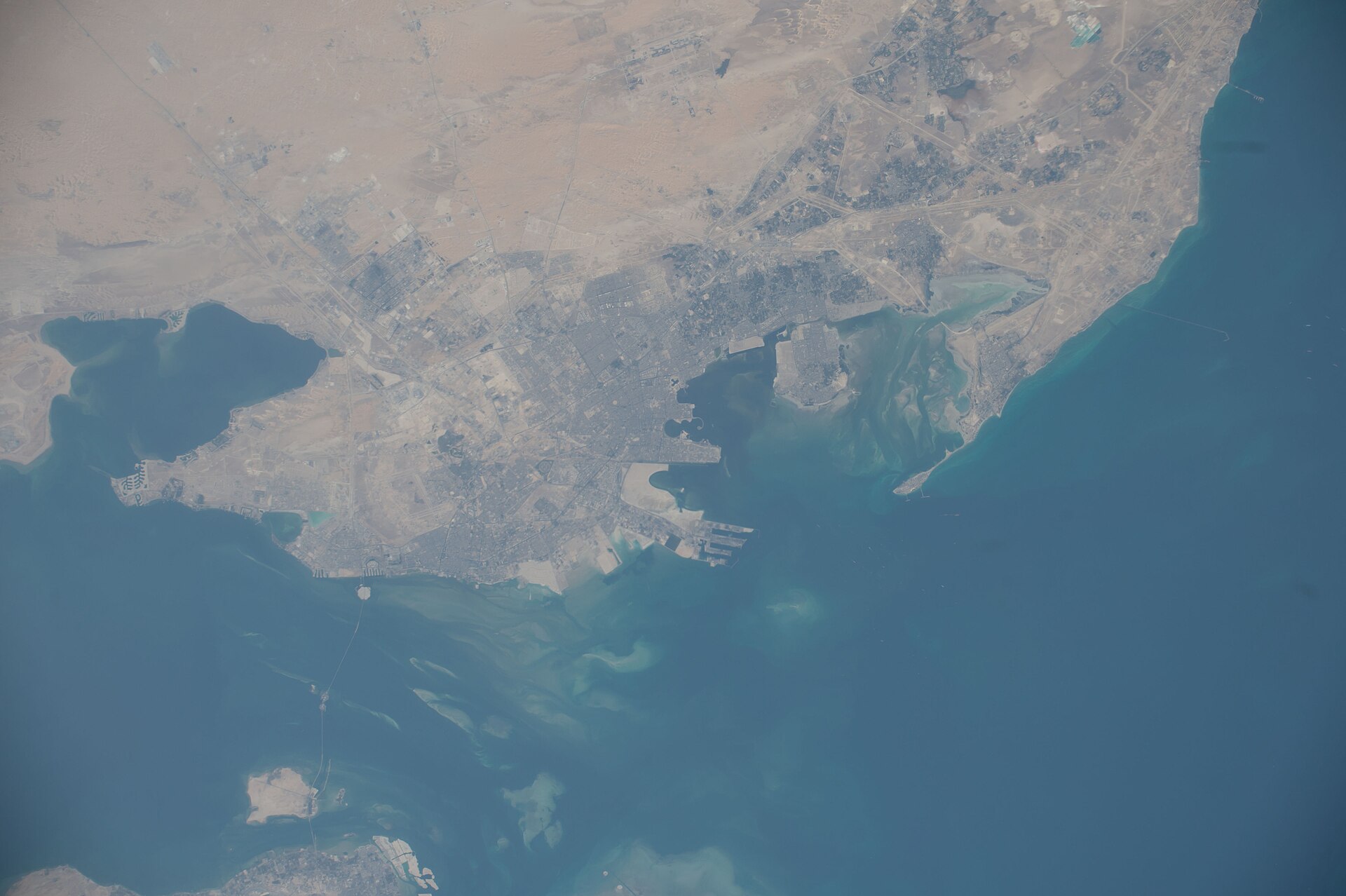
Table of Contents
- What Hit King Fahd Airport on October 11?
- The Terminal That Does Not Appear on Any Departure Board
- Can Aramco Staff Its Oil Fields Without Dammam?
- Who Has Already Stopped Flying?
- The Houthis Named the Eastern Province
- What Stands Between the Missiles and the Oil?
- The Barrel That Cannot Fly
- Frequently Asked Questions
What Hit King Fahd Airport on October 11?
Saudi Arabia’s General Authority of Civil Aviation confirmed on October 11 that King Fahd International Airport had been attacked, saying damage assessments and safety inspections were underway. An eyewitness account published by Simple Flying placed the impact at approximately 8:30 p.m. local time, describing a projectile that struck the tarmac near several parked aircraft and ignited a fire. No casualties were reported at KFIA from the attack — a contrast to the devastation at Riyadh’s King Khalid International, where a strike on Terminal 4 on the same day killed one person and wounded eleven.
The attack came on a day when Saudi Arabia was already under siege. Hours before the KFIA strike, the Terminal 4 missile had hit Riyadh, following the October 10 attack that killed thirteen and wounded more than 300 at the same airport — the deadliest single incident of the campaign. While the world’s cameras trained on the wreckage in Riyadh, the Dammam strike registered as a footnote: no dead, fire extinguished, airport still operating. But the target selection told a different story to anyone reading the operational map of Saudi oil production.
Houthi military spokesman Yahya Saree claimed responsibility for the KFIA strike and said the projectile “directly hit its target and disrupted air traffic.” In the same statement, Saree claimed simultaneous strikes on Aramco’s Shedgum gas plant and Tanajib oil facility, both in the Eastern Province. Saudi Arabia has not confirmed damage to either facility. The Saudi-led coalition said separately that it had intercepted and destroyed a drone over the Eastern Province that day, though whether that interception related to the KFIA strike or the claimed oil-facility attacks remains unclear.
The pairing of targets was the signal. Riyadh’s King Khalid airport is a political target — strikes there generate casualties, headlines, and diplomatic fury. King Fahd International Airport sits in the middle of something the Houthis have explicitly identified as a military objective: the oil infrastructure of the Eastern Province. Striking it alongside Shedgum and Tanajib was not a coincidence but a statement that the Houthis understand the operational geography of Saudi crude production — and intend to exploit it.
The Middle East briefing 3,000+ readers start their day with.
One email. Every weekday morning. Free.
The Terminal That Does Not Appear on Any Departure Board
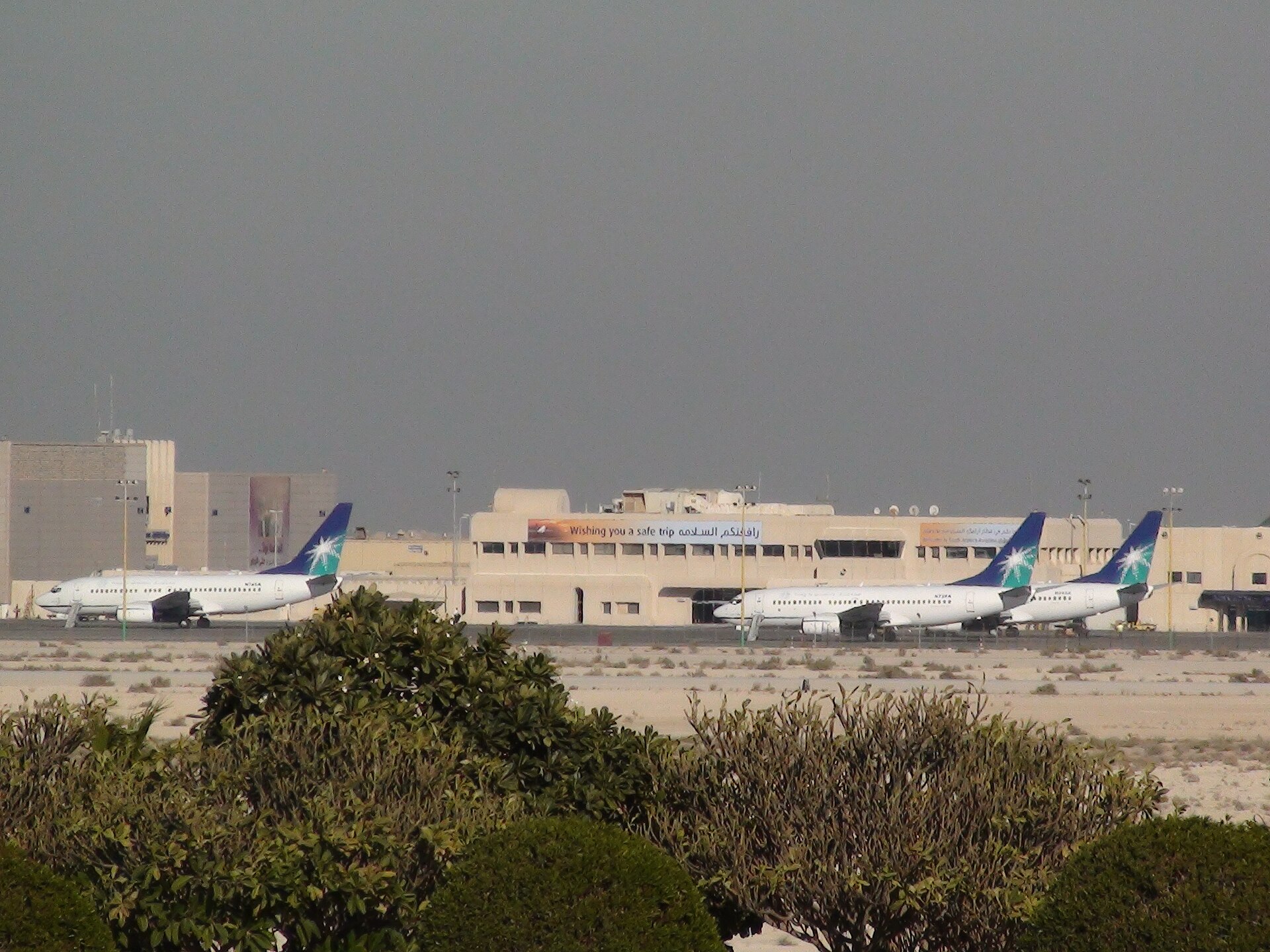
Among King Fahd International Airport’s facilities is a terminal that does not serve ordinary passengers. The Aramco Terminal handles flights exclusively for Saudi Aramco employees, connecting them to company sites at Yanbu, Tanajib, Shaybah, and Haradh — locations that range from refining hubs on the Red Sea coast to drilling operations deep in the Rub’ al-Khali desert. It is the operational front door of Al Oula Aviation, the Aramco-owned airline that rebranded from Mukamalah Aviation in August 2024.
Al Oula’s fleet includes more than sixty aircraft — seven Boeing 737-800s for trunk routes, twenty-four AgustaWestland AW139 helicopters for offshore platforms and remote pads, Hawker 900XP jets, and King Air 350 turboprops for shorter connections, according to CH-Aviation fleet data. The airline manages eight Aramco-owned airports and more than 300 helipads across the kingdom, forming a hub-and-spoke network with KFIA at its centre. No other airport in Saudi Arabia provides this function. If a gas compressor fails at a remote processing plant or an emergency response team is needed at a desert field site, the flight originates at Dammam.
In 2021, Aramco signed a memorandum of understanding with Dammam Airports Company to build an integrated logistics ecosystem at KFIA’s cargo village, designed to streamline the movement of equipment, spare parts, and subcontractors serving Aramco operations across the Eastern Province. A master plan approved for KFIA targets more than 600,000 tonnes of cargo per year by 2030, up from 140,000 tonnes handled in 2024, with a design contract signed with WSP in September 2026. The cargo expansion was a pillar of the Eastern Province’s growth story — an ambition that assumed the runway would stay open and the insurance premiums would stay sane. The deeper question is whether Aramco’s oil fields can remain staffed and supplied if neither assumption holds.
Can Aramco Staff Its Oil Fields Without Dammam?
The Eastern Province is not a single oil field but a chain of processing plants, export terminals, and extraction sites stretched across hundreds of kilometres of coastline and desert. King Fahd International Airport serves all of it. KFIA connects the Dammam–Dhahran–Al Khobar metropolitan area to Qatif, Ras Tanura, and Jubail — the full industrial corridor that produces, stabilises, refines, and ships the bulk of Saudi crude. Roads link the coastal cities: the Gulf Road runs north from Dammam through Qatif to Ras Tanura, and the Dhahran–Jubail Highway reaches the industrial port. For the urban core of the Eastern Province, a grounded airport is an inconvenience.
The problem lies further out. Shaybah, one of Aramco’s largest producing fields, sits deep in the Rub’ al-Khali desert, reachable by a single desert highway or by air. Haradh, a major gas processing hub, is far inland. Tanajib and other offshore-support facilities depend on helicopter crews staging from Dammam. When critical infrastructure at these remote sites fails — and at facilities running at wartime intensity, failure rates accelerate — the replacement crew and the replacement part both route through KFIA. Al Oula’s eight Aramco-owned airports function as spokes of a network whose hub is Dammam, not as independent centres with their own international supply chains.
Oil production at this scale is a continuous operation that does not tolerate gaps in technical staffing. Processing plants like Abqaiq run around the clock, and their maintenance schedules are measured in hours — a delayed turbine inspection or a missed corrosion check at a facility handling millions of barrels of sour crude cascades into production losses within days. The crews who perform this work are specialists, many of them international contractors who fly into Dammam on commercial airlines before transferring to Al Oula flights at the Aramco Terminal for the final leg to remote sites. Any sustained disruption to commercial aviation at KFIA compresses the pipeline of expertise reaching the oil fields, even if Al Oula’s own fleet continues to fly.
The facilities these crews maintain are not minor operations. Abqaiq, which receives crude from fields across the Eastern Province and processes it for export, is the world’s largest crude stabilisation plant, according to Aramco’s own description of the facility. Ras Tanura has a refining capacity of 550,000 barrels per day and houses one of the world’s largest offshore oil-loading terminals. Together, the Eastern Province’s processing and export infrastructure handles the core of Saudi Arabia’s crude export capacity. The air bridge that staffs and supplies these sites is not a convenience — it is a production input, and it runs through one commercial runway at Dammam.
| Facility | Function | Primary Access From KFIA |
|---|---|---|
| Aramco Global HQ, Dhahran | Corporate headquarters | Road (same metro area) |
| Abqaiq | World’s largest crude stabilisation plant | Road; Al Oula flights |
| Ras Tanura | Refinery (550,000 bpd) and export terminal | Gulf Road; Al Oula flights |
| Tanajib | Oil facility (claimed as Houthi target, Oct 11) | Helicopter from KFIA |
| Shedgum | Gas plant (claimed as Houthi target, Oct 11) | Al Oula flights from KFIA |
| Shaybah | Major oil field, Rub’ al-Khali desert | Air or single desert highway |
| Haradh | Gas processing | Al Oula flights from KFIA |
| Khurais | Major oil field | Al Oula flights from KFIA |
Sources: CH-Aviation (Al Oula fleet and airport data, 2023–24); GACA (KFIA service area); Anadolu Agency (Houthi claims naming Shedgum and Tanajib, October 11, 2026); Aramco (facility descriptions).
Who Has Already Stopped Flying?
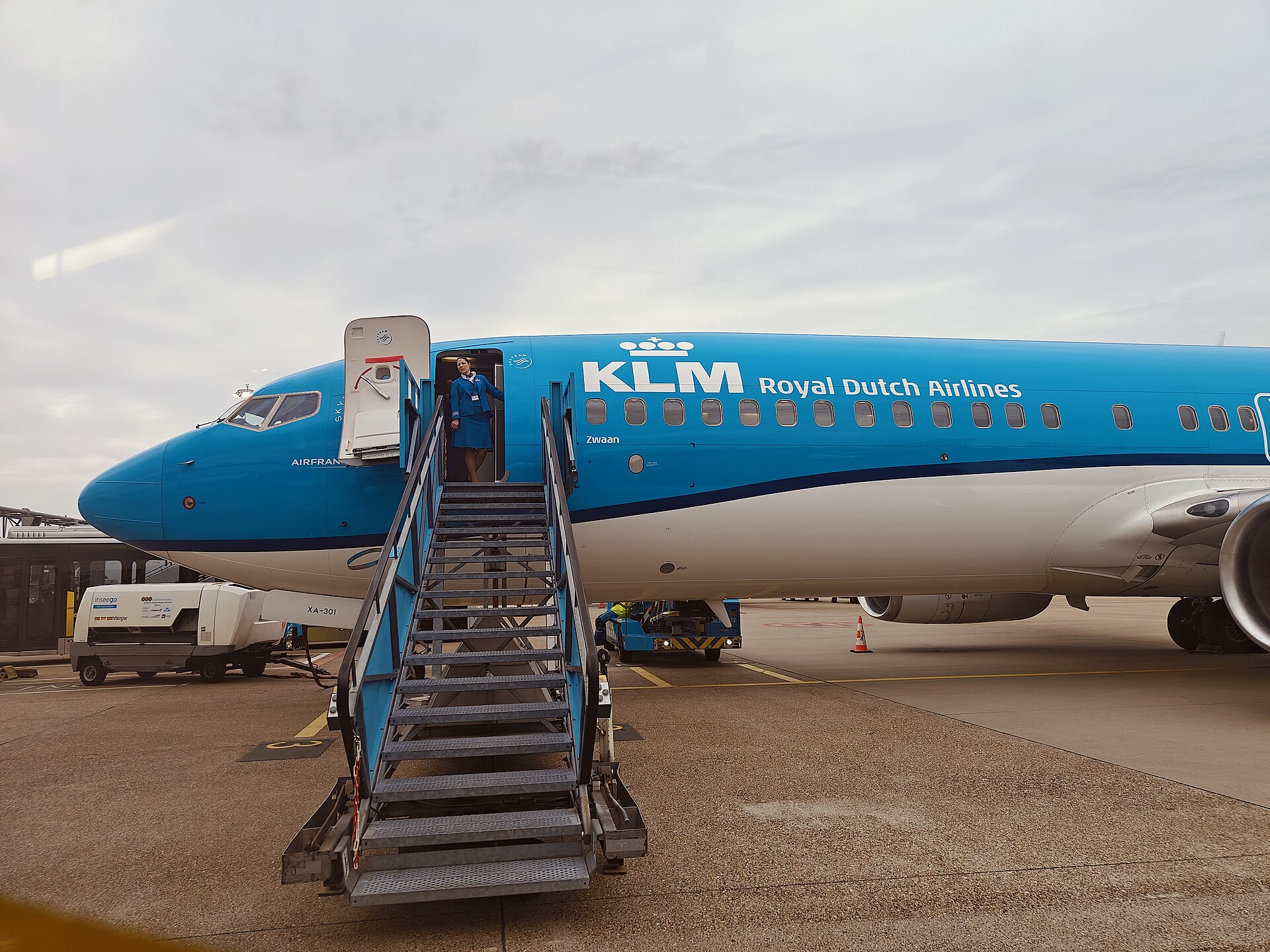
The airlines did not wait for a second confirmed strike to make their decisions. KLM suspended all Dammam and Riyadh flights through October 31 — the longest withdrawal of any carrier. Etihad cancelled Dammam service through October 24. Air India and Air India Express extended their Dammam, Riyadh, and Jeddah suspensions through October 20. SriLankan Airlines pulled its Dammam–Colombo route through October 18, Qatar Airways suspended Dammam and Riyadh flights from October 13 with no resumption date given, and flydubai cancelled Dammam, Riyadh, and Abha services through October 14.
The operational damage was steep and immediate. On October 15, Cirium flight-tracking data reported by Khaleej Times showed that sixty of 131 scheduled departures from Dammam were cancelled — a cancellation rate approaching 46 per cent. By October 19, the rate had eased to roughly 10 per cent, with 19 cancellations and 25 delays across the day’s schedule. King Fahd International Airport has not been subject to a formal NOTAM closure, unlike periods when Riyadh’s King Khalid airport was shut entirely. But a 10 per cent cancellation rate at a major commercial airport is not normal operations — it is a sustained degradation that erodes passenger confidence, diverts cargo to competing hubs, and drains the operational tempo of every business that depends on the runway.
| Airline | Routes Affected | Suspended Through |
|---|---|---|
| KLM | Dammam, Riyadh | October 31 |
| Etihad Airways | Dammam | October 24 |
| Air India / Air India Express | Dammam, Riyadh, Jeddah | October 20 |
| SriLankan Airlines | Dammam–Colombo | October 18 |
| Qatar Airways | Dammam, Riyadh | TBC (from October 13) |
| flydubai | Dammam, Riyadh, Abha | October 14 |
Sources: Wego Travel Blog (October 20, 2026); Khaleej Times (October 16, 2026); SriLankan Airlines (October 2026); Gulf News (Etihad, October 2026); Bernama (Qatar Airways, October 2026).
On October 19, the United States Embassy in Riyadh issued a security alert requiring American government employees to obtain special authorisation before using airports in Riyadh, Jeddah, or Dammam. The alert did not single out Dammam, but its inclusion alongside the capital signalled that Washington considers the Eastern Province’s airport a target of equal concern. For the commercial carriers still operating into Dammam, each week of suspension by competitors means fewer available connections, higher load factors on remaining flights, and growing pressure from insurers and crew unions to follow the exits rather than wait for the next headline.
The Houthis Named the Eastern Province
When Houthi spokesman Yahya Saree claimed responsibility for the October 11 KFIA strike, he did not present it as an isolated attack. He named Shedgum and Tanajib in the same breath — two Aramco facilities embedded in the Eastern Province oil-processing chain — framing the trio as a single coordinated operation. Three days later, on October 13–14, Saree issued a broader declaration: all airports and oil installations across Saudi Arabia were “legitimate targets,” and he called on foreign airlines, shipping companies, citizens, and workers to evacuate them immediately.
All airports and oil installations are legitimate targets.
Yahya Saree, Houthi military spokesman, October 14, 2026
The Houthis followed through. On October 14, Saree claimed a strike on Aramco’s headquarters complex in Dhahran — the nerve centre of the world’s largest oil company, in the same metropolitan area as KFIA. Saudi Arabia’s Ministry of Energy confirmed that “a limited fire broke out in an administrative building” with no injuries, a formulation that acknowledged a strike without conceding its operational impact. Within a single week, the Houthis had hit the airport and the corporate headquarters, targeting both the logistical and the administrative cores of Aramco’s Eastern Province presence.
Hisham al-Omeisy, an analyst with the European Institute of Peace, described the Houthis as “a maximalist group” seeking “more concessions from the Saudis,” and warned that the campaign could widen to “oil pipelines and energy facilities.” The pattern visible across October suggests that widening has already begun. The initial wave of attacks on Riyadh’s King Khalid airport generated casualties and forced the government to issue its first hostile-aerial-threat alert in years. The shift to Dammam, Dhahran, Shedgum, and Tanajib targets something Riyadh does not contain: the physical infrastructure that produces Saudi Arabia’s primary export and its primary source of government revenue.
The evolution follows a logic the Houthis have made explicit. Strikes on Riyadh’s airports and public venues generate political pressure — civilian casualties, cancelled conferences, foreign travel advisories — that embarrasses the government and forces it to divert military resources to homeland defence. Strikes on the Eastern Province generate economic pressure: threatened oil production, nervous commodity markets, and a direct challenge to Aramco’s ability to meet its export commitments. The first kind of attack costs Saudi Arabia prestige. The second costs it revenue.
What Stands Between the Missiles and the Oil?
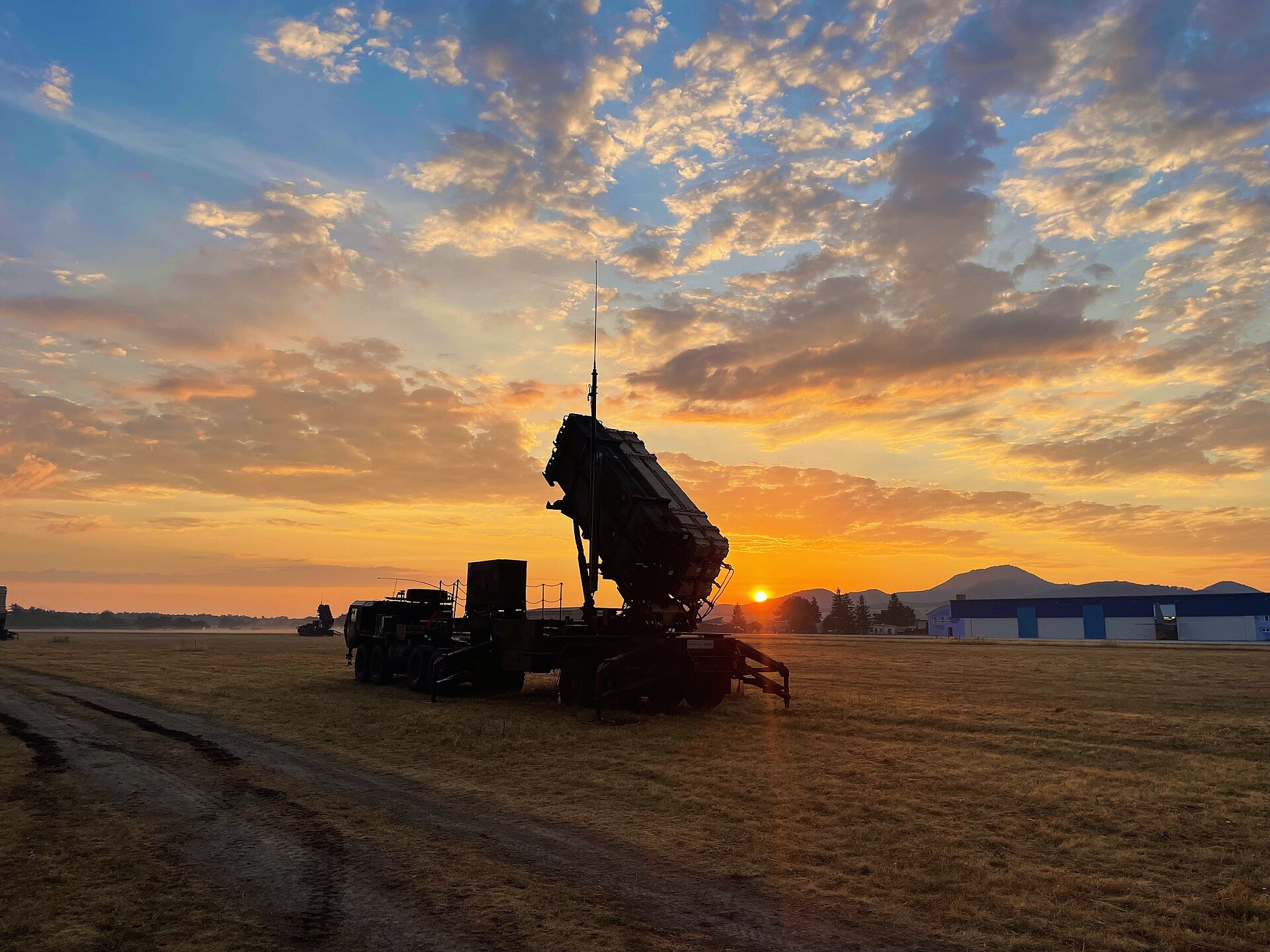
The Saudi Ministry of Defence deployed additional personnel to oil installations following the October attacks, with what Energy Intelligence described as a “special focus on the Eastern Province.” Anti-missile systems have been positioned along the eastern shoreline — a deployment that acknowledges the concentration of high-value targets along the coast from Jubail to Ras Tanura. Greece reportedly extended the mission of its Patriot battery in Saudi Arabia through November 2026 to help protect Aramco facilities, according to Army Recognition. On the western coast, France confirmed the deployment of troops, radars, and air-defence assets to protect the Yanbu refinery complex.
The coalition spokesman, Turki al-Maliki, has framed the airport strikes in legal terms, calling the October 10 King Khalid attack “a full-fledged war crime.” The language is designed to mobilise international political and legal pressure, but it does not intercept the next missile. Saudi Arabia’s air-defence challenge in the Eastern Province is geometrically different from defending the capital: instead of shielding a single high-profile airport, it must protect a sprawling industrial corridor that stretches from Jubail in the north to Abqaiq inland, from Ras Tanura’s export terminal to Aramco’s offshore loading platforms, plus the airport that connects them all. A single Patriot battery, however capable, cannot cover hundreds of kilometres of coastline and desert.
The 2019 drone and missile attack on Abqaiq demonstrated what a single breach of Eastern Province air defences can cost: Saudi output was temporarily halved, and the facility — processing roughly 4.9 million barrels per day at the time — needed weeks to fully restore operations, according to post-incident data reported by Reuters. That was a one-off strike. The current threat is a sustained campaign from multiple vectors, with the Houthis firing ballistic missiles, cruise missiles, and drones in coordinated salvos. Defending every node in the Eastern Province’s oil network against persistent attack would require an integrated air-defence architecture that Riyadh has been trying to build for years and has not yet completed.
Saudi Energy Minister Prince Abdulaziz bin Salman said the kingdom’s resilience “had been put to the test” and vowed a response that would be “equally serious.” The statement conceded what the deployments already implied: the Eastern Province’s defences were not dimensioned for a sustained aerial campaign against the region’s full industrial footprint, and the gap between what is defended and what needs defending is wider at Dammam than at Riyadh.
The Barrel That Cannot Fly
The Houthi campaign against Saudi airports and oil infrastructure is already registering in the numbers that matter. The International Energy Agency reported in September that Saudi output had fallen by 2.6 million barrels per day in August, with crude shipments declining to 6 million barrels per day — well below the OPEC+ target of 10.5 million barrels per day set for November, according to Enerdata. Brent crude reached $102.94 per barrel on October 9, the day before the deadliest Riyadh airport strike, and has continued to climb on fears about Gulf production and shipping security. JP Morgan told clients in September that it “does not know how to model the endgame” of the Saudi–Houthi conflict — an admission from the world’s largest investment bank that the risk premium on Saudi crude is now beyond conventional quantification.
The cargo dimension is often overshadowed by the passenger headlines, but for Aramco it may be the more urgent pressure point. The 140,000 tonnes of cargo that KFIA handled in 2024 included drilling equipment, replacement parts for refining units, and specialised safety components that cannot be manufactured in-country at the speed operations demand. If cargo capacity degrades further — or if insurers begin to price Dammam at war-risk premiums, as they have already done for maritime traffic through the Strait of Hormuz — the cost of maintaining Eastern Province operations rises and the lead times for critical repairs lengthen. In an industry where a refinery shutdown can cost millions of dollars per day in lost throughput, modest supply-chain delays carry outsized production consequences.
The air bridge is not an abstract metaphor in this equation. Aramco’s production depends on continuous crew rotation — engineers, technicians, safety inspectors, and emergency response teams who cycle through remote installations on schedules measured in days. When Saudi Arabia postponed its flagship Future Investment Initiative conference to 2027, it was conceding that the kingdom’s international calendar could not function under sustained attack. If the air bridge to the Eastern Province degrades at the same pace, the concession will not involve conferences. It will involve barrels.
The KFIA cargo master plan that targeted 600,000 tonnes per year by 2030 was designed for a Saudi Arabia that was scaling up, not one defending its existing output. Vision 2030 made the Eastern Province a centrepiece of economic diversification, with massive investment in logistics, tourism, and industrial capacity radiating from the Dammam–Dhahran–Jubail corridor — every project predicated on a functioning airport. The Houthis do not need to close King Fahd International Airport permanently to achieve their strategic objective. They need only make it unreliable enough that the air logistics chain it supports begins to fray. The airport has not closed, and Aramco has said nothing publicly about crew rotations. KLM will not return to Dammam before November, and the Houthis have promised to keep firing.
Frequently Asked Questions
What is Al Oula Aviation and why does it matter to this story?
Al Oula Aviation is Saudi Aramco’s wholly owned aviation subsidiary, spun off from Aramco’s internal aviation department in 2023 and rebranded from Mukamalah Aviation in August 2024. The company operates more than sixty aircraft — including Boeing 737-800s, AW139 helicopters, and turboprops — from a dedicated terminal at King Fahd International Airport, connecting Aramco employees to eight company-owned airports and more than 300 helipads across the kingdom. It is the only airline capable of reaching Aramco’s most remote production sites.
Has King Fahd International Airport been formally closed?
As of October 19, KFIA had not been subject to a formal NOTAM closure — unlike Riyadh’s King Khalid International Airport, which was formally shut during peak periods of the Houthi campaign. A NOTAM closure triggers mandatory diversion procedures for arriving aircraft and blocks departure clearances; it is a binary signal that forces immediate decisions from airlines, insurers, and cargo operators alike. The current situation at KFIA sits in a harder category to navigate: measurable cancellations and delays, US Embassy restrictions on government employees, but no single official trigger that forces a carrier’s hand. Airlines are making individual commercial judgements, which is why KLM’s withdrawal extends to October 31 while other carriers are still operating — and why each week without a NOTAM closure does not mean the operational risk has passed.
What oil production capacity sits in the Eastern Province?
The Eastern Province contains the core of Saudi Arabia’s crude-processing and export infrastructure. Abqaiq is the world’s largest crude stabilisation plant, processing sour crude from across the region for shipment to Ras Tanura, Jubail, and — via the East-West pipeline — Yanbu on the Red Sea. The Ras Tanura complex has a refining capacity of 550,000 barrels per day and hosts a major offshore oil-loading facility. In September 2019, a drone and missile attack on Abqaiq alone temporarily knocked out roughly half of Saudi production — processing at the facility was running at approximately 4.9 million barrels per day at the time of the attack, according to restoration data reported by Reuters. The East-West pipeline provides a bypass to Yanbu with roughly 7 million barrels per day of capacity, but the processing that feeds it still originates in the Eastern Province.
Could Aramco use alternative airports if KFIA is degraded?
Al Oula Aviation operates from eight Aramco-owned airports, but these are private airfields designed for internal crew rotation — they lack customs and immigration facilities for international personnel, commercial cargo-handling infrastructure, and the fuel and apron capacity of a major commercial airport. KFIA is the only facility in the Eastern Province that combines international commercial aviation with Aramco’s dedicated terminal, enabling foreign contractors arriving on commercial flights to connect directly to oil-field rotations. Saudi Arabia’s rail network links Dammam to Riyadh, and road connections serve the coastal cities, but neither can replicate the speed or the reach of the air bridge for emergency technical crews deploying to remote desert and offshore sites.