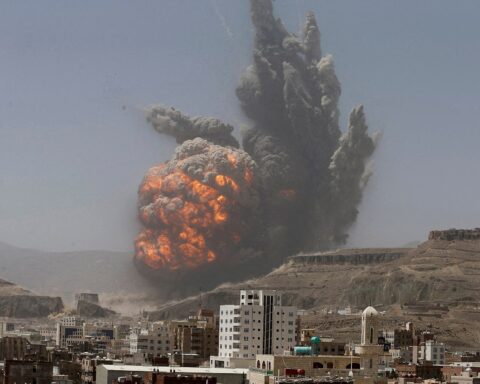
RIYADH — Saudi-led coalition air defenses intercepted a ballistic missile and at least one drone aimed at Riyadh on Sunday 25 October 2026, as King Khalid International Airport moved to resume flights from two terminals closed for more than two weeks after deadly Houthi strikes.
The missile intercept came roughly 30 minutes after the airport’s reopening announcement, according to a Gulf News liveblog. Saudi Civil Defense had activated the National Early Warning Platform for the capital, warning residents of a “hostile aerial threat,” according to TASS citing AFP. An AFP journalist in Riyadh reported hearing three explosions after the alerts were issued. No casualties or infrastructure damage were confirmed from Sunday’s events, according to Gulf News and AP. By mid-morning, the capital had received an airport reopening notice and a missile alert within the same hour.

Table of Contents
What Happened Over Riyadh on Sunday?
Events on Sunday morning unfolded in rapid sequence. According to a Gulf News liveblog, the timeline (all times UTC+4, as reported by Gulf News) was:
The House of Saud Daily Briefing
Saudi Arabia's news in 3 minutes, every morning. Free. See today's issue
- 06:02 AM — The coalition announced it had intercepted and destroyed a drone in the Riyadh region.
- 06:57 AM — King Khalid International Airport announced it would resume operations from Terminals 1 and 2.
- 07:05 AM — Saudi Civil Defense activated the National Early Warning Platform, warning Riyadh residents of a “hostile aerial threat” and instructing them to seek safe shelter.
- 07:15 AM — Civil Defense announced the danger had passed and told residents to call 911 in an emergency.
- 07:25 AM — The coalition announced it had intercepted a ballistic missile launched toward Riyadh.
- 07:48 AM — An AFP journalist reported hearing three explosions in Riyadh.
Coalition spokesman Maj. Gen. Turki al-Maliki confirmed the intercepts in two statements.
Air defenses intercepted and destroyed a ballistic missile launched by the terrorist Houthi militia toward Riyadh.
Maj. Gen. Turki al-Maliki, coalition spokesman, via TASS, 25 October 2026
AP separately quoted al-Maliki as saying forces “intercepted and destroyed a ballistic missile and a drone fired by the Houthis early Sunday.” Xinhua reported that two drones were destroyed in addition to the ballistic missile. Other sources confirmed a single drone.
Official statements described all projectiles as successfully intercepted. The cause of the three explosions reported by AFP — whether intercept detonations or debris impacts — was not specified in coalition statements.
The Civil Defense alert on Sunday was the latest in a series that Riyadh residents have received since early October. Saudi authorities had also activated the warning platform on Saturday, issuing shelter alerts across several regions after intercepts over populated areas, according to Asharq al-Awsat. The platform tells residents to seek safe shelter and to contact emergency services at 911, according to TASS and Gulf News.
Why Did KKIA Reopen After More Than 2 Weeks?
King Khalid International Airport announced at 06:57 AM (UTC+4) on Sunday that it would resume flight operations from Terminal 1, which handles domestic flights, and Terminal 2, which serves international and national carrier routes, according to Gulf News.
The timing placed the reopening in the middle of an active threat sequence. The airport’s statement came 55 minutes after the coalition announced a drone intercept over Riyadh, and roughly 30 minutes before the coalition confirmed it had intercepted a ballistic missile aimed at the city.
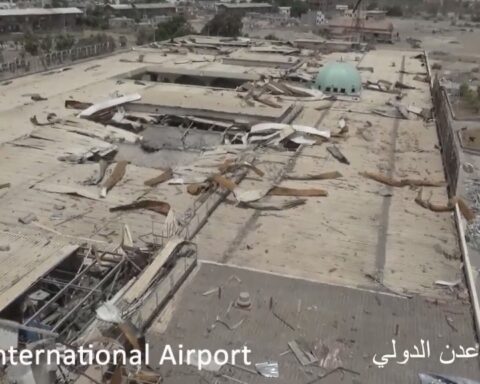
KKIA had been closed to regular commercial traffic since early October. On 10 October, a Houthi strike on the airport killed more than a dozen people and wounded more than 300, according to Al Jazeera and BBC. On 11 October, a projectile hit Terminal 4, killing a Pakistani resident and injuring 11, according to CNN. The airport had been out of service for more than two weeks, AP reported.
For travelers monitoring the situation, House of Saud maintains a Saudi Arabia airport guide with current operational status.
Houthi military spokesman Yahya Saree challenged the reopening. He warned travelers and airlines to avoid King Khalid International Airport, calling it “an unsafe military target,” according to Al Jazeera and Tribune India.
Whether the reopening holds is a question Saudi authorities cannot answer alone. Airlines face a calculation between the airport’s announcement, the Houthis’ warning, and the European and international aviation safety bulletins issued for Saudi airspace since early October. Sunday’s missile intercept over the city did not narrow that gap.

What Did the Houthis Claim?
Houthi military spokesman Yahya Saree said on Saturday 24 October that the group had carried out a coordinated operation targeting eight sites across Saudi Arabia, according to Reuters via LifeNews and Nation.com.pk. The claimed targets were:
- King Khalid International Airport in Riyadh, described as targeted “in two phases”
- An Aramco facility in Yanbu
- Rabigh oil refinery
- Crude oil pumping stations
- The East-West Pipeline
- King Fahd International Airport in Dammam
- Najran airport
- Khamis Mushait airbase
Saudi authorities did not confirm damage at any of the claimed targets. The coalition confirmed on Saturday that it intercepted a ballistic missile aimed at Riyadh, two missiles aimed at Taif and Yanbu, and a drone over the Eastern Province, according to Asharq al-Awsat.
The eight-target claim was the broadest single-day Houthi operation reported during the current escalation, spanning airports, oil infrastructure, and military bases from the Gulf coast to the Red Sea. The Houthi campaign against energy and transport infrastructure has contributed to a surge in global oil prices.
The Houthis denied targeting Mecca or Medina, saying “our operations target Saudi oil facilities and military bases,” according to Nation.com.pk.
Separately, Houthi-controlled media claimed 16 people were killed in Saudi coalition strikes on Sanaa and a Red Sea port city, according to IBTimes UK citing AFP. That figure could not be independently verified.
Where Did Intercept Debris Fall on Saturday?
Saturday’s intercepts left debris across several populated areas. Fragments fell in Wadi al-Mughammas in the Makkah region, as well as in parts of Jeddah, Taif, and Rabigh, according to Asharq al-Awsat.
Saudi Civil Defense issued shelter-in-place warnings for those areas on Saturday, according to Asharq al-Awsat and Nation.com.pk. No casualties were reported from the debris.
The debris in the Makkah region drew a sharp response from the Gulf Cooperation Council. A previous Makkah-region alert had come earlier on 24 October when the coalition intercepted two missiles aimed at Taif and Yanbu, both within the wider Makkah Province.
The Houthis have insisted they do not target the holy cities. Saudi authorities have countered that intercept debris over populated areas makes no such distinction.
GCC Condemns Attacks as Albudaiwi Warns of Escalation
GCC Secretary-General Jasem Albudaiwi issued a formal condemnation of the Houthi attacks on Saturday. He described any threat to Makkah as a “serious escalation,” praised “the efficiency and vigilance” of Saudi air defenses, and called on the international community to act, according to Asharq al-Awsat.
His language was the strongest from the GCC since the current round of strikes accelerated in early October. The condemnation followed a week that forced changes to Riyadh’s diplomatic calendar: the EU-GCC summit, originally scheduled for 24 October according to The National, did not proceed on its planned date as attacks mounted.
Iran’s state-run Mehr News Agency reported Sunday’s events under the headline “Series of explosions rock Saudi Arabia’s Riyadh,” citing AFP. Tehran has offered to mediate between Saudi Arabia and the Houthis, according to BBC, but neither side has publicly responded.
Background: Air-Defense Pressure and the October Campaign
Sunday’s intercepts extended a month of sustained Houthi fire on the Saudi capital and its surrounding infrastructure.
The Houthis first claimed a strike near KKIA on 19 September, in what appeared to be their first attack on Riyadh in the current escalation, according to Reuters via the Kathmandu Post. Attacks on the airport and other Saudi airports between 6 and 11 October forced closures that severed the capital’s regular commercial air links.
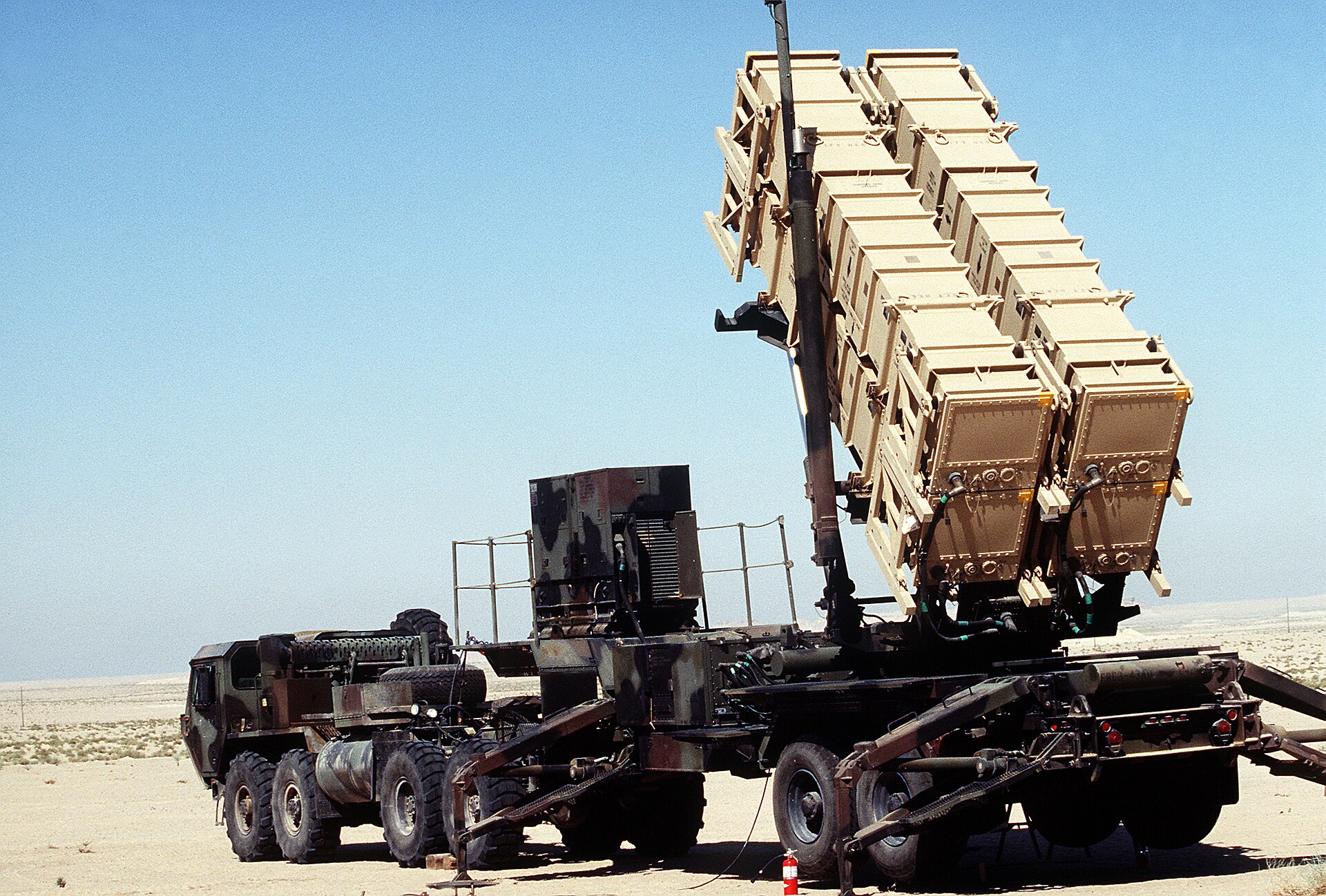
Saudi Arabia’s air-defense network is under strain. The Wall Street Journal reported on 12 October that Saudi officials described Patriot interceptor stocks as “running short,” according to the Times of Israel and JFeed. No specific inventory figure was published. The United States deployed an additional Patriot battery to Saudi Arabia on 2 October, according to JFeed.
The Houthis’ eight-target claim on Saturday suggested a campaign designed to stretch Saudi air defenses across as wide a front as possible. On Saturday alone, the coalition confirmed four separate intercepts across the country. Sunday added at least one missile and one drone over the capital.
The coalition’s ground offensive in Yemen, launched on 4 October, has not slowed the Houthi aerial campaign. The coalition said 100 jets participated in the first phase of the operation, according to the Oman Observer. The Houthis have continued firing on Saudi territory throughout, maintaining a pace that has tested both the air-defense network and the civil-protection system in cities from Riyadh to Jeddah.
Crown Prince Mohammed bin Salman called President Trump twice in September to ask for US strikes on the Houthis; both requests were declined, according to Axios. Trump said on 8 October that the US “will not be attacking Iran at any time prior to the midterm elections” on 3 November, according to The National. The question of whether Washington joins the air campaign remains open.
For travelers assessing conditions in the kingdom, current advisories are tracked in House of Saud’s Saudi Arabia travel status guide.
Frequently Asked Questions
Has EASA changed its guidance on Saudi airspace?
The European Union Aviation Safety Agency widened its Saudi airspace warning in early October, according to Fortune on 9 October 2026. EASA advisories do not ban flights outright but warn airlines of the risks of operating in or near affected airspace. Individual airlines make their own route decisions based on these bulletins and their internal risk assessments. Several international carriers suspended Riyadh service after the October KKIA attacks.
Which countries have issued travel advisories for Saudi Arabia?
Australia told citizens in Saudi Arabia to ensure they have sufficient food, water, and other essential supplies, according to its Smartraveller advisory. India issued an advisory for its 2.65 million nationals in the kingdom but stopped short of ordering an evacuation, according to BBC. The United States ordered the departure of non-emergency diplomats and family members, according to AP. The United Kingdom advises against all travel within 10 kilometers of the Yemen border, according to BBC.
What is the current status of Houthi-Saudi ceasefire efforts?
Iran’s foreign minister Abbas Araghchi offered to “facilitate dialogue between Saudi Arabia and Yemen” on 11 October, according to Al Jazeera. Neither Riyadh nor the Houthis publicly responded. A separate ceasefire proposal reportedly channeled through Oman was described by the Jerusalem Post, citing Lebanese newspaper Al Akhbar, in September, but Saudi Arabia did not confirm it. The coalition’s ground offensive in Yemen, launched on 4 October, continues.
How many people died in the October KKIA attacks?
Between 6 and 11 October, Houthi strikes on King Khalid International Airport and other Saudi airports killed at least 20 people across four incidents, based on GACA casualty statements reported by BBC. The 10 October strike was the deadliest: Al Jazeera reported 12 killed and 309 wounded, while BBC reported 13 dead — after an Indian national died of injuries — and 308 wounded. A Pakistani resident was killed on 11 October when a projectile hit Terminal 4.
Has the coalition confirmed damage to any oil infrastructure from Saturday’s attacks?
Saudi authorities have not confirmed damage at Yanbu, Rabigh refinery, or the East-West Pipeline from the claims Houthi spokesman Yahya Saree made on 24 October. The coalition confirmed interceptions near Taif and Yanbu but did not address whether any projectiles reached oil facilities. Saudi Arabia suspended East-West Pipeline flows as a precaution in September and restarted them later that month, though full capacity could take six weeks or more, according to Reuters via Baird Maritime on 24 September.
The House of Saud Daily Briefing
Saudi Arabia's news in 3 minutes, every morning. Free. See today's issue