
ADEN — Houthi forces fired ballistic missiles at Yemen’s coast guard headquarters and Aden International Airport on 24 October while simultaneously launching attacks on at least 8 targets across Saudi Arabia, opening a second active front against the internationally recognised government on its own territory.
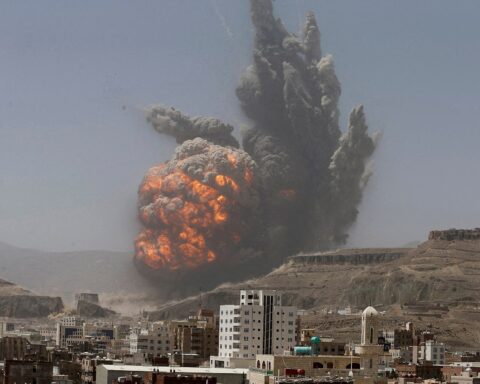
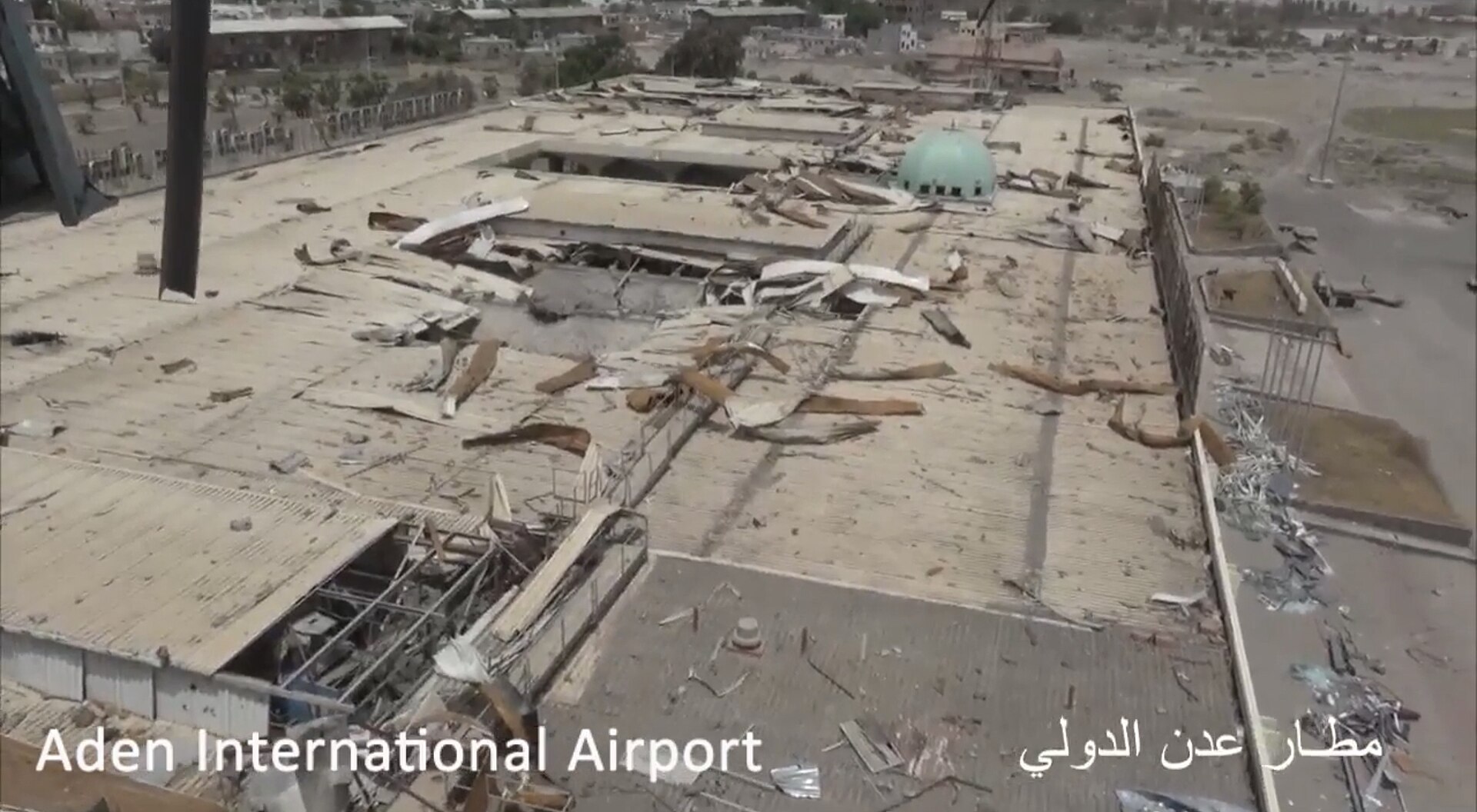
Yemen’s Interior Ministry said 2 missiles hit the coast guard headquarters inside the ministry’s compound and a third struck a coast guard building in the Tawahi district, according to the state-run Saba news agency. Separately, Yemen’s Transport Ministry said 2 ballistic missiles hit Aden International Airport, calling it the “fourth such attack this month” and warning of “a threat to the safety of civil aviation.” No casualties were reported in Aden. An Anadolu Agency correspondent said 3 explosions were heard across the city.
For the Saudi-led coalition, the simultaneous strikes mean the Houthis are now fighting on two fronts in a single day — hitting Saudi airports and oil infrastructure from the north while targeting the Saudi-backed government’s security apparatus in the south. Aden has served as the interim capital of Yemen’s internationally recognised government since the Houthis seized Sanaa in 2014, and the coast guard is a direct asset of the Presidential Leadership Council that Saudi Arabia has funded and equipped.
The House of Saud Daily Briefing
Saudi Arabia's news in 3 minutes, every morning. Free. See today's issue
Table of Contents
What Hit Aden on 24 October
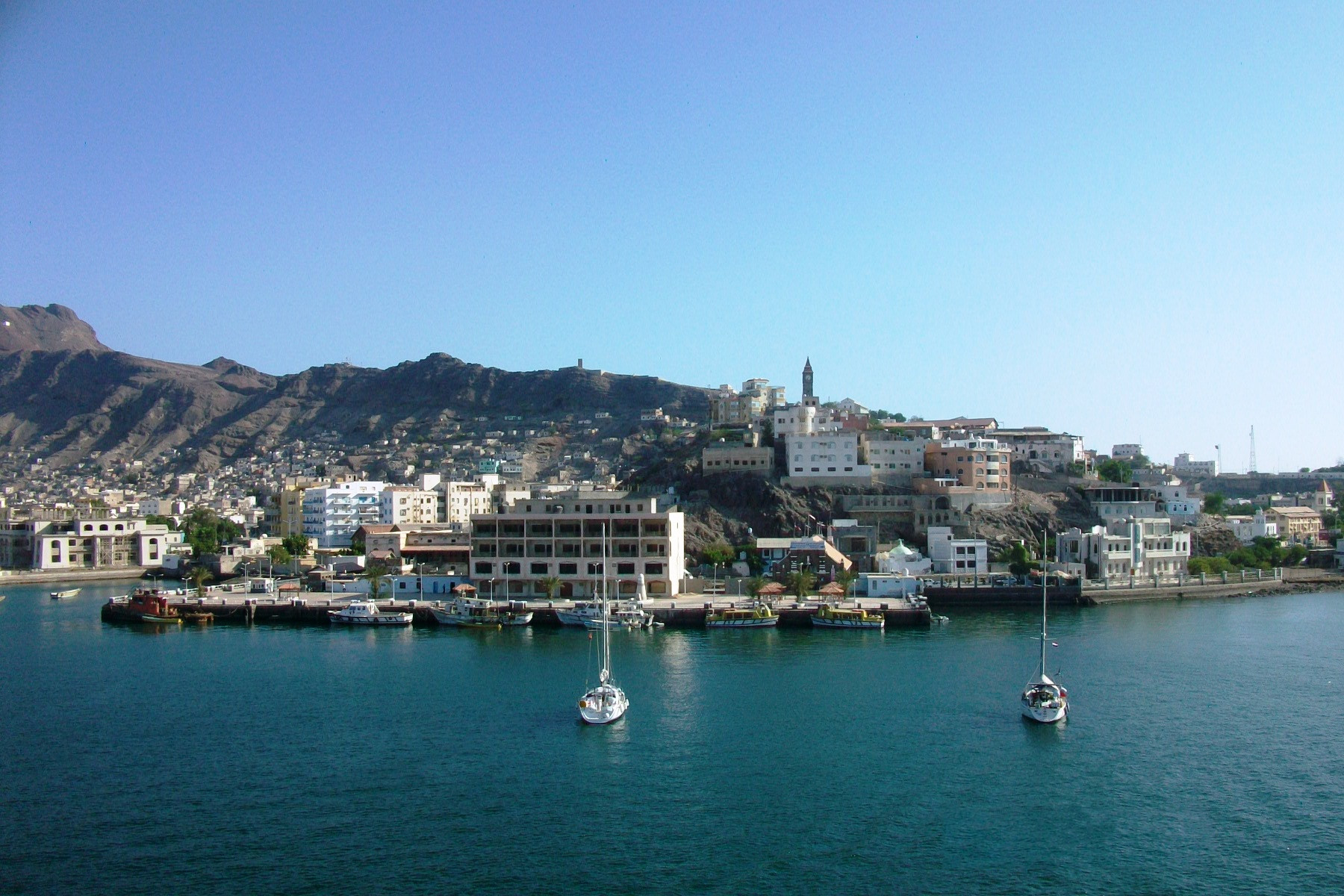
The Interior Ministry’s statement, carried by Saba, described 3 missile strikes within the city. Two hit the coast guard headquarters inside the ministry compound. A third struck a separate coast guard building in the Tawahi district, a densely built neighbourhood that runs along Aden’s western harbour.
Yemen’s Transport Ministry issued a statement on X saying 2 ballistic missiles targeted Aden International Airport. The ministry described the airport attack as the “fourth such attack this month” — a characterisation that underlines how routine Houthi missile fire at Aden’s only functioning commercial airport has become since the ceasefire collapsed. The Interior Ministry added that the strikes followed “earlier attacks on civilian and vital sites in Aden.”
Neither the Interior Ministry nor international wire services reported casualties from the 24 October Aden attacks. An Anadolu Agency correspondent in Aden confirmed hearing 3 explosions. The airport’s operational status after the strikes was not immediately confirmed.
Houthis Claim Saudi Targets in Aden
Houthi military spokesman Yahya Saree framed the Aden strikes differently from the Yemeni government’s account. Saree said Houthi forces had targeted “Saudi enemy concentrations at the so-called al-Nasr camp and the naval base in Aden,” according to Anadolu Agency. He named Saudi Brigadier General Badr Salah al-Harbi as “overseeing the assembly and equipping of those forces” at the sites.
Saree’s statement did not mention the airport. The Interior Ministry confirmed the coast guard headquarters and the Tawahi building were struck, but made no reference to al-Nasr camp. Whether the camp was hit, or whether Saree was describing the same strikes under a different name, remains unclear. What is clear is the Houthis’ intent to portray Aden not as Yemen’s capital under attack but as a Saudi forward operating base.
That framing carries military logic. Saudi-aligned naval units have been working with Yemen’s coast guard along the southern coastline, and a new naval facility was established near the Bab al-Mandeb strait by July 2026, according to the Maritime Executive and Janes. Striking the coast guard headquarters hits the command node of a force Saudi Arabia has invested in to patrol the Red Sea approach — the same waters the Houthis declared under blockade in July.
Saudi Arabia Reports 4 Intercepts as Houthis Claim 8 Targets
On the Saudi side, coalition spokesman Brig-General Turki Al Maliki confirmed intercepting 3 Houthi ballistic missiles aimed at Riyadh, Yanbu and Taif, and destroying a drone in the Eastern Province, according to Aaj TV and Arab News. The Saudi Civil Defense issued “potential danger” alerts covering Taif, Yanbu, Mecca and Jeddah, then rescinded them within roughly 10 minutes, France 24 and the Korea Times reported.
Saree claimed far more. He said Houthi forces had targeted 8 Saudi sites: King Khalid International Airport in Riyadh, a Yanbu Aramco facility, Rabigh oil refinery, crude pumping stations and the East-West Pipeline, King Fahd International Airport in Dammam, Najran airport and Khamis Mushait airbase, according to France 24 and the Times of Israel. None of these additional strikes have been independently confirmed. The coalition acknowledged 4 intercepts: 3 ballistic missiles targeting Riyadh, Yanbu and Taif, and a drone in the Eastern Province.
The gap between what the Houthis claim and what Saudi Arabia confirms has been a persistent feature of this conflict. Coalition statements have typically limited themselves to confirmed intercepts, while Houthi spokesmen have described broader target lists. Saree also claimed Saudi Arabia had carried out “100 airstrikes in 24 hours” against Yemen, a figure the Times of Israel carried via AFP but which has not been verified.
Debris Falls in Mecca and Jeddah
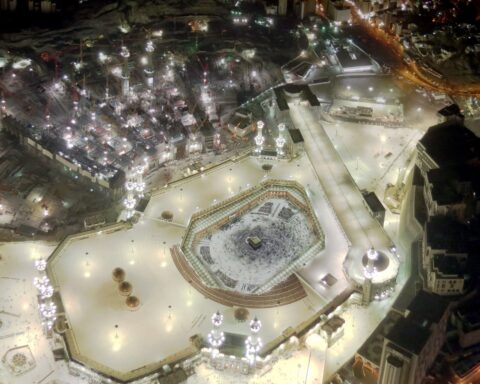
Even when missiles are intercepted, fragments reach the ground. AFP reported, via the Times of Israel, that debris from intercepted missiles fell in Mecca’s Wadi al-Mughammas area, in Jeddah, Taif and Rabigh. The brevity of the civil defense alerts — issued and rescinded within about 10 minutes — suggests Saudi authorities judged the threat had passed quickly, but the debris spread covered a wide corridor along Saudi Arabia’s western seaboard.
Mecca has been a recurring point of tension. The coalition accused the Houthis of targeting the city with a drone in September, which the Houthis denied. King Salman condemned what he called the Houthi “terrorist militia’s” attempt to repeat its targeting of Makkah ahead of National Day. The safety implications for millions of residents and visitors along Saudi Arabia’s western coast are no longer theoretical.
Saudi Strikes on Yemen Kill 11 to 16, Houthi Media Says
As the Houthis struck Aden and Saudi Arabia, the coalition’s own air campaign exacted a rising toll inside Yemen. The Houthi-run Al-Masirah channel reported that Saudi strikes killed 4 people in a house in Sanaa and another 6 women and 1 child at a cement factory workers’ residence in Sanaa governorate, according to AFP via the Korea Times. AFP, via the Times of Israel, put the Sanaa toll at 11.
Al-Masirah separately reported 5 killed in a strike on a family home in Hodeida — a father, 2 children and 2 wives, according to AFP via the Korea Times. Including Hodeida, the total reported toll reaches 16. Both figures — 11 for Sanaa alone and 16 including Hodeida — originate exclusively from Houthi-run Al-Masirah and were relayed by AFP. Saudi Arabia has not commented on civilian casualties in Yemen.
This fits a pattern in which the Houthis’ Al-Masirah is the sole initial source for casualty figures inside Houthi-held territory, because independent verification is effectively impossible there. On the government side, Col. Majed Abdullah al-Nazili, the Yemeni army spokesman, said government forces had carried out more than 700 “targeting operations” in 24 hours, “neutralising” 300 Houthi fighters, according to Al Jazeera. Al Jazeera said it could not verify those figures.
Why Aden Keeps Getting Hit
The 24 October strikes are the latest in a series of Houthi attacks on Aden this month. On 15 October, missiles struck the presidential palace, killing 5 and wounding 16, according to CGTN. On 21 October, the Houthis claimed to have hit a “Saudi operations room” in Aden; AFP security sources said the target was near the airport, according to AFP.
Each attack has targeted a different node of the Saudi-backed government’s infrastructure: the seat of executive power, a military coordination centre and now the coast guard command. The coast guard is not a token force. Yemeni government forces said on 5 October they had secured the Bab al-Mandeb strait, the Dhubab area and the port city of Mokha, but the Houthis’ ability to strike deep into Aden raises questions about how consolidated that control is.
The GCC Secretary-General Jasem Mohamed Albudaiwi called the Houthi attacks on Saudi Arabia “heinous,” according to Al Jazeera. But there has been no comparable statement on the Aden strikes from the UN Security Council, which in October affirmed Saudi Arabia’s right of self-defence and condemned Houthi attacks on the kingdom. The Presidential Leadership Council itself had issued no public statement on the 24 October Aden strikes at the time of publication.
Background
The Houthi movement seized Sanaa in 2014, forcing Yemen’s internationally recognised government to relocate to Aden, which has served as the interim capital since. Saudi Arabia intervened in 2015 to support the government. A ceasefire agreed in 2022 held until it collapsed in July 2026, according to the BBC.
Yemen’s government launched an offensive called “Dawn of Yemen” on 4 October with coalition air support. The Houthis have responded with escalating attacks on Saudi cities — airport strikes between 6 and 11 October killed 20 people, according to CNN — while also turning their weapons on Aden.
The conflict now runs on multiple axes. Saudi Arabia faces Houthi missiles from the south. Its ally in Aden faces those same missiles from the north. Iran’s Strait of Hormuz closure has squeezed Saudi oil exports and pushed the 2026 budget deficit to 245 billion riyals.
Pakistan has deployed about 8,000 troops under the Makkah pact, and France has sent troops and air defences to Yanbu. UN Special Envoy Hans Grundberg told the Security Council on 9 October: “Unless war is to become Yemen’s permanent reality, the time to consider political strategies is now.”
FAQ
How do the Houthi and Yemeni government accounts of the Aden strikes differ?
Yemen’s Interior Ministry said missiles hit the coast guard headquarters and a coast guard building in Tawahi. The Transport Ministry said missiles hit the airport. Houthi spokesman Saree said his forces targeted “al-Nasr camp and the naval base in Aden” and named a Saudi brigadier general. Saree did not mention the airport. The two sides describe overlapping but distinct target sets, and it is not clear whether they are describing the same impacts differently or separate strikes.
Why has the Presidential Leadership Council not commented?
No public statement from the PLC on the 24 October Aden strikes had been found at the time of publication. The Interior Ministry and Transport Ministry issued statements through official channels, but the PLC leadership — which was targeted in the 15 October presidential palace attack that killed 5 — has not publicly addressed the latest escalation. The council’s silence is notable but its reasons are not known.
What is Saudi Arabia’s position on civilian casualties in Yemen?
Saudi Arabia has not commented on the Houthi-reported civilian death toll of 11 to 16 from strikes on 24 October. All casualty figures originate from Houthi-run Al-Masirah and were relayed by AFP. Independent verification inside Houthi-held territory is not currently possible. The coalition has historically disputed Houthi casualty claims but has not addressed the specific reports from 24 October.
The House of Saud Daily Briefing
Saudi Arabia's news in 3 minutes, every morning. Free. See today's issue