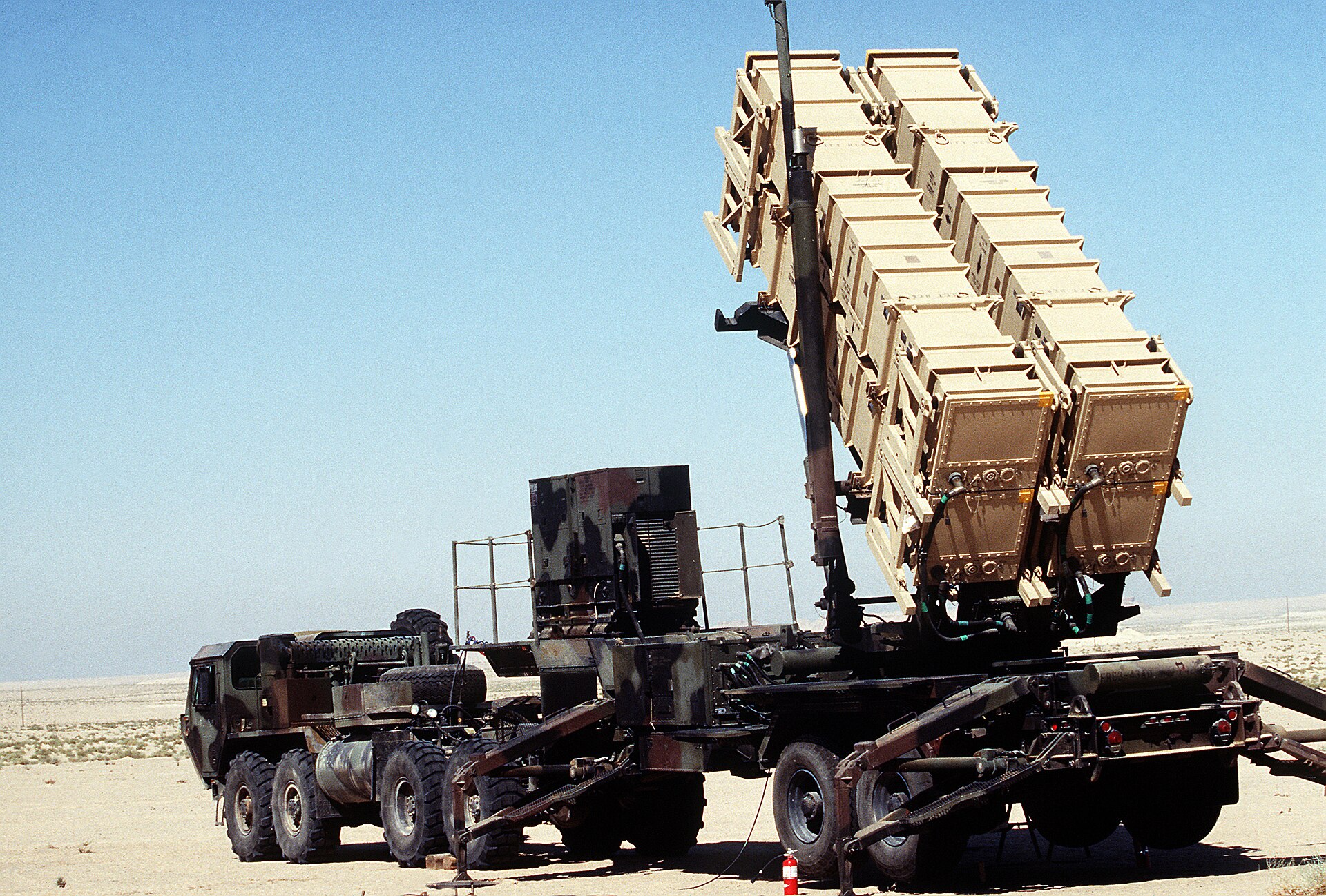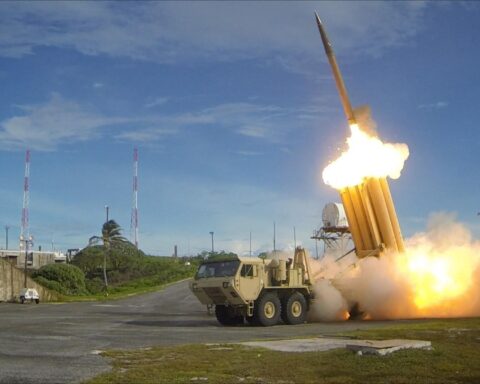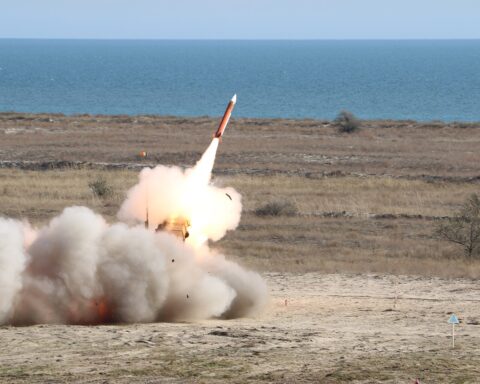

JEDDAH — Saudi Civil Defense sent emergency warnings to residents of Mecca Province, Jeddah, Yanbu and Taif on Saturday, October 24, after the Saudi-led coalition said its air defences had intercepted and destroyed 2 Houthi ballistic missiles aimed at Taif and Yanbu, and the same warning platform later told residents that the danger had passed, with no casualties or damage reported. The alerts repeated a pattern set on September 24, when six missiles aimed at the same two cities produced a warning for Mecca as well, and they confirm that Saudi Arabia’s active intercept perimeter in the Hejaz now routinely takes in the approaches to the holiest city in Islam, whatever the Houthis say about sparing it.
The military facts of the morning are modest, a pair of missiles and a pair of intercepts aimed at a mountain city that hosts one of the kingdom’s main fighter bases and at a Red Sea oil port, but the political facts are heavier, because the Houthis have spent the autumn insisting, in formal notices and in their leader’s speeches, that Mecca and Madinah sit outside their target list. Saudi Arabia, for its part, cannot describe the defence of the Haramayn as one more air-defence operation among dozens without conceding that the holy places have become a front, and the alerts of October 24 show both of those positions under strain at the same time. What follows is an analysis of the geography that pulls Mecca into a Taif alert, the language each side uses to manage that fact, and what it means for Pakistan’s declared mission and for the Organisation of Islamic Cooperation.
Table of Contents
- The October 24 Alerts and the 2 Intercepts
- Why Does a Missile Aimed at Taif Put Mecca on Alert?
- What Have the Houthis Said About Sparing Mecca and Madinah?
- The 2017 and 2019 Precedents in Mecca Province
- How Does Saudi Arabia Word an Alert That Names Mecca?
- What Do the Alerts Mean for Pakistan’s Holy-Sites Mandate?
- What Has the OIC Said About Attacks Near Mecca?
- Pilgrims and Airlines Are Betting on the Exemption
- The Threshold Saudi Arabia Has Crossed Since September
- Frequently Asked Questions
The October 24 Alerts and the 2 Intercepts
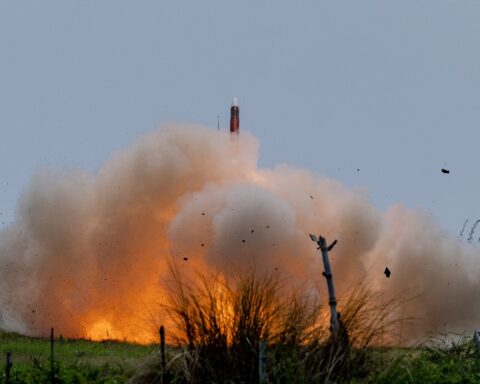
On October 24, 2026, coalition spokesman Turki al-Maliki said Saudi air defences intercepted and destroyed two Houthi ballistic missiles aimed at Taif and Yanbu. Saudi Civil Defense issued warnings for Mecca Province, Jeddah, Yanbu and Taif through the National Early Warning Platform, then declared the danger passed. No casualties or damage were reported.
The House of Saud Daily Briefing
Saudi Arabia's news in 3 minutes, every morning. Free. See today's issue
The wording on the official posts was more restrained than the headlines they produced, and the distinction matters for everything that follows in this piece. ANI’s syndicated report, carried by The Tribune in India, spoke of a “hostile aerial threat” in Mecca, but the Civil Defense posts it quoted said only that “a warning has been issued by the National Early Warning Platform in Mecca Province to alert of a potential danger,” followed later by “Alert: The danger has passed in Mecca Province.” Residents were told to keep following Civil Defense instructions and to avoid gathering and filming, an instruction that says as much about the state’s concern with images as about its concern with debris.
The coalition’s statement, issued by al-Maliki and carried by the Saudi Press Agency and Asharq Al-Awsat, named the two targets as Taif and Yanbu and attributed both missiles to the Houthi militia, while CNBC and the Deccan Herald reported that the intercepts caused no casualties or damage. No Houthi statement claiming or denying the Saturday launches had been found at the time of writing, which is not a small gap, because the group’s public position on the holy cities has become the frame through which every alert in western Saudi Arabia is now read. Our earlier report on the Taif and Yanbu intercepts covers the operational detail of the morning; this piece is concerned with the alert map rather than with the missiles themselves.
Why Does a Missile Aimed at Taif Put Mecca on Alert?
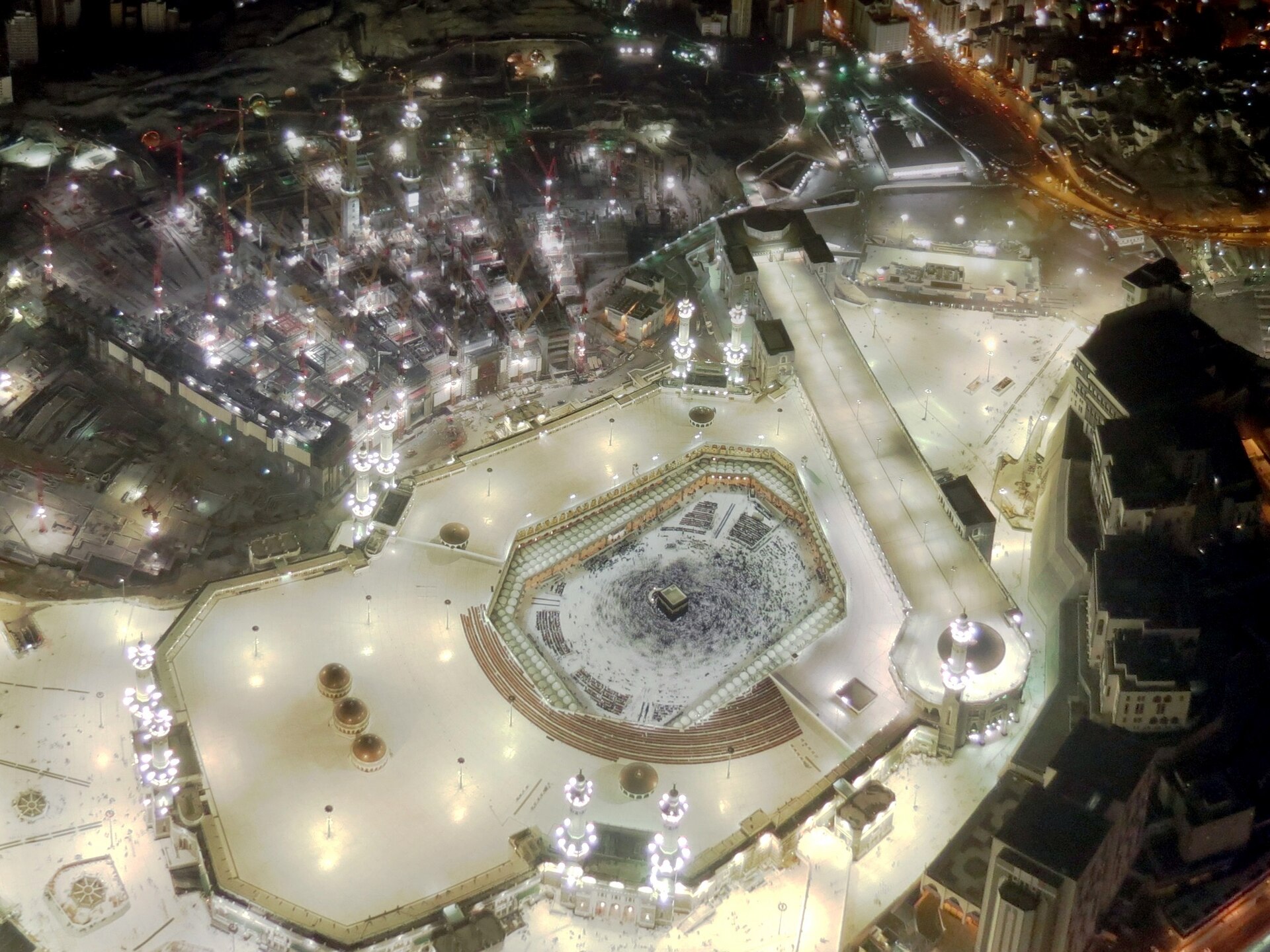
Taif lies about 55 kilometres from Mecca in a straight line and about 90 to 95 kilometres by road, and both cities, along with Jeddah, fall inside Mecca Province. Saudi warnings are issued by province and governorate, so an alert covering the province around Taif reaches Mecca on the same screen, whatever the missile’s actual target.
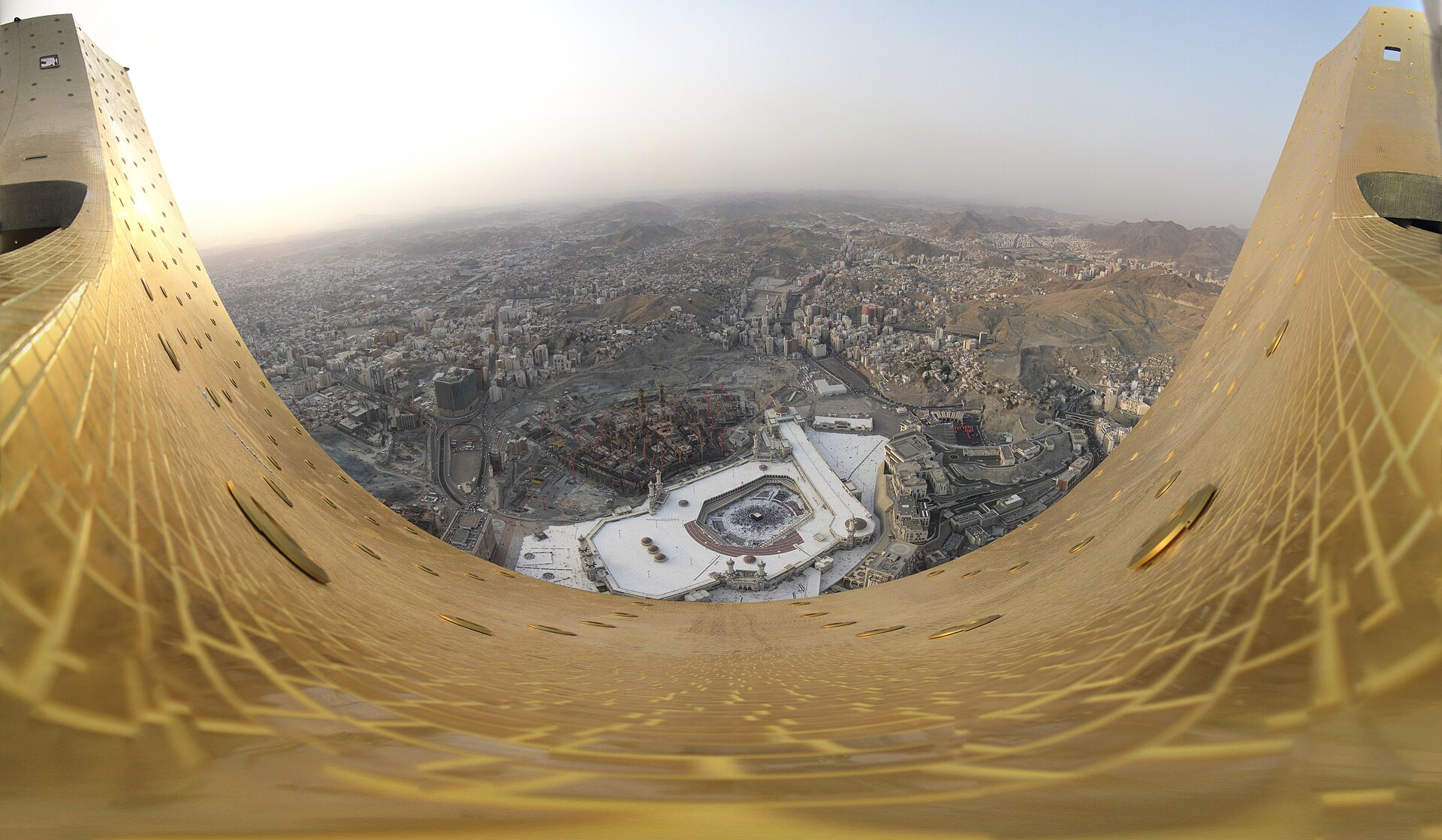
The distance itself is reported slightly differently depending on who is measuring, which is worth stating rather than smoothing over: a straight-line calculator at himmera.com gives roughly 55 kilometres, Rome2Rio puts the drive at 90 to 95 kilometres, and Gulf News, reporting a 2019 intercept, gave the gap as 50 kilometres. The vertical relationship is just as striking for anyone who has driven the mountain road between them, since Taif International Airport sits at about 1,478 metres while Mecca lies at roughly 277 metres, so the city the coalition says the Houthis aimed at on Saturday looks down, quite literally, on the city they say they will never touch. When the Saudi embassy in Washington described an earlier interception in 2019, it said the missiles were intercepted in Mecca Province, a province that, as Gulf News noted at the time, includes both Jeddah and Taif, which captures the administrative problem precisely.
Taif is not a random target, and nothing in this analysis requires the reader to assume that the Houthis are aiming at Mecca when they fire at it. King Fahd Air Base at Taif is one of the Royal Saudi Air Force’s primary fighter installations, according to GlobalSecurity.org, and Janes reported that the UK’s Sky Sabre air-defence system was deployed there from March 31, 2026, which makes the base both a military asset worth attacking and a defended zone where intercepts are likely to happen. The Aviationist reported that RAF Typhoons began flying defensive airspace missions in Saudi Arabia from October 20, a reminder that the western air picture now involves foreign crews as well as Saudi ones.
Taif has already paid a price in this war, which the Houthis’ public statements about the Hejaz tend to obscure. On September 14 the coalition said Houthi ballistic missiles and drones hit Khamis Mushait, Abha and Taif, injuring 13 civilians across the three cities and damaging seven houses and two vehicles, according to Khaleej Times, so the mountain city has been on the target list in practice for more than a month, with Mecca’s alert status following it each time the missiles fly.
Is the Mecca approach being probed deliberately?
Whether the Houthis are deliberately testing the approaches to Mecca, or simply aiming at an air base and a pipeline terminal that happen to sit close to it, is not something any public source settles, and what follows here is this publication’s reading rather than a reported fact. On the evidence available, the military explanation is sufficient on its own, since King Fahd Air Base and Yanbu’s oil infrastructure are exactly the targets a group trying to raise the cost of the war for Saudi Arabia would choose, and France’s decision in September to send soldiers, radars and defence systems to protect the Yanbu terminal, reported by Al Jazeera, shows that Saudi Arabia’s allies read Yanbu the same way, a point we examined in our piece on the French deployment to Yanbu.
The symbolic effect, though, does not depend on intent. Every time a missile is aimed at Taif, the warning system that Saudi Arabia has built to protect civilians puts the word “Mecca” in front of everyone in the province who receives it, and that effect is the same whether a Houthi planner meant it or not, which is why the military question and the political question have to be read separately.
| Date | Place | What was reported | Source |
|---|---|---|---|
| Sep 14 | Khamis Mushait, Abha, Taif | Coalition said Houthi missiles and drones hit the three cities, injuring 13 civilians | Khaleej Times |
| Sep 15 | Mecca, Jeddah, Taif | Civil Defense alerts issued and lifted; Al-Monitor called the Mecca alert the first in the city since the Houthi attacks began | Al-Monitor |
| Sep 16 | Mecca | Coalition said it downed a drone heading for Makkah; the Houthis called the claim a “lie” | Al Jazeera; Khaleej Times |
| Sep 24 | Taif, Yanbu (alerts also for Makkah, Jeddah, Tabuk) | Coalition said it intercepted 6 ballistic missiles; alerts lifted “a few minutes later” | Express Tribune/AFP |
| Sep 29 | Madinah | Drone attack put a transformer at a power station supplying the Prophet’s Mosque out of service, coalition said | GDN |
| Oct 15 | Madinah region | Coalition said it intercepted a missile; the Houthis denied firing toward Madinah | Ahram Online; France 24 |
| Oct 21 | Madinah, Eastern region | Coalition said it intercepted drones; Houthi spokesman Yahya Saree denied launching drones toward Madinah | bdnews24/Reuters |
| Oct 24 | Taif, Yanbu (alerts for Mecca Province, Jeddah, Yanbu, Taif) | Coalition said it intercepted 2 ballistic missiles; no casualties or damage | Asharq Al-Awsat/SPA; The Tribune/ANI; CNBC |
What Have the Houthis Said About Sparing Mecca and Madinah?
The Houthis have repeatedly said the holy cities are off-limits. On October 11 they called all Saudi airports except those of Mecca and Medina potential targets, according to CNN, and on October 19 they declared Saudi airspace unsafe while exempting Mecca and Medina, Middle East Monitor reported. Abdul-Malik al-Houthi called Saudi claims of a Mecca drone attack a “major lie.”
The leader’s language in September was as strong as anything the group has said on the subject, and it came in direct response to the coalition’s claim on September 16 that it had shot down a drone heading for Makkah. Al Jazeera and Middle East Eye reported on September 17 that Abdul-Malik al-Houthi called the accusation a “major lie” and a “heinous lie” and pledged to defend the holy sites, while Hazem al-Assad, a member of the group’s politburo, wrote on X that “the claims about targeting Makkah are a worn-out lie that has been used before and no longer fools anyone,” according to Khaleej Times.
The October notices turned that rhetoric into something closer to a published rule of engagement. Reuters reported that the group’s military spokesman, Yahya Saree, exempted “the airspace over Mecca and Medina” from the targeting notice, and the denials since then have followed the same script: France 24 reported that the Houthis denied firing toward Madinah on October 15, and on October 21, after the coalition said it had intercepted drones over Madinah and the Eastern region, Saree said the group had “not launched any drones towards the Saudi holy city of Madinah,” according to a Reuters report carried by bdnews24. We looked at the earlier phase of that pattern in our report on the Madinah drone exemption.
The one incident the Houthis have struggled to wave away was the drone attack on a Madinah power distribution station at the end of September, which the coalition said put a transformer supplying the Prophet’s Mosque out of service, and which it said on October 1 had been traced to the Houthis through examination of the wreckage, according to GDN. That episode matters here because it shows the exemption being contested on the ground rather than only in statements, with each side holding to its own account and no independent investigator in a position to settle it.
Why October 24 strains the exemption
The geometry of Saturday’s alerts exposes a mismatch between two maps that neither side has an interest in pointing out, and the reading below is analysis rather than reported fact. The Houthi exemption is drawn around the airspace over Mecca and Medina, which is a narrow and politically useful line, while the Saudi warning system is drawn around provinces and governorates, so a missile aimed at Taif can honour the Houthi notice to the letter and still put Mecca’s name on every alert in the region, as it did on September 24 and again on Saturday.
For the Houthis, that mismatch is tolerable as long as the missiles are intercepted well short of the holy city and the coalition itself names Taif and Yanbu as the targets, which is exactly what al-Maliki did on October 24. The risk for them lies in the alerts accumulating faster than their denials can keep pace, so that the line between “aimed at Taif” and “aimed toward Mecca” blurs in the minds of the Muslim publics whose opinion the exemption was designed to reassure in the first place.
The 2017 and 2019 Precedents in Mecca Province
None of this is new in kind, and the history explains why both sides handle the subject with such care. Semafor, reporting on the September 16 drone claim, recalled that the coalition had accused the Houthis of targeting Mecca with a ballistic missile in 2017, and the accusations and denials of 2026 follow a cycle that the two sides first rehearsed years before this war began.
The closest parallel to Saturday came in May 2019, when Saudi Arabia said it had intercepted two missiles in Mecca Province fired by the Houthis. Gulf News reported that a coalition spokesman, quoted by the Saudi Press Agency, said “Royal Saudi Defence Forces spotted aerial targets flying through restricted areas in the provinces of Jeddah and Taif.” Al Arabiya, citing witnesses, reported intercepts over Taif and Jeddah. The Houthis made no claim for the missile fire and denied having targeted Islam’s holiest site. Gulf News also noted at the time that Mecca lies between the two cities, which, the paper reported, fuelled anger online even though no Saudi official said where the missiles had been aimed.
What has changed since 2019 is the speed at which the public learns of the threat. In 2019 the news arrived after the fact, through the Saudi Press Agency and witnesses quoted by a television channel, while in 2026 residents of Mecca Province receive a Civil Defense warning of a potential danger from the National Early Warning Platform and, later, an all-clear, which turns each intercept into something the city experiences directly rather than reads about afterwards, and removes the state’s old option of announcing a success afterwards and saying little else.

How Does Saudi Arabia Word an Alert That Names Mecca?
Saudi Civil Defense uses neutral, procedural language. The October 24 posts warned of a “potential danger” in Mecca Province and later said the danger had passed, without naming missiles, the Houthis or the Grand Mosque. Political condemnation is left to the king, the cabinet, the coalition spokesman and the religious establishment.
The template was set on September 15, when the National Early Warning Platform issued what Al-Monitor described as the first alert in Mecca since the Houthi attacks on the kingdom began, warning of a “potential danger” without saying what it was. Residents were told to avoid crowded and open areas and to take shelter indoors, and once the danger had passed, Civil Defense urged them to keep avoiding gatherings and to refrain from filming or photographing the scene, instructions that in Mecca carry a weight they do not carry in Yanbu or Tabuk.
The sacral register is kept for a different set of speakers and a different kind of event, namely those where the coalition says Mecca itself was the target. Chairing the cabinet on September 22, King Salman condemned the Houthi “terrorist militia’s” attempt to repeat its targeting of Makkah and commended the military and security services for “confronting any aggression against the holy sites, pilgrims, citizens and residents of the Kingdom,” according to Khaleej Times. Three days later, CP24 and the Associated Press reported, Grand Mufti Saleh al-Fawzan issued a rare statement urging soldiers to be ready to defend the kingdom against the Houthis, a step that brought the senior religious authority into the language of mobilisation.
“An extremely dangerous provocation to the feelings of Muslims around the world” and “a terrorist act.”GCC Secretary-General Jasem Albudaiwi on the alleged September 16 targeting of Mecca, GCC statement, 2026-09-16
Two registers and the gap between them
Set side by side, the two registers show how deliberately the Saudi state separates its technical warnings from its religious and political framing, and the reading that follows is analysis. The alert speaks to residents in the language of a weather warning, while the king, the Grand Mufti and the Gulf Cooperation Council speak to the Muslim world in the language of sacrilege, and the second register has so far been switched on only when the coalition has asserted that Mecca itself was in the crosshairs, as it did on September 16.
October 24 falls into the gap between them, because the coalition’s own statement named Taif and Yanbu as the targets and made no claim about Mecca, which leaves Saudi Arabia warning Mecca without accusing anyone of aiming at it. That is a more honest position than the alternative, but it also means the kingdom has accepted, in practice, that alerts naming the holy city are a routine part of defending the west of the country, and routine is precisely the status the Saudi state has worked hardest to deny any threat to the Haramayn.
What Do the Alerts Mean for Pakistan’s Holy-Sites Mandate?
Pakistan has framed its presence in Saudi Arabia around the holy sites. In September its military spokesman, Lt. Gen. Ahmed Sharif Chaudhry, said Pakistani forces were already deployed to protect the kingdom and Islam’s two holiest sites, in Mecca and Medina, Al Jazeera reported. Alerts that reach Mecca from Taif test how far that mission extends.
The force behind that statement is substantial but not unlimited. Reuters, in a report carried by The Standard on May 20, put Pakistan’s deployment at about 8,000 troops, around 16 JF-17 combat aircraft, two drone squadrons and an HQ-9 air-defence system, and the political framework around it has thickened since: the Makkah Joint Defense Agreement signed on August 7 by Saudi Arabia, Pakistan and Turkey treats an attack on one member as an attack on all, according to Kuwait Times and AFP, and on October 5 the pact’s committee agreed to deploy Pakistani and Turkish forces to Saudi Arabia and to “activate collective deterrence measures,” Al Jazeera reported. We examined the domestic side of that commitment in our piece on Pakistan’s troop deployment.
No public source says where Pakistan’s HQ-9 battery or its aircraft are based, or whether any Pakistani unit took part in the intercepts on September 24 or October 24, and this article does not assume it. The question the alerts raise is narrower and, in the end, more uncomfortable for Islamabad: if Pakistan’s mission is defined by the holy sites, and the missiles that put Mecca on alert are aimed at military and industrial targets within the same province, then the mission is in practice a perimeter mission across the whole of Mecca Province, which is a larger and more open-ended commitment than the language of guarding the Haramayn suggests.
That framing also has a domestic function in Pakistan, where the defence of Mecca and Medina is a far easier case to make than the defence of a Saudi air base or an Aramco terminal, and the analysis here is that each Mecca alert strengthens that case even when, as on Saturday, the coalition says the missiles were aimed elsewhere. The longer the alerts continue, the harder it becomes for Pakistani officials to draw a public line between protecting the holy cities and fighting Saudi Arabia’s war against the Houthis, and the October 24 morning made that line a little thinner.
What Has the OIC Said About Attacks Near Mecca?
The OIC’s most recent public position found for this article dates from September 17, when it called the alleged attacks on Mecca “heinous” and backed Saudi deterrent measures, according to JNS. No OIC statement on the October 24 alerts had been found at the time of writing.
The Gulf Cooperation Council moved faster in September, with Secretary-General Jasem Albudaiwi calling the alleged targeting of Mecca on September 16 “an extremely dangerous provocation to the feelings of Muslims around the world” and “a terrorist act,” and those statements gave Saudi Arabia the multilateral cover it wanted at the moment it was making its gravest accusation of the war. The diplomatic track has moved elsewhere since then, with Saudi Arabia and Yemen’s government asking the UN Security Council to act, Al Jazeera reported on October 9, and Iran’s foreign minister, Abbas Araghchi, telling his Saudi counterpart that Iran was ready to help “facilitate dialogue between Saudi Arabia and Yemen,” according to the BBC, developments followed in our reports on the UN Security Council’s response and on Iran’s mediation offer.
The analysis here is that the OIC’s machinery is built to respond to accusations, and an alert without an accusation gives it nothing to respond to. The organisation can condemn an attempt to strike Mecca when Saudi Arabia says one has been made, as it did in September, but it has no obvious vocabulary for a morning in which Mecca was warned, the coalition named two other cities as the targets and nobody was hurt, so whatever the OIC does or does not say about October 24 will reveal less about the OIC’s position than about the limits of a body whose statements depend on its host’s framing.
That dependence runs both ways, because Saudi Arabia controls when the religious register is activated and, by extension, when the wider Muslim world is invited to treat the war as a matter of the holy places. On Saturday the kingdom chose not to make that invitation, and the most plausible reading is that it judged a Taif and Yanbu intercept, however close to Mecca, not to be the right occasion, though no Saudi official has said so publicly.
Pilgrims and Airlines Are Betting on the Exemption
The Houthi exemption has acquired a commercial life of its own, which is one reason the October 24 alerts matter beyond the military and diplomatic arguments. Travelers Today reported on October 18 that Malaysia Airlines had resumed flights to Jeddah and Madinah, citing the Houthis’ exemption of the holy sites, a decision that in effect treats the group’s published notice as a usable safety assessment for carrying pilgrims into the Hejaz.
India’s experience points the other way. The Indian Ministry of External Affairs said about 3,000 stranded Umrah pilgrims had returned to India in the past week and more than 10,000 others had travelled home on available flights, according to an ANI report carried by Asianet Newsable on October 24, and the Indian Consulate in Jeddah said it was running round-the-clock control rooms in Jeddah and Makkah and working with Saudi Arabia’s Ministry of Hajj and Umrah on visa extensions and delayed departures, The Tribune reported.
For pilgrims weighing a journey, the practical lesson of Saturday is that an exemption drawn around the airspace over the holy cities does not exempt them from the alerts, the shelter instructions that follow any intercept in the surrounding province, a point worth reading alongside our Mecca travel guide and our Jeddah travel guide. Airlines that resume service on the strength of the Houthi notice are accepting the Houthi map, while the warnings their passengers will receive on landing are drawn on the Saudi one.
The Threshold Saudi Arabia Has Crossed Since September
The threshold that October 24 confirms is not the first alert in Mecca, which Al-Monitor dated to September 15, nor the first Taif-and-Yanbu wave to carry Mecca’s name, which came on September 24, but the moment at which such alerts stopped being exceptional. Read against the September record, Saturday’s morning was handled as an ordinary event by every party involved: Civil Defense issued and cleared its warnings in procedural language, the coalition named its targets and reported its intercepts, no Houthi statement on the launches has been found, and the religious and multilateral voices that spoke so loudly in September did not reappear.
That normalisation is the real change, and it sits uneasily with the claims each side has staked out, since the Houthis’ exemption depends on the holy cities remaining outside the war and Saudi Arabia’s religious legitimacy depends on any threat to them being treated as intolerable rather than routine. The broader tempo makes the pressure easy to see, since the table above records reported incidents touching Mecca Province or Madinah across the whole of the past five weeks, alongside the wider campaign against Riyadh and the Eastern Province described in our coverage of the Houthi missile waves against the capital, and each new wave toward the west brings Mecca’s alert map into play again.
The questions worth watching are concrete ones. Whether the Houthis issue any statement on the October 24 launches, and whether it repeats the language of the October 19 exemption, will show whether the group thinks the Taif alerts are costing it anything with Muslim opinion, while any change in how Saudi Civil Defense words its Mecca Province warnings, or any decision by the coalition to say that a missile was aimed toward Mecca rather than toward Taif, would signal that Saudi Arabia has decided to switch on the register it held back on Saturday.
Pakistan’s next public statement on its role, and any OIC communiqué that refers to October rather than September, will show whether the governments that have tied their positions to the holy sites are prepared to say what the alert map already shows, which is that the defence of Mecca now begins over Taif and Yanbu. Until one of them does, the threshold will have been crossed in practice while every party continues to speak as though it had not, and the people of Mecca Province will keep receiving warnings about a danger that nobody officially says is aimed at them.
Frequently Asked Questions
Was any other Saudi city targeted on October 24?
Yes. Earlier on Saturday the coalition said its air defences intercepted and destroyed a Houthi ballistic missile aimed at Riyadh, according to ANI reports carried by The Tribune and Asianet Newsable. Riyadh was not part of the Civil Defense alerts covering Mecca Province, Jeddah, Yanbu and Taif.
Is the Makkah pact the same as the Saudi-Pakistan defence agreement?
No. Saudi Arabia and Pakistan signed a separate Strategic Mutual Defence Agreement in September 2025, which treats aggression against either country as an attack on both, according to Al Jazeera. Al Jazeera reported in September 2026 that this bilateral pact had yet to be made operational, while the three-way Makkah pact adds Turkey.
Which Indian flights to Saudi Arabia are cancelled?
IndiGo suspended flights to and from Jeddah, Dammam and Madinah until October 27, 2026, inclusive, and flights to and from Riyadh until October 31, 2026, inclusive, according to an ANI report carried by The Tribune on October 24. The airline cited the evolving security situation.
Who should pilgrims contact during an alert in Mecca?
Saudi Civil Defense tells residents to call 911 in an emergency, according to The Tribune. The Indian Consulate in Jeddah advises Umrah pilgrims with accommodation or service problems during extended stays to call the Pilgrim Care Centre on 1966 within Saudi Arabia, obtain a case reference number and share it with the consulate’s control rooms.
The House of Saud Daily Briefing
Saudi Arabia's news in 3 minutes, every morning. Free. See today's issue