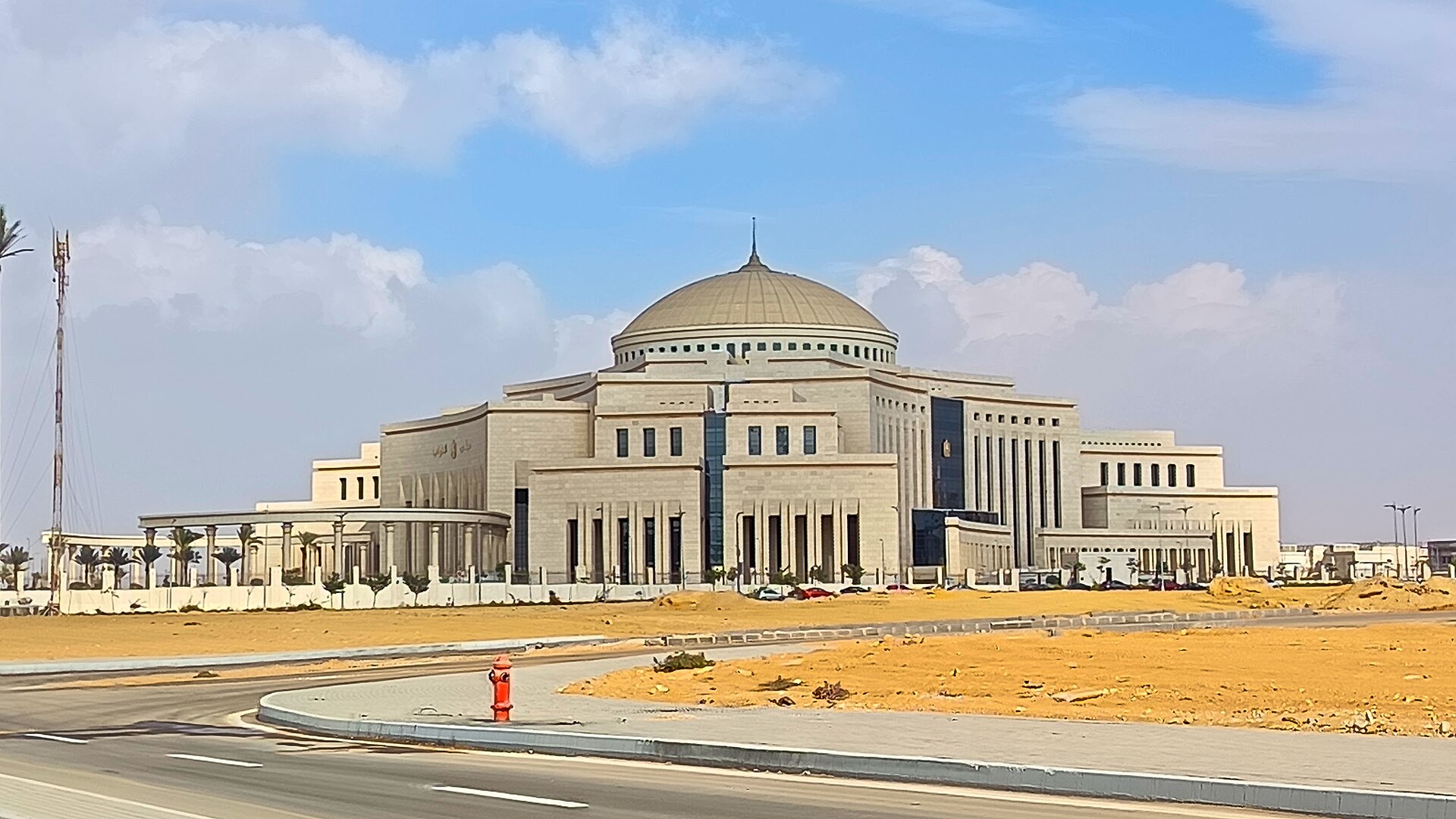

CAIRO — Egypt’s House of Representatives approved President Abdel Fattah el-Sisi’s request to deploy armed forces in defence of Saudi Arabia on October 26, passing the measure by a two-thirds majority in a closed roll-call session. The vote clears the constitutional threshold set by Article 152, which requires approval from at least 398 of the chamber’s 596 members before Egyptian troops can be sent on a combat mission abroad.
The authorization is permissive, not operative: Saudi Arabia has not formally requested Egyptian forces, and no deployment has been triggered. The mandate allows Sisi to take “necessary measures in coordination with Riyadh” to defend Saudi territory, sovereignty and Islamic holy sites, according to Ahram Online, but explicitly excludes offensive operations inside Yemen. Egypt acted outside the Makkah Joint Defence Agreement — the mutual-defence pact signed on August 7 by Saudi Arabia, Turkey and Pakistan — making this a bilateral constitutional act, not collective-defence activation.
Table of Contents
What Parliament Approved
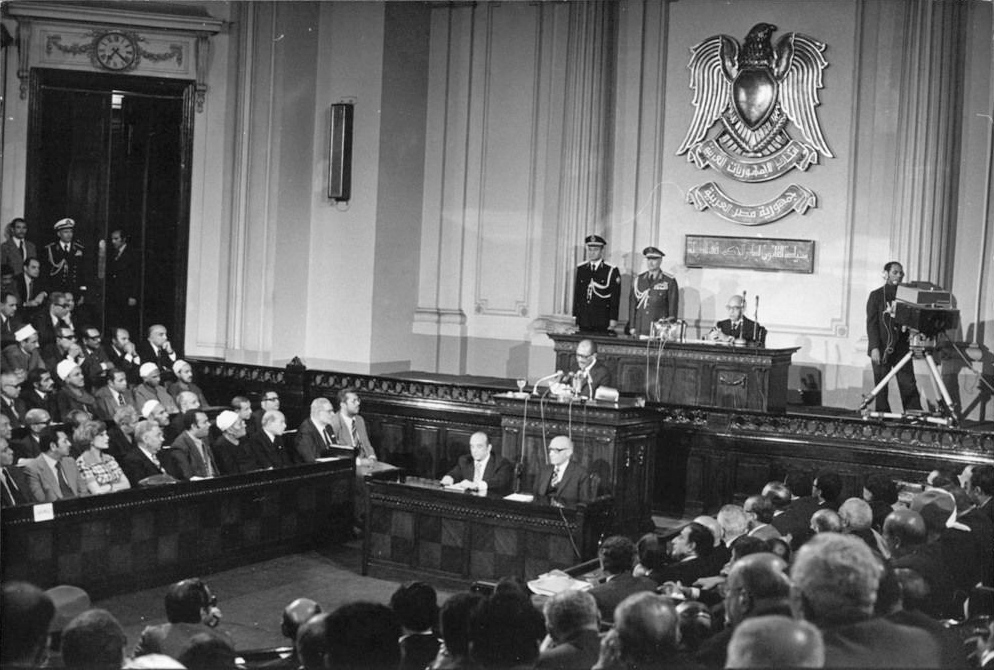
The House of Representatives voted on October 26 after Speaker Hesham Badawy convened the chamber’s third secret session on the matter, according to Zawia3. The exact vote tally was not made public — a consequence of the closed proceedings — but multiple outlets confirmed the two-thirds threshold was met (The National, 2026-10-26; Bloomberg, 2026-10-26; Ahram Online, 2026-10-26).
The House of Saud Daily Briefing
Saudi Arabia's news in 3 minutes, every morning. Free. See today's issue
The constitutional process followed two gates. Egypt’s National Defence Council, chaired by Sisi, first approved “all necessary and possible forms of support” for Saudi Arabia, according to a Reuters report carried by the Qatar Tribune on October 18. The parliamentary vote was the second and final gate under Article 152, which bars the president from deploying forces abroad without both NDC consultation and a two-thirds legislative majority (Al Jazeera, 2026-10-19).
The mandate’s scope is drawn tightly. Support is confined to defending Saudi territory and borders, according to Business Recorder. Sisi underscored this limit at the Military Academy graduation on October 17, where he made the request: “I am not speaking about going to war against anyone, or attacking anyone. We are talking about defence only,” he told graduates, according to Reuters.
Foreign Minister Badr Abdelatty had already signalled Cairo’s posture. “Whatever is being asked by the Saudis, of course we will respond,” he told Bloomberg in mid-October (Ahram Online, 2026-10-13). Sisi later issued a statement reinforcing the constraint: Egypt’s support “is to defend Saudi territory, and does not include an attack on Yemen,” as reported by ARY News on October 21.
Why Did Parliament Hold 3 Secret Sessions Before the Vote?
The path to approval took nine days. On October 18, parliament held its first secret session to discuss the deployment request, but ended without a vote, according to Zawia3. A second session followed on October 19, which was also adjourned, before the final vote on October 26 — making three closed-door meetings in total (Zawia3, 2026-10-26; Al Jazeera, 2026-10-19).
The closed format reflected the sensitivity of the deliberation. The opposition Egyptian Social Democratic Party instructed its bloc to abstain, citing that parliament had not received sufficient information about “the proposed mission’s objectives, scope, duration, cost or risks to Egyptian troops,” according to an AFP report carried by Devdiscourse on October 19. That objection — a demand for operational specifics that the government evidently could not or would not provide in open session — helps explain why Badawy kept the proceedings sealed.
Parties backing the measure included the Wafd, Republican People’s and Justice parties, according to L’Orient Le Jour, citing AFP. The Constitution Party backed it conditionally. The breadth of support from establishment parties suggested the outcome was never seriously in doubt. The Social Democrats’ abstention registered dissent without threatening the two-thirds threshold.
Egypt Outside the Makkah Pact
Egypt was absent from the Makkah Joint Defence Agreement summit on August 7, where Saudi Arabia, Turkey and Pakistan signed the mutual-defence treaty that treats an attack on one signatory as an attack on all (Kuwait Times/AFP, 2026-08-07; Al Jazeera, 2026-08-09). Turkish Foreign Minister Hakan Fidan said Egypt could potentially join once “technical matters” are resolved, according to the Tribune Pakistan. No further detail on those technical matters has been disclosed.
The distinction matters for how each coalition partner entered the conflict. Pakistan deployed approximately 8,000 troops to Saudi Arabia under the Makkah Pact without a separate parliamentary vote, according to Reuters and the Associated Press. Reuters reported the deployment included around 16 mostly JF-17 aircraft, two drone squadrons and an HQ-9 air defence system financed by Riyadh (The Standard/Reuters, 2026-05-20). Turkey committed forces under the pact’s collective-defence clause. Egypt’s route was different: a bilateral constitutional process that required clearing both the NDC and a two-thirds supermajority of 596 legislators.
That independence gives Cairo both freedom and distance. Egypt can calibrate the scope, pace and conditions of any deployment without being bound by pact commitments negotiated by Riyadh, Ankara and Islamabad. It also means Egypt carries no automatic obligation if the Makkah Pact activates further provisions — a layer of insulation that the Social Democrats’ abstention suggests at least some legislators valued.
How Has Iran Responded?
Iran’s reaction has been cautionary without amounting to a direct threat toward Cairo. Foreign Minister Abbas Araghchi, speaking on Iraqi state television Al-Iraqiya on October 20, warned that “any foreign presence or interference will only make resolving this issue more difficult,” according to L’Orient Le Jour. He added that Cairo had previously told Tehran it would “not directly” interfere in Yemen — an assurance he appeared to treat as still operative, or at least as leverage.
Araghchi’s language stopped short of the red line he drew earlier in the crisis. On August 2, he warned Saudi counterpart Prince Faisal bin Farhan that “any attack by Washington or its allies, or participation by regional countries in such actions, would trigger a decisive and proportionate response from Iran’s armed forces,” according to Yeni Safak, citing AFP. That warning predated Egypt’s vote by nearly three months, but it established the framework within which Tehran interprets new entrants to the coalition.
No specific post-vote statement from the Islamic Revolutionary Guard Corps or Iranian state news agency IRNA was found as of publication. The gap is itself telling — Tehran may be calculating that a parliamentary authorization with no deployment attached does not yet cross the threshold for escalation. Egypt’s explicit exclusion of offensive operations in Yemen gives Iran a rhetorical off-ramp it may prefer to keep open.
What the Vote Means for Coalition Credibility
The parliamentary authorization adds a third major military power to the roster of countries that have formally committed to Saudi Arabia’s defence, joining Pakistan and Turkey. But the commitment comes with conditions that distinguish it from its predecessors.
Pakistan deployed forces under the Makkah Pact without a separate legislative vote, moving troops and air assets to the kingdom within weeks of the pact’s activation, according to AP. Turkey committed through the same treaty framework. Egypt moved through a domestic constitutional process that took nine days of closed deliberation, produced a formal opposition abstention on grounds of inadequate information, and resulted in an authorization that remains dormant until Saudi Arabia makes a request. The three paths reflect not just different constitutions but different levels of political willingness to commit without preconditions.
The coalition’s roster now spans three of the four largest Arab and Muslim-majority militaries. Egypt’s armed forces — the largest in the Arab world and in Africa, with active personnel exceeding 400,000, according to the International Institute for Strategic Studies — bring capabilities that complement Pakistan’s air defence systems and Turkey’s expeditionary capacity. The breadth of the coalition signals to both the Houthis and Iran that the cost of continuing attacks on Saudi territory may rise. Whether it does depends on whether Cairo converts an authorization into an actual deployment.
The 1991 Gulf War offers a historical comparison. Egypt deployed more than 35,000 troops and several hundred tanks to Saudi Arabia for Operation Desert Storm, the second-largest national contingent after the United States, and took part in the ground offensive, as reported by the Christian Science Monitor. That deployment was followed by approximately $20 billion in debt forgiveness. Whether a similar financial arrangement is part of the current calculus is unconfirmed, but the precedent looms over any operational planning in Cairo.
Background: From Airport Strike to Parliamentary Mandate
The chain of events that led to the October 26 vote began on October 10, when a Houthi strike on King Khalid International Airport in Riyadh killed 13 people and wounded more than 300 (Al Jazeera, 2026-10-10; BBC, 2026-10-11 — Al Jazeera reported 309 wounded; the BBC said 308).
On October 11, Saudi Arabia, Egypt, Pakistan and Turkey issued a joint statement calling the Houthi attacks “a blatant violation of international law,” according to CBS News. The statement marked the first time Egypt appeared alongside the Makkah Pact signatories in a formal condemnation, even though Cairo had not signed the treaty.
Crown Prince Mohammed bin Salman had visited Cairo on September 15, a meeting after which Egypt’s presidency stated that “Saudi and Gulf security is inseparable from Egypt’s,” according to Asharq Al-Awsat. That phrasing — echoing the language of mutual-defence treaties without the treaty — laid the political groundwork for what followed. On October 17, Sisi made the parliamentary request at the Military Academy graduation, and the House convened its first secret session two days later.
The coalition’s military operations have intensified in parallel. Houthi attacks on Saudi infrastructure continued through late October, including drone strikes on East-West Pipeline pumping stations and a claimed strike on an Aramco facility in Yanbu. The coalition responded with strikes on Houthi missile launchers in Sanaa and intercepted missiles aimed at southern Saudi cities. The escalation has sustained the political pressure that made the Egyptian vote possible — and made its conditions all the more contested.
Frequently Asked Questions
Has Egypt deployed troops to Saudi Arabia before?
Egypt deployed to Saudi Arabia for Operation Desert Storm in 1991 — the figures are covered above. The precedent that weighs more heavily on today’s deliberations is the 1962-70 North Yemen civil war, where Egyptian forces suffered an estimated 26,000 casualties over eight years, according to historical consensus (Ferris, “Nasser’s Gamble”). That campaign — a counter-insurgency operation that expanded far beyond its original scope and dragged on for nearly a decade — is the sharpest reminder in Cairo’s strategic memory of what an open-ended Yemeni commitment costs. It helps explain why the Article 152 mandate explicitly excludes offensive operations inside Yemen.
What military capabilities could Egypt contribute?
Egypt operates one of the most diversified arsenals in the Middle East, with equipment sourced from both Western and Russian suppliers. Its air force flies American F-16s and French Rafales; its navy includes French-built Mistral-class amphibious assault ships, the only such vessels in Africa or the Middle East, according to Jane’s Defence Weekly. For a Saudi deployment, the most likely contribution would be air defence units, logistical support and potentially ground forces — though the mandate’s defensive scope rules out expeditionary operations into Yemen.
Could Egypt still join the Makkah Pact?
Turkish Foreign Minister Hakan Fidan said after the August 7 signing that Egypt could join once “technical matters” are resolved, according to the Tribune Pakistan. No timeline was given for that process. Egypt’s decision to pursue a bilateral constitutional authorization rather than wait for pact membership suggests Cairo prefers to retain independent control over the terms of any deployment — a stance consistent with its broader foreign policy of maintaining relationships with multiple blocs rather than binding itself to a single alliance framework.
What happens if Saudi Arabia formally requests Egyptian forces?
The parliamentary authorization gives Sisi the legal authority to deploy without returning to the House of Representatives, provided the deployment falls within the mandate’s stated scope — defence of Saudi territory, sovereignty and holy sites. The operational details — troop numbers, timeline, rules of engagement, cost-sharing arrangements — would be negotiated bilaterally between Cairo and Riyadh. No public framework for those negotiations has been announced. The NDC would likely convene again to review the specific request before any deployment order was issued.
How does Egypt’s authorization compare with Pakistan’s deployment?
Pakistan deployed approximately 8,000 troops to Saudi Arabia under the Makkah Pact without a separate parliamentary vote, according to Reuters and the Associated Press. Pakistan’s constitution does not require legislative approval for overseas military deployments in the same way Egypt’s Article 152 does. The contrast highlights different constitutional traditions: Pakistan’s executive acted under treaty authority, while Egypt’s executive needed an explicit legislative mandate — a process that introduced public debate, opposition dissent and a nine-day deliberation period that Pakistan’s deployment bypassed entirely.
The House of Saud Daily Briefing
Saudi Arabia's news in 3 minutes, every morning. Free. See today's issue