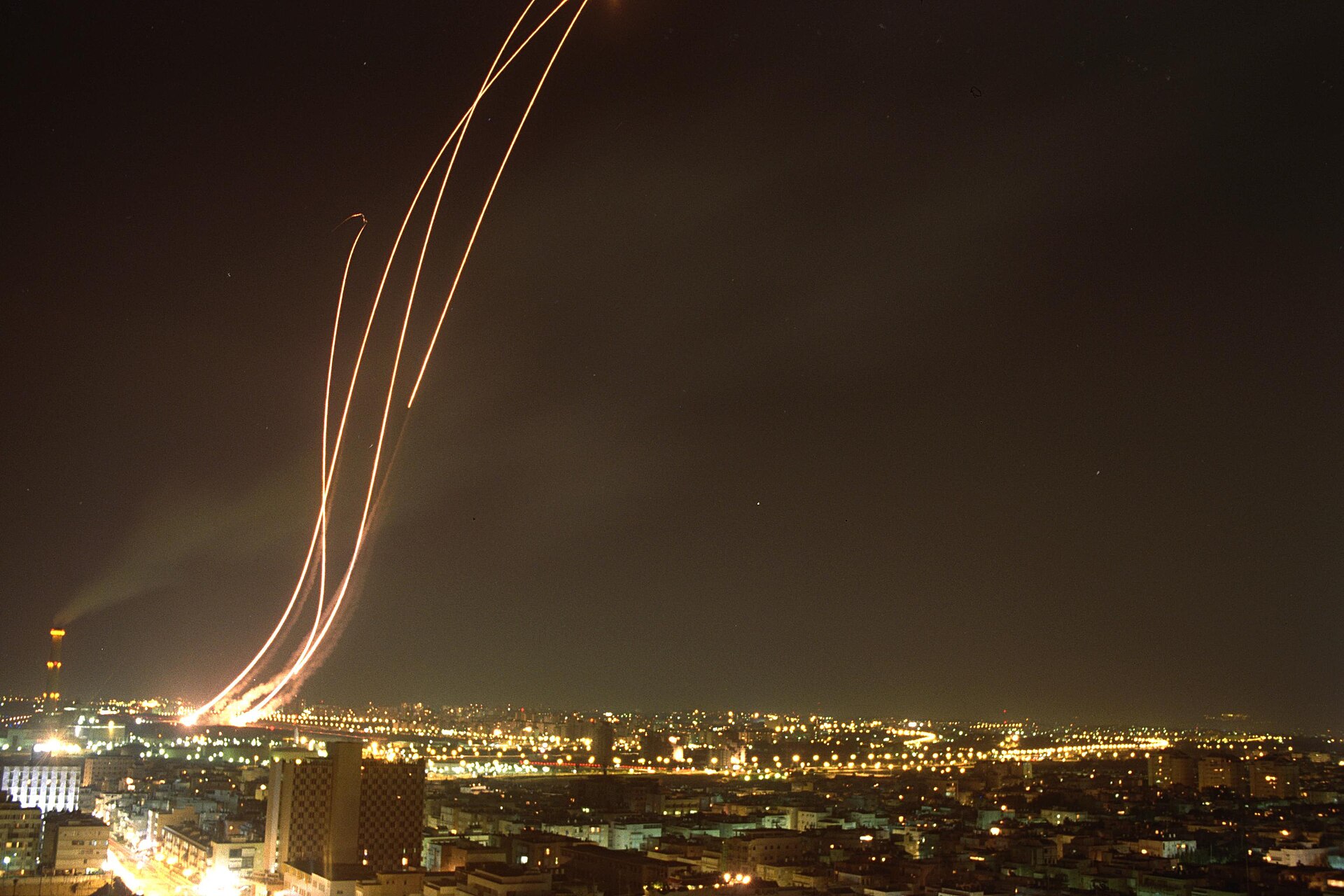

RIYADH — Saudi-led coalition forces intercepted a Houthi ballistic missile fired at Riyadh in the early hours of 26 October and struck the launch sites in Sanaa in a rapid counter-battery operation, according to coalition spokesperson Major General Turki Al-Maliki. Arab News reported that at least two launchers were destroyed, one of which fired the missile aimed at King Khalid International Airport. Al Jazeera, citing Al-Maliki, put the tally higher: four launchers, five tunnels used to store missiles, and one missile depot.
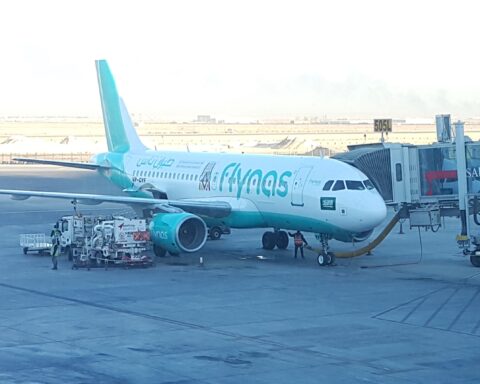
The strike follows a pattern the coalition has established this month, tracing and destroying Houthi launch platforms in the same operational cycle as Riyadh-targeted interceptions. Houthi military spokesman Yahya Saree claimed the group had hit KKIA “with precision,” but Saudi authorities did not confirm any damage at the airport, which had resumed operations at Terminals 1 and 2 just the day before after a two-week closure.
Table of Contents
The 26 October Interception and Sanaa Strikes
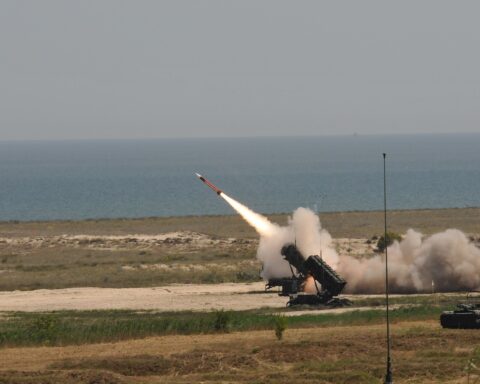
Riyadh residents received a National Early Warning Platform alert at approximately 3:42 a.m. local time on 26 October, according to Arab News and TRT World. A second alert minutes later indicated the threat had passed. Al-Maliki confirmed on X that coalition air defences had “intercepted and destroyed a ballistic missile” fired by the Houthis toward the capital.
The House of Saud Daily Briefing
Saudi Arabia's news in 3 minutes, every morning. Free. See today's issue
The coalition then struck targets in Sanaa that Al-Maliki described as part of an operation “aimed at neutralising sources of threat” and cutting Houthi supply lines, according to Al Jazeera. The speed of the response — interception followed by a strike on the launch infrastructure within the same operational cycle — mirrors the pattern the coalition established earlier in October.
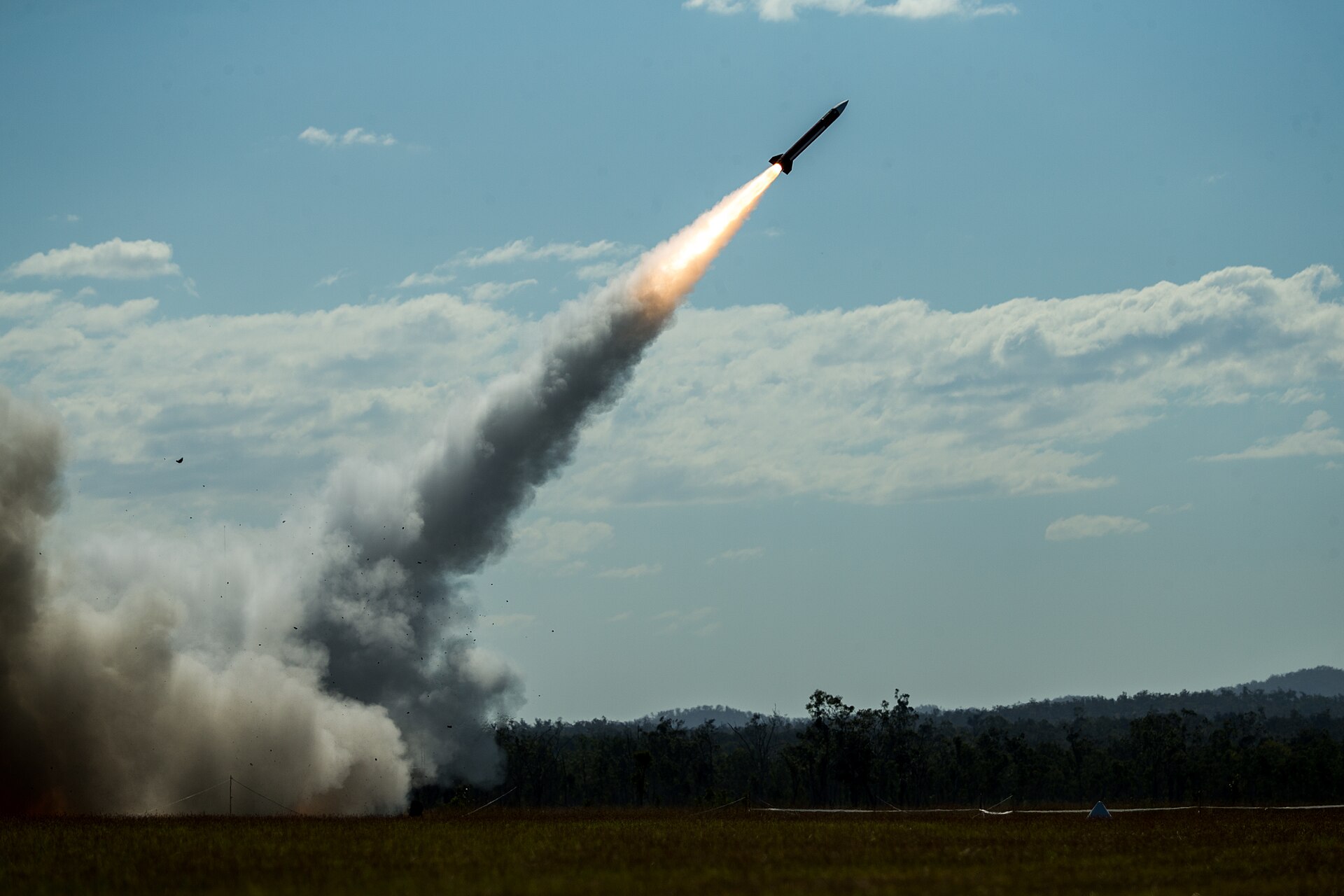
KKIA had only reopened on 25 October after a two-week closure prompted by repeated Houthi attacks. The airport resumed operations at Terminals 1 and 2, according to The National. The 26 October missile was the first test of that reopening.
The deadliest attack on the airport came on 10 October, when a strike killed 13 people and wounded more than 300, according to Al Jazeera and the BBC. Since then, the coalition has reported 20 attacks on KKIA since 1 October and says it has destroyed 127 warehouses and launch pads across Yemen as of 15 October, according to Arab News.
How Many Launchers Were Destroyed?
The coalition’s own accounts diverge. Arab News, The National, TRT World, and Anadolu reported that two ballistic missile launchers were destroyed in Sanaa, one of which was used in the Riyadh attack. Al Jazeera, also citing Al-Maliki, reported four launchers destroyed, along with five tunnels used to store missiles and one missile depot.
No independent verification exists for either figure. The discrepancy may reflect different phases of the same operation — the two-launcher reports focusing on the immediate counter-battery response, the four-launcher figure encompassing a broader set of strikes — but the coalition has not clarified the difference. Both figures are attributed to Al-Maliki or coalition sources, making it impossible to resolve from open reporting alone.
What is not in dispute is the operational intent. Al-Maliki described the strikes as targeting the “sources of threat” rather than retaliatory punishment. That framing matters for the coalition’s stated strategy: not merely intercepting incoming missiles, but degrading the capacity to fire them.
A Counter-Battery Pattern Takes Shape
The 26 October strikes are not isolated. The coalition has now destroyed Houthi launch platforms in the same cycle as a Riyadh interception on at least three occasions this month.
On 20 October, following a ballistic missile attack on Riyadh, Al-Maliki announced on 21 October: “We destroyed the platform that launched the ballistic missile that was fired at Riyadh today,” according to Asharq Al-Awsat. On 23 October, the Saudi Press Agency reported the coalition had destroyed the launcher used in that day’s Riyadh attack. Now, on 26 October, the same sequence repeated.
| Date of missile | Coalition response | Source |
|---|---|---|
| 20 October | Launcher destroyed (announced 21 Oct) | Asharq Al-Awsat |
| 23 October | Launcher destroyed | Saudi Press Agency |
| 26 October | 2 launchers (Arab News) or 4 launchers + tunnels + depot (Al Jazeera) | Arab News / Al Jazeera |
The pattern suggests the coalition has developed — or at least is publicly asserting — a capability to locate and strike mobile launchers within hours of a firing. Mobile ballistic missile launchers have historically been among the hardest targets in air warfare; the U.S.-led coalition’s failure to destroy Iraqi Scud launchers in 1991 remains a canonical case study. Whether the coalition’s intelligence, surveillance, and reconnaissance (ISR) chain is genuinely this fast, or whether some of these launchers were pre-identified and struck after the missile confirmed the site, is not something the open reporting resolves.
What Did the Houthis Claim?
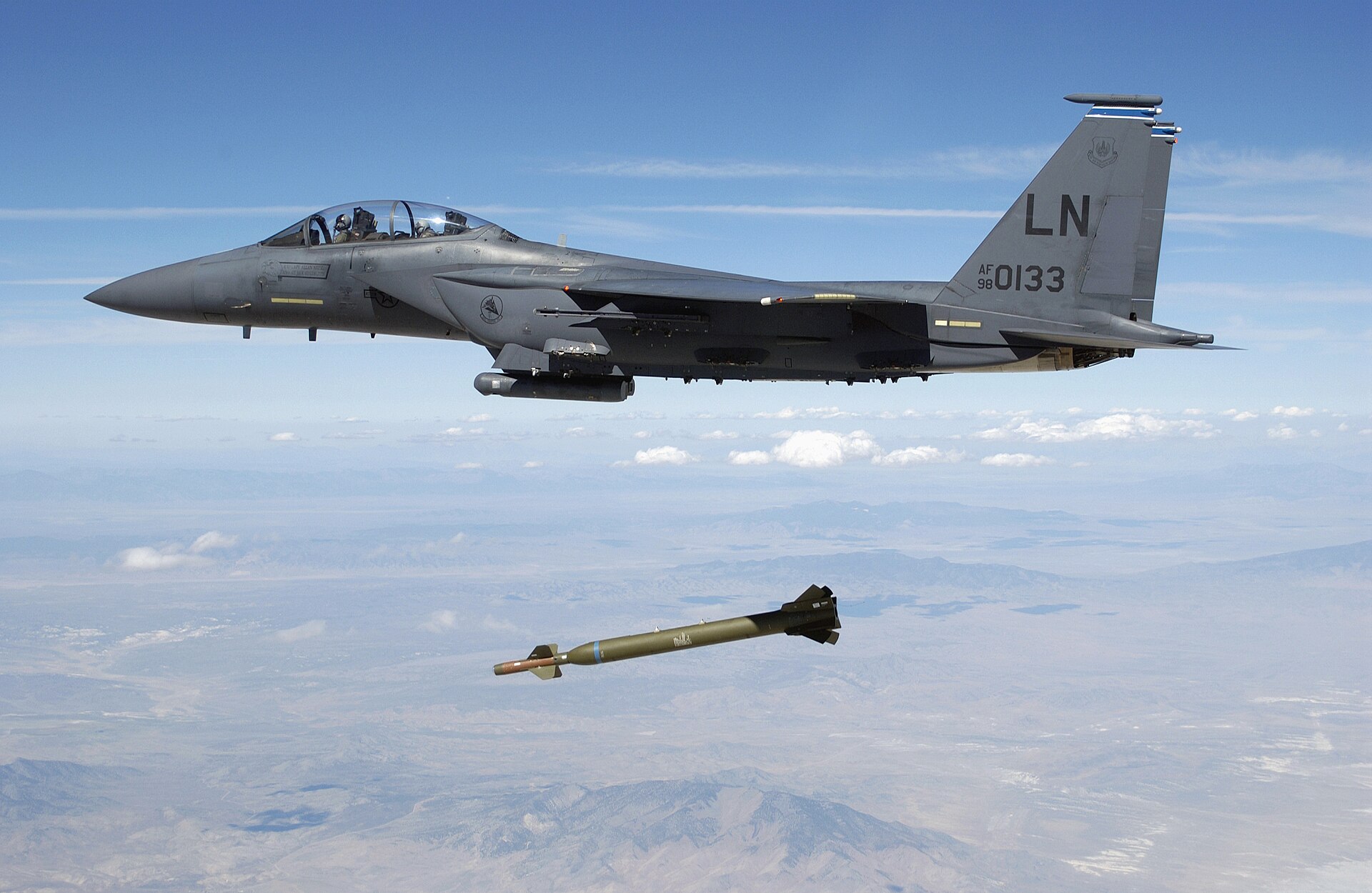
Yahya Saree, the Houthi military spokesman, said on X that the group had “successfully targeted” KKIA with a ballistic missile and struck East-West pipeline pumping stations with drones, according to Al Jazeera and Arab News. He warned travellers to avoid the airport, declaring it a “military target.”
Saudi authorities did not confirm damage at either the airport or the pipeline. The pattern of claim and non-confirmation has repeated throughout October: Houthi spokesmen assert hits, coalition spokesmen assert interceptions, and independent verification from the ground is scarce.
Houthi-aligned media outlet Al-Masirah described the Sanaa strikes as “Saudi aggression,” according to Xinhua. Al-Masirah did not provide immediate casualty figures for the 26 October strikes. On 23 October, it reported three people killed in a coalition airstrike in Sanaa’s Nihm district, according to Newscord.
The Houthi framing serves a specific purpose. By claiming precision strikes on Aramco facilities and the airport, the group signals to its domestic audience and to Tehran that it retains the capacity to threaten Saudi critical infrastructure despite the coalition’s ground offensive and air campaign. Whether the missiles actually reached their targets is, for that audience, secondary to the assertion that they were fired.
The Interceptor Supply Problem
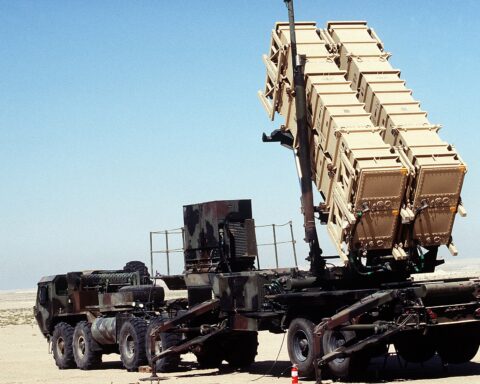
The coalition’s emphasis on destroying launchers rather than simply reporting interceptions reflects a hard arithmetic. Each interception consumes expensive and difficult-to-replace Patriot missiles. The Wall Street Journal has reported that Saudi Arabia has “fewer than 1,000” Patriot interceptors remaining, and analysts have estimated restocking could take “up to 30 months,” according to The National.
The United States approved a $9 billion sale of 730 PAC-3 MSE missiles on 30 January 2026, according to US defence procurement records, but delivery timelines remain unconfirmed. In the interim, every launcher the coalition destroys on the ground is one fewer intercept required in the air — a calculus that makes counter-battery operations not merely tactical but logistically essential.
Greek Prime Minister Kyriakos Mitsotakis, visiting Riyadh on 26 October, agreed to keep a Greek Patriot battery deployed in Saudi Arabia, according to Al Jazeera. The commitment — from a NATO member outside the Gulf — illustrates how far Riyadh has reached to shore up its air defence network.
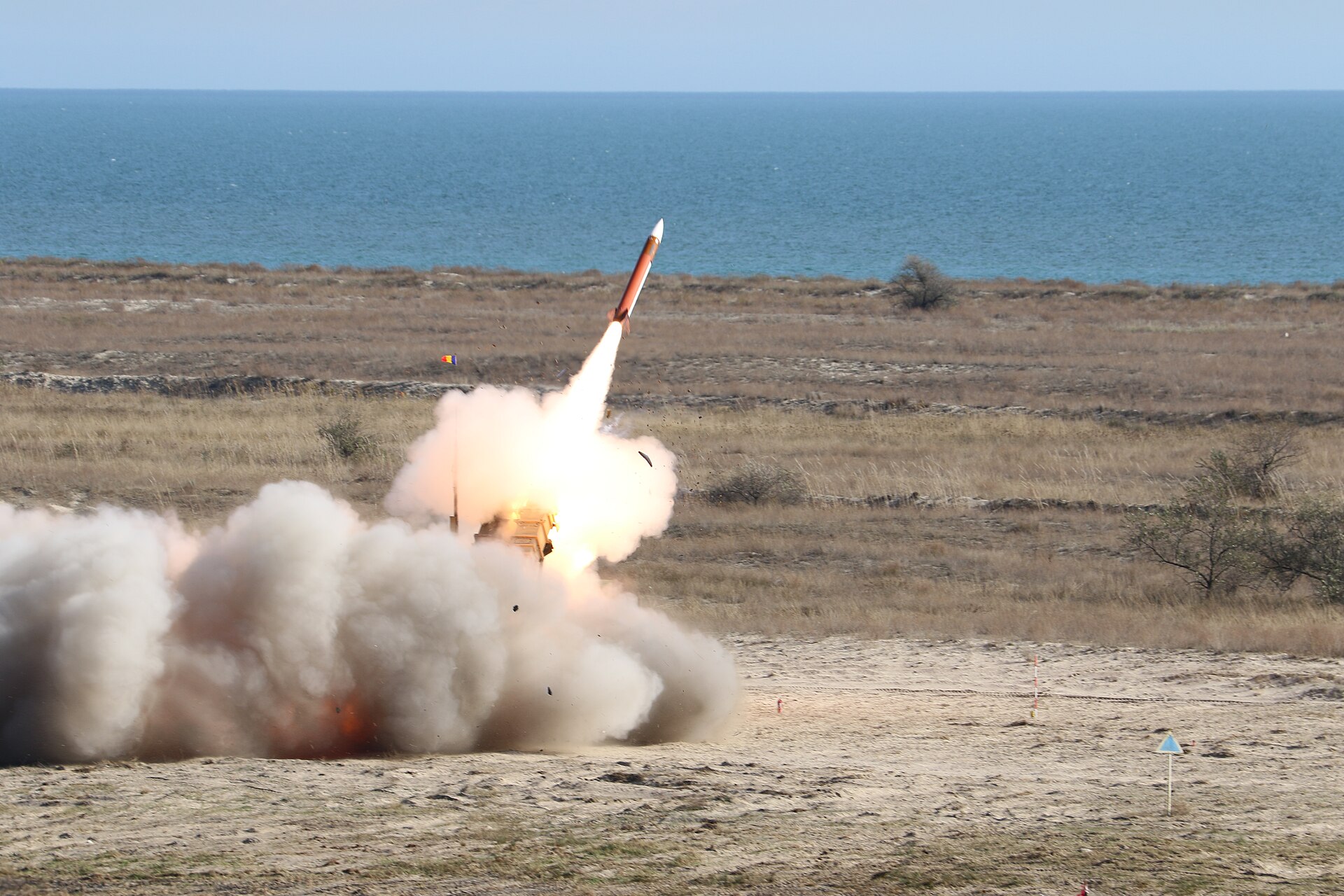
Nawaf Obaid, a senior fellow at King’s College War Studies, told Al Jazeera on 11 October that “as much as you can have a multi-layered air defence system, one will always come through.” The 26 October interception worked. But the coalition appears to be betting that reducing the number of launches matters more than perfecting the intercept rate.
Defence analyst Wolfgang Pusztai told Al Jazeera that “the Houthis likely have only a limited number of short-range ballistic missiles left, so they may be unable to mount saturation attacks.” Their aim, he said, was “to maximise the strategic impact of these attacks, in this case to disrupt civilian air traffic.” Analysts estimate the Houthi long-range ballistic missile inventory at 100 to 200, according to The National. Named types include the Palestine-2, a solid-fuel, two-stage missile with a range of approximately 2,000 kilometres, and the Toufan, a rebranded Iranian Ghadr with a range of 1,350 to 1,950 kilometres, according to Al Jazeera.
Conflict Armament Research reported in October that the Houthis were attempting to build a new medium-range ballistic missile using Chinese-sourced components, including rocket motor parts, according to US News. If confirmed, the finding would complicate assessments of how quickly the Houthis’ inventory is depleting.
Missiles and Diplomacy on the Same Day
While coalition jets struck Sanaa, Saudi Defence Minister Prince Khalid bin Salman was in Tehran alongside Pakistani Army Chief Field Marshal Asim Munir and Turkish intelligence head Ibrahim Kalin, according to The National. Saudi Deputy Minister for Public Diplomacy Rayed Krimly said the meeting was “aimed at de-escalation and finding diplomatic solutions to the crises in the region,” The National reported.
The juxtaposition is worth sitting with. The same government that ordered the Sanaa strikes sent its defence minister to the capital of the state that Western and Gulf officials have long described as the Houthis’ principal backer. Multiple analysts have assessed that the Houthis still rely on Iran for sophisticated guidance and control components, according to The National.
The Tehran meeting produced no public statement by the time of publication. But the visit signals that Riyadh is pursuing a dual-track approach: military degradation of Houthi launch infrastructure while maintaining a diplomatic channel to Iran. The coalition’s intensified operations across southern Saudi Arabia — including the interception of 10 Houthi missiles on 25 October — provide the military context in which those diplomatic conversations take place.
The targeting of Makkah and Madinah on 25 October, when the coalition intercepted 2 Houthi missiles aimed at the holy cities, has further raised the stakes. The UN Security Council affirmed Saudi Arabia’s right to self-defence on 15 October and condemned the Houthi strikes, providing diplomatic cover for the coalition’s air campaign.
Background: A War That Moved North
The current phase of the Saudi-Houthi conflict dates to the collapse of a 2022 truce, after which fighting resumed in southern Saudi Arabia before the Houthis shifted their targeting to Riyadh’s airport by September 2026, according to the BBC and Reuters. The 19 September attack on KKIA was part of that shift, opening a sustained campaign against the Saudi capital’s main airport.
Yemen’s internationally recognised government launched Operation “Dawn of Yemen” on 4 October, with the coalition contributing 100 combat jets, according to CNN and the Oman Observer. The ground offensive, supported by Pakistani and Turkish forces under the Makkah Joint Defence Agreement, aimed to push Houthi forces away from positions within range of Saudi population centres.
But the Houthis’ long-range missile inventory has allowed them to strike Riyadh from deep inside Houthi-held territory, rendering the ground campaign’s northern advance insufficient to eliminate the threat. The counter-battery air operations documented this month represent the coalition’s parallel attempt to address that gap: if the launchers cannot be pushed out of range, they must be destroyed in place.
For residents of Riyadh, the 3:42 a.m. alert on 26 October was one more in a series that began in late September. The coalition’s assurance that it destroyed the launcher may provide some tactical comfort. The question — which the coalition has not yet answered — is whether it can sustain a pace of launcher destruction that outstrips the Houthis’ ability to move, conceal, and replace them.
For travellers concerned about the security situation, House of Saud maintains an updated Saudi Arabia travel status guide and a detailed Saudi airports guide with the latest on KKIA operations.
Frequently Asked Questions
Did the Houthi missile cause any damage at KKIA on 26 October?
Saudi authorities had not confirmed or denied damage at the airport as of publication. The coalition said the missile was intercepted and destroyed. Houthi spokesman Yahya Saree claimed a hit “with precision,” but the Houthis have made similar claims in previous attacks that Saudi officials did not corroborate. KKIA had reopened Terminals 1 and 2 on 25 October after a two-week closure; it was not immediately clear whether the 26 October incident disrupted airport operations again.
What types of ballistic missiles are the Houthis using against Riyadh?
The coalition has not publicly identified which type was fired on 26 October. Both principal Houthi long-range types — the Palestine-2 and the Toufan — rely on Iranian guidance and control components, according to The National, which is why analysts regard cutting the supply chain as important as destroying launchers. The Conflict Armament Research finding that the Houthis were assembling a new medium-range type from Chinese-sourced parts introduces a further uncertainty: if that programme reaches operational status, estimates of how quickly the existing inventory is being depleted would need to be revised upward.
Were there casualties in Sanaa from the coalition strikes on 26 October?
No confirmed figures were available at publication. Al-Masirah, the Houthi-affiliated broadcaster that typically covers Yemeni civilian casualties within hours, published no 26 October casualty tally for the Sanaa strikes. The coalition described the targets as missile storage infrastructure and “sources of threat” rather than populated sites. Both sides have strong incentives to shape the casualty narrative — the coalition to demonstrate precision, the Houthis to claim civilian victimhood. Independent figures from Houthi-held territory typically take days to emerge through UN monitoring bodies or organisations such as the Yemen Data Project that systematically track airstrike fatalities.
What is the Makkah Joint Defence Agreement?
Announced on 5 October by Defence Minister Prince Khalid bin Salman, the agreement activated “collective deterrence measures” among Saudi Arabia, Pakistan, and Turkey in response to Houthi attacks. Under it, Pakistani and Turkish forces have deployed to support the coalition’s operations, although Turkey’s parliament had not formally ratified the pact as of early October, according to Al Jazeera. Egypt is not a signatory; Egypt’s parliament voted on 26 October on a separate Saudi military deployment measure.
Is Greece now a participant in Saudi air defence?
Greek PM Mitsotakis agreed on 26 October to maintain a Patriot battery already deployed in Saudi Arabia. Greece is a NATO member and its Patriot contribution predates the current escalation. The 26 October commitment formalised its continuation rather than representing a new deployment. No deployment date for an additional battery was announced.
The House of Saud Daily Briefing
Saudi Arabia's news in 3 minutes, every morning. Free. See today's issue