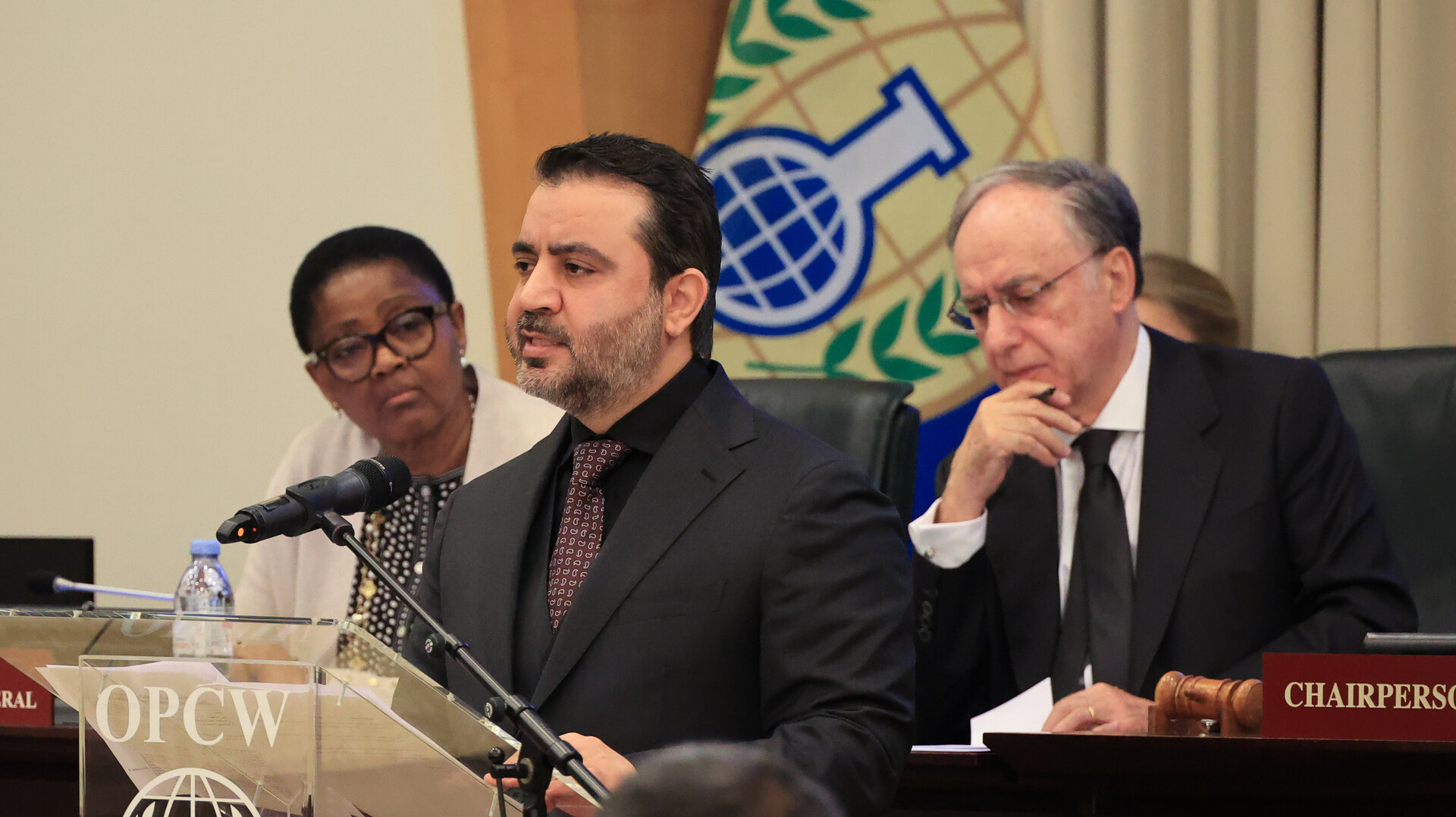

MANAMA — Syria’s foreign minister confirmed on Saturday that Damascus is negotiating to join the Makkah Joint Defence Agreement, the Saudi-Turkish-Pakistani mutual-defence pact signed on August 7 that commits its members to treat an attack on one as an attack on all. Asaad al-Shaibani, speaking at the 22nd IISS Manama Dialogue in Bahrain on October 31, said “discussions are currently underway to evaluate Syria’s entry into the Makkah alliance,” according to AFP.
The announcement recasts a wartime alliance — activated on October 5 with what Prince Khalid bin Salman called “collective deterrence measures” against Iranian-backed attacks on Saudi Arabia — as the framework for a four-state bloc stretching from the Bosporus to the Indus. For Iran, the implications cut deep: the country it spent 13 years propping up under the Assad family, its only reliable overland corridor to Hezbollah and the Mediterranean, is now seeking membership in a military pact built to contain it.
The House of Saud Daily Briefing
Saudi Arabia's news in 3 minutes, every morning. Free. See today's issue
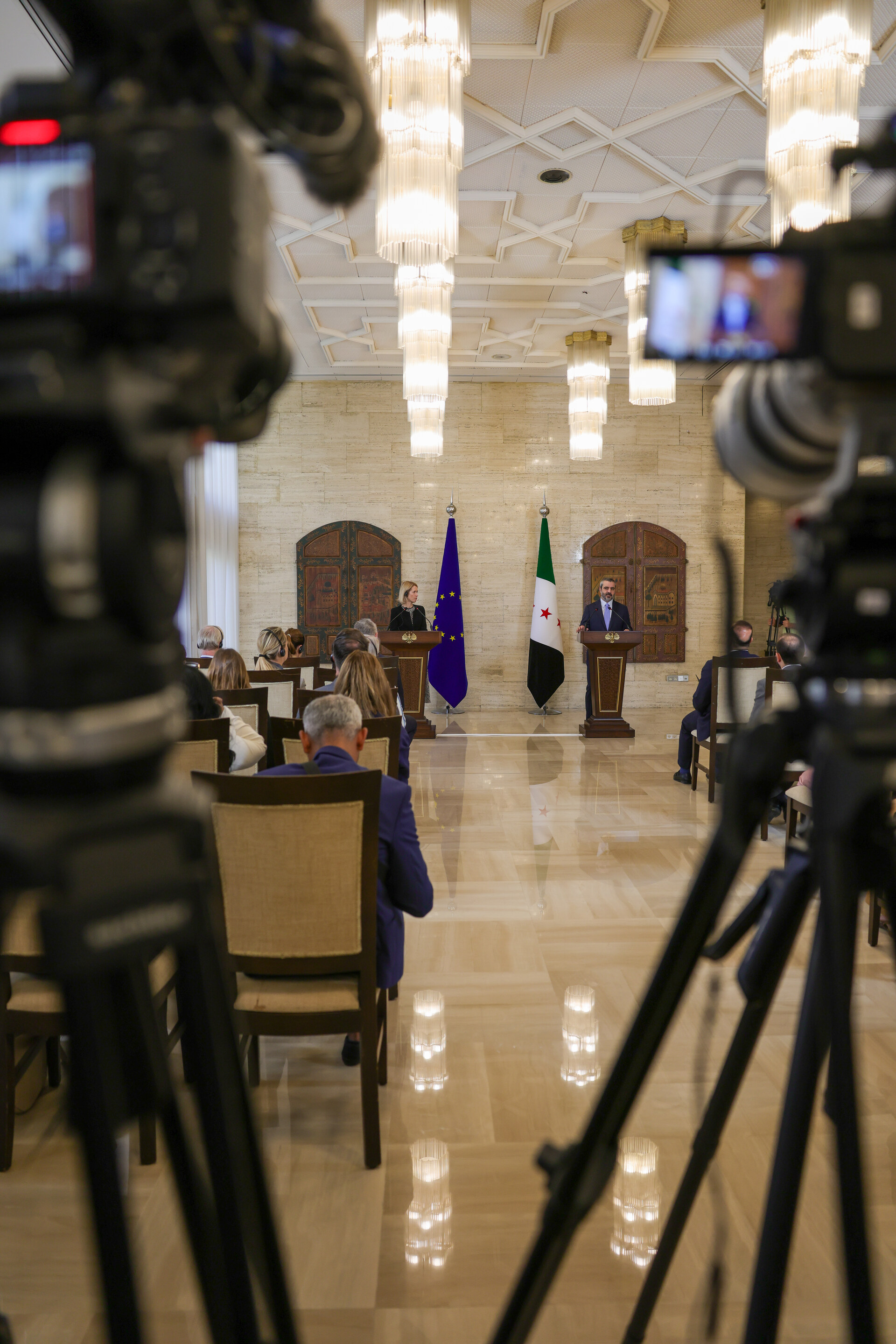
Table of Contents
What Did al-Shaibani Say at the Manama Dialogue?
al-Shaibani’s statement went well beyond a diplomatic feeler. He framed Syria’s candidacy as a strategic reorientation, coupling the membership bid with an explicit security guarantee to the Gulf states that his predecessor spent a civil war helping Iran undermine. “We will not stand by as a spectator in the face of any aggression against the Gulf states,” he said, according to the Syrian Arab News Agency, adding that Damascus would oppose “any aggression” and “cross-border militias” — the exact networks that once used Syrian territory as a highway.
He paired that pledge with a line that worked as both geographic observation and political thesis. “Geography is destiny, and integration is a choice,” AFP reported him saying, a formulation that acknowledged Syria’s position as a bridge between the Gulf and the Mediterranean while asserting that Damascus had made its choice.
“Geography is destiny, and integration is a choice.”
Asaad al-Shaibani, Syrian Foreign Minister, Manama Dialogue, October 31, 2026
al-Shaibani described Turkey’s relationship with Syria as “very special,” citing shared economic and military collaboration (The National News, October 31), a telling framing given that Turkish-backed forces helped bring down Bashar al-Assad less than two years ago. He also denied reports that Saudi Arabia had asked Damascus to send ground troops to fight the Houthis in Yemen (The National News, October 31), signaling that Syria views the Makkah Pact as a defensive umbrella rather than a commitment to expeditionary campaigns. Syria’s military is still rebuilding after 13 years of civil war, and Damascus has neither the capacity nor the appetite for foreign deployments.
Pakistan’s military, the pact’s third pillar, appeared to welcome Syria’s interest with an openness that carried its own edge. The director general of Pakistan’s Inter-Services Public Relations directorate said the pact’s text does not bar new members and, asked whether even Iran might eventually qualify, replied: “Anyone who has a shared vision of collective deterrence and regional peace, why not?” (AFP via Dawn, October 31). The phrasing was diplomatic and sharply directed at the same time, effectively inviting Tehran to either join the alliance it has spent months denouncing or watch its isolation deepen.
The Corridor That Died With Assad
The strategic weight of al-Shaibani’s announcement is inseparable from what Damascus used to be for Tehran — not merely an ally, but the central node of an overland supply chain that ran from Iran through Iraqi territory, across Syria and into southern Lebanon, sustaining Hezbollah with weapons, fighters and money for more than a decade. Iran backed Assad through a civil war that killed hundreds of thousands rather than lose that corridor. When Bashar al-Assad fell on December 8, 2024, the route lost its state guarantor overnight, and every party in the network understood immediately what the collapse meant for the wider balance of power.
Hezbollah leader Naim Qassem conceded the loss within days, dismissing the Syrian supply route as “a detail in the resistance’s work” (Reuters, December 14, 2024). The claim was transparently defensive; Hezbollah’s heavy-weapons arsenal depended on that route, and Iran was already scrambling to find alternatives, reportedly exploring an air corridor to bypass the severed overland connection (Times of Israel, 2025). By March 2026, Carnegie Endowment analyst Kheder Khaddour assessed that Syria had “effectively moved into the Western orbit” and that Iran’s infrastructure in the country had “eroded” (Carnegie Endowment, March 16, 2026).
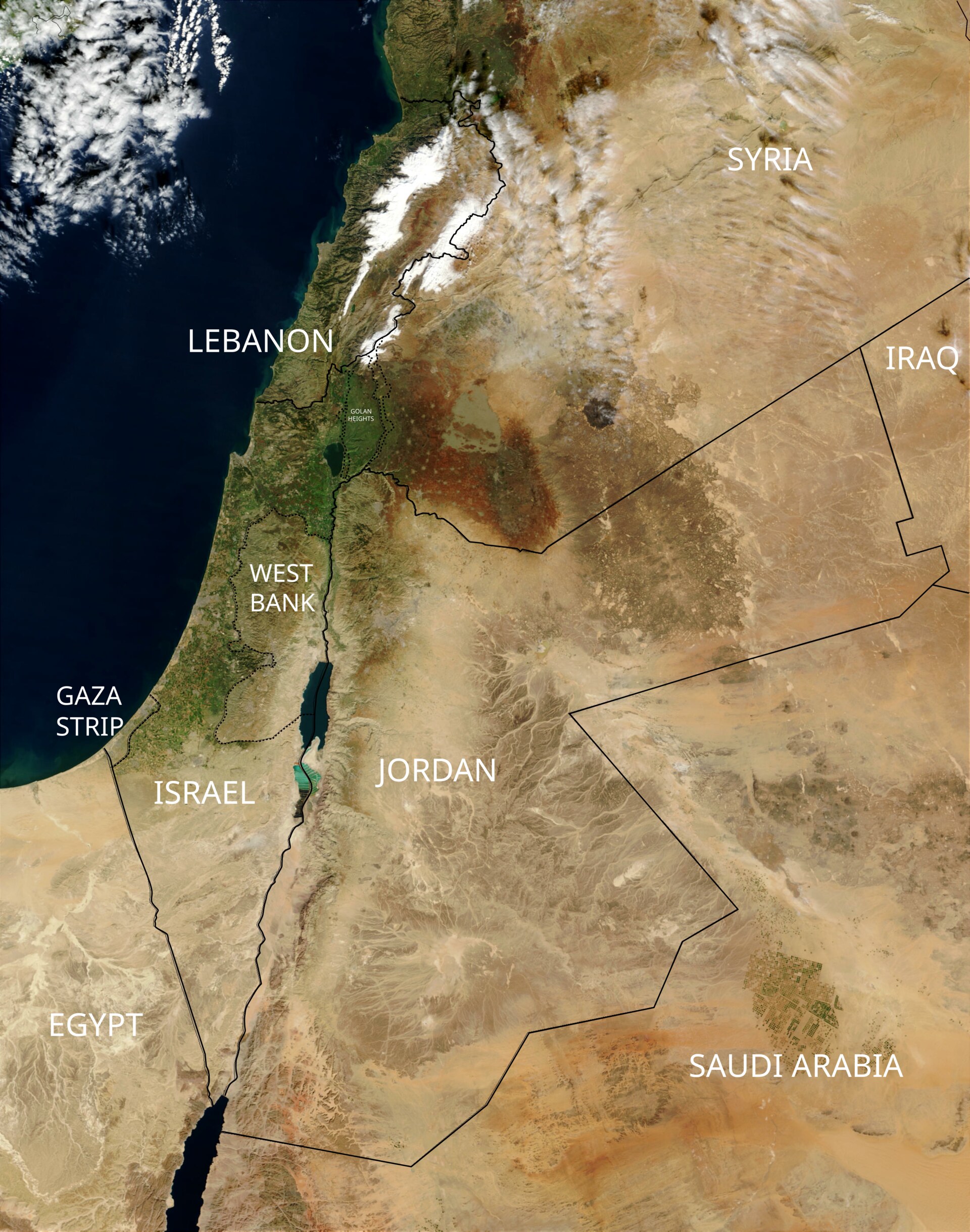
Syria’s new government did not merely inherit a post-Assad vacuum — it actively dismantled what remained of Iran’s presence. Damascus reinforced its borders with Lebanon and Iraq, tightened crossings and blocked the movement of weapons and fighters, according to Khaddour’s assessment. al-Shaibani put it without diplomatic varnish at a Council on Foreign Relations event earlier in 2026: “All of these militias left with the late regime.”
The new government’s approach was firm but not absolutist. During a July 2026 visit to Beirut, al-Shaibani indicated Syria was open to meeting Hezbollah “if interests require it,” while insisting the Hezbollah file had not come up in formal talks (Reuters via Al-Monitor, July 2026). By August, however, the tone had sharpened; speaking in Islamabad, he said Iran would have to acknowledge what it had done to Syria before any improvement in bilateral ties could begin (Arab News, August 2026). Iran’s foreign minister Abbas Araghchi had already conceded the rupture, telling IranWire in May 2025 that “currently, there are no relations between Tehran and Damascus.”
The integration of the Syrian Democratic Forces into the Syrian Army, completed on August 25, 2026, removed the last major armed faction operating outside Damascus’s unified command. Syria’s pursuit of Makkah Pact membership is the formal diplomatic expression of a realignment under way for nearly two years — the transformation of Iran’s most important Arab client state into a candidate for the coalition ranged against it.
Can Syria Meet the Pact’s Entry Bar?
Article 8 of the Makkah Joint Defence Agreement specifies that accession requires unanimous consent from all three founding members — Saudi Arabia, Turkey and Pakistan. Pakistan’s military spokesperson has already signaled openness, and Turkish Foreign Minister Hakan Fidan has previously stated that Egypt “could join the agreement” once technical matters are resolved, establishing a precedent for the pact’s expansion beyond its original signatories. The question is whether that openness extends to a country with a shattered military, negligible power-projection capacity and a reconstruction bill that will run into the hundreds of billions of dollars.
Turkey’s position on Syria specifically remains unstated, though the bilateral relationship has warmed dramatically since Assad’s fall. Ankara retains military bases in northern Syria, and one of the main historical obstacles to closer ties — the Kurdish question in the northeast — was effectively resolved when the SDF merged into the Syrian Army on August 25, 2026. al-Shaibani’s description of the relationship as “very special” at Manama suggests the diplomatic groundwork is in place, though Turkey’s own parliament has yet to ratify the pact itself — a committee cleared the ratification bill on October 27, but the full assembly vote has no scheduled date.
Saudi Arabia’s investment in the relationship is already substantial. Riyadh signed $2.8 billion in binding commitments with Syria on February 7, 2026 (Forbes, February 9, 2026), and Syrian President Ahmad al-Sharaa visited Saudi Arabia in October to discuss reconstruction plans (SANA, October 6-7, 2026). No timeline exists for a formal Syrian application, and the consensus requirement means a single objection from any founding member could block it indefinitely — but al-Shaibani’s public statement at a major security forum is the kind of declaration that diplomats do not make unless they have reason to believe the answer will eventually be yes.
The Makkah pact delegation that traveled to Tehran on October 26 — led by Prince Khalid bin Salman alongside Field Marshal Asim Munir and Turkey’s intelligence chief Ibrahim Kalin — found what Iran’s security chief Mohsen Rezaei described as “a very positive atmosphere” (France 24, October 26, 2026). Whether that atmosphere would survive the addition of a member that Tehran once considered a vassal is a question no Iranian official has been willing to address publicly, and the silence is at least as telling as any answer would be.
Iran’s Encirclement Deepens
The geography speaks without embellishment. The existing Makkah Pact already places Turkey to Iran’s northwest, Saudi Arabia to its southwest and Pakistan to its southeast — three of the four cardinal approaches to the Iranian plateau covered by a single mutual-defence treaty. Syrian accession would seal the western flank, the Levantine corridor that Iran spent decades cultivating as its strategic depth and its primary weapons-delivery route to the Mediterranean. Iranian analyst Hamidreza Azizi, writing for Iran Analytica, described even the three-member pact as a “potential encirclement” of Iran; adding Damascus would leave Tehran surrounded by treaty allies on every land border that matters.
Tehran’s official posture toward the pact has veered between dismissal and naked threat. Iran’s foreign ministry spokesman Esmaeil Baqaei said in August 2026 that Tehran had “no reason for concern” over the agreement. Iranian MP Ebrahim Rezaei struck a harder note, calling it a “paper agreement” and warning that “the roar of our missiles” would reach its signatories (Iran Analytica). No Iranian official has publicly responded to Syria’s candidacy — and fabricating a reaction where none has been recorded would be irresponsible — but the trajectory from client state to adversary alliance is visible enough without editorial embroidery.
Western analysts remain divided on whether the pact carries operational teeth or is primarily a political signal dressed in military language. Yoel Guzansky and Gallia Lindenstrauss of Israel’s INSS assessed in August 2026 that the agreement had “doubtful military substance” owing to “divergent threat perceptions, Saudi-Turkish rivalry for Sunni leadership, and both Ankara’s and Islamabad’s ties with Tehran.” Carnegie analysts Cheema and Hage Ali questioned whether either Turkey or Pakistan would follow Saudi Arabia into a direct shooting war with Iran. The skeptics may well be right about the pact’s battlefield limitations — but Syria’s candidacy suggests the alliance’s most consequential function is political rather than operational, a treaty structure that turns Iran’s former partners into formal adversaries whether or not a single additional soldier ever deploys under its flag.
What Does Saudi Arabia Gain From a Fourth Member?
The calculation for Riyadh extends well beyond the military balance sheet. At the most immediate level, Syria’s accession would codify the severance of the Iran-Syria-Hezbollah land corridor in a binding mutual-defence treaty, locking in a realignment that has so far been enacted through border enforcement, diplomatic statements and Saudi investment but has not yet been embedded in a legal commitment that outlasts any single government in Damascus. A Syria bound by the Makkah Pact cannot simultaneously serve as a transit route for Iranian weapons headed to Lebanon without violating a treaty obligation to the country writing its reconstruction cheques.
The broader strategic picture is shifting fast — Trump’s Iran strike moratorium expires on November 3, Araghchi’s last-ditch Hormuz proposal remains unanswered, and OPEC+ is holding December output at 31 million barrels amid the blockade. A fourth pact member strengthens Riyadh’s hand regardless of which scenario materializes: if deterrence holds, the alliance’s political weight grows; if it does not, Syria’s border enforcement denies Iran a resupply route that decades of Israeli airstrikes never permanently severed.
al-Shaibani’s condemnation at Manama of more than 1,000 Israeli attacks on Syrian territory since December 2024 (Newscord, October 31, 2026) introduces a tension that Riyadh will have to manage. Syria’s new government opposes Israeli strikes on its soil even as it courts the alliance Saudi Arabia is building, a contradiction that is containable while the pact remains focused on Iran and its proxies but that will test cohesion if the alliance’s membership and scope expand.
What al-Shaibani offered in Bahrain was not a formal application — no timeline for one exists, and no founding member has publicly endorsed Syria’s candidacy. But he said it on a stage shared with defence chiefs from across the region, and that shifts the diplomatic equation regardless of what Article 8’s consensus mechanism eventually produces. The country that spent a generation as the keystone of Iran’s arc of influence is asking to join the other side, and in this part of the world the public declaration often carries as much weight as the formal document that follows it.
Frequently Asked Questions
When was the Makkah Joint Defence Agreement signed and what does it require?
Saudi Arabia, Turkey and Pakistan signed the pact on August 7, 2026 in Mecca. Article 2 provides that “any armed attack against any one of the three States shall be regarded as an attack against them all,” a collective-defence clause modeled on NATO’s Article 5. The pact committee activated its first operational measures on October 5, 2026, deploying Pakistani and Turkish forces to defend Saudi Arabia against Houthi and Iranian-backed attacks.
Has any other country been formally invited to join?
No formal invitation has been extended to any non-founding state, but Turkish Foreign Minister Hakan Fidan said publicly that Egypt “could join the agreement” once technical matters are resolved. Syria is the first country to confirm that membership discussions are actively under way. Article 8 requires unanimous consent from all three founding members for any new accession, and none of the three has publicly endorsed Syria’s bid.
What is the current state of Syria’s armed forces?
Syria’s military has been rebuilding since the end of 13 years of civil war. The integration of the formerly autonomous Syrian Democratic Forces into the regular army, completed on August 25, 2026, unified the country’s armed factions under a single command for the first time since 2011. Damascus denied at Manama that Saudi Arabia had requested Syrian ground troops for the Yemen campaign, signaling that expeditionary operations are not part of the membership discussion.
Does Iran maintain any diplomatic presence in Syria?
Effectively none. Iran’s Foreign Minister Abbas Araghchi acknowledged in May 2025 that “currently, there are no relations between Tehran and Damascus” (IranWire). Syria’s new government has reinforced its Lebanese and Iraqi borders, dismantling the infrastructure that sustained Iran’s overland weapons-supply route to Hezbollah. al-Shaibani said in Islamabad in August 2026 that Tehran would have to acknowledge its past actions in Syria before any relationship could be rebuilt.
How does the Makkah Pact relate to the ongoing Hormuz crisis?
The pact was signed two months after Iran closed the Strait of Hormuz to Saudi shipping, and its operational activation on October 5 came in direct response to the Houthi missile and drone campaign that has struck Saudi airports and oil facilities. Pakistan had already deployed approximately 8,000 troops, around 16 aircraft, mostly JF-17s, and an HQ-9 air defence system under a separate bilateral agreement with Riyadh (Reuters, May 2026). The Makkah agreement multilateralized those deployments and added Turkish military participation.
The House of Saud Daily Briefing
Saudi Arabia's news in 3 minutes, every morning. Free. See today's issue