
TEHRAN — Saudi Arabia, Iran, Turkey, and Pakistan issued a joint communiqué on Monday pledging to continue dialogue on regional peace and security, the sole tangible outcome of four-way talks in Tehran that failed to produce a ceasefire, a new defence agreement, or a date for a second meeting.
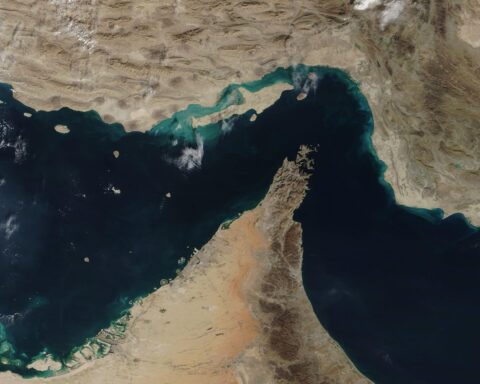
The communiqué commits the four countries to nothing beyond further conversation. It sets no deadline, names no mechanism, and proposes no timeline for easing the Strait of Hormuz closure or halting Houthi missile attacks on Saudi Arabia. Yet it is the diplomatic structure that survived Monday’s collapse—a channel that remains open as President Donald Trump’s self-imposed pause on Iran strikes expires November 3.
“The first meeting of four regional countries was held today, 26 October 2026, in Tehran,” the statement read, according to the text released by Iran’s state-affiliated ABNA news agency. The four countries “agreed to continue the dialogue to strengthen cooperation amongst the four regional countries,” including “for peace and security in the region.”
The House of Saud Daily Briefing
Saudi Arabia's news in 3 minutes, every morning. Free. See today's issue
Table of Contents
What the Communiqué Commits To—And What It Does Not
The joint statement’s language was carefully calibrated to signal continuity without promising results. The operative commitment, published in full by ABNA, reduces to a single sentence: the four nations agreed to continue dialogue for regional peace and security. That is the sum of what the parties formally agreed to.
What the communiqué does not contain is equally significant. The Middle East Monitor reported on October 27 that the statement announced no new defence agreement, no joint security mechanism, no ceasefire, and no date or venue for a second round of talks. Al Jazeera’s coverage confirmed that the meeting ended without a formal agreement to halt hostilities.
Iran’s Foreign Ministry spokesman Esmaeil Baghaei called the meeting “a practical step towards advancing security cooperation based on shared interests in the region,” according to Pakistan Point. The statement offers a framework for future engagement but no operational commitments before the November 3 US midterm elections—and the potential resumption of American military action that date may unlock.
Rayed Krimly, Saudi Arabia’s Deputy Minister of Public Diplomacy, addressed the talks on X after the communiqué’s release. He said the Makkah pact delegation’s visit was part of “efforts to reduce tensions and support Qatar’s and Pakistan’s mediation” and said the visit “underscores the pivotal role” of the Makkah pact countries, according to Nour News.
Who Attended the Tehran Talks?
Iran hosted the meeting through Mohsen Rezaei, Secretary of Iran’s Supreme National Security Council. Rezaei described the talks as “very good” with a “new and positive atmosphere” and said a “new regional dynamic” was taking shape, according to Nour News and Al Jazeera reporting on October 27.
Saudi Arabia sent Defence Minister Prince Khalid bin Salman, The National reported on October 27. His presence marked the highest-level Saudi visit to Tehran since the current crisis began.
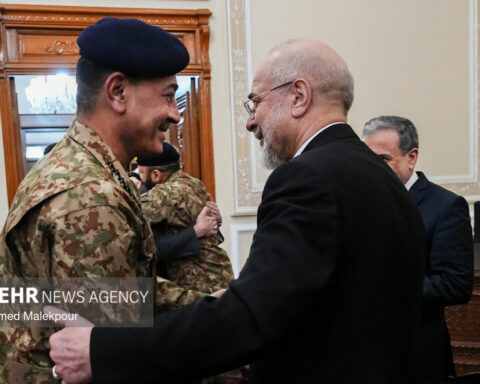
Pakistan dispatched Field Marshal Asim Munir, Chief of Army Staff, according to PressTV and Dawn reporting on October 26. Pakistan’s Interior Minister Mohsin Naqvi also attended the session. Munir had proposed the four-way format after an earlier visit to Tehran, according to Nour News citing Ali Bagheri Kani, Iran’s Deputy Secretary of the Supreme National Security Council for International Affairs.
Turkey sent Ibrahim Kalin, Director of the National Intelligence Organization (MİT), according to Al Jazeera, PressTV, and TRT World. Kalin’s participation underscored Turkey’s intelligence-led approach to the mediation effort.
Iran’s President Masoud Pezeshkian and Foreign Minister Abbas Araghchi also participated, Dawn reported. Pezeshkian said Iran was “ready to take steps toward deepening regional cooperation,” according to IRNA via TRT World. He called on Muslim countries to “stand together and adopt a coordinated position” and warned against “US and Israeli efforts to split Muslim nations.”
A Pakistani security official told Reuters that Field Marshal Munir carried a proposal with “Donald Trump’s blessing” to the Tehran meeting, Al Jazeera reported. The proposal’s specific terms have not been disclosed by any government.
Iran’s Request: A Two-Week Regional Pause
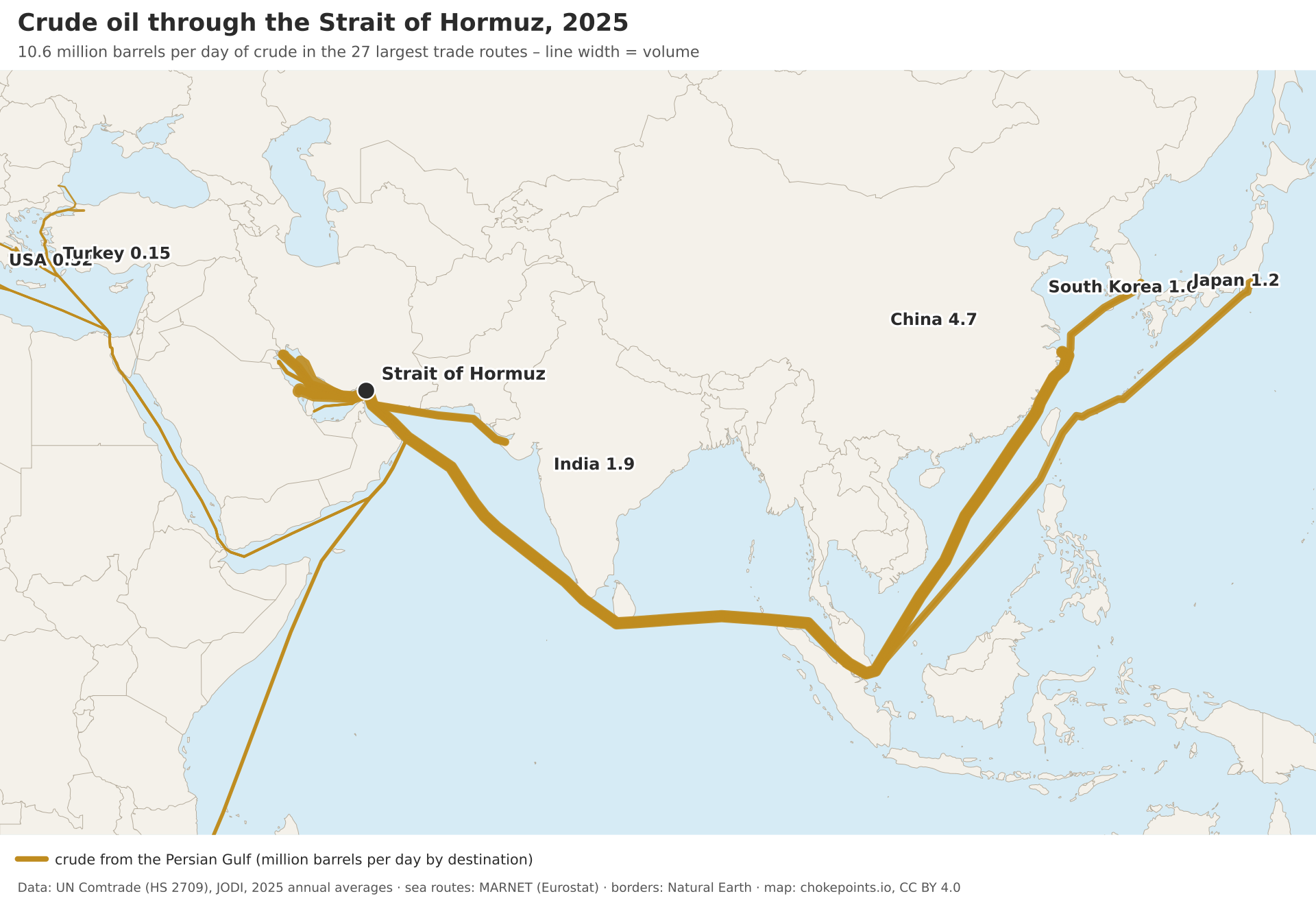
The National reported exclusively on October 27 that Iran asked its three guests to press Washington to accept a two-week regional pause in hostilities. In return, Iran said it would allow negotiations to resume and gradually reopen the Strait of Hormuz.
The request places the initiative back on Washington, where President Trump has already ruled out strikes before November 3. Trump said on October 8 that the US “will not be attacking Iran at any time prior to the midterm elections,” according to The National. The question is whether the administration will agree to extend that pause into a formal diplomatic window.
Iran’s Foreign Minister Abbas Araghchi described the meeting as “an important opportunity to advance dialogue on regional peace and security,” according to ABNA on October 28. He said lasting cooperation would depend on “shared principles, confidence-building, respect for sovereignty, and concrete commitments.” Araghchi advocated for regional security “without military presence or interference from outside powers.”
The proposal aligns with Iran’s public position that Hormuz can reopen in 4-5 days if the US lifts its blockade of Iranian ports. Tehran has also demanded $24 billion in reserves before any Hormuz reopening clock begins.
No US response to Iran’s two-week pause request has been reported. The proposal’s viability depends on whether Washington sees value in extending a pause it has already committed to through the midterms—or whether the administration views that pause as a strategic window rather than a diplomatic one.
The Houthi Problem Remains Unresolved
The Tehran talks failed to address the immediate security threat facing Saudi Arabia: Houthi missile and drone attacks that have continued unabated during the crisis.
The National reported on October 27 that Iran told the meeting it “lacked leverage” over the Houthis to halt attacks on Saudi Arabia. Iran suggested final Houthi negotiations should take place in Sanaa, not Tehran—a position that distances Tehran from direct responsibility for Yemen-origin attacks.
Hours after the communiqué was released, the Saudi-led coalition intercepted three ballistic missiles and four drones, Al Jazeera reported on October 27. The attacks demonstrated the gap between diplomatic statements and battlefield reality.
The coalition has maintained sustained defensive operations throughout the Tehran talks. The disconnect between Iran’s claim of limited Houthi influence and the continued attacks from Yemeni territory remains a central obstacle to any ceasefire agreement.
Iran’s position—that it cannot guarantee Houthi compliance with any regional agreement—complicates the value of the Tehran communiqué. If the channel to Tehran does not include a channel to Sanaa, its utility for Saudi Arabia’s immediate security concerns is limited.
Why Was the Nuclear Programme Excluded?
Iran’s delegation told the meeting that the nuclear programme was not discussed, according to the Middle East Monitor citing Reuters on October 27. An Iranian official told Reuters that Tehran would not discuss its nuclear activities until the United States responded to Iran’s demands for ending the wider conflict.
The carve-out is consistent with Iran’s long-standing position that nuclear negotiations belong in a bilateral or multilateral format with Washington, not in regional talks with Gulf states. It also reflects the tactical sequencing Tehran has adopted: secure de-escalation first, then address the nuclear file.
For Saudi Arabia, the exclusion is a limitation. Riyadh has consistently expressed concern about Iranian nuclear capabilities, and any comprehensive regional security framework would eventually need to address the issue. The Tehran communiqué’s silence on the nuclear question means that track remains separate from the four-nation dialogue.
The Trump administration’s recent sanctions on Iran’s shadow fleet suggest Washington is pursuing economic pressure rather than dialogue on the nuclear file. Whether that approach changes after November 3 remains unclear.
Will There Be a Second Round?
The communiqué did not set a date or venue for follow-up talks. A source told The National that a second round “could be held soon, possibly in Turkey,” but no government has confirmed the report.
Turkey’s potential role as host would shift the format away from Iranian territory and potentially expand the agenda. Kalin’s participation as MİT director rather than a foreign ministry official suggests Turkey may be positioning itself as a security interlocutor rather than a purely diplomatic one.
The Makkah Joint Defence Agreement, signed August 7, 2026, by Saudi Arabia, Turkey, and Pakistan, provides the institutional backdrop for continued engagement, according to Kuwait Times and AFP. Turkey’s parliamentary Foreign Affairs Committee approved the Makkah pact ratification bill on October 27, TRT World reported; a full assembly vote is still pending. Ankara’s participation in the Tehran meeting confirms that operational cooperation has proceeded regardless of formal ratification.
Pakistan’s role as organizer positions Islamabad as the diplomatic engine of the process. Pakistan has approximately 8,000 troops deployed in Saudi Arabia under the Makkah pact, according to Reuters. The country previously brokered the April 2026 ceasefire and the Islamabad Memorandum, which collapsed after 60 days when fighting resumed, according to Anadolu Agency and NIAC analysis.
The window for a second round is narrow. If Trump’s pause on Iran strikes expires November 3 without extension, the diplomatic context for regional talks will shift fundamentally. The communiqué preserves a channel; whether that channel carries meaningful traffic depends on decisions in Washington as much as Tehran.
Background: From Makkah Pact to Tehran
The Tehran meeting grew out of the Makkah Joint Defence Agreement signed August 7, 2026, which committed Saudi Arabia, Turkey, and Pakistan to mutual defence cooperation. The pact was a response to escalating tensions with Iran following Supreme Leader Mojtaba Khamenei’s consolidation of power after his father Ali Khamenei’s death on February 28, 2026.
Iran’s Foreign Minister Abbas Araghchi had previously offered to “facilitate dialogue between Saudi Arabia and Yemen,” according to the BBC on October 11. The Tehran meeting represented a different approach: direct four-nation engagement rather than Iran as intermediary for Houthi talks.
Iranian state media framed Monday’s meeting as a first-of-its-kind regional security initiative. PressTV quoted Rezaei’s post-meeting televised remark that “regional security must be guaranteed by regional countries themselves”—a formulation that implicitly excludes the United States from regional arrangements.
Iranian hardline media offered a more skeptical assessment. Kayhan published an editorial titled “The Tehran Summit: Water or Mirage?” questioning whether Turkey, Saudi Arabia, and Pakistan can be credible mediators, according to Nour News. The editorial warned that Tehran would not abandon the Houthis under pressure. Another Iranian newspaper headline read simply: “Never Without Iran.”
Frequently Asked Questions
What role did Qatar play in the Tehran talks?
Qatar was not among the four parties at the Tehran meeting. A Pakistani security official told Reuters that the goal was “a regional mechanism to prevent military attacks between countries in the region,” with Pakistan, Turkey, Saudi Arabia, and Qatar as potential guarantors. Qatar’s inclusion as a named guarantor—despite its absence from Monday’s session—suggests Doha may play a formal role in any follow-on framework.
Has Iran’s Supreme National Security Council engaged directly with Saudi Arabia before?
Mohsen Rezaei’s role as host marked SNSC-level engagement with Saudi Arabia during the current crisis. Rezaei, a former IRGC commander who ran for president in 2021, brings a security rather than diplomatic profile to the talks. His characterization of a “new regional dynamic” taking shape suggests Tehran views the channel as potentially durable beyond the current crisis.
What is Ali Bagheri Kani’s current role?
Ali Bagheri Kani left his position as Deputy Foreign Minister in September 2024 and now serves as Deputy Secretary of the Supreme National Security Council for International Affairs. His involvement signals that the Tehran talks run through Iran’s security apparatus rather than its foreign ministry—a distinction that matters: the SNSC answers directly to the Supreme Leader, giving this channel a different chain of command than foreign ministry tracks that can be reversed by cabinet reshuffles.
How does the Tehran communiqué compare to the Islamabad Memorandum?
The Islamabad Memorandum, brokered by Pakistan in April 2026, established a 60-day passage framework for Strait of Hormuz shipping and included specific operational commitments. The Tehran communiqué contains no such specifics—it commits parties to “continue the dialogue” without timelines, mechanisms, or benchmarks. The Islamabad Memorandum collapsed after 60 days; the Tehran communiqué’s vaguer language may make it more durable but less operationally meaningful.
What is the Makkah Joint Defence Agreement’s current status?
Turkey’s parliamentary Foreign Affairs Committee approved the Makkah pact ratification bill on October 27, TRT World reported; a full assembly vote is still pending. Until that vote completes, Turkey cannot be formally bound by the pact’s mutual defence trigger—meaning Ankara’s obligations remain political rather than legal. Pakistan remains the only member with troops on the ground in Saudi Arabia. Turkey participates through executive decision and intelligence channels, which Ankara can withdraw without parliamentary approval.
The House of Saud Daily Briefing
Saudi Arabia's news in 3 minutes, every morning. Free. See today's issue