MANAMA — All six GCC transport ministers signed the General Agreement for the GCC Railway Project at a ceremony in Bahrain on November 8, committing to a roughly 1,700-kilometre overland freight and passenger network from Kuwait to Oman, Gulf News reported. Core infrastructure costs alone are estimated at $15.4 to $16 billion, according to the New Arab, with total spending — including national networks, stations, and logistics facilities — reaching as high as $250 billion, Al Majalla reported.
The agreement projects freight volumes of 200 million tonnes by 2030 and 271 million tonnes by 2045, with a December 2030 target for full operations, Asharq Al-Awsat reported. It arrives as the Strait of Hormuz remains under IRGC-declared closure and container volumes at Jebel Ali, the Gulf’s largest port, have collapsed — a facility that sits behind the strait and cannot be reached without passing through it.
The House of Saud Daily Briefing
Saudi Arabia's news in 3 minutes, every morning. Free. See today's issue
Sheikh Abdulla bin Ahmed Al Khalifa, Bahrain’s transport minister, told Asharq Al-Awsat the railway “is not intended to serve as a substitute for maritime transport” and described it as “an investment in the future of the Gulf and its generations.” Afaq Hussain, a nonresident senior fellow at the Atlantic Council, told EnterpriseAM the GCC railway “solves half the problem” — linking Gulf states by land but leaving the route to global markets incomplete.
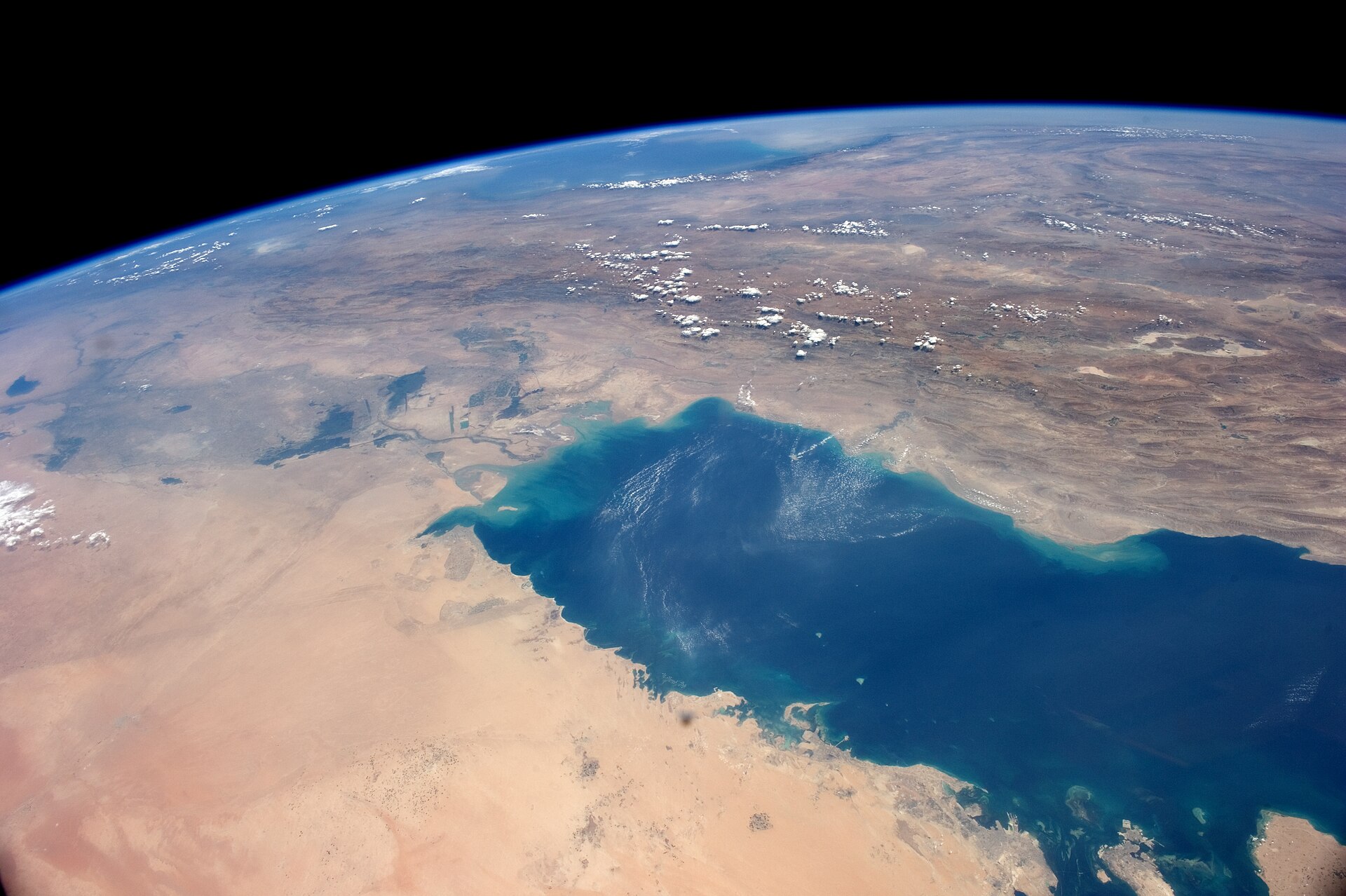
Table of Contents
What the Agreement Establishes
The General Agreement sets out four pillars: project implementation, technical integration, coordination, and regional connectivity, according to Asharq Al-Awsat. Each GCC state funds and builds its own section of the railway, with shared interconnection costs to be “determined collectively.” No unified public-private partnership model was approved.
GCC Secretary General Jasem Mohamed Albudaiwi described the agreement as an important step toward establishing an integrated regional transport network and said it sets a common framework for member states to implement and operate the project, Gulf News reported. Sheikh Abdulla called transport “the lifeline of any economy in any country in the world,” according to Asharq Al-Awsat.
Competing sources give different total lengths for the network. Gulf News cites approximately 1,700 kilometres for the core cross-border route, while Asharq Al-Awsat places the wider figure at 2,100 to 2,177 kilometres when including connecting national spurs. The ceremony venue is also disputed — The National identified it as Al Zahir Palace, while Gulf News reported Al Riffa Palace.
Saudi Arabia’s Council of Ministers formally approved the General Agreement on May 19, 2026 — six months before the Bahrain ceremony — according to Al Majalla. The signing itself was held alongside the GCC Ministerial Committee on Transport and Communications, which reviews railway coordination among the six states, Gulf News reported.
Where Does Construction Stand?
Mohammad Al Shabrami, director general of the GCC Railways Authority, confirmed that overall project completion has surpassed 50 percent, EnterpriseAM reported. Asharq Al-Awsat described that figure as an average across all six states, masking wide variation — some members have completed national rail networks while others have not broken ground on their GCC Railway sections.
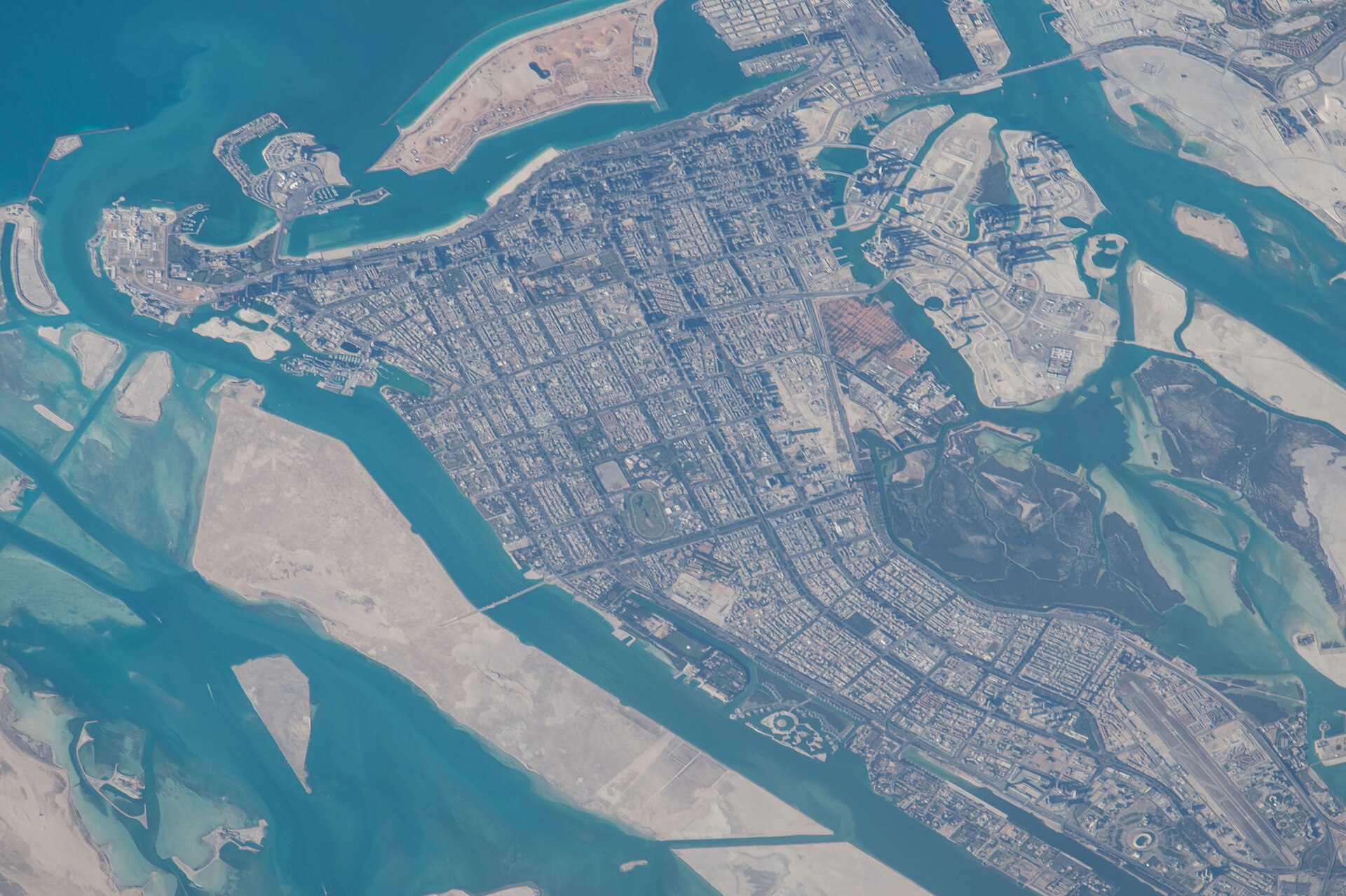
The UAE is the only GCC state with operating intercity freight rail. Its 900-kilometre Etihad Rail national network was inaugurated in February 2023 and already carries freight, according to Al Majalla. The Hafeet Rail link between the UAE and Oman — 238 kilometres connecting Sohar to Abu Dhabi via Al Ain — is roughly 40 percent complete, with trial operations targeted for the fourth quarter of 2027, EnterpriseAM reported.
Wolfgang Lehmacher, former head of supply chain and transport industries at the World Economic Forum, told EnterpriseAM the UAE-Oman timeline “looks realistic but tight” and expected regular container trains on Hafeet Rail by 2028, subject to border procedures. He expected the Saudi stretch and the full network to slip into the early 2030s.
Saudi Arabia’s 672-kilometre section — the second-longest individual segment after the UAE’s 684-kilometre stretch — is in the design phase, with design completion expected around 2028 and construction tenders to follow, according to EnterpriseAM. France’s Systra is reportedly the front-runner for the design contract, and no construction contractor has been selected. That timeline places the Saudi section well past the December 2030 operational target.
The Saudi Landbridge, a separate roughly 950-kilometre freight rail link between Riyadh and Jeddah, also remains unbuilt — tenders were forecast for mid-2026 and have not materialised, with completion now expected in the early 2030s, according to Drewry Maritime Research via Hellenic Shipping News. Jeddah — the logical Red Sea container port for any Hormuz bypass — has no rail connection to the capital.
Kuwait’s chronic political gridlock has historically complicated major infrastructure spending and procurement, AGBI noted, and the status of its railway section has received minimal public reporting. Progress in Qatar and Bahrain has been similarly underdocumented in the English-language record.
Can the Gulf Railway Replace Hormuz Sea Lanes?
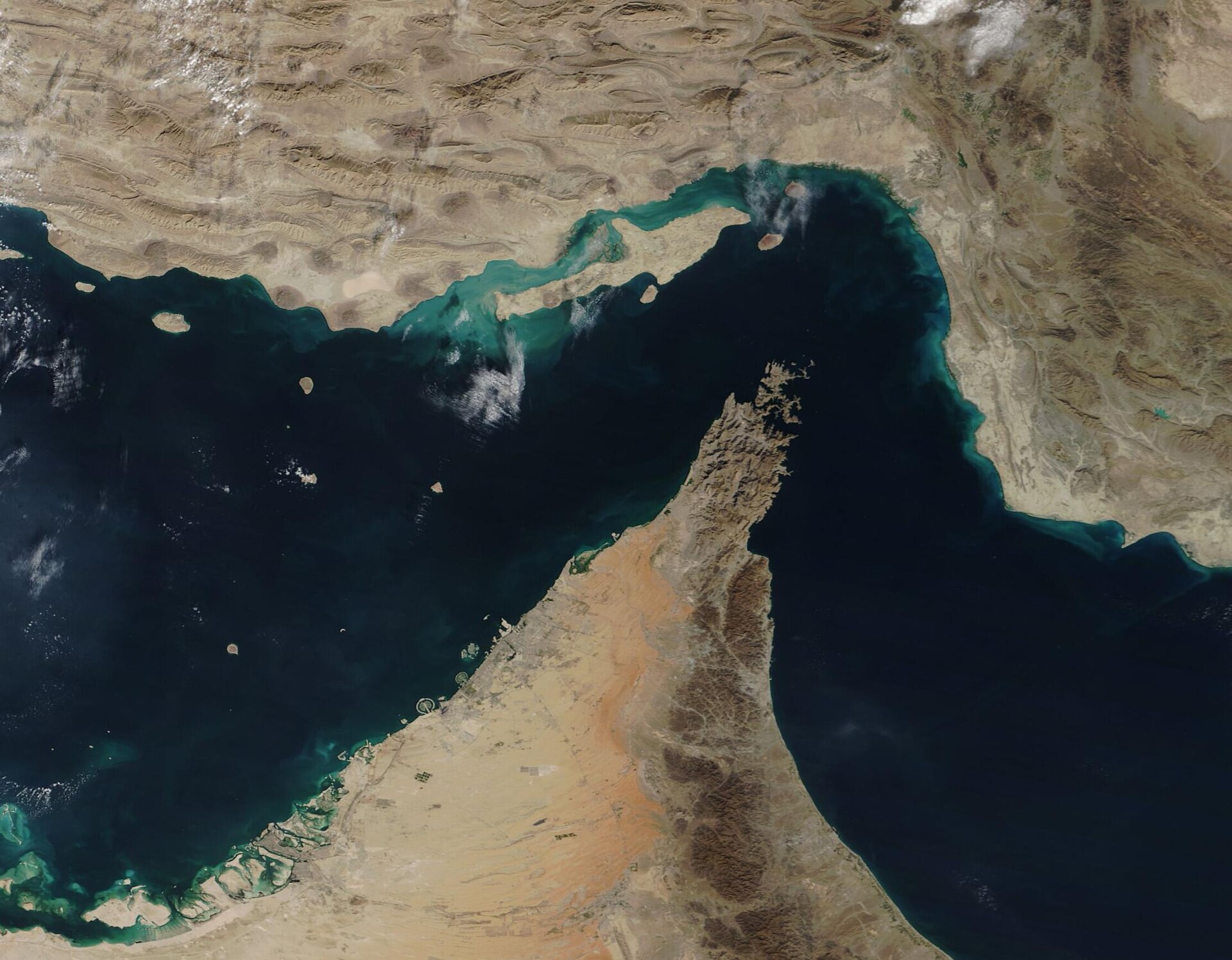
Approximately 33 million twenty-foot equivalent units of containerized cargo transit the Strait of Hormuz annually under normal conditions, according to Drewry Maritime Research. The IRGC declared the strait closed on October 26, a chokepoint through which roughly 138 ships per day had been transiting, according to the Joint Maritime Information Center.
Jebel Ali, with annual capacity of roughly 19.4 million TEU across four terminals, sits behind the strait. Its first-half 2026 container throughput fell 59.5 percent year-on-year, with the second quarter alone down 90.1 percent, World Cargo News reported. Drewry said “more than three-quarters of that connectivity has gone dark” since the closure began.
Drewry’s assessment of bypass options leaves little room for optimism: “No combination of available bypass ports and inland logistics can fully substitute for Hormuz access in the short term.” Qatar, Bahrain, Kuwait, and Iraq have no adequate overland alternative that avoids Hormuz or Saudi territorial transit, the firm added. Duqm in Oman — the most frequently discussed bypass port — represents a “3 to 5 year investment horizon” before it could function as a container hub, according to Drewry.
The railway’s 2030 freight target covers all cargo types across the GCC network — petrochemicals, construction materials, agricultural products — and cannot be compared directly to Hormuz’s containerized traffic volume. The Gulf’s most consequential export, crude oil, travels through the strait on a separate and much larger scale.
Saudi Arabia’s Yanbu terminal on the Red Sea coast, connected by the East-West pipeline, has tested export throughput at approximately 4 to 4.5 million barrels per day during 2026, according to Argus via Noonpost. Pipeline flows fell to roughly 2 million barrels per day in August, Kpler reported via EnterpriseAM. The GCC Railway is designed for dry freight and passengers, not liquid hydrocarbons — the Hormuz bypass for oil is an existing pipeline, not the railway.
What Lies Beyond the Gulf’s Borders?
Even a completed GCC railway leaves the Gulf’s access to global markets half-solved. Gulf states export petrochemicals, aluminium, and fertilizers that currently reach Europe through Hormuz, the Suez Canal, and the Mediterranean — a closed strait severs the first link in that chain. Hussain at the Atlantic Council told EnterpriseAM the railway network stops at the Gulf’s edge, with Mediterranean connectivity requiring passage through Jordan, Syria or Israel, and access to ports at Haifa, Tartous, or Latakia — none under GCC control. An expanded India-Middle East-Europe Economic Corridor — a multimodal link connecting India to Europe through the Gulf — could replace roughly 60 percent of container traffic through Hormuz if fully built, Hussain estimated.
Saudi Arabia and Turkey signed a rail connectivity memorandum in June 2026 for a link through Jordan and Syria, reviving elements of the historic Hejaz Railway, EnterpriseAM reported. Approximately 400 kilometres of the Syria-Jordan segment remains missing. The Saudi-Syria defense pact signed on November 4 may improve the political conditions for cross-border infrastructure, though no rail-specific commitment accompanied the agreement.
China-Iran overland rail traffic between Xi’an and Tehran has increased from roughly one train per week to one every three to four days since the US blockade began on April 13, according to Supply Chain Brain. Beijing has pressed Tehran to reopen Hormuz while benefiting from exempted passage under Iran’s toll arrangement. Iraq’s Development Road — a separate Basra-to-Turkey corridor — has also drawn Iranian concern about reduced Baghdad economic dependence on Tehran.
Background
The GCC Railway was first approved at the 2009 Kuwait Summit with a 2018 completion target, building on discussions from the 1980s about GCC economic integration, according to Al Majalla. The Economist Intelligence Unit attributed the missed deadline primarily to the 2014-16 oil price crash and the fiscal austerity it forced, Al Majalla reported.
The 2017-21 Qatar blockade fractured the political cohesion that the project required. In January 2016, the UAE’s Etihad Rail had already suspended tendering for Phase 2, and Oman’s transport ministry simultaneously said it would halt work because other Gulf states “appeared to have decided to stop work on the project,” AGBI reported. COVID-19 and Kuwait’s chronic political gridlock compounded the delays.
The AlUla Declaration of January 2021 reconciled Qatar with its Gulf neighbours, and the GCC Railway Authority was established in December of that year with the 2030 target, according to Al Majalla. The broader Saudi fiscal picture — a 245-billion-riyal budget deficit in 2026, according to Zawya — adds context to how quickly Riyadh will move from design to construction. Under the agreement’s terms, each state funds its own portion, and no pooled fund exists to cover shortfalls.
Frequently Asked Questions
How many passengers is the railway designed to carry?
The General Agreement projects 6 million passengers by 2030 and more than 8 million by 2045, according to Asharq Al-Awsat. The figures are modest relative to the agreement’s freight volumes, reflecting the project’s initial emphasis on cargo logistics over public transit. Saudi Arabia and Qatar signed a separate high-speed passenger rail deal in December 2025 to link Riyadh and Doha in approximately two hours, according to Al Jazeera — that line’s capacity is not included in the GCC Railway’s passenger figures.
Will the railway compete with Gulf shipping?
Antonella Teodoro, a senior transport consultant at MDS Transmodal, told EnterpriseAM that rail will compete selectively with short-sea and feeder services rather than replace deep-sea shipping. The strongest case for rail is time-sensitive intra-GCC freight, where door-to-door delivery avoids port handling delays and customs queues. Rail also extends port hinterland reach and supports transshipment of goods that would otherwise require multiple sea legs between Gulf terminals.
Is the agreement legally binding?
The full text of the November 8 agreement has not been published, and it remains unclear whether the document imposes enforceable obligations or functions as a political coordination framework. No dispute-resolution or penalty mechanism has been described in reporting on the text. The GCC’s most direct precedent — the 2009 Kuwait Summit agreement with its 2018 completion target — was signed with similar ceremony and produced no cross-border track within the timeframe it set.
Does Yanbu offer a bypass for crude oil?
Yanbu’s theoretical maximum export capability is roughly 7 million barrels per day, according to Argus via Noonpost — well above the volumes tested during 2026. The East-West pipeline’s constraints are operational and security-related, not a function of the system’s design capacity. For containerized goods rather than crude, the question is different: Jeddah, the Red Sea’s primary commercial port, lacks a rail connection to eastern Saudi Arabia, and the planned Saudi Landbridge that would provide one remains years from completion.
What about Houthi threats to railway infrastructure?
The Houthis have targeted Saudi economic and transport infrastructure throughout 2026, including airports, Aramco facilities, and military sites. A railway running along Saudi Arabia’s eastern coast — the likeliest route for the Saudi section — would pass through areas within demonstrated range of Houthi ballistic missiles and drones. Rail infrastructure is harder to destroy permanently than a single ship or pipeline but easier to disrupt temporarily, as a severed section can halt traffic for days or weeks while repairs proceed. No public vulnerability assessment of the planned route has been released.
The House of Saud Daily Briefing
Saudi Arabia's news in 3 minutes, every morning. Free. See today's issue