
CAIRO — Egypt’s Ministry of Foreign Affairs on Friday formally condemned the attacks on “civilian and economic facilities in the Saudi capital, Riyadh,” referencing the Houthi missile strike that damaged the 72-storey Public Investment Fund Tower in the King Abdullah Financial District on November 19. The statement reaffirmed Cairo’s “full solidarity” with Saudi Arabia and endorsed Riyadh’s “right to take all necessary measures to safeguard its sovereignty and territorial integrity.”
The condemnation — one of several Egypt has issued since September — lands at a moment when Cairo is doing more for Saudi defence than any non-pact state: Egyptian troops, armour and air-defence batteries are deployed on Saudi soil under a parliamentary mandate, yet Egypt remains outside the Makkah Defence Pact signed by Saudi Arabia, Turkey and Pakistan in August. The gap between what Egypt is doing and the alliance it has not joined is the defining tension of Cairo’s position in the Iran-Saudi war.
The House of Saud Daily Briefing
Saudi Arabia's news in 3 minutes, every morning. Free. See today's issue
Table of Contents
What Egypt’s Statement Said and Did Not Say
The Egyptian Gazette published the full statement on November 20. Egypt “strongly condemned the attacks targeting civilian and economic facilities in the Saudi capital, Riyadh,” stressed that the strikes “constitute a violation of Saudi Arabia’s sovereignty and international law,” and called for “their immediate cessation.” Cairo reaffirmed “its full support for Saudi Arabia and its right to take all necessary measures to safeguard its sovereignty and territorial integrity and ensure the security and safety of its citizens and residents.”
The phrase “right to take all necessary measures” is the standard diplomatic formulation used to signal support for military self-defence. Egypt’s National Defence Council used nearly identical language on October 18 when it pledged “all necessary and possible support to defend the kingdom’s security and stability,” according to Khaama, citing ABC News and the Associated Press.
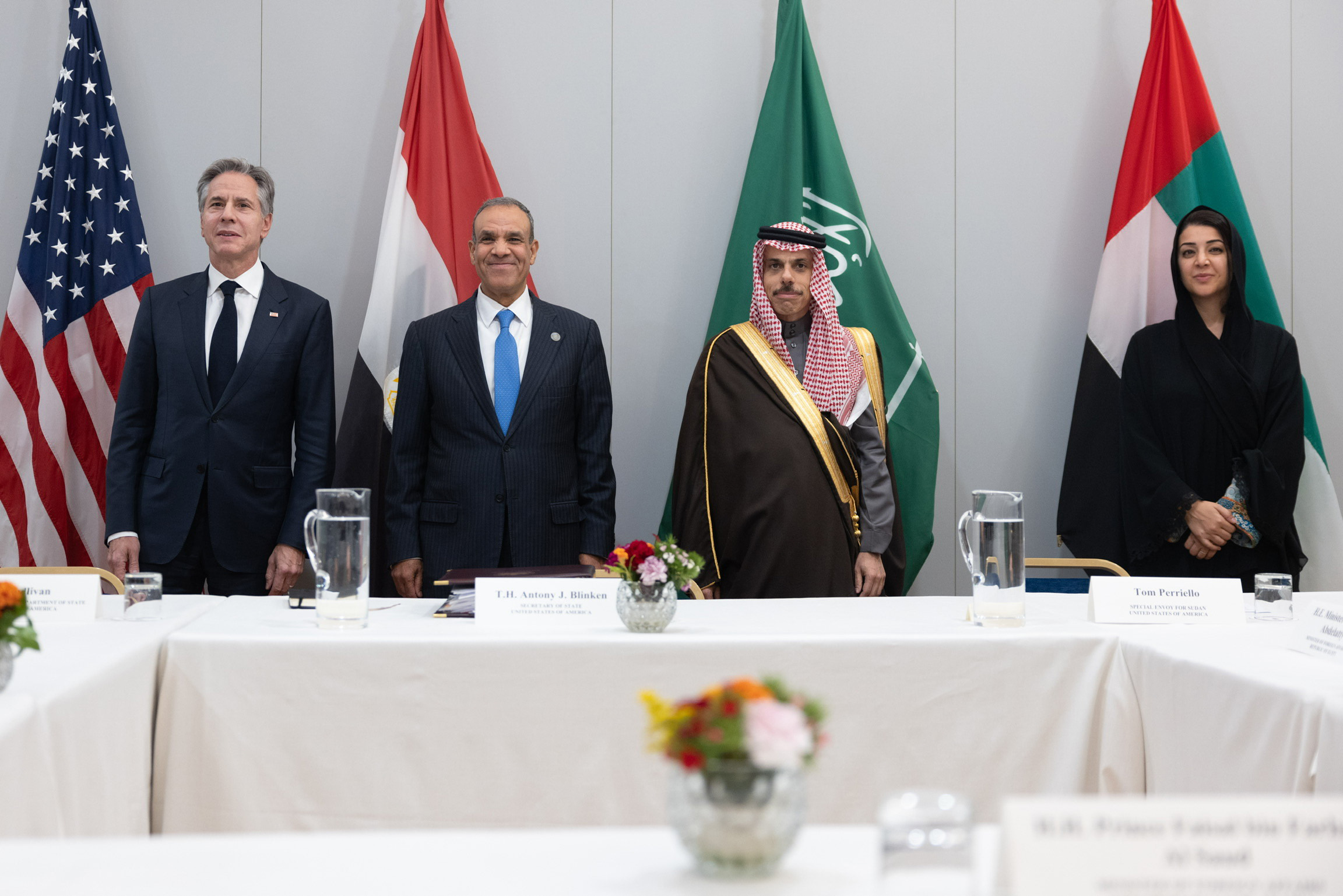
What the statement did not contain is as revealing as what it did. Neither Iran nor the Islamic Revolutionary Guard Corps was named — consistent with every unilateral Egyptian condemnation since September 2026, the Egyptian Gazette and Khaama both reported. By contrast, joint communiqués with Saudi Arabia have used the more direct phrase “repeated Iranian attacks on Arab states,” according to a State Information Service readout of a July 20 bilateral meeting. The omission is deliberate: Cairo condemns the attacks but avoids naming the state behind them.
The November 20 statement follows multiple previous Egyptian condemnations of attacks on Saudi Arabia since September, including confirmed statements on September 8, September 15, November 6, November 8 and November 12 reported by the Egyptian Gazette and Ahram Online. The language across all of them follows a consistent template — “strongly condemned,” “violation of sovereignty and international law,” “solidarity with Saudi Arabia” — suggesting an institutional formula rather than ad hoc drafting.
The PIF Tower Attack That Triggered the Response
The Houthis struck the PIF Tower in Riyadh’s King Abdullah Financial District on November 19, damaging the skyscraper that houses Saudi Arabia’s sovereign wealth fund headquarters, according to Reuters via Khaama. The Houthis claimed responsibility for the attack. The strike came during an intensifying campaign: Saudi-coalition air defences intercepted a missile and drones over Asir and Jizan on November 20.
The PIF Tower is not an arbitrary target. The Public Investment Fund is Saudi Arabia’s sovereign wealth fund and the financial engine of Vision 2030. Striking it was a message aimed at Saudi Arabia’s economic credibility — and at the foreign investors and sovereign funds that do business with PIF. Egypt’s condemnation explicitly referenced “civilian and economic facilities,” language that acknowledged the economic dimension of the attack.
Egyptian Forces Already on the Ground
Egypt’s condemnation is not the response of a distant ally issuing a press release. Egyptian Foreign Minister Badr Abdelatty confirmed in a France 24 interview on November 10 that “we already have a military presence there at the request of our brothers and sisters in Saudi Arabia,” characterising the mission as “mainly for defensive objectives to defend sensitive sites, including holy sites and others.” The National reported on November 11 that the deployment includes troops in the hundreds, armour, Amoun anti-aircraft batteries and surface-to-surface missiles, citing unnamed sources.
The legal basis came on October 26, when Egypt’s House of Representatives voted by a two-thirds majority to authorise President Sisi to “take the necessary measures to support the Kingdom of Saudi Arabia,” Al Jazeera reported. The authorisation is explicitly defensive and would not cover offensive operations against Yemen. Reports indicate some Egyptian forces may have arrived before the parliamentary vote was held.
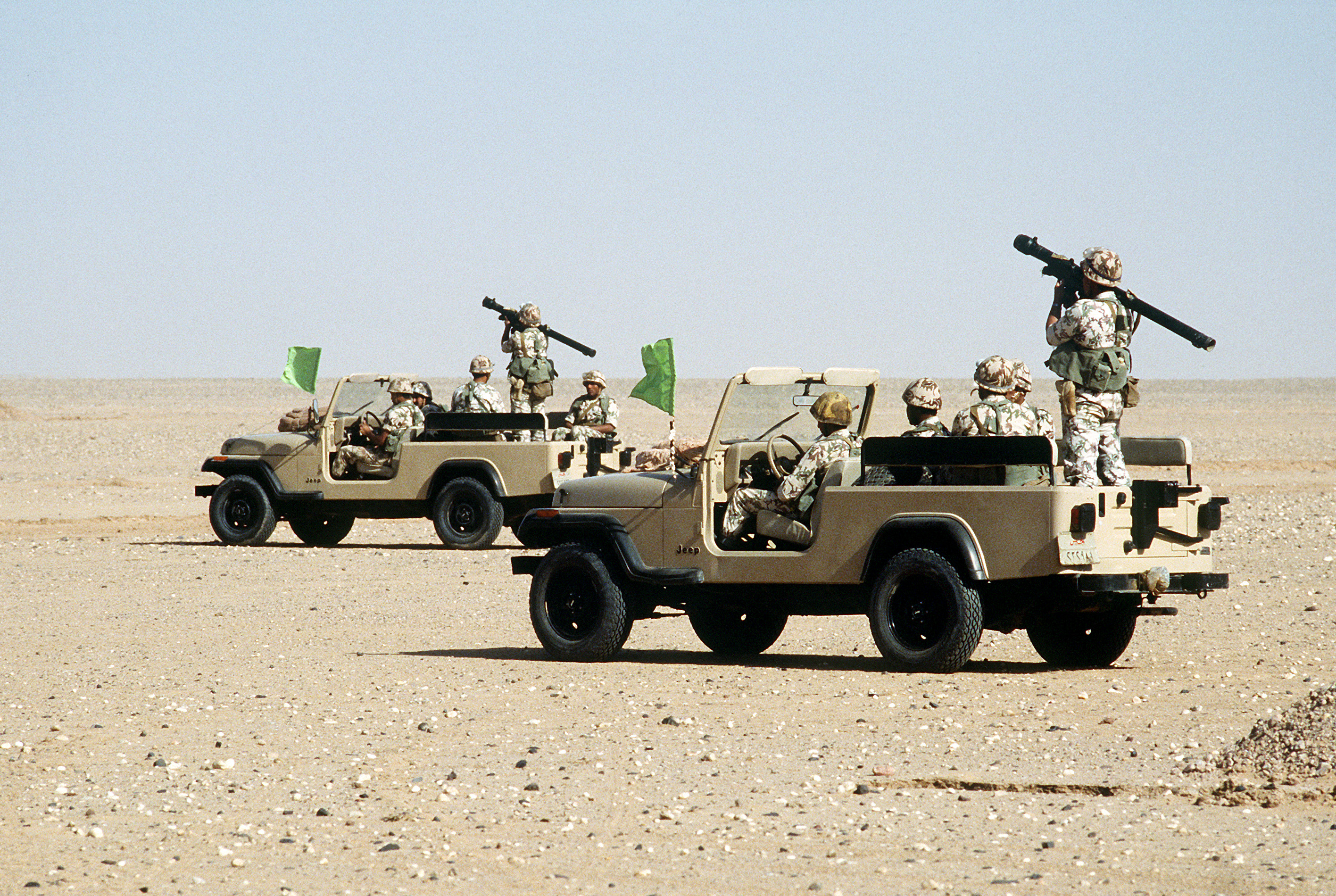
Retired Egyptian general and military analyst Samir Ragheb told The National on November 13 that the deployment “signals a shift for Egypt from a cautious observer to an effective partner.” Saudi Arabia itself has not publicly commented on Egypt’s force presence, The National reported — a silence that suits both governments, allowing the deployment to proceed without inviting Houthi retaliation specifically against Egyptian personnel.
Why Is Egypt Not in the Makkah Pact?
The Makkah Defence Pact, signed on August 7 by Saudi Arabia, Turkey and Pakistan, created the region’s first post-Iran-war mutual defence commitment. Turkey ratified it on November 5 by a 279-to-119 vote, according to Anadolu Agency. Pakistan ratified on October 23. Egypt was not invited as a founding member.
Egyptian Foreign Minister Abdelatty told The National on August 14 that “legal and constitutional questions” under Article 152 of Egypt’s 2014 Constitution needed to be resolved before any membership decision. The constitution requires parliamentary authorisation for deploying forces abroad — a threshold Egypt cleared bilaterally in October, but which carries different implications when embedded in a multilateral defence treaty.
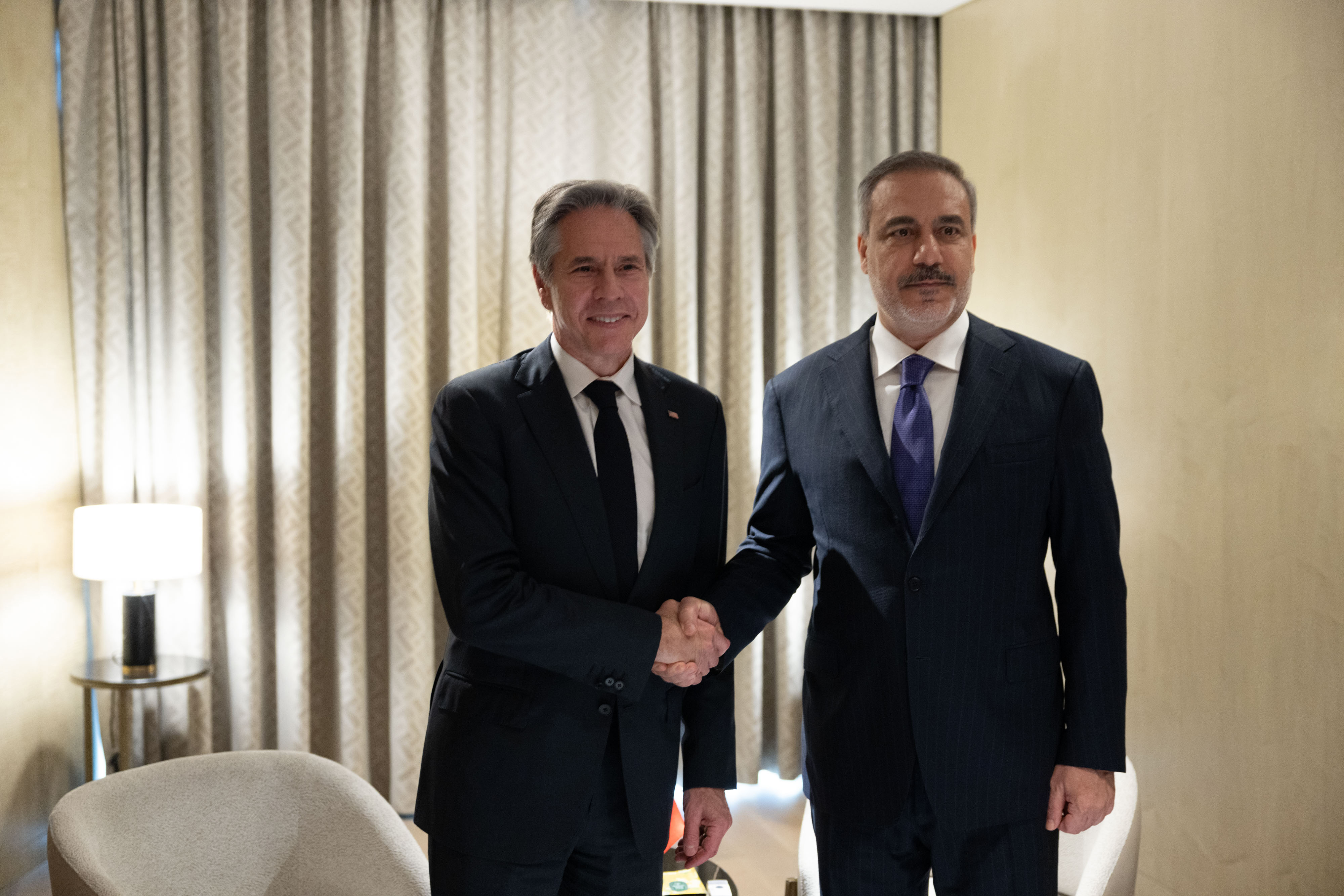
Turkish Foreign Minister Hakan Fidan publicly designated Egypt as the most likely next participant on August 8, calling Cairo a “natural partner on all issues” and saying only “technical issues” remained, Bosphorus News reported. Any new member requires the unanimous approval of all three founding states.
The constraints on Egyptian membership go deeper than constitutional procedure. Amr Hamzawy, director of the Middle East Program at the Carnegie Endowment for International Peace, wrote in October that Egypt is “a central candidate for enlarging the pact, given its military assets, Red Sea access, and good relations with the signatories,” but that joining military pacts “has never been a preferred foreign policy measure for Egypt.”
Andreas Krieg of King’s College London told Al Jazeera on September 17 that Cairo sees the Suez Canal and Bab al-Mandeb as “one security zone” and “now has a very strong interest in substantive cooperation with Saudi Arabia on Red Sea security,” but that there is “a very hard ceiling” on Egypt’s role in Yemen. Egypt, he said, “does not want to become responsible for Yemen.” The ghost of Nasser’s 1962-to-1967 intervention — a costly war that ended in withdrawal — remains an institutional constraint in Cairo’s military planning.
Bezawit Eshetu of the Horn Review argued on August 17 that staying outside the pact is “close to the most advantageous outcome available to Cairo given its current toolkit,” preserving relationships with Saudi Arabia, the UAE, Turkey, Israel and India without forcing an explicit hierarchy. Egypt’s 1979 peace treaty with Israel — Article VI of which prohibits military alliances that conflict with its Israel obligations — adds a further complication, given Turkey’s adversarial relationship with Israel.
The result is a structure that serves Cairo’s interests: bilateral military cooperation with Riyadh on Saudi soil, diplomatic coordination through the R4 format (Saudi Arabia, Egypt, Turkey and Pakistan), and no treaty signature that would tie Egypt to a collective response it cannot control. The R4 group’s most recent joint statement, issued in Istanbul on October 23, condemned “escalating attacks by the Houthi militia, particularly strikes targeting Saudi Arabia,” Al Jazeera reported.
What Binds Egypt to Saudi Arabia Beyond Security?
Egypt’s condemnation reflects a security relationship underwritten by economic dependency. Saudi-Egyptian bilateral trade reached $18.1 billion in 2025, according to Arab News, and the first half of 2026 was up 20.3 percent year-on-year at $7.1 billion, Arab Finance reported. Over the five years from 2021 to 2025, total bilateral trade exceeded $82.2 billion.
Saudi investments in Egypt total $25 billion cumulatively, Economy Middle East reported. When Crown Prince Mohammed bin Salman met President Sisi in Cairo on September 15, the two leaders announced a preliminary $10 billion Saudi investment package and the renewal of a $5.3 billion deposit at the Central Bank of Egypt, according to Al Manassa. The joint declaration framed Saudi and Gulf security as “inseparable from Egypt’s national security” — language that Sisi later repeated when seeking parliamentary authorisation on October 17, Al Jazeera reported.
The human dimension is equally binding. Between 1.1 million Egyptians (the official figure from CAPMAS, Egypt’s statistics agency) and 1.6 to 2 million (a manpower ministry adviser’s estimate) live and work in Saudi Arabia, according to Egyptian Streets. Saudi-sourced remittances totalled roughly $8 billion in the fiscal year 2023-2024, AGBI reported — a substantial share of Egypt’s record $47.3 billion in total remittances for fiscal year 2025-2026.
Saudi Foreign Minister Prince Faisal bin Farhan called Abdelatty on November 16 to discuss bilateral cooperation, regional developments and “support for diplomatic efforts aimed at de-escalation,” PressBee reported, citing the Saudi Gazette. That was one of several such calls since early November — a cadence that reflects how closely the two governments are coordinating during the war’s intensification.
Why Has Iran Stayed Silent on Egypt’s Deployment?
Iran has pursued a two-track approach to Egypt’s deepening involvement. Publicly, Iranian Foreign Minister Abbas Araghchi called Egypt “an important friend and partner in the region” in a post on X on July 30, Tasnim News Agency reported. When a drone struck Egypt’s Damietta Port, Araghchi attributed it to Israeli “false-flag operations” — a framing designed to preserve Egypt’s neutrality. No Iranian government statement specifically condemning Egypt’s October-November military deployment to Saudi Arabia was identified in Tasnim, IRNA or Press TV reporting, suggesting a deliberate policy of not antagonising Cairo.
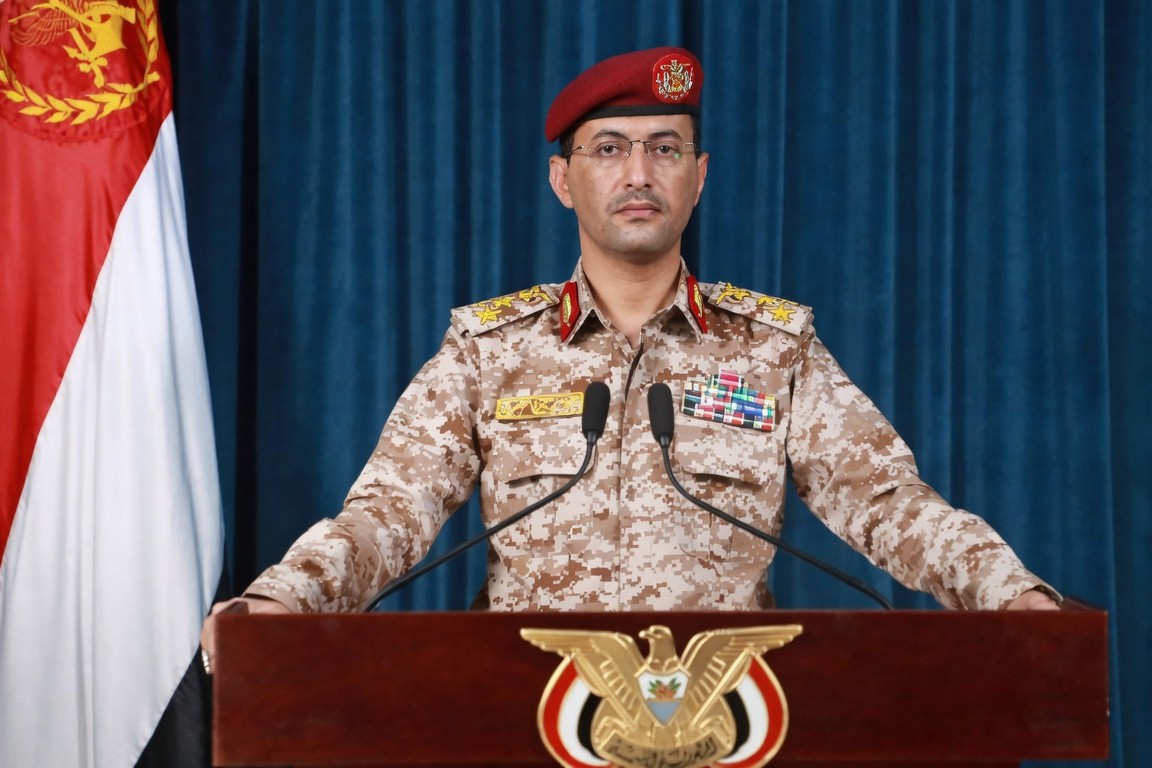
Iranian MP Ebrahim Rezaei, a member of the National Security and Foreign Policy Commission, dismissed the Makkah Pact as a “paper agreement” that would not bring Saudi Arabia security, telling Foreign Policy on August 11 that Riyadh would need to “change its policy if it wants security.” The Houthis have been more direct. Mohammed Ali al-Houthi of the Houthi Political Bureau said on Telegram on October 27 that Egypt’s parliamentary authorisation for Saudi defence amounted to “a declaration of war against the Republic of Yemen,” Israel Hayom and Yeni Safak reported. The threat was explicit: Egypt had crossed a line from condemnation to participation, and the Houthis would treat it accordingly.
The asymmetry is deliberate. Iran needs Egypt to remain outside the Makkah Pact — an Egyptian signature would transform a three-nation treaty into a four-nation bloc controlling both sides of the Red Sea, the Suez Canal and the approaches to the Arabian Gulf. The Houthis, by contrast, have little to lose from threatening Egypt; they have already declared war on Saudi Arabia’s entire coalition. The question is whether the Houthis’ escalating attacks push Cairo closer to, or further from, the pact table.
Frequently Asked Questions
What would Egypt need to satisfy to formally join the Makkah Defence Pact?
Three conditions would need to be met. First, a parliamentary mandate specifically covering multilateral treaty obligations under Article 152 of the 2014 constitution — the October 26 vote authorised a bilateral defensive deployment, not a treaty signature. Second, unanimous agreement from Saudi Arabia, Turkey and Pakistan. Third, a resolution of the conflict between Turkey’s adversarial relationship with Israel and Egypt’s 1979 peace treaty, whose Article VI limits Egyptian military alliances that could affect its Israel obligations.
Why has Saudi Arabia not publicly acknowledged Egypt’s military deployment?
The National reported on November 11 that Saudi Arabia has not publicly commented on Egypt’s force presence. Both governments appear to have agreed to proceed without formal confirmation: an official Saudi statement could invite direct Houthi threats against Egyptian personnel and complicate a deployment both sides have framed as a bilateral defensive arrangement under Cairo’s October 26 parliamentary mandate — not a formal alliance commitment.
How many times has Egypt condemned attacks on Saudi Arabia in 2026?
Multiple times since September 2026, with confirmed statements including September 8, September 15, November 6, November 8, November 12 and November 20. The unilateral statements consistently avoid naming Iran directly, while joint communiqués with Saudi Arabia have used the more explicit phrase “repeated Iranian attacks on Arab states.”
What is the R4 diplomatic format?
The R4 is an informal diplomatic grouping comprising Saudi Arabia, Egypt, Turkey and Pakistan that has met since at least March 2026. Its most recent confirmed joint statement, issued in Istanbul on October 23, condemned “escalating attacks by the Houthi militia, particularly strikes targeting Saudi Arabia.” The format allows Egypt to coordinate with Makkah Pact members without being bound by the treaty itself.
Has Iran condemned Egypt’s military deployment to Saudi Arabia?
No public Iranian government condemnation of Egypt’s deployment was found in Tasnim, IRNA or Press TV reporting through November 20. Iranian FM Araghchi called Egypt “an important friend and partner” on July 30. Analysts interpret the silence as deliberate: Tehran has an interest in keeping Egypt out of the Makkah Pact and would risk the opposite by publicly threatening Cairo over a bilateral defensive deployment.
The House of Saud Daily Briefing
Saudi Arabia's news in 3 minutes, every morning. Free. See today's issue