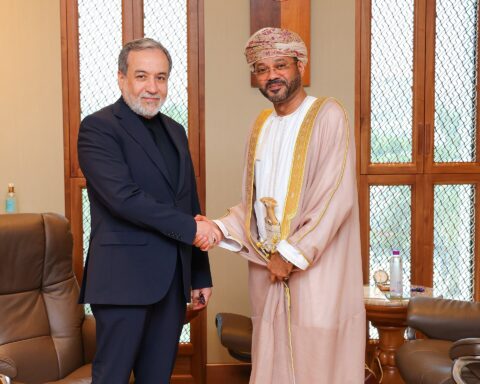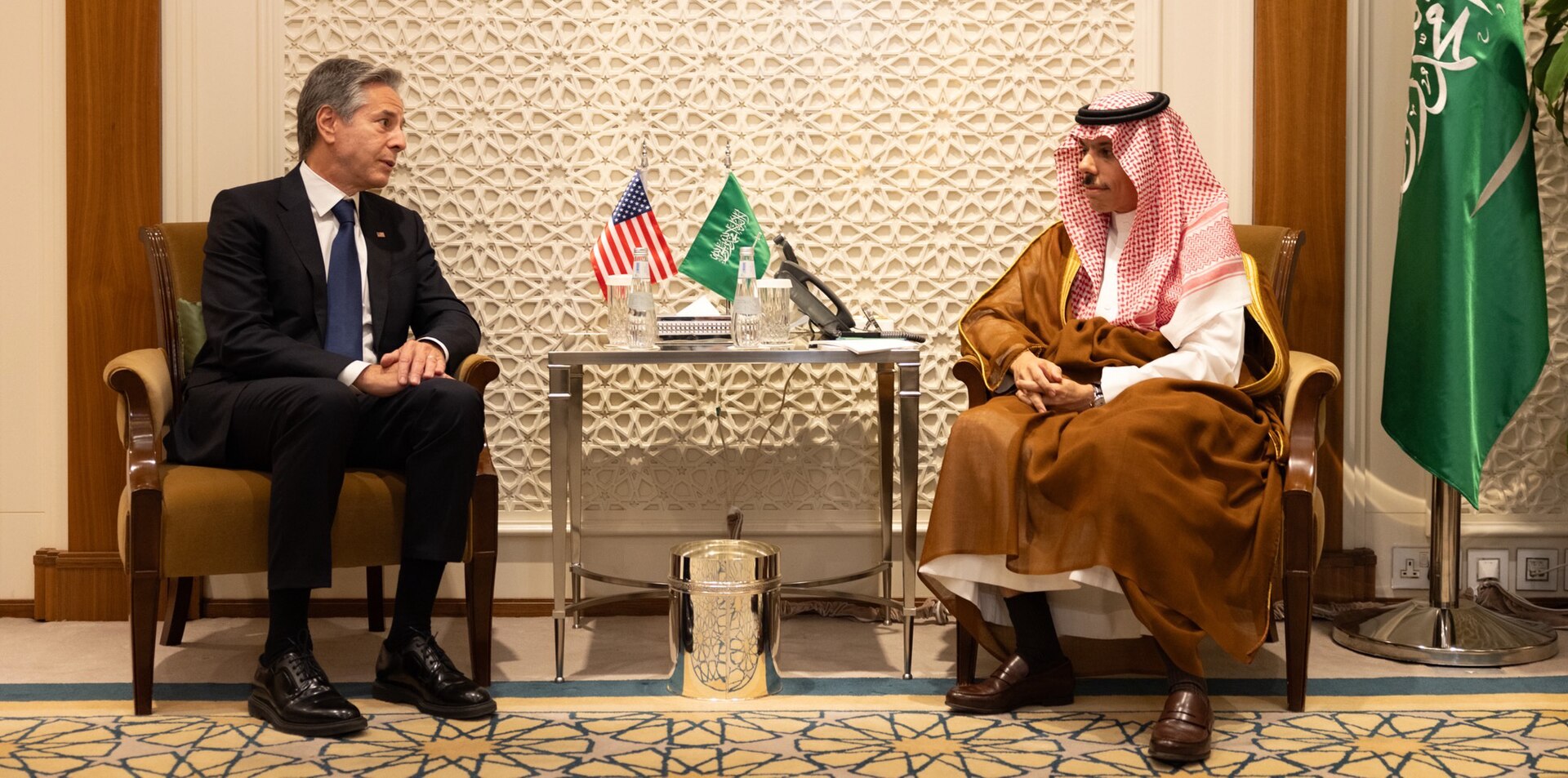

RIYADH — Saudi Foreign Minister Prince Faisal bin Farhan received a call from his Jordanian counterpart Ayman Safadi and met the Makkah Defence Alliance’s secretary-general on November 19, two days after Iran’s foreign minister left Muscat without a Hormuz agreement from talks that Qatar and Oman conducted without Saudi Arabia at the table. The kingdom also issued a formal solidarity statement backing Bahrain after the Islamic Revolutionary Guard Corps struck its territory repeatedly between November 13 and 17 — part of a dense week of Saudi bilateral diplomacy shaped by Riyadh’s exclusion from the region’s only active Iran negotiating channel.
The pattern reveals a kingdom working to coordinate with its partners through the channels available to it, while the negotiations Saudi Arabia most needs to influence proceed without its participation. The November 19 moves came as the IRGC continued to strike Bahrain and the Muscat mediation produced no breakthrough, leaving bilateral diplomacy as Saudi Arabia’s primary available instrument. Pakistan, a Makkah pact signatory with roughly 8,000 troops deployed on Saudi soil according to Reuters, made the picture sharper by holding a sideline meeting with the same Iranian foreign minister on November 16 on the sidelines of the ECO conference in Islamabad, according to The Nation — talking to both sides in a week when Saudi Arabia could reach only its own allies.
The House of Saud Daily Briefing
Saudi Arabia's news in 3 minutes, every morning. Free. See today's issue
Table of Contents
The Jordan Call and the Bahrain Statement
The Saudi foreign ministry’s readout of the November 19 call said Prince Faisal and Safadi discussed “joint efforts to reduce tensions and achieve de-escalation, in support of security and stability in the region,” according to Anews. The formula language — standard for Gulf foreign ministry communications — disclosed nothing about what Saudi Arabia specifically asked Jordan to do, or what Jordan offered in return.
The call sits within an established institutional framework. Saudi Arabia and Jordan share a Higher Coordination Council, co-chaired by Crown Prince Mohammed bin Salman and King Abdullah II, with the two foreign ministers heading its general secretariat. The council signed an amended cooperation protocol at a meeting in Riyadh in October, according to Jordan’s Petra news agency, suggesting the bilateral channel was active well before the Muscat mediation track became the region’s focal point. Jordan is not a signatory to the Makkah Defence Alliance, but the Saudi-Jordanian institutional relationship predates the current war by years, and the two countries’ security interests in the Iran conflict overlap considerably.
Separately, Saudi Arabia’s foreign ministry issued a statement on November 17-18 condemning what it called “repeated Iranian attacks on Bahrain” as violations of international law and expressing “full solidarity” with Bahrain’s sovereignty, according to the Middle East Monitor. The statement urged Iran to allow diplomatic efforts to resolve the regional crisis through negotiations. The timing sharpened the message: the IRGC had repeatedly struck US military radar assets in Bahrain between November 13 and 17 — including at Al-Rifaa Air Base on November 15 and Sheikh Isa Air Base on November 17 — according to Reuters, Al Jazeera and NPR — a campaign that continued even as Iran’s foreign minister sat in Muscat discussing de-escalation with Oman’s Badr al-Busaidi.
Bahrain had issued its first nationwide air-raid alert since September on November 15, according to The National, and has since demanded guarantees from the UN Security Council. Saudi Arabia’s solidarity statement stopped short of promising specific defensive support, but its positioning — issued during the ongoing Iranian strikes — made clear that Riyadh intended its alignment with Manama to be noted by both Tehran and the mediators in Muscat.
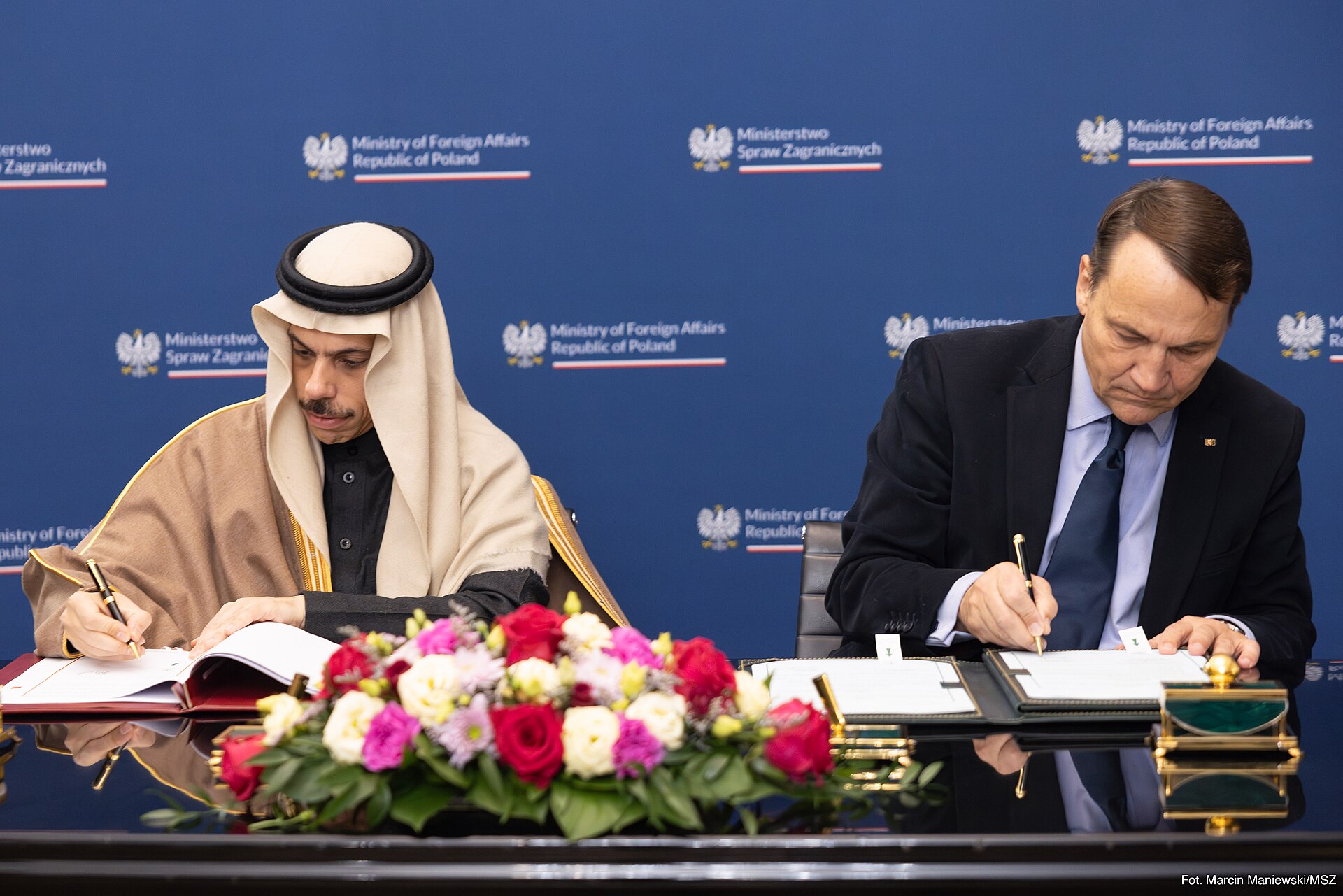
Why Was Saudi Arabia Missing From the November 17 Diplomatic Wave?
The Khaleej Times surveyed the diplomatic phone calls made on November 17 — the day Iranian Foreign Minister Abbas Araghchi and Oman’s Busaidi met in Muscat — and identified six countries actively calling one another: the UAE, Qatar, Oman, Egypt, Jordan and Bahrain. Saudi Arabia was not among them, according to the newspaper’s November 18 report. The list is telling: it included Qatar and Oman, the channel’s operators; Egypt, Saudi Arabia’s traditional Arab ally; and Jordan and Bahrain, two countries Prince Faisal spoke to or about in the days immediately afterward. On the day the region’s foreign ministers were working the phones around the Muscat talks, the kingdom that hosts the coalition and built the Makkah Defence Alliance was not in the loop.
The absence has a structural explanation. Saudi Arabia is a co-belligerent: it hosts coalition air operations, is the principal architect of the Makkah pact, and faces near-daily Houthi missile and drone fire. The Qatar-and-Oman-led mediation track works precisely because neither mediator occupies that position — Qatar holds leverage through its relationship with Tehran and its management of Iranian financial assets, while Oman has mediated between Iran and its adversaries since at least the 2015 nuclear negotiations. A belligerent cannot also be the broker, and Saudi Arabia — however urgently it wants the outcome the brokers are pursuing — sits on the wrong side of that line.
What Prince Faisal has done instead is a visible bilateral effort concentrated in the days surrounding the Muscat talks. The Jordan call and Makkah Alliance meeting on November 19 followed the Bahrain solidarity statement on November 17-18. No Saudi source has described this activity as a deliberate parallel diplomatic track, and the readouts reveal nothing about whether the calls are coordinated or simply coincident. But the pattern — bilateral engagement with allies and institutional partners, in the same window that the Muscat channel operated and stalled — would be difficult to dismiss as routine schedule management.
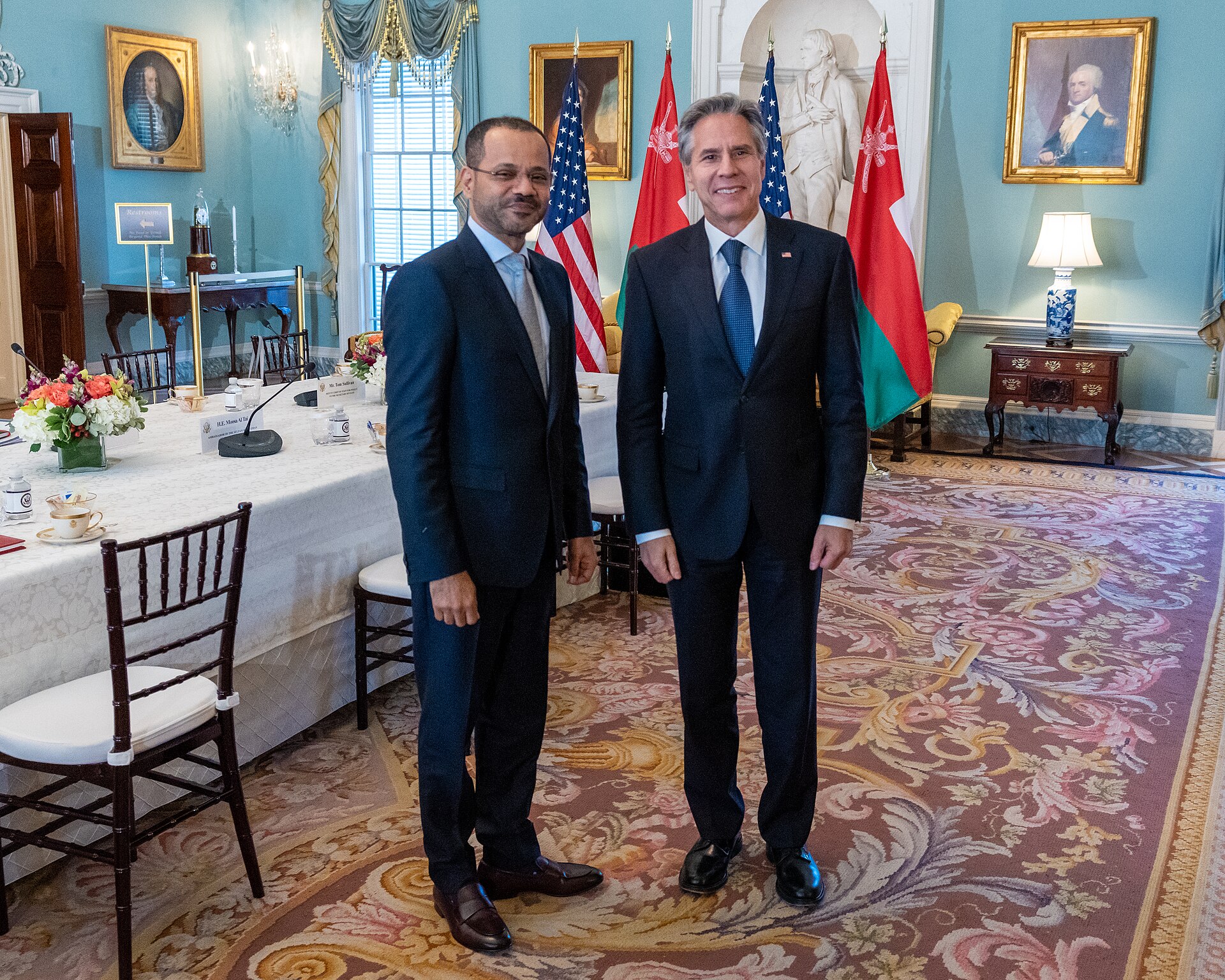
The Makkah Alliance Secretary-General
Prince Faisal’s meeting with the Makkah Defence Alliance’s secretary-general on November 19 focused on “boosting cooperation among members,” according to Arab News. The meeting came as the alliance moves through a period of institutional momentum: Turkey’s parliament ratified the pact on November 5 by a vote of 279 to 119, according to Anadolu Agency, and Pakistan had already ratified on October 23, giving the alliance its two most prominent military signatories within a fortnight.
The Makkah alliance is Saudi Arabia’s own institutional framework — the defence structure Riyadh built after the Iran war began reshaping the region’s security arrangements in February 2026. Meeting the alliance’s leadership two days after the Qatar-Oman channel came up empty in Muscat signals Saudi investment in the machinery it controls, even as the diplomacy it most needs to influence proceeds without its direct participation. The meeting also reflects the basic asymmetry of Saudi Arabia’s position: it can convene its allies and strengthen its defence architecture, but neither action opens a door to the table in Muscat where the Hormuz conditions are being debated. Whether the alliance can serve as a diplomatic coordination platform, rather than purely a military one, is a question its founding documents — focused on collective defence — do not answer.
Pakistan’s Foreign Minister Ishaq Dar, speaking at an ECO media briefing in Islamabad on November 16, said the alliance’s membership remains open “only to those Muslim countries which would accept terms and conditions of MDA,” according to The Nation. The alliance’s strategic defence and political committee is set to meet in Islamabad by the end of November, Dar announced at the same briefing — bringing the pact’s institutional business to the same city where Pakistan has simultaneously been engaging with Iran.
Where Does Pakistan Stand Between Makkah and Tehran?
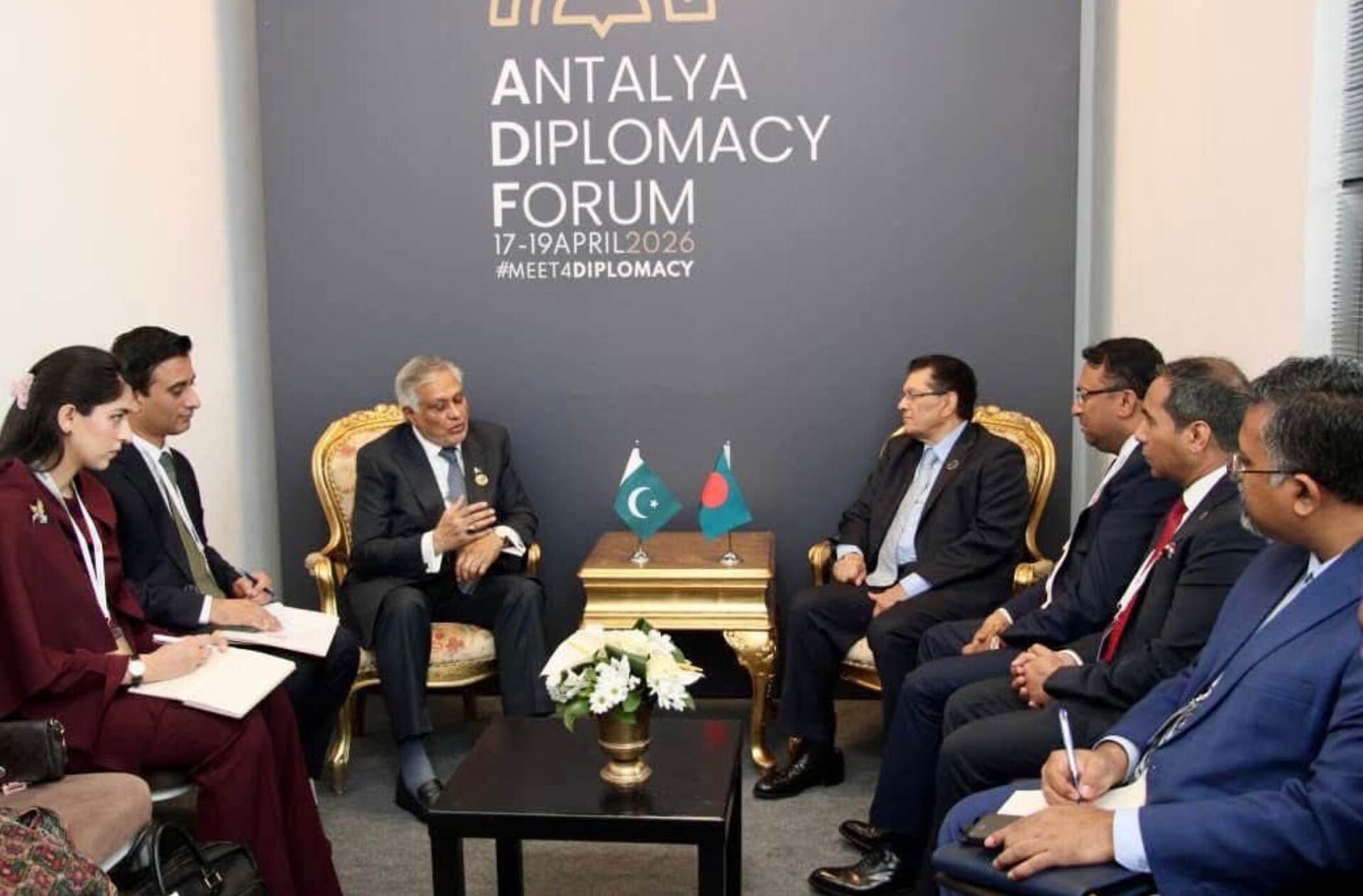
Pakistan occupies the most revealing position in the week’s diplomacy. It is the Makkah pact’s most visible military contributor. And yet on November 16, on the sidelines of the ECO conference in Islamabad, Dar held a bilateral meeting with the same Iranian Foreign Minister Araghchi who had been in Muscat negotiating on the Hormuz crisis, according to The Nation — placing a Makkah pact foreign minister across the table from the Iranian diplomat Saudi Arabia cannot reach.
The dual positioning may be a feature of the emerging regional order rather than a contradiction. Hamidreza Azizi of the International Crisis Group observed in October that Saudi Arabia, Pakistan and Turkey share concern about a prolonged US-Iran confrontation, and that Gulf states are “diversifying their security partnerships” while showing “little indication that they intend to abandon” the American security system, as reported by Al Jazeera. Pakistan’s foot in both camps — Makkah pact troop contributor and active Iran interlocutor — reflects a country calibrating between commitments that have not yet forced a binary choice. Turkey occupies a similar position, having ratified the Makkah pact while maintaining its own diplomatic engagement with Tehran, in a pattern of multi-track hedging that the conflict has imposed on most of its participants.
What sets Saudi Arabia apart is that its position is not ambiguous — it is fixed. The kingdom funds the alliance, hosts the troops, absorbs the missiles, and cannot sit in the room where Iran is talking to its own pact partner. The bilateral diplomacy this week is the work available to a country in that position, and the question the week leaves open is whether alignment among allies can compensate for absence from the main negotiating channel.
What Saudi Arabia Cannot Do From the Outside
The limitation of Saudi Arabia’s bilateral push is that phone calls to Amman and solidarity statements about Manama cannot substitute for presence in the room where the Hormuz agreement is being discussed. Araghchi left Muscat on November 17 without a deal, according to Euronews, and Qatar’s foreign ministry spokesman Majed Al-Ansari warned the same day that Gulf escalation poses a “grave danger” extending to “not only freedom of navigation and the global economy, but also to the chances of reaching an agreement,” as reported by Euronews. The assessment from Qatar’s side — that the escalation itself is threatening the negotiations — adds another layer of pressure on a kingdom that is both a victim of the escalation and absent from the response to it.
Saudi political analyst Khaled Batarfi captured the underlying dynamic in October, telling Al Jazeera that Saudi Arabia’s earlier direct visit to Tehran aimed to deliver a “last warning” to Iran — but that Tehran had “so far refused” to engage. What remained, Batarfi said, was too little trust and too wide a gap to be bridged by calls to Amman or solidarity statements about Manama alone.
“The gap is [wide] and what makes it worse is that there is no trust.”
— Khaled Batarfi, Saudi political analyst, on Saudi-Iranian diplomacy; Al Jazeera, October 2026
Aniseh Bassiri Tabrizi of Chatham House took the broader view in October, telling Al Jazeera that it is “really hard to see a regional security framework coming out in the coming months or even years” and that a regional security framework “would need the same vision for the region, which is not necessarily shared” among GCC states. Saudi Arabia is trying to build shared purpose among its own partners, but building consensus on one side of the table is different from reaching across it, and what this week’s diplomacy demonstrated most clearly is that the two tracks — the mediation channel and the bilateral outreach — are running in parallel without any visible mechanism to connect them.
The Makkah pact’s strategic defence and political committee will convene in Islamabad by the end of November, in the same city where Pakistan’s foreign minister sat across from Iran’s Araghchi on November 16. The week’s bilateral diplomacy was not wasted — but the room he most needs to be in is not one any bilateral call can open.
Frequently Asked Questions
When was the last confirmed call between Saudi and Pakistani foreign ministers?
The most recent confirmed bilateral call between Prince Faisal bin Farhan and Pakistan’s Ishaq Dar took place on November 4-5. They discussed “regional developments and emphasized the importance of continuing efforts to reach diplomatic solutions to crises in the region,” according to Asharq Al-Awsat and Pakistan’s Radio Pakistan. No fresh Saudi-Pakistan foreign minister call has been confirmed in the November 17-19 window, despite the fact that both countries were diplomatically active throughout the period — Pakistan at the ECO conference and in its meeting with Araghchi, Saudi Arabia through Safadi’s call and the Makkah Alliance meeting.
Did Saudi Arabia call Bahrain’s foreign minister directly this week?
No bilateral phone call between Prince Faisal and Bahrain’s Foreign Minister Abdullatif al-Zayani has been confirmed for November 17-19. Saudi Arabia’s response to the IRGC attacks took the form of a foreign ministry statement — a formal institutional expression of solidarity — rather than a confirmed minister-to-minister call. Bahrain’s own outreach in the same period included confirmed calls from Jordan’s Safadi on November 17 and US Secretary of State Marco Rubio on November 16.
What are Iran’s conditions for reopening the Strait of Hormuz?
Iran’s conditions include major sanctions relief, the release of approximately $12 billion in frozen assets, and compensation for damages from the conflict. Araghchi first presented a seven-day roadmap incorporating these demands via Qatari mediators at the UN General Assembly in New York in September, according to Al Jazeera. The November 17 Muscat meeting with Busaidi ended without agreement on any of them, according to Euronews.
The House of Saud Daily Briefing
Saudi Arabia's news in 3 minutes, every morning. Free. See today's issue