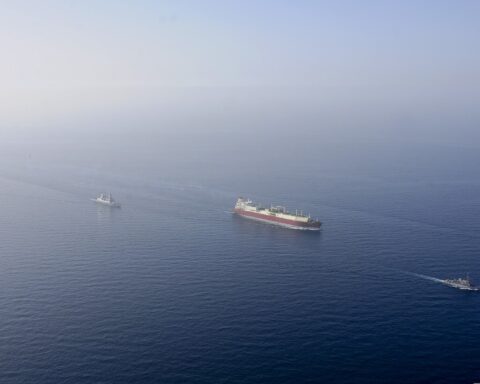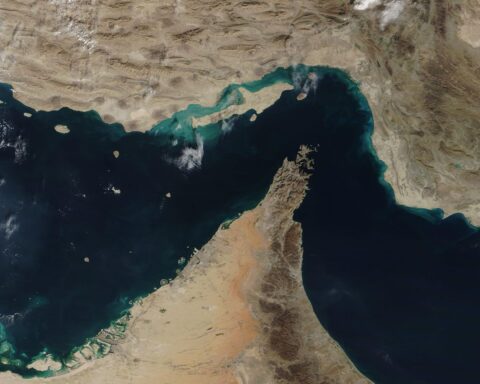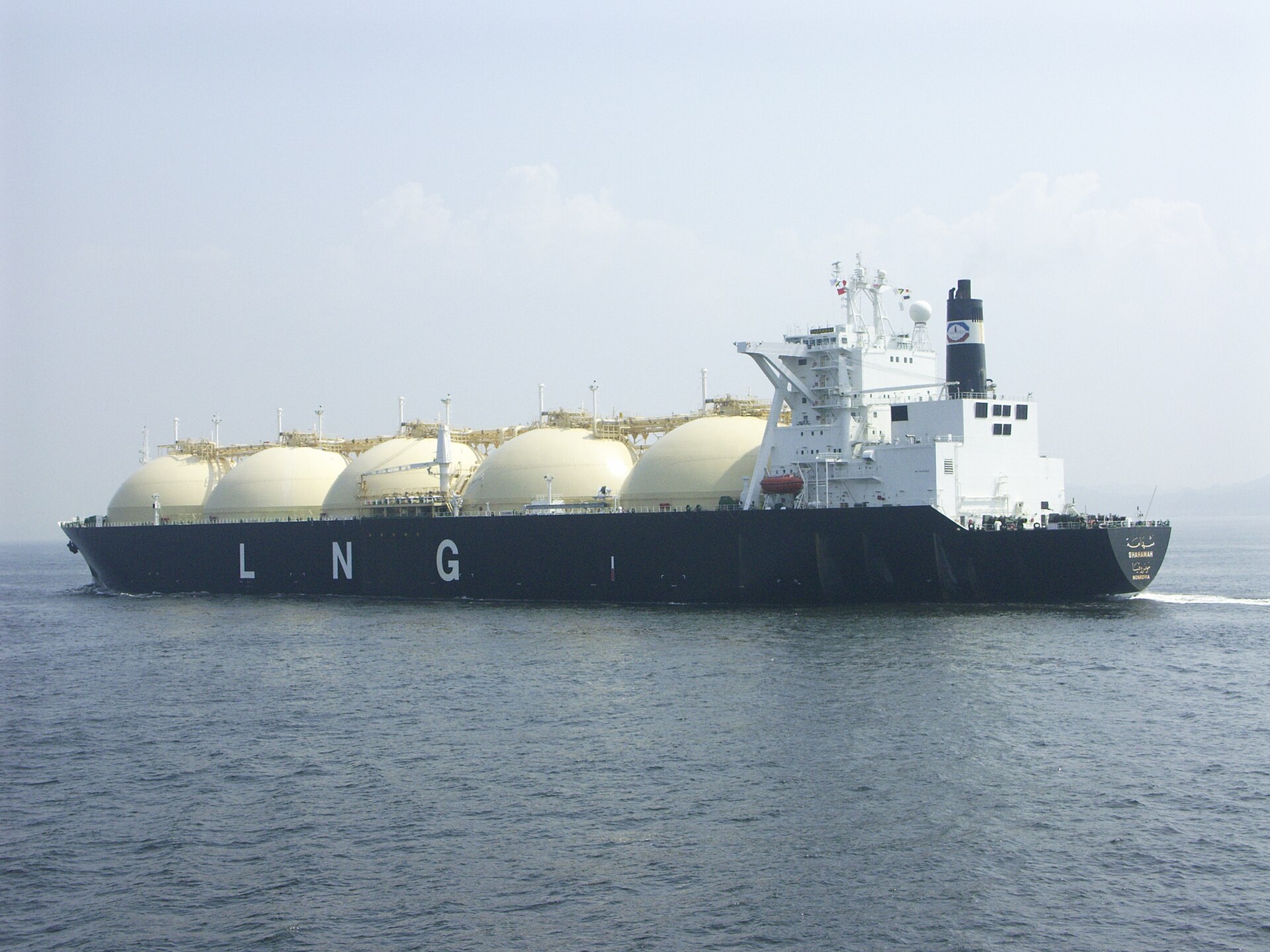

DOHA — Thirty-one laden LNG tankers exited the Strait of Hormuz in October, the highest monthly total since Iran’s war with the Gulf states began in February, according to S&P Global Energy data published by Reuters on November 10 — a figure that would have been unremarkable eight months ago but now represents something closer to a diplomatic signal than a shipping statistic.
The number matters because it arrived the same week that QatarEnergy extended its force majeure on LNG deliveries through year-end December 2026, telling customers including Italy’s Edison and Pakistan’s Petrobangla that it cannot guarantee further cargoes. It matters more because the IRGC, which declared in July that not even a drop of oil or gas may cross without Iran’s coordination, has been allowing those tankers through while continuing to mine crude oil supertankers in the same waters.
Table of Contents
What the October Numbers Show
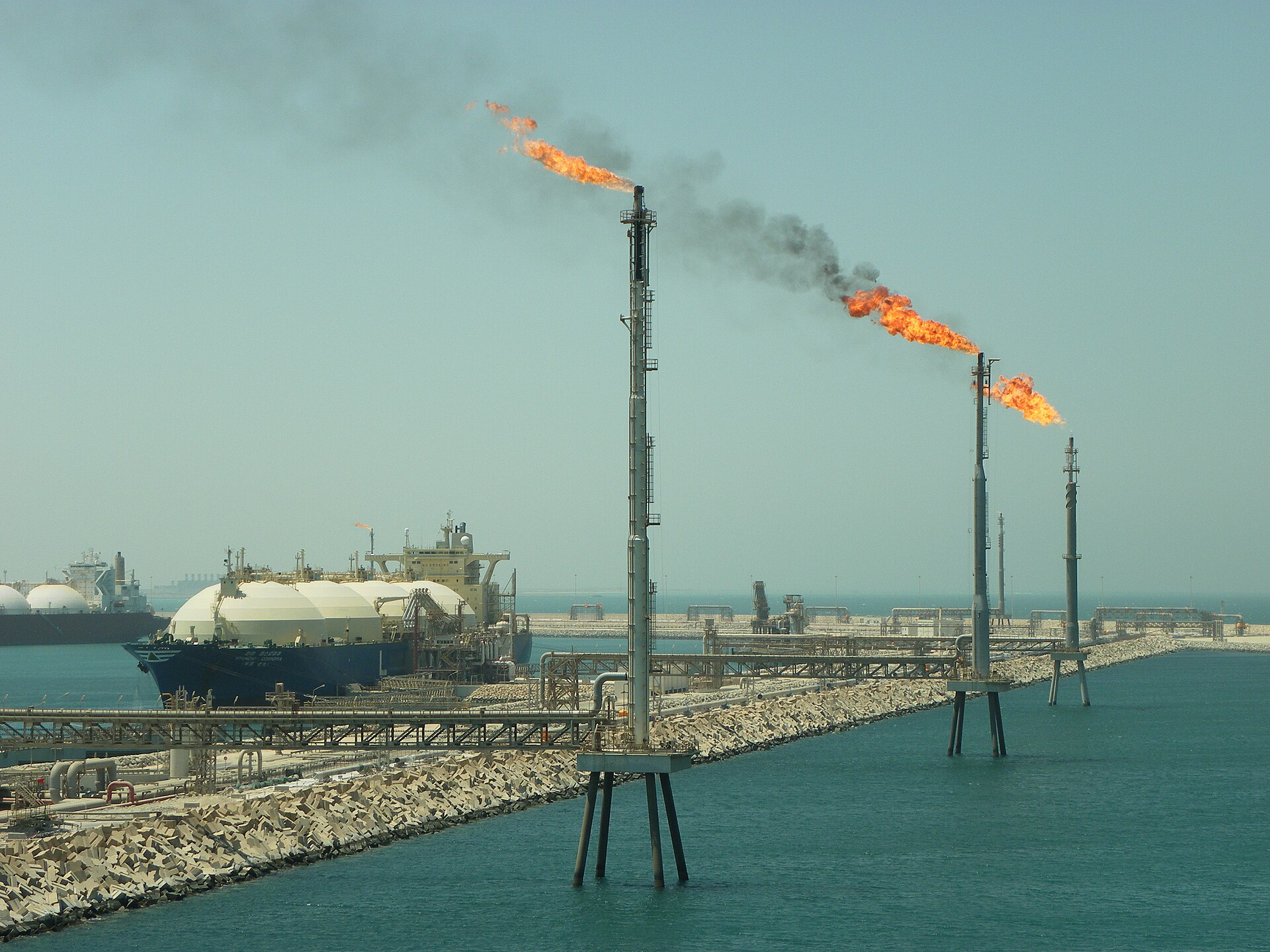
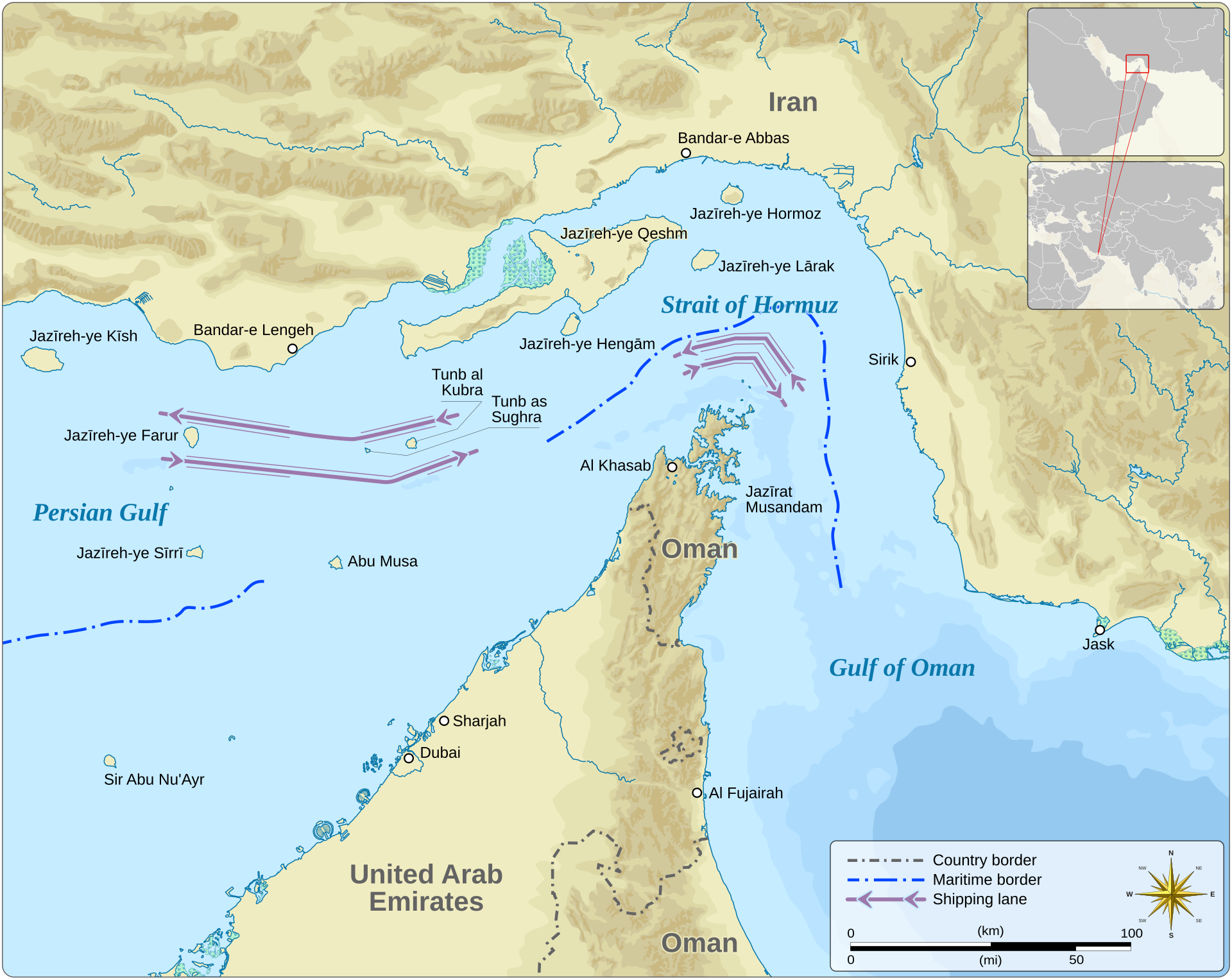
Before the war, approximately 86 LNG vessels crossed Hormuz every month, handling close to 20 per cent of the world’s seaborne LNG trade, according to Kpler data cited by Bloomberg. In March, after IRGC attacks damaged Ras Laffan — Qatar’s sole LNG export terminal — the number dropped to zero confirmed exits. It climbed back through single digits in April and May, reached roughly 15 in June, dipped again through summer, then hit 23 in September before October’s 31, per the S&P Global count reported by Reuters.
The House of Saud Daily Briefing
Saudi Arabia's news in 3 minutes, every morning. Free. See today's issue
At 31, the strait is passing roughly 36 per cent of its pre-war LNG traffic — based on the Kpler pre-war baseline of 86 monthly vessels — a recovery, but one that leaves almost two-thirds of normal volumes absent. Eric Yep, senior principal analyst at S&P Global Energy, told Reuters that “we are looking at UAE back to pre-war transit levels and Qatar at over 30 per cent of pre-war Hormuz transits,” a split that tells its own story about who has been able to restart and who has not.
Kpler, which measures cargo loadings rather than tanker exits — a methodological difference worth flagging — recorded 42 LNG cargo loadings in October, up from 27 in September. Its Ras Laffan figure was 35 cargoes totalling over 2.7 million tonnes, according to data reported by Oilprice.com. That 2.7 million tonnes compares to roughly 6.2 million tonnes in February 2026, the last full pre-war month — meaning Qatar’s October loading reached about 44 per cent of that February baseline, by those Kpler figures.
Who Is Loading and Where Are the Cargoes Going?
Of October’s 31 laden exits, 23 vessels had loaded at Qatar’s Ras Laffan and eight at the UAE’s Das Island, according to Reuters. The UAE’s full recovery to pre-war transit levels — confirmed by S&P Global’s Yep — reflects a geographic advantage: Das Island sits closer to the strait’s exit, and Abu Dhabi’s relationship with Tehran, while strained, has not produced the same level of IRGC hostility directed at Qatari infrastructure.
At least two of the Ras Laffan cargoes conducted ship-to-ship transfers off Oman’s Sohar anchorage after clearing Hormuz, a workaround that has become a feature of wartime Gulf energy trade. Reuters reported that the SC Prestige transferred its cargo to BW ENN Crystal Sky, bound for South Korea, while the Al Mafyar offloaded to Shandong Redwood and Ejnan, with the gas ultimately delivered to Pakistan. The STS transfers suggest buyers in Asia and South Asia remain willing to take Qatari LNG, but under logistics arrangements that would have been unthinkable before the war.
The Force Majeure Paradox
QatarEnergy first declared force majeure in April 2026, after IRGC strikes on Ras Laffan reduced the terminal’s capacity. By October, 35 Qatari cargoes had been missed since April — a different count from the 35 Ras Laffan cargoes Kpler recorded as loaded in October — with 23 of those missed cargoes replaced mainly by US LNG, according to Edison data reported by BusinessToday India. The force majeure has been extended repeatedly — Bloomberg reported an extension through end of November in late September, and Oilprice.com confirmed on October 28 that QatarEnergy told Edison it could not deliver three further cargoes to the Adriatic LNG terminal in Italy, pushing the declaration through year-end December 2026.
Yet cargoes are loading at Ras Laffan despite that active force majeure, and exiting Hormuz despite Iran’s claimed total maritime control. The contradiction is not as clean as it appears: force majeure covers contracted delivery obligations, not all production. Qatar’s energy minister, Saad Sherida Al-Kaabi, said in October that repairs to damaged Ras Laffan units could take approximately three years, but the other 12 units “could normalize within weeks” if Hormuz transit were safe, as reported by BusinessToday India. What October’s figures suggest is that some of those undamaged units are running and their output is finding a way out — just not reliably enough to lift the force majeure.
Iran’s attacks removed an estimated 17 per cent of Qatar’s export capacity, with an annual revenue loss estimated at $20 billion, according to Oilprice.com. That damage is real, the contractual defaults are real, and the cargoes that are getting through represent partial recovery under conditions that remain, by Qatar’s own legal declaration, force majeure.
How Does Iran’s Permit System Treat LNG Differently?
In May 2026, Tehran established the Persian Gulf Strait Authority, which asserts that “no vessel is permitted to pass through the Strait of Hormuz without a valid passage permit.” The United States sanctioned the body on May 27, according to the US Treasury’s Office of Foreign Assets Control. The process, as described by Al Jazeera and CNBC in June, requires countries to contact Iran’s Foreign Ministry, after which the IRGC provides designated route coordinates and ships must contact the IRGC Navy on a designated channel before transiting. Six vessels that attempted an unauthorised route were turned back with warning shots, Al Jazeera reported.
No source has identified a separate arrangement for LNG carriers within this system — the stated permit rules cover all cargo types equally. What the data appears to show is selective enforcement rather than a formal carve-out: LNG tankers are transiting while crude carriers are being intercepted and mined at a rate that keeps the crude market in a state of permanent anxiety. The IRGC has not publicly explained the distinction, and no reporting has confirmed whether Qatar maintains a separate diplomatic channel with Tehran that covers LNG specifically.
IRGC Commander Ahmad Vahidi, speaking to university students on November 20, framed Iran’s maritime posture in deterrent terms rather than as a transit-prohibition statement: “Why do enemy warships not dare to come closer than 500 to 600 kilometres?” he asked, according to Tasnim News Agency. He also claimed the Persian Gulf had previously hosted as many as 120 Western military vessels, adding that none of those vessels had been seen in the strait for many months. The language, as reported earlier today, is about projecting dominance over foreign navies, not about choking commercial traffic — a framing that may help explain why 31 LNG tankers got through while Vahidi was talking about how nothing moves without Iran’s permission.
Why Crude Tankers Are Still Getting Mined
The divergence between LNG and crude tells a story about Iranian priorities that no official in Tehran has spelled out but the shipping data makes visible. The separation is visible in real time: while LNG tankers have been clearing Hormuz at their highest rate since February, IRGC mines have damaged an ADNOC vessel in the same waters, injuring crew members. On November 19, the IRGC claimed that two supertankers hit mines in Hormuz carrying four million barrels, the latest in a series of attacks that have kept crude export routes under constant threat. The same week, Iran sent a 14-tanker convoy from Kharg Island to test the US oil blockade, a move that underlined how contested crude shipping remains even as LNG traffic quietly climbs.
Saudi Arabia has largely sidestepped the Hormuz crude problem by routing exports through the East-West pipeline to Yanbu on the Red Sea. Energy Minister Prince Abdulaziz bin Salman confirmed on October 6 that the pipeline was running at 5.8 million barrels per day, and Kpler data via BusinessToday India put Saudi crude exports at roughly 5.4 million bpd in September. The pipeline bypass means Saudi oil has an escape route that Qatari gas does not — Ras Laffan’s LNG can only leave via Hormuz, making every tanker that exits a data point about the IRGC’s willingness to let it pass.
The pattern amounts to a de facto Iranian hierarchy of targets: Western naval vessels are warned off, crude tankers are mined and interdicted, and LNG carriers — which serve customers in Asia and South Asia as much as in Europe — appear to move with less interference, though under Iran’s permit system and on Iran’s terms.
What Does This Mean for European Gas Prices This Winter?
The partial LNG recovery through Hormuz has not prevented European gas markets from pricing in a difficult winter. The front-month TTF contract reached $108.51 per megawatt-hour — 97.53 euros — the highest level since the 2022 energy crisis, following the QatarEnergy force majeure year-end extension, according to Oilprice.com. EU gas storage stood at its lowest level since 2013, and the International Energy Agency warned on November 3 that it could drop below 10 per cent capacity by March 2027.
The IEA’s Global Gas Security Review 2026 projected that global LNG supply would fall roughly 3 per cent in 2026, or nearly 20 billion cubic metres — the steepest annual decline on record. If Hormuz remains disrupted through the end of March 2027, the decline could reach 7 per cent, the agency said. Rystad Energy calculated that global LNG importers were spending $39 billion more for 60.7 million tonnes less gas in 2026 than the year before, with Asian spot prices rising from about $10 per million British thermal units pre-conflict to roughly $14, according to Rystad data reported by Invezz.com in March.
Abdul Mannan, chairman of Bangladesh’s Petrobangla, told Reuters that “we are trying to secure additional spot cargoes to bridge the supply gap,” a statement that captures the position of importers across South and Southeast Asia who built their energy infrastructure around Qatari LNG and are now scrambling for alternatives. S&P Global’s Yep identified the “key concern” as “whether LNG transits through Hormuz can be sustained through winter” — the question that October’s 31 tankers have partially answered without resolving.
FAQ
Is Iran’s apparent tolerance of LNG transits a formal policy or selective enforcement?
No Iranian official has publicly explained why LNG tankers are transiting while crude carriers face mines. The Persian Gulf Strait Authority’s permit rules, as described by the Congressional Research Service, apply equally to all cargo types. The divergence visible in October’s data — 31 LNG tankers cleared while crude carriers faced attack — appears to reflect enforcement priorities rather than a written rule. Iran has neither confirmed a separate LNG arrangement with Qatar or the UAE, nor denied that one exists.
Why does Kpler report 42 LNG cargoes when S&P Global says 31 tankers?
The two firms measure different things: S&P Global counts laden tankers exiting the strait, while Kpler counts cargo loadings at terminals including Ras Laffan and Das Island. A single tanker can carry more than one cargo loading’s worth of LNG, and not every cargo loaded necessarily exits the strait in the same reporting period. The figures are complementary, not contradictory, but combining or averaging them would produce a meaningless number.
How much of the missed Qatari LNG supply has been replaced, and by what?
By October, 35 contracted Qatari cargoes had gone undelivered since the April force majeure declaration, according to Edison data reported by BusinessToday India. Twenty-three of those were replaced mainly by US LNG. The remaining 12 have not been accounted for in available reporting — meaning the buyers for those cargoes either went to the spot market at elevated prices, drew on storage, or went short. The TTF front-month contract reaching its highest level since the 2022 energy crisis in late October reflects the cumulative weight of those unresolved shortfalls.
Could Qatar ramp back to pre-war output quickly if Hormuz were fully open?
Not immediately. Qatar’s energy minister said repairs to damaged Ras Laffan units could take approximately three years, though the terminal’s remaining 12 undamaged units could normalize within weeks if transit were safe. The scale of what full recovery would mean is visible in Ras Laffan’s 2025 total output of approximately 81.5 million tonnes, according to Rystad Energy data reported by the International Gas Union — against October’s 2.7-million-tonne loading, sustained security of passage would need to hold for months before buyers commit to restoring pre-war contract volumes.
Does Saudi Arabia export LNG through Hormuz?
Saudi Aramco has minimal LNG throughput via the strait. Saudi Arabia’s energy exports rely overwhelmingly on crude oil, and the kingdom’s primary response to the Hormuz disruption has been routing crude through the 7-million-bpd-capacity East-West pipeline to Yanbu on the Red Sea, which Prince Abdulaziz bin Salman confirmed was running at 5.8 million bpd in October. The LNG recovery story is a Qatari and Emirati story, not a Saudi one — though whether crude tanker interdiction continues at a different rate from LNG tells Riyadh something about how selectively Iran is using its Hormuz leverage.
The House of Saud Daily Briefing
Saudi Arabia's news in 3 minutes, every morning. Free. See today's issue