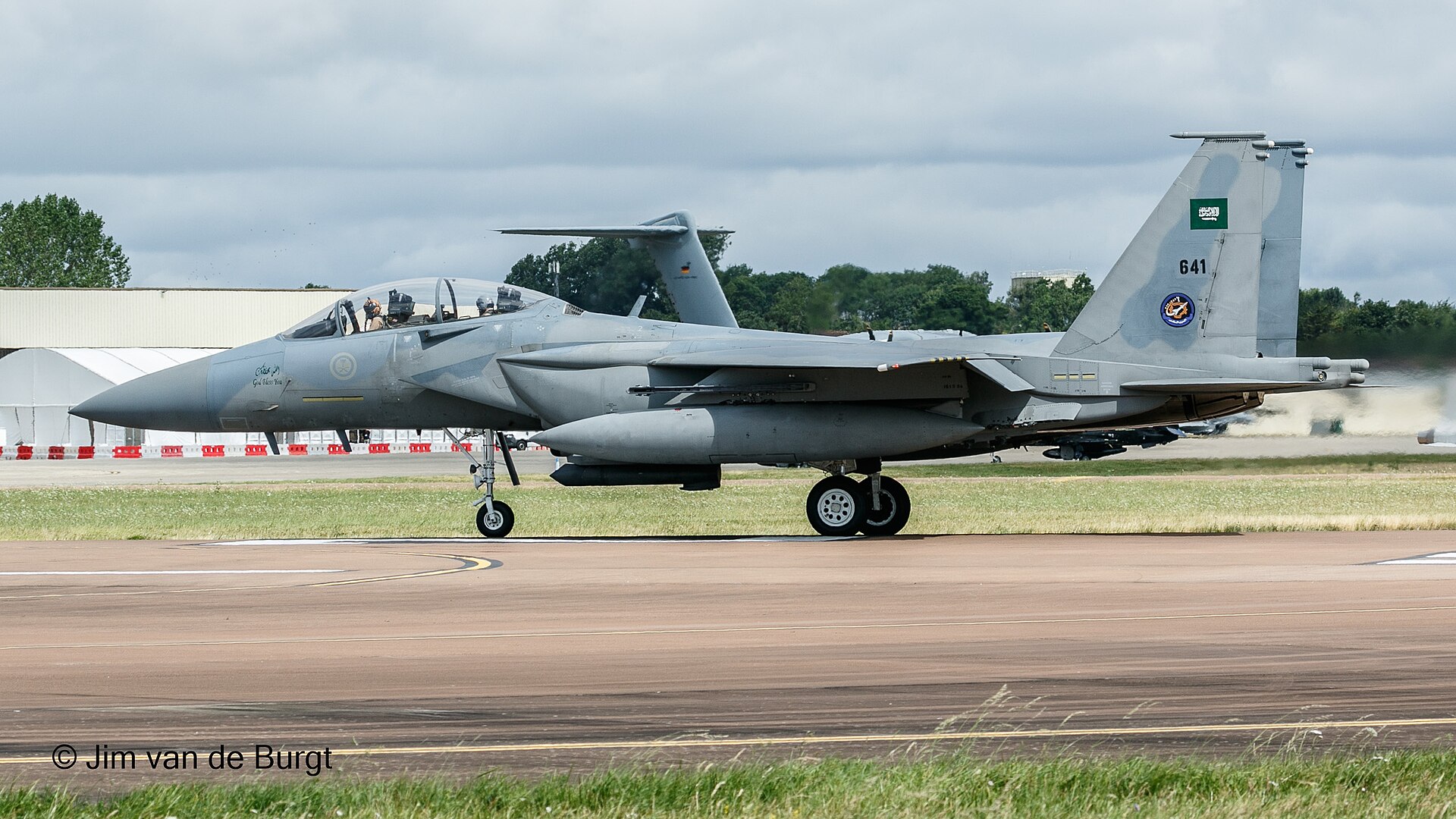

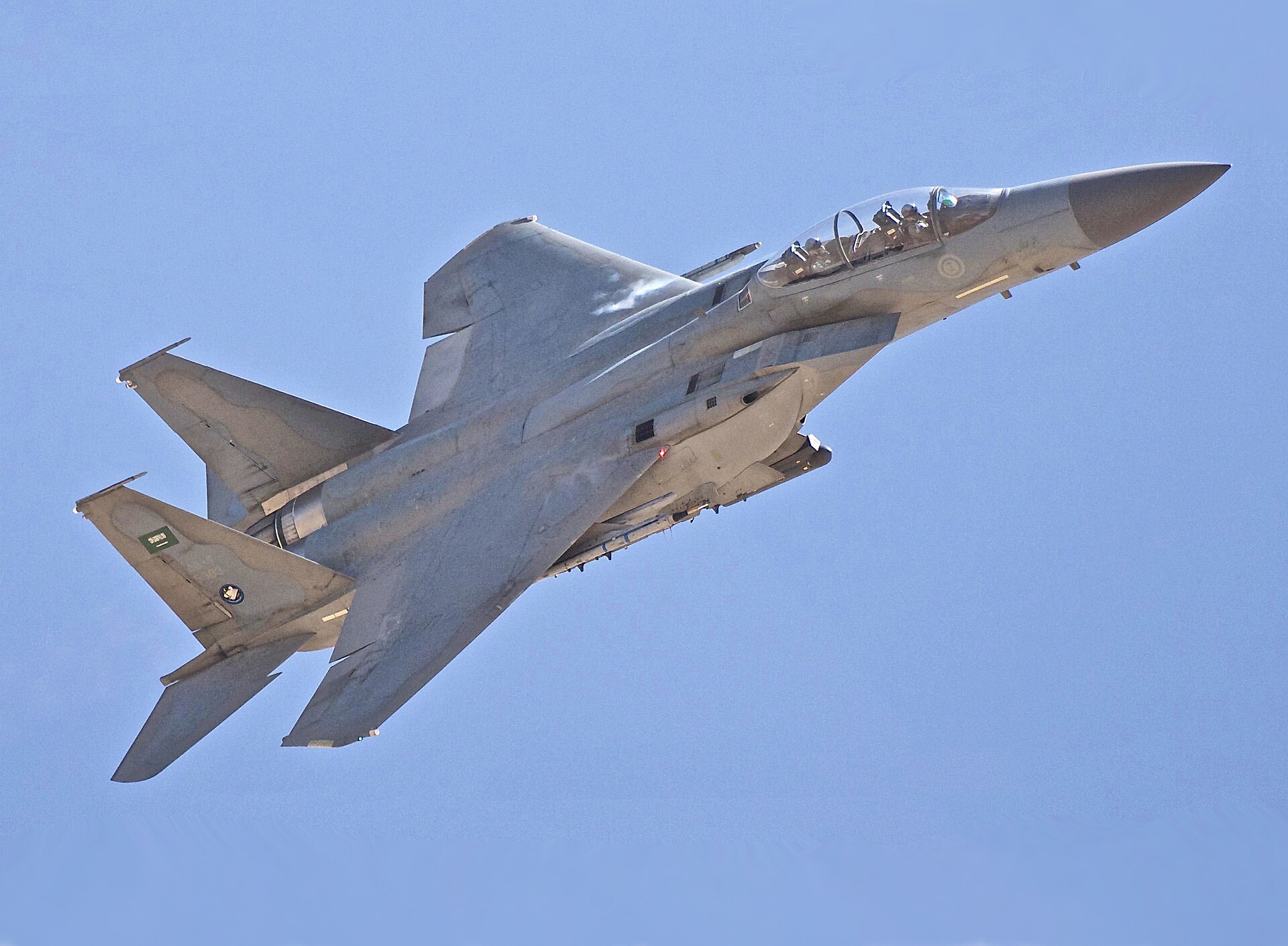
RIYADH — Houthi military spokesman Yahya Saree said Saudi F-15SA jets struck buses and commercial transport vehicles in the Ma’baq area of al-Maqatirah district, Lahj Governorate, south-western Yemen on 23 November. The Houthi-affiliated Saba news agency reported dozens of dead or missing, adding that Saudi aircraft overhead were impeding rescue. Local authorities in Lahj, aligned with Yemen’s internationally recognized government, blamed Houthi forces for the shelling. Saudi Arabia did not comment, and no independent verification of the toll or the attacker’s identity was available.
The attribution dispute is itself a symptom of the accountability vacuum that now defines the Yemen air campaign. The coalition’s own review body, JIAT, has not publicly investigated a single 2026 incident.
The House of Saud Daily Briefing
Saudi Arabia's news in 3 minutes, every morning. Free. See today's issue
Table of Contents
- What Happened in Lahj on November 23?
- How Bad Is the 2026 Civilian Toll?
- How Does the Coalition Justify Strikes on Civilian Objects?
- From Dahyan to Lahj: The Vehicle Strike Pattern
- Has JIAT Investigated Any 2026 Incident?
- Do Precision Munitions Guarantee Lawful Targeting?
- The Campaign’s Structural Incentives
- Frequently Asked Questions
What Happened in Lahj on November 23?
The accounts of the Lahj incident diverge at the most basic level — who carried out the attack. Saree said Saudi F-15SA aircraft departed King Khalid Air Base near Khamis Mushait at 11:36 a.m. local time and left Yemeni airspace at 12:55 p.m., striking passenger buses and cargo trucks in the Wadi Ma’baq area with what he identified as US-made GBU-49 Enhanced Paveway II and GBU-12 Paveway II laser-guided bombs. The Houthi-run government described the strikes as a “horrific massacre” amounting to a war crime, according to Middle East Eye, and rejected accusations from the Saudi-backed government that the Houthis were responsible.
The casualty figures are contested too. Saba reported 25 dead or missing and six wounded. A Xinhua report citing a local official aligned with the internationally recognized government put the initial toll at six travelers killed. AFP, the first international wire to carry the story, could not independently verify either account and noted the coalition had not commented as of 02:50 UTC on 24 November.
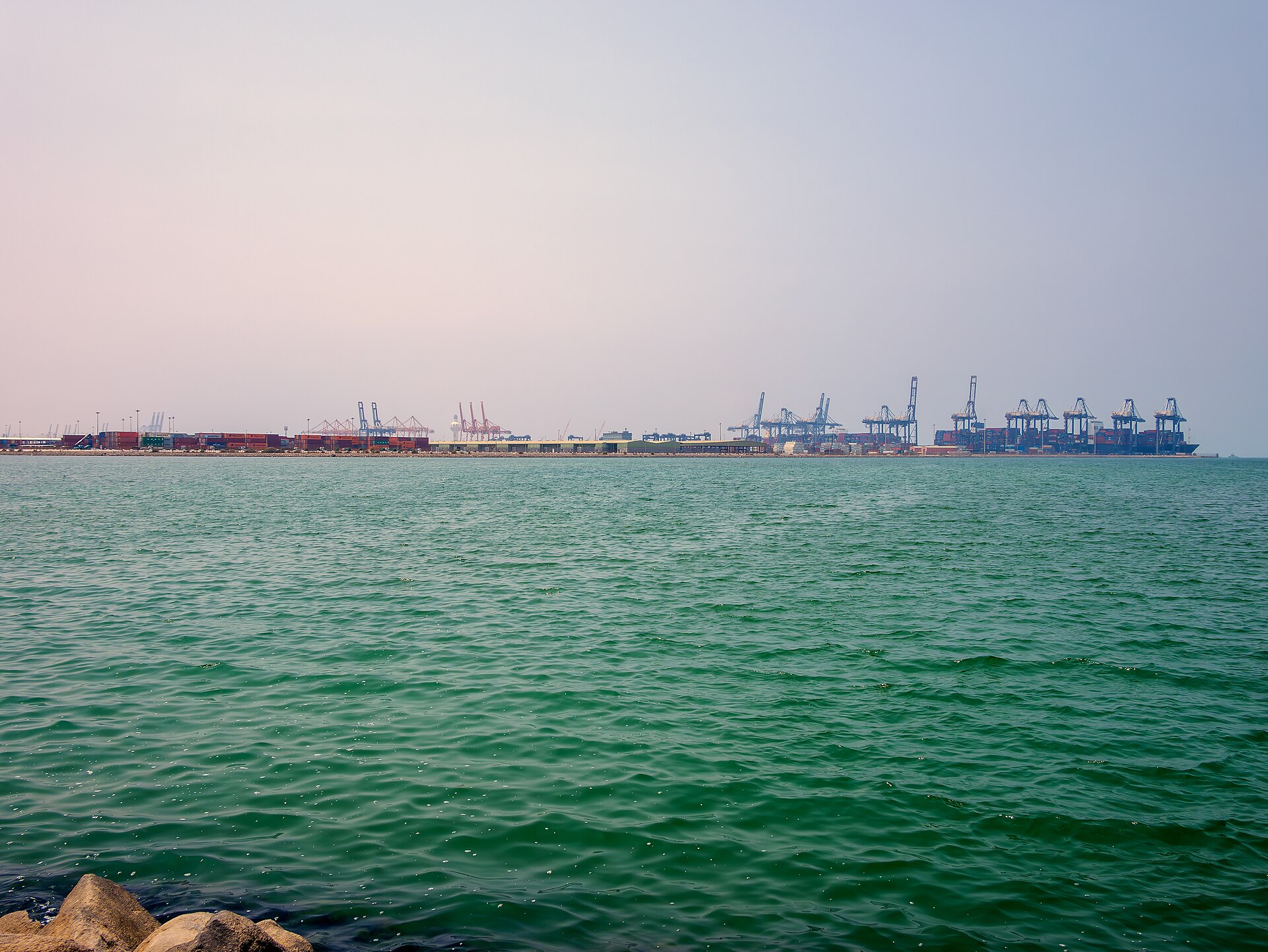
Saree vowed the attack “will not go unanswered.” He had earlier stated that since the July 2026 resumption of the war, Houthi forces had adopted a “blockade for blockade” strategy — a posture reflected in the Houthi warnings that have moved insurers and airlines away from Jeddah without a single strike being confirmed on the port city.
On the same day, coalition airstrikes on telecommunications facilities in Hodeida province killed 17 workers and wounded 11, according to the Houthi telecommunications ministry, destroying administrative buildings, staff housing and a mosque. Saudi Arabia did not comment on that incident either. The day before, coalition aircraft struck multiple targets across Hodeidah that the Houthis said served civilian purposes, the latest in a daily rhythm of strikes across western Yemen.
The Hodeida telecommunications strike illustrates the dual-use targeting doctrine in practice. Communications infrastructure serves both civilian and military purposes, and the coalition has previously designated such facilities as targets on the grounds that the Houthis use them for command and control. But the toll — 17 workers killed in administrative buildings, staff housing and a mosque adjacent to the facility, according to AFP — raises the proportionality question that IHL requires the attacking party to assess before each strike. The Houthi telecommunications ministry said the strikes cut internet and phone service to tens of thousands of civilians across the province.
How Bad Is the 2026 Civilian Toll?
Saudi coalition airstrikes killed at least 140 civilians and wounded 286 in October 2026, according to Yemen Data Project figures reported by Antiwar.com — the highest monthly civilian death toll from Saudi strikes since December 2017. Among the dead were 40 children, with 60 more wounded, making October 2026 the worst month for child casualties since the Dahyan bus attack of August 2018.
The month before was already severe. Amnesty International, citing Yemen Data Project data, documented 66 civilians killed and 90 wounded by Saudi airstrikes in September 2026. Taiz province was the most heavily bombed in October; the single deadliest confirmed incident was an 18 October strike on a home in Saada province that killed at least ten civilians, including seven children, and wounded 23 more.
“Civilians are never legitimate targets. They must not pay the price of further escalation.”
Heba Morayef, Amnesty International MENA Regional Director, 14 October 2026
The UN human rights office had verified 323 civilian casualties in Yemen since early August 2026 as of 23 November, and more than 360,000 people have been displaced since August, according to Anadolu Agency. OHCHR stated the true toll is likely higher than its verified count.
The resumed Saudi air campaign began on 13 July 2026, when coalition aircraft struck Sanaa International Airport — the first strikes in Houthi-controlled territory since the April 2022 ceasefire. Human Rights Watch described the airport as “a critical entry point for humanitarian personnel and aid.” Within four months, the new campaign’s worst monthly norms have equalled or exceeded those of the most intense periods of the 2015–2022 war’s later years, according to the Yemen Data Project’s longitudinal data.
The escalation was rapid. By 10 September, AFP counted more than 500 killed in fighting since the previous week, according to Euronews — a figure that includes combatants on both sides, not only civilian deaths from airstrikes. The Houthi Health Ministry maintained a separate count of 155 civilians killed by Saudi strikes from July through 22 October, a figure reported by Antiwar.com that uses different methodology and counting periods from the Yemen Data Project’s monthly breakdowns. The discrepancy between monitoring sources — OHCHR’s 323 verified casualties since August, YDP’s month-by-month tallies, the Houthi ministry’s cumulative count — reflects the difficulty of verifying harm in a conflict zone where humanitarian access is restricted and both sides have incentives to shape the numbers.
| Month | Civilians killed | Civilians wounded | Source |
|---|---|---|---|
| September 2026 | 66 | 90 | Amnesty International / YDP |
| October 2026 | 140 | 286 | Yemen Data Project via Antiwar.com |
How Does the Coalition Justify Strikes on Civilian Objects?
Coalition spokesman Maj. Gen. Turki Al-Maliki laid out the operational logic on 13 October 2026. The coalition had established, he said, that the Houthis were using “civilian facilities and vital resources to sustain military operations,” and that the coalition had taken “feasible precautions to limit civilian harm.” He specifically cited fuel facilities in Sanaa, Hodeidah and Dhamar as targets that made “a direct contribution to attacks against civilians and civilian infrastructure,” according to Saudi Gazette and the Qatar News Agency.
The statement formalized a doctrine that had been signaled for months. In mid-2026, Al-Maliki warned that Houthi military activity had “exposed” Yemeni civilian infrastructure — including the ports of Hodeidah, Ras Isa and Salif, Sanaa airport and power stations — to potential coalition military action, the New Arab reported. The language was precise: the exposure was caused by the Houthis, in the coalition’s framing, not by the coalition’s decisions about what to strike.
The dual-use argument has a basis in the law of armed conflict. A fuel depot that stores diesel for military vehicles can be a legitimate military objective under international humanitarian law, even if it also fuels civilian generators. A telecommunications tower that carries Houthi military communications may qualify, even if it provides internet to tens of thousands of civilians. The legal test, under Additional Protocol I to the Geneva Conventions, is whether the object makes an “effective contribution to military action” and whether its destruction offers a “definite military advantage.”
What the coalition has not addressed — in any public statement during the 2026 campaign — is how that framework applies to passenger buses and commercial cargo trucks on a road in a south-western governorate. An October 8 strike on a passenger vehicle in Taiz produced no coalition statement. The Lahj incident, whatever its true attribution, has produced none either.
From Dahyan to Lahj: The Vehicle Strike Pattern
The coalition’s record of striking civilian vehicles dates to the first year of the original war and runs through its last. The incident that defined the category — and that remains the reference point for every subsequent vehicle strike — took place in Dahyan, Saada province, on 9 August 2018. A Saudi airstrike hit a school bus in a crowded market. The International Committee of the Red Cross counted at least 29 children killed. Human Rights Watch put the figure at 26 children and called the strike “an apparent war crime.”
The coalition’s response followed a pattern that has since become routine. It first described the school bus as “a legitimate military target.” Weeks later, it acknowledged “mistakes” were made, according to CNN. Bellingcat’s investigation established that the weapon was a US-supplied MK-82-based munition, documenting the American supply chain link to the specific bomb fragments recovered at the scene.
Eight years later, the pattern has not changed in kind. On 8 October 2026, Saudi aircraft struck a passenger vehicle in Taiz province, killing at least two civilians — including a pregnant woman whose fetus also died — and wounding six others, including two girls, according to the Houthi Health Ministry as reported by Antiwar.com. The coalition made no statement. Six weeks later, buses and trucks were struck in Lahj under disputed circumstances, with Houthi and government-aligned sources blaming each other. The coalition again said nothing.
| Incident | Date | Location | Toll | Coalition response | Investigation |
|---|---|---|---|---|---|
| Dahyan school bus | 9 Aug 2018 | Saada | 29+ children killed (ICRC) | “Legitimate target,” then “mistakes” | JIAT: accountability accepted, no prosecution |
| Taiz passenger vehicle | 8 Oct 2026 | Taiz | 2 killed, 6 wounded (Houthi Health Ministry) | No statement | None announced |
| Lahj vehicles | 23 Nov 2026 | Lahj | 25 dead or missing (Saba) / 6 killed (Xinhua, local official) | No statement; attribution disputed | None announced |
The Campaign Against Arms Trade has tracked dozens of coalition air raids on civilian vehicles, roads and convoys over the course of the 2015–2022 war. What the data shows is not a series of isolated errors but a structural feature of a campaign in which the attacking force determines, unilaterally and without independent oversight, when a civilian vehicle becomes a military target. The coalition provided no public explanation after Dahyan until international pressure forced one. It has provided none for either the Taiz or Lahj incidents.
The 2015–2022 air campaign logged thousands of strikes on populated areas. The Yemen Data Project’s database, covering thousands of reported air raids, found that a substantial proportion struck non-military sites — including hospitals, schools, markets, weddings, funerals and roads carrying civilian traffic. The vehicle strike subset is a particular category within that broader record: strikes on moving targets where the attacking force must make a real-time determination of military versus civilian identity, with the burden of that determination falling entirely on the coalition’s own intelligence and authorization process.
Has JIAT Investigated Any 2026 Incident?
The Joint Incidents Assessment Team was established by the coalition in 2016 as an internal review mechanism to investigate allegations of civilian harm. It was activated after Dahyan and after a number of other high-profile strikes during the 2015–2022 war. Its investigations were widely criticized by Human Rights Watch and Amnesty International as inadequate — accepting responsibility without producing criminal referrals or changes to targeting procedures that prevented recurrence.
As of 24 November 2026, no JIAT investigation has been announced for any incident in the resumed air campaign. Not for the 13 July strikes on Sanaa International Airport. Not for the 18 October strike on a home in Saada that killed ten people including seven children. Not for the 8 October passenger vehicle strike in Taiz. The mechanism that was activated — however imperfectly — after Dahyan has not been activated at all during a campaign that produced 140 civilian dead in a single month.
External monitors have documented the gap. Mwatana for Human Rights, an independent Yemeni organization, recorded at least 38 airstrikes on unlawful civilian objects during 2025 — the vast majority carried out by US and Israeli forces in the period between the two campaigns, with one attributed to the Saudi border guard — and in March 2026 renewed its call on the coalition to assume its legal, moral, and humanitarian obligations toward civilian victims. A Columbia Law School submission to the UN’s Universal Periodic Review described coalition conduct as involving “widespread and systematic” violations of international humanitarian law and international human rights law.
The UN’s own investigative capacity has also narrowed. The Human Rights Council voted in October 2021 to end the mandate of the Group of Eminent International and Regional Experts on Yemen, the only independent international body with authority to investigate the conflict. The group had produced annual reports documenting what it described as possible war crimes by all parties, including the coalition. Its termination left no international criminal investigative mechanism in place — a gap that has not been filled in the five years since and that the resumption of the campaign in July 2026 has made more consequential than at any point since the original war began.
The absence of JIAT action in 2026 is not an oversight. The GCC defense structure has been reorganized and the coalition’s operational tempo has increased. The Saudi Chief of General Staff, Gen. Fayyadh bin Hamed Al-Ruwaili — in post since February 2018, spanning both the original campaign and the resumed one — has made no public statement on targeting doctrine in the current war.
Do Precision Munitions Guarantee Lawful Targeting?
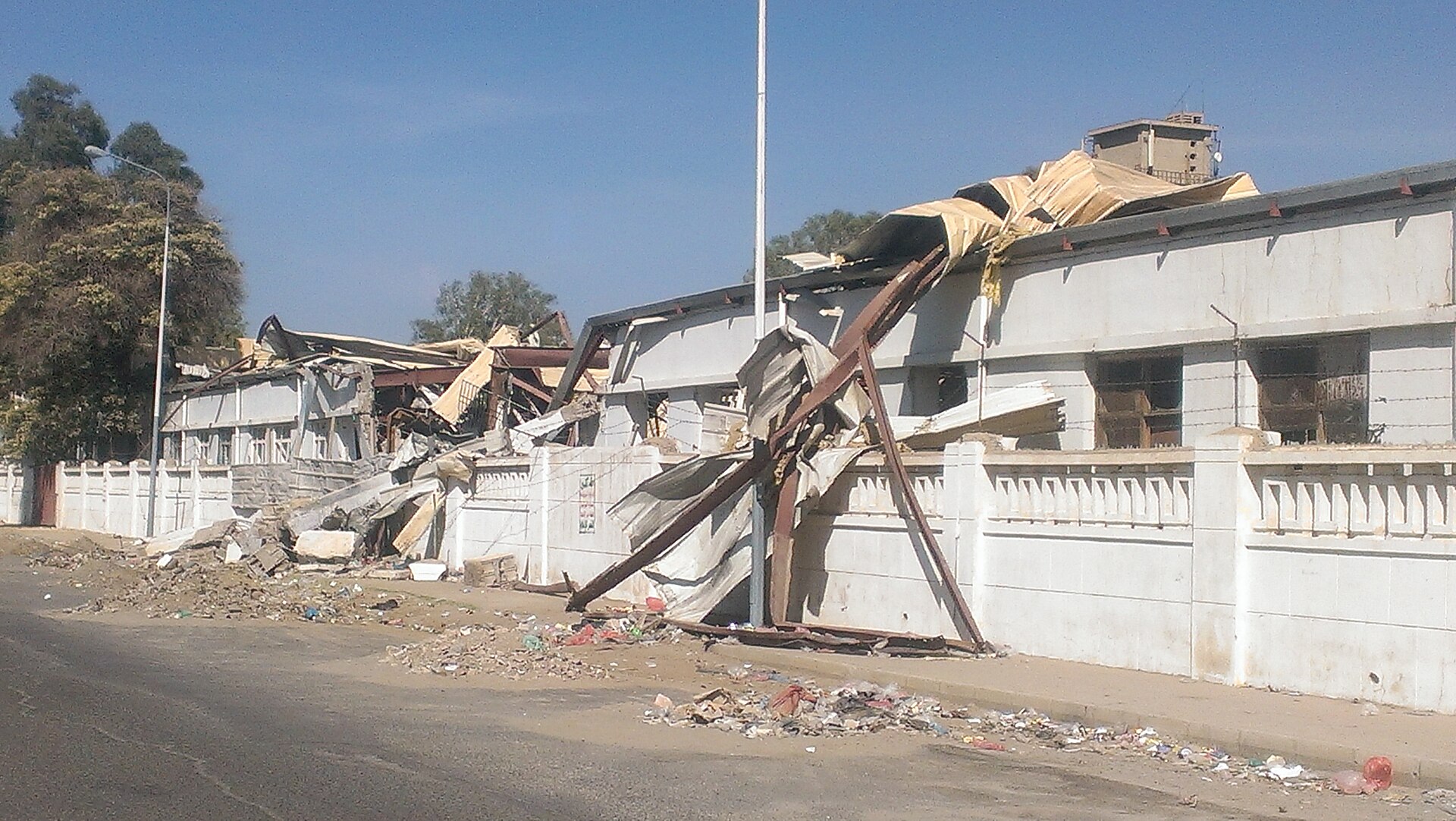
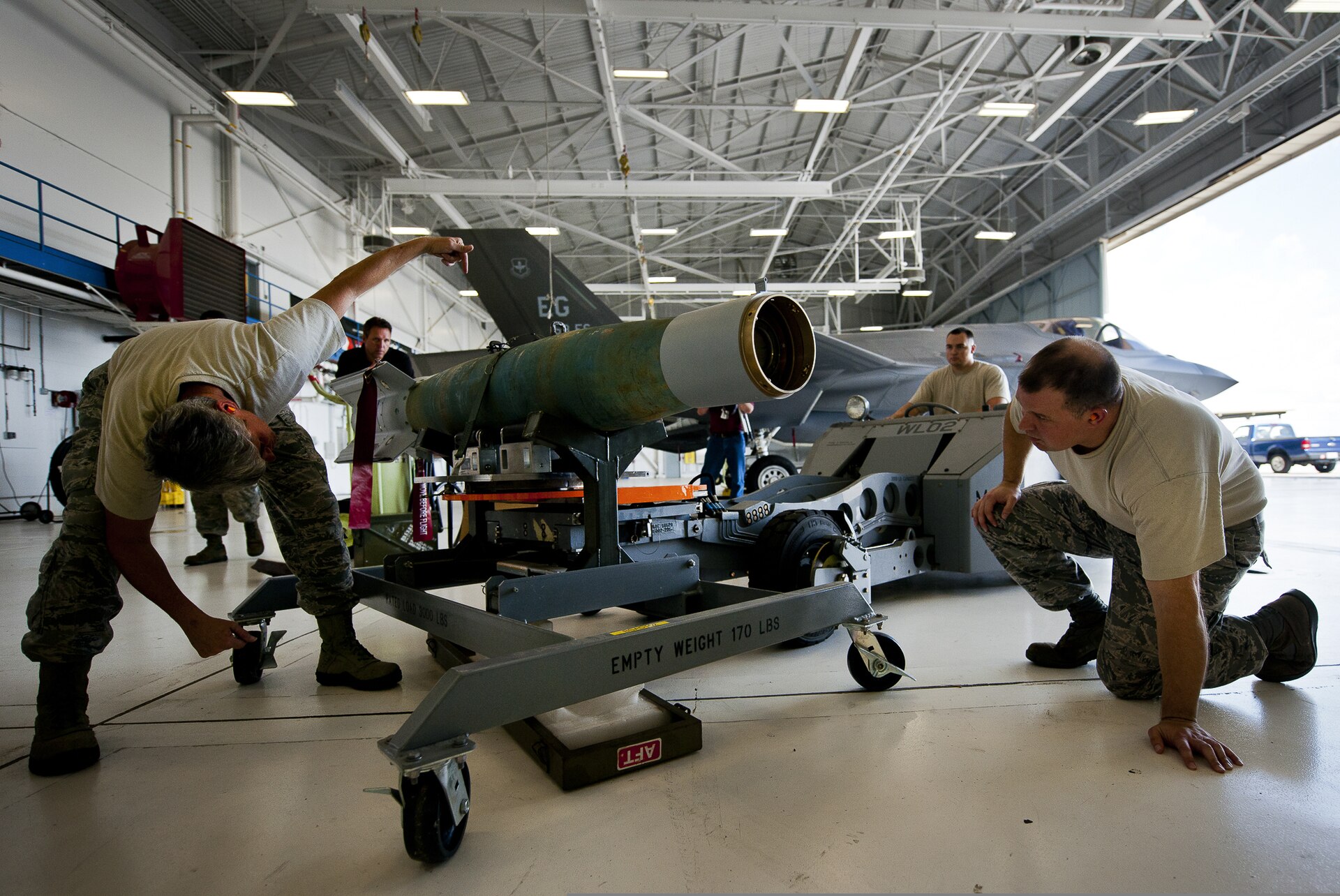
The GBU-12 Paveway II and GBU-49 Enhanced Paveway II, the weapons Houthi spokesman Saree identified as having been used in the Lahj strike, are both laser-guided bombs manufactured in the United States. The GBU-12 has a circular error probable measured in single-digit metres; the GBU-49 adds GPS/INS guidance for use through cloud cover and poor visibility. Both require the pilot or a ground designator to hold a laser on a specific aim point. If the weapons identification is accurate — and it has not been independently confirmed — the munitions hit what the pilot aimed at.
That is the core paradox of the Yemen air campaign’s civilian toll. The IHL question is not whether the weapon was accurate but whether the targeting selection was lawful. Two tests must be met under the laws of armed conflict: the target must constitute a “legitimate military objective,” and the expected civilian harm must not be “excessive in relation to the concrete and direct military advantage anticipated.” A laser-guided bomb that strikes within three metres of a bus carrying civilians is not more lawful than an unguided bomb that does the same. The weapon’s accuracy only matters if the target was lawful in the first place.
The coalition has never explained, in any public statement during the 2026 campaign, what intelligence led to the classification of the Taiz passenger vehicle on 8 October or the Lahj vehicles on 23 November as military objectives — assuming, in the Lahj case, that the coalition was responsible. It has not disclosed whether pre-strike assessments of civilian presence were conducted, what collateral damage estimates were prepared, or what approval chain authorised the strikes. The absence of any such disclosure is consistent across the entire 2026 campaign.
The political dimension is inseparable from the legal one. If the GBU-49 and GBU-12 identification is confirmed, both are US-manufactured weapons delivered under US arms-transfer agreements that carry end-use monitoring requirements. The US approved a possible $5 billion sale of bombs and guidance kits to Saudi Arabia on 4 September 2026, according to the Express Tribune citing AFP. Each documented strike on a civilian target with a US-supplied weapon reopens the question of whether Washington’s arms-transfer controls are functioning as intended — a question that members of Congress raised repeatedly during the 2015–2022 campaign and that the Senate has voted on at least ten times, per NPR.
The Campaign’s Structural Incentives
The civilian toll data exists within a campaign designed for sustained duration. Reuters reported exclusively in mid-November 2026 that Saudi Arabia is preparing for the Yemen campaign to last well into 2027. Two Western officials briefed by the Saudis said Riyadh foresees up to six months of operations aimed at securing ground gains for its Yemeni allies before any negotiations begin. A Saudi Foreign Ministry official declined to comment.
The operational tempo is consistent with that timeline. Coalition aircraft have struck targets across Hodeidah, Sanaa, Saada, Taiz, Marib, Al-Jawf and Lahj in the past month alone. On 20 November, coalition strikes hit Hodeidah and the Houthis threatened Jeddah port. On 21 November, the coalition intercepted three Houthi ballistic missiles over Riyadh, with two explosions heard in the capital. On 23 November, the coalition intercepted a Houthi ballistic missile aimed at the Makkah region. The cycle has become self-reinforcing: coalition strikes produce Houthi retaliatory fire at Saudi cities, which the coalition intercepts, which produces further coalition strikes.
Houthi political spokesman Mohammed Abdul-Salam told Press TV that Saudi Arabia was “forcing Yemenis to choose between starvation and being killed.” The statement is adversary rhetoric, but the aggregate data speaks to the same underlying dynamic. A campaign producing 140 civilian dead in a single month, with no internal review mechanism activated and no public accounting for individual strikes, faces a question that precision munitions cannot answer: whether the aggregate harm is consistent with IHL’s requirement that parties to a conflict take “constant care” to spare the civilian population.
The Houthis have explicitly tied their targeting of Saudi cities to the air campaign’s civilian toll. Saree’s statement after the Lahj incident — “will not go unanswered” — echoed language he has used after each major strike on civilian areas since July. The pattern has been consistent: coalition strikes on Houthi-held territory, followed within days by Houthi missile and drone launches at Saudi airports, oil infrastructure and urban centres, followed by further coalition strikes framed as responses to those launches. Each side cites the other’s conduct to justify its own.
Reuters’ sources said a deal to end the broader Iran war could lead to a drawdown in Yemen, but no date for negotiations has been announced.
Frequently Asked Questions
What role do US advisers play in Saudi targeting decisions in Yemen?
CNN reported in September 2026 that approximately 200 US advisers were providing targeting data to Saudi Arabia. The extent to which they participate in strike authorisation for specific targets has not been publicly disclosed. Under US law, arms-transfer agreements carry end-use monitoring provisions, but the State Department has not publicly reported findings on whether US-supplied munitions have been used in strikes that caused civilian casualties during the 2026 campaign.
How does the Lahj vehicle strike compare to other disputed attribution incidents in Yemen?
Contested attribution is common in the Yemen conflict. During the 2015–2022 war, the Saudi-backed government and the Houthis frequently accused each other of strikes on civilian targets, with independent verification rarely available because of restricted humanitarian access. In the Lahj case, the Houthi military spokesman identified Saudi aircraft and US munitions, while local authorities aligned with the government blamed Houthi shelling. Xinhua, citing a government-aligned official, reported six killed — well below Saba’s 25 dead or missing. Without access to munitions fragments or satellite imagery, the competing claims cannot be independently adjudicated.
Can Saudi military officers face prosecution for Yemen civilian casualties?
Saudi Arabia is not a party to the Rome Statute and does not fall under the jurisdiction of the International Criminal Court. The UN Human Rights Council voted in 2021 to end the mandate of its Group of Eminent Experts on Yemen, the only international body that held an investigative mandate over the conflict. No international criminal accountability mechanism for Yemen currently exists. Domestic Saudi military courts have not publicly disclosed proceedings related to any airstrike in Yemen during either the 2015–2022 or 2026 campaigns.
What is the Yemen Data Project and how reliable are its figures?
The Yemen Data Project is an independent monitoring initiative that has tracked all reported airstrikes in Yemen since 2016, using open-source data from local media, humanitarian agencies and official statements from both sides. It categorises each strike by target type, location and reported casualties. Its monthly reports provide the most systematic publicly available longitudinal dataset on coalition airstrikes, and its figures are cited by Amnesty International and other major rights organizations. The data relies on reports from active conflict zones where verification is inherently limited, and the project itself notes that actual figures are likely higher than confirmed counts.
How many people have died in the entire Yemen conflict since 2015?
Estimates vary because of the extreme difficulty of counting deaths in an active conflict zone with restricted humanitarian access. The UN estimated in 2021 that the war had caused approximately 377,000 deaths since 2015, with the majority attributable to indirect causes — disease, food insecurity and disruption of health services — rather than direct violence. No authoritative updated estimate covering the 2026 resumed campaign has been published, though the Yemen Data Project’s monthly airstrike tracking and OHCHR’s verified casualty count provide partial data for the most recent period.
The House of Saud Daily Briefing
Saudi Arabia's news in 3 minutes, every morning. Free. See today's issue