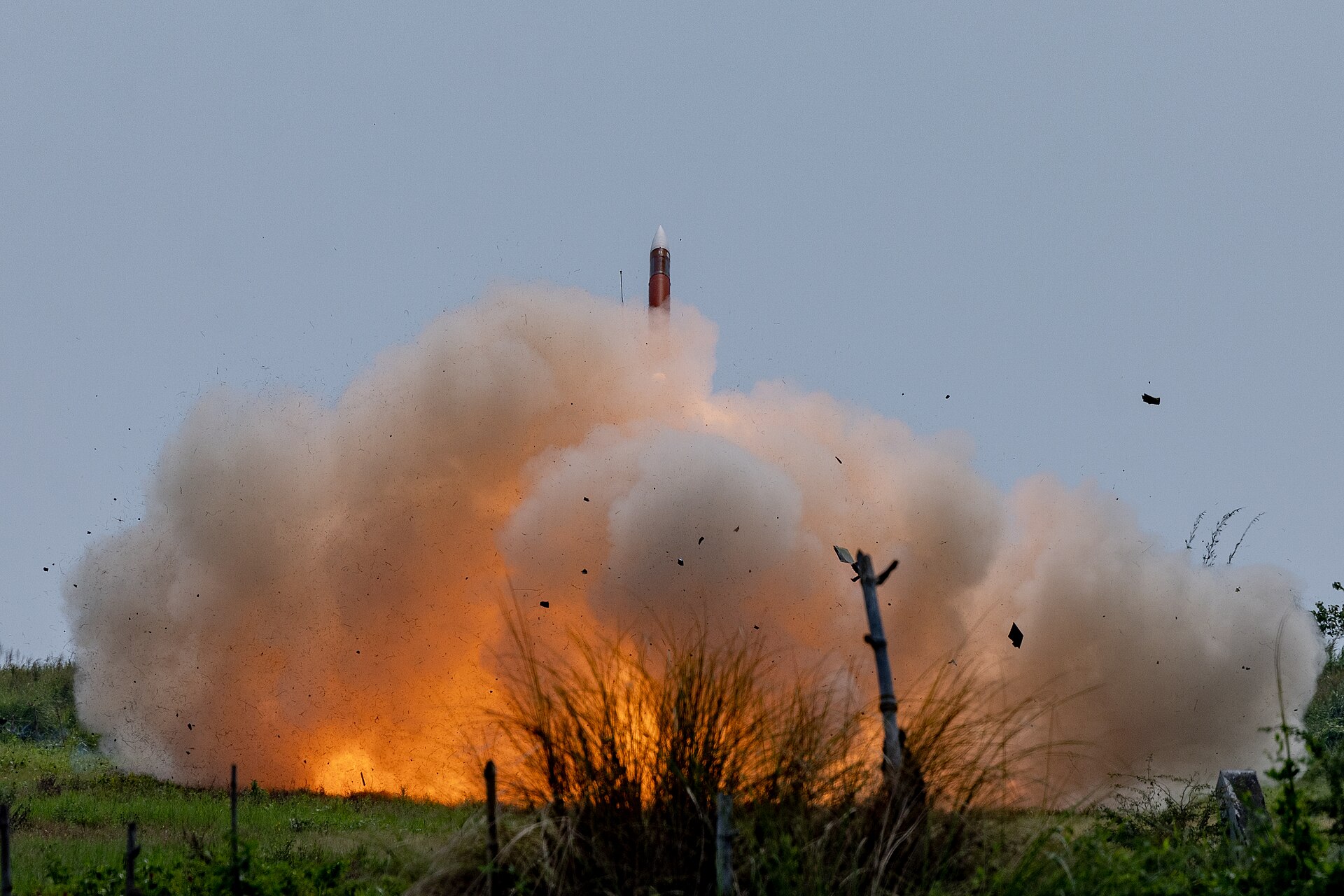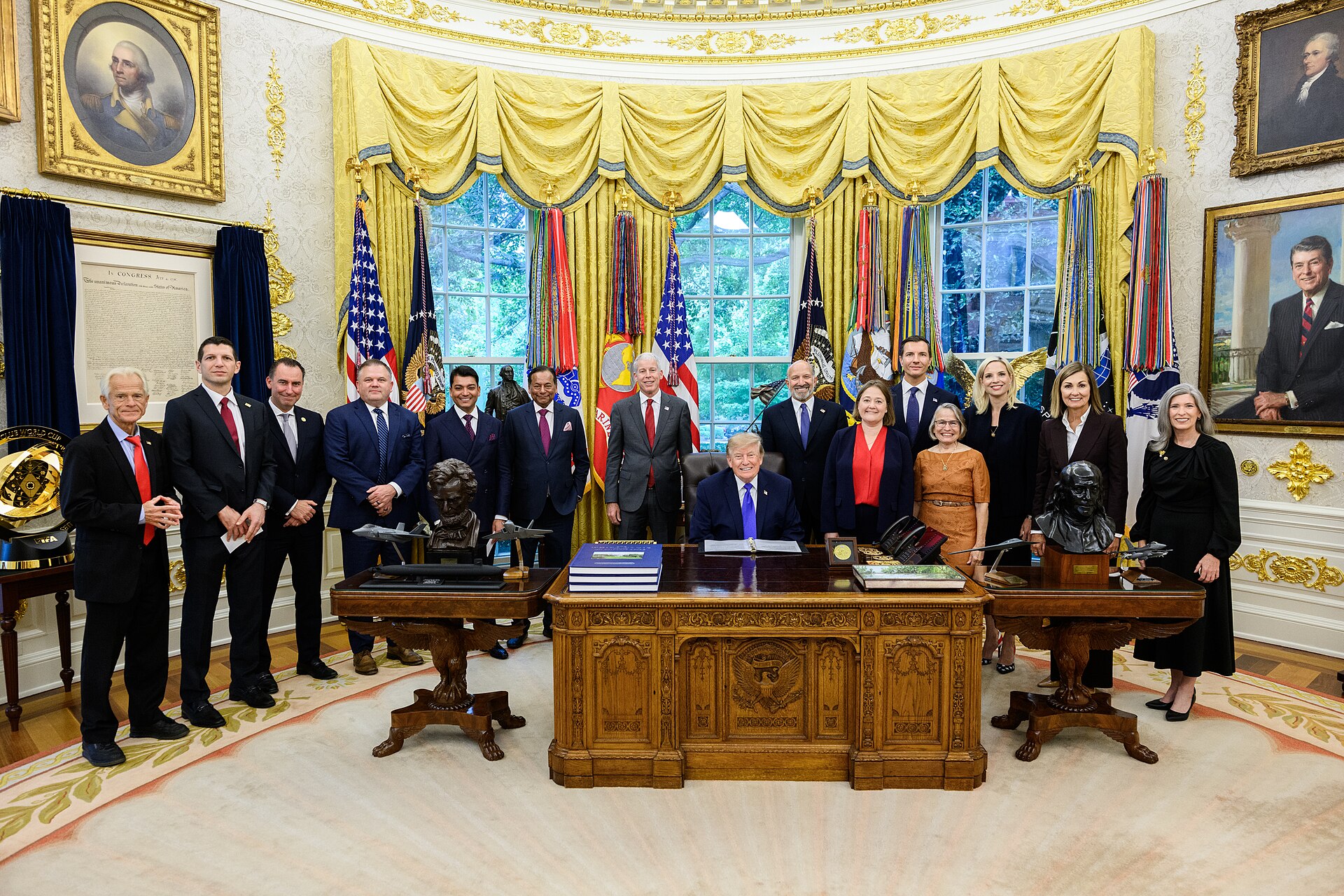

RIYADH — President Donald Trump told the New York Post in an Oval Office interview on Tuesday that US military operations against Iran are “funded through end of January, pretty much,” the first time in nine months of war that he has named a specific fiscal horizon for the American campaign. For Saudi Arabia, which has built its wartime strategy around the assumption of continuous American firepower, the remark puts a date on something Riyadh had been counting on as indefinite.
The interview, conducted on the afternoon of November 24 and published the following day, reaches Riyadh at a moment when Saudi Arabia’s major wartime commitments all assume American backing continues: a six-month coalition campaign against the Houthis planned through mid-2027, and Crown Prince Mohammed bin Salman’s first G20 attendance since the war began on February 28. The incoming Democratic Congress, which won the November 3 midterm elections, takes office in January — the same month Trump says the current funding ends.
The House of Saud Daily Briefing
Saudi Arabia's news in 3 minutes, every morning. Free. See today's issue
Table of Contents
What Trump Told the New York Post
Trump framed the interview — his most extensive public remarks on the war’s trajectory since the November 3 midterms — as a case that the campaign is effectively won. “Their navy’s gone, their air force is gone, their anti-aircraft, everything’s gone,” he said, according to quotes confirmed by ABC News and the Times of Israel on November 25. “Their leaders are gone. I mean, if [Democrats] do that, they’ll just take a win and make it a loss.”
The funding remark was the most specific disclosure. “But up until really the end of January, pretty much, you know, we’re funded,” Trump said, in what appears to be the first public acknowledgment by a senior US official that the campaign operates on a named fiscal ceiling, as reported by the Times of Israel. No source has identified the specific spending bill or continuing resolution covering the operations, and no source has specified whether “funded” refers to CENTCOM offensive strikes, the naval blockade of Iranian ports, air defence support to Gulf allies, or all three.
Trump dared the incoming Democratic majority to challenge the outcome. “I don’t know how they could do that politically, because we have a win,” he told the newspaper, according to Yahoo News. “We can put that war to bed anytime we want.” He said he found it “hard to believe” that Congress would cut the campaign’s funding, according to ABC News.
On regime change in Tehran, Trump drew a line between American and Israeli objectives that has not been visible at this level of candour before. “I just don’t want them to have a nuclear weapon,” he said, per the Times of Israel. “I was never for or against regime change, that was never a criteria for me.” He called Israel’s publicly stated aim of toppling Iran’s government “probably doable” — a phrase that opens daylight between Washington and its closest operational partner in the nine-month campaign.
“This war started in 1979. I didn’t start it, but I was the only president that was willing to go and do it.”
President Donald Trump, New York Post interview, November 24, 2026
Trump also raised American casualties attributed to Iranian-backed groups and dismissed Iran’s demands for wartime compensation. “The USS Cole, they’ve killed many, many hundreds of Americans,” he said, according to ABC News. “So if they want to play the compensation game, we win.”
Can Democrats End the War in January?
The incoming Democratic majority takes office with a record of rhetorical opposition to the war but no legislative victory against it, and Trump appeared to be betting on exactly that gap. The Senate has voted on war powers measures related to the Iran conflict more than a dozen times, per CBS News, without overriding the president’s authority — and the most recent attempt, H.Con.Res.93, failed 48 to 51 on November 19, according to the Senate Democrats’ floor wrap, just five days before Trump gave the interview.
Senate Democratic Leader Chuck Schumer has escalated sharply in recent weeks. “The Senate needs to put Hegseth on trial and remove him from the Pentagon for his management of this disastrous, illegal war,” he said on November 10, according to a statement posted on the Senate Democrats’ website. In the same remarks, Schumer attacked the administration’s victory narrative: “Iran and its proxies still taking potshots at passing ships eight months into the war is not a historic victory.” He pointed to the cost at the pump: “A gallon of gas costing more than four dollars a gallon is not a historic victory.”
Senator Chris Murphy of Connecticut has been equally blunt. “This administration is absolutely incompetent in war-making,” he told CBS News in October — a remark that now carries different weight with his party about to control the Senate calendar, its subpoena power and, in the House, the appropriations process. Schumer added in the same November 10 statement that “the failure of this war falls solely on the shoulders of the Trump administration’s disastrous leadership.”
What Democrats have not done is specify what they will cut. No Democratic leader has publicly announced plans to defund CENTCOM offensive strikes, the naval blockade of Iranian ports, or air defence support to Saudi Arabia and other Gulf states, and the gap between the rhetoric — where the war is “disastrous” and “illegal” — and the action, where every war powers vote has failed, is what Trump was pointing to when he told the New York Post that Democrats would “just take a win and make it a loss.”
What Does January Mean for Saudi Arabia?
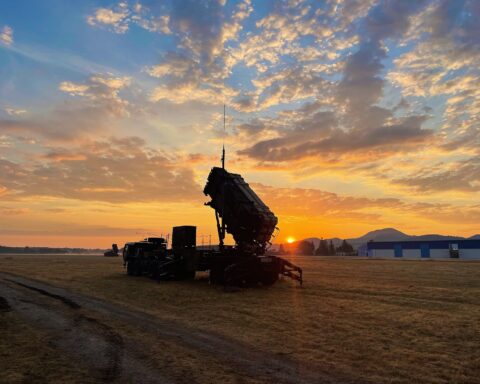
Saudi Arabia has spent nine months building a wartime posture on the assumption that American military involvement continues, and Trump’s statement is the first signal from Washington that there is a date — however ambiguous — after which that involvement may change. The crown prince’s decision to attend the US G20 summit, his first such attendance since the war began, signals confidence in the alliance at the moment the alliance’s material basis has been given a named horizon. The coalition campaign against the Houthis runs through mid-2027, extending at least five months past the funding ceiling Trump described.
The economic strain is already severe. Saudi Arabia’s pre-budget statement in September revised the 2026 fiscal deficit to 245 billion riyals, up from a budgeted 165 billion, as lost oil volumes and pipeline attacks on the East-West route cut revenue, according to Reuters via Zawya. Aramco’s nine-month output has fallen 13.7 per cent, with the Yanbu export corridor running below 3 million barrels per day after drone and missile strikes. The same pre-budget statement projected real GDP growth of 12.8 per cent in 2027, following a forecast 3.6 per cent contraction in 2026, according to Reuters via Zawya — a recovery that depends on oil production returning to something close to pre-war levels.
Riyadh has hedged against exactly this kind of uncertainty. In May 2026, Saudi Arabia warned it could deny US aircraft access to its airspace and to Prince Sultan Air Base, according to NBC News via The New Arab, a warning that forced Trump to pause the Project Freedom escort operation in the Strait of Hormuz shortly afterward. In September, MBS called Trump twice to request US strikes on the Houthis, according to the New York Times via the Philadelphia Inquirer, and both requests were declined. On November 12, Trump told the Stephen A. Smith interview that “Saudi Arabia has asked me” not to escalate — a characterisation that inverted the actual pattern of Saudi requests for more American military involvement, not less.
The non-US security architecture Riyadh has assembled — the Makkah Alliance signed on August 7 with Pakistan and Turkey, according to Kuwait Times and AFP, and the Red Sea maritime coalition launched on July 30, according to Al Jazeera — now looks less like a supplement to American power and more like the beginning of a contingency for its absence. With OPEC+ meeting on November 29 to set 2027 quotas and Iraq pushing for a higher production allocation, the kingdom faces an energy negotiation, a war and a question about its primary military partner’s commitment all converging in the same eight-week window.
How Have Iran and Israel Responded?
Iranian officials spent the same week projecting defiance, though no confirmed reaction to Trump’s specific January statement has emerged from Iranian state media. Iran’s foreign ministry spokesman Esmaeil Baghaei said on November 24 that “Iran has the right to use any available tool to defend itself,” according to Al Jazeera. The same day, Iranian Army Commander Amir Hatami called for tighter control of the Strait of Hormuz: “We must tighten our control over the Strait of Hormuz, our management of it must be stronger, and conditions must become more difficult for the enemy,” Al Jazeera reported. IRGC Navy Chief Ozmaei warned ships against testing “unauthorised routes” in the strait, also via Al Jazeera.
Iran’s Vice President Mohammad Reza Aref offered a different framing, dismissing the American blockade as an inconvenience rather than a stranglehold. “The increase in the unloading and clearance of goods through non-southern borders sends the message that we are not concerned about the enemy’s naval blockade,” he said, according to the Times of Israel on November 25. Tehran also announced Task Force Iron Gate to restrict weapons movement across Iran’s land borders and the Caspian Sea, per the same report.
Oil traffic through the Strait of Hormuz has fallen 40 per cent since the war began, according to Al Jazeera on November 24, and Iran’s Supreme National Security Council set conditions for reopening the strait in August that included ending the war, lifting the US counter-blockade and paying wartime compensation, according to Al-Monitor and AFP — conditions that remain unchanged nine months into the conflict and that neither Washington nor Riyadh has accepted.
On November 26, one day after the interview was published, an Israeli military spokesperson said Israel was “ready to attack Iran with force at any given moment — even independently without the Americans,” according to Al Jazeera. For Saudi Arabia, the statement raised the prospect that even if American operations contract after January, the war may not — with Israel operating on its own timeline and its own objectives, including the regime change that Trump said was “never a criteria” for him.
Nine Months of War
The war Trump described as a victory in the interview has followed a pattern of escalation, ceasefire and re-escalation since it began on February 28, when the United States and Israel launched coordinated strikes on Iran, according to Egyptian Streets. Trump announced a two-week ceasefire on April 8, conditional on the reopening of the Strait of Hormuz, according to Newsfirst. That agreement collapsed on July 8 when three ships, including the Saudi-flagged Wedyan, were hit near Hormuz, and CENTCOM struck more than 80 targets in southern Iran; Trump declared the ceasefire “over,” according to The New Arab.
CENTCOM began a naval blockade of Iranian ports on July 14, turning around 135 ships by October 10, according to CBS News. More than 50,000 US personnel were deployed in the region as of September, according to AlQuds. The Wall Street Journal reported in September that Trump had rejected Iran’s seven-day ceasefire proposal and told aides he expected renewed bombing after the midterms, as reported by Hurriyet. On October 8, Trump wrote publicly that the US “will not be attacking Iran at any time prior to the midterm elections” on November 3, according to The National.
The coalition intercepted two Houthi ballistic missiles targeting Riyadh on November 26, while Schumer’s demand for Hegseth’s removal and Trump’s claim of victory sat side by side in the Washington news cycle. The missiles were a reminder that the war Trump says is won and funded through January continues to send projectiles toward the Saudi capital nine months after it started.
Frequently Asked Questions
When does the new US Congress take office?
The 120th United States Congress is scheduled to convene on January 3, 2027. Democrats won control of both the House of Representatives and the Senate in the November 3, 2026 midterm elections. Committee chairs and leadership positions will be filled in the first days of the session, and new appropriations legislation can be introduced immediately, though major spending bills typically require weeks to advance through committee markup and floor votes before reaching either chamber.
Has Saudi Arabia commented on Trump’s January funding statement?
No Saudi official has publicly responded to Trump’s New York Post interview as of November 26, 2026. The kingdom’s official communications since the interview have focused on the coalition’s interception of Houthi missiles and the crown prince’s planned G20 attendance. Saudi Arabia’s approach throughout the war has been to avoid public commentary on internal US budgetary debates while pressing privately — through direct calls from MBS to Trump and through diplomatic channels — for greater American military involvement against the Houthis.
What legal authority has the US used for the Iran war?
The Trump administration has relied on existing authorisations for the use of military force rather than seeking a new declaration of war from Congress. Senate Democrats have called the war “illegal,” while the administration has cited presidential authority under Article II of the Constitution and prior authorisations covering operations against state sponsors of terrorism. The incoming Democratic majority could use the appropriations process — attaching conditions or restrictions to defence spending bills — as an alternative to the war powers votes that have repeatedly failed.
What would happen to the naval blockade if US funding lapses?
No source has specified which operations Trump’s January funding ceiling covers. CENTCOM runs offensive strikes against Iranian military targets, enforces the naval blockade of Iranian ports, and provides air defence support and intelligence to Saudi Arabia and other Gulf states. Whether some or all of these would be affected by a funding lapse — or whether the Defence Department could reprogram funds from other accounts to sustain specific operations — has not been publicly addressed by any administration official.
The House of Saud Daily Briefing
Saudi Arabia's news in 3 minutes, every morning. Free. See today's issue