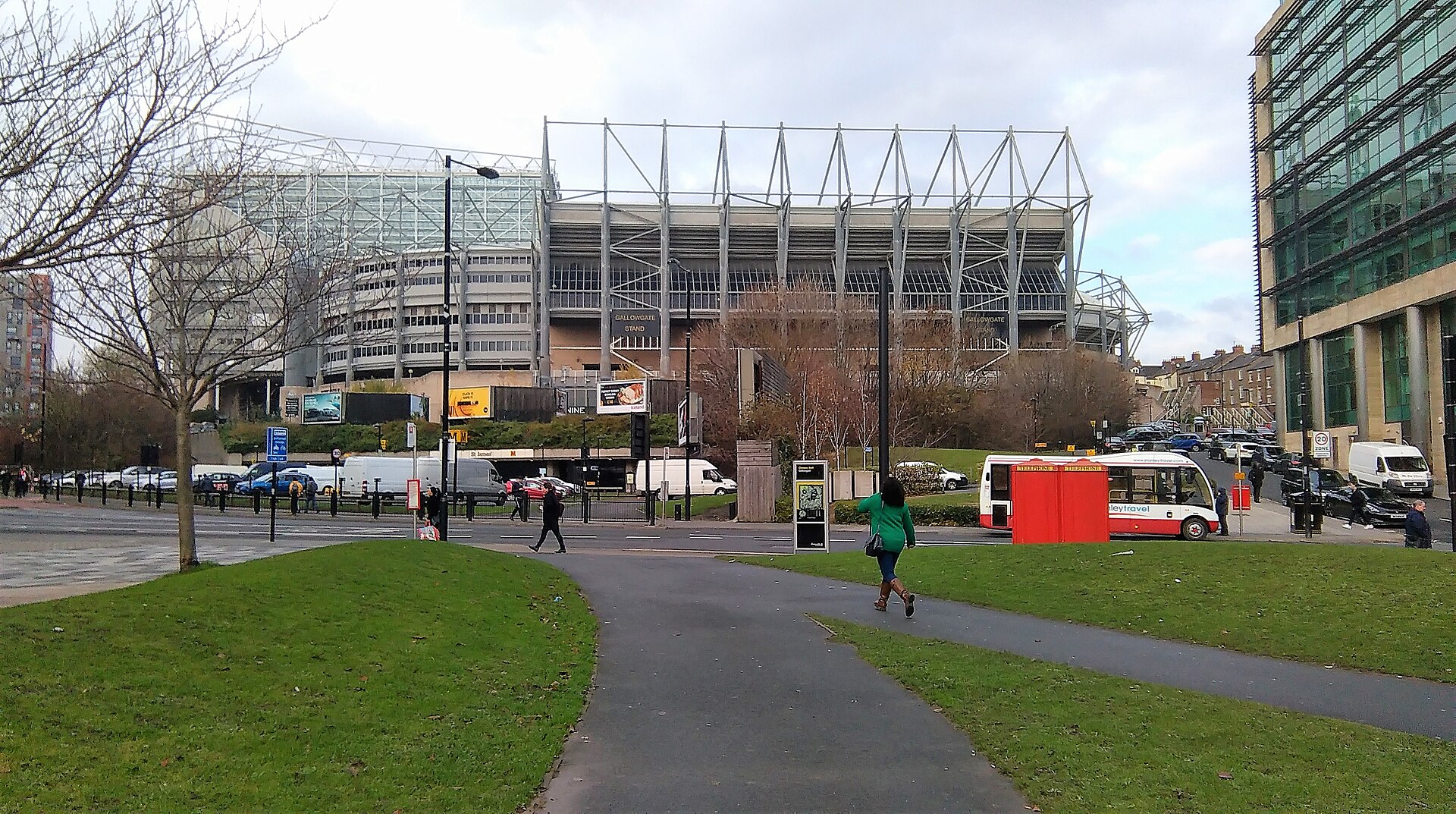

LONDON — Saudi Arabia’s Public Investment Fund has hired JPMorgan to find investors for up to 25 percent of Newcastle United, with two US private investment firms — Arctos Partners and Sixth Street Partners — in early-stage talks with bankers handling the process, The Athletic and the Financial Times reported on Monday. The Athletic’s David Ornstein and Chris Waugh, citing people familiar with the matter, broke the story, with the Financial Times independently confirming the mandate the same day.
The mandate marks the first confirmed step by PIF toward diluting its holding in a major Western trophy asset. The Iran war has forced the $905 billion fund to cap foreign holdings and redirect capital toward a wartime economy — the Saudi cabinet had approved a record defence budget two days before the mandate was reported. No statement has been issued by PIF, Newcastle United, or JPMorgan, and Reuters reported that all three declined or did not respond to requests for comment.
The House of Saud Daily Briefing
Saudi Arabia's news in 3 minutes, every morning. Free. See today's issue
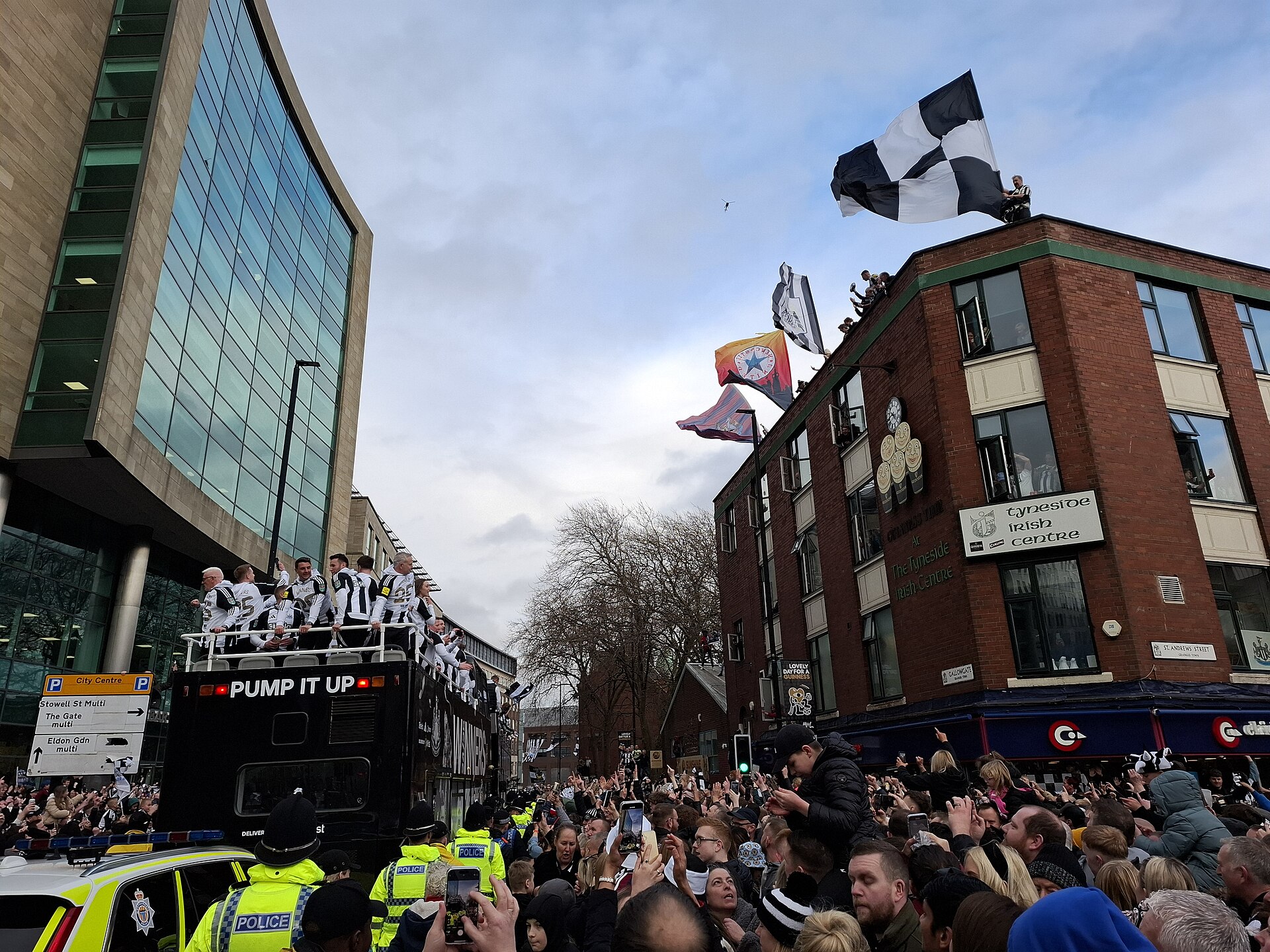
Table of Contents
How Is the Newcastle Stake Sale Structured?
The transaction would involve newly issued shares in Newcastle United rather than a transfer of PIF’s existing stock, according to The Esk. The supporter-run tracker has compiled the most detailed open-access account of the process, drawing on the original reporting by David Ornstein and Chris Waugh at The Athletic. Proceeds would flow to the club to fund infrastructure projects rather than to PIF’s treasury in Riyadh. PIF’s approximate 85 percent holding — acquired after a July 2024 restructuring that bought out Amanda Staveley’s PCP Capital Partners — would be diluted rather than sold down. The Reuben family’s RB Sports & Media, which holds approximately 15 percent through the same restructuring, has not publicly indicated whether it would participate in the new issuance.
At PIF’s reported internal valuation of approximately £2 billion, a figure reported by Yahoo Sports citing Chris Douglas, a full 25 percent new-share issue would imply a value of roughly £500 million — though the final price depends entirely on what investors agree to pay, and that valuation has not been tested by a market transaction. The trajectory from the £305 million that the Saudi-led consortium paid for the club in October 2021 to a reported £2 billion internal number five years later reflects both the Premier League’s inflation in franchise values and the volume of equity that PIF and its co-owners have poured into the club since the takeover.
Club sources told multiple outlets that Newcastle is not for sale, a characterisation that is technically accurate since the structure involves dilution via new issuance rather than a disposal of existing shares. PIF would retain outright control even at the maximum 25 percent placement, with a holding of roughly 63 percent.
Who Is in Talks to Buy a Newcastle Stake?
Arctos Partners and Sixth Street Partners are described by The Esk and Yahoo Sports as being in early-stage conversations with the bankers running the process, though neither firm has publicly confirmed its involvement. Bloomberg first reported that Newcastle had held talks with Arctos as far back as June 2026, suggesting the relationship predates the formal JPMorgan mandate by several months.
Arctos, now owned by KKR after a $1.4 billion acquisition completed in February 2026 according to Sportico, specialises in minority stakes of between 5 and 30 percent in professional sports franchises, and its portfolio already includes Liverpool FC, Paris Saint-Germain, and Atalanta BC — a spread that would make Newcastle its second Premier League club and its first alongside a sovereign wealth fund as majority shareholder. KKR’s backing gives Arctos a capital base and an institutional credibility that few sports-focused investment firms can match, which matters when the counterparty is a fund that answers to a G20 government.
Sixth Street Partners, a San Francisco-based firm managing more than $130 billion in assets, has built its sports portfolio through structured finance rather than outright equity: a reported €360 million revenue-participation deal with Real Madrid tied to the Santiago Bernabéu renovation, a 25-year agreement for 25 percent of Barcelona’s LaLiga television rights, and a 20 percent stake in the San Antonio Spurs. Its multi-club vehicle, Bay Collective, acquired a majority stake in Sunderland AFC Women in April 2026 according to The Esk, making it a near-neighbour in northeast England — though a deal at St James’ Park would represent a different order of magnitude. Neither firm has a track record of investing alongside a Gulf sovereign fund in a Western sports franchise, and the Premier League requires its own approval for any ownership change exceeding 5 percent.

Training Ground and Stadium Ambitions
Newcastle confirmed on 20 August 2026 the purchase of a 260-acre site at Woolsington Hall, south of Newcastle airport, for a new training complex costed at £190 million, according to the club’s official announcement and ITV Tyne Tees. The move is planned for the 2029/30 season and would replace existing facilities at Darsley Park that are widely regarded as among the most outdated in the Premier League, and the Woolsington project is the first item on any list of what the minority-stake proceeds are expected to fund.
The stadium question is larger and unresolved. Two options are under consideration: an expansion of St James’ Park to approximately 60,000 seats at an estimated cost of around £500 million, according to Football Ground Guide, or a new-build stadium at Leazes Park that could exceed £1.3 billion according to Yahoo Sports relaying a Telegraph estimate. David Hopkinson — described as the club’s chief executive by Yahoo Sports — told supporters they could hear about the stadium situation “soon,” without specifying a timeline or a preferred option. Neither Newcastle nor PIF has indicated whether proceeds from the minority sale would fund the training ground, the stadium, or both.
The combined price tag of Woolsington Hall and even the cheaper stadium option would exceed £690 million — well above what a 25 percent stake at the club’s reported valuation might raise — which suggests the minority sale is part of a broader financing package rather than a single-transaction solution. Reuters first reported in May 2026 that PIF was exploring either a minority share issue or a securitisation of the club’s commercial revenues, and The Times reported a valuation at that time of approximately £1.5 billion according to The Esk’s tracker, meaning the club’s internal price has risen by roughly a third in six months.
Why Is PIF Bringing Capital Home?
PIF’s 2026-2030 strategy, outlined by Governor Yasir Al-Rumayyan, capped international investments at 20 percent of assets under management, down from a previous target range of 30 to 50 percent, according to Fortune. The fund’s 2025 annual report confirmed that international holdings had already reached that ceiling at year-end, according to Zawya, which means the cap is now binding rather than aspirational — and every pound held in Newcastle, or in any other overseas asset, is a pound that cannot be deployed domestically without first creating headroom.
“There is no obvious, equally large capital source waiting in the wings.”
Rebecca Patterson, senior fellow, Council on Foreign Relations
The pullback extends well beyond football. PIF has withdrawn funding from LIV Golf, pulled a $200 million commitment to New York’s Metropolitan Opera, and scrapped five planned 2034 World Cup stadiums, according to analysis published by the Council on Foreign Relations and Before It’s Obvious Gulf. The fund has also begun exploring securitisation of commercial revenues and stake sales in domestic assets including Al Hilal football club and its artificial intelligence subsidiary HUMAIN, according to Private Equity Wire — a pattern that suggests the Newcastle transaction is not an isolated event but one line item in a systematic effort to bring private capital into assets PIF would previously have funded alone.
The domestic call on PIF’s capital is growing. The Saudi cabinet approved a 2027 budget on 24 November allocating SAR 263 billion ($70.1 billion) to defence, a 2.1 percent increase over 2026 levels, according to Xinhua and AFP. Finance Minister Mohammed Al-Jadaan told the Riyadh Budget Forum that there was “no cap” on military spending if the conflict required more. The kingdom projects a 2027 deficit of 190 billion riyals — a 22 percent reduction from the revised 2026 deficit of 245 billion riyals, but still a gap that sovereign fund revenues help to absorb. PIF reported revenue of $120 billion and net profit of $17 billion in 2025 according to its official annual report, but its annualised total shareholder return has fallen from 7.2 percent to 5.8 percent since inception — a decline that reflects a fund whose domestic obligations have multiplied faster than its returns.
Newcastle’s Balance Sheet Under PIF
Newcastle’s owners have injected approximately £599 million of equity into the club since the October 2021 takeover, including £95 million in October 2026 alone, according to The Esk — a sum that has funded a squad transformation delivering a League Cup victory in 2025, the club’s first domestic trophy in 70 years according to France24, and two Champions League qualifications. The return on that spending is mixed at best: Newcastle sat 12th in the Premier League at the time of the JPMorgan report, with one win in their last seven matches across all competitions, and an operating loss of approximately £109 million in the 2024/25 financial year.
| Metric | Figure | Source |
|---|---|---|
| Acquisition price (Oct 2021) | £305m | Sportico |
| PIF’s current stake | ~85% | Newcastle United, Jul 2024 |
| Equity injected since 2021 | ~£599m | The Esk, Nov 2026 |
| Oct 2026 equity injection | £95m | The Esk, Nov 2026 |
| Reported internal valuation | ~£2bn | Yahoo Sports, Nov 2026 |
| Operating loss, 2024/25 | ~£109m | The Esk, Nov 2026 |
| Training complex (Woolsington) | £190m | Newcastle United, Aug 2026 |
Helima Croft of RBC Capital Markets observed earlier this year that foreign firms had been treating PIF as an “easy ATM,” according to Fortune — a description that Newcastle’s equity record would seem to illustrate, and one that explains why the minority stake sale is best understood not as PIF losing interest in English football but as PIF deciding that someone else should share the cost of funding it. Whether Arctos or Sixth Street would pay a price implying the fund’s internal valuation for a club posting nine-figure annual losses remains an open question, and the gap between what PIF believes Newcastle is worth and what the market will pay is the transaction’s central uncertainty.
The 2021 Takeover and What Changed
A Saudi-led consortium — PIF, PCP Capital Partners, and the Reuben family’s RB Sports & Media — completed the acquisition in October 2021 after a 17-month process that included the Premier League’s investigation into alleged Saudi state piracy of its broadcasting content. Amnesty International UK described the deal as “a clear attempt to sportswash Saudi Arabia’s human rights record with the glamour of top-flight football,” according to the Bylines Network. Campaigners from groups including ALQST and NUFC Fans Against Sportswashing have maintained pressure on the club and the city of Newcastle throughout five years of Saudi ownership — a sustained campaign that any incoming minority investor would inherit alongside the financial exposure.
Newcastle was part of a broader PIF sports strategy alongside LIV Golf, the Saudi Pro League, Formula E investments, and Saudi Arabia’s successful bid to host the 2034 World Cup — a soft-power portfolio built to reshape the kingdom’s international image in parallel with Vision 2030’s economic transformation. The July 2024 restructuring, in which PIF and the Reubens bought out Staveley’s approximate 10 percent stake according to the club’s official announcement, simplified the ownership table and concentrated control under PIF’s vehicle, PZ Newco Limited, leaving the fund as the dominant shareholder in what had become one of the Premier League’s most expensive projects.
What has changed is not the commitment but the cheque book: PIF’s foreign investment cap is binding, the wartime budget is consuming domestic capital at a pace the fund’s pre-war strategy never anticipated, and the JPMorgan mandate is what that pressure looks like when it reaches St James’ Park. The next injection of equity into Newcastle United, whenever it comes and at whatever price, is expected to carry a name from Wall Street rather than from Riyadh.
Frequently Asked Questions
Does the Premier League need to approve the sale?
Any new investor acquiring more than 5 percent of a Premier League club must pass the league’s Owners’ and Directors’ Test, which scrutinises the financial integrity and legal standing of incoming shareholders. No public indication has been given that the approval process has begun, and neither the Premier League nor any of the named parties has commented on the timeline. Due diligence for comparable transactions has typically taken several months, and the league has not indicated any timetable for a ruling.
What happens to the Reuben family’s stake?
RB Sports & Media holds approximately 15 percent through the current structure dating from the July 2024 buyout of Amanda Staveley. No reporting has indicated whether the Reubens would participate in the new share issue, invest proportionally to maintain their percentage, or accept dilution alongside PIF, and the family has not commented publicly. If they do not participate in a full 25 percent new issuance, their stake would fall to roughly 11 percent.
Has PIF sold stakes in other sports assets?
PIF has not previously brought external investors into an overseas sports franchise. Its exits from sports assets have taken a different form: withdrawing operational funding from LIV Golf and exploring domestic asset sales — including stake sales in Al Hilal football club and its artificial intelligence unit HUMAIN, according to Private Equity Wire — rather than seeking outside equity in an overseas club it controls. The Newcastle transaction would be structurally distinct: equity sold to outside investors in a foreign-domiciled company, subject to English company law and Premier League ownership rules.
Could PIF eventually exit Newcastle entirely?
No indication of a full exit exists in any reporting, and the new-share structure — which directs proceeds to the club rather than to PIF — suggests the fund intends to remain as majority owner while reducing its ongoing capital commitment. Monica Malik, chief economist at ADCB, told Fortune that “a lot of investment will sit on the sidelines” until regional stability returns, which may limit the pool of willing buyers at any price and constrains PIF’s options whether it wishes to dilute further or not.
When did PIF first explore selling a Newcastle stake?
Reuters reported in May 2026 that PIF was weighing two options: a minority equity sale or a securitisation of the club’s commercial revenues. Those are structurally different routes: a securitisation raises capital by pledging future revenues as security for a financial instrument, without diluting ownership, while an equity sale dilutes existing shareholders and brings investors with governance rights. Bloomberg reported the following month that Newcastle had already held preliminary talks with Arctos — the same firm still named in the November process — suggesting the equity route had been chosen before JPMorgan was formally appointed. The Times reported a valuation at that time of approximately £1.5 billion, according to The Esk’s tracker.
The House of Saud Daily Briefing
Saudi Arabia's news in 3 minutes, every morning. Free. See today's issue