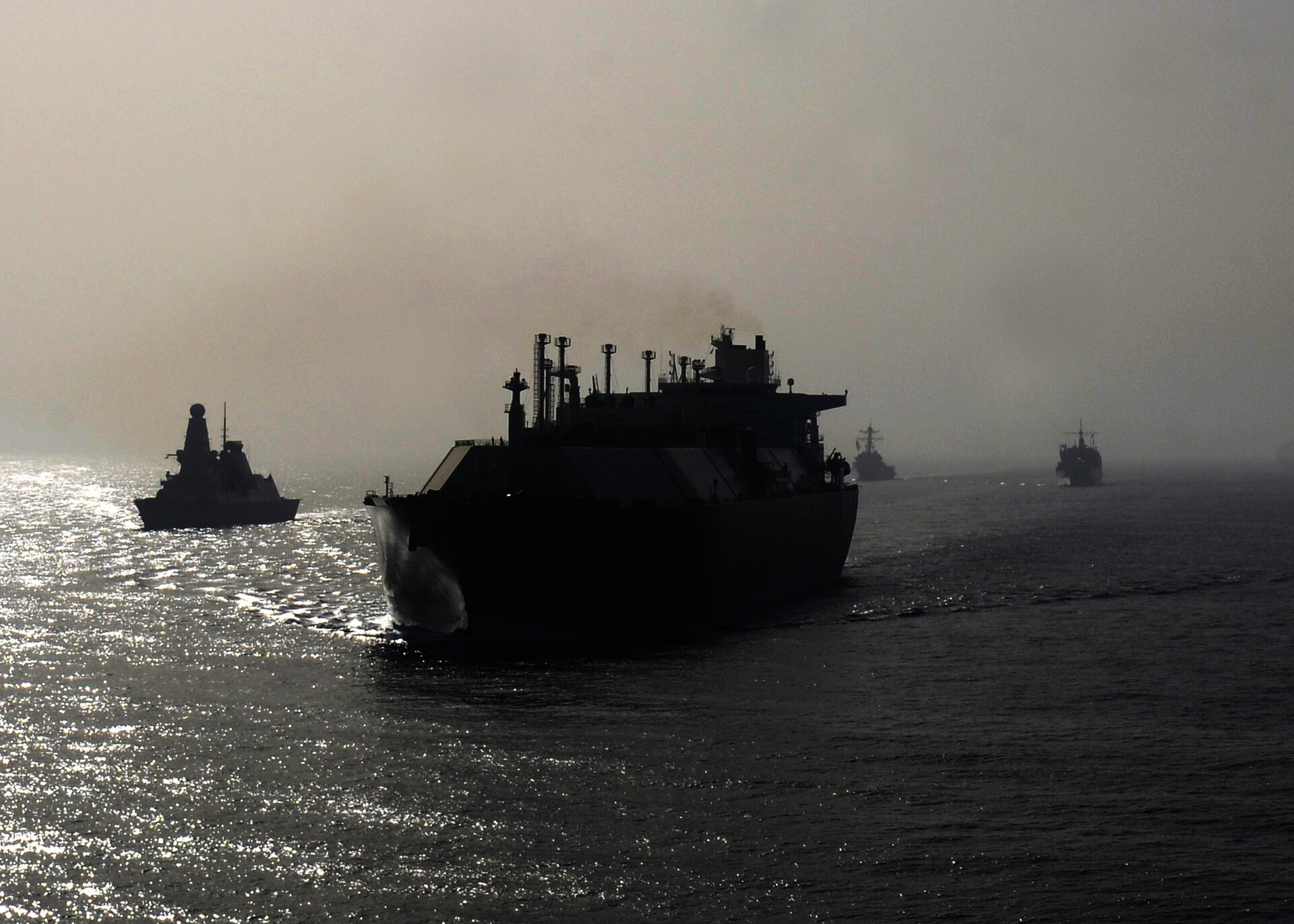

DUBAI — Strait of Hormuz oil throughput averaged 9.25 million barrels per day in the week ending November 24, roughly 54% of the prewar level of 17.14 million barrels per day, according to Kpler data reported by The National on November 27. The shortfall coincides with growing strain on the Gulf of Oman ship-to-ship transfer network — the primary bypass route since Iran first restricted the strait in late February — which shipping brokers say is approaching physical capacity limits.
The convergence of falling Hormuz flows and a contracting workaround has opened a structural throughput gap that neither route can close on its own. The International Energy Agency estimated cumulative losses from the conflict at 2.8 billion barrels of oil and 60 billion cubic meters of gas through the end of October, calling it “the largest energy supply shock that the world has faced” in its November World Energy Outlook, as reported by Al Jazeera on November 22. Brent crude settled at $96.57 on November 27, putting the benchmark on track for its first weekly gain in November — up roughly 3% — as supply concerns mounted ahead of the OPEC+ meeting on November 29, according to The National.
The House of Saud Daily Briefing
Saudi Arabia's news in 3 minutes, every morning. Free. See today's issue
Table of Contents
How Much Oil Is Getting Through Hormuz?
Kpler’s weekly snapshot for the period ending November 24 put total Hormuz clearance at 9.25 million barrels per day, according to The National. That represents a partial recovery from the week ending November 11, when Kpler measured 8.26 mbd — comprising 5.66 mbd of direct strait transit and 2.60 mbd routed through Gulf of Oman STS operations, per a Kpler briefing reported by hormuz.now on November 13.
| Metric | Figure | Period |
|---|---|---|
| Total Hormuz clearance | 9.25 mbd | Week to Nov 24 |
| Direct strait transit | 5.66 mbd | Week to Nov 11 |
| Gulf of Oman STS component | 2.60 mbd | Week to Nov 11 |
| Prewar Hormuz baseline | 17.14 mbd | Pre-conflict |
| Current share of prewar | ~54% | Week to Nov 24 |
The improvement in total volume must be weighed against a parallel decline in vessel traffic. Only 263 ships transited Hormuz in the week of November 12–18 — 15% fewer than the prior week and 20% fewer than the week before that — according to the United Kingdom Maritime Trade Operations agency as cited by Al Jazeera on November 22. Among those, just 37 were oil tankers, down from 52 the previous week.
The tanker count is a leading indicator. Fewer oil tankers means fewer hulls available for both direct transit and STS shuttle operations. As the fleet thins, the system loses slack — any single mine strike, insurance withdrawal, or port restriction removes capacity that cannot be replaced quickly.
Daniel Richards, senior economist at Emirates NBD, told The National on November 27: “Supply risks dominate ahead of Sunday’s Opec+ meeting, and the market is pricing in a tighter picture than the headline inventory data suggest.”
Ship-to-Ship Transfers Approach Physical Limits
The STS network that emerged in March 2026 as the main workaround for Hormuz restrictions is itself under pressure. Gulf of Oman ship-to-ship transfer volumes fell approximately 14% in November compared with October, per Braemar shipping data, though the figure has not been independently verified in this research.
The strain predates November. A Reuters/Zawya investigation published in late September reported that STS turnaround times had doubled from a typical 5–7 days to nearly 10 days. Saudi Aramco had sold more than 60 million barrels through STS operations off Sohar, Oman, in September and October alone, Reuters reported.
Panagiotis Krontiras, a Kpler analyst, told Reuters that the roughly 3 million barrels per day of Saudi crude rerouted from Hormuz would require 36–40 additional VLCCs just for shuttle operations. Anoop Singh of Oil Brokerage estimated that “that 2 million bpd uplift in Saudi flows will generate additional demand for 15 VLCCs for shuttle runs alone,” he told Reuters on September 23. Emma Li, a Vortexa analyst, told Reuters that “congestion is getting worse near the Strait of Hormuz due to long STS queues.”
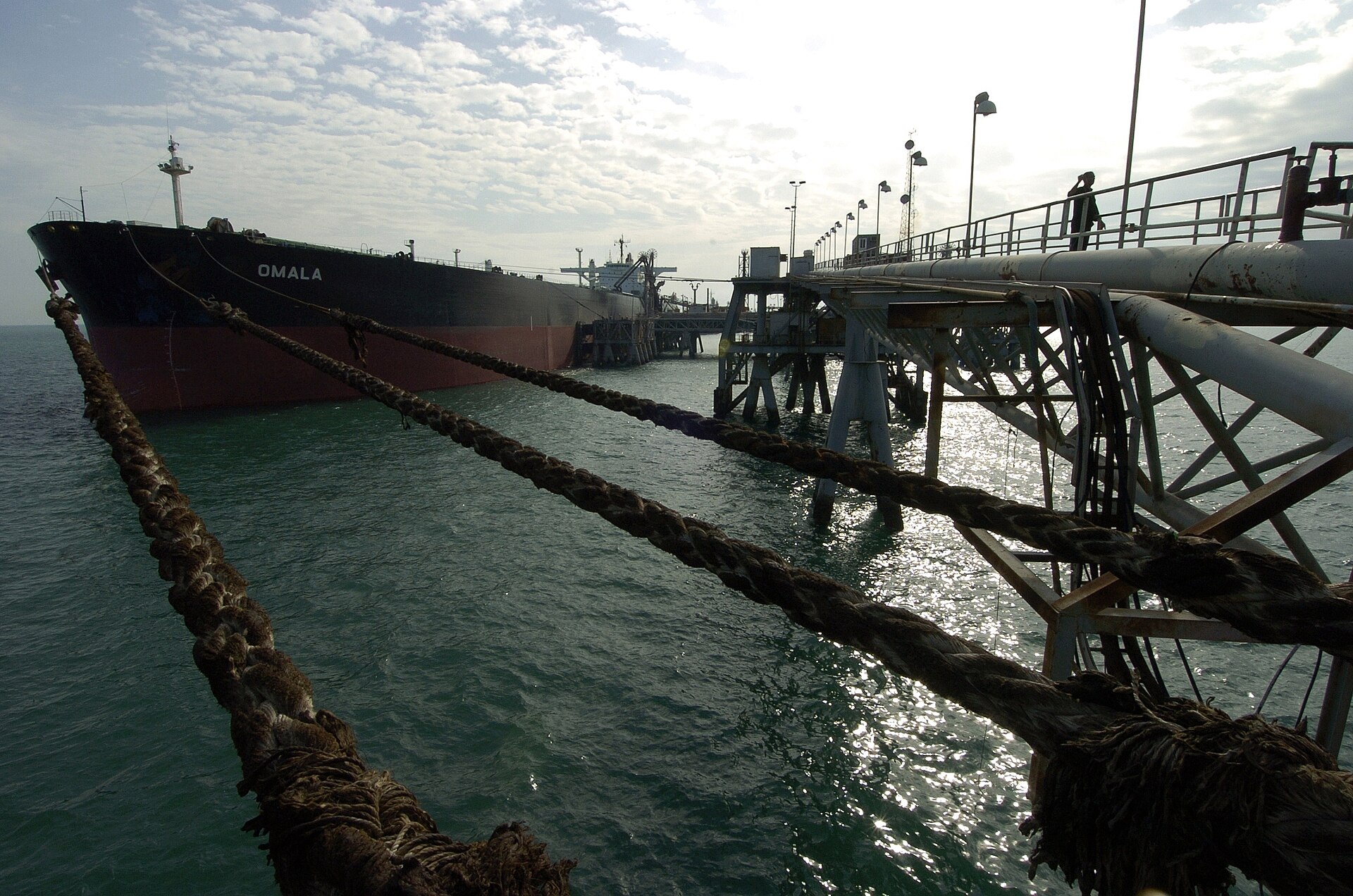
The result is a bottleneck in the bottleneck. When ADNOC restricted five of its export terminals this week in response to IRGC claims that two tankers hit mines, the STS route — already running near practical capacity — could not absorb the redirected volume.
Why Is Iran Targeting the Workaround?
Iran has signaled that the STS route is itself a target. On November 8, Iranian forces attacked Oman’s Didamar island, calling the navigation aids located there “enemy navigation aid systems,” according to Al Jazeera on November 22. Those navigation aids are part of the infrastructure that makes the STS workaround operational.
Hamidreza Azizi of the International Crisis Group told ABC News on November 21 that “Tehran now seems determined to make these arrangements more costly and less reliable.” He added that “large oil tankers seem to be receiving particular attention.”
Noam Raydan of the Washington Institute for Near East Policy told ABC News that Iran’s objective is to keep the Omani route “a very high-risk passage.” The pattern is consistent: Iran first closed Hormuz on February 28 and March 2–4, re-closed it on April 18, and again on July 12. Each closure forced more traffic onto alternate routes. Now the alternates themselves are under pressure, as the latest mine strike on a tanker in Hormuz demonstrated.
“We consider the economic siege a hostile act, and we will take any necessary measures to break this economic siege.”
— Kazem Gharibabadi, Iranian Deputy Foreign Minister, Al Jazeera, November 22
President Masoud Pezeshkian called the situation a “silent economic war,” according to Al Jazeera. Rami Khouri, a fellow at the American University of Beirut and the Arab Center Washington DC, told Al Jazeera that Iran aims “to spread the pain of the war widely to include the entire [Gulf region] and, indirectly, global economies.”
The US naval blockade of Iranian ports remains the backdrop. Iran frames its Hormuz restrictions and attacks on the STS network as proportional responses to what it calls an economic siege — a framing that Western and Gulf states reject but that shapes Tehran’s operational calculus.
What Are Insurance and Freight Markets Pricing In?
The throughput gap has translated directly into cost. War risk premiums for Hormuz transits rose from 0.10–0.25% of hull value before the conflict to 3.5–7.5%, according to an unnamed US maritime agency cited by Al Jazeera on November 22. Peak rates reached 7.5–10% between July and October, per data from Marsh and Lloyd’s cited in the same report.
Total war risk claims filed through September 2026 reached approximately $2 billion, according to the International Union of Marine Insurance via S&P Global, as reported by Al Jazeera.
Freight rates have spiked in parallel. Aramco CEO Amin Nasser said on the company’s third-quarter earnings call on November 3 that freight rates had risen more than 15 times compared with pre-conflict levels, as reported by MarineLink. VLCC rates on the Gulf-to-China route hit a record $1.27 million per day in September, according to LSEG data cited by Zawya and Reuters.
The cost escalation reinforces the throughput constraint. Higher insurance and freight rates reduce the number of operators willing to send vessels through or near Hormuz, which in turn shrinks the pool of ships available for STS operations — tightening both routes simultaneously. A VLCC owner facing $1.27 million per day in charter revenue must weigh that against potential hull losses in a zone where war risk premiums can exceed 7% of vessel value.
Brent’s 8.1% rally over four days last week reflected this compounding effect. The benchmark’s first weekly gain in November signals that markets are beginning to price in a tighter supply picture as both primary and alternate export routes lose capacity rather than recover it.
The East-West Pipeline and the Structural Gap
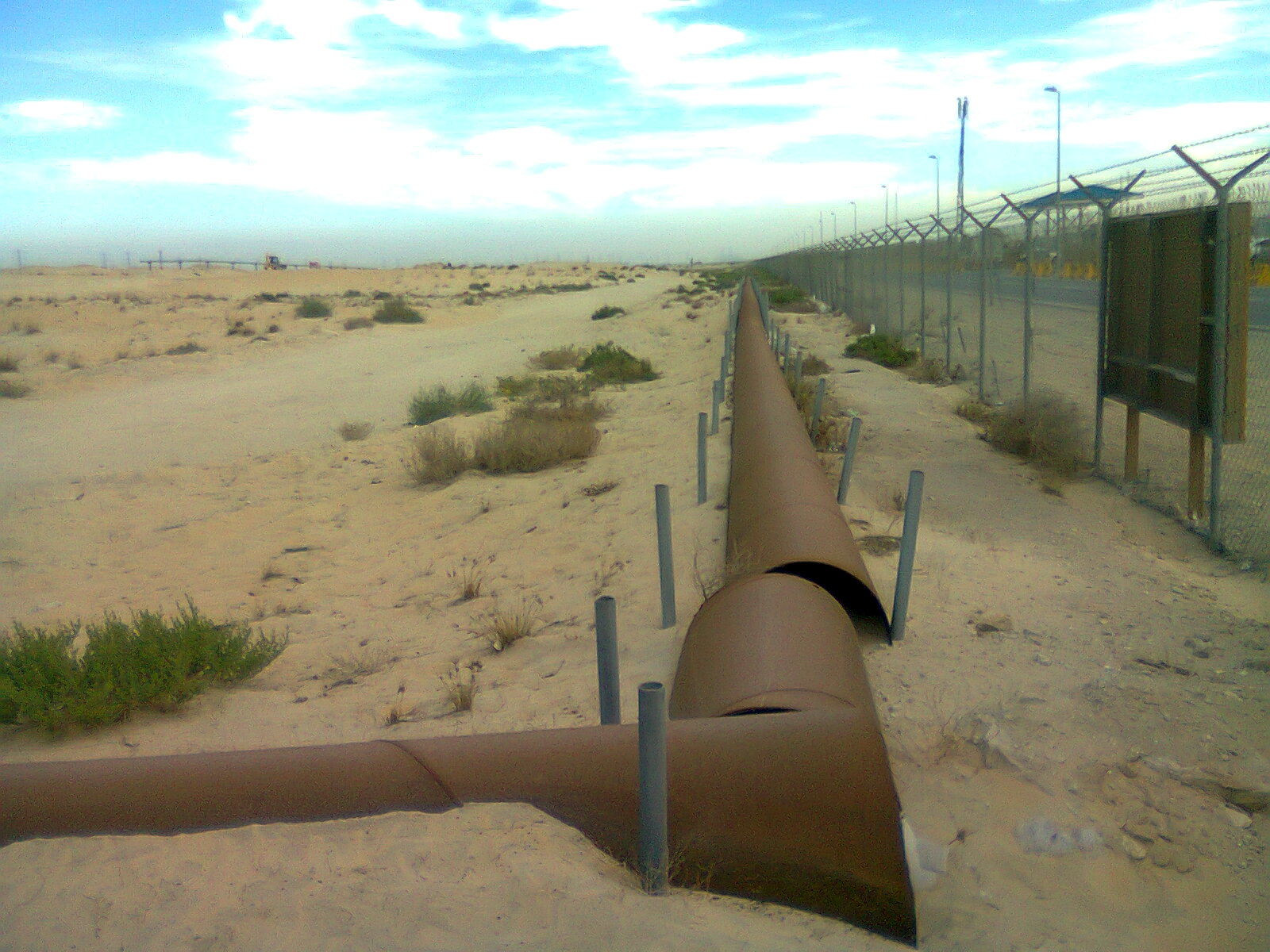
Saudi Arabia’s East-West Pipeline, which links Gulf coast crude production to Red Sea export terminals at Yanbu, has carried a larger share of exports since the Hormuz closures began. The pipeline’s design capacity is 7 million barrels per day, and throughput had recovered to approximately 6 mbd — roughly 86% utilization — by early October, according to Pipeline Journal on October 6.
Nasser confirmed on November 3 that “work has already started” on expanding the pipeline’s capacity to 10 million barrels per day, MarineLink reported. The expansion, once complete, would allow Saudi Arabia to route most of its crude exports without touching Hormuz.
But the pipeline cannot substitute for the strait’s full throughput. At 6 mbd, it handles crude that would otherwise ship east through Hormuz. It does not replace the liquefied natural gas, condensates, and refined products that account for a significant portion of Hormuz flows. And the expansion will take years to complete.
The Red Sea route faces its own risks. Houthi attacks struck the Jazan refinery in late November, and Yanbu-linked infrastructure has been targeted repeatedly since the conflict began. Saudi Arabia’s diplomatic push at the G7 in Paris this week to press for Hormuz navigation reflects the limits of the pipeline-only alternative.
Even if all three export pathways — direct Hormuz transit, the Gulf of Oman STS network, and the Red Sea pipeline route — operate at their current maximums simultaneously, they fall well short of the prewar Hormuz throughput. The sum of the figures detailed above leaves a gap of several million barrels per day, and that gap is widening as the STS workaround contracts rather than expands.
Background
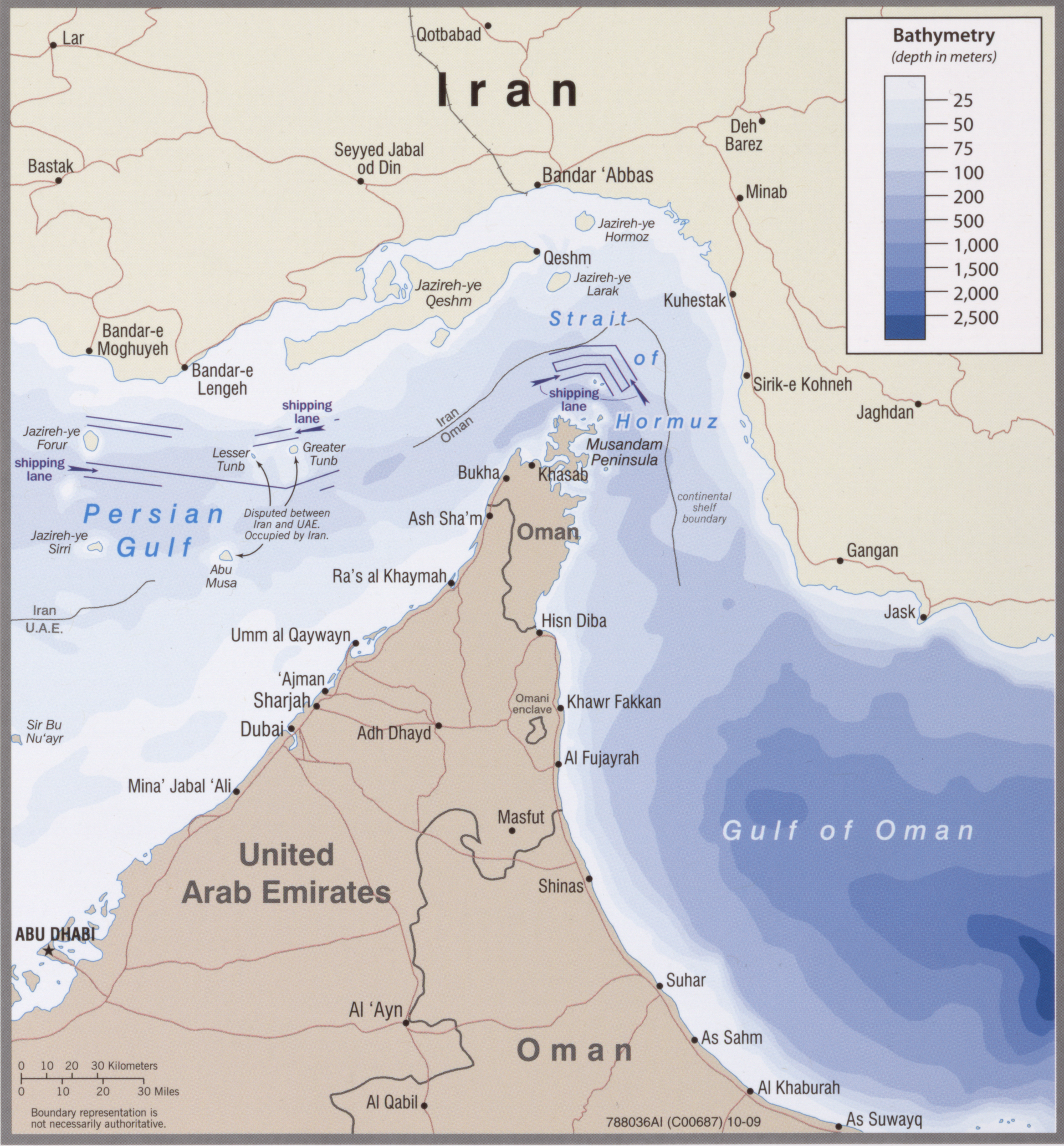
The Strait of Hormuz handled approximately 17.14 million barrels per day before the Iran conflict began, per Kpler’s tracking scope. Iran first restricted the strait on February 28 and March 2–4, 2026, following US and Israeli strikes that killed Supreme Leader Ali Khamenei on February 28. Iran re-closed Hormuz on April 18 and again on July 12.
Ship-to-ship transfers in the Gulf of Oman emerged as the main bypass route in March. Commodity carrier transits through the STS zone scaled rapidly through the spring and summer. By September, the STS network was handling a significant share of Gulf crude exports, but the September 10 shutdown of a section of the East-West Pipeline by drones from Iraq forced Saudi exports entirely onto the STS route, pushing it to practical capacity limits for the first time.
“The Hormuz crisis has delivered a huge shock to the system.”
— Fatih Birol, IEA Executive Director, IBTimes, November 19
Nine months into the conflict, the question is no longer whether alternative routes can maintain Gulf oil exports. The data show they cannot — at least not at prewar volumes. With OPEC+ members under pressure and the STS workaround contracting, the throughput gap is becoming a fixture of the global oil market rather than a temporary disruption.
Frequently Asked Questions
How many vessels have been attacked in Hormuz since the war began?
The International Maritime Organization has recorded 138 vessel attacks since the conflict started, according to ABC News on November 21. The United Kingdom Maritime Trade Operations agency logged 31 attacks in October alone and approximately 19 in November through November 18, ABC News reported. The attacks have included mines, missiles, and drone strikes, with large oil tankers drawing particular attention in recent months according to Azizi of the International Crisis Group.
How long could it take to replenish global inventories once Hormuz fully reopens?
Aramco CEO Amin Nasser warned at the Energy Intelligence Forum in London on October 5 that the global supply cushion is “scarily thin.” He said at the company’s third-quarter earnings call on November 3 that replenishing inventories after Hormuz reopens could take “up to 2 years,” as reported by MarineLink. The extended timeline reflects not just the cumulative volume of lost supply but the damage to port infrastructure, insurance markets, and shipping logistics that would need to rebuild simultaneously.
Was Hormuz throughput lower earlier in the conflict?
The IEA estimated Hormuz flows at 7.6 million barrels per day in August 2026, per its November World Energy Outlook as reported by Shafaq News on November 19. The increase to 9.25 mbd by late November reflects the scaling of STS operations during September and October. But with the STS network now approaching capacity limits and November volumes contracting, the recovery trend has stalled.
What role does the OPEC+ meeting play in the throughput picture?
OPEC+ meets on November 29 to set 2027 production quotas. Sina Toossi of the Center for International Policy told ABC News on November 21 that the conflict has created “a cycle of adaptation and counter-adaptation” that complicates production planning. With Hormuz at 54% of prewar capacity and the STS workaround contracting, the cartel faces the question of whether to adjust quotas for members whose exports are physically constrained — a problem production targets alone cannot resolve.
The House of Saud Daily Briefing
Saudi Arabia's news in 3 minutes, every morning. Free. See today's issue