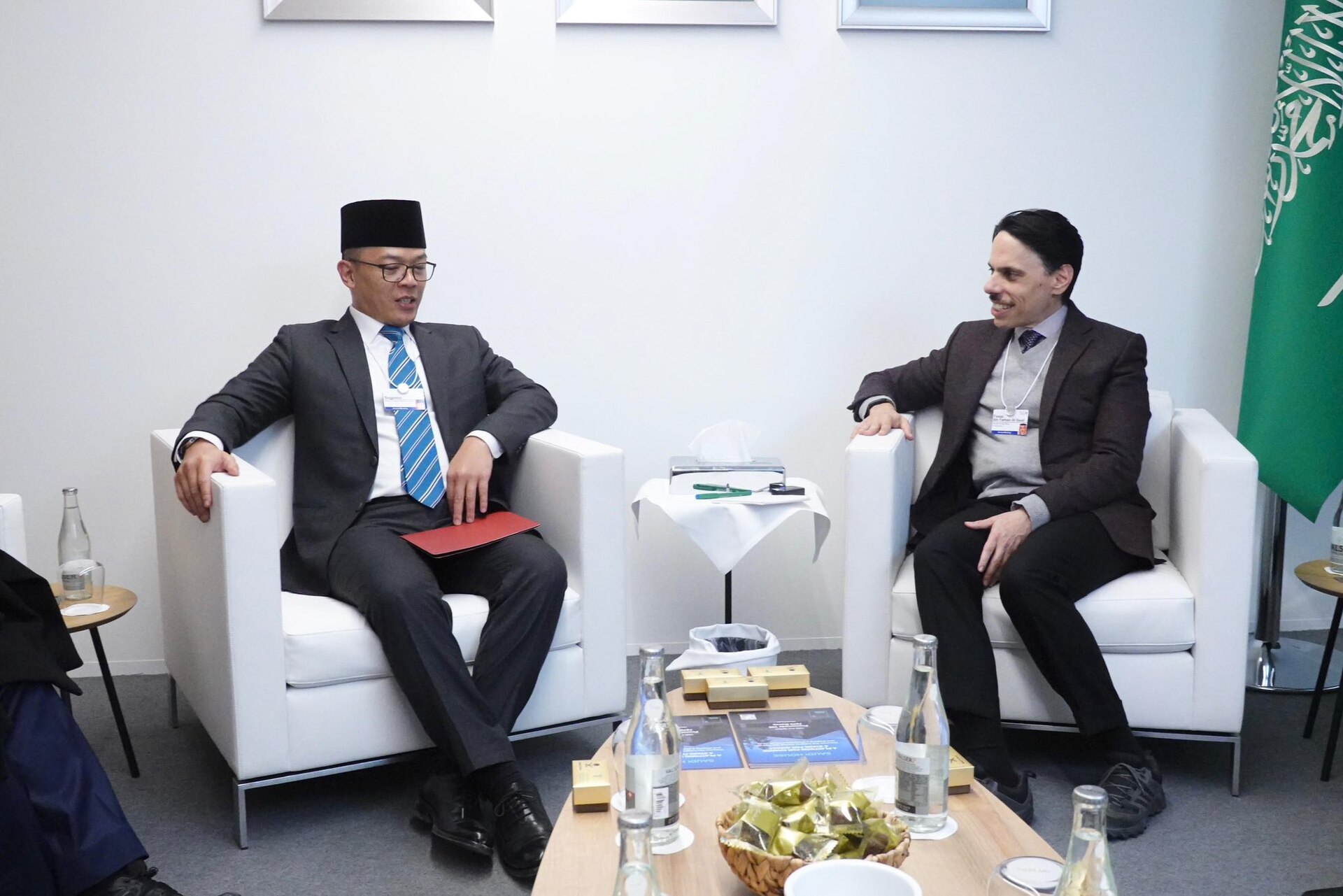
PARIS — Saudi Foreign Minister Prince Faisal bin Farhan held four separate bilaterals at the G7 Foreign Ministers’ Meeting in Paris on 9–10 November 2026 — with French FM Jean-Noël Barrot, UK FM Ed Miliband, German FM Johann Wadephul, and South Korean FM Cho Hyun — building a two-track coalition to restore freedom of navigation in the Strait of Hormuz. The meetings split along a line most coverage has missed: France and the United Kingdom are permanent UN Security Council members who can shape Hormuz resolutions, while South Korea and Germany bring economic leverage that sits outside the Security Council chamber.
Faisal attended as an invited partner, not a G7 member. Hormuz transits remain significantly below pre-conflict levels, according to UK Maritime Trade Operations. Saudi Arabia has repeatedly pushed the Security Council to act on Hormuz navigation. The arc from September exhortation to November coalition-building reveals a systematic campaign — and the structural constraint that shapes all of it: France and the United Kingdom vote yes; Russia and China veto.
Table of Contents
- What Did Saudi Arabia Seek at the G7 Paris Meeting?
- The Diplomatic Arc: UNGA to Paris in 45 Days
- Why Does France Hold Three Instruments on Hormuz?
- South Korea: Economic Pressure, Not Security Council Votes
- How Does the Russia-China Veto Constrain Hormuz Enforcement?
- Germany’s Strategic Rehabilitation With Riyadh
- What Did Adversary Media Make of the Paris Meetings?
- The November 10 Confluence
- Frequently Asked Questions
What Did Saudi Arabia Seek at the G7 Paris Meeting?
Saudi Arabia used its invitation to the G7 Paris meeting to hold four bilaterals aimed at building diplomatic and economic support for restoring Hormuz navigation. Prince Faisal met counterparts from two UNSC permanent members — France and the United Kingdom — one major European economy — Germany — and one LNG-dependent Asian power — South Korea — in a single 48-hour window.
The House of Saud Daily Briefing
Saudi Arabia's news in 3 minutes, every morning. Free. See today's issue
The meeting took place under France’s G7 presidency. The expanded session on 9 November focused on artificial intelligence and strategic risk, according to Asharq Al-Awsat. Saudi Arabia is not a G7 member; Faisal attended as an invited partner. That distinction matters. Riyadh did not set the agenda. It worked the margins.
The Saudi readout of the Barrot and Miliband meetings cited “latest regional developments,” Houthi attacks on Saudi Arabia, “securing the safety of international waterways and freedom of navigation,” and “efforts to address the crises and limit their repercussions,” Asharq Al-Awsat reported. No joint communiqué was published.
The South Korean readout went further. Faisal and Cho agreed to expand cooperation in nuclear power, advanced technology, and the defence industry, according to The World Korea. Both sides stressed the importance of restoring freedom of navigation in the Strait of Hormuz. Cho expressed deep sympathy over Saudi civilian and economic losses from Houthi attacks.
The language gap between the European and Korean readouts is itself telling. Barrot and Miliband kept to generalities — “regional developments,” “international waterways.” Cho named Hormuz, named the Houthis, and committed to specific cooperation sectors. When a foreign minister names the chokepoint and the attacker, that is a different diplomatic register. The European vagueness may reflect institutional caution by P5 members careful not to prejudice a resolution they may draft. Seoul, unburdened by that procedural constraint, could speak plainly.
The Diplomatic Arc: UNGA to Paris in 45 Days
The Paris bilaterals were not improvised. They sit at the end of a 45-day Saudi diplomatic escalation that began at the United Nations General Assembly in late September and moved through bilateral and multilateral channels in a deliberate sequence.
| Date | Event | Channel |
|---|---|---|
| 26–28 September | Faisal tells UNGA the international community has been “absent” | Multilateral exhortation |
| 28 September | Faisal meets Secretary of State Rubio in Washington | Bilateral (US) |
| 9–10 November | Faisal holds 4 bilaterals at G7 Paris | Multilateral coalition-building |
At the UNGA in September, Prince Faisal told the General Assembly that the international community had been “absent” in meeting its responsibilities on threats to peace and security, according to The National. He called protecting international navigation “a shared responsibility that requires serious international cooperation.”
The word “absent” was deliberate. When Saudi Arabia’s foreign minister tells the General Assembly that the existing mechanisms have failed, Riyadh is signalling that it intends to build alternatives. The Rubio meeting two days later tested whether Washington would back that assessment with action. Rubio said the United States “intend[s] to live by” the US–Saudi defence agreement and underscored the importance of protecting navigation in both the Strait of Hormuz and the Bab al-Mandab, Al Jazeera reported. That was a public commitment from Washington — but not a resolution.
Saudi Arabia’s formal approach to the Security Council moved the demand from rhetoric to procedure. Riyadh was not asking the Council to do something novel; UN Resolution 2817 had already condemned obstruction of Hormuz navigation — the question was enforcement, not condemnation. Saudi Arabia was asking the Council to enforce what it had already condemned — and signalling that if enforcement failed, it would pursue other channels.
The Paris quadrilateral represents the third stage: assembling the specific partners whose votes, vetoes, economic weight, or military assets could give a Hormuz resolution actual enforcement weight. Faisal’s parallel calls to Pakistan and Norway in the same period reinforce the pattern. This is not ad hoc diplomacy. It is a campaign with identifiable stages, each building on what the previous stage revealed about who would commit and who would not.
Why Does France Hold Three Instruments on Hormuz?
France holds three distinct instruments of pressure on the Hormuz crisis, each operating in a different domain. No other country Faisal met in Paris combines all three: physical military presence in Saudi Arabia, co-leadership of a multinational naval mission, and authorship of a UN Security Council resolution draft.
Military Deployment at Yanbu
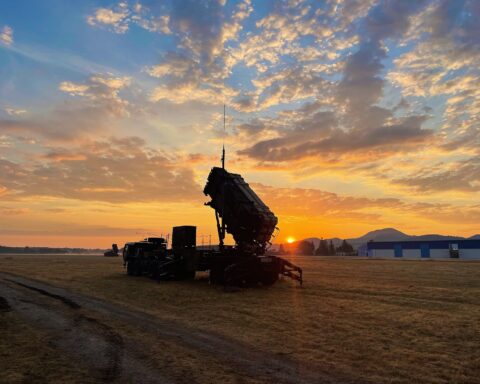
France confirmed troops, radars, and air defences at Yanbu in September 2026, according to Al Jazeera. This is not symbolic. Yanbu is the terminal for Saudi Arabia’s East-West pipeline, the alternative export route when Hormuz is blocked. French forces are defending the infrastructure that keeps Saudi oil moving while the strait remains disrupted. Separately, coalition air defences at Ras Tanura intercepted four drones on 25 November, illustrating the persistent threat to Saudi energy infrastructure along the Gulf coast.
Co-Chairmanship of M3SOH
France and the United Kingdom co-chair the Multinational Military Mission for Hormuz, announced on 17 April 2026 at a Paris summit attended by representatives of 51 countries, according to France 24. The mission is committed to restoring safe passage in the strait once conditions permit. It has not deployed; activation remains conditional on de-escalation.
Authorship of a New UNSC Draft
France was working on a new draft Security Council resolution supporting freedom of navigation in Hormuz as of 22 September 2026, in coordination with the United States, Reuters reported. The draft would recall the Law of the Sea and support peaceful passage. It has not been confirmed as formally tabled or voted on.
The 25 August joint statement from the MBS-Macron summit in Paris further anchored the relationship. That statement condemned restrictions on Hormuz navigation, called for a diplomatic settlement with Iran, urged Tehran to cooperate with the IAEA, and explicitly rejected any tolls or passage fees in the strait, according to the Élysée. At the November Paris gathering, France signalled that any Iran settlement must cover ballistic missiles and the proxy network — going beyond a simple Hormuz reopening, Sabq reported. That condition matters. It is a marker against a narrow deal that reopens the strait but leaves Iran’s broader threat architecture intact.
South Korea: Economic Pressure, Not Security Council Votes
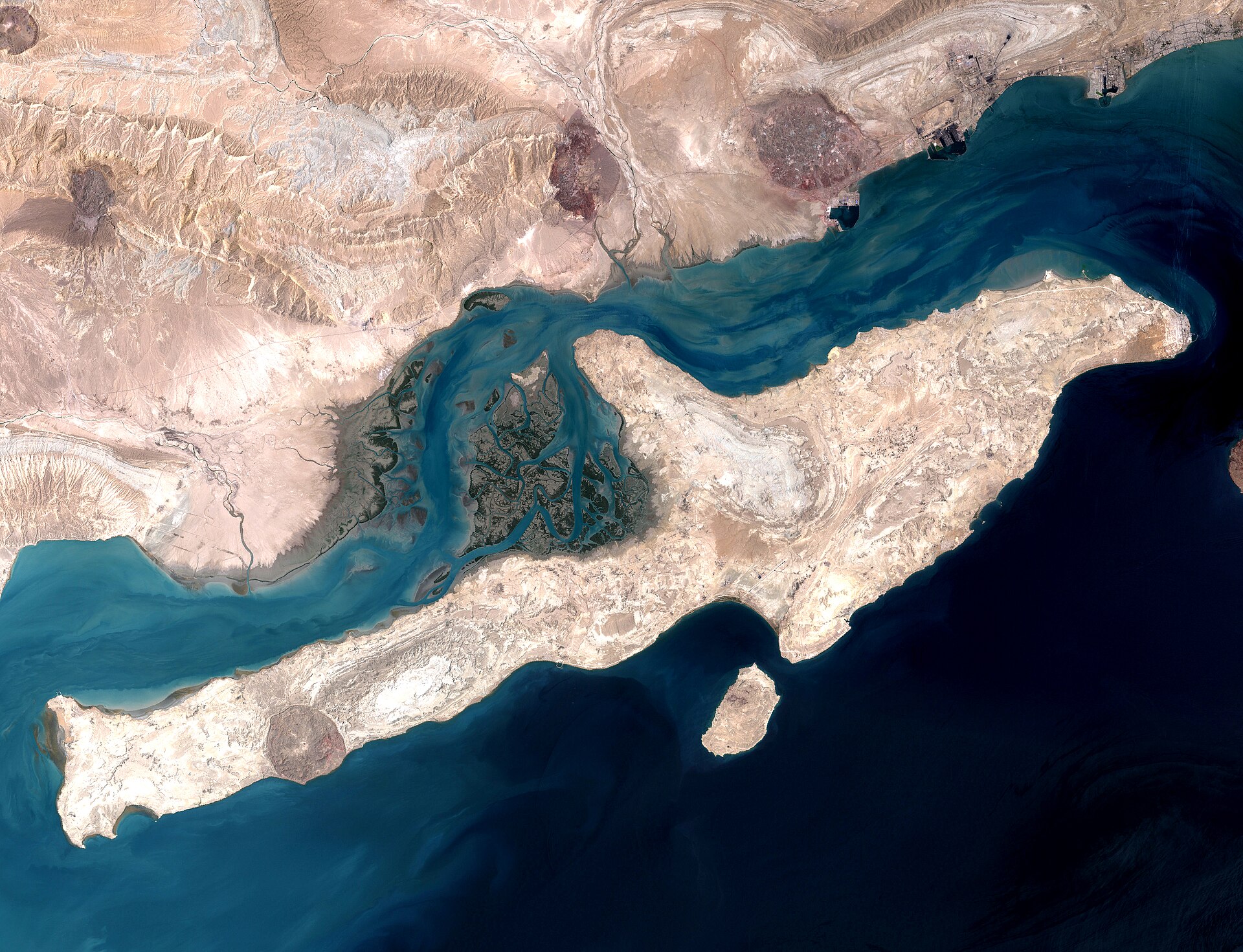
South Korea is not a permanent member of the UN Security Council. Seoul cannot vote on a Hormuz resolution, cannot wield a veto, and cannot shape the text of a draft. This distinction is essential and has been routinely conflated in the coverage. The value South Korea brings to Saudi Arabia’s coalition is economic, not procedural — LNG exposure, nuclear energy cooperation, and defence-industry ties that create material incentives for Seoul to support enforcement.
The LNG exposure has been partially mitigated. KOGAS CEO Choi Yeon-hye said in June 2026 that South Korea’s Middle East LNG dependence is expected to fall below 18 percent by the end of 2026, down from 45 percent in 2022 and 24 percent in 2025, the Korea Times reported. Seoul has diversified into LNG Canada and Australian supply.
But the QatarEnergy force majeure complicates that picture. QatarEnergy declared force majeure on long-term LNG contracts to South Korea, Italy, Belgium, and China following Iranian attacks on Qatari facilities, the Seoul Economic Daily reported on 23 November. South Korea’s Trade Ministry said Qatar accounted for 5.2 percent of Korean LNG imports from January to September 2026. The percentage is small. The disruption to long-term contract planning is not.
On 23 November — two weeks after the Paris meetings — South Korean Trade Minister Kim Jung-kwan asked Qatar for priority LNG supply once Hormuz traffic normalises, according to the Korea JoongAng Daily. That request tells us Seoul expects normalisation to be a matter of negotiation and sequencing — who gets supply first, on what terms, under what conditions. Saudi Arabia, as Qatar’s neighbour and the most prominent advocate for reopening the strait, is a natural broker in that sequencing.
The Faisal-Cho readout’s mention of nuclear power, advanced technology, and the defence industry signals a broader transactional framework. South Korea’s defence sector has been expanding its Gulf footprint — Korean firms signed a range of memoranda and contracts with Saudi counterparts at the World Defense Show in Riyadh in February 2026, including a South Korea–Saudi Arabia defence ministerial meeting between Defence Minister Ahn Gyu-back and Prince Khalid bin Salman — and the nuclear energy dimension creates a long-term structural tie that goes well beyond any single LNG shipment. Seoul has skin in the game on Hormuz. Riyadh is offering cooperation in sectors Seoul values.
The bilateral is economic leverage wrapped in a partnership agreement — the kind of weight that matters not at the Security Council but in the economic coalition that makes a resolution enforceable. The distinction between Security Council track and economic track is not a limitation; it is the design. France and the United Kingdom press the procedural case. South Korea and Germany raise the material cost of inaction.
How Does the Russia-China Veto Constrain Hormuz Enforcement?
The structural constraint on UN Security Council action is straightforward: France and the United Kingdom consistently vote for Hormuz enforcement measures, and Russia and China consistently block them. Resolution 2817, adopted on 11 March 2026, succeeded only because Moscow and Beijing abstained rather than vetoing. A stronger follow-on draft did not survive.
| Date | UNSC Action | Outcome |
|---|---|---|
| 11 March 2026 | Resolution 2817: condemns obstruction of Hormuz navigation | Adopted (Russia, China abstained) |
| April 2026 | Bahrain/US-backed follow-on draft | Vetoed by Russia and China |
| 22 September 2026 | France drafting new resolution (with US) | Not yet tabled |
Resolution 2817 condemns Iranian attacks on Gulf states and Jordan and condemns “any actions or threats aimed at closing, obstructing, or otherwise interfering with international navigation through the Strait of Hormuz,” according to the resolution’s text at unscr.com. The language is strong. The enforcement mechanism is absent.
The April follow-on, backed by Bahrain and the United States, sought to move from condemnation to enforcement. Russia and China vetoed it. The pattern is visible: condemnation passes; enforcement does not. The difference between abstention and veto is the difference between disapproval and obstruction. On Resolution 2817, Moscow and Beijing chose to let the condemnation pass while reserving the right to block enforcement. France’s new draft would need to find language strong enough to change behaviour but abstract enough to avoid a veto — a diplomatic needle that may not be threadable.
This is precisely why Saudi Arabia’s Paris bilaterals matter beyond the Security Council. If the UNSC cannot enforce, the coalition must create enforcement weight through other means — military presence at Yanbu, naval readiness through M3SOH, economic pressure from South Korea’s LNG demand and Germany’s arms-export leverage, and the diplomatic weight of a broad coalition that raises the political cost of obstruction. The Makkah Alliance, now operational, represents the security-pact dimension of that same multi-track strategy.
Germany’s Strategic Rehabilitation With Riyadh
Germany’s presence in the quadrilateral reflects a relationship that has changed faster than most observers expected. Berlin blocked arms sales to Saudi Arabia from 2018 until 2024, a policy put in place after the killing of journalist Jamal Khashoggi. That policy is now reversed.
Chancellor Friedrich Merz visited Saudi Arabia in February 2026, promising arms cooperation and seeking energy partnerships, the Algemeiner reported. The following month, Germany eased arms export rules for Gulf states including Saudi Arabia, the UAE, Qatar, Kuwait, Bahrain, and Oman, enabling rapid deliveries of air and naval defence equipment, according to the Eurasian Times.
German FM Wadephul stated publicly that Germany should lift arms export restrictions on Saudi Arabia and the UAE if it wanted effective measures against the Houthis. That statement reframed German arms policy from a human-rights constraint to a security-effectiveness question — a clear shift in Berlin’s public posture toward the Gulf.
Berlin also signed a memorandum of understanding establishing a foreign-minister-level strategic dialogue with Riyadh, formalising the relationship at the institutional level. The speed of Germany’s diplomatic rehabilitation with Saudi Arabia — from arms embargo to strategic dialogue in under a year — reflects how the Hormuz crisis has rewritten the calculus of European Gulf policy.
Germany is not a permanent member of the Security Council. Like South Korea, Berlin’s value to the coalition is economic and industrial, not procedural. But Germany is the European Union’s largest economy and a major source of military technology. A Germany that sells air and naval defence equipment to Saudi Arabia is a Germany materially invested in the coalition’s success. The Wadephul bilateral with Faisal in Paris formalises that investment at the foreign-minister level, extending a diplomatic track that began with Merz’s February visit and the March arms-rules decision.
What Did Adversary Media Make of the Paris Meetings?
Russian and Iranian state media told markedly different stories about the Paris diplomatic activity. Both omissions reveal where the sensitive edges lie for each government, and both deliberately flatten the enforcement dimension of the meetings.
Sputnik, Russia’s state media outlet, framed the 10 November session as “Saudi, Qatari, European Foreign Ministers Discuss Energy Security in Paris.” The framing is economic, not diplomatic-military. There is no reference to a Security Council initiative, no mention of Hormuz enforcement, and no acknowledgement that two of the European participants are P5 members whose votes could shape a resolution Moscow would need to veto. The omission is the message: Moscow does not want the UNSC track visible.
Iran’s Mehr News Agency took a different tack. Reporting on the earlier 25 August Saudi-France joint statement, Mehr framed the relationship as evidence that “Saudi Arabia, France push for diplomatic Iran deal.” The same outlet noted the two countries “also urged Iran to resume full cooperation with the IAEA.” This framing presents European engagement as an opportunity for sanctions easing and diplomatic resolution — not as the coalition-building the participant readouts describe.
Iran’s Tasnim News Agency, in April 2026, urged Europe to play a “constructive role in ending war” — framing European involvement as leverage for concessions. Iran has not publicly responded to the specific November 10 Paris meetings. The ongoing US-Iran military exchanges near Hormuz continue in parallel with these diplomatic tracks, creating a dual environment of negotiation and confrontation that neither Sputnik nor Mehr acknowledged.
The two framings, taken together, suggest that neither Moscow nor Tehran reads the Paris quadrilateral as the coalition-building exercise the readouts describe. That gap between what the participants say they discussed and how the adversary press frames the meetings is itself a data point. When Russia calls it energy security and Iran calls it diplomatic outreach, neither is describing the UNSC enforcement track or the economic-pressure track that the readouts reveal.
The November 10 Confluence
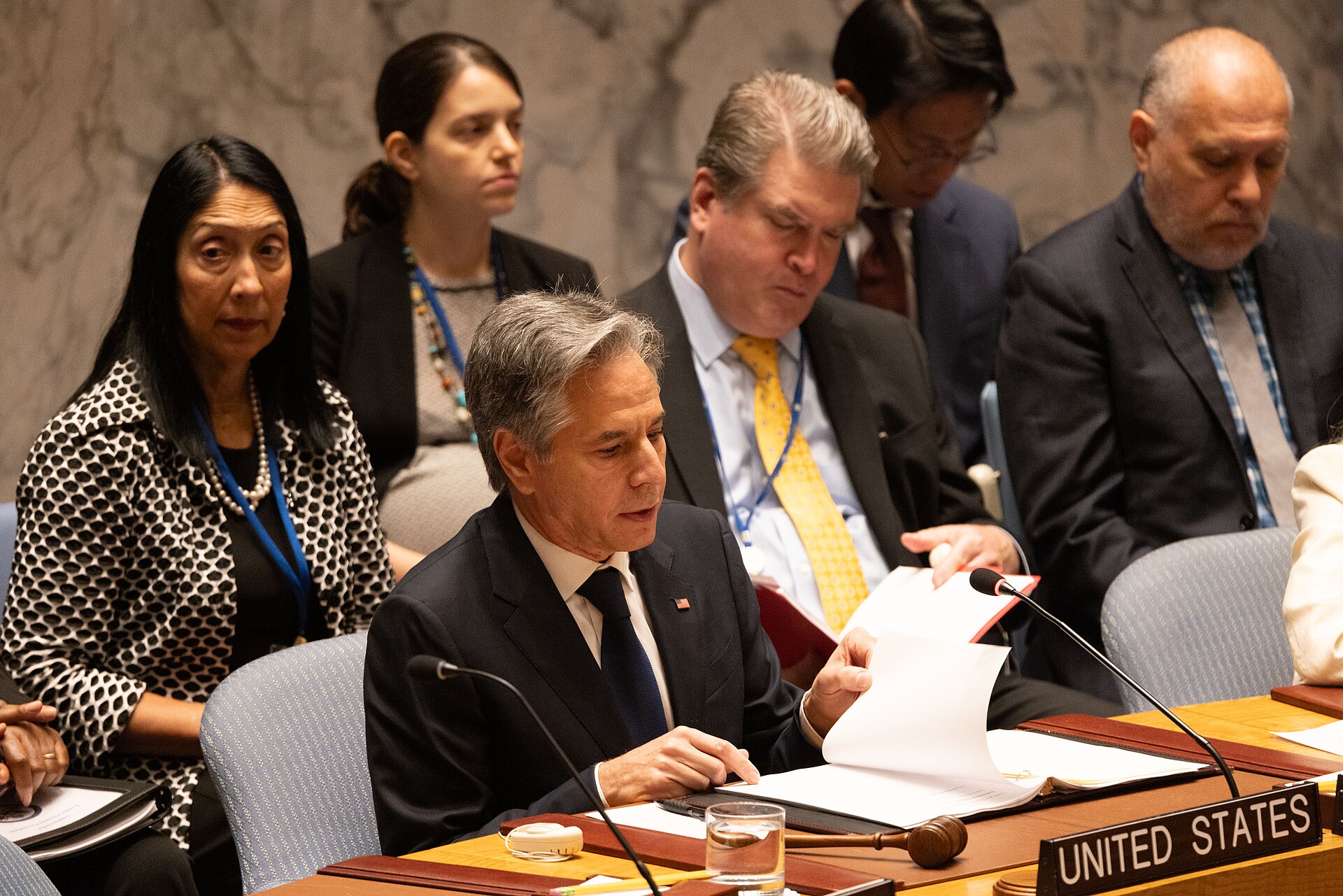
The most striking feature of the Paris meetings is not any single bilateral but the convergence of three separate diplomatic threads on a single day.
The first thread was Faisal’s bilaterals. Four meetings, four different types of leverage — UNSC votes from France and the United Kingdom, economic weight from South Korea, and military-industrial rehabilitation from Germany. Each bilateral addressed Hormuz from a different angle; together they outline a coalition whose pressure operates on multiple fronts simultaneously.
The second thread arrived with Qatar’s Prime Minister and Foreign Minister Sheikh Mohammed bin Abdulrahman Al Thani, who joined the Paris gathering on 10 November. The session was convened by Barrot and included Faisal and European G7 foreign ministers from France, Germany, Italy, and the United Kingdom, according to France 24 and The National. The Qatari prime minister had met President Trump earlier that day and briefed the group that there was momentum toward ending the Iran war. That briefing injected a live diplomatic update — from the US president, via the principal Gulf mediator, into a room containing two P5 foreign ministers and the foreign minister of the country most directly affected by Hormuz’s closure. Qatar’s own stake is direct: QatarEnergy declared force majeure on its long-term LNG contracts after Iranian attacks on Qatari facilities.
The third thread is France’s UNSC draft, which has been in progress since at least 22 September. While France has not confirmed the draft as formally tabled, the timing of Barrot’s convening of the 10 November session — with both Gulf foreign ministers and European P5 members in the room — suggests the draft remains active and that the coalition arithmetic is being tested in real time.
European ministers at the gathering pressed the United States to avoid new Iran escalation and to ensure Hormuz shipping, Sabq reported. France signalled that any Iran settlement must cover ballistic missiles and the proxy network, going beyond a simple Hormuz reopening. These are not identical demands. Washington is under pressure to avoid escalation; Paris is demanding that any de-escalation be comprehensive enough to justify the political capital a new resolution would spend.
Saudi Arabia entered the Paris meeting as a guest. It left having demonstrated that it could convene the specific partners whose combined weight — Security Council votes, military assets, economic demand, industrial supply — creates the coalition arithmetic that a resolution alone cannot deliver. With OPEC+ meeting on 29 November to set 2027 quotas, the economic dimension of the Hormuz crisis will only intensify. Whether that coalition produces enforcement depends on whether France’s draft resolution progresses from preparation to formal tabling, and whether Moscow and Beijing respond differently to a broader coalition than they did to the April draft.
Frequently Asked Questions
Is Saudi Arabia a member of the G7?
No. The G7 comprises Canada, France, Germany, Italy, Japan, the United Kingdom, and the United States. Saudi Arabia attended the November 2026 Paris foreign ministers’ meeting as an invited partner under France’s G7 presidency. The G7 regularly invites non-member states to specific sessions on topics where they are directly affected or bring necessary weight. Saudi Arabia is a member of the G20, the larger grouping of major economies, and hosted the G20 summit in Riyadh in 2020. Its G7 invitation reflects the centrality of the Hormuz crisis and Gulf energy security to the global economy rather than a change in institutional membership.
Has the Multinational Military Mission for Hormuz deployed?
No. M3SOH was announced on 17 April 2026 at a 51-nation Paris summit co-hosted by French President Macron and UK Prime Minister Starmer. Its mandate covers mine clearance and merchant-vessel escort in the Strait of Hormuz. As of 3 July 2026, Oman agreed to cooperate with France and the United Kingdom regarding operations in its territorial waters, according to GOV.UK. However, wider deployment remains conditional on de-escalation, a condition that has not been met. The United States and Iran were both absent from the founding summit.
Did the Paris bilaterals produce a joint communiqué?
No joint communiqué from Prince Faisal’s bilateral meetings has been published. Sideline bilaterals at multilateral summits rarely produce formal joint statements; their value lies in the coordination signal and the specific topics raised in readouts. The South Korean readout went further than the European readouts, specifying nuclear energy, advanced technology, and defence-industry cooperation alongside Hormuz navigation. The broader 10 November session convened by Barrot — which included the Qatari prime minister alongside Saudi and European ministers — also produced no published communiqué, though France 24 and The National reported on its substance.
What nuclear energy cooperation exists between Saudi Arabia and South Korea?
The Faisal-Cho readout cited an agreement to expand nuclear energy cooperation but did not specify operational details. South Korea has previously competed for Gulf nuclear contracts through KEPCO’s APR-1400 reactor design. Separately, the United States and Saudi Arabia signed a 123 civil nuclear agreement on 22 July 2026, described by reporting at the time as a decades-long partnership, though Trump subsequently conditioned final approval on Saudi Arabia joining the Abraham Accords, according to Arms Control Association reporting from September 2026. How Seoul’s nuclear cooperation with Riyadh relates to or complements the US agreement remains unspecified in public readouts. The World Korea’s report suggests both sides see nuclear energy as one element of a broader economic partnership anchored by shared interest in Hormuz reopening.
The House of Saud Daily Briefing
Saudi Arabia's news in 3 minutes, every morning. Free. See today's issue