
TEHRAN — Iranian MP Esmaeil Kowsari declared on state broadcaster IRIB on November 27 that Iran’s armed forces would break the US naval blockade of the Strait of Hormuz, claiming Iran holds the waterway and warning neighboring states and European countries against supporting American military operations. Kowsari, a former IRGC brigadier general who now sits on the Majlis National Security and Foreign Policy Commission, explicitly deferred operational decisions to the military, saying the timing and method of any response remain “at the discretion of the armed forces,” according to IRIB as reported by ANI.
The statement arrived hours after Saudi Arabia condemned the drone attack that killed two Italian nationals in Kuwait, and shortly before US President Donald Trump posted that “victory” over Iran was “at hand.” It followed a week in which IRGC Commander-in-Chief Ahmad Vahidi claimed Iranian naval control extends 500 km beyond Hormuz, the Iranian Army ordered the strait “more closed each day,” and the G7’s November 10 joint declaration called on Iran to “cease its persistent attacks against civilian vessels.”
The House of Saud Daily Briefing
Saudi Arabia's news in 3 minutes, every morning. Free. See today's issue
Table of Contents
What Kowsari Said on IRIB
Kowsari’s interview, broadcast on IRIB and first reported in English by the Indian news agency ANI at approximately 04:20 UTC on November 27, carried three distinct claims. “The US naval blockade will be broken by the strategies and capabilities of Iran’s armed forces,” he said, according to ANI’s translation from Persian. He warned that “the use of European airspace to attack Iran will not go unanswered by the Islamic Republic.” And he said “any country that provides its capabilities and territory to the United States for action against Iran” would bear consequences.
ANI summarized Kowsari as claiming Iran has “full control” of the Strait of Hormuz, though that phrase does not appear as a direct quote in any available report. He also said Iran’s missile and drone capabilities had forced US warships to withdraw from the region, and warned that neighboring states restricting Hormuz shipments would face “higher economic costs,” according to ANI.
All English-language coverage of the November 27 statement traces to a single ANI dispatch syndicated to Tribune India, Awaz The Voice, Webindia123, and the Gulf News live blog. No independent English-language report from a non-ANI source was found. The original IRIB Persian-language transcript was not accessed.
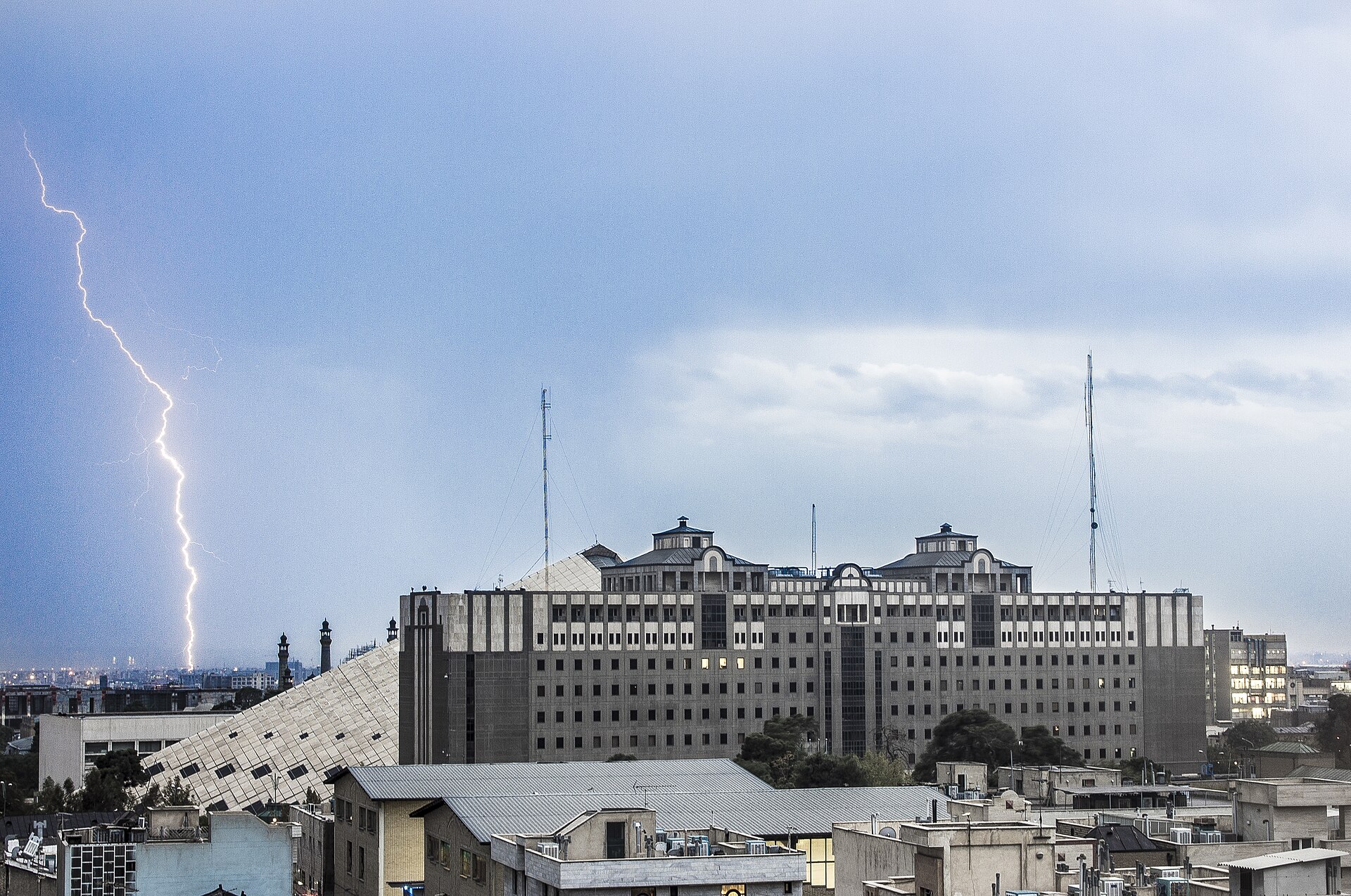
Who Is Esmaeil Kowsari?
Kowsari is not an active military commander. Born in 1955, he served in the IRGC from 1980 to 2008 and again from 2017 to 2021, rising to brigadier general. During the Iran-Iraq War he commanded the 27th Mohammad Rasulullah Division, and from 2017 to 2020 he headed the Thar-Allah Headquarters, the IRGC’s Tehran security unit. He returned to the Majlis in July 2021 and is currently described by ANI as a member of the National Security and Foreign Policy Commission, the parliamentary committee that oversees defense and intelligence matters.
The distinction matters. His November 27 statement drew that line explicitly — deferring operational decisions to the armed forces rather than asserting parliamentary authority over military timing. He connected Iran’s current posture to preparations “dating back to the Iran-Iraq War,” referencing the 1987 Tanker War era when Iran first mined the strait and exchanged fire with US Navy vessels, according to ANI.
A Pattern of Hormuz Threats With Conditions Attached
Kowsari’s November 27 statement was not his first on the strait. In June 2025 he said Iran was weighing a Hormuz blockade, noting that parliament had approved a non-binding measure but the final decision rested with the Supreme National Security Council, according to Press TV. The following month he told Iran International that “military measures concerning the Strait of Hormuz have been completed” but no decision had been made. By August 2026, after the US blockade had been in place for months, he warned that Iran’s armed forces would “switch to offensive action” if the blockade continued, and tied any deal to reopen Hormuz to the US lifting the blockade first, according to Tabnak via Minanews.
The pattern across 18 months is consistent: threat-with-conditions, followed by deferral to the Supreme National Security Council or the armed forces on actual execution. Kowsari performs a specific function in Iran’s domestic politics — lending parliamentary and former-military voice to what IRGC commanders say operationally, without committing the state to a timeline or a specific action.
How Do Military Statements Compare With Kowsari’s Claims?
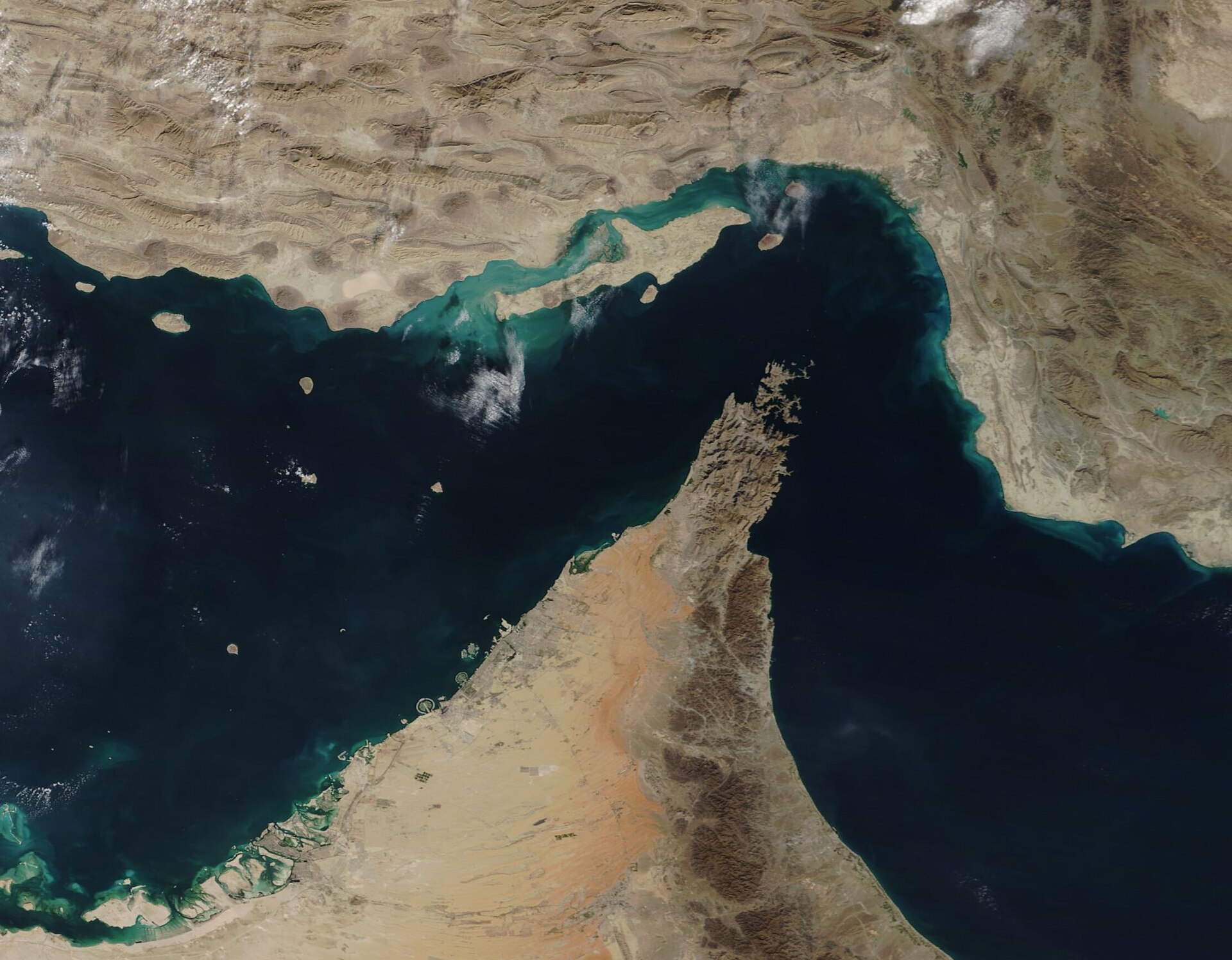
Kowsari’s claim of Iranian control over Hormuz arrived in the same week as operational statements from Iran’s military leadership that went further in their specifics. On November 20, IRGC Commander-in-Chief Ahmad Vahidi said at a Basij student conference that “not just the Persian Gulf and the Strait of Hormuz, but at least up to 500 km and beyond, is under the sway of Iran’s navy,” according to Newsquawk. That claim — extending Iranian control deep into the Arabian Sea — was a direct counter to Trump’s declaration the same day that the United States held “total control” of the waterway.
Four days later, Iranian Army Commander Maj Gen Amir Hatami told the Army Command and Staff University in Tehran that the strait “must become more closed each day to make things harder for the other side,” according to Trend News via MENAFN. He said the closure would remain until Iran’s seven conditions are met, though no single authoritative document listing those conditions has been published.
Where Vahidi and Hatami are active commanders with forces under their authority, Kowsari commands nothing. His statements carry the weight of a National Security Commission member — a figure who can shape public narratives and parliamentary consensus — but not of an officer who can order a mine-laying operation or close a shipping lane. The separation he drew on November 27, deferring operational matters to the military, was both constitutionally accurate and politically deliberate: it allows Tehran to escalate the rhetoric without committing an operational commander’s credibility to a specific action.
What Does CENTCOM Say About Hormuz Control?
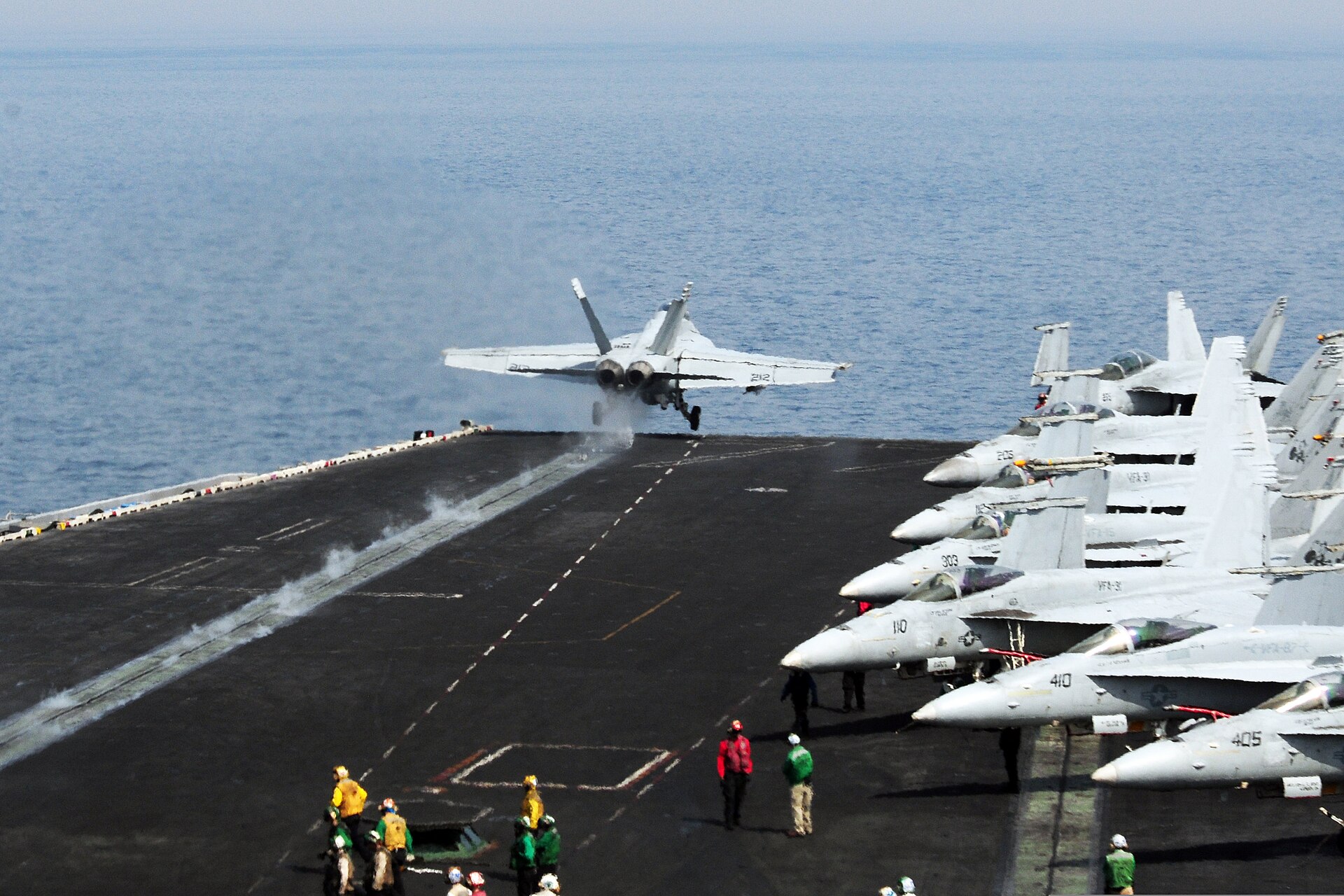
The most recent high-level American assessment of the strait came on October 25, when CENTCOM Commander Admiral Brad Cooper flew over Hormuz in a Chinook helicopter and confirmed it remained “free and clear of Iranian sea mines,” according to Gulf News. That assessment followed US Navy clearance of more than 100 mines from the Traffic Separation Scheme in August, using underwater drones and private contractors to identify and detonate them.
Iran’s IRGC has continued to claim mine strikes against oil tankers throughout November. On November 24, the IRGC said three tankers hit mines under US escort, and on November 26 it claimed supertankers were struck. None of these claims have been verified by UKMTO or any independent maritime authority, according to Iran International.
Transit data tells a more complicated story than either side’s rhetoric. Vortexa estimated that 26 or more tankers per day transited Hormuz between November 1 and 19, counting AIS-broadcasting vessels carrying crude, fuel, and LNG, according to FinScans. The Kpler estimate around November 23 was lower — roughly 11 tankers per day, derived from a weekly transit count of 147 vessels, according to GazeWire. The United Against Nuclear Iran monitoring group put the figure at 31.2 vessels per day for US-facilitated transits through November 21. All of these fall well below the pre-war baseline of approximately 138 ships per day across all vessel types, as recorded by JMIC, and the roughly 50 tankers per day that Kpler tracked before the conflict.
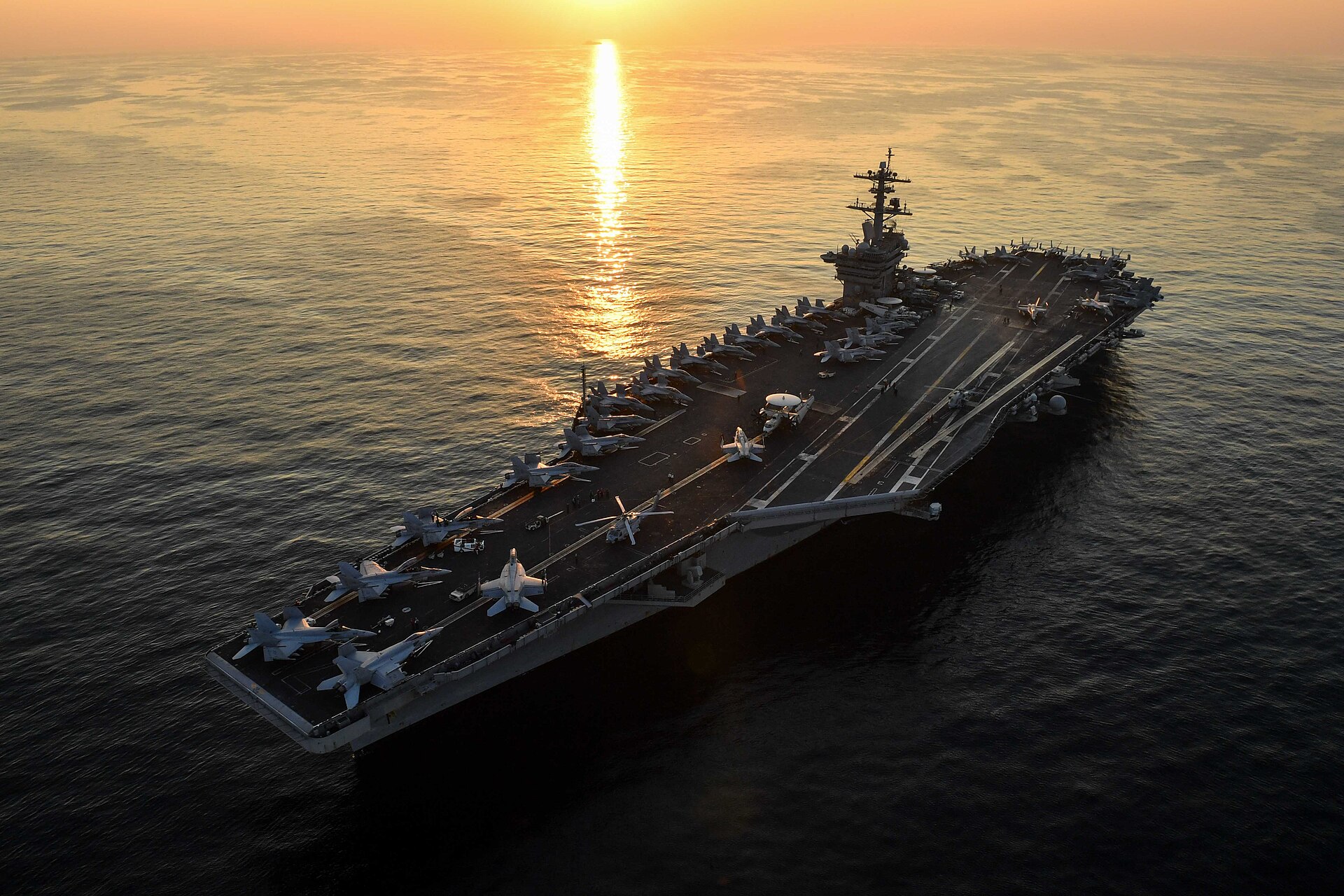
Three US carrier strike groups — the USS George H.W. Bush, USS George Washington, and USS Theodore Roosevelt — were in the CENTCOM area as of mid-November, according to i24NEWS and the Defense Post. No specific US, Saudi, or CENTCOM statement rebutting Kowsari’s November 27 remarks was found; the standing CENTCOM posture that the strait is mine-clear and the concurrent US naval presence constitute the implicit but not explicit American position.
The G7 and Saudi Diplomatic Response
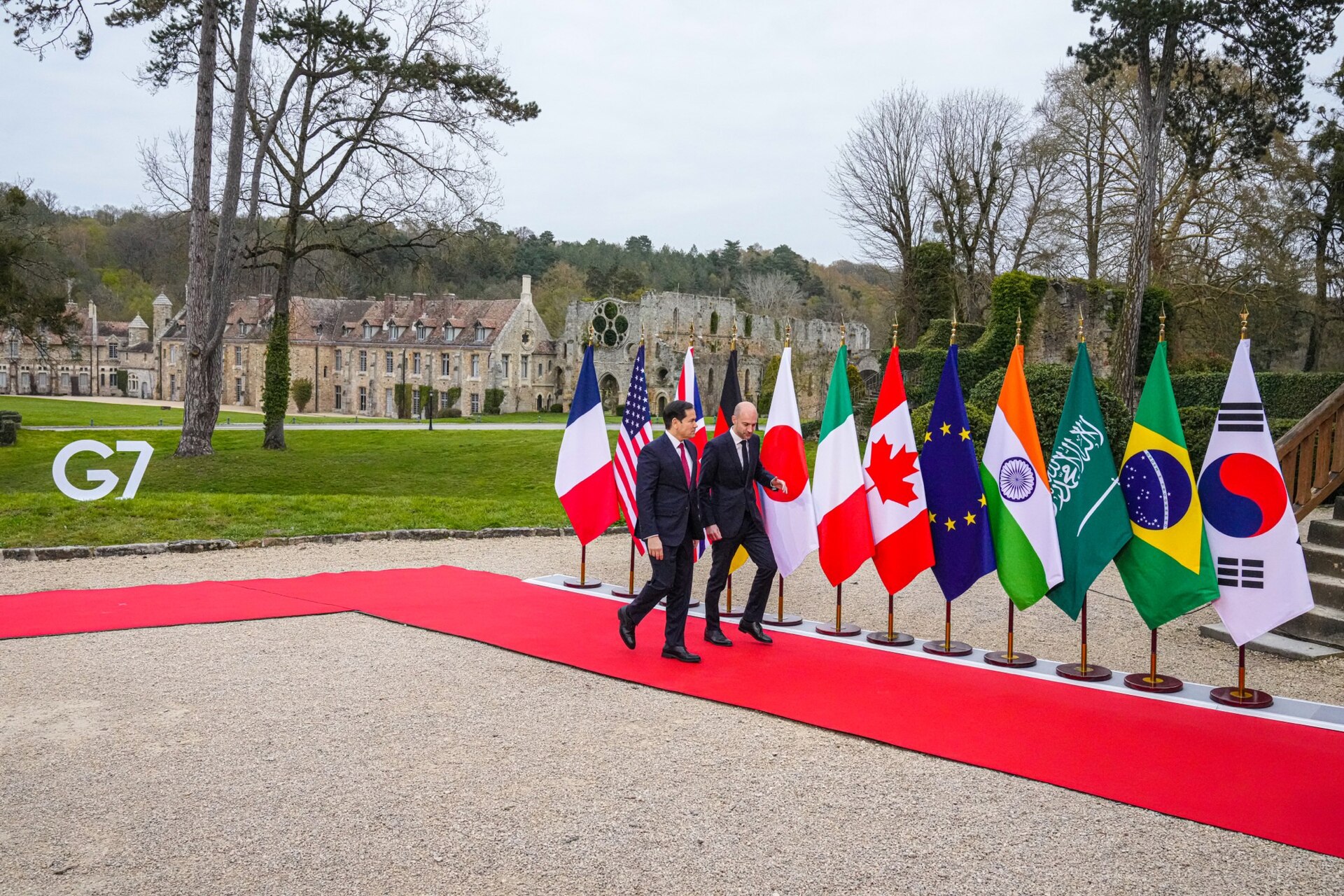
Kowsari’s statement arrived against a diplomatic backdrop shaped by the G7 foreign ministers’ meeting in Paris on November 9–10. The joint declaration from that summit explicitly called on Iran to “cease its persistent attacks against civilian vessels in the Strait of Hormuz,” expressed opposition to “any tolls, fees, illegal costs, discriminations or any limitation imposed on maritime transit,” and praised CENTCOM’s demining operations, according to the UK Government and US State Department.
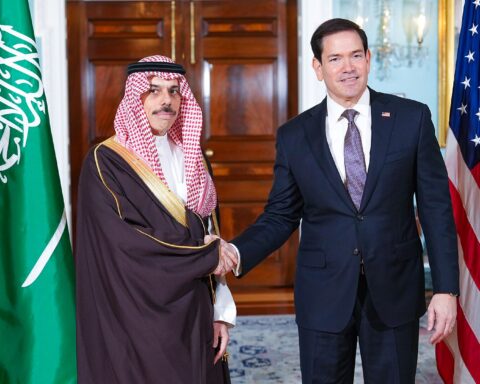
Saudi Foreign Minister Prince Faisal bin Farhan used that summit to press the navigation issue in bilateral meetings with four foreign ministers — the UK’s Ed Miliband, France’s Jean-Noël Barrot, Germany’s Johann Wadephul, and South Korea’s Cho Hyun — stressing “joint efforts to secure waterways and freedom of navigation” in the UK and German meetings, according to Asharq Al-Awsat. A separate Saudi-Qatari-E4 ministerial meeting on November 10 addressed “international coordination to protect regional waterways,” Asharq Al-Awsat reported.
The Saudi position on Hormuz has shifted over the course of the conflict. In April 2026, Riyadh urged Washington to end the blockade and return to negotiations with Iran, fearing escalation, according to The New Arab citing the Wall Street Journal. By November, the Saudi posture had moved to actively supporting CENTCOM demining and pressing G7 partners for collective action on freedom of navigation — a turn reflected in the November 26 call between Secretary of State Rubio and Prince Faisal, in which both condemned Houthi attacks and stressed Hormuz navigation.
At the United Nations, the Security Council remains deadlocked. A Bahrain-led resolution affirming the illegality of Iran’s closure received 11 votes in favor on April 7 but was vetoed by Russia and China, according to PBS NewsHour. A subsequent Bahrain-US draft in May gained 112 co-sponsors, Al Jazeera reported, but its final outcome has not been confirmed. The G7-backed CENTCOM operations and a France-UK naval initiative remain the principal multilateral responses.
Iran’s own diplomatic track has not gone silent. On the same day as Kowsari’s statement, Foreign Minister Abbas Araghchi denied Iranian involvement in the Kuwait drone attack that killed two Italians, calling it a “precooked recipe for war” and offering a joint investigation, according to the Gulf News live blog. The juxtaposition — a former IRGC general vowing to break the blockade on IRIB while the foreign minister distances Tehran from the Kuwait attack — reflects Iran’s routine practice of running multiple messages simultaneously, using different voices for different audiences.
Andreas Krieg, an associate professor in security studies at King’s College London, told Al Jazeera on November 20 that “Iran can circumvent parts of the blockade, but it cannot break it militarily in any sustainable way.” Iran’s real objective, he said, is to make enforcement “politically and economically unsustainable” rather than to physically defeat US forces. His colleague Rob Geist Pinfold, a lecturer in international security at King’s College London, noted that Washington “prefers the blockade to renewed military strikes as a way to bring Iran to the negotiating table,” and that oil accounts for “around 30 percent of Iran’s economy,” according to Al Jazeera.
A CIA assessment from May 2026, reported by the Washington Post, estimated that Iran could withstand the blockade for three to four months before facing severe economic hardship. That window has long since passed. Whether Tehran’s internal calculus has changed — or whether Kowsari’s vow to break the blockade reflects desperation as much as defiance — remains an open question that his IRIB appearance did nothing to resolve.
FAQ
Is the Strait of Hormuz currently open or closed?
The status depends on who is counting and how. Iran’s IRGC declared the strait closed to hostile shipping on February 28 and has maintained that claim through a series of closures and partial reopenings, most recently ordering it “more closed each day” on November 24. CENTCOM says the main shipping lanes are clear of mines as of its October 25 assessment. Transit data from multiple tracking firms shows traffic well below the pre-war baseline of 138 ships per day but significantly above zero — Vortexa counted 26 or more tankers daily through mid-November, while IMF PortWatch’s stricter AIS-only methodology recorded as few as 0.7 per day from November 15, according to the Boston Report.
Has any country officially responded to Kowsari’s November 27 statement?
No government or military command has issued a public statement specifically addressing Kowsari’s remarks as of November 27. The nearest counterpoints are CENTCOM Commander Admiral Cooper’s October 25 confirmation that the strait is mine-clear, the G7’s November 10 declaration opposing any restrictions on transit, and Trump’s November 27 “victory at hand” post, none of which reference Kowsari by name.
What are Iran’s seven conditions for reopening Hormuz?
Iranian Army Commander Maj Gen Amir Hatami referenced seven conditions during his November 24 speech at the Army Command and Staff University in Tehran, saying the strait would remain closed until they are met. No single authoritative document listing the conditions has been published. An earlier framework floated by FM Araghchi in September via Qatari mediators included lifting the US naval blockade, sanctions waivers, and the release of approximately $12 billion in frozen assets, according to Al Jazeera, but it is unclear whether Hatami’s seven conditions correspond to that proposal.
How many US carrier strike groups are near the Strait of Hormuz?
Three carrier strike groups — led by the USS George H.W. Bush, USS George Washington, and USS Theodore Roosevelt — were in the CENTCOM area of responsibility as of mid-November, according to i24NEWS and the Defense Post. Whether all three remain simultaneously deployed in the region as of late November has not been confirmed in open sources; at least one report suggested the George Washington may have departed.
What was the Tanker War reference in Kowsari’s statement?
Kowsari said Iran’s preparations for controlling Hormuz date to 1987, near the end of the Tanker War phase of the Iran-Iraq conflict. During that period Iran laid mines in the strait, attacked commercial vessels with speedboats and Silkworm missiles, and exchanged direct fire with US Navy warships — most sharply in Operation Praying Mantis on 18 April 1988, the largest of the US Navy’s major surface engagements since the Second World War. The reference signals continuity in Iranian doctrine: the IRGC’s asymmetric mine-and-swarm tactics in 2026 descend directly from that era.
The House of Saud Daily Briefing
Saudi Arabia's news in 3 minutes, every morning. Free. See today's issue