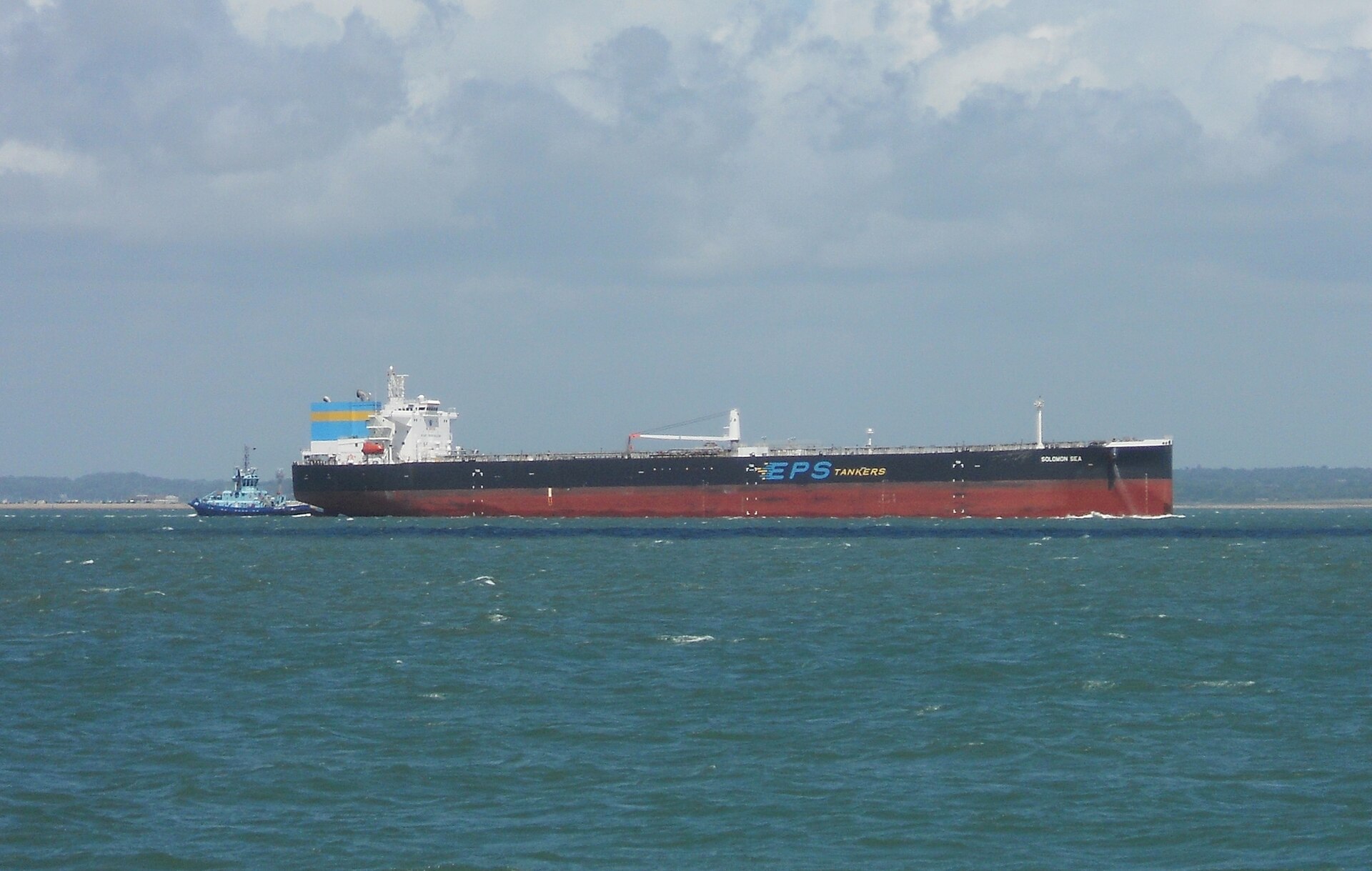

DUBAI — An oil tanker exploded after striking a naval mine in the Strait of Hormuz on Friday morning, Iran’s Revolutionary Guard Navy claimed, in what has become a near-daily cycle of detonations that has pushed Hormuz shipping traffic to roughly 65 per cent below pre-conflict levels, based on UKMTO weekly transit data reported by Gulf News, and left no independent maritime body able to confirm what is actually hitting the vessels. The IRGC said a second tanker attempting the same route was forced to turn back — a detail Tehran is framing as evidence that its mine campaign is working.
The claim, carried by Iran’s Fars news agency and reported by Anadolu Agency on November 27, gave no vessel name, flag, cargo type, crew status, or casualty count. No UKMTO advisory, ship-owner statement, or CENTCOM response had confirmed the explosion at the time of publication. In October, the Washington Institute for Near East Policy recorded 37 ship attacks in the strait — the highest monthly total since the war began on February 28, according to USNI News — and at least 10 more ships were hit in the first 10 days of November alone, according to Baird Maritime, citing the Washington Institute.
The November 27 explosion is the latest in a week of near-daily IRGC mine announcements: the Guard claimed two tankers hit mines north of Khasab on November 26, an LNG carrier exploded in the strait on November 25, three tankers were said to have hit mines under US escort on November 24, and two supertankers were claimed mined on November 23. Each time, the IRGC described the vessels as “violating” or “non-compliant” ships on unauthorized routes, and each time, neither UKMTO nor any ship owner publicly named the vessel or confirmed a mine as the weapon.
The House of Saud Daily Briefing
Saudi Arabia's news in 3 minutes, every morning. Free. See today's issue
Table of Contents
What Did the IRGC Navy Say About the November 27 Explosion?
The IRGC Navy’s public relations office, speaking through Fars news agency, said two oil tankers attempted to “secretly pass through an unauthorized route north of Ghavam Island on Friday morning,” according to Anadolu Agency. One exploded after colliding with a naval mine; the other was forced to turn back. The statement named no vessel, gave no flag state or cargo description, and provided no information on casualties or damage — a pattern that has held across every IRGC mine claim this month.
Roya News, citing the same IRGC statement, reported that the Guard described the incident as demonstrating its “authority and absolute sovereignty” over the approaches to the strait, and that unauthorized-route traffic had dropped sharply in recent days. That framing is consistent with Tehran’s broader narrative: each explosion is presented not as an act of aggression but as enforcement of a sovereignty regime that Iran considers legally binding and that every Western maritime authority considers a violation of international law governing transit passage through straits.
Two days earlier, on November 25, the IRGC said an LNG carrier exploded and burned after hitting a mine on what it called a “US-Israeli-fabricated” route, according to Arab News and Saudi Gazette. On November 26, Mehr News Agency reported the IRGC claimed two more tankers — described as “non-compliant” vessels with “unknown identities and switched-off navigation systems” — hit mines north of the port of Khasab, Oman. The IRGC said both had “attempted a covert passage relying on US military fighter jets,” and described one as a supertanker carrying more than 2 million barrels of crude oil.
The consistent refusal to identify any vessel is itself telling, because it makes independent verification impossible while allowing the IRGC to control the narrative entirely. Ship owners have shown no inclination to publicly confirm damage, which likely reflects both insurance concerns and the commercial sensitivity of admitting a vessel was operating on a route Tehran considers prohibited.
A Week of Explosions — The November Attack Timeline
The November 27 claim extends a week in which the IRGC has announced mine detonations on an almost daily basis, while UKMTO has separately confirmed multiple projectile strikes — without calling them mines. The Joint Maritime Information Centre counted 177 total incidents in the region by November 8, according to Gulf News, and four confirmed attacks in a 96-hour window at the start of the month triggered JMIC Update 111, which raised the regional maritime threat level to “Severe.”
On November 21, UKMTO confirmed two tankers were hit by projectiles in the strait while Iran separately claimed mines. That gap — between what UKMTO observes and what the IRGC announces — has widened every day since, with each side describing the same contested waterway in irreconcilable terms.
| Date | IRGC claim | Independent confirmation | Source |
|---|---|---|---|
| Nov 21 | Iran claims mines | UKMTO: 2 tankers hit by projectiles in Hormuz | UKMTO / HOS |
| Nov 23 | 2 supertankers hit mines; toll “6 in 4 days” | None at publication | PressTV |
| Nov 24 | 3 tankers hit mines “under US escort” | None at publication | PressTV / Nour News |
| Nov 25 | LNG carrier hit mine on “US-Israeli” route | UKMTO Warning 223-26: Kun Peng hit by projectile 18 nm east of Khasab; 1 crew severely injured | Arab News / Seatrade Maritime |
| Nov 25 | — | UKMTO: tanker hit by 2 projectiles 50 nm north of Madinat ash Shamal, Qatar | Unbiased Headlines |
| Nov 26 | 2 tankers hit mines north of Khasab; 1 supertanker with 2m+ barrels | None at publication | Mehr News Agency |
| Nov 27 | 1 tanker explodes north of Ghavam Island; 2nd turns back | None at publication | Fars / Anadolu Agency |
Noam Raydan, a senior fellow at the Washington Institute for Near East Policy, told Reuters that October represented “the highest number of ship attacks on record” in the strait, with Verisk Maplecroft independently counting 36 against the institute’s 37.
“Serious consequences, including explosions and fires” await tankers on unauthorized routes.
— IRGC Navy warning issued November 24, via Nour News / IRNA
The IRGC has not released a cumulative November count, and no authoritative external tally for the full month existed at the time of publication. Iranian state media, including PressTV, labeled the November 24 explosion as the “fourth violating oil tanker” to detonate — but the IRGC’s own related announcements listed incidents on November 19, 20, and 22, making PressTV’s ordinal inconsistent with its own side’s reporting.
Mine or Projectile? Why Maritime Monitors Tell a Different Story
Every IRGC statement this month has described the weapon as a “naval mine” laid on routes Tehran designates as unauthorized. Every UKMTO advisory covering the same period has described the weapon as an “unidentified projectile.” The discrepancy matters, because mines and missiles imply very different operational realities: a mine suggests a static area-denial weapon that punishes any vessel transiting a prohibited zone, while a projectile suggests active targeting — a missile, rocket, or drone deliberately fired at a specific ship.
The November 25 Kun Peng incident illustrates the gap with unusual clarity. UKMTO Warning 223-26 confirmed the Hong Kong-flagged chemical and products tanker (IMO 9272503) was struck by an “unidentified projectile” 18 nautical miles east of Khasab, Oman, according to Seatrade Maritime and The Daily Scout, citing JMIC advisory update 117/26. One crew member was severely injured and an engine-room fire broke out before being extinguished. The IRGC, covering what appears to be the same timeframe and geography, said an LNG carrier hit a mine — a vessel description that does not match a chemical and products tanker, and a weapon identification that contradicts UKMTO’s.
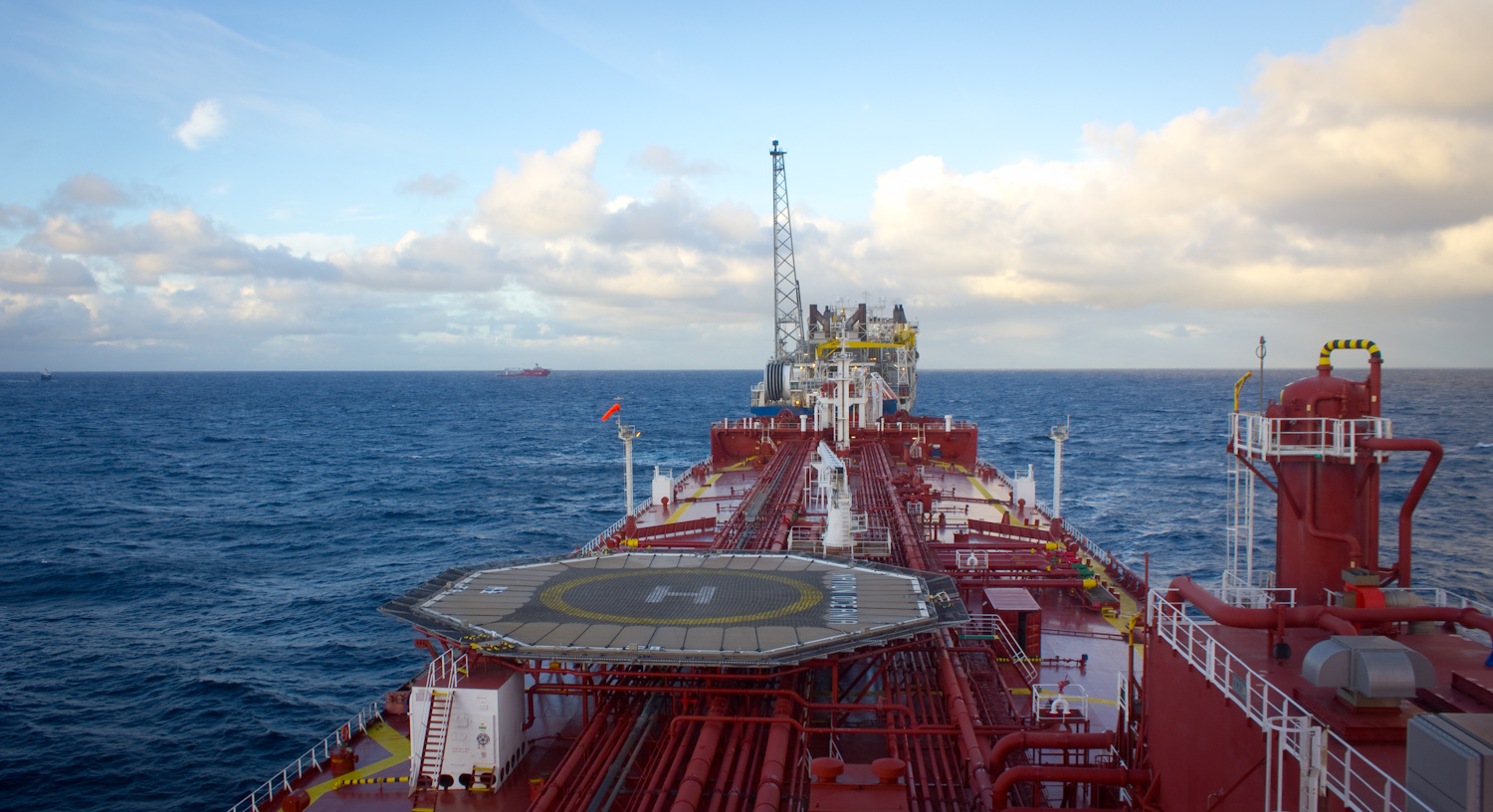
There is precedent for this kind of narrative divergence. In September 2026, CENTCOM explicitly rejected the IRGC’s claim that the Panama-flagged tanker El Gaia struck a mine, attributing the damage instead to Iranian weapons — a distinction that turned a narrative of passive area denial into one of active attack. No similar CENTCOM statement has been issued for any November incident, but the absence of independent mine confirmation across every event this month leaves the IRGC’s framing unverified.
UKMTO’s advisory language in Warning 223-26 and related November advisories — urging vessels to “transit with caution and report suspicious activity” — reads as deliberately neutral, the kind of phrasing that avoids attributing intent while still telling commercial operators that the strait is not safe. For ship owners and insurers, the distinction between a mine and a missile may be academic. Vessels are detonating, burning, and losing crew in waters where hundreds of ships transited daily before February 28, and the cause written on the IRGC’s press release matters far less than the fire in the engine room.
What Does This Mean for Hormuz Shipping and Gulf Oil?
The cumulative effect of nine months of attacks has been devastating to Hormuz traffic. As of the week ending November 10, UKMTO counted 170 outbound and 155 inbound weekly transits through the strait — a combined 325, against a pre-war baseline of roughly 138 vessels per day, or close to 970 per week, according to Gulf News. The Joint Maritime Information Centre reported single-digit to low-double-digit daily transits in early November, a figure that would have been unthinkable in what had been one of the world’s most heavily transited shipping lanes.
CENTCOM, which has maintained a naval blockade against Iran since July 14, said it had redirected 147 commercial vessels and disabled 5 by November 10, up from 144 redirected and 4 disabled on November 1, according to Gulf News. The US Navy was facilitating approximately 31 transits per day through the strait in early November, according to US Naval Cooperation and Guidance for Shipping data cited by Gulf News — a fraction of the pre-war flow but still the primary mechanism by which Gulf crude reaches Asian refineries.
The escalation comes two days before OPEC+ meets on November 29 to set 2027 production quotas, with Hormuz oil flows already running well below capacity and member states facing sharply different revenue pressures depending on their exposure to the strait. On the same day as the explosion, Iranian lawmaker Kowsari told state media that Iran could break the US naval blockade and controls Hormuz — rhetoric that, combined with the mine campaign, is calibrated to establish Tehran’s leverage ahead of any post-midterm diplomatic reopening.
Brent crude rose $1.05, or 1.2 per cent, to $90.42 on November 24 after the IRGC’s three-tanker mine claim, according to Unbiased Headlines — a muted response for a war in the world’s most important oil chokepoint. The price action reflects the degree to which alternative routes, strategic reserves, and reduced Chinese demand have absorbed the supply shock, even as the physical risk to vessels transiting Hormuz continues to climb with each day’s new IRGC announcement.
Tehran signed a memorandum of understanding with Washington in June, but implementation stalled over freedom-of-navigation terms, and Iran has since linked reopening the waterway to an end to US-Israeli hostilities, security guarantees, and the lifting of sanctions and port restrictions — conditions Washington has shown no willingness to meet. Iran has also claimed, through Roya News, that unauthorized-route traffic specifically has dropped sharply — a figure no independent authority has confirmed but that is consistent with the broader decline in weekly transits documented in this section.
Frequently Asked Questions
Where is Ghavam Island and why does it matter?
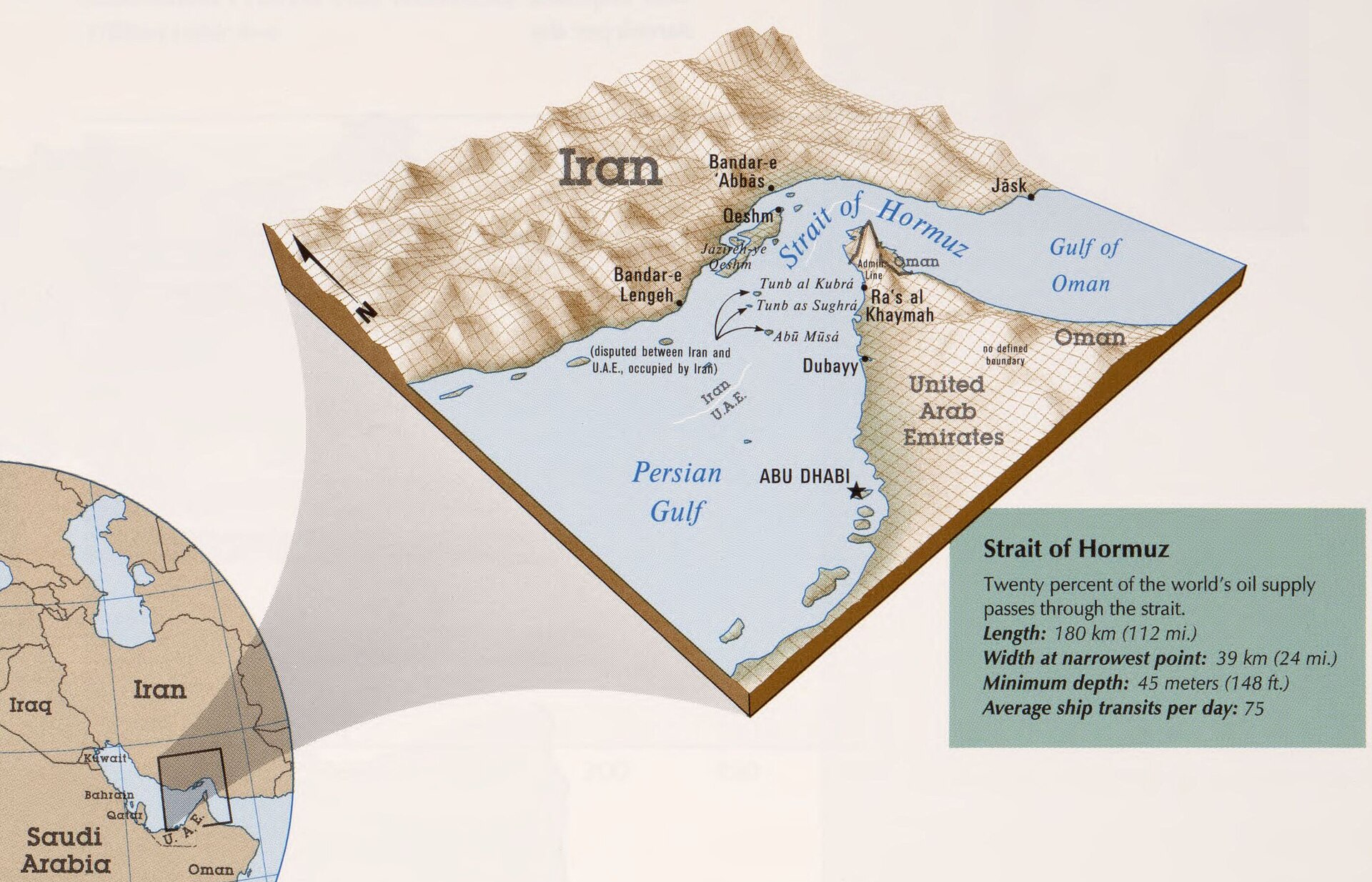
Ghavam Island sits in the northern approaches to the Strait of Hormuz, in the narrow waters between Iran and Oman through which international shipping transits under internationally recognized traffic separation schemes designated by the International Maritime Organization. The IRGC Navy has described routes near the island as “unauthorized” under its own unilateral maritime restrictions imposed since the war began, though these designations have no standing under the UN Convention on the Law of the Sea, which guarantees transit passage through international straits regardless of coastal-state objections.
How does the current campaign compare to the 1980s Tanker War?
The Iran-Iraq War’s “Tanker War” phase saw both sides attack commercial shipping in the Persian Gulf from 1984 to 1988, prompting the United States to launch Operation Earnest Will, which completed approximately 127 escort missions, according to a US Naval War College study. The current campaign has produced more reported ship attacks in a single month than any comparable period during the 1980s, though direct comparison is complicated by the IRGC’s consistent refusal to identify vessels or permit independent verification of its claims.
What alternative routes exist for Gulf oil that bypass Hormuz?
Saudi Arabia’s East-West Pipeline can carry up to 7 million barrels per day from the Eastern Province to Yanbu on the Red Sea, bypassing Hormuz entirely, though the pipeline was shut down after a drone attack from Iraq in September 2026. The UAE’s Habshan-Fujairah pipeline carries Abu Dhabi crude to Fujairah on the Gulf of Oman, partially bypassing the narrowest stretch of the strait. Neither pipeline has the capacity to fully replace pre-war Hormuz transit volumes.
What are insurers charging for Hormuz transits?
War-risk insurance premiums for vessels transiting the Strait of Hormuz reached 6 to 10 per cent of hull value by October 2026, according to brokers cited by the Financial Times. For a supertanker valued at $100 million, that translates to $6-10 million per single transit in additional war-risk costs alone — a charge passed to refiners and consumers through higher freight rates and cargo premiums, and one reason why many operators have chosen to avoid the strait entirely rather than absorb the cost.
The House of Saud Daily Briefing
Saudi Arabia's news in 3 minutes, every morning. Free. See today's issue