
Table of Contents
- What Did the Bilateral Produce?
- The Communiqué Faisal Co-Signed
- Why Did Rubio Choose Bahrain Over Riyadh?
- Did Saudi Arabia Extract a Sequencing Commitment?
- How Tehran Read the Meeting
- The Downgrade After Bahrain
- Can the Sakhir Declaration Restore What Diplomacy Did Not?
- Twenty-Three Days from Bilateral to Void
- Frequently Asked Questions
MANAMA — Saudi Arabia’s foreign minister secured a bilateral meeting with Marco Rubio on June 25, and the most substantive recorded output was a single sentence about freedom of navigation that Rubio had already delivered to five other ministers in the same building. Prince Faisal bin Farhan attended the GCC-US ministerial at Bahrain’s Ritz-Carlton as one of six Gulf foreign ministers, obtained a sideline bilateral — the first FM-level face-to-face with Rubio since the March 11 Riyadh visit — and co-signed a joint communiqué that named Pakistan and Qatar as mediators of the Iran nuclear deal while omitting Saudi Arabia from any process role.
Twenty-three days later, Iran voided the memorandum of understanding. Saudi Arabia was not consulted, not notified, and not named in the void declaration. Whatever diplomatic standing Riyadh believed it recovered at Bahrain evaporated before July ended.
The meeting has since been overtaken by events so thoroughly that its significance now lies in what it failed to prevent. Bahrain was the high-water mark of Saudi-US FM contact in this war cycle. Contact degraded to phone calls by July 10. By July 18, the MOU framework no longer existed. The venue, the communiqué language, and the sequencing silence at Bahrain can now be read as a complete diplomatic record — not of Saudi recovery, but of the terms under which Saudi marginalization was formalised in multilateral text.
What Did the Bilateral Produce?
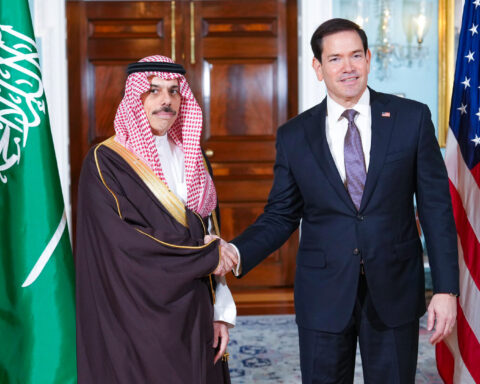
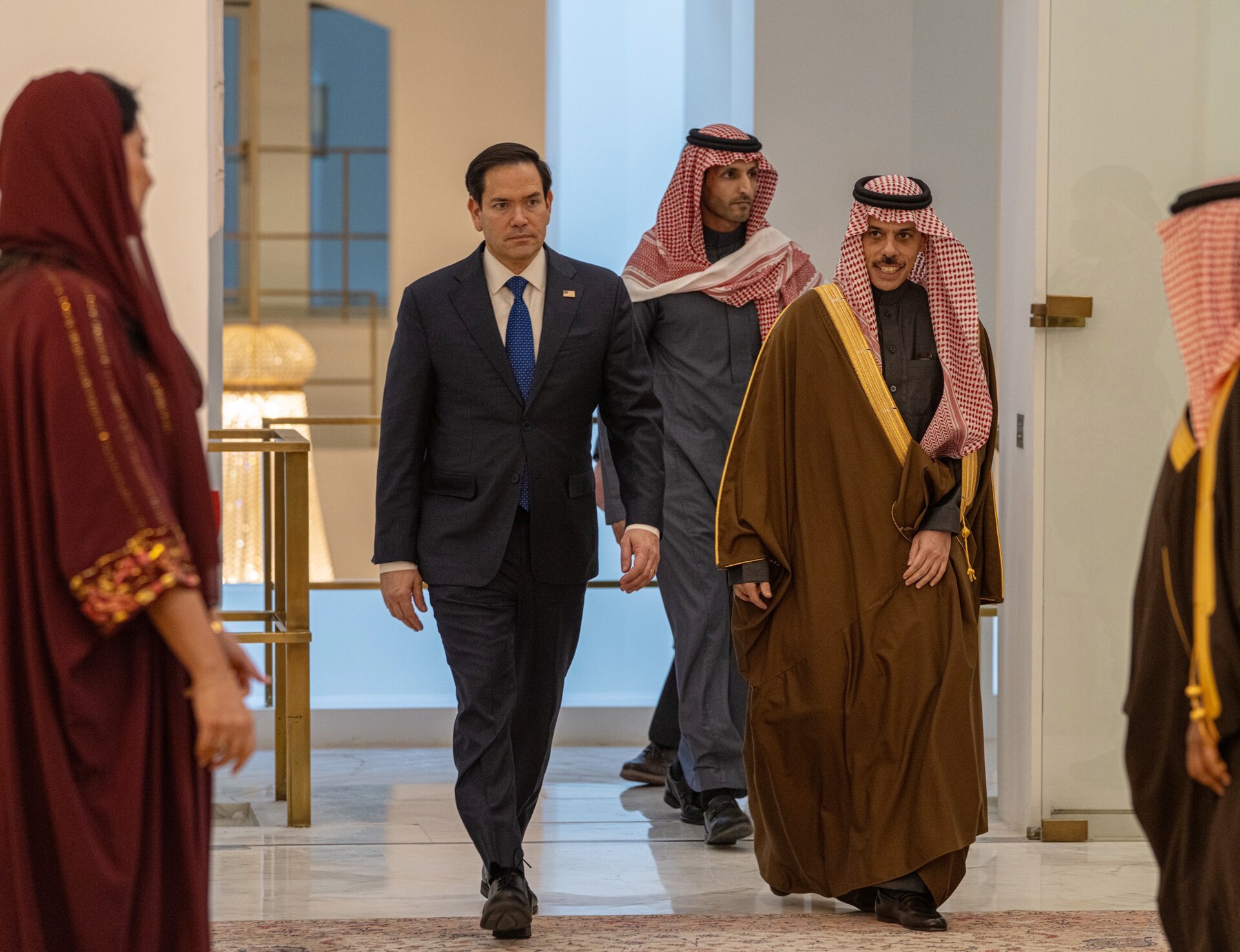
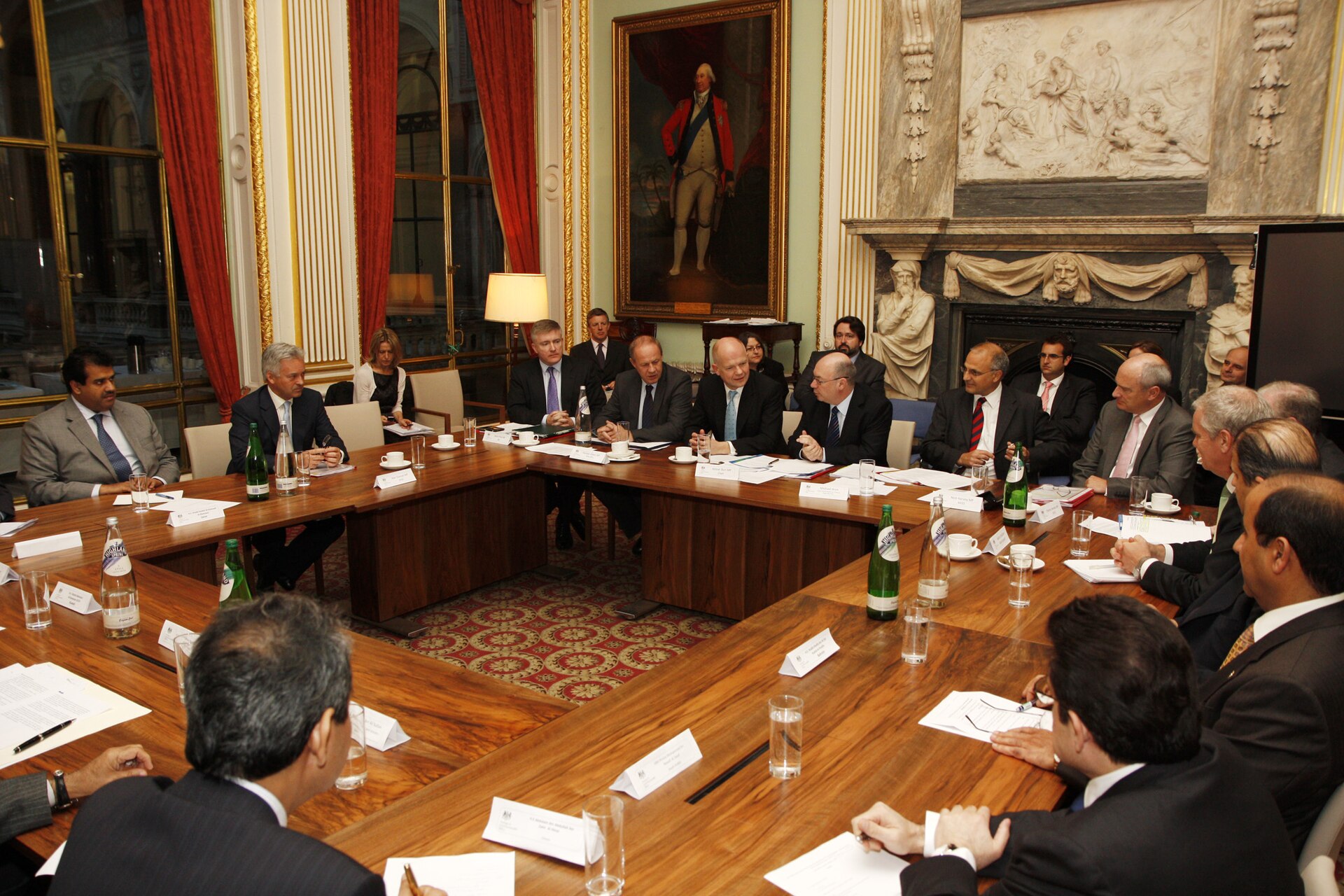
The Faisal-Rubio bilateral at the Ritz-Carlton Bahrain on June 25 generated a single-paragraph statement from the Saudi Press Agency. No joint readout was issued. No press conference followed. The Saudi delegation included Prince Musab bin Mohammed Al Farhan and Ambassador to Bahrain Naif Al Sudairi. Topics covered, per Asharq Al-Awsat: US-Iran MOU progress, permanent peace deal sequencing, Strait of Hormuz freedom of navigation, Gaza, and Lebanon.
The only on-record substantive language: “Prince Faisal and Rubio stressed the importance of ensuring freedom of international navigation through the Strait of Hormuz without restrictions.” This is process language — a restatement of existing international maritime law that commits neither party to any course of action. Rubio had made the same point publicly at the ministerial plenary minutes earlier: “No country on Earth has the right to charge for the use of international waterways. And that will never be an acceptable condition of any deal.”
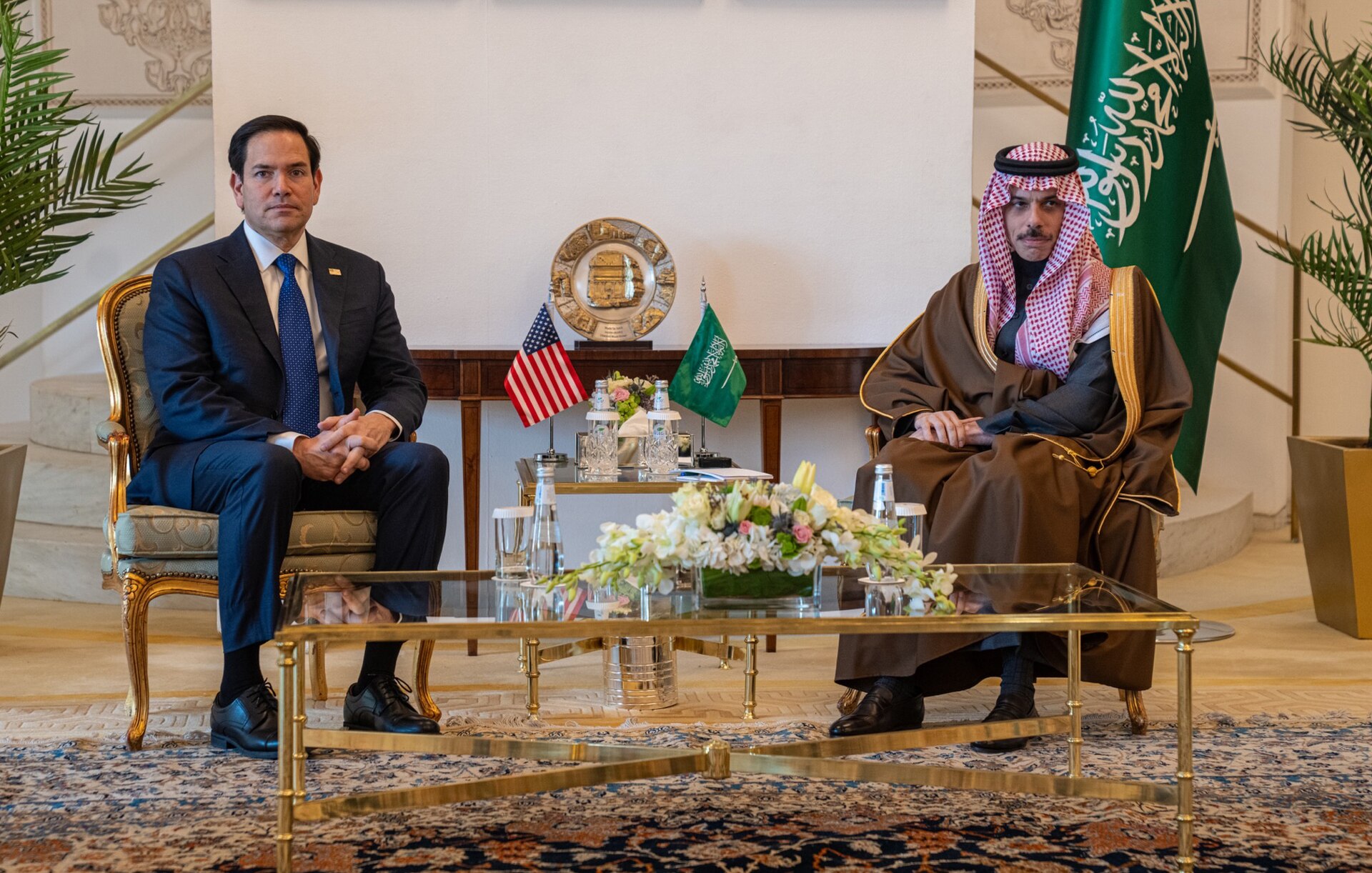
Compare the output to the March 11 Riyadh bilateral. Rubio flew to Riyadh, met both Crown Prince Mohammed bin Salman and Faisal, and issued a multi-paragraph joint statement covering defence cooperation, economic partnership, and Iran policy coordination. The March meeting produced bilateral language on bilateral terms. The June meeting produced multilateral language on multilateral terms — and the bilateral component left no recorded trace beyond the SPA’s single paragraph.
The Middle East briefing 3,000+ readers start their day with.
One email. Every weekday morning. Free.
The structural difference is not subtle. In March, Rubio went to Riyadh because Saudi Arabia was the destination. In June, Faisal went to Bahrain because Rubio was there. The directionality reversed.
The Communiqué Faisal Co-Signed
The GCC-US joint statement issued after the June 25 ministerial named Pakistan and Qatar as mediators of the Islamabad MOU process. Saudi Arabia was not named as a mediator, a process guarantor, or an observer. Saudi Arabia’s role in the document was as a GCC member state — one of six signatories to a collective position that acknowledged its own country’s exclusion from the diplomatic architecture being endorsed.
Faisal signed a communiqué that ratified the very arrangement that had locked Riyadh out of the Iran nuclear track since June 17. The Islamabad MOU assigned Pakistan the mediator’s chair and Qatar the facilitator role. Saudi Arabia’s informational access to the process consisted of post-round phone briefings from Pakistani Foreign Minister Ishaq Dar — notification after the fact, not participation during it. The Bahrain communiqué elevated this exclusion from a bilateral arrangement between Washington and Islamabad into multilateral text endorsed by all six GCC states and the United States.
No competing outlet has made this argument explicitly. Reuters covered the meeting as process reporting — Rubio selling the deal to sceptical Gulf allies. Al Jazeera led with the Hormuz toll rejection. Asharq Al-Awsat reported the official narrative without critical analysis. The Arab Center Washington DC came closest, assessing Saudi leverage over MOU implementation as “slight” and Saudi posture as “damage limitation rather than meaningful gains.” But none identified the communiqué’s mediator-recognition clause as the mechanism by which Saudi Arabia formalised its own process exclusion in writing.
The clause was not contested. There is no reporting — from SPA, from Asharq Al-Awsat, from any Saudi-aligned outlet — suggesting Faisal objected to the mediator language, sought amendment, or registered a reservation. The communiqué passed with Saudi Arabia’s full co-signature.
Why Did Rubio Choose Bahrain Over Riyadh?
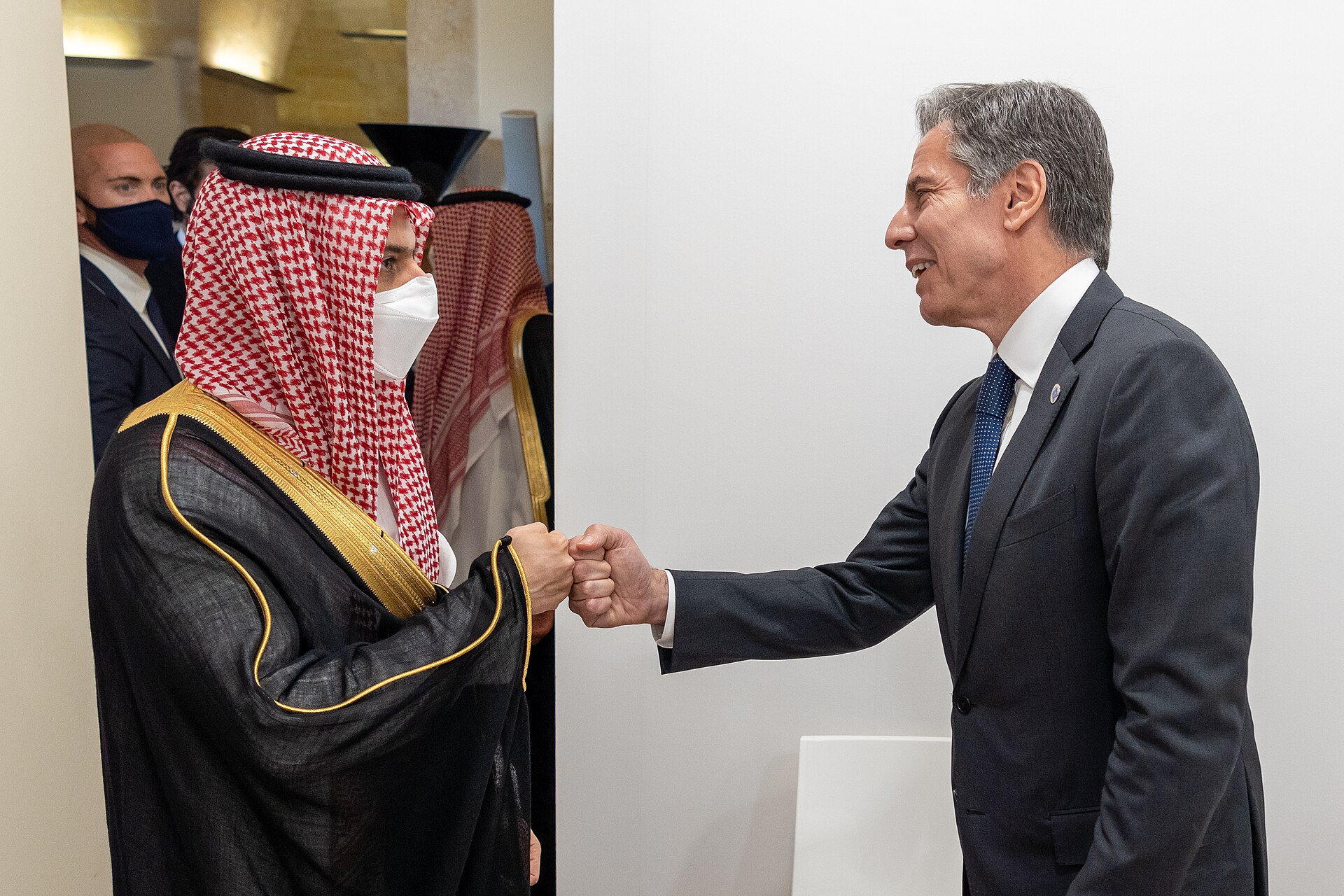
Rubio’s June Gulf tour visited Abu Dhabi on June 24, Kuwait City on June 24, and Manama on June 25. Riyadh was not on the itinerary. The Secretary of State chose to convene GCC foreign ministers on Bahraini soil — home of the US Fifth Fleet, Combined Maritime Forces headquarters, and Naval Support Activity Bahrain — rather than in the largest GCC economy, the PAC-3 host nation, or the kingdom that had received his two previous bilateral visits in January and March 2026.
Bahrain is operationally critical to the US military posture in the Gulf. It hosts approximately 9,000 US personnel, the forward-deployed command ship USS Blue Ridge, and the naval infrastructure underpinning freedom of navigation operations in the Strait of Hormuz. It is also a venue without political freight. Meeting six foreign ministers in Bahrain implies no bilateral preference. Meeting one foreign minister in Riyadh — as Rubio did in March — implies Saudi Arabia warrants a dedicated visit.
The venue choice reflected where Washington saw operational necessity during the MOU implementation period. Bahrain’s naval infrastructure was the platform from which Hormuz transit enforcement would operate. Saudi Arabia’s Prince Sultan Air Base — where 43 US warplanes had been grounded by Saudi authorities during Operation Project Freedom in May — was a site of bilateral friction, not coordination. Rubio went where the US military footprint was uncontested.
Did Saudi Arabia Extract a Sequencing Commitment?
No. Saudi Arabia, Qatar, and Oman collectively pressed Rubio for clarity on how sanctions relief, nuclear inspections, and missile restrictions would be sequenced under the Islamabad MOU’s permanent deal framework. Reuters reported on June 25 that the three states were “pressing Washington for clarity on how sanctions relief, nuclear inspections and missile restrictions will actually be sequenced, rather than accepting broad assurances.” Rubio gave broad assurances.
The sequencing question is not procedural. It determines whether Iran receives economic relief before or after verification of nuclear commitments — and whether that relief revives the funding channels for proxies operating in Iraq, Lebanon, and Yemen. The Arab Center Washington DC identified this as Saudi Arabia’s core concern: “sanctions relief could revive Iranian regional influence funding proxies.” Faisal’s own public statement called the MOU “incredibly important” and a “possible turning point” while cautioning that “the details would matter, particularly regarding long-term verification.”
The details did not arrive at Bahrain. Rubio’s response to sequencing pressure was to restate the Hormuz freedom-of-navigation position and decline engagement on the $300 billion Iran reconstruction fund. GCC Secretary-General Jasem Albudaiwi, asked about the fund at the post-ministerial press conference, said: “It was not introduced to me nor to other GCC countries. We don’t know anything about it.” Pressed further by The National’s correspondent: “We really don’t know anything about it.”
It was not introduced to me nor to other GCC countries. We don’t know anything about it.
Jasem Albudaiwi, GCC Secretary-General, The National, June 26, 2026
Albudaiwi identified three GCC priorities from the meeting: Iran-backed proxies (“the most critical issue”), Hormuz access, and nuclear verification. On all three, the ministerial produced collective language and no specific US commitments. The Secretary-General noted his own channel to Rubio was “almost daily or every other day” — but this was the GCC Secretariat’s institutional channel, not the Saudi FM’s bilateral one. The distinction matters: Albudaiwi’s access did not constitute Saudi access.
Faisal’s own position on the reconstruction fund was revealing. Asked whether Saudi Arabia would contribute to the $300 billion package, the foreign minister said he “had no information” and refused to say if Riyadh would participate. A foreign minister of the Gulf’s largest economy, attending a ministerial specifically convened to discuss Iran deal implementation, had no information on the deal’s largest financial component. The fund’s existence was not disputed — Rubio simply declined to introduce it. Saudi Arabia learned about the single largest financial mechanism in the Iran deal framework from press reporting, not from its bilateral partner.
How Tehran Read the Meeting
Iran’s Foreign Ministry responded on June 26 by calling the GCC-US communiqué “interventionist, irresponsible, and provocative.” The statement accused Washington and Gulf allies of “using diplomacy to impose pressure on Tehran” and urged GCC states to “prevent their territory and facilities from being used” for attacks against Iran. The response addressed “the GCC and US” as a single bloc. Saudi Arabia received no separate diplomatic treatment, no acknowledgment of Faisal’s individual bilateral engagement, and no distinction from the five other Gulf states that had attended.
From Tehran’s perspective, six foreign ministers attending a multilateral ministerial co-chaired by the US Secretary of State is a collective act, not six bilateral ones. The sideline bilateral between Faisal and Rubio — the meeting Riyadh needed to demonstrate recovered standing — registered in Tehran’s response as invisible. Iran’s Deputy Foreign Minister Kazem Gharibabadi stated that Iranian defence capabilities “cannot be subject to bargaining or concession,” addressing the GCC bloc’s missile-restriction demands without singling out any individual state’s diplomatic efforts.
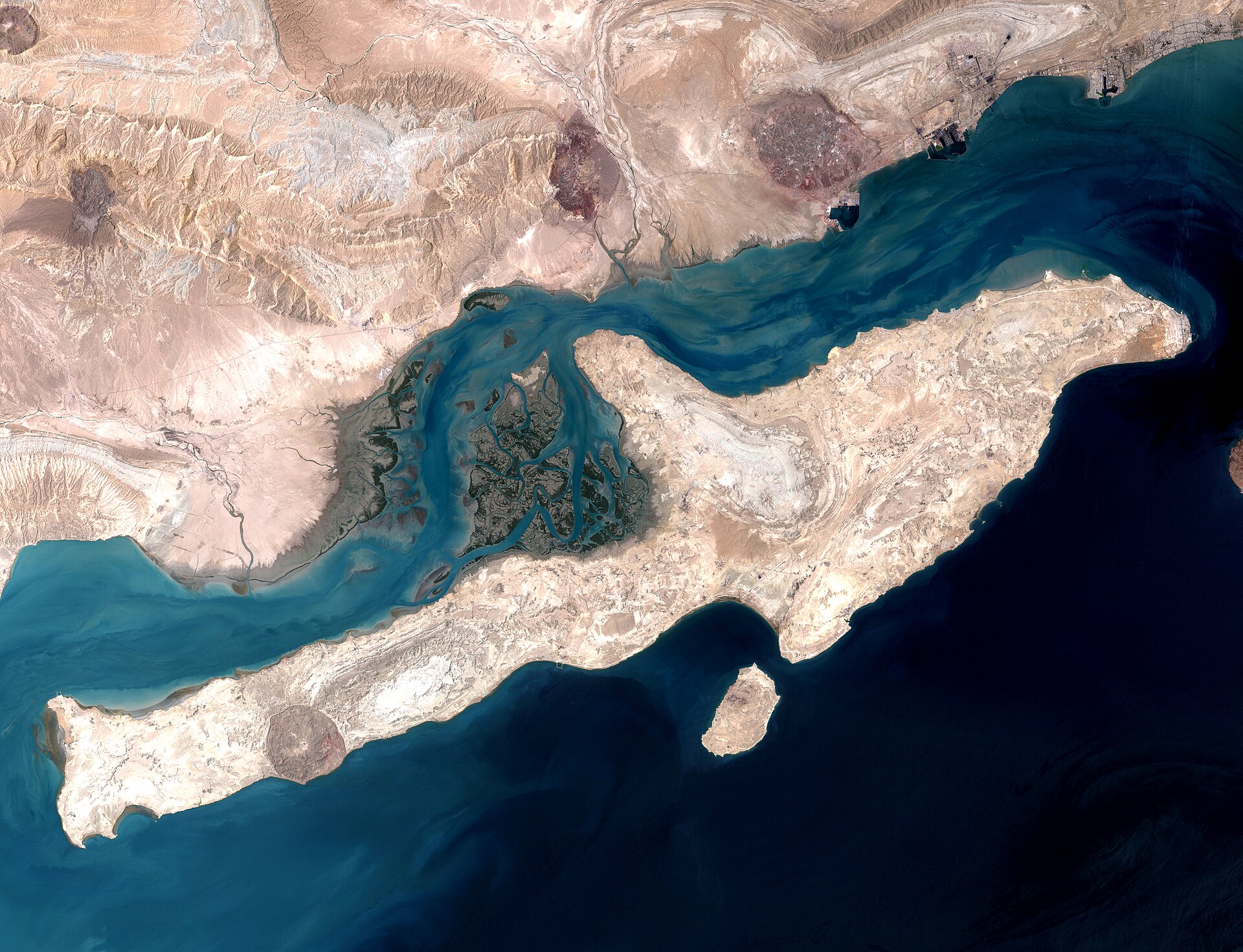
Iran also asserted jurisdiction: the Strait of Hormuz “lies within the territorial waters of Iran and Oman” and the June 17 MOU’s Article 5 governs shipping transit. This directly contradicted the Faisal-Rubio joint sentence on freedom of navigation — but Iran’s contradiction was directed at the collective communiqué, not at the bilateral statement. The bilateral, in Tehran’s diplomatic response, did not exist as a separate event requiring separate rebuttal.
The base-hosting language was directed at Bahrain (Fifth Fleet), Qatar (Al Udeid), Kuwait (Arifjan, Ali Al Salem), and the UAE (Al Dhafra) — four of the six states that co-signed the communiqué with Faisal. Tehran treated the signatories as accomplices, not interlocutors. For Saudi Arabia, which had sought to position itself as a distinct actor capable of engaging both Washington and Tehran, the Iranian response was categorical: there were no distinct actors in the room, only a single adversarial bloc whose individual members held no separate standing.
The nuclear dimension compounded the dismissal. Iran accused the GCC-US communiqué of “fabricating accusations” about its “peaceful nuclear programme” — rejecting not just Saudi Arabia’s position but the premise that any GCC state held standing to comment on the nuclear file. The June 25 communiqué’s nuclear verification language, which Faisal co-signed, produced a response from Tehran that denied the signatory states’ relevance to the subject. Bahrain — the host venue, the Fifth Fleet anchor, the Sakhir Declaration’s birthplace — received identical treatment to Saudi Arabia in Tehran’s rebuttal. The venue conferred no diplomatic distinction.
The Downgrade After Bahrain
The trajectory of Saudi-US FM contact in 2026 follows a single direction. January: full Riyadh bilateral, Rubio visits Saudi Arabia as a destination. March 11: Riyadh bilateral, Rubio meets both MBS and Faisal, multi-paragraph joint statement. June 25: Bahrain GCC sideline, Faisal attends a multilateral to obtain face-time, single-paragraph SPA statement. July 10: phone call only — and on the same day, Rubio met Princess Reema Al-Saud, the Saudi ambassador to Washington, in person.
The July 10 configuration is the starkest indicator. FM-level contact reduced to telephone while ambassador-level remained in-person. Reema met Rubio; Faisal did not. The ambassador meeting concerned operational matters. The FM phone call concerned strategic coordination. Washington chose to handle operations face-to-face and strategy at a distance.
Four days later, on July 14, Faisal placed de-escalation calls to Tehran and to the Houthis. Neither responded. The Saudi FM’s July diplomatic record after Bahrain consists of a downgraded phone call with Washington, silence from Tehran, and silence from Sanaa. Three channels, three forms of diminished access.
By July 1, Foreign Policy reported that Saudi Arabia had assembled a parallel diplomatic axis — Saudi Arabia, Qatar, Turkey, Pakistan, and Egypt — explicitly excluding the UAE. The axis construction is evidence that Riyadh itself did not regard Bahrain as having restored its standing within the existing US-mediated framework. States that believe they hold adequate positions within current structures do not build parallel ones.
The parallel axis also reveals a geographic judgment. The five states span the Eastern Mediterranean, the Red Sea, the Arabian Peninsula, and South Asia — the full arc of Iranian proxy reach and US military deployment. The axis excludes the UAE, Saudi Arabia’s closest GCC partner and coalition co-belligerent in Yemen, suggesting that Riyadh’s post-Bahrain alignment is built for regional reach rather than Gulf solidarity. Bahrain’s ministerial offered collective GCC unity; Riyadh responded within six days by constructing an alternative coalition that supersedes GCC boundaries.
Can the Sakhir Declaration Restore What Diplomacy Did Not?
The Sakhir Declaration was adopted on December 3, 2025, at Bahrain’s Sakhir Palace — the same country, six months before the same city hosted Faisal’s diminished bilateral. The declaration’s sovereignty clause states that “any infringement upon the sovereignty of a member state constitutes a direct threat to their collective security.” It contains no response obligation, no mutual defence trigger, and no automatic escalation mechanism. It is structurally weaker than NATO’s Article 5, which itself has been invoked only once in 75 years.
Between July 8 and July 18, Iranian missiles and drones struck military and civilian infrastructure across six GCC member states. Bahrain, Kuwait, Qatar, Saudi Arabia, the UAE, and Oman all sustained impacts of varying severity. The Sakhir Declaration was not invoked. The Middle East Council on Global Affairs, in its assessment “Lessons Learned by GCC States in the 2026 US-Israel-Iran War,” concluded that GCC states “fought their own battles against a single coordinated adversary” with “no shared early warning, no pooled stock of interceptors, and no way to make a collective decision in real time without the consent of all six capitals.”
The collective framework that Bahrain’s Sakhir Palace produced in December could not generate a collective response when Bahrain’s own territory was struck in July. The GCC’s forty-five-year history contains zero instances of collective defence invocation. Bahrain itself — the host of both the Sakhir Declaration and the June 25 ministerial — sustained Iranian-origin strikes without triggering the document it had hosted into existence seven months earlier. The declaration’s value as a substitute for bilateral standing with Washington — the standing Saudi Arabia failed to recover at the June 25 ministerial — remains theoretical after six states absorbed Iranian strikes without triggering its provisions.
Iran’s suspension of the MOU on July 18 rendered the Sakhir Declaration’s diplomatic utility moot in a different sense: the deal whose implementation the declaration might have influenced no longer exists. There is no process for Saudi Arabia to seek entry into, collectively or bilaterally.
Twenty-Three Days from Bilateral to Void
On June 25, Faisal described the Islamabad MOU as “incredibly important” and a “possible turning point.” On July 13, Iranian Deputy Foreign Minister Esmail Baghaei declared a “crisis phase” in MOU implementation. On July 15, Baghaei stated Iran had “no plans for negotiations.” On July 18, Deputy FM Gharibabadi formally suspended MOU implementation and Supreme Leader Khamenei declared that a US president’s signature has “no validity.”
The twenty-three-day interval between the Bahrain bilateral and the MOU void is the complete lifespan of whatever Saudi Arabia believed it recovered on June 25. Within that window: no sequencing commitments materialised, no mediator status was granted, no bilateral summit was scheduled, and the FM channel degraded from in-person to telephone. The Arab Center Washington DC’s assessment — Saudi posture was “damage limitation rather than meaningful gains” — reads as generous in retrospect. Damage limitation implies the capacity to limit damage. The MOU voided regardless.
The void’s timing also illuminated the gap between Faisal’s June 25 characterisation and Tehran’s July trajectory. Faisal called the MOU “incredibly important” — language suggesting he assessed the framework as durable enough to warrant Saudi engagement with its terms. Baghaei’s July 13 “crisis phase” declaration came eighteen days after Faisal’s endorsement. The Saudi FM’s public assessment of the MOU’s importance and Iran’s operational timeline for voiding it were separated by less than three weeks. Either Faisal misread the framework’s durability, or he endorsed a document he knew was fragile in order to maintain the appearance of engagement with a process he could not influence.
Saudi Arabia was not consulted before the void. It was not notified. The three-stage collapse — Baghaei’s July 13 “crisis” framing, Baghaei’s July 15 negotiations rejection, and the Gharibabadi-Khamenei formal suspension on July 18 — unfolded over five days without any reported Saudi engagement at any stage. Pakistan, the mediator Faisal’s communiqué had named, was informed. Qatar, the facilitator Faisal’s communiqué had named, was informed. Saudi Arabia, which co-signed the document recognising both, was not. On July 20, Faisal called Qatar’s PM about MOU compliance — a readout gap that confirms Riyadh’s proxy access to the Doha track does not substitute for a seat at it.
Saudi leverage over implementation is slight. The kingdom’s posture has been one of damage limitation rather than meaningful gains.
Arab Center Washington DC, July 2026
The June 25 bilateral now occupies a precise position in the diplomatic record: it was the last FM-level in-person contact between Saudi Arabia and the United States before a war that struck six GCC states, voided the Iran deal framework, and reduced the Saudi-US channel to phone calls and ambassador meetings. Bahrain gave Saudi Arabia a seat at a table that no longer exists.
Frequently Asked Questions
When was the last time Rubio visited Riyadh in 2026?
March 11, 2026. Rubio conducted a full bilateral visit that included meetings with both Crown Prince Mohammed bin Salman and Foreign Minister Faisal bin Farhan, producing a multi-paragraph joint statement. His June Gulf tour visited Abu Dhabi (June 24), Kuwait City (June 24), and Manama (June 25) without stopping in Riyadh. The 106-day gap between the March Riyadh visit and the June Bahrain sideline represents the longest period without a Rubio-Riyadh bilateral in 2026.
What specific commitments did Saudi Arabia secure at the Bahrain bilateral?
None that appear in any public record. The SPA issued a single-paragraph statement. The only recorded substantive output — a joint sentence on Hormuz freedom of navigation — restated existing international maritime law without committing either party to enforcement mechanisms, timeline, or resource allocation. Rubio declined to discuss the $300 billion Iran reconstruction fund, declined to provide sequencing specifics on sanctions relief versus nuclear verification, and offered no timeline for a follow-up bilateral in Riyadh.
Why was Saudi Arabia not named as a mediator in the Islamabad MOU process?
The June 17, 2026 Islamabad MOU was negotiated through a Pakistan-hosted framework with Qatar as facilitator, reflecting the diplomatic channels that had maintained contact with Tehran during the pre-agreement period. Saudi Arabia’s exclusion predates the GCC-US ministerial — the kingdom was not a party to the Islamabad talks, did not hold observer status, and received information through post-round briefings from Pakistani FM Ishaq Dar rather than direct participation. The Bahrain communiqué’s mediator-recognition clause formalised an existing arrangement rather than creating a new one.
Has the GCC Sakhir Declaration ever been invoked for collective defence?
No. Despite Iranian strikes on all six GCC member states between July 8 and July 18, 2026, the declaration’s sovereignty clause has produced zero invocations in its seven-month existence. The GCC’s 45-year institutional history contains no instance of collective military response to external attack. The declaration lacks an automatic trigger mechanism, mutual defence obligation, or escalation protocol — each member state retains full veto over collective action, making invocation contingent on unanimous consent that has never been achieved under fire.
What diplomatic channels does Saudi Arabia currently maintain with the US on Iran policy?
As of July 19, 2026, the active Saudi-US channels on Iran consist of FM-level phone calls (last confirmed July 10), ambassador-level in-person meetings (Princess Reema met Rubio July 10 in Washington), and the GCC Secretary-General’s institutional channel to the State Department (described by Albudaiwi as “almost daily or every other day”). The FM-level in-person bilateral channel has not produced a meeting since June 25. Iran’s July 18 MOU suspension removed the primary agenda item that would have driven a resumption of that channel.