TEHRAN — Iran’s foreign ministry declared the Islamabad Memorandum of Understanding operationally dead on July 13 — five days before Mojtaba Khamenei issued the political statement that international media treated as the termination event. Esmaeil Baghaei told reporters at his weekly Tehran press briefing that the MOU had “undoubtedly entered a crisis phase” and that Iran would follow “commitment for commitment” — language that conditioned future Iranian compliance on American actions Iran had already judged insufficient. By July 15, Baghaei escalated to definitive operational closure: “We currently have no plans for negotiations and are focused on defense.” The word “suspended” did not appear in Iranian state media until July 18, when Deputy Foreign Minister Kazem Gharibabadi and Khamenei’s X account issued coordinated statements within hours of each other. The five-day gap between operational void and political declaration is not administrative delay. It is how Iran decouples tactical withdrawal from political signaling — a structure with direct precedent in the JCPOA withdrawal sequence of 2018-2019.
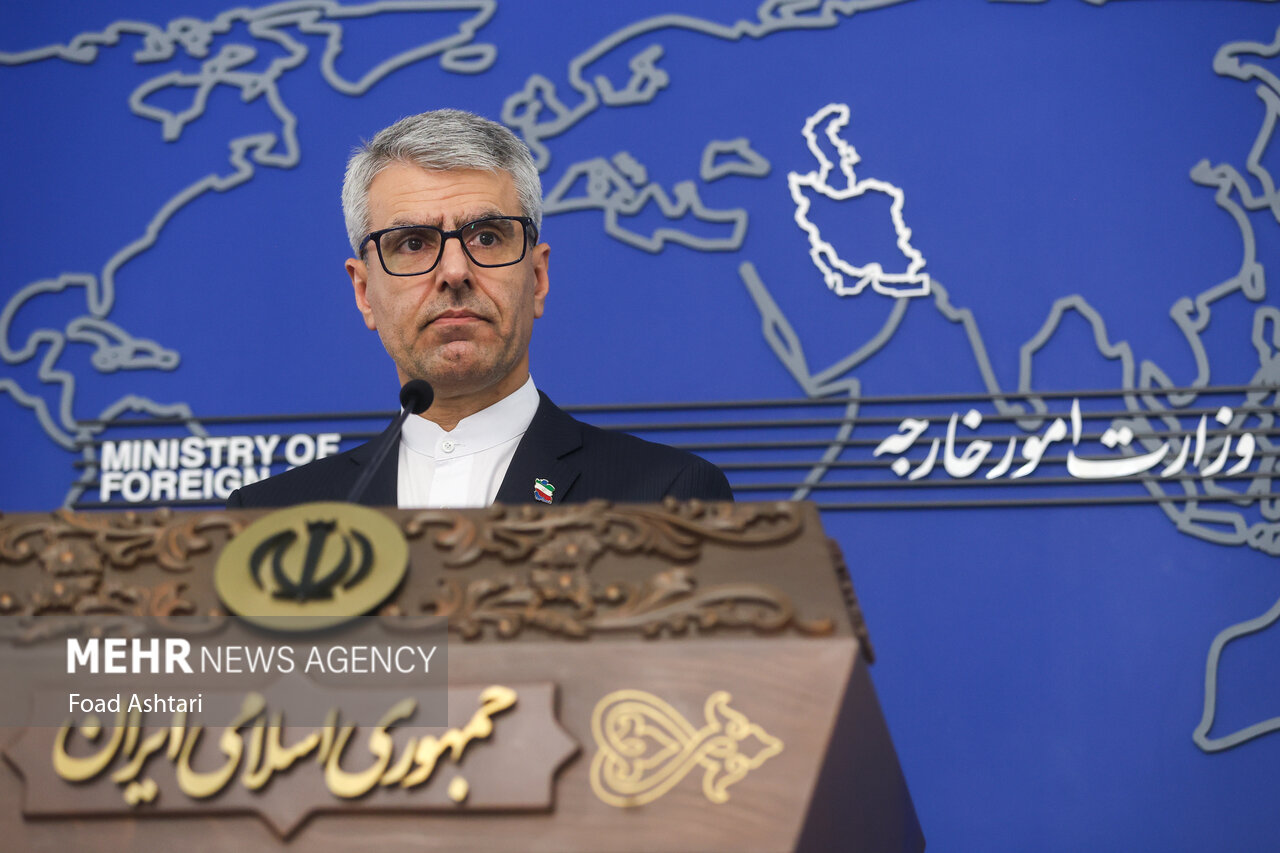
Table of Contents
- What Did Baghaei Say on July 13?
- Why Did the Foreign Ministry Escalate on July 15?
- The Gharibabadi-Khamenei Coordination of July 18
- How Does Iran Decouple Operational Withdrawal From Political Signaling?
- Where Was Saudi Arabia During the Five-Day Gap?
- The JCPOA Template for Two-Level Signaling
- What the Word-Choice Ladder Reveals
- The PGSA Clock Runs Independent of the MOU
- Why Did International Coverage Miss July 13?
What Did Baghaei Say on July 13?
Baghaei’s July 13 statement contained three operative clauses. First: the MOU had “undoubtedly entered a crisis phase.” Second: Iran “has never been the party to violate commitments under the deal first.” Third: Iran adheres to “commitment for commitment” — if the United States does not fulfil obligations, Iran will not fulfil its own. Xinhua, PressTV, and Mehr News all carried the statement within hours of delivery.
The conditional grammar matters. Baghaei did not say Iran was withdrawing. He said Iran’s future compliance was contingent on American compliance that Iran had already deemed absent. The logical terminus of this framing — if the US has violated, and if Iran will mirror violations — is that Iran considers itself unbound. But Baghaei preserved deniability by framing the void as prospective rather than declarative.
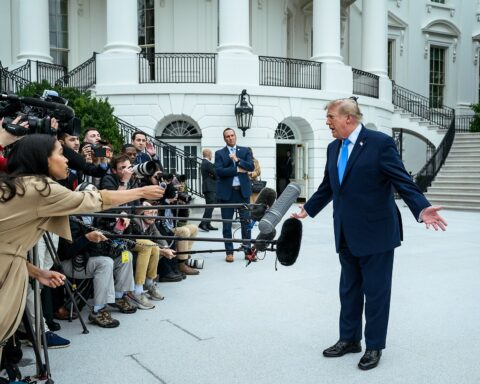
This was the same day — July 13 — that Donald Trump told Hugh Hewitt on his radio programme that the ceasefire was “over” and that a “memorandum of understanding when you’re dealing with sleazebags don’t mean much.” Trump simultaneously reimposed the naval blockade of Iranian ports. Both parties declared the MOU operationally dead on July 13. Neither used the word “void.” Neither triggered a formal withdrawal process — because the 14-point text contains no withdrawal clause.
The MOU’s 14th article calls for UN Security Council ratification of any final agreement but establishes no interim oversight body. The “executive mechanism” for monitoring compliance, referenced in the text, was never constituted. No dispute-resolution process existed to trigger. No notification period was specified. Iran and the United States were free to self-certify violations — and both did, on the same afternoon, in different time zones, to different audiences.
Critical Threats, the ISW/AEI joint project, published a special report on July 13 recognising Baghaei’s statement as structurally significant. The report assessed that the MOU breakdown “will likely revive the intra-regime debate over how to handle the strait, economy, and negotiations with the United States, with the anti-negotiations camp using the reimposition of the US blockade as evidence that negotiating with the United States was a mistake.” No other Western analytical outlet treated July 13 as an inflection point. Al Jazeera, PBS, ABC News, and Middle East Eye all dated the MOU void to July 18.
The Middle East briefing 3,000+ readers start their day with.
One email. Every weekday morning. Free.
Why Did the Foreign Ministry Escalate on July 15?
Two days after Baghaei’s conditional framing, the same spokesman removed the conditionality. On July 15, Baghaei stated: “We currently have no plans for negotiations and are focused on defense.” He added: “Iran no longer considers itself bound by the terms of the MoU.” And he provided the doctrinal framework: “An MoU is a set of mutual commitments, and in the event of a breach by the other party, we too will refrain from fulfilling our obligations; this is a principle, and this same path will be followed henceforth.”
The shift from July 13 to July 15 moved across three registers. The temporal register changed from future-conditional (“will not fulfil”) to present-declarative (“no longer considers itself bound”). The operational register changed from diplomatic hedging (“crisis phase”) to military framing (“focused on defense”). The doctrinal register changed from case-specific (“this MOU”) to universal principle (“this is a principle… henceforth”).
PressTV’s own headline captured the escalation. On July 13, the outlet ran: “Islamabad MoU in crisis as US ‘gutted’ 14-point agreement: Iran.” On July 15: “Iran has no plans for negotiations, focused on defense: FM spokesman.” Two days, one outlet, two incompatible registers.
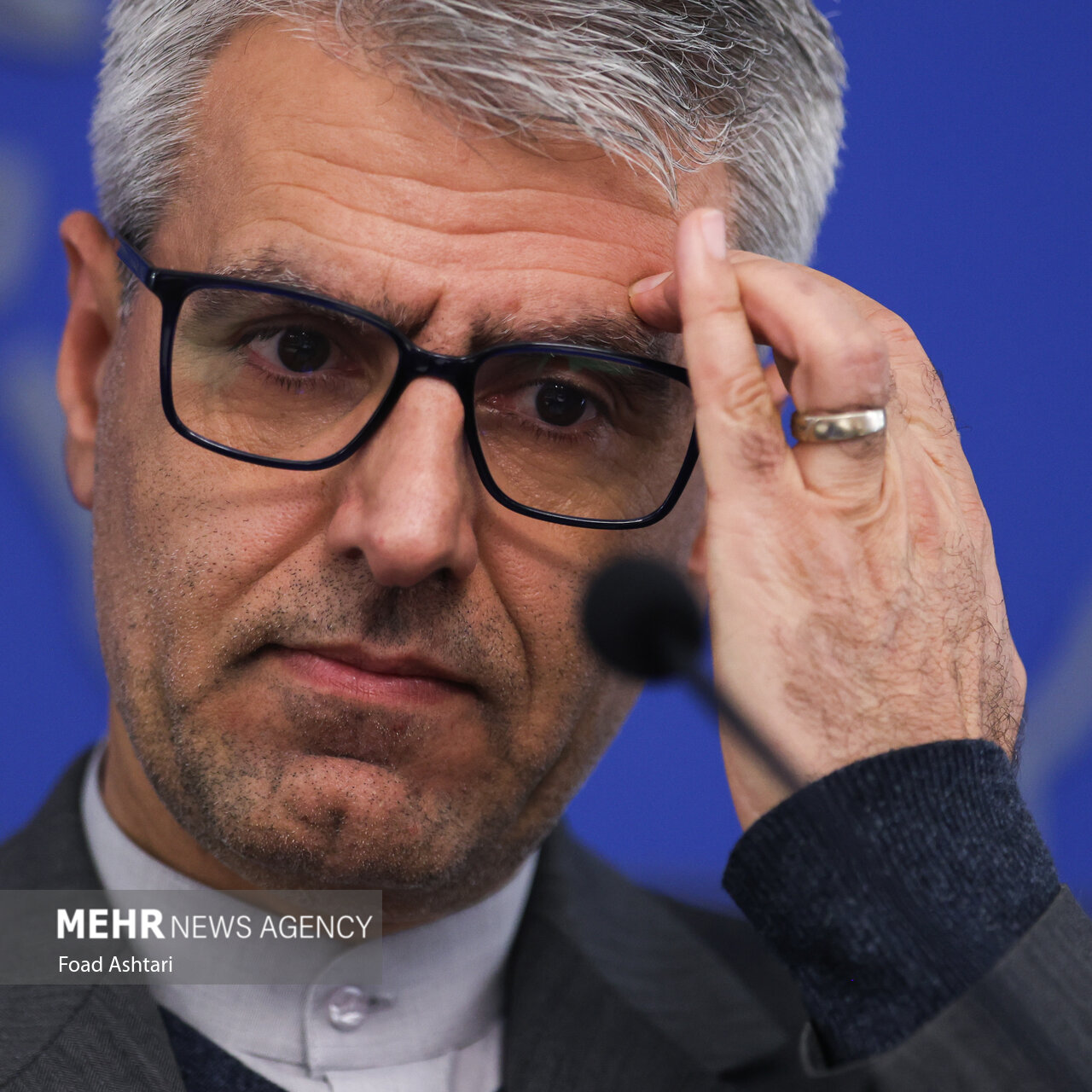
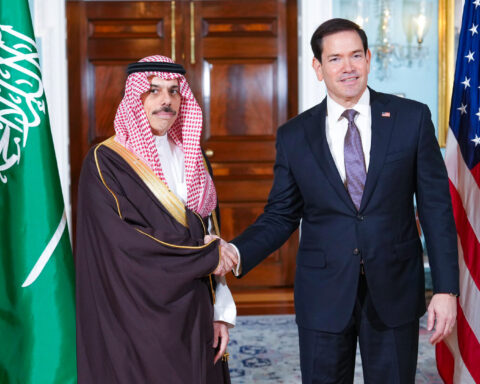
Between July 13 and July 15, Prince Faisal bin Farhan made a de-escalation call to Tehran and the Houthis on July 14. He received zero response from either party. The call went out after Baghaei’s July 13 “crisis phase” statement but before the July 15 escalation to “no plans for negotiations.” Faisal’s capacity to speak for Saudi Arabia in the Iran context had been structurally eroded throughout the conflict — and neither Tehran nor the Houthis answered.
The July 15 statement also introduced a temporal finality absent from July 13. “Henceforth” — a word that forecloses return to prior conditions without a new initiating event — appeared for the first time. Baghaei was not leaving the door open for American compliance to restore the MOU. He was declaring a new baseline from which any future negotiations would start from zero.
The Gharibabadi-Khamenei Coordination of July 18
On July 18, Iran’s formal diplomatic and supreme political authorities issued coordinated statements. Deputy Foreign Minister Kazem Gharibabadi stated: “We have also suspended all our commitments under that memorandum of understanding, known as the Islamabad Memorandum of Understanding, and we are not currently fulfilling those obligations.” He added: “We were engaged in negotiations, and unfortunately, the US itself, in violation of its commitments under the memorandum of understanding, resorted to these aggressive acts.”
Within hours, Mojtaba Khamenei’s X account posted a standalone statement: “The signature of the US President is utterly worthless and devoid of credibility.” This was not embedded in a speech or issued through IRNA’s standard Leader’s Office wire. It was a social media post — a format Khamenei’s office had been using with increasing frequency since the Supreme Leader’s death in early 2026.
The coordination is significant for what it reveals about sequencing. Gharibabadi — a Deputy Foreign Minister, one rank above Baghaei — introduced the word “suspended” into Iran’s official diplomatic lexicon for the first time. PressTV’s headline read: “Iran suspends MoU commitments after repeated US violations: Deputy FM.” The word had not appeared on July 13. It had not appeared on July 15. Its first deployment on July 18, simultaneous with Khamenei’s political declaration, indicates that “suspended” was reserved for the political event, not the operational one.
Khamenei’s statement performed a different function. It did not address the MOU’s specific provisions. It did not name the Islamabad agreement. It attacked the credibility of American presidential commitments as a category — “the signature of the US President” rather than “the signature on this MOU.” The statement was architecturally distinct from the foreign ministry’s operational language. It was a political declaration designed to foreclose the class of agreements to which the MOU belonged, not merely to end this specific one.
Mojtaba Khamenei’s prior conditional approval of the MOU had created structural ambiguity. He had granted “permission” with “a different view” — conditionality the Supreme National Security Council could not self-adjudicate because only Khamenei’s office could determine when those conditions were satisfied. The July 18 statement resolved that ambiguity. Khamenei was not declaring the MOU void; Baghaei had done that five days earlier. Khamenei was declaring the category of instrument void — ensuring no future MOU could proceed without his explicit re-authorisation.
How Does Iran Decouple Operational Withdrawal From Political Signaling?
The five-day gap between July 13 and July 18 served four structural purposes within Iran’s institutional architecture. Each purpose required the gap to exist — a same-day announcement would have collapsed functions that Iran needed to keep separate.
First, the gap allowed Iran to test whether the United States would reverse course after the operational void became apparent. Baghaei’s July 13 statement was carried by Xinhua, PressTV, and Mehr News — all outlets monitored by US intelligence. If Washington had responded between July 13 and July 18 with a compliance signal, Iran could have walked back the foreign ministry’s language without Khamenei having committed his political authority. The gap was an off-ramp that neither party used.
Second, the gap insulated Khamenei from diplomatic failure. If July 13 is the operative void date — and functionally it was — then any diplomatic efforts between July 13 and July 18 were directed at a dead agreement. Prince Faisal’s July 14 call to Tehran went unanswered because the foreign ministry had already moved to post-MOU posture. But because Khamenei had not yet spoken, Tehran could maintain that the MOU remained theoretically alive while operationally treating it as dead. This is institutional deniability at the sovereign level.
Third, the gap allowed Iranian state media to construct a narrative of American culpability before issuing the formal suspension. Between July 13 and July 18, Mehr News, PressTV, and IRNA published a sustained campaign framing Washington as the violating party. By July 18, when Gharibabadi used “suspended” and Khamenei attacked American presidential credibility, the Iranian public had been prepared for five days. The suspension appeared reactive rather than initiated.
Fourth, the gap separated the military register from the political one. On July 13, Iran reimposed its operational posture — “focused on defense,” no negotiations planned. This freed the IRGC and regular military to act without waiting for political authorisation from Khamenei’s office. By the time Khamenei spoke on July 18, Iranian military operations were already five days into their post-MOU phase. The political declaration ratified actions already underway rather than initiating them.
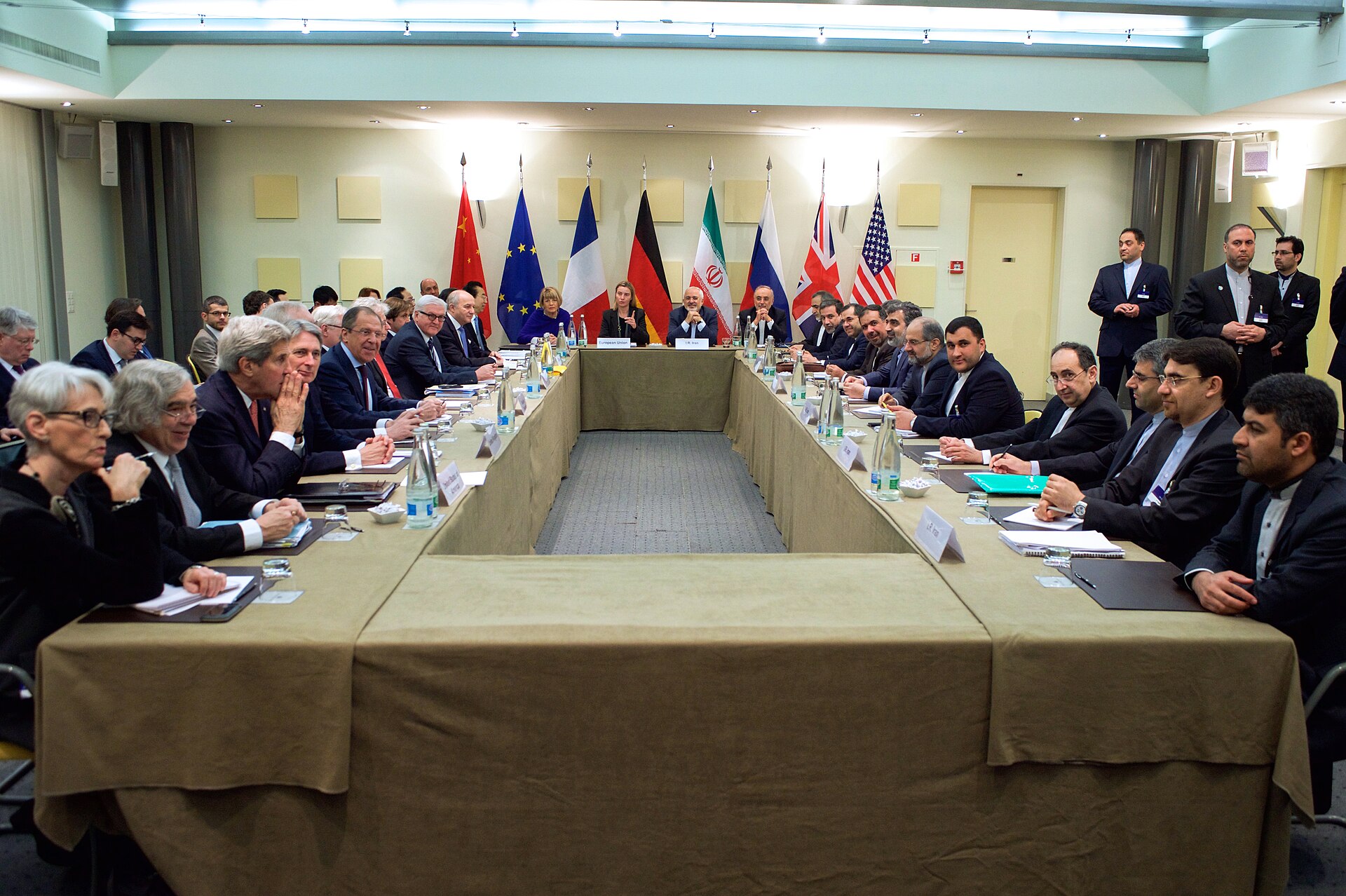
Where Was Saudi Arabia During the Five-Day Gap?
Saudi Arabia was not a signatory to the Islamabad Memorandum of Understanding. It was not a mediator. It held no observer status. Pakistan and Qatar served as co-mediators; the United States and Iran were the signatories. Saudi Arabia possessed no formal notification right under the agreement and had no standing to demand information about its status.
The only Iranian official with physical access to Saudi territory was Ambassador Enayati. Riyadh had expelled five Iranian diplomats in March 2026 while explicitly preserving Enayati’s status — a calculated distinction between punitive signaling and channel preservation. But Enayati held no role in the MOU’s operational architecture. He was a bilateral channel, not a multilateral one. Whatever he communicated to Riyadh between July 13 and July 18 — if anything — carried no formal weight regarding the MOU’s status.
This structural exclusion created an information asymmetry with direct operational consequences. Saudi Arabia’s back-channel to Tehran was pursuing objectives that depended on the MOU’s continued existence — regional de-escalation, Houthi restraint, the preservation of a diplomatic framework that might eventually include Saudi security interests. Between July 13 and July 18, that back-channel was pursuing a deal that Iran’s foreign ministry had already functionally abandoned.
Saudi Arabia’s most recent formal engagement with the MOU framework was its co-signature of the GCC-US Bahrain communiqué on June 25 — a document that named Pakistan and Qatar as mediators while assigning Saudi Arabia no process role.
Faisal’s July 14 de-escalation call — made to both Tehran and the Houthis, answered by neither — was placed into a diplomatic void. The call occurred one day after Baghaei declared the “crisis phase” and one day before Baghaei escalated to “no plans for negotiations.” Saudi Arabia was attempting diplomacy with a counterpart whose foreign ministry had already adopted military framing. The call was not rejected; it was irrelevant to the register Iran was operating in.
The deeper structural problem is that Saudi Arabia had no mechanism to distinguish between Iran’s conditional non-compliance (July 13) and definitive operational void (July 15). Both were communicated through the same spokesman at the same weekly press briefings. Without observer status, without formal notification rights, and without access to Iran’s internal decision-making architecture, Riyadh was dependent on public-source analysis of Baghaei’s word choices to determine whether the agreement undergirding its diplomatic strategy had already collapsed.
Hasan Alhasan, Senior Fellow at the International Institute for Strategic Studies, had assessed in June 2026 that Gulf states view the Iran conflict as “a disastrous turning point for the regional security order” and that “a bad deal is still preferable to war.” By July 13, the deal — bad or otherwise — had ceased to exist operationally. Saudi Arabia would not learn this definitively until July 18, when the rest of the world learned it too. Two days later, on July 20, Faisal called Qatar’s PM about MOU compliance — a call that illustrated Riyadh’s structural dependence on a facilitator it cannot substitute.
The JCPOA Template for Two-Level Signaling
Iran’s two-level void structure has a direct institutional precedent. When Trump withdrew from the Joint Comprehensive Plan of Action in May 2018, Iran did not respond with a single coordinated withdrawal. The foreign ministry announced “strategic patience” — continued compliance while Europe attempted to construct alternative economic mechanisms. Simultaneously, the IRGC began incremental enrichment steps that functionally voided Iran’s JCPOA commitments over a period of months.
The operational void preceded the political declaration by approximately fourteen months. Iran formally announced its “fifth step” of reduced JCPOA commitments in January 2020 — but enrichment beyond JCPOA limits had begun in June 2019. The foreign ministry maintained the fiction of conditional compliance (“if Europe delivers on economic commitments”) while the nuclear programme operated on a post-JCPOA basis.
The MOU gap compresses this template from months to days. The structural logic is identical: operational withdrawal through the foreign ministry, maintaining conditional/prospective language that preserves deniability, followed by political ratification from the supreme authority that forecloses return. The compression from fourteen months (JCPOA) to five days (MOU) reflects the accelerated tempo of the current crisis — Iran could not afford a months-long gap when US strikes were ongoing and 46 people had been killed, with over 400 wounded, since hostilities resumed.
The Washington Institute for Near East Policy documented the JCPOA two-level pattern as a structural feature of Iranian decision-making rather than a one-time diplomatic tactic. The foreign ministry operates as a preliminary signaling instrument; the Leader’s office operates as a ratification authority. The gap between them is not bureaucratic lag. It is a designed feature that preserves institutional flexibility at both levels.
The JCPOA precedent also illuminates why international media missed July 13 as the operative void date. In 2018-2019, Western coverage similarly treated Iran’s formal “fifth step” announcement as the withdrawal date rather than the earlier operational enrichment steps. The pattern rewards analysts who track foreign ministry language shifts rather than waiting for Leader-level declarations — and penalises those who treat the political declaration as the initiating event.
What the Word-Choice Ladder Reveals
Iranian state media’s word choices between July 13 and July 18 followed a controlled escalation ladder. Each rung introduced a stronger term while retiring the weaker one. The ladder was: “crisis” (July 13) → “no plans for negotiations” (July 15) → “suspended” (July 18).
On July 13, Mehr News headlined: “Iran acted in good faith but US put Islamabad MoU into crisis – FM spox.” PressTV ran: “Islamabad MoU in crisis as US ‘gutted’ 14-point agreement: Iran.” Both outlets used “crisis” — a word that implies a living agreement under stress rather than a dead one.
On July 15, PressTV’s headline read: “Iran has no plans for negotiations, focused on defense: FM spokesman.” The word “crisis” disappeared from the framing. “No plans” is operationally terminal — it describes a state of affairs in which the agreement’s core function (producing negotiations) has ceased. But it avoids the juridical register entirely. It neither “suspends” nor “voids” nor “withdraws.” It simply describes inaction.
On July 18, PressTV headlined: “Iran suspends MoU commitments after repeated US violations: Deputy FM.” “Suspended” is the first word in the five-day sequence that belongs to the language of international agreements. It implies a reversible formal act by a state authority — distinct from “crisis” (a condition) or “no plans” (a description of intent). Its appearance on July 18 rather than July 13 or 15 demonstrates that formal juridical language was held in reserve for the moment of political coordination with Khamenei’s office.
The voice escalation mirrored the word-choice ladder. July 13: Foreign Ministry Spokesman (the lowest-ranking official authorised to make public statements on diplomatic matters). July 15: the same Foreign Ministry Spokesman, now speaking in universal-principle register. July 18: Deputy Foreign Minister (one rank above) coordinated with the Supreme Leader’s office. Three rungs of institutional authority, three rungs of linguistic force, three calendar stops over five days.
This is not how states withdraw from agreements accidentally. Accidental or reactive withdrawals use inconsistent language, produce contradictions between spokespeople, and generate corrections. Iran’s five-day ladder produced zero corrections, zero contradictions between institutional voices, and a clean upward progression in both linguistic force and institutional authority. The precision argues for pre-planned sequencing rather than reactive escalation.
The PGSA Clock Runs Independent of the MOU
The Persian Gulf Strait Authority’s fee structure — $5.5 million per day, $253 million outstanding as of mid-July, hard deadline August 18 — operates on a timeline structurally independent of the MOU’s status. Whether the MOU was voided on July 13, July 15, or July 18 changes nothing about PGSA fee accrual. The authority’s legitimacy claim derives from Iranian control of Hormuz navigation infrastructure, not from any diplomatic agreement with the United States.
The economic warfare around Hormuz proceeded without reference to the MOU’s diplomatic status throughout the five-day gap. Brent pricing, transit volumes, and war-risk premiums all reflected the operational reality — that Iran was not negotiating — rather than the formal status of the agreement. Markets, unlike diplomats, registered July 13 rather than July 18 as the inflection point.
The PGSA’s August 18 deadline falls approximately two days after the MOU’s 60-day window would expire on August 16. The near-coincidence is not structural — the PGSA deadline was set independently and reflects Iranian fiscal requirements for strait-transit revenue rather than diplomatic scheduling. But the proximity means that any future negotiation to resurrect an MOU-like framework must now contend with PGSA fee arrears as a precondition rather than a parallel track.
By July 19, the MOU’s 60-day negotiation window has consumed 32 of its days — more than half elapsed, with zero negotiating sessions held since July 13. The Islamabad follow-up meeting originally scheduled for July 11 did not convene. Pakistan’s mediating role has produced no public statements since July 13. Qatar’s parallel channel — referenced in Gharibabadi’s July 18 statement as one of the frameworks Iran has abandoned — is similarly dormant.
The 440.9 kilograms of highly enriched uranium in Iranian stockpiles and the ongoing 121-day IAEA inspection blackout — within which the entire July 13-18 gap falls — form a separate but related clock. The nuclear dimension of the MOU — which included enrichment caps as part of the 14-point framework — is now ungoverned by any agreement, any inspection regime, or any negotiating framework. The five-day gap’s practical consequence is that both the PGSA fiscal clock and the nuclear clock advanced without diplomatic constraint while the world waited for Khamenei to speak.
Why Did International Coverage Miss July 13?
Al Jazeera, PBS, ABC News, and Middle East Eye all dated the MOU’s termination to July 18. The Foundation for Defense of Democracies published a July 14 analysis titled “Ceasefire Collapse Restores U.S. Leverage” that treated the collapse as US-driven rather than as an Iranian foreign ministry withdrawal announcement. Only Critical Threats — the ISW/AEI joint analytical project — treated Baghaei’s July 13 statement as a structurally significant event rather than routine diplomatic hedging.
Three factors explain the coverage gap. First, Baghaei’s July 13 language was deliberately constructed to sound like conditional hedging rather than operational void. “Crisis phase” and “commitment for commitment” are phrases that maintain the grammar of an agreement under stress rather than one that has ceased to function. Without tracking the escalation to July 15’s “no plans for negotiations,” the July 13 statement is indistinguishable from standard Iranian diplomatic complaint.
Second, Trump’s simultaneous July 13 statement — “sleazebags don’t mean much” — absorbed the available analytical oxygen. English-language coverage framed July 13 as a day of American provocation rather than Iranian diplomatic action. The FDD’s “Restores U.S. Leverage” framing typifies this: Washington acted, Tehran reacted. The framing obscured that Baghaei’s statement was itself an initiating action with independent institutional significance.
Third, the absence of the word “suspended” from July 13 and July 15 coverage meant that wire services and international outlets had no juridical trigger word to flag as a formal diplomatic event. Reuters, AP, and AFP are structurally attuned to words like “withdraws,” “suspends,” “terminates,” and “voids.” “Crisis phase” triggers no such editorial protocols. Iran’s word-choice ladder was designed to pass beneath this detection threshold until July 18, when “suspended” appeared simultaneously with Khamenei’s political statement — ensuring maximum international attention at the moment of political declaration rather than at the moment of operational reality.
The information architecture of the five-day gap therefore served not only internal institutional purposes but external narrative ones. Iran controlled when the world would recognise the MOU as dead — and chose the moment that maximised Khamenei’s political authority rather than the moment that maximised diplomatic off-ramp availability. The world learned on July 18 what Iran’s foreign ministry had decided on July 13. Qatar’s parallel push for ceasefire compliance — and why it reaches rooms Riyadh cannot enter — is covered in Qatar Holds the Ceasefire Saudi Arabia Cannot Enter.
Frequently Asked Questions
Did the MOU contain any mechanism for formal withdrawal?
The 14-point text includes no withdrawal clause, no specified notification period, and no dispute-resolution mechanism. Article 14 references UN Security Council ratification for a final deal but establishes no interim governance structure. The “executive mechanism” referenced in the text for monitoring compliance was never constituted — meaning neither party had a formal process to follow when declaring the agreement non-functional. This legal vacuum is why both Iran and the United States could declare the MOU dead on July 13 without triggering any procedural obligations to the other signatories or to co-mediators Pakistan and Qatar.
Was Pakistan informed of the operational void before July 18?
No public evidence indicates that Pakistan — a co-mediator and host of the original signing ceremony — received formal notification between July 13 and July 18 that Iran considered itself unbound. The Islamabad follow-up meeting scheduled for July 11 did not convene, and Pakistan’s Foreign Ministry issued no public statement on MOU status between July 13 and July 19. Pakistan’s mediating architecture depended on both parties’ continued engagement with the framework — a condition that ceased on July 13 without formal communication to the mediating parties.
How does Iran’s MOU void compare to the JCPOA withdrawal timeline?
The fourteen-month JCPOA gap (June 2019 to January 2020) was never formally acknowledged as a two-level structure by Western governments at the time. European capitals treated Iran’s incremental enrichment steps as compliance failures rather than as intentional pre-positioning for the eventual “fifth step” declaration — the same analytical error now visible in coverage that dated the MOU void to July 18 rather than July 13. The IAEA’s Board of Governors voted in June 2019 to find Iran in non-compliance but the political acknowledgment of JCPOA collapse did not occur until February 2020, when the UK, France, and Germany formally triggered the dispute-resolution mechanism. The equivalent political acknowledgment of the MOU collapse — Khamenei’s July 18 statement — occurred five days after the operational void rather than eight months after. Whether this acceleration represents institutional learning or simply the absence of European mediating parties to absorb the gap remains the key structural distinction between the two cases.
Could the MOU theoretically be revived after July 18?
Gharibabadi’s use of “suspended” rather than “terminated” or “void” preserves theoretical reversibility — suspension implies a state that can be un-suspended. However, Khamenei’s statement attacked the category of instrument (“the signature of the US President is utterly worthless”) rather than this specific agreement. Revival would require not merely addressing MOU-specific violations but rehabilitating American presidential credibility as a class — a political condition that only Khamenei’s office can determine satisfied, and which no American action short of fundamental policy reversal could plausibly meet.
What is the PGSA’s relationship to the MOU framework?
The PGSA was not referenced in the Islamabad MOU’s 14 points and was explicitly excluded from the MOU negotiating track — Iran treated the strait-transit fee structure as a sovereign infrastructure right, not a diplomatic concession subject to the agreement’s terms. This separation means the MOU’s collapse does not extinguish the PGSA obligation: the $253 million outstanding accrues regardless of whether any diplomatic framework exists. Conversely, any future successor agreement must address PGSA arrears before Iran would have incentive to return to a negotiating table — the MOU’s silence on PGSA now functions as a structural design flaw that forecloses the fastest revival path.
On July 18, the MOU’s collapse Baghaei set in motion reached its formal terminus. Mojtaba Khamenei’s declaration that Trump’s signature was “utterly worthless and invalid” — issued from a location no government in the region could verify — dissolved the framework whose five-day pre-closure this article documents. Mojtaba Voided the MOU from a Location No Official Can Name maps what that declaration means for the PGSA arrears and any successor agreement. The nuclear clause Baghaei’s closure left unresolved — the US-Saudi 123 Agreement, signed May 13 but still unsubmitted to Congress — surfaces as the next structural constraint: Saudi Arabia Bought the Nuclear Ceiling It Cannot Set details why Pickaxe Mountain puts Riyadh inside a decision it has no mechanism to enter.