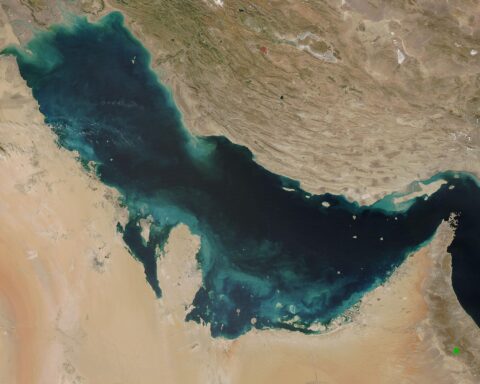
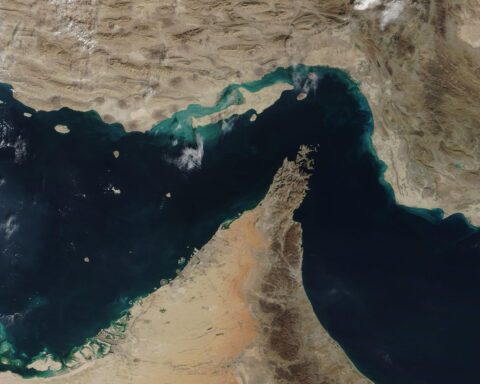
TEHRAN — Iran’s Islamic Revolutionary Guard Corps said on Thursday that two supertankers carrying more than 4 million barrels of oil combined caught fire overnight in the Strait of Hormuz after crossing what the IRGC described as an “unauthorized southern route,” according to Mehr News Agency. The claimed cargo volume is consistent with two fully loaded Very Large Crude Carriers, the standard supertanker class used in Gulf-to-Asia trade.
The IRGC said both vessels were “stopped by massive explosions” and warned that any ship cooperating with US forces on the same route would “meet the same fate.” As of approximately 11:00 UTC on November 12, no independent maritime authority had confirmed the incident. The IRGC did not identify either vessel by name, flag state, owner, operator, or IMO number, and the United Kingdom Maritime Trade Operations center had issued no matching advisory.
The House of Saud Daily Briefing
Saudi Arabia's news in 3 minutes, every morning. Free. See today's issue
An AFP translation of the IRGC statement described the incident as an “accident,” while Mehr News Agency’s own English text used only “massive explosions.” The IRGC has not addressed the discrepancy. The announcement came one day after the Bahri-operated NCC Fajr tanker was reported in a suspected Hormuz attack, and as Iran’s regular Army Navy separately warned of mine dangers in the eastern strait.
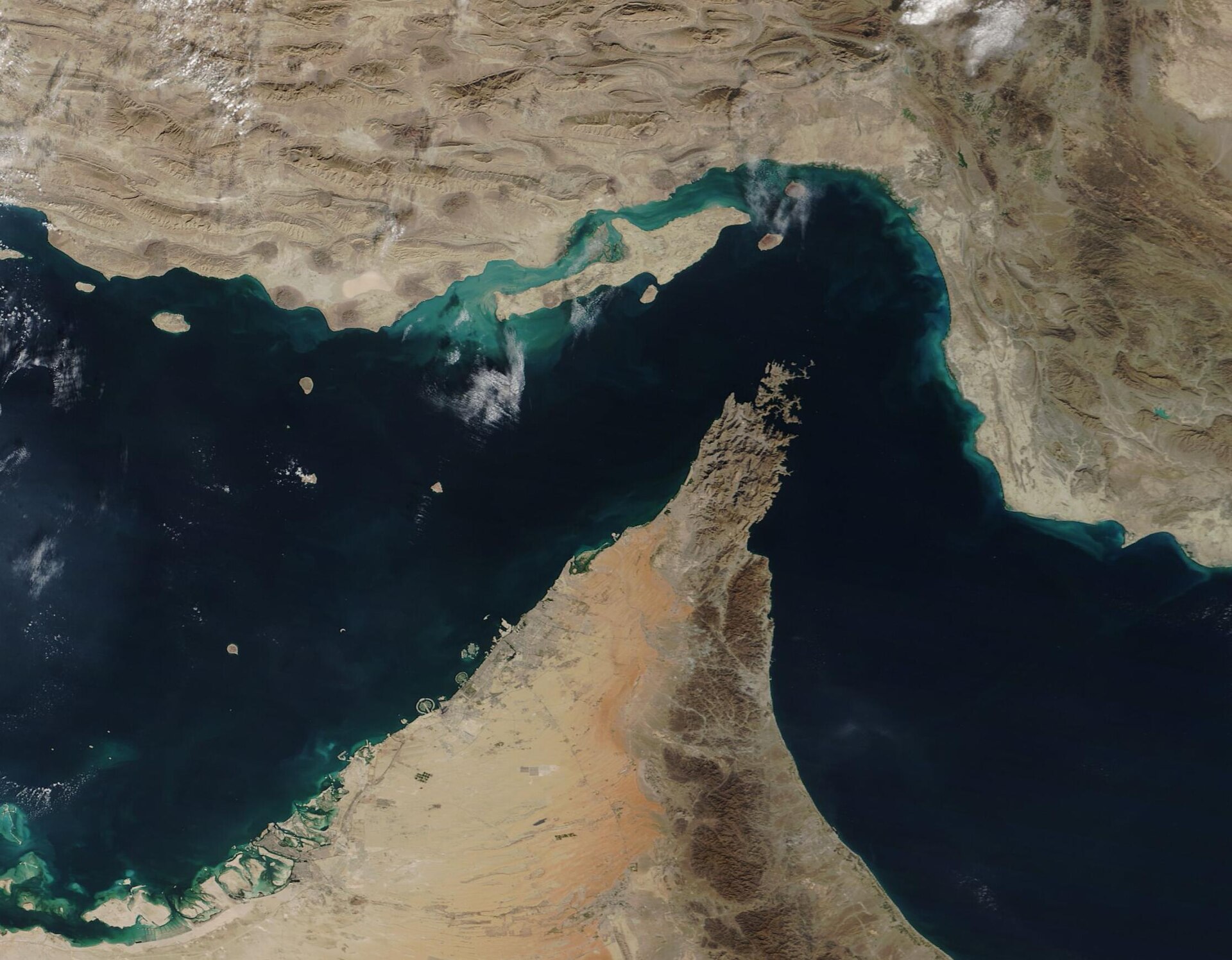
Table of Contents
What Did the IRGC Say About the Tanker Fires?
The IRGC Navy said two supertankers carrying more than 4 million barrels were “stopped by massive explosions” after crossing an “unauthorized southern route” in the Strait of Hormuz, according to Mehr News Agency. The IRGC did not identify either vessel and warned that ships cooperating with US forces would “meet the same fate.”
The Mehr News Agency English text, published Thursday morning, said both tankers had crossed “the unauthorized southern route despite repeated warnings from the traffic control center.” The IRGC called the route “illegal and unsafe” and said the fires resulted from the vessels’ “trust in the plundering and aggressor U.S. military,” according to Mehr.
The warning to the broader shipping industry was explicit. Any vessel that “switches off its navigation systems in the Persian Gulf or Hormuz and cooperates with US forces on the southern route would face the same fate,” the IRGC said, as reported by Mehr.
The language tracked previous IRGC statements since its October 26 declaration that the Strait of Hormuz was closed. The IRGC has framed Hormuz as a waterway under Iranian sovereign control and characterized US-escorted transits as “illegal.” The November 12 statement did not reference any specific naval engagement or confrontation with US forces.
Nour News, an outlet with ties to Iran’s Supreme National Security Council, published a version of the IRGC statement on November 12. Its version said the tankers were “stopped following a massive explosion” but used neither the word “accident” nor any specific cause for the explosions, according to Nour News.
No version of the statement from any Iranian outlet named the vessels, their flag states, owners, operators, or IMO registration numbers. No information about crew casualties, rescue operations, or environmental impact appeared in any version.
“Accident” or “Massive Explosions”?
AFP translated the IRGC statement as describing an “accident” in which the tankers were “hit with a violent explosion,” according to the wire as carried by the Times of Israel and Asharq Al-Awsat. Mehr News Agency’s English text and Nour News both described only “massive explosions,” without the word “accident.” The IRGC has not clarified the discrepancy.
The AFP wire reported that the vessels “were involved in an accident while traversing this prohibited path in the strait” and were separately “hit with a ‘violent explosion'” and left immobilized, according to the Times of Israel and Asharq Al-Awsat. Mehr’s English text made no mention of an accident. Whether the AFP rendering reflects a Persian-language original that Iran’s own English outlets chose to translate differently, or a distinct characterization, is not clear from available reporting.
Iran’s Army Navy — a separate branch from the IRGC Navy — reported on November 11 that an oil tanker caught fire after “hitting a mine” in “the unsafe and restricted area in the eastern part of the Strait of Hormuz,” according to Middle East Eye. That statement urged operators to “coordinate with the armed forces and comply with maritime laws.” Whether the Army Navy’s report describes one of the same vessels the IRGC referenced on November 12, or a separate incident, is unknown.
Iran operates two distinct naval forces: the regular Army Navy, which patrols the broader Persian Gulf, and the IRGC Navy, which claims jurisdiction over the Strait of Hormuz. The two branches issued separate statements about tanker incidents in Hormuz on consecutive days — the Army Navy explicitly referenced a mine on November 11; the IRGC Navy did not on November 12. TASS, the Russian state news agency, mentioned mines in a sidebar teaser on the November 12 incident but not in its main article text, according to a review of TASS’s coverage.
No Independent Confirmation
UKMTO, the Royal Navy-run center that issues navigation warnings for Gulf shipping, had published no advisory matching the IRGC’s November 12 claim as of approximately 11:00 UTC, according to Ship & Bunker and Bernama. UKMTO’s most recent relevant advisory, numbered 202-26 and dated November 11, covered a single unnamed tanker involved in “suspicious activity” with crew, damage, and environmental status listed as unknown, according to Ship & Bunker.
MarineLink, citing Reuters, carried the IRGC claim on November 12 but noted no UKMTO confirmation. The IRGC provided no coordinates for the alleged fires, no satellite imagery, and no environmental assessment. No maritime authority outside Iran — including CENTCOM, the IMO, or Gulf coastguard services — had publicly confirmed the incident as of Thursday morning.
The two vessels remain unidentified by any source, Iranian or international. Without names, flag states, or IMO numbers, shipping insurers and port authorities have no way to verify the IRGC’s account against vessel tracking data or automatic identification system records.
How Does This Compare to Previous Hormuz Incidents?
The International Maritime Organization had recorded 134 maritime incidents in the region as of November 11, with 25 seafarers killed since the conflict began, according to IBTimes citing IMO data. October alone saw 37 vessel attacks — the highest monthly total since the start of hostilities — according to Washington Institute for Near East Policy data cited by IBTimes.
The IRGC’s November 12 announcement follows a series of similar claims. In early November, the IRGC reported tanker fires following mine incidents in Hormuz. On November 6, Mehr News Agency reported two more such incidents. By November 10, the IRGC claimed 11 ships had been hit in 10 days.
On November 11, the Bahri-operated NCC Fajr tanker was reported in a suspected attack in the Hormuz area. India separately said the VLCC MT Fujairah Energy was hit by a projectile in the Persian Gulf, injuring four crew members. Iran also claimed a strike on Oman’s Didamar Island navigation aids in the strait.
Hormuz transit has all but stopped. IMF PortWatch recorded 3 transits on November 8, against a pre-war baseline of approximately 138 per day, according to Straits.live and the Joint Maritime Information Center, while 43 vessels held outside the strait. In October, 31 LNG tankers left the Gulf — a figure Reuters described as a wartime record, according to IBTimes.
The Saudi Cabinet on November 10 called for an immediate end to threats in both the Strait of Hormuz and Bab al-Mandeb. Iran has said the strait will not reopen until 7 conditions are met.
What Does This Mean for Oil Markets?
Brent crude traded at approximately $93.49 on November 12, up slightly on the day, according to Straits.live. The benchmark had been above $110 per barrel in late October. “Oil has fallen by more than 20% from its late-October highs,” an FxPro analyst told OilPrice.com on November 10.
Recovery of Hormuz shipping faces structural barriers beyond any diplomatic breakthrough. “Any increase in Hormuz flows would depend on mine clearance, insurance costs, and whether shipowners would accept the risk, even if a deal is struck,” LSEG Oil Research said, as reported by OilPrice.com. VLCC freight rates on the Gulf-to-China route exceeded $1 million per day, against approximately $80,000 per day a year earlier, according to Baltic Exchange assessments reported by Seatrade Maritime News.
Saudi Arabia has relied on its East-West pipeline, with a design capacity of approximately 7 million barrels per day, as a primary export corridor since Hormuz throughput fell. The pipeline was suspended on September 11 after a Houthi strike and restarted on September 22, according to Saudi Gazette and Zawya. Aramco in November cut its Arab Light official selling price to Asia by $3, pricing that reflected the recalibration around pipeline-fed exports and reduced Hormuz flows.
Frequently Asked Questions
What is UKMTO and why does its silence matter?
The United Kingdom Maritime Trade Operations center, run by the Royal Navy from Dubai, serves as the primary reporting point for commercial shipping incidents across the Gulf, Arabian Sea, and Indian Ocean. When a vessel is attacked or experiences an unexplained fire, UKMTO typically publishes a numbered advisory within hours. Its advisories are the standard reference for insurers, flag states, and shipping companies assessing Gulf route risk. The absence of any advisory matching the IRGC’s November 12 claim means no ship operator or third-party observer had reported a corresponding incident to the international maritime community as of Thursday morning.
What is the “unauthorized southern route” the IRGC referenced?
Since Iran declared the Strait of Hormuz closed — first on April 18, then again on July 12 — the IRGC has claimed authority over all vessel movements in the waterway. The “southern route” runs closer to the Omani coast, outside shipping lanes the IRGC considers under its jurisdiction, and has been used by tankers attempting to transit with US naval escort. The IRGC has warned repeatedly that vessels using this route without its coordination are entering an “unsafe zone” and will face consequences, according to multiple Iranian statements in November. Iran declared the strait closed on April 18, reopened it under a June agreement, and re-closed it on July 12. The US reinstated its naval blockade on July 14.
Can Saudi Arabia export oil without the Strait of Hormuz?
Saudi Arabia operates the East-West pipeline — also known as Petroline — carrying crude from the Eastern Province to the Red Sea port of Yanbu, bypassing Hormuz entirely. The pipeline has a design capacity of approximately 7 million barrels per day, with roughly 5 million barrels per day of exportable throughput, according to Aramco. It has served as the kingdom’s primary crude export corridor since Hormuz traffic collapsed, though it remains vulnerable to Houthi strikes from Yemen — a risk demonstrated by its 11-day suspension in September after a direct hit.
What is a supertanker?
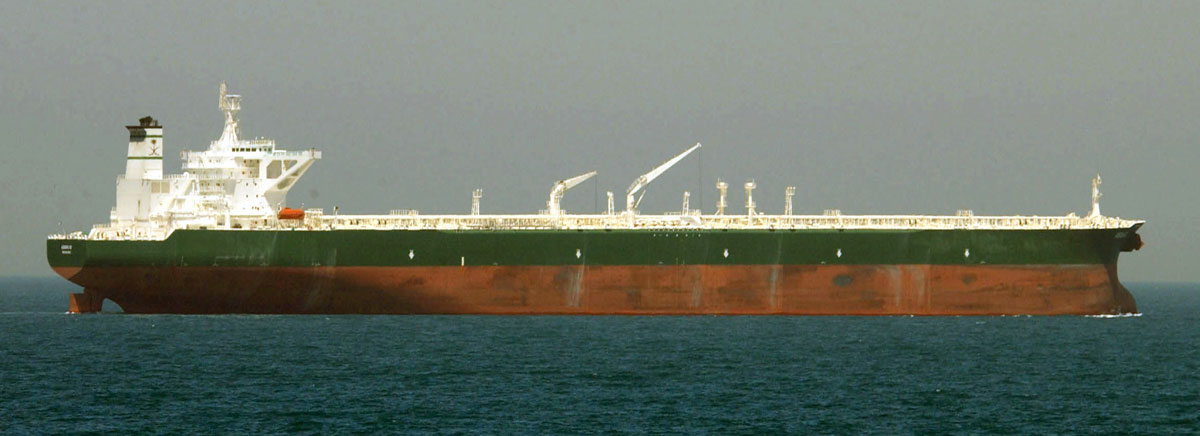
The term typically refers to a Very Large Crude Carrier, a vessel class of approximately 300,000 deadweight tonnes that carries about 2 million barrels of crude oil per voyage. VLCCs are the workhorse of Gulf-to-Asia crude trade. The IRGC’s stated figure of “more than 4 million barrels” across both vessels is consistent with two fully loaded VLCCs, though no independent source has confirmed the vessel class, the cargo, or the volume.
How many vessels were waiting outside Hormuz as of November 8?
IMF PortWatch data published by Straits.live showed 43 vessels holding outside the Strait of Hormuz as of November 8, unable or unwilling to attempt the passage. The Joint Maritime Information Center places the historical transit baseline at 138 ships per day — far above the 3 transits PortWatch recorded on that date. The figures reflect the near-total shutdown of commercial traffic through the waterway since Iran’s closure declarations and the US-led naval blockade.
The House of Saud Daily Briefing
Saudi Arabia's news in 3 minutes, every morning. Free. See today's issue