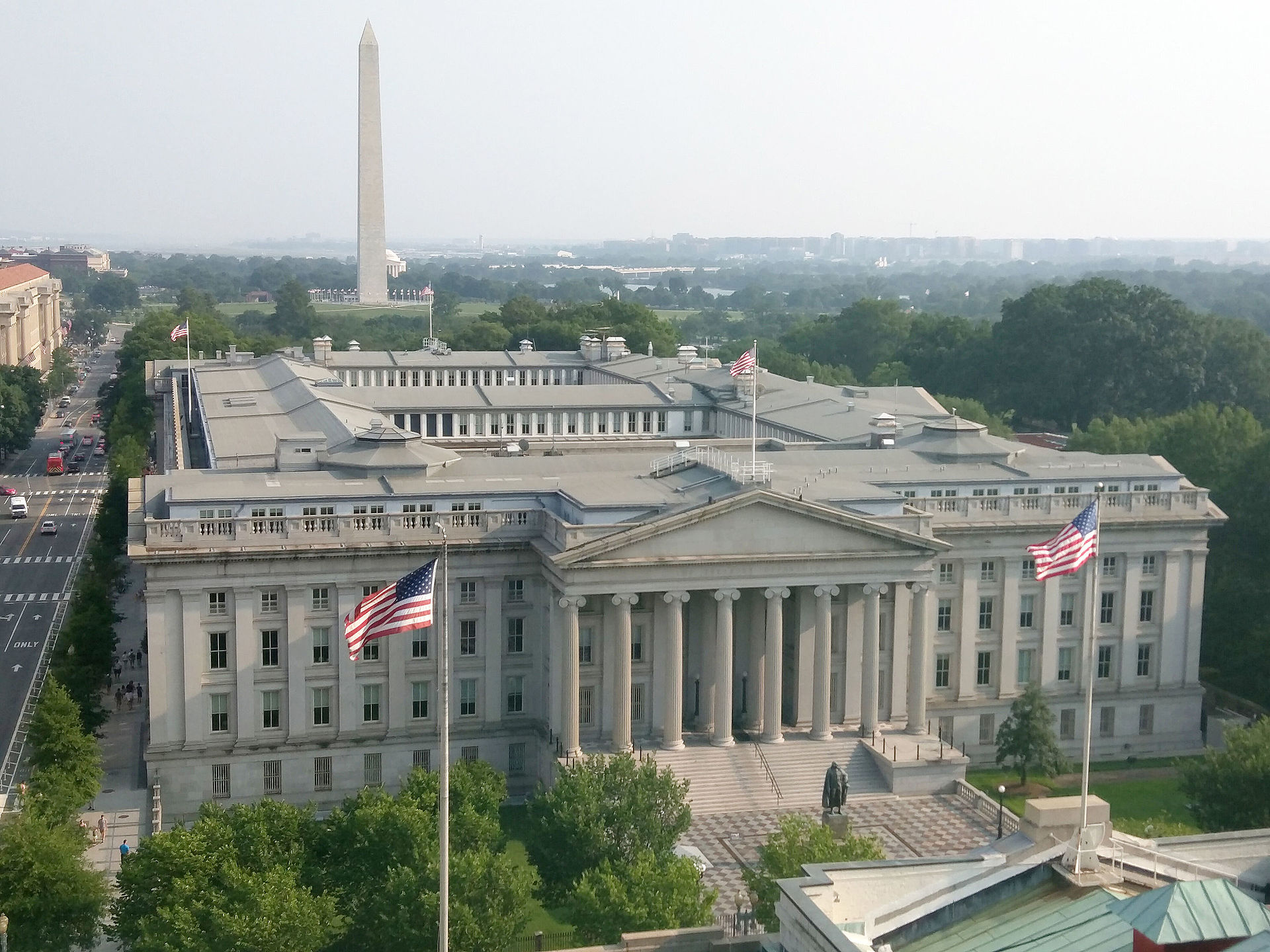

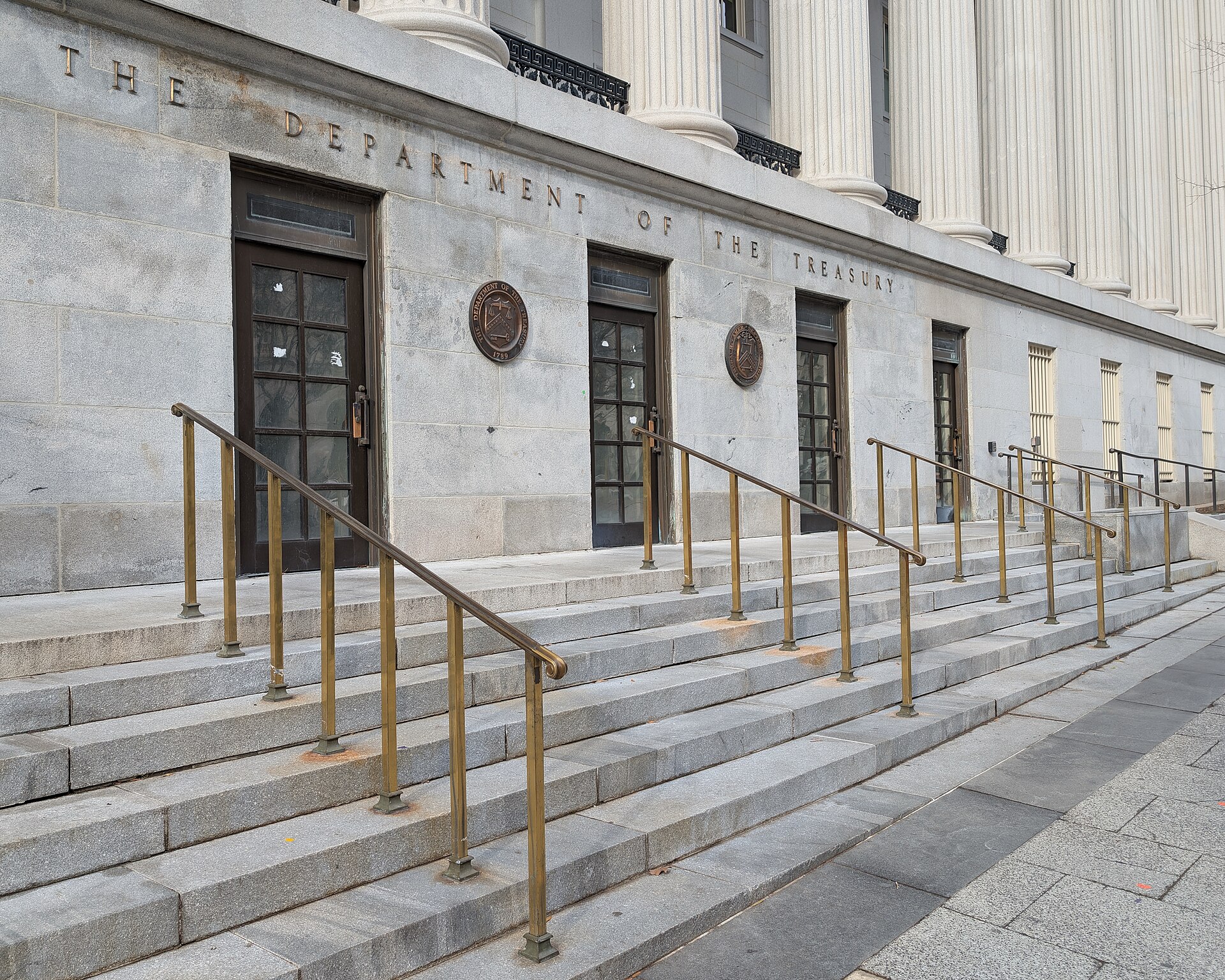
WASHINGTON — Treasury Secretary Scott Bessent directed his department on June 6, 2026, to use “all available authorities” to redirect frozen Iranian assets toward Gulf allies as compensation for war damage sustained since Iran’s first strikes on February 28 — a move that converts the $24 billion Tehran demanded as its precondition for peace into the fund Washington intends to use for paying the repair bills of the states Iran attacked. The directive, disclosed by a source familiar with Bessent’s thinking and reported simultaneously by Reuters, CBS News, and Arab News, arrived one day after Mohsen Rezaei, military adviser to Supreme Leader Mojtaba Khamenei, told CNN that the frozen assets were non-negotiable and that without their release “the negotiations are at a deadlock.”
The timing is not incidental. Iran filed its Oman counteroffer on June 6 — three days earlier than the expected June 9 deadline — demanding that Washington release frozen assets before Tehran removes mines from the Strait of Hormuz or restores passage to commercial shipping. Bessent’s directive does not merely reject that sequencing; it eliminates the asset pool Iran was negotiating over, redirecting the same funds to the parties Iran damaged. The result is a collision between two governments claiming the same $24 billion for opposite purposes, with neither possessing the legal machinery to force the other’s compliance.
Table of Contents
- What Treasury Said — and What It Left Open
- The Rezaei Interview That Preceded the Directive
- How Much of Iran’s Frozen Money Does Washington Actually Control?
- The Legal Architecture: IEEPA’s Armed-Hostilities Amendment
- The Damage Bill Treasury Is Trying to Fill
- Can Iran’s Counteroffer Survive Without the Assets It Demands?
- Background
- Frequently Asked Questions
What Treasury Said — and What It Left Open
The language attributed to Bessent’s directive was deliberately expansive. “Treasury will utilize all tools available to allow Iranian assets to be made available to our Gulf allies to support rebuilding and repairs for any future damage caused by Iran,” the source told Reuters and CBS News on June 6. The phrasing — “all tools available” rather than a specific statutory citation — left open whether the department intends to invoke the International Emergency Economic Powers Act’s armed-hostilities amendment, pursue targeted sanctions enforcement, or combine both with asset forfeiture actions already underway. Reuters noted that the language “did not appear limited to frozen assets,” a distinction that opens the scope to seized oil tankers, sanctioned cryptocurrency holdings (Treasury’s Office of Foreign Assets Control had already seized $500 million in crypto assets linked to Iranian entities during its 2026 “Economic Fury” campaign), and secondary-sanctions enforcement against third-party jurisdictions holding Iranian deposits.
Bessent also directed a team to seek comprehensive cost estimates from Gulf allies for Iran-caused damage since the conflict began on February 28, according to CBS News. The states named in Treasury’s scope — Saudi Arabia, UAE, Kuwait, Bahrain, Qatar, and Oman — cover every GCC member, including two that have maintained diplomatic or back-channel contact with Tehran throughout the conflict. That inclusion of Qatar and Oman, both of which have served as intermediaries in parallel de-escalation tracks, transforms the damage-assessment exercise into something broader: a mechanism that asks mediators to quantify their grievances against the party they are mediating for.
No Gulf foreign ministry issued a public response to the Treasury disclosure within 24 hours of its release. Arab News, which covers Saudi interests closely, reported the directive without obtaining comment from Riyadh’s Ministry of Foreign Affairs — consistent with a pattern of Saudi diplomatic silence that has now extended past two weeks. The absence of reaction from Kuwait, which expelled two Iranian diplomats on June 3 after IRGC strikes hit its passenger terminal and is arguably the state with the most immediate damage claims, is equally telling: Bessent’s directive offers Gulf states the prospect of compensation without requiring them to publicly endorse a move that would collapse whatever remains of the Oman mediation track.
The Rezaei Interview That Preceded the Directive
Bessent’s disclosure arrived precisely 24 hours after CNN aired an exclusive interview with Mohsen Rezaei, the former IRGC commander who now serves as military adviser to Supreme Leader Mojtaba Khamenei — a sequencing that CBS News flagged as contextually linked. Rezaei told CNN on June 5 that “the negotiations are at a deadlock and Trump must break this deadlock,” identifying the release of $24 billion in frozen assets as the price: $12 billion immediately upon signing any memorandum of understanding, with an additional $12 billion in a subsequent phase. The phased structure matched Iran’s broader demand architecture, in which Hormuz mine removal, sanctions relief, and asset release are sequenced so that Tehran receives material concessions before surrendering any of its current military position.
The Middle East briefing 3,000+ readers start their day with.
One email. Every weekday morning. Free.
Rezaei also delivered a threat that extended the war’s geographic frame, warning that if the United States resumes hostilities, Iran will “drag the war” from the Persian Gulf to the Indian Ocean, Bab al-Mandab, the Red Sea, and the Mediterranean. The escalation ladder he described tracked with language already published by Tasnim, the IRGC-aligned outlet, which had placed Bab al-Mandab activation on the agenda as early as June 1 — the same day Iran reclassified Hormuz from a concession to an invoice. What made the Rezaei interview operationally distinct from Tasnim’s editorial positioning was his status: as military adviser to Mojtaba Khamenei, his statements carry the weight of the supreme leader’s office rather than the IRGC’s media apparatus, and his use of CNN rather than Iranian state media indicated a message calibrated for Washington’s consumption.
“The negotiations are at a deadlock and Trump must break this deadlock.” — Mohsen Rezaei, military adviser to Supreme Leader Mojtaba Khamenei, CNN, June 5, 2026
How Much of Iran’s Frozen Money Does Washington Actually Control?
The gap between the headline figure and the operational reality is enormous. Iran’s total frozen assets globally exceed $100 billion, a sum that economist Frederic Schneider told Al Jazeera in April 2026 is “about three times what Iran earns annually from the sale of hydrocarbons” and approaches 25 percent of GDP. But the United States directly controls only approximately $2 billion of that total, according to the same Al Jazeera analysis. The remaining assets sit in third-party jurisdictions — roughly $20 billion in China, $6 billion in Qatar, $6 billion in Iraq, $7 billion in India, $1.5 billion in Japan, and $1.6 to $2 billion across EU institutions including Luxembourg-based funds — where Washington’s ability to redirect them depends on a combination of secondary sanctions pressure, bilateral cooperation, and legal authorities that have never been tested for this purpose.
Former US Treasury Secretary Jacob Lew added a further constraint in the Al Jazeera report: even if all sanctions were lifted, Iran could access only about half of its frozen assets, as the remainder is committed to existing investments, trade credit arrangements, or loan repayments in the jurisdictions where they are held. The practical effect is that the $24 billion Rezaei demanded is itself partly illusory — a claim on funds that are neither fully liquid nor fully recoverable — and Bessent’s counter-directive applies Washington’s own $2 billion in direct control while asserting jurisdiction over assets it would need cooperation to actually move. The Qatar precedent is instructive: in 2023, $6 billion moved from South Korean accounts to Qatar-held custodial accounts as part of a prisoner exchange, but those funds remain inaccessible to Tehran and sit in a jurisdiction now named in Bessent’s damage-assessment scope.
Reuters’s observation that Treasury’s language “did not appear limited to frozen assets” matters precisely because of this jurisdictional gap. If Bessent’s directive extends to seized tankers, forfeited cryptocurrency, and sanctioned commodities — categories where OFAC has already demonstrated enforcement capacity — the compensation pool grows beyond the contested $24 billion into assets where Washington’s control is unambiguous. The $500 million in crypto seizures during the “Economic Fury” campaign represents a down payment on this approach, one that does not require Chinese or Indian cooperation to execute.
The Legal Architecture: IEEPA’s Armed-Hostilities Amendment
The legal foundation for what Treasury is contemplating rests on a single paragraph added to the International Emergency Economic Powers Act in the weeks after September 11, 2001. The amendment — codified at 50 U.S.C. § 1702(a)(1)(C) — permits the president to “confiscate” (vest ownership of) foreign state property when “the United States is engaged in armed hostilities or has been attacked by a foreign country or foreign nationals.” Standard IEEPA authority allows only blocking — freezing assets in place — not transferring ownership; the 2001 amendment created a carve-out that has been invoked exactly once, when President George W. Bush seized Iraqi government assets in 2003 and directed them toward Iraqi reconstruction under Executive Order 13290.
Applying the same authority to the 2026 Iran conflict is legally straightforward in one respect and unprecedented in another. The threshold condition — armed hostilities with a foreign country — is unambiguously met; Iran has launched over 4,000 projectiles against GCC states since February 28, struck US military installations in Kuwait and Bahrain repeatedly, and the United States has conducted sustained strikes on Iranian territory including Qeshm and Goruk islands. But the Iraq precedent directed seized assets toward the reconstruction of the country whose assets were seized — the funds went from Iraq back to Iraq, for Iraq’s benefit. Bessent’s directive would channel Iranian assets not to Iran but to the Gulf states Iran attacked, creating a reparations-by-executive-action mechanism that has no direct precedent in IEEPA case law.
The Supreme Court’s February 20, 2026 ruling on IEEPA complicates the picture without foreclosing it. The Court struck down Trump’s use of IEEPA to impose global tariffs, finding that the statute’s commercial application exceeded its intended scope — but the ruling addressed IEEPA’s standard blocking authority and said nothing about the 2001 armed-hostilities amendment, which operates under a separate subsection with a distinct triggering condition. Legal analysts at CSIS noted the ruling narrows IEEPA’s commercial application while leaving its wartime powers untouched, a reading that Treasury appears to have adopted given the timing of Bessent’s directive. The Biden administration’s explicit decision not to invoke the 2001 amendment for Russian assets after the invasion of Ukraine — choosing instead the more limited REPO Act route — makes the Trump administration’s willingness to invoke it against Iran the second-ever use of the provision and the first directed at third-party compensation rather than subject-state reconstruction.
The Damage Bill Treasury Is Trying to Fill
The cost estimates Bessent’s team will collect from Gulf allies are likely to dwarf the assets Washington can realistically redirect. Repair costs to US military bases in the Gulf alone were estimated at approximately $5 billion as of late April, according to NBC News and Middle East Monitor — a figure that excluded radar systems, weapons platforms, and aircraft destroyed beyond repair. One source cited by Middle East Monitor placed the real figure at $40 to $50 billion when accounting for full rebuilding and equipment replacement across all affected installations. Fifth Fleet headquarters at NSA Bahrain, which has absorbed three separate IRGC strikes, carries a repair estimate of $200 million with confirmed damage to at least two air defense systems.
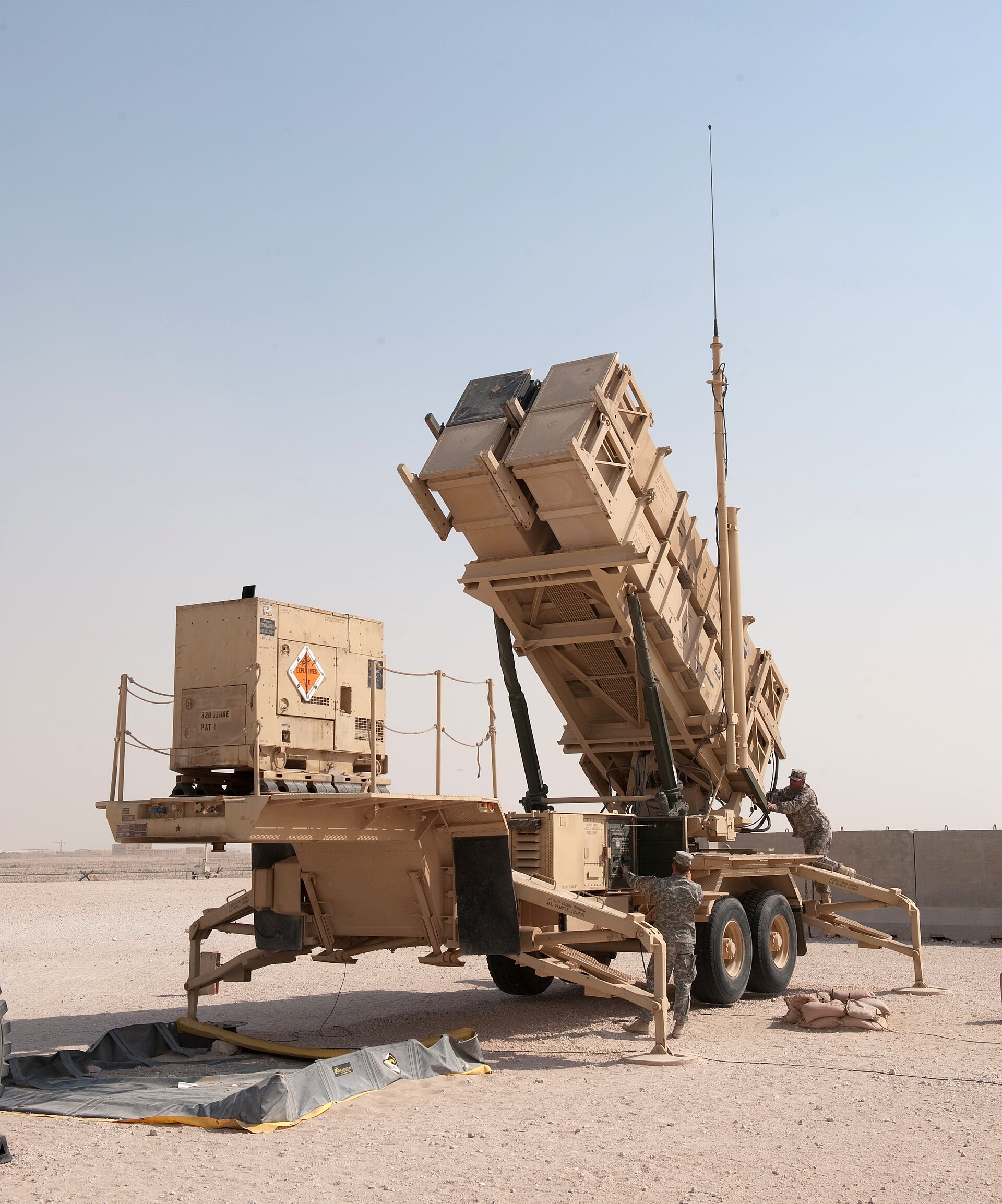
Gulf state civilian infrastructure damage adds layers that no single asset pool can cover. Kuwait’s Shuwaikh petroleum complex and two power and desalination plants sustained severe damage in strikes documented by Al Jazeera as early as April 5; the Mina Al Ahmadi and Mina Abdullah refineries were targeted multiple times. Saudi Arabia absorbed at least 38 missile and 435 drone impacts targeting military sites, oil facilities, and capital-area infrastructure, according to compiled strike data — a bombardment sustained across 99 days of conflict that has consumed an estimated 80 to 150 of Saudi Arabia’s PAC-3 MSE interceptor rounds, leaving the kingdom at roughly 3 to 5 percent of its pre-war inventory. The interceptor deficit alone, at approximately $4 million per round, represents a replacement cost exceeding $10 billion at current Lockheed Martin production rates — and Camden’s annual output of 620 missiles means the queue stretches years, not months.
Bahrain’s situation is more acute by proportion. With approximately 8 PAC-3 MSE rounds remaining from an original inventory of 60 — an 87 percent depletion rate — the kingdom’s entire air defense architecture depends on the 50-round standard FMS order published in the Federal Register on June 1 (FR Doc 2026-10920), which carries an 18-month delivery timeline. Secretary Rubio’s $8.6 billion emergency waiver on May 2 excluded Bahrain entirely. The damage assessment Bessent has requested will quantify what the Gulf states already know: the war’s costs are accumulating faster than any compensation mechanism — frozen assets, congressional appropriation, or allied contribution — can replenish.
Can Iran’s Counteroffer Survive Without the Assets It Demands?
Iran’s counteroffer, filed through Oman on June 6, was built on a single structural premise: that frozen asset release precedes every other concession, including Hormuz mine removal, restoration of commercial shipping, and the broader sanctions architecture that Rubio enumerated in his June 2 Senate testimony. The counteroffer inverted Washington’s draft sequencing, which placed Hormuz access in Phase 1 (no sanctions relief) and nuclear enrichment discussions in Phase 2 (with sanctions on the table). Iranian FM spokesperson Esmaeil Baghaei reinforced the inversion on June 6, calling Washington’s demands “unreasonable” and stating that “Iran has not reached a final understanding with the United States” — language that treated the US draft MOU as a proposal to be renegotiated rather than a framework to be accepted or rejected.
Bessent’s directive functionally nullifies the counteroffer’s first condition before Oman finishes delivering it. If Treasury proceeds to vest Iranian assets under the IEEPA armed-hostilities amendment, the $24 billion Tehran demanded as its entry price for negotiations becomes the fund Washington uses to compensate the states Iran struck — a transformation that does not merely deny the demand but converts it into its opposite. Rezaei’s $12 billion “immediately upon signing” becomes, under Bessent’s framework, $12 billion in Kuwaiti airport reconstruction or Saudi interceptor replacement. The counteroffer’s remaining conditions — end the war, lift the naval blockade, restore Hormuz passage, restore regional security — survive structurally but lose their anchor, because Iran designed the sequence so that each concession followed the asset release that Treasury has now claimed for other purposes.
Iran’s state broadcaster IRIB had previously floated a counter-demand in the opposite direction, reported by PressTV on May 1: that GCC states should pay Tehran war reparations for “enabling US-Israeli aggression.” That claim, dismissed at the time as propaganda positioning, acquires a different character in light of Treasury’s move. Both Washington and Tehran are now asserting that the other side’s allies owe compensation to their own — a symmetry that forecloses the asset-swap diplomacy on which every Oman-brokered framework has depended. No specific Iranian government statement directly addressing the Treasury’s June 6 announcement had been publicly filed as of June 7, but the structural response is already embedded in Baghaei’s “unreasonable” — a word that now applies not just to the MOU text but to the asset pool it was written to unlock.
Background
Diplomatic efforts have run through multiple parallel tracks without convergence. The Trump administration’s MOU proposal, circulated in late May, sought a phased framework placing Hormuz access before sanctions relief — a sequencing Iran rejected. Pakistan served as a courier between Washington and Mojtaba Khamenei’s office, while Oman maintained its traditional intermediary role, receiving Iran’s formal counteroffer on June 6. Saudi Arabia has been excluded from all three negotiating tracks — the US-Iran direct channel, the Oman mediation, and the Pakistan courier architecture — despite absorbing more total strikes than any other GCC state. The IMF’s June 3 Article IV statement conditioning Saudi recovery on Hormuz normalization marked the first time the fund had attached chokepoint conditionality to any Gulf state’s economic outlook.
Frequently Asked Questions
Has the United States ever seized a foreign government’s assets and given them to a third country?
No. The only prior invocation of IEEPA’s armed-hostilities amendment was President Bush’s 2003 seizure of Iraqi government assets, which were directed toward Iraq’s own reconstruction — not paid to third parties. If Treasury proceeds under Bessent’s directive, the transfer of Iranian assets to Gulf allies would establish an entirely new application of the 2001 amendment, one in which seized sovereign wealth compensates the attacking state’s victims rather than funding the subject state’s rebuilding. Legal challenges are likely, though the standing question — who would have standing to sue on behalf of Iran’s frozen assets in US courts during active hostilities — has no settled answer.
Could Iran retaliate economically against states that accept compensation from its seized assets?
Iran’s options for direct economic retaliation against GCC states are limited by the war itself — trade links were largely severed in March 2026 when the UAE closed its embassy and commercial transit through Hormuz collapsed. However, Iran retains control of the Strait of Hormuz, where the IRGC manages mine placement and the Persian Gulf Security Agreement (PGSA) toll structure. States that accept compensation could face permanent exclusion from any future Iranian transit concession, a cost that matters most for Kuwait and Bahrain (which depend on Hormuz for hydrocarbon exports) and least for Oman (which has Indian Ocean port alternatives). Iran’s IRIB has already framed GCC states as co-belligerents; accepting reparations funded by Iranian assets would harden that designation.
What happens to the Oman mediation track if the asset pool is redirected?
Oman’s role as intermediary depends on its ability to present credible trade-space to both sides — and the asset pool was the single largest item in that trade-space. If Washington vests the assets before Oman delivers Iran’s counteroffer to the White House (the counteroffer was filed with Oman, not directly with Washington), the sultanate’s mediation channel loses its primary currency. Muscat has not publicly commented on Bessent’s directive, but its inclusion in Treasury’s list of Gulf allies eligible for damage compensation creates an additional complication: Oman would be simultaneously mediating for Iran and collecting compensation from Iran’s seized assets, a dual role that no mediator can sustain without one side or the other withdrawing confidence.
Does the February 2026 Supreme Court IEEPA ruling block this move?
The Supreme Court’s February 20, 2026 ruling struck down Trump’s use of IEEPA to impose global tariffs, finding the statute was not designed to regulate commerce. But the ruling addressed Section 1702(a)(1)(B) — the standard blocking authority — and did not reach Section 1702(a)(1)(C), the armed-hostilities amendment added in 2001. Legal analysts at CSIS and the Brookings Institution have noted that the two subsections operate under different triggering conditions and different constitutional bases (war powers versus commerce powers). Treasury’s legal team appears to share this reading, since the directive was issued four months after the ruling without any indication that the Court’s tariff decision was treated as a constraint on wartime asset seizure.
How does Saudi Arabia’s damage claim compare to other Gulf states’?
Saudi Arabia has absorbed the largest aggregate volume of Iranian strikes — at least 38 missile and 435 drone impacts across 99 days — but its damage profile is distributed across military sites, oil facilities, and capital-area infrastructure rather than concentrated in single catastrophic events. Kuwait’s claims may be more politically potent despite lower aggregate volume: the June 3 strike on Terminal 1, which killed one person and injured 63 just 48 hours after the terminal reopened, provides the kind of identifiable civilian harm that strengthens a compensation case. Bahrain’s claim is the most defense-specific, centered on the 87 percent depletion of its PAC-3 interceptor inventory and the estimated $200 million in damage to NSA Bahrain facilities. The UAE, which closed its Tehran embassy on March 1 and has operated at heightened alert since, has disclosed the least about its damage exposure — a reticence that may change once Treasury’s cost-estimate requests arrive.
The same day Treasury began structuring its IEEPA asset-seizure framework, Iran’s Khatam al-Anbiya issued a parallel escalatory signal: Operation True Promise 5 was declared as a conditional strike on Israel contingent on continued Beirut strikes — a development that directly complicated any diplomatic opening the asset-seizure move might have created.
The zero-sum collision between Washington’s asset-seizure plan and Tehran’s asset-release demand is analyzed in depth in Twenty-Four Billion Dollars Cannot Move in Two Directions, which maps the 1981 Algiers Accords precedent, IEEPA sequencing constraints, and the June 9 fiscal convergence that makes Saudi neutrality on the dispute unsustainable.