
ISLAMABAD — Pakistan’s Interior Minister Mohsin Naqvi landed in Tehran on Saturday evening — his third trip to the Iranian capital in three weeks — carrying a letter written not by his country’s foreign minister or prime minister but by Field Marshal Asim Munir, Pakistan’s army chief, addressed directly to Supreme Leader Mojtaba Khamenei. The letter’s routing tells you everything about who controls the war’s only functioning diplomatic channel: a military commander writing to a supreme leader’s office whose real power sits with the IRGC apparatus beneath it, delivered by a cabinet minister whose portfolio has nothing to do with foreign affairs, on Day 100 of a conflict in which Saudi Arabia — the country most directly threatened by Iranian missiles — has no equivalent access, no seat at the table, and no capacity to protest without dismantling the security architecture keeping its own oil infrastructure defended.
n
Riyadh cannot object because the same field marshal whose pen reached Tehran commands approximately 13,000 Pakistani troops deployed across Saudi Arabia, anchored at King Abdulaziz Air Base in the Eastern Province. Pakistan has converted its courier role into structural leverage over every party simultaneously, and the mathematics of that position are now visible in Naqvi’s itinerary.
n
Wire reports confirmed later on June 7 that Interior Minister Naqvi carried a second, separate letter from Prime Minister Shehbaz Sharif alongside Munir’s military communication — a dual-letter architecture designed to give Tehran interpretive flexibility over which Pakistani institutional authority it is engaging with. The structure and strategic logic of the two-letter format are detailed here.
n
The Middle East briefing 3,000+ readers start their day with.
One email. Every weekday morning. Free.
Table of Contents
n
- n
- What Does a Letter From Pakistan’s Army Chief to Iran’s Supreme Leader Mean?
- The Three-Week Cadence
- Why Is an Interior Minister Running the Back-Channel?
- The SMDA Trap — 13,000 Troops and a $5 Billion Deposit
- Can Saudi Arabia Object to Pakistan’s Iran Diplomacy?
- Thirty-Four Years Inside Washington’s Pakistani Embassy
- Why Did Iran Use Oman for the Rejection and Pakistan for Substance?
- Lebanon’s Army Chief Arrives in Islamabad
- Frequently Asked Questions
n
n
n
n
n
n
n
n
n
n
n
 n
nn
What Does a Letter From Pakistan’s Army Chief to Iran’s Supreme Leader Mean?
n
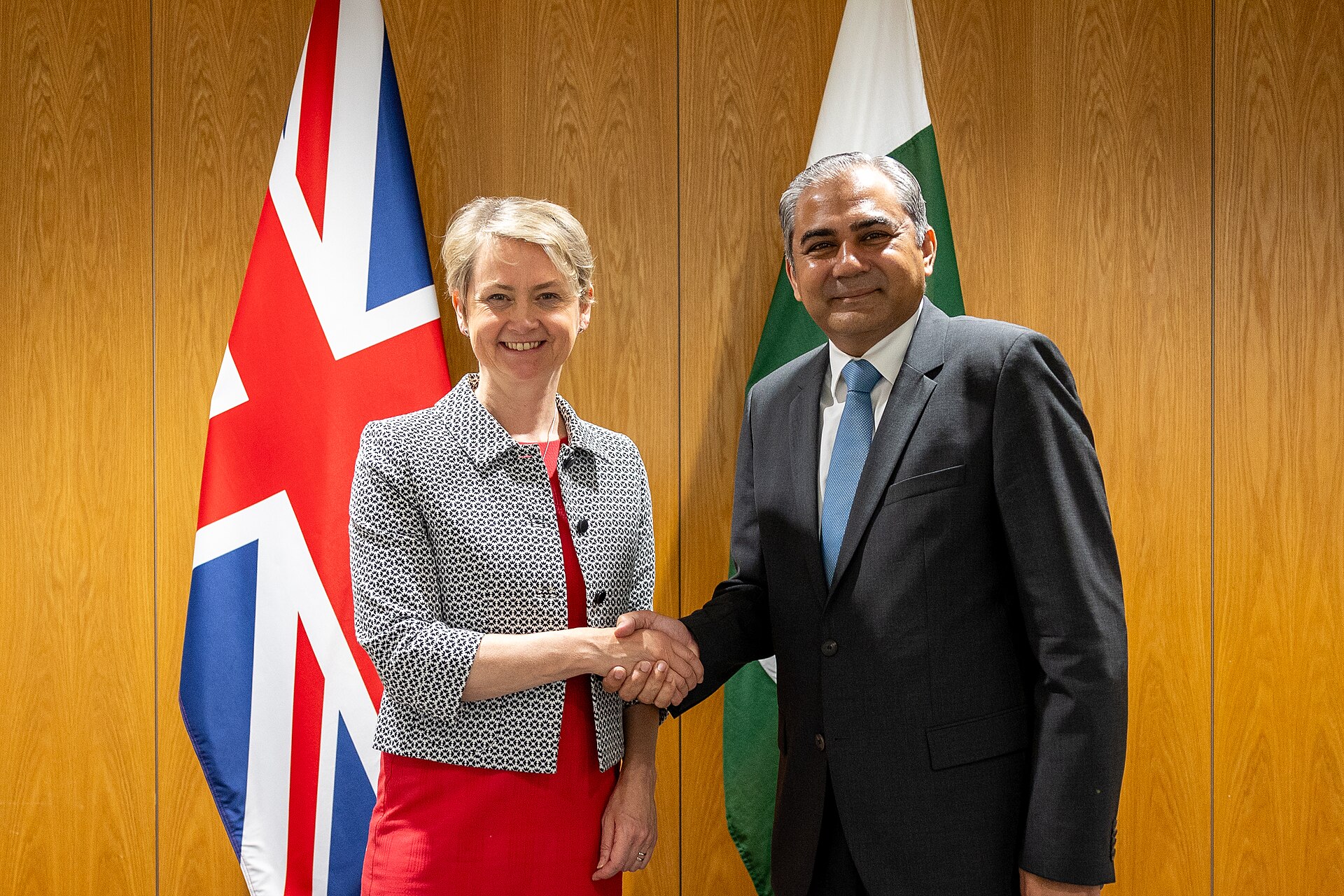
The letter Naqvi carried to Tehran was written by Field Marshal Asim Munir — Pakistan’s most powerful individual, the man who commands the country’s nuclear arsenal, runs its intelligence network, and holds a direct personal relationship with Donald Trump established during a June 2025 White House meeting where Trump hosted him without any Pakistani political leader present. The addressee was not Iran’s president, not its foreign minister, but Mojtaba Khamenei — the supreme leader installed on March 9, 2026, whom Time magazine described in April as a “rubber stamp” for the IRGC-dominated Supreme National Security Council, pressured into office by the same military apparatus that now receives Munir’s correspondence.
n
This is not head-of-state to head-of-state communication. It is military institution to military institution — Pakistan’s army chief writing to the office that commands Iran’s Revolutionary Guard through the supreme leader’s formal authority. “I am in Iran to deliver a special letter from the Commander of the Army and the Prime Minister of Pakistan to Ayatollah Sayyed Mojtaba Khamenei,” Naqvi told Aaj English TV on arrival. The phrasing was precise: he named Munir’s title first, Sharif’s second. The army chief’s letter is the payload; the prime minister’s message is the diplomatic cover.
n
Iran’s state media accepted the framing entirely. ISNA — Iran’s official news agency — reported that Naqvi “carries a special message from Field Marshal Asim Munir addressed to Leader of the Islamic Revolution Ayatollah Seyyed Mojtaba Khamenei,” naming Munir’s military rank before anything else. When a country’s state news agency dignifies a foreign army chief’s correspondence to its supreme leader as a normal channel of communication, the architecture is no longer improvised — it is institutional.
n
Islamabad has begun to exert sizable regional and global influence and is being courted by states across the world, having found success as the primary negotiator between the United States and Iran.
Joshua Kurlantzick, Senior Fellow, Council on Foreign Relations, April 28, 2026
n
The conventional Saudi diplomatic toolkit — foreign minister calls, royal envoys, GCC joint statements — cannot interface with this channel. Saudi FM Prince Faisal bin Farhan broke 14 days of silence in early June without calling Washington or Tehran. Pakistan’s army chief wrote directly to the office that matters and got a meeting scheduled within hours of delivery.
n
The Three-Week Cadence
n
Naqvi’s June 6 arrival was his third trip to Tehran since mid-May, establishing a roughly weekly diplomatic rhythm that no other country maintains with Iran’s leadership. During prior visits he met President Masoud Pezeshkian, Parliament Speaker Mohammad Bagher Ghalibaf, Foreign Minister Abbas Araghchi, and Interior Minister Eskandar Momeni — a roster that spans every institutional power center in the Islamic Republic. The current visit escalates the access tier: Naqvi met Momeni on arrival, has a scheduled meeting with Araghchi, and a session with Mojtaba Khamenei himself is expected, according to Tasnim — the IRGC-aligned news agency that would not report such a meeting unless the Guard approved it.
n
The cadence matters as much as the access. Three visits in three weeks means Pakistan is not arriving for set-piece summits with communiqués and photo opportunities. It is running an operational channel — carrying messages, receiving responses, adjusting positions, and returning with updated terms. A senior Pakistani official told Foreign Policy on June 1 that “Munir understood that Trump prefers to do diplomacy with individuals he thinks are able to take decisions immediately, not with diffuse, creaking foreign-policy bureaucracies.” The weekly Tehran trips are the mirror image of that logic applied to Iran’s side: Munir identified which office in Tehran actually decides and built a dedicated shuttle to reach it.
n
| Visit | Approximate Date | Iranian Officials Met | Access Tier |
|---|---|---|---|
| First | Mid-May 2026 | Pezeshkian, Ghalibaf, Araghchi, Momeni | President + Parliament + FM + Interior |
| Second | Late May 2026 | Araghchi, Momeni, additional officials | FM + Interior (return engagement) |
| Third | June 6–7, 2026 | Momeni (confirmed); Araghchi, Khamenei (scheduled) | Supreme Leader tier |
n
Compare this to Saudi Arabia’s diplomatic output over the same period. Prince Faisal made six contacts between June 2 and June 4 — none with Rubio, none with Araghchi, none with Lebanon’s leadership. The kingdom’s foreign minister was working the periphery while Pakistan’s interior minister was working the center. That gap is not a failure of Saudi diplomacy; it is a structural exclusion. The channel Pakistan built runs through military-to-IRGC nodes that Saudi Arabia’s civilian diplomatic apparatus cannot physically access.
n
 n
nn
Why Is an Interior Minister Running the Back-Channel?
n
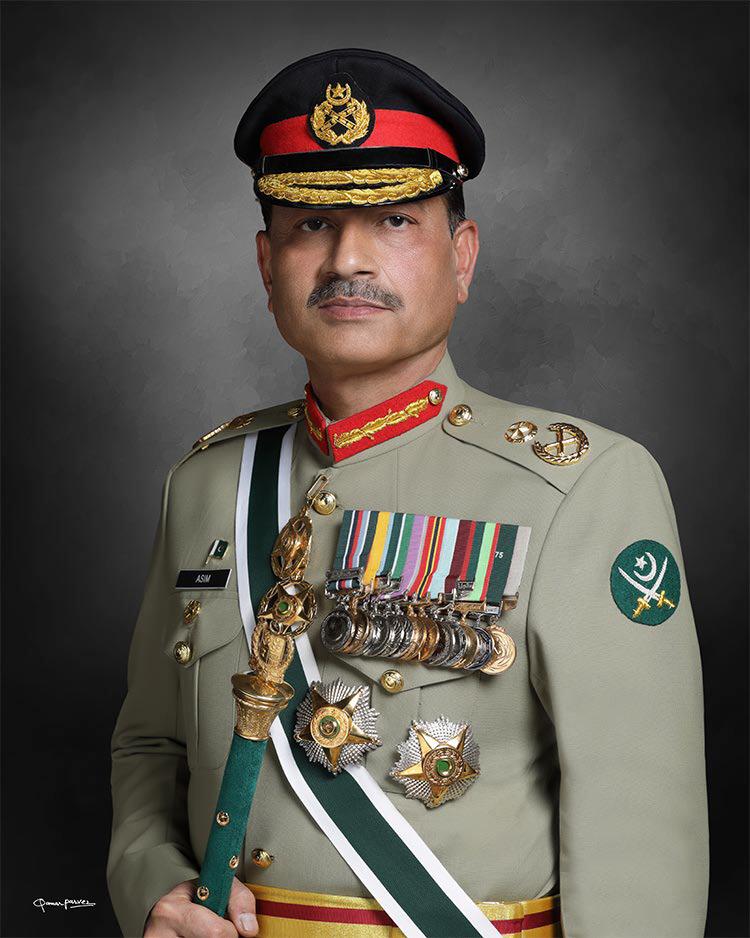
Mohsin Naqvi’s portfolio — interior security, police, border management — has no conventional relationship to international diplomacy. His selection as courier is the tell. In Pakistan’s power structure, the interior minister sits closer to the army chief’s operational orbit than the foreign minister does; Naqvi controls the intelligence coordination that interfaces with ISI, which interfaces with Munir directly. He is not a diplomat making diplomatic visits — he is a secure courier with cabinet rank, carrying classified military correspondence under the institutional cover of a scheduled bilateral meeting with his Iranian counterpart Momeni.
n
The Foreign Policy profile of Pakistan’s mediation strategy, published June 1, noted that Munir’s approach to Trump’s preferences — dealing with decisive individuals rather than bureaucracies — has been applied symmetrically to Tehran. Naqvi is the human equivalent of a secure communication line: trusted by the army chief, holding sufficient rank to be received at the supreme leader level, and operating in a portfolio that gives him plausible bilateral business (border security, drug trafficking coordination, refugee management) to discuss publicly while the classified correspondence travels in parallel.
n
Chatham House assessed in April 2026 that “Pakistan continues to take centre stage as an indefatigable mediator claiming neutrality and the trust of all sides in the US-Iran peace process,” adding that “Pakistan’s achievements in securing a ceasefire between the US and Iran and bringing the two warring parties together for their first high-level direct engagement since 1979 are not to be underestimated.” That ceasefire — the April 8 Islamabad Talks arrangement — established Pakistan not merely as a messenger but as a venue state capable of hosting direct US-Iran contact for the first time in 47 years.
n
The SMDA Trap — 13,000 Troops and a $5 Billion Deposit
n
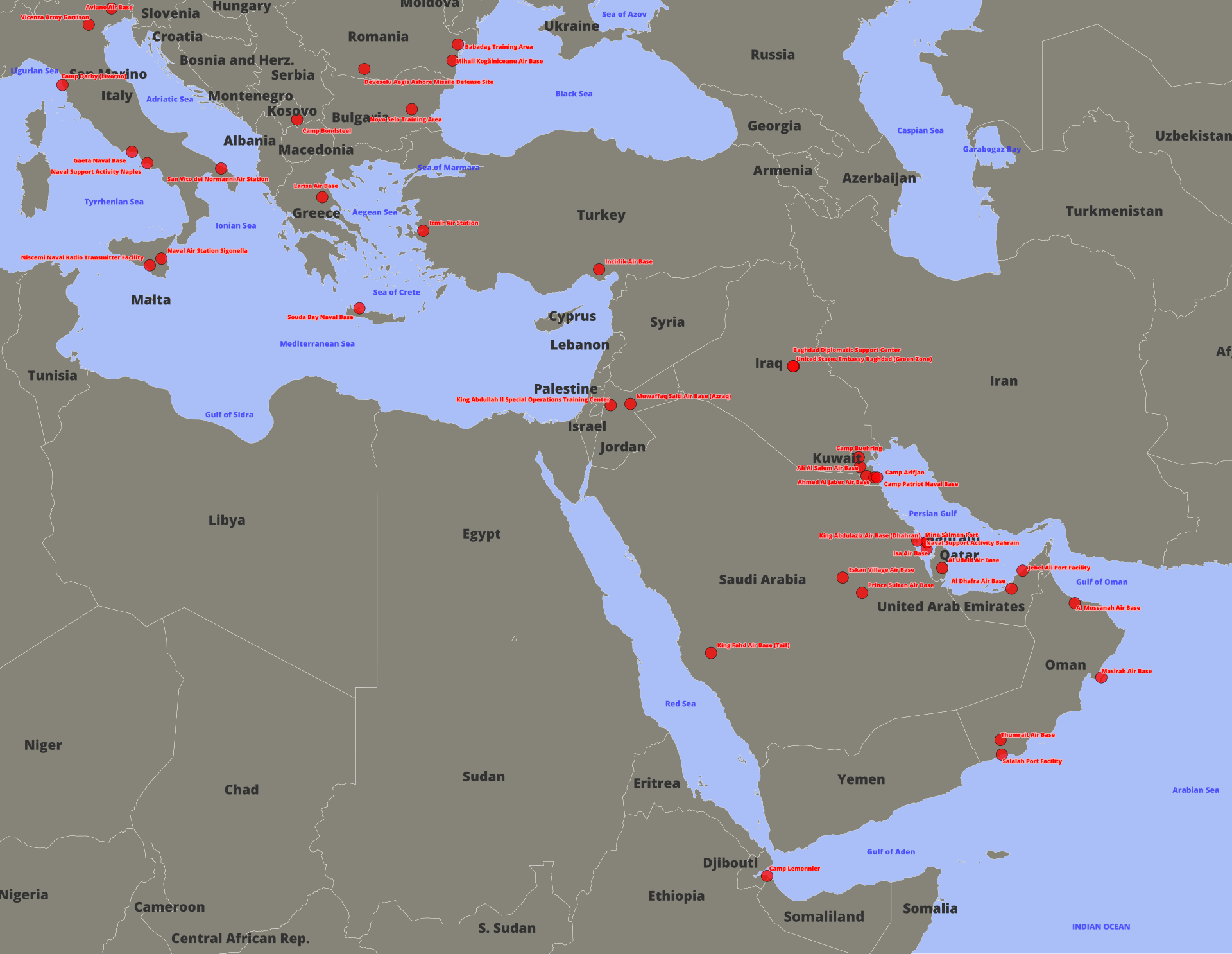
The Strategic Mutual Defence Agreement signed at Al-Yamamah Palace on September 17, 2025 — never presented to Pakistan’s parliament for review — created the formal framework under which approximately 13,000 Pakistani ground troops and at least 10 fighter jets now operate across Saudi Arabia, with the primary deployment at King Abdulaziz Air Base in the Eastern Province. The SMDA authorizes up to 80,000 troops; current deployment represents a fraction of what Riyadh could theoretically request. But the troops already present are defending the infrastructure corridor that keeps Saudi oil flowing while Iranian missiles target GCC facilities weekly.
n
The financial architecture binding Saudi Arabia to Pakistan runs deeper than the security agreement. Saudi bilateral cash deposits to Islamabad total $5 billion, maintained at approximately 4 percent annual interest — below prevailing rates on Chinese bilateral deposits and significantly below Pakistan’s commercial borrowing costs. After the UAE recalled a loan in early 2026, Saudi Arabia and Qatar stepped up with $5 billion to shore up Pakistan’s foreign exchange reserves, timing explicitly linked to Pakistan’s mediation role. The IMF’s three-year program for Pakistan requires Saudi Arabia, China, and the UAE to maintain $12 billion in total deposits through completion — Saudi Arabia cannot weaponize financial withdrawal without triggering a program collapse that would destabilize its own security partner.
n
| Mechanism | Value | Constraint on Saudi Arabia |
|---|---|---|
| Bilateral cash deposits | $5 billion (at ~4% interest) | IMF requires maintenance through program end |
| Saudi-Qatar bailout (post-UAE recall) | $5 billion combined | Withdrawal collapses forex reserves |
| Saudi remittances to Pakistan (Jan 2026) | $739.6 million (single month) | Largest single-country source; disruption destabilizes Pakistan economy |
| Pakistan total remittances (FY2025) | $38.3 billion | Exceeds entire IMF loan program value |
| IMF deposit requirement | $12 billion (Saudi + China + UAE combined) | Cannot be withdrawn without IMF program failure |
n
The trap runs in both directions. Pakistan cannot abandon its Iran mediation without losing the diplomatic leverage that makes it valuable to Washington — and losing that value would eventually erode the financial support Riyadh provides. Saudi Arabia cannot pressure Pakistan to stop talking to Tehran without risking the military deployment that keeps Patriot batteries defended and the IMF program that keeps its security partner solvent.
n
As the Stimson Center noted in its 2026 analysis: “Pakistan can hold both roles only if military deployment remains strictly defensive, time-bound, and transparently limited — the moment the theatre shifts to offensive operations, the dual role collapses.” The deployment has remained defensive, and on Day 100, the dual role is operating at its highest tier yet.
n
 n
nn
Can Saudi Arabia Object to Pakistan’s Iran Diplomacy?
n
Saudi Arabia’s inability to challenge Pakistan’s Tehran shuttle is not a diplomatic choice — it is a structural impossibility created by Riyadh’s own decisions. The kingdom signed a defense pact that made Pakistani military presence essential to its Eastern Province security, committed to IMF-mandated financial deposits it cannot withdraw, and assembled a quadrilateral security bloc (Saudi-Pakistan-Egypt-Turkey) that held three foreign ministers’ sessions in 31 days between March 19 and April 18, 2026, with zero communiqués — a format that gave Pakistan insider status without public accountability.
n
The quadrilateral’s IISS characterization as “institutionalised consultation” means Pakistan sits inside Saudi Arabia’s security planning architecture while simultaneously running the only diplomatic channel Tehran has accepted for substantive negotiation with the United States. Riyadh built itself into a position where its closest military partner is also its diplomatic rival for influence over the war’s resolution — and it cannot disentangle the two relationships without losing the military one it needs more urgently.
n
Consider the counterfactual. If Saudi Arabia publicly criticized Pakistan’s Iran engagement, Islamabad could slow-walk SMDA cooperation — not withdraw troops outright, but delay reinforcement rotations, reduce aircraft availability, restrict intelligence sharing. With Saudi PAC-3 stocks depleted to an estimated 80–150 interceptors and no emergency resupply waiver from Washington, any friction in the Pakistani military presence becomes an existential risk to Saudi air defense coverage. Prince Faisal’s silence is not passivity — it is the sound of a foreign minister who has calculated that the cost of complaint exceeds the cost of exclusion.
n
Saudi Arabia grounded Project Freedom over access issues with the United States. It cannot ground Pakistan’s Tehran shuttle without grounding its own air defense.
n
Thirty-Four Years Inside Washington’s Pakistani Embassy
n
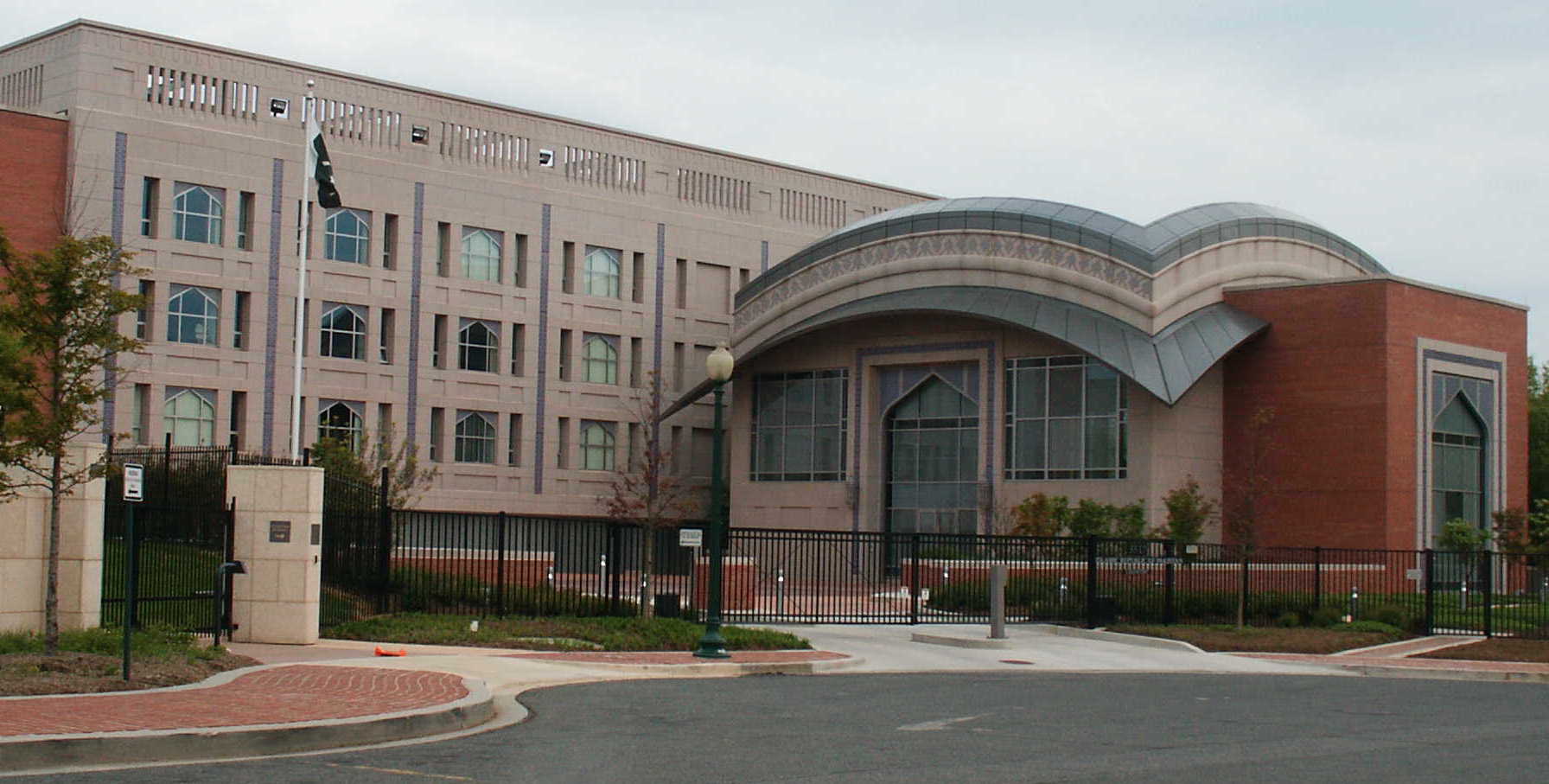
Pakistan’s role as Iran’s diplomatic bridge to the United States did not begin with the current war. Since March 1992, when Algeria withdrew as Iran’s protecting power, Pakistan has operated the Interests Section of the Islamic Republic of Iran inside the Pakistani Embassy compound at 1250 23rd Street NW in Washington, DC. For 34 years, every piece of formal Iranian diplomatic communication to the United States government has been transmitted through Pakistani institutional infrastructure — a structural arrangement no other country on earth can replicate.
n
This is not a personal relationship between leaders that dies when governments change. It is an institutional function embedded in the physical infrastructure of Washington’s diplomatic quarter, surviving every change of government in Islamabad, every rupture between Iran and the Gulf, every US sanctions escalation since 1992. When the Islamabad Talks produced the first direct US-Iran meeting since 1979 in April 2026, Pakistan was not improvising a new role — it was extending a function it had performed for three decades into a kinetic conflict that made the function suddenly indispensable.
n
The 34-year institutional history also explains why Iran trusts Pakistan’s courier architecture in a way it would not trust a Gulf state’s. Saudi Arabia built a private de-escalation track with Iran — but that track operates through ad hoc royal channels without institutional permanence. Pakistan’s channel is literally built into the bricks of its Washington embassy. Iran was the first country to recognize Pakistan’s independence in 1947; Pakistan is home to the world’s second-largest Shia Muslim population; the two share a 900-kilometer border. The relationship has structural depth that Saudi Arabia, which severed diplomatic ties with Tehran in 2016 and only restored them through Chinese mediation in 2023, simply does not possess.
n
Why Did Iran Use Oman for the Rejection and Pakistan for Substance?
n
On June 6 — the same day Naqvi arrived in Tehran — Iran delivered its formal rejection of Trump’s Memorandum of Understanding through Oman, not through Pakistan. The compartmentalization is deliberate and reveals how Tehran has organized its diplomatic architecture for the conflict: Oman handles the formal legal track (official rejections, counteroffers, public-facing diplomatic correspondence), while Pakistan handles the substantive back-channel (IRGC-level communication, supreme leader engagement, military-to-military signaling).
n
Washington nullified Iran’s counteroffer without responding to it — but the counteroffer itself traveled through Oman. When Iran needed to send a classified military communication about negotiating positions to the office that actually controls Iranian decision-making, it used Pakistan. The distinction maps precisely onto Iran’s internal power division: the Omani track interfaces with Iran’s foreign ministry (Araghchi, the civilian apparatus), while the Pakistani track interfaces with the Beyt — the Supreme Leader’s Office through which Mojtaba Khamenei, and before him his father, managed the IRGC networks that hold real authority.
n
Iran’s Deputy Foreign Minister Kazem Gharibabadi stated that Tehran “does not wait for the green light of any country” and acts “strictly according to what it considers its own interests.” That language — broadcast via IRIB — was directed at Pakistan as much as at Washington, a reminder that being the courier does not make you the decision-maker. But Gharibabadi’s statement was itself delivered through state media, not through the Naqvi channel, reinforcing the compartmentalization: public posturing goes through broadcast; substantive positions go through Munir’s letter.
n
Saudi Arabia sits on neither track. Iran filed its counteroffer through Oman, not Riyadh. The supreme leader’s office receives correspondence from Islamabad, not from any GCC capital. The kingdom is excluded from both the formal rejection channel and the substantive negotiation channel — a double exclusion that leaves it entirely dependent on secondhand readouts from partners who have no obligation to share them.
n
 n
nn
Lebanon’s Army Chief Arrives in Islamabad
n
On the same day Naqvi flew to Tehran, Lebanese Army Chief General Rodolphe Haykal departed Beirut for Pakistan at the personal invitation of Field Marshal Munir. A source told the Times of Israel that the trip is “linked to the Pakistani mediation to resolve” the US-Iran conflict, with Lebanon described as “a critical part of the negotiations.” The simultaneity — Naqvi carrying messages to Tehran while Lebanon’s military commander arrives in Islamabad — suggests Pakistan is now managing parallel threads of a negotiation that includes the Lebanese front as a variable.
n
Lebanon’s inclusion makes strategic sense given the conflict’s architecture. Hezbollah did not sign the ceasefire Iran required as a precondition for MOU progress; Iran’s March 2026 five-point counter-proposal included Lebanon as an explicit condition; and the June 4 US-Israel-Lebanon trilateral ceasefire named Hezbollah as a condition rather than a party. If Pakistan is carrying proposals that include Lebanese dimensions, inviting Haykal to Islamabad ensures the Lebanese military leadership — distinct from Hezbollah’s political leadership — has direct input into the terms being shuttled.
n
Munir is collecting the threads. He holds a direct relationship with Trump — who referred to Munir as “my favorite field marshal” during the June 2025 White House visit — commands the channel to Mojtaba Khamenei, hosts Lebanon’s army chief, maintains a full division inside Saudi Arabia’s Eastern Province, and operates the institutional infrastructure that connects Iran to Washington. No other single individual in the conflict holds connections to this many counterparties simultaneously. The IISS assessment of the Saudi-Pakistan-Egypt-Turkey quadrilateral as marking “the shift from reactive coordination to institutionalised consultation” understates what has actually occurred: Pakistan has not joined a consultation — it has become the switchboard through which every party must route.
n
| Counterparty | Channel | Function |
|---|---|---|
| Iran (Supreme Leader) | Naqvi courier / Munir letter | IRGC-level substantive negotiation |
| United States (Trump) | Munir direct relationship | Personal diplomacy, Islamabad Talks host |
| Saudi Arabia (MBS) | SMDA / quadrilateral | Military deployment, security consultation |
| Lebanon (Army) | Haykal visit to Islamabad | Lebanese front coordination |
| Iran (Washington presence) | Interests Section since 1992 | Formal diplomatic infrastructure |
n
The closest structural precedent is Kuwait’s mediation during the 2017 Qatar blockade — a small state that accumulated enduring influence by being the indispensable bridge between Saudi Arabia and Qatar for 3.5 years until the Al-Ula agreement in January 2021. Pakistan’s position is more entrenched: it holds a formal defense treaty with one party, an institutional diplomatic channel with another, a direct personal relationship at the top of the US chain, and a military invitation to the Lebanese army chief. Kuwait had geographic proximity and neutrality. Pakistan has all of that plus nuclear weapons, a formal defense treaty with the kingdom, and an Interests Section in Washington that has transmitted Iranian communications to the United States for longer than most of the current conflict’s combatants have been in power.
n
Frequently Asked Questions
n
How many times has Pakistan mediated between the US and Iran before 2026?
n
Pakistan attempted quiet mediation during the 2016 Saudi-Iran rupture following the execution of Sheikh Nimr al-Nimr, producing no lasting result. General Raheel Sharif (army chief 2013–2016) made a joint visit to Riyadh and Tehran in January 2016 but generated no framework. The 2026 iteration is structurally different: it is the first time Pakistan holds both an active defense pact with a Gulf state and a functioning courier channel accepted by Iran’s supreme leader simultaneously. The April 8, 2026 Islamabad Talks ceasefire was the first direct US-Iran engagement since 1979, hosted on Pakistani soil — a hosting role (not merely courier role) that no previous Pakistani government achieved.
n
What would happen to Pakistan’s mediation if SMDA deployment became offensive?
n
If Pakistani troops or aircraft participated in strikes on Iranian territory or Iranian-aligned forces, Tehran would terminate the courier channel and likely expel the Pakistani ambassador. The secondary cascades are less visible but potentially larger: Iran could activate pressure along the 900-kilometer Pakistan-Iran border, where smuggling routes, Baloch separatist networks, and water disputes give Tehran multiple instruments short of military force. Pakistan’s $38.3 billion in annual remittances — more than half sourced from GCC states — would face disruption if Iran imposed transit penalties on Pakistani labor flows through Iranian airspace or logistics corridors. The Stimson Center’s assessment that Pakistan can hold the dual role only while deployment remains “strictly defensive, time-bound, and transparently limited” has so far held because Munir has understood that the mediation premium is worth more than any offensive operation Saudi Arabia could ask him to run.
n
Does Pakistan’s Interests Section in Washington give it access to classified US-Iran communications?
n
The Interests Section operates under strict diplomatic protocols — it transmits messages between governments but does not grant Pakistan access to the content of those messages unless Iran or the US specifically authorizes disclosure. However, the institutional function gives Pakistan procedural knowledge (timing of communications, frequency of contact, escalation patterns) that no other mediator possesses. When Iran needed to communicate urgently with Washington during the early days of the February 2026 conflict, the message physically traveled through Pakistani diplomatic infrastructure before any third-party mediation track was established — giving Islamabad advance awareness of Tehran’s posture before other capitals received the information through intelligence channels.
n
Why did Trump host Munir at the White House without Pakistani political leadership in June 2025?
n
Trump’s June 2025 meeting with Munir — reportedly the first time a US president hosted a Pakistani army chief unaccompanied by the prime minister or president — reflected Trump’s documented preference for dealing with individuals who hold actual decision-making power rather than political figureheads. Pakistan’s civilian government has historically operated under military constraints on foreign and security policy; Trump, briefed on this dynamic, went directly to the power center. The meeting established the personal rapport that later enabled Munir to propose the Islamabad Talks format and gain Trump’s agreement to send Vice President JD Vance for direct engagement with Iranian officials on Pakistani soil in April 2026.
n
Could Saudi Arabia build an alternative channel to Iran’s supreme leader?
n
Saudi Arabia restored diplomatic relations with Iran through Chinese mediation in March 2023, but the restored channel operates at the foreign ministry level — connecting Saudi FM Prince Faisal to Iranian FM Araghchi, not to the supreme leader’s office. The kingdom has no military-to-military relationship with Iran, no historical institutional infrastructure connecting it to the IRGC apparatus, and no protecting-power function that would give it structural access. The closest Saudi Arabia came to supreme leader engagement was through Iraqi Prime Minister al-Sudani’s mediation in 2023–2024, but Iraq’s channel collapsed when the current conflict began. Building an equivalent to Pakistan’s 34-year institutional relationship would require decades of trust-building that the current conflict timeline does not permit. Five days after Munir’s letters, his chain of command produced a public escalation: PM Sharif declared the deal text “final and agreed upon,” making Pakistan the only government to put a finished-text claim on the record while both Washington and Tehran hedged. The tension between Pakistan’s institutional military role and its public political declarations is documented in Sharif Calls the Iran Deal Text Final. Vance Says ‘Still TBD.’ Three days after Munir delivered his June 7 letters, Washington demonstrated it would use military threats against the intermediaries themselves — targeting Oman’s backchannel architecture the same way it had exposed Pakistan’s: Trump Threatened to Bomb Oman: Saudi Arabia’s Last Channel to Tehran. Three days after the Oman channel closed, Qatar ran a parallel track — flying a delegation directly to Tehran on June 10 after consulting Washington, not Riyadh. Qatar Called Saudi Arabia Before Flying to Tehran — That Is the Trap examines how the “coordination” call to Riyadh masked Qatar’s independent mandate.