RIYADH — Iran executed Operation True Promise 5 on Day 100 of this war, firing at least ten ballistic missiles at Ramat David airbase in northern Israel — and Saudi Arabia held no diplomatic position on a single link in the trigger chain that produced it. The strike was not a surprise. Khatam al-Anbiya’s Central Headquarters publicly warned, in Hebrew, on June 1–2 that any Israeli attack on Beirut’s southern suburbs would trigger a response against northern Israel. Israel struck Dahiyeh on June 7, killing two and wounding eleven. The IRGC launched within hours. What followed was not an intelligence failure but a structural exposure: Saudi Arabia had no Israel channel (no normalization), no IRGC back-channel (Pakistan holds that), and no Lebanon track (excluded from the June 4 trilateral ceasefire). A third front is now open, and Riyadh cannot reach any of the three parties operating on it.
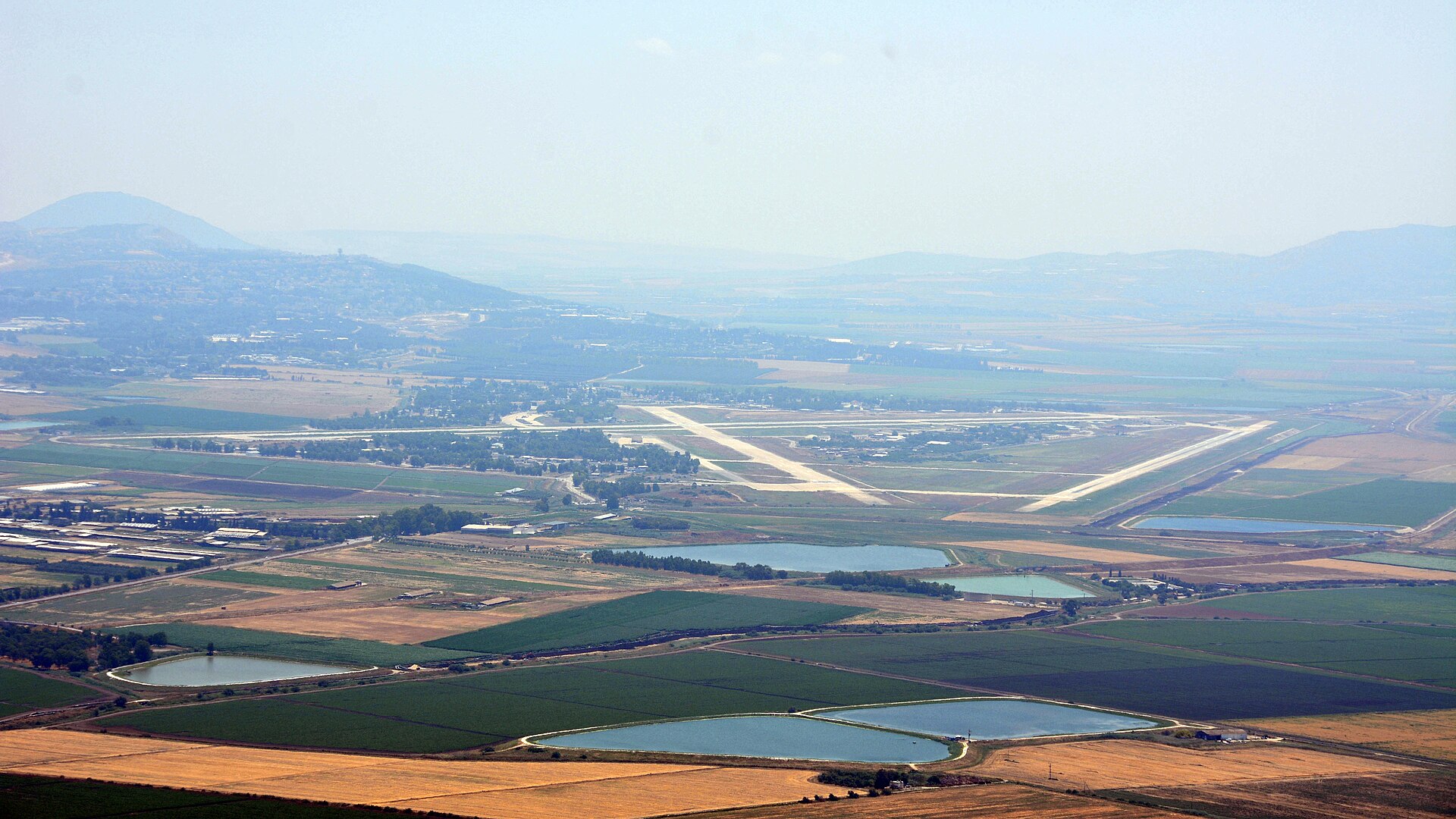
Table of Contents
- The Trigger Chain Ran in Public for Six Days
- What Did the Ramat David Strike Prove About Iran’s Capacity?
- Why Was Saudi Arabia Locked Out of Every Link?
- What Does Ghalibaf’s Declaration Mean for PSAB?
- The Interceptor Arithmetic on Day 100
- How Does the June 9 Convergence Change With Three Fronts Open?
- Pakistan Has a Channel. Saudi Arabia Does Not.
- Day 100 Was a Floor
- Frequently Asked Questions
The Trigger Chain Ran in Public for Six Days
Iran’s True Promise operations have always followed the same pattern: a declared threshold, a trigger, and a kinetic response. What distinguished TP5 was the degree of public pre-commitment. On June 1–2, Khatam al-Anbiya’s Central Headquarters issued what amounted to a standing order disguised as a warning — if Israel struck Dahiyeh, the IRGC would hit northern Israel. The statement was issued in Hebrew. This was not deterrence through ambiguity. It was a contract written in the open, addressed to the Israeli public, with a deadline attached to Israeli military behaviour.
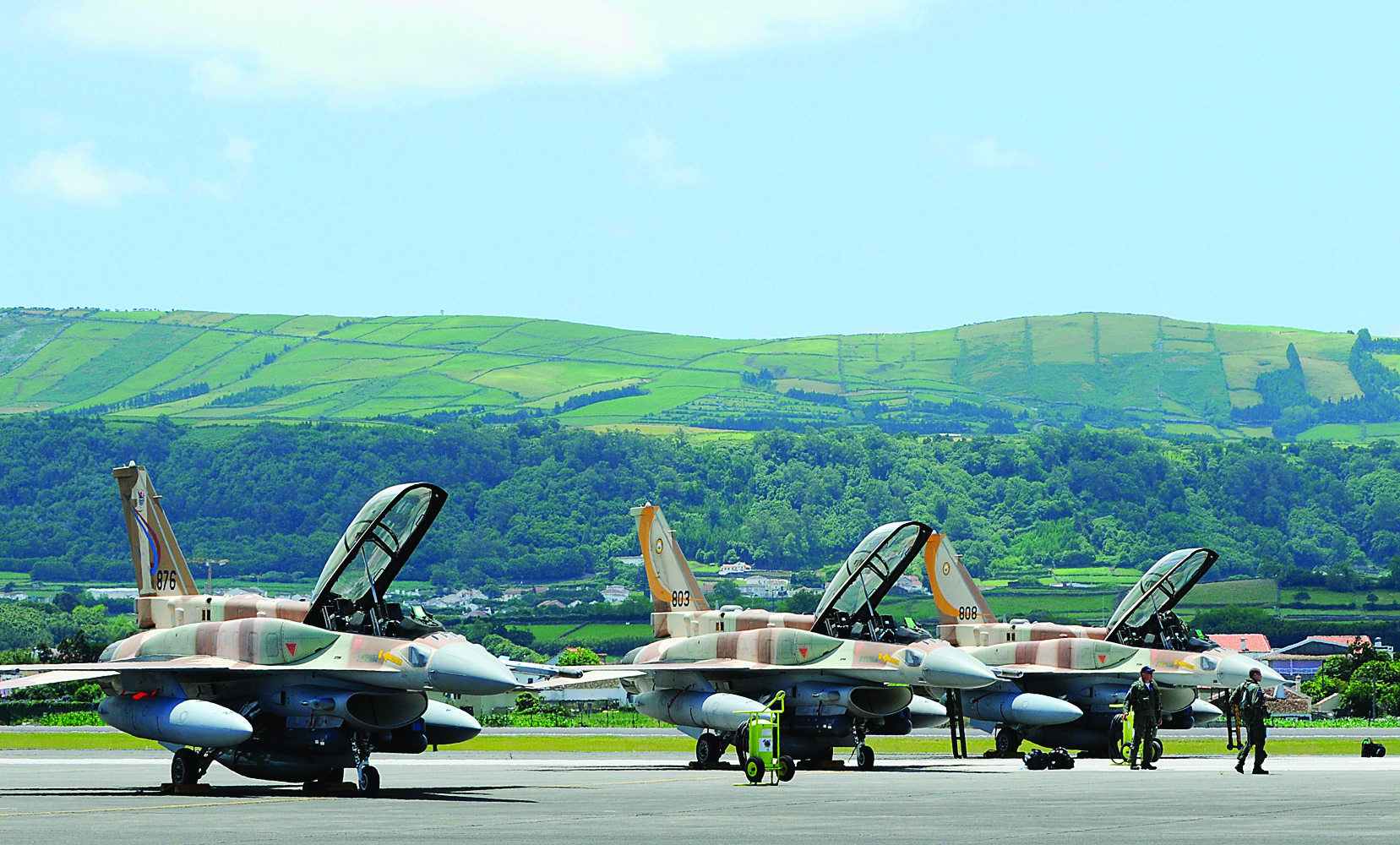
Israel struck Dahiyeh on June 7. Two people were killed. Eleven more were wounded. Within hours, the IRGC executed against Ramat David — Israel’s northernmost fighter aircraft installation, 20 kilometres southeast of Haifa, with three all-weather runways and the largest concentration of IAF northern strike capacity. Three F-16 squadrons (the 101st “First Fighter,” 105th “Scorpion,” and 109th “Valley”) operate from a base that sits barely 50 kilometres from the Syrian and Lebanese borders. The IRGC did not pick this target on June 7. Hezbollah published drone reconnaissance footage of Ramat David in 2021. The base has been in Iranian targeting packages for years.
The IDF initially stated that all incoming missiles were intercepted. Then, after additional barrages continued past its first statement, an IDF spokesperson told CNN it “could not yet provide information about the alleged air base hit.” The hedge was notable. In every previous True Promise operation, the IDF issued damage assessments within hours. On Day 100, it stopped short. Iran’s IRGC claimed at least three separate barrages with a minimum of ten ballistic missiles in the initial wave alone — meaning the Iron Dome and Arrow systems faced saturation conditions against precisely the kind of threat they were built to defeat.
The pre-declaration of TP5’s conditions represents something more dangerous than a retaliatory strike. It reveals that the IRGC’s Mosaic Defense architecture — with launch authority pre-delegated across 31 provincial commands — functions as a standing-order system. Once Khatam al-Anbiya publicly stated the trigger condition, the decision to fire was no longer a real-time choice. It was a pre-authorized execution awaiting confirmation of the trigger. Araghchi’s warning landed with precision: “Such an action would mean that the ceasefire had been completely broken, and our armed forces would respond.” The armed forces did.
What Did the Ramat David Strike Prove About Iran’s Capacity?
Trump told NBC in early June that Iran’s military is “totally destroyed” with approximately 21 percent of its missile capacity remaining. Classified US intelligence assessments, reported by multiple outlets, put the actual figure at roughly 70 percent of the prewar stockpile. That is a 3.3-to-1 discrepancy between the public narrative and the intelligence reality — and TP5 landed squarely on the side of the classified number. An adversary reduced to one-fifth of its original capacity does not open a new front on Day 100 against an opponent’s most heavily defended airspace. An adversary retaining two-thirds of its arsenal does exactly that.
The Middle East briefing 3,000+ readers start their day with.
One email. Every weekday morning. Free.
Ramat David is not a soft target. It sits inside Israel’s densest air defence belt — Arrow-3, David’s Sling, and Iron Dome all layered across the northern approaches. The IRGC fired ballistic missiles, not the cheaper cruise missiles or drones used against shipping in the Persian Gulf. Ballistic trajectories against northern Israel require flying through the most surveilled airspace on earth, with US naval Aegis assets in the eastern Mediterranean providing early warning and midcourse tracking. That the IDF hedged on damage after multiple barrages suggests either a saturation breach or debris impact — neither consistent with a 21-percent adversary firing its last reserves.
The IRGC’s own statement framed the strike as “a warning” — language that explicitly positions TP5 as the floor of a response curve, not its ceiling. “If the aggressions are repeated,” the Khatam al-Anbiya statement continued, “the responses will be broader and will encompass all American-Zionist targets in the region.” The phrasing matters because it mirrors the escalation grammar of True Promise 1 through 4: each operation was described as proportional to the trigger, with the next level pre-committed in the post-strike statement. Every time an IRGC codename has been publicly attached to an operation, the kinetic action has followed without exception.
For Saudi Arabia, the capacity question is existential in a way it is not for Israel. Israel has Arrow-3 and US Aegis support. Saudi Arabia has approximately 80 to 150 PAC-3 MSE interceptors remaining from an original inventory of 2,800 — somewhere between 3 and 5 percent of prewar stocks. If Iran retains 70 percent of its missile capacity rather than 21 percent, Saudi Arabia’s air defence posture moves from degraded to functionally decorative against a sustained campaign.
Why Was Saudi Arabia Locked Out of Every Link?
The TP5 trigger chain had three links: the IRGC’s public declaration (June 1–2), Israel’s Dahiyeh strike (June 7), and the Iranian launch (June 7). Saudi Arabia had no diplomatic access to any participant at any stage. This was not an oversight. It is the accumulated product of choices — some made by Riyadh, some made for it — that left the Kingdom structurally unable to influence a war that now directly threatens its territory.
Start with the first link. The IRGC declaration was addressed to Israel, not to the region. Saudi Arabia has no communication channel with the IRGC’s military command. The Kingdom expelled Iran’s military attaché and four embassy staff on March 21 but preserved the civilian diplomatic channel by retaining Ambassador Enayati. FM Faisal held four calls with Araghchi between April and May. But Araghchi does not command missile forces. The civilian Iranian government — Pezeshkian’s administration — did not authorize TP5. The Hormuz Letter account reported that Mojtaba Khamenei personally authorized execution through the Supreme National Security Council, bypassing civilian authority entirely. Saudi Arabia’s maintained channel runs to a government that does not control the weapons.
The second link — Israel’s decision to strike Dahiyeh — was equally unreachable. Saudi Arabia has no diplomatic relations with Israel. Normalization, the centrepiece of the 2023 Biden framework and the $142 billion May 2025 arms package, never materialised. There is no Saudi ambassador in Tel Aviv, no back-channel through which Riyadh could have conveyed that a Dahiyeh strike would trigger TP5 against a base Riyadh has no interest in seeing struck but every interest in the consequences of. The Kingdom was a spectator to an Israeli decision whose second-order effects land on Saudi soil.
The third link — Lebanon — was formally severed from Saudi access on June 4, when the US-Israel-Lebanon trilateral ceasefire was concluded without Saudi participation. The ceasefire signed without Hezbollah carried Araghchi’s statement that “Lebanon and Iran are inseparable” — meaning the Lebanon front was always a potential TP5 trigger. Saudi Arabia was excluded from the negotiating table that produced the ceasefire whose violation produced the strike. FM Faisal’s six diplomatic contacts between June 2 and June 4 included no call to Rubio, no call to Araghchi, and no call to anyone in Beirut.
What Does Ghalibaf’s Declaration Mean for PSAB?
Mohammad Bagher Ghalibaf, Speaker of Iran’s parliament, posted on X on June 7 that “the naval blockade against the Iranian nation and America’s green light today to the Zionist regime turn American and regime bases and assets in the region into legitimate targets.” The statement did not name Prince Sultan Air Base. It did not need to. PSAB is the largest US military installation in the region, with approximately 2,700 personnel operating under no Status of Forces Agreement — giving Saudi Arabia unilateral termination authority but providing no legal framework for shared defence obligations.
“The naval blockade against the Iranian nation and America’s green light today to the Zionist regime turn American and regime bases and assets in the region into legitimate targets.” — Mohammad Bagher Ghalibaf, Speaker of Iran’s Parliament, June 7, 2026
PSAB was already struck on March 27, when IRGC missiles destroyed an E-3G AWACS aircraft — one of the US Air Force’s airborne early warning platforms — and damaged five KC-135 tanker aircraft. The damage exceeded $4 billion. The KC-135s were subsequently evacuated. No retaliatory action was taken specifically in response to the PSAB strike, and Saudi Arabia exercised a unilateral veto over US offensive operations (Project Freedom) in early May 2026. Ghalibaf’s declaration on June 7 moves PSAB from “already struck” to “explicitly named as a category” — from a precedent to a declared doctrine. When Iran announced a conditional cessation of operations on June 8, the condition — that Israel halt actions including in Lebanon — left the doctrine intact: Iran’s conditional cessation restructures rather than resolves Saudi Arabia’s PSAB exposure, because resumed hostilities are now tied to a trigger Riyadh cannot modulate.
When Israel struck Beirut and Ghalibaf made his declaration, the geometry was already clear: the next Israeli action that triggers an IRGC response could route through Saudi territory without Saudi Arabia having any role in the decision chain. Israel strikes. Iran retaliates. The retaliation hits a US base on Saudi soil. Saudi Arabia absorbs the physical consequences of a trigger chain it cannot influence, interrupt, or even observe until the missiles are in flight. The Carnegie Endowment’s April 2026 assessment that the war “uncovered the weakness in US-Gulf ties” understates the structural reality: it is not weakness but absence.
The Interceptor Arithmetic on Day 100
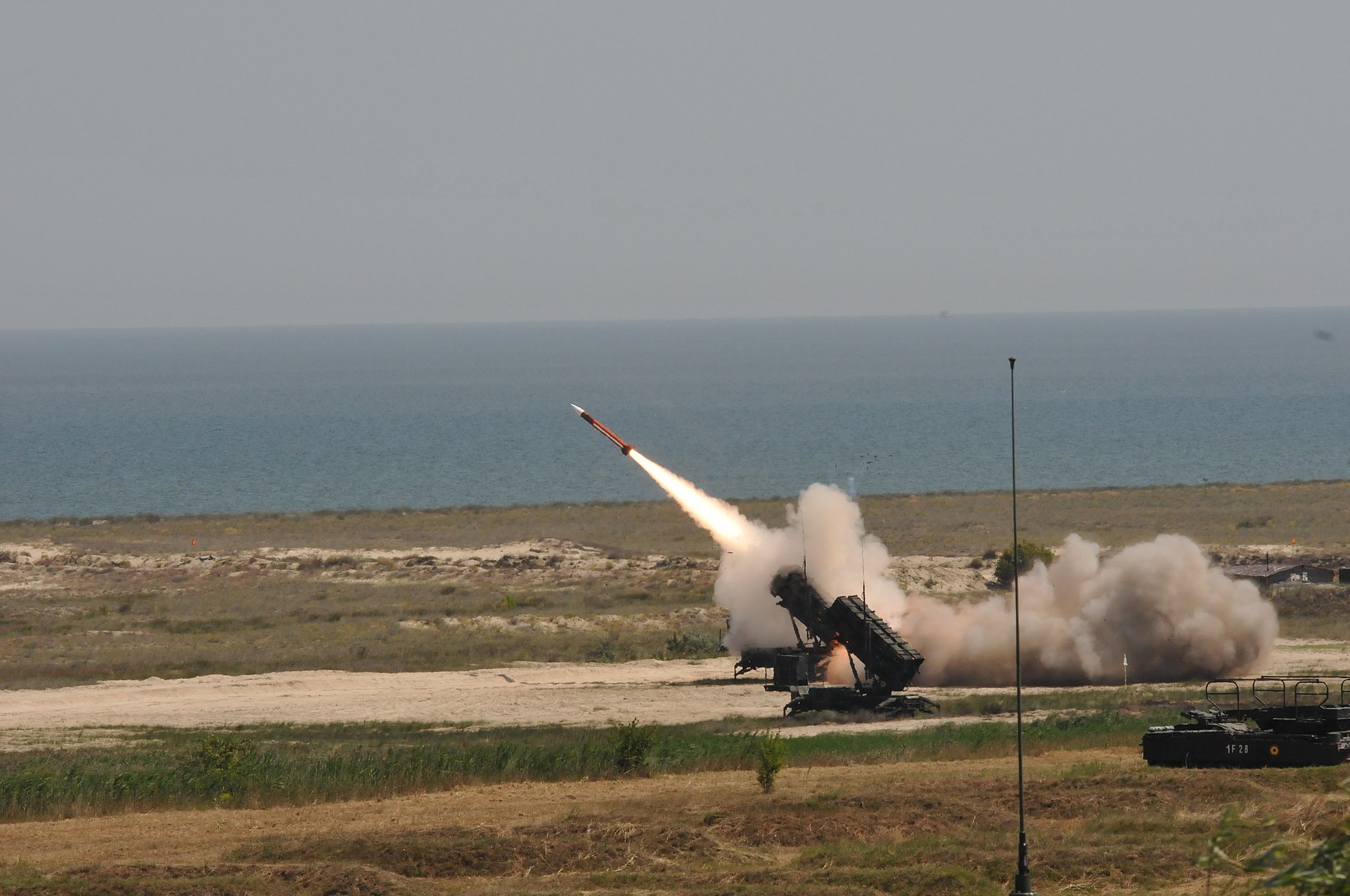
Saudi Arabia entered this war with approximately 2,800 PAC-3 MSE interceptors across its national air defence network. It now holds roughly 80 to 150. That is not a stockpile. It is a magazine that empties in a single sustained barrage — the kind the IRGC just demonstrated it can still execute against the most heavily defended airspace in the region. The GCC Patriot depletion analysis established what the replacement pipeline looks like: years, not months.
The Lockheed Martin facility in Camden, Arkansas produces roughly 620 PAC-3 MSE rounds per year, with a ramp to 2,000 planned by 2030 but not yet achieved. The Pentagon’s FY2027 order of 2,798 rounds at $12.2 billion claims the entire Camden output through 2030. Saudi Arabia has no emergency waiver — Rubio’s $8.6 billion May 2 expedited delivery excluded Saudi Arabia entirely, covering only direct US stocks and select allies. The Foreign Military Sales backlog exceeds 4,300 rounds, representing more than seven years of current production capacity. Bahrain, which hosts 9,000 US personnel under a 1992 SOFA, holds approximately eight MSE interceptors.
The cost-exchange ratio compounds the arithmetic. Each PAC-3 MSE costs between $4 million and $5.5 million. The IRGC’s Shahed-series drones cost approximately $30,000. Even at the ballistic missile level — Khorramshahr-4 or Kheibar Shekan — the cost ratio runs between 40:1 and 60:1 in favour of the attacker. Iran can afford to saturate. Saudi Arabia cannot afford to intercept. At 80 to 150 remaining rounds, the Kingdom is one major barrage away from a magazine that reads zero against an adversary its own intelligence partners assess at 70 percent retained capacity.
The CSIS assessment of “Last Rounds” published during the ceasefire period quantified what the GCC collectively faces: all six member states activated national air defence during this war. All six face depletion. None has a replacement pathway that operates faster than Iran’s demonstrated ability to launch.
How Does the June 9 Convergence Change With Three Fronts Open?
June 9 was already the most dangerous date on Saudi Arabia’s calendar before TP5 launched. Three events converge: Aramco’s $21.89 billion dividend payment falls due against $18.6 billion in actual free cash flow — a $3.3 billion gap that drops the post-dividend cash floor to approximately $53.3 billion. Iran’s formal counter-submission to the US nuclear proposal routes through Oman on the same date. And the IAEA censure resolution, prompted by Iran’s 93-day inspection blackout and 440.9 kilograms of unverified highly enriched uranium, reaches its procedural deadline.
The structural incompatibility of these three events was already acute. TP5 now adds a fourth variable: a hot third front that makes diplomatic resolution less likely on every track simultaneously. The nuclear counteroffer cannot succeed while Iran is actively striking Israeli military infrastructure. The ceasefire framework — the June 4 trilateral — is formally dead by Iran’s own declaration (“the ceasefire has been completely broken”). And the Aramco dividend pays regardless of what the missiles are doing, because sovereign credit depends on distribution reliability above all else.
PIF raised $7 billion in bonds in May 2026 — its largest single issuance — generating a $23.8 billion order book. It executed that raise when PIF cash sat at a six-year floor. The order book signals that sovereign credit markets still price Saudi Arabia as solvent. But credit markets price the last quarter’s performance, not the next quarter’s threat environment. A third front, with PSAB explicitly categorised as a legitimate target by a senior Iranian official, with 80 to 150 interceptors standing between that declaration and its execution, is not a credit event until it becomes one — at which point it is too late to price.
Vision 2030 construction commitments have already contracted from $71 billion to $30 billion — a $41 billion evaporation not from policy deferrals but from the collapse of the revenue assumptions that underwrote them. The June 9 dividend payment is the last act of financial normalcy. What follows it depends entirely on decisions being made in Tehran, Tel Aviv, and Washington — three capitals Saudi Arabia cannot reach through any operational channel.
Pakistan Has a Channel. Saudi Arabia Does Not.
On the same day that TP5 struck Ramat David, Pakistan’s Interior Minister Naqvi was in Tehran carrying two separate letters — one from Prime Minister Shehbaz (the civilian/state channel) and one from Army Chief Munir (the IRGC back-channel). This was Naqvi’s third Tehran trip. The dual-letter architecture means Pakistan can activate either track independently: the civilian channel for formal diplomacy, the military channel for the IRGC command structure that actually controls launch authority. Saudi Arabia has no equivalent.
The asymmetry is structural, not circumstantial. Pakistan’s Army Chief Munir maintains a direct relationship with IRGC commanders through the Saudi-Pakistan Military Defence Agreement (SMDA), which authorises 80,000 Pakistani troops for Saudi deployment with 8,000 currently stationed in the Eastern Province. Munir writes to Khamenei — specifically to Mojtaba Khamenei, who authorised TP5 — while his troops guard Saudi oil infrastructure. Saudi Arabia funds the security relationship but does not control the diplomatic channel it produces. Pakistan is simultaneously Saudi Arabia’s military guarantor and Iran’s preferred interlocutor. It cannot be both without serving one less than the other.
The Washington track offers no relief. The US nullified Iran’s last counteroffer without responding. Rubio’s Phase 1 / Phase 2 framework — Hormuz first (no sanctions), then nuclear (sanctions) — requires Iranian cooperation on the strait before addressing enrichment. Iran has reclassified Hormuz from a concession to an invoice, demanding $12 billion in frozen assets up front. The gap between these positions is measured in preconditions, not proximity. And TP5 just widened it by demonstrating that Iran retains escalation options that the US position assumed were exhausted.
FM Faisal’s six contacts between June 2 and June 4 were directed at Pakistan and Qatar — coordination about mediation frameworks, not mediation itself. Mediation requires access to the parties in conflict. Pakistan has that access. Qatar has limited access. Saudi Arabia has neither, and its diplomatic activity in early June was coordination about coordination — organising the table settings while others held the conversations that mattered.
Day 100 Was a Floor
The IRGC’s post-strike statement contained a single sentence that should dominate Saudi strategic planning for the next week — promising that repeated aggressions would produce broader responses encompassing all American-Zionist targets in the region. This is the grammar of pre-commitment. It mirrors the June 1–2 Khatam al-Anbiya statement that preceded TP5 — a public threshold that functions as a standing order once crossed. The IRGC has now established that its trigger-declaration-execution cycle operates on a timeline measured in hours, against targets selected years in advance, with launch authority pre-delegated below the political leadership.
Day 100 killed the fiction that this war was approaching a stable equilibrium. Lebanon’s toll stands at 3,593 dead and more than one million displaced. Iran has lost at least 3,468 people, per Al Jazeera’s Day 100 retrospective. The Atlantic Council’s June assessment that the war “upends Gulf states’ security and business model” describes the present, not a scenario. Saudi Arabia is living inside the upended model — paying dividends it cannot cover from cash flow, defending airspace with magazines it cannot refill, and watching a third front open across actors it cannot contact.
“If the aggressions are repeated, the responses will be broader and will encompass all American-Zionist targets in the region.” — IRGC Khatam al-Anbiya Headquarters, June 7, 2026
The question that hangs over Riyadh is not whether TP5 succeeded or failed against Ramat David. It is what happens when the next Israeli strike produces TP6, and Ghalibaf’s “legitimate targets” declaration converts from rhetoric to targeting coordinates. PSAB sits within range. Saudi Arabia has no SOFA obligating the US to defend it, no interceptor stocks to defend itself, no diplomatic channel to the actor making the targeting decisions, and no seat at the table where the ceasefire that might prevent it is being negotiated. Three fronts are open. The Kingdom can reach none of them. June 9 arrives in forty-eight hours, and with it the last date on which financial normalcy and strategic paralysis can coexist without one consuming the other.
Frequently Asked Questions
What is Ramat David airbase and why did Iran target it?
Ramat David is Israel’s northernmost active fighter aircraft installation, located 20 km southeast of Haifa with three all-weather runways and capacity for over 50 aircraft. It currently hosts three F-16 squadrons (101st, 105th, and 109th) — making it the largest concentration of IAF strike capacity in northern Israel. Iran selected Ramat David because it is the closest IAF base to Lebanon and Syria (50–60 km from both borders), the base from which strikes on Dahiyeh would logically originate, and a target Hezbollah had already conducted ISR collection against in 2021 via drone overflights, meaning it had been in IRGC targeting packages for at least five years before TP5.
How does Iran’s Mosaic Defense doctrine enable rapid retaliation?
The IRGC’s Mosaic Defense doctrine distributes launch authority across 31 provincial commands with pre-delegated authorization. This means that once a threshold is publicly declared — as Khatam al-Anbiya did on June 1–2 — the decision to fire does not require real-time centralized authorization. Provincial commanders hold the trigger condition as a standing order. This explains how TP5 executed within hours of the Dahiyeh strike rather than the days that conventional military decision-making cycles would require. The architecture effectively converts public declarations into automated standing orders distributed across geographically separated launch units, making pre-emption against the command structure functionally impossible.
What is the significance of Iran opening a third simultaneous front?
Before TP5, Iran was sustaining operations on two fronts — the Persian Gulf (naval blockade plus strikes on GCC territory) and Iraq/Syria (proxy and direct operations). TP5 against Ramat David activates a direct Iran-Israel kinetic front, distinct from the Lebanon proxy front, meaning Iran is now engaged in simultaneous military operations across three separate theatres that each require different diplomatic frameworks to resolve. No single negotiation can address all three, and progress on one (say, Hormuz) does not reduce escalation pressure on another (direct Israel strikes). For Saudi Arabia specifically, three fronts mean three separate decision chains producing consequences for the Kingdom, none of which it can influence.
What happened to the June 4 ceasefire between Israel and Lebanon?
The June 4 US-Israel-Lebanon trilateral ceasefire was declared dead by Iran’s foreign minister Araghchi within three days. It suffered from the same structural defect as the 2024 ceasefire — Hezbollah was named as a condition but not a signatory, meaning enforcement depended on a party with no formal obligations. IDF Northern Command chief Zamir stated “no ceasefire for our forces” on June 3, twenty-four hours before the agreement was formalised. The June 7 Dahiyeh strike confirmed what the structural analysis predicted: a ceasefire without the armed party as signatory and without the patron state (Iran) as guarantor had no enforcement mechanism beyond voluntary compliance.
Can Saudi Arabia acquire replacement PAC-3 interceptors before the next major strike?
No, not through any existing procurement mechanism. Camden, Arkansas produces approximately 620 rounds annually with a planned ramp to 2,000 by 2030 that has not yet materialised. The Pentagon’s FY2027 order of 2,798 rounds claims the entire production line through 2030. Saudi Arabia was explicitly excluded from Rubio’s $8.6 billion May 2 emergency waiver. The Foreign Military Sales backlog exceeds 4,300 rounds — over seven years of current output. Even if Saudi Arabia received an emergency allocation tomorrow, the Boeing seeker subcomponent bottleneck means delivery would take 18 months minimum under the most optimistic scenario. Saudi Arabia’s 80–150 remaining MSE rounds represent the total available inventory for the foreseeable future. The broader question of how Washington made Saudi Arabia’s diplomatic isolation structural on May 28 — by threatening the Omani channel — is examined in Trump Threatened to Bomb Oman: Saudi Arabia’s Last Channel to Tehran.
On June 8 — Day 100 — those 80 to 150 rounds faced a new escalation chain: Israel struck five Iranian provinces hours after Trump asked Netanyahu not to retaliate, and Saudi Civil Defense issued a missile alert for Al Kharj Governorate. Israel Strikes Iran After Trump Asked Netanyahu Not To Retaliate documents how the Trump-Netanyahu rupture directly exposed PSAB to the Iranian retaliation that Saudi Arabia cannot intercept.